Alan Greenspan: The Man Behind One of America’s Most Prosperous Eras and Controversial Monetary Policies
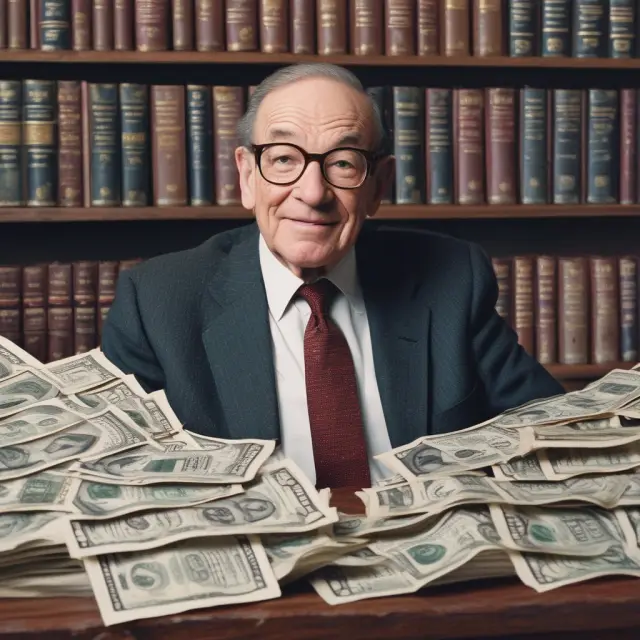
Alan Greenspan was an American economist who served as the 13th chair of the Federal Reserve Board from August 11, 1987, to January 31, 2006, appointed chair by four presidents. He earlier chaired President Ford's Council of Economic Advisers from 1974 to 1977, and he died in June 2026.
Correction: This entry describes Alan Greenspan in the present tense and dates his Council of Economic Advisers chairmanship to 1974-1975. He served from 1974 to 1977, and he died in June 2026; the Federal Reserve announced his passing on June 22, 2026.
Background and Early Career
Alan Greenspan, born March 6, 1926, is an esteemed American economist best known for his tenure as the Chair of the Federal Reserve (Fed) from 1987 to 2006. During this period, Greenspan oversaw a prosperous era marked by low inflation and steady economic growth – often referred to as the ‘Great Moderation’. Before embarking on his illustrious public service career, Greenspan earned his undergraduate, master’s, and doctoral degrees in economics from New York University. He began his professional journey with a non-profit organization that analyzed demand for essential metals like steel, aluminum, and copper. After running an economic consulting firm in New York City for nearly three decades, Greenspan joined the public sector for the first time, serving as chair of President Gerald Ford’s Council of Economic Advisors (CEA) from 1974 to 1975. In 1987, Ronald Reagan appointed Greenspan to lead the Federal Reserve, a role he would occupy until his retirement in 2006. Throughout his service as chair, Greenspan was also the head of the Federal Open Market Committee (FOMC), which makes interest rate and money supply decisions for the United States.
Greenspan’s appointment came with significant challenges, including the immediate need to address the historic stock market crash of 1987. His response was to sharply reduce interest rates in an attempt to prevent a deep depression. This proactive approach earned him criticism from some quarters, who argued that he placed undue emphasis on price control at the expense of employment levels. Nevertheless, Greenspan’s tenure proved instrumental during one of the most severe economic crises – the aftermath of the 1987 stock market crash.
As a prominent economist and public figure, Alan Greenspan’s policies and actions have remained subjects of intense debate. In later years, he would develop a reputation as a ‘hawkish’ figure in his concerns over inflation. However, this stance would evolve as the economic landscape changed, leading to allegations that Greenspan contributed to both the dot-com bubble and the subsequent subprime mortgage financial crisis. Despite these criticisms, Alan Greenspan’s service as chair of the Federal Reserve remains a crucial chapter in America’s economic history.
In this section, we will delve deeper into Alan Greenspan’s background, education, early career, and appointments in the public sector. As an accomplished economist with a rich history, his professional journey offers valuable insights for those interested in finance, economics, or public policy. Let us explore how Alan Greenspan’s experiences shaped his career trajectory and prepared him for the significant role he would later play as the Chair of the Federal Reserve.
Alan Greenspan was born on March 6, 1926, in New York City, where he grew up amid a Jewish community that valued education highly. He attended New York University (NYU), graduating summa cum laude with a Bachelor’s degree in economics in 1948. Greenspan continued his academic pursuits, earning both a Master’s and a Ph.D. in economics at NYU by 1951. Along the way, he studied under renowned economist Arthur Burns, who would later serve two consecutive terms as chair of the Board of Governors of the Federal Reserve. Greenspan’s first job was not with the government but for a non-profit organization analyzing demand for essential metals like steel, aluminum, and copper.
In 1954, Greenspan founded his economic consulting firm, Townsend-Greenspan & Co., Inc., in New York City. The company provided strategic advice to businesses on various economic issues. Greenspan’s expertise was sought after by clients such as the Department of Defense and the United States Steel Corporation. He ran the firm until 1974 when he took a brief hiatus from consulting. Greenspan returned to his consulting practice in 1977, running it until 1987 when he joined the public sector for the first time as chair of President Gerald Ford’s Council of Economic Advisors (CEA). The CEA was established by the Employment Act of 1946 to advise the president on economic policy matters.
Greenspan’s tenure in the public sector began with his appointment as a member of the CEA, followed by becoming its chair in 1974. During this period, he worked closely with President Ford on domestic and international economic issues such as oil price shocks and inflation. The experience allowed Greenspan to familiarize himself with the inner workings of government and the legislative process.
In 1987, Ronald Reagan appointed Greenspan to succeed Paul Volcker as chair of the Federal Reserve, making him the 13th person to hold that position. Greenspan’s first challenge upon assuming office was dealing with the immediate fallout from the historic stock market crash in October 1987. In response, he advocated for sharp reductions in interest rates to prevent a deep depression and preserve economic stability.
This proactive approach earned him both praise and criticism. Some observers praised Greenspan’s swift actions, which helped reassure markets and stabilize confidence. Others, however, accused him of focusing too much on price control at the expense of employment levels. Regardless, Alan Greenspan’s decisive response to the 1987 stock market crash set the stage for his tenure as chair, during which he oversaw a period of relatively stable inflation and economic growth – the Great Moderation.
As Greenspan navigated the complex landscape of monetary policy, he would face challenges from both critics and supporters alike. His unconventional policies, such as the ‘Greenspan put,’ would leave lasting impacts on the global economy. In the following sections, we will explore these developments in detail, shedding light on Alan Greenspan’s remarkable career and his enduring legacy.
FAQ: Frequently Asked Questions about Alan Greenspan and His Career
When was Alan Greenspan born?
Answer: Alan Greenspan was born on March 6, 1926.
Where did Alan Greenspan attend college?
Answer: Alan Greenspan earned his Bachelor’s, Master’s, and Doctoral degrees in economics at New York University (NYU).
What companies did Alan Greenspan work for before joining the public sector?
Answer: Before joining the public sector, Alan Greenspan ran an economic consulting firm, Townsend-Greenspan & Co., Inc., from 1954 to 1974 and 1977 to 1987.
How long did Alan Greenspan serve as Chair of the Federal Reserve?
Answer: Alan Greenspan served as Chair of the Federal Reserve for over 18 years, from 1987 to 2006.
What was Alan Greenspan’s stance on inflation during his early career?
Answer: In his early career, Alan Greenspan developed a reputation for being hawkish on inflation due to his advocacy for a return to the gold standard in monetary policy.
Additional Resources for Learning More About Alan Greenspan
- Book: “The Age of Turbulence” by Alan Greenspan – A memoir detailing Greenspan’s life and career, including his time at the Federal Reserve.
- Documentary: “Maestro: Greenspan’s Fed and the American Economy” (2013) – A documentary film that explores Alan Greenspan’s tenure as chair of the Federal Reserve.
- Website: Federal Reserve History – An official website dedicated to the history of the Federal Reserve, with a section on Alan Greenspan’s service as chairman.
- Articles: Various articles and opinion pieces on Alan Greenspan and his career in reputable financial publications such as The Economist, Bloomberg, and The Wall Street Journal.
Greenspan’s Time at the Fed (1987-2006)
Alan Greenspan is best remembered for his service as chair of the Federal Reserve from 1987 to 2006, where he oversaw the nation’s monetary policy during one of the most prosperous periods in American history. Greenspan was nominated by President Ronald Reagan and served under four subsequent presidents: George H.W. Bush, Bill Clinton, and George W. Bush. This tenure saw him through significant economic events, such as the stock market crash of 1987, the dot-com bubble in the late 1990s, and the aftermath of the September 11 attacks.
Greenspan’s policy during this time was defined by the Great Moderation – a period of relatively stable inflation and economic growth that lasted from the mid-1980s to the financial crisis in 2007. However, his policies were not without controversy, with some critics arguing that they contributed to the dot-com bubble and the subsequent financial crisis in 2008.
Early in Greenspan’s career, he was known for his hawkish stance on inflation. His advocacy for a return to the gold standard in monetary policy was evident in his 1967 essay “Gold and Economic Freedom.” However, during his time at the Fed, Greenspan’s supposedly ‘hawkish’ approach proved to be quite flexible. He pursued an expansionary monetary policy that kept interest rates relatively low compared to his predecessor Paul Volcker.
One of Greenspan’s earliest tests came with the historic 1987 stock market crash. In response, he advocated for sharply slashing interest rates to prevent the economy from falling into a deep depression. This action set the tone for Greenspan’s tenure, which was characterized by his adeptness at gaining consensus among Fed board members and leading the nation through one of its most severe economic crises.
Greenspan’s flexible approach to inflation became even more evident in the early 2000s when he reduced interest rates following the dot-com bubble burst and after the September 11 attacks. Critics argue that these rate cuts contributed to inflating asset price bubbles, such as the U.S. housing market, which eventually led to the subprime mortgage financial crisis and the Great Recession.
Despite the controversy surrounding some of Greenspan’s policies, his service at the Fed was marked by significant achievements and challenges. He faced critical economic events head-on and helped lead the nation through prosperous periods as well as severe crises. Greenspan’s tenure at the Federal Reserve remains a topic of debate among economists and historians.
Greenspan’s time at the Fed was not only marked by economic policy, but also by his views on inflation and interest rates. In the early stages of his career, Greenspan advocated for a return to the gold standard in monetary policy due to his concerns over inflation. However, during his tenure as chair, he developed a more flexible stance on inflation. Greenspan’s reputation as a hawkish economist began with his 1967 essay “Gold and Economic Freedom,” where he argued for a return to the gold standard in monetary policy. In this essay, he expressed concerns over the potential consequences of unchecked government spending and the impact on inflation. However, when he took office as chair of the Federal Reserve, Greenspan’s approach proved to be more nuanced than his earlier stance suggested.
Greenspan’s flexibility on inflation was demonstrated during the early 2000s. Despite his reputation as a hawkish economist, Greenspan lowered interest rates following the dot-com bubble burst and after the September 11 attacks to prevent economic downturns. Critics argue that these rate cuts contributed to inflating asset price bubbles, such as the U.S. housing market, which eventually led to the subprime mortgage financial crisis and the Great Recession.
However, Greenspan’s tenure at the Federal Reserve was not without its achievements. One of his most notable accomplishments came during the stock market crash of 1987. Greenspan’s quick response to lower interest rates helped prevent a deep economic depression following the crash. His adeptness in gaining consensus among Fed board members also contributed to a stable macroeconomic environment throughout his service.
Greenspan faced several challenges during his time at the Federal Reserve, including significant economic events like the stock market crash of 1987 and the dot-com bubble in the late 1990s. His response to these crises demonstrated his ability to lead the nation through prosperous periods as well as severe crises, making him a controversial yet influential figure in American economic history.
In conclusion, Alan Greenspan’s tenure at the Federal Reserve (1987-2006) was marked by significant achievements and controversies. He faced major economic events head-on, leading the nation through periods of prosperity as well as crises. Greenspan’s flexible stance on inflation, initially shaped by his advocacy for a return to the gold standard in monetary policy, proved influential during his time at the Fed. However, his policies also sparked debate and controversy, particularly regarding their role in contributing to the dot-com bubble and the subsequent financial crisis. Regardless of personal opinion, Alan Greenspan’s service as chair of the Federal Reserve remains an important chapter in American economic history.
Views on Inflation
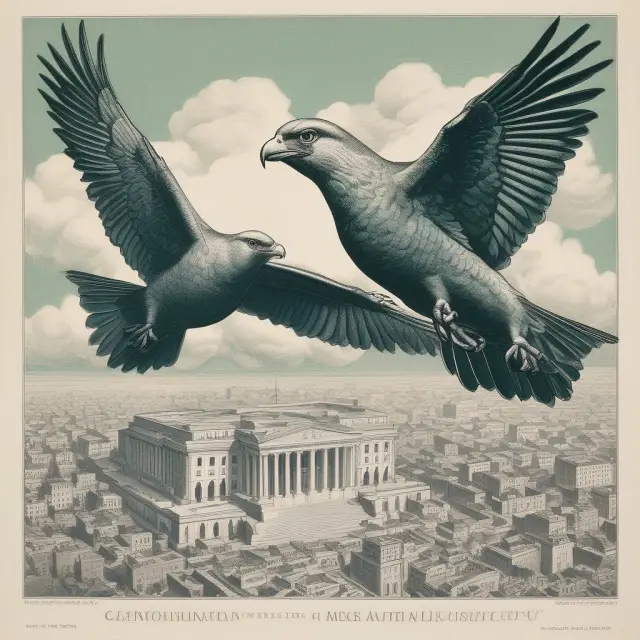
Alan Greenspan, an American economist and former Federal Reserve chairman, is best known for overseeing one of America’s most prosperous periods and implementing expansionary monetary policies during his tenure from 1987 to 2006. However, Greenspan’s stance on inflation has been a subject of debate due to his early reputation as a hawkish economist and eventual shift in beliefs.
Greenspan developed a reputation for being hawkish on inflation based on his advocacy for returning to the gold standard in monetary policy through his 1967 essay, “Gold and Economic Freedom.” This perspective was viewed by critics as prioritizing price stability over economic growth. However, Greenspan later revised his stance during his service at the Fed, acknowledging that the new economy might not be susceptible to inflation as he initially thought.
Greenspan’s reputation for being hawkish on inflation did not prevent him from implementing flexible monetary policies when necessary. In the early 2000s, Greenspan lowered interest rates drastically following the dot-com bubble burst and after the September 11 attacks. Critics argue that these rate cuts could have potentially fueled asset price bubbles in the U.S., contributing to the housing bubble, subprime mortgage financial crisis, and eventual Great Recession.
In his 2004 speech, Greenspan encouraged homeowners to consider adjustable-rate mortgages (ARMs), stating that they could help reduce borrowing costs for some Americans. However, with interest rates increasing during this period as inflation accelerated, many of these ARMs reset at much higher payments, causing significant distress for homeowners and exacerbating the impact of the crisis.
Greenspan’s policies and actions have been a subject of intense debate regarding their impact on inflation and economic growth during his time at the Fed. While some argue that his early hawkish stance on inflation contributed to the overall success of the Great Moderation, others believe that Greenspan’s later focus on keeping interest rates low played a role in stoking asset price bubbles and the ensuing financial crisis.
Regardless, Alan Greenspan remains an influential figure in modern economic history due to his long tenure at the Federal Reserve and the impact of his policies on the American economy during this time.
Alan Greenspan’s Controversial Policies: ‘The Greenspan Put’
One of Alan Greenspan’s most notable policies as chair of the Federal Reserve was his unconventional monetary strategy, often referred to as ‘The Greenspan Put.’ This term describes Greenspan’s attempt to prevent financial market downturns by lowering interest rates significantly when necessary, acting like an investor buying a put option in the stock market.
Greenspan introduced this policy during his first crisis at the Fed – the 1987 stock market crash. In response to the stock market plunge following October 19, 1987, Greenspan led the FOMC to reduce the federal funds rate by a full percentage point within days. This bold move was intended to stabilize investor confidence and help prevent a prolonged depression.
Greenspan’s actions were effective in quelling market volatility following the 1987 crash, but they also raised concerns regarding moral hazard and potential inflation risks. Critics believed that this policy created an environment where investors might take excessive risks, assuming the Fed would bail them out in case of a market downturn.
Greenspan’s pro-inflationary policies were further emphasized during the dot-com bubble in 2000. In response to the bursting of the bubble, Greenspan advocated for lower interest rates to stimulate economic growth and prevent a recession. He reduced the Fed funds rate from 6.5% to 1.0% between 2001 and 2003, creating an environment that critics argue contributed to the housing market bubble, which eventually led to the subprime mortgage financial crisis in 2008.
The consequences of Greenspan’s ‘put’ were significant; some argue it created a false sense of security for investors during a time when they should have been preparing for potential downturns. Others believe that his actions ultimately helped prevent even more severe economic repercussions, especially after the 9/11 attacks and the global financial crisis in 2008.
Regardless of the long-term implications, Alan Greenspan’s ‘The Greenspan Put’ remains an essential part of the narrative surrounding his tenure as chair of the Federal Reserve. It highlights the unique challenges faced during that time and serves as a reminder of the importance of striking a balance between controlling inflation and promoting economic growth.
Encouraging Adjustable-Rate Mortgages
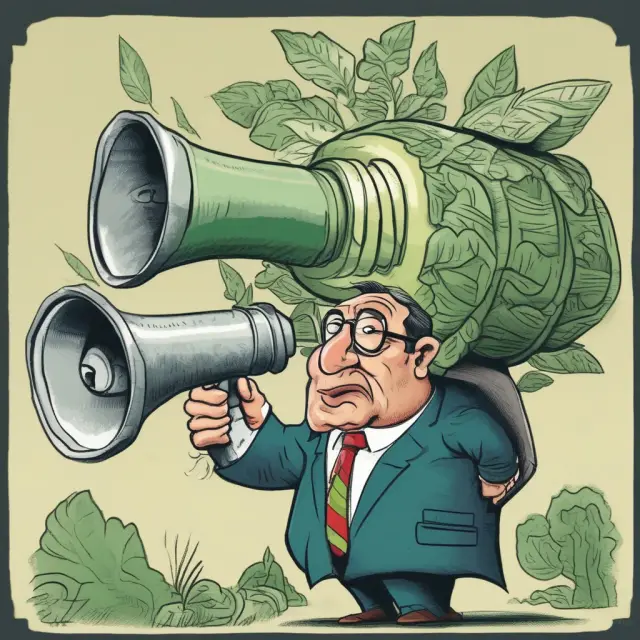
During Greenspan’s tenure, he encouraged homeowners to consider taking out adjustable-rate mortgages (ARMs) in a 2004 speech. This advice would come back to haunt him during the financial crisis a few years later. In the early 2000s, interest rates dropped significantly due to Greenspan’s aggressive monetary policy. ARMs were particularly popular because their initial low introductory rate was enticing for borrowers. However, the rates could reset based on prevailing market conditions, leaving homeowners vulnerable to higher payments in the future.
As inflation accelerated, many of these mortgages saw their interest rates resetting to significantly higher levels. This increase caused even more distress for homeowners and worsened the impact of the financial crisis. The proliferation of ARMs was a contributing factor to the housing bubble that led to the subprime mortgage financial crisis and the Great Recession.
The consequences of Greenspan’s advocacy for adjustable-rate mortgages can be attributed to several factors. First, his belief in the low inflation environment encouraged borrowers to take on debt with seemingly manageable payments. Second, the Federal Reserve’s aggressive rate cuts made it easier for people to afford these mortgages at their inception. Lastly, the perceived security of a Greenspan-led Fed may have given borrowers a false sense of security that they could weather any potential interest rate increases.
Although there is debate over how much responsibility Greenspan bears for the housing bubble and subsequent financial crisis, his role in encouraging adjustable-rate mortgages remains a significant piece of this complex puzzle.
The consequences of Alan Greenspan’s endorsement of adjustable-rate mortgages continue to be felt today. The housing bubble that led to the 2008 financial crisis demonstrates how seemingly sound economic advice can have unintended and disastrous consequences when combined with an uncertain economic environment.
Stay tuned for the following sections, where we will explore Greenspan’s impact on the dot-com bubble and the Great Recession in more detail.
Greenspan’s Impact on the Dot-Com Bubble and the Great Recession
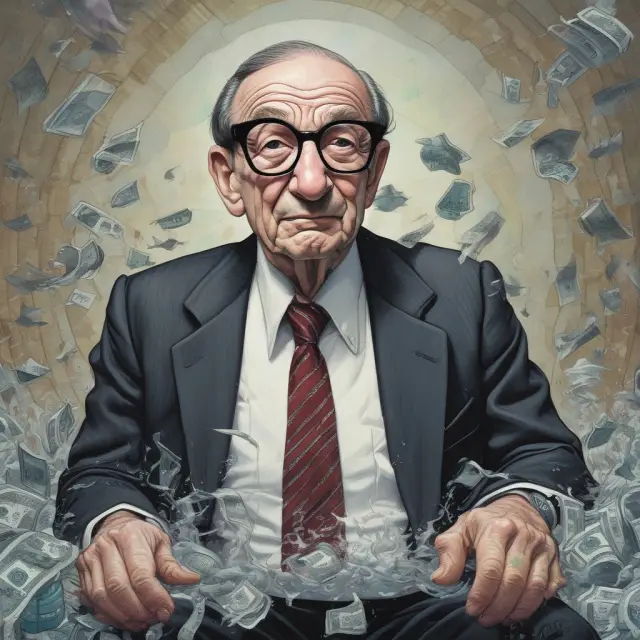
Alan Greenspan is a pivotal figure in American financial history, having served as chair of the Federal Reserve from 1987 to 2006. During this time, he oversaw some of the most significant economic events in recent history, including the dot-com bubble and the Great Recession.
The period of economic prosperity under Greenspan’s leadership is referred to as the “Great Moderation,” characterized by stable inflation and robust economic growth. However, his policies have also been blamed for fueling the 2000 dot-com bubble and the subsequent subprime mortgage financial crisis.
In the late 1990s, Greenspan’s Federal Reserve played a role in contributing to the overvaluation of technology stocks by maintaining low interest rates. This allowed investors to borrow cheaply and fueled speculative buying. Once the bubble burst, the ensuing market crash led to significant losses for investors and caused widespread panic.
Greenspan’s aggressive monetary policies continued into the early 2000s when he reduced interest rates following the 9-11 attacks in 2001. The goal was to stimulate the economy, but this move also encouraged riskier investments and housing market speculation. In his famous 2004 speech, Greenspan suggested that homeowners consider adjustable-rate mortgages (ARMs), which eventually contributed to the subprime mortgage crisis when interest rates began to rise, making mortgage payments unaffordable for many borrowers.
Despite the controversies surrounding Greenspan’s monetary policies during his tenure, it is essential to acknowledge his influence on shaping the American economy throughout the late 20th century. His impact can be seen in both the dot-com bubble and the Great Recession. Although debated, Greenspan’s policies have been linked to fueling asset price bubbles and exacerbating economic instability.
Greenspan’s legacy is complex, with critics highlighting his role in these financial crises, while supporters argue that he successfully navigated the U.S. economy through tumultuous times, including the aftermath of the 1987 stock market crash and the terrorist attacks on September 11th, 2001. Regardless of your stance, Greenspan’s influence on monetary policy and American finance is undeniable.
Additionally, it is worth acknowledging that Greenspan was not solely responsible for these events; multiple factors contributed to the dot-com bubble and the subprime mortgage crisis. However, his policies did play a significant role in shaping the economic landscape during this time.
Moving forward, understanding Alan Greenspan’s impact on the financial world provides valuable context for investors, economists, and policymakers looking to navigate today’s increasingly complex markets. By examining his actions and their consequences, we can learn essential lessons about managing risk, inflation, and the role of central banks in economic stability.

Greenspan’s Legacy: Successes and Criticisms
Alan Greenspan’s tenure as Chairman of the Federal Reserve from 1987 to 2006 is marked by significant accomplishments, but also faced criticism for some of his policies and actions. Alan Greenspan’s legacy can be viewed through various perspectives, revealing both successes and criticisms.
One of Greenspan’s most notable contributions was his role in the Great Moderation – a period of relatively stable inflation and economic growth that lasted from the mid-1980s to the financial crisis in 2007. During this time, Greenspan managed to maintain low, stable inflation while promoting robust economic expansion.
However, some critics argue that Greenspan’s focus on controlling prices came at the cost of full employment. His reputation as a hawkish economist, with an emphasis on fighting inflation over achieving maximum employment, has been subject to debate. While advocating for a return to the gold standard early in his career, Greenspan later changed his views and adopted more flexible policies, including ‘easy money’ strategies that some argue contributed to asset price bubbles and economic crises like the dot-com bubble and the 2008 financial crisis.
An example of such criticism lies in Greenspan’s approach during the 1990s and early 2000s. He advocated for lowering interest rates after the dot-com bubble burst in 2000 and following the 9/11 attacks, which some argue may have fueled asset price inflation. In 2004, Greenspan even suggested that more homeowners should consider adjustable-rate mortgages (ARMs), which contributed to the housing market crisis when interest rates rose during his tenure and reset many of those mortgages to much higher payments.
Additionally, the ‘Greenspan put’ – a monetary policy strategy popular during Greenspan’s reign – has been criticized for creating moral hazard in financial markets. This strategy involved using the federal funds rate to aggressively lower interest rates to fight deflation of asset price bubbles, encouraging investors to take excessive risks, and distorting incentives as market participants knew that Fed monetary policy would bail them out in case of a downturn.
Despite these criticisms, Greenspan’s legacy remains significant. He is credited with guiding the U.S. economy through major challenges such as the 1987 stock market crash and the aftermath of the 9/11 attacks, maintaining low inflation, and contributing to a period of strong economic growth. Alan Greenspan’s impact on the world of finance and economics is undeniable; his contributions will continue to be debated and studied for years to come.
Alan Greenspan After the Federal Reserve
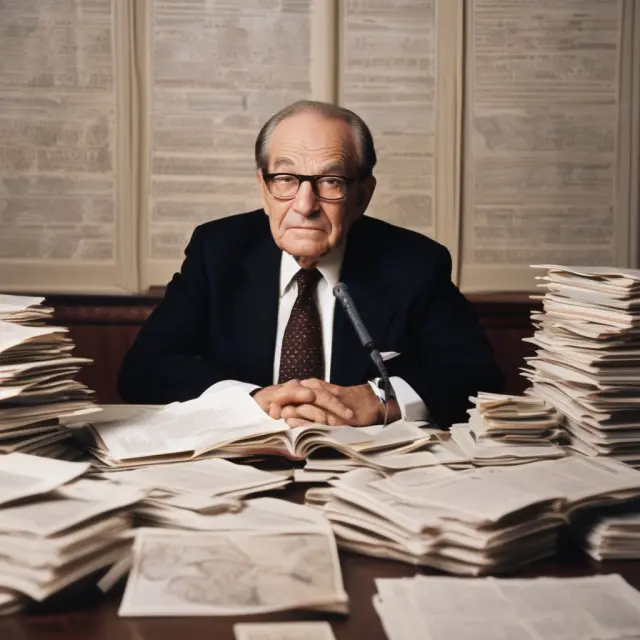
After an impressive tenure of over 18 years as chair of the Board of Governors of the Federal Reserve (Fed), Alan Greenspan retired in 2006 to be replaced by Ben Bernanke. Having made significant contributions to American economic history, including presiding over the Great Moderation—a period marked by low inflation and steady growth—Greenspan left a lasting impact on U.S. monetary policy. Post-Fed, Greenspan began his own Washington DC-based consulting firm, Greenspan Associates LLC.
Before stepping down from the Fed, he published his memoir, The Age of Turbulence: Adventures in a New World (2007), offering readers an insightful look into his thoughts and experiences while shaping U.S. economic policy. In 2013, Greenspan was awarded the Presidential Medal of Freedom by Barack Obama, becoming the only Fed chair to receive this prestigious award.
Greenspan’s legacy has been a source of debate among economists and financial experts. Some argue that he played an essential role in maintaining economic stability, while others believe his policies contributed to the dot-com bubble and subsequent subprime mortgage financial crisis. Critics have pointed to Greenspan’s flexible approach to monetary policy, which they argue may have encouraged excessive risk-taking among investors.
As a hawkish economist known for his focus on controlling inflation, Greenspan initially adopted a more cautious stance toward interest rates and the money supply during his early years at the Fed. However, as economic conditions changed, he adapted his views to prioritize growth over price stability in certain instances. Greenspan’s decision to lower interest rates following the 1990s stock market crash and after the 2001 terrorist attacks is often cited as having contributed to asset price bubbles, particularly in the housing sector.
In 2004, Greenspan suggested that homeowners should consider adjustable-rate mortgages (ARMs), which would ultimately prove problematic when interest rates rose following his term at the Fed. This advice, combined with his prior monetary policy decisions, exacerbated the impact of the financial crisis on American homeowners.
Despite these criticisms, Greenspan’s time at the helm of the Federal Reserve will continue to be studied by economists and policymakers for years to come. His unique perspective and innovative ideas have left a lasting impact on U.S. economic policy, shaping how we understand the role of central banks in managing inflation and stabilizing financial markets.
FAQ: Alan Greenspan Frequently Asked Questions
What did Alan Greenspan do after leaving the Federal Reserve?
Alan Greenspan founded his own consulting firm, Greenspan Associates LLC, following his departure from the Fed in 2006.
Did Alan Greenspan receive any awards for his contributions to economics?
Yes, Alan Greenspan was awarded the Presidential Medal of Freedom by George W. Bush in 2005. He is also the only Federal Reserve chair to have received this honor.
How long did Alan Greenspan serve as Chair of the Fed?
Alan Greenspan served as Chair of the Board of Governors of the Federal Reserve from 1987 until 2006, a total of five terms.
Who replaced Alan Greenspan at the Federal Reserve?
Ben Bernanke succeeded Alan Greenspan as Chair of the Federal Reserve in 2006.
What are some criticisms of Alan Greenspan’s time at the Fed?
Critics argue that Greenspan’s policies, particularly his focus on controlling inflation and his advocacy for adjustable-rate mortgages, contributed to the dot-com bubble and the subprime mortgage financial crisis. They also claim that his flexible approach to monetary policy created an environment where investors were encouraged to take excessive risks.
Additional Resources:
- Alan Greenspan – Biography (biography.com)
- Alan Greenspan on Inflation (investopedia.com)
- Alan Greenspan’s Impact on the Markets (cnbc.com)

FAQ: Frequently Asked Questions about Alan Greenspan and His Career
What is Alan Greenspan’s background, education, and early career?
Alan Greenspan was born on March 6, 1926, in New York City. He earned his bachelor’s, master’s, and doctoral degrees in economics from New York University (NYU), as well as studied economics at Columbia University under Arthur Burns, who later became the Fed chair. Greenspan’s early career was spent working for a non-profit analyzing demand for steel, aluminum, and copper. In 1954, he ran an economic consulting firm, Townsend-Greenspan & Co., Inc., in New York City until 1974 and later from 1977 to 1987. Greenspan’s first entry into the public sector came when he served as chair of the President’s Council of Economic Advisers (CEA) under President Gerald Ford in 1974. In 1987, he was appointed by President Ronald Reagan as the 13th chair of the Federal Reserve, serving until 2006 for a total of five terms.
When did Alan Greenspan’s tenure at the Federal Reserve begin and end?
Alan Greenspan began his service as Chair of the Federal Reserve in August 1987 and ended it on January 31, 2006.
What is Alan Greenspan best known for during his time at the Fed?
Best known for presiding over the Great Moderation, a period of low and stable inflation and economic growth that lasted from the mid-1980s to the financial crisis in 2007. His policy was characterized by the expansionary monetary policy of “easy money,” which some critics argue contributed to the dot-com bubble and the subsequent subprime mortgage financial crisis.
What is Alan Greenspan’s reputation on inflation concerns?
Greenspan developed a reputation for being hawkish on inflation due to his advocacy for a return to the gold standard in monetary policy. However, he later reversed those views during his service as Fed chair, focusing more on achieving full employment than controlling prices.
What major economic challenges did Alan Greenspan face while at the Federal Reserve?
Alan Greenspan faced significant economic challenges during his tenure at the Federal Reserve, including managing the aftermath of the 1987 stock market crash and dealing with the dot-com bubble in the early 2000s. He advocated for sharply lowering interest rates to prevent a deep depression following the stock market crash but received criticism for focusing on controlling inflation rather than achieving full employment.
What has Alan Greenspan been doing since leaving the Federal Reserve?
After leaving the Federal Reserve, Alan Greenspan founded his own consulting firm, Greenspan Associates LLC, in Washington D.C. He also published a memoir titled “The Age of Turbulence.”

Additional Resources for Learning More About Alan Greenspan
For readers seeking to expand their understanding of Alan Greenspan’s contributions to finance and economics, a multitude of resources exist, delving into various aspects of this influential economist’s life, career, and policies. Below are recommended books, articles, websites, and multimedia content that can help broaden your knowledge on Alan Greenspan.
Books:
1. Greenspan, A. (2007). The Age of Turbulence: Adventures in a Time of Institute for Economic Affairs (IEA)
For those seeking to understand Greenspan’s perspective and insights from his own words, his memoir is an excellent place to start. In this book, Greenspan reflects on his tenure as Federal Reserve chair during some of the most turbulent economic periods in recent history.
2. Bernanke, B. S., & Greenspan, A. (1993). The Challenge of Central Banking in a Democratic Society: Hearings Before the Committee on Banking, Finance and Urban Affairs, United States Senate (p. 47-84). Government Printing Office
This Congressional hearing transcript features a comprehensive exchange between Alan Greenspan and Ben Bernanke discussing monetary policy, inflation targeting, and the role of central banks in society.
Articles:
1. Krugman, P. (2005, November 8). Maestro, My Ass. The New York Times.
In this op-ed for The New York Times, Nobel laureate Paul Krugman criticizes Alan Greenspan’s monetary policies and their impact on economic inequality. This article offers a perspective different from the widely held positive perception of Greenspan as the “Maestro.”
2. Woodward, B. C. (1997, September 8). Greenspan: A Biography. The Washington Post.
This in-depth profile of Alan Greenspan by renowned journalist Bob Woodward offers a comprehensive look at his life and career, including personal anecdotes and insights into Greenspan’s motivations and decision-making processes.
Websites:
1. Federal Reserve Education – http://www.federalreserveeducation.org/concepts/alan-greenspan
The Federal Reserve’s official educational website offers a detailed biography of Alan Greenspan, along with his views on topics such as inflation, economic growth, and the role of central banks.
2. Alan Greenspan Institute for Economic Reform – http://www.alangreenspan.org
This non-profit organization, founded by Alan Greenspan in 1997, promotes free market economic principles through research, education, and publications. Their website offers a wealth of information on Greenspan’s views and contributions to economics.
Multimedia:
1. The Ascent of Money (2001) – A four-part documentary series by Niall Ferguson that examines the history of money from ancient times to the present day, including a detailed segment on Alan Greenspan and his impact on modern monetary policy.
2. 60 Minutes: Alan Greenspan (September 27, 1998) – In this interview with Lesley Stahl for CBS’s 60 Minutes, Alan Greenspan discusses his views on the economy, monetary policy, and the role of the Federal Reserve in managing economic fluctuations.
These resources offer valuable insights into Alan Greenspan’s background, career, and contributions to finance and economics. By exploring these sources, readers can gain a deeper understanding of this influential economist’s life and impact on modern monetary policy.
 Next entry · No. 131Understanding Aleatory Contracts: From Insurance Policies to Annuities
See also
-
 No. 523
28 Apr 2024
18 min
Understanding Broad Money: Definition, Components, Advantages and Measurement in the US Economy
Economics
No. 523
28 Apr 2024
18 min
Understanding Broad Money: Definition, Components, Advantages and Measurement in the US Economy
Economics -
 No. 486
26 Apr 2024
22 min
Understanding the Boom and Bust Cycle: Causes, Effects, and Mitigation
Economics
No. 486
26 Apr 2024
22 min
Understanding the Boom and Bust Cycle: Causes, Effects, and Mitigation
Economics -
 No. 447
24 Apr 2024
18 min
Understanding the Bureau of Labor Statistics (BLS): Data, Reports, and Their Importance to the U.S. Economy and Investors
Economics
No. 447
24 Apr 2024
18 min
Understanding the Bureau of Labor Statistics (BLS): Data, Reports, and Their Importance to the U.S. Economy and Investors
Economics -
 No. 395
21 Apr 2024
17 min
Ben Bernanke’s Role in U.S. Economy: Controversial Strategies and Legacy
Economics
No. 395
21 Apr 2024
17 min
Ben Bernanke’s Role in U.S. Economy: Controversial Strategies and Legacy
Economics -
 No. 373
16 Apr 2024
22 min
Basket of Goods and Services: Understanding the Consumer Price Index (CPI) and Its Role in Measuring Inflation
Economics
No. 373
16 Apr 2024
22 min
Basket of Goods and Services: Understanding the Consumer Price Index (CPI) and Its Role in Measuring Inflation
Economics -
 No. 1,479
21 Sep 2024
21 min
Understanding the Role and Significance of the Federal Discount Rate in Monetary Policy
Finance Policy
No. 1,479
21 Sep 2024
21 min
Understanding the Role and Significance of the Federal Discount Rate in Monetary Policy
Finance Policy