Understanding Greenspan Put: The Unintended Consequence of Fed Policies
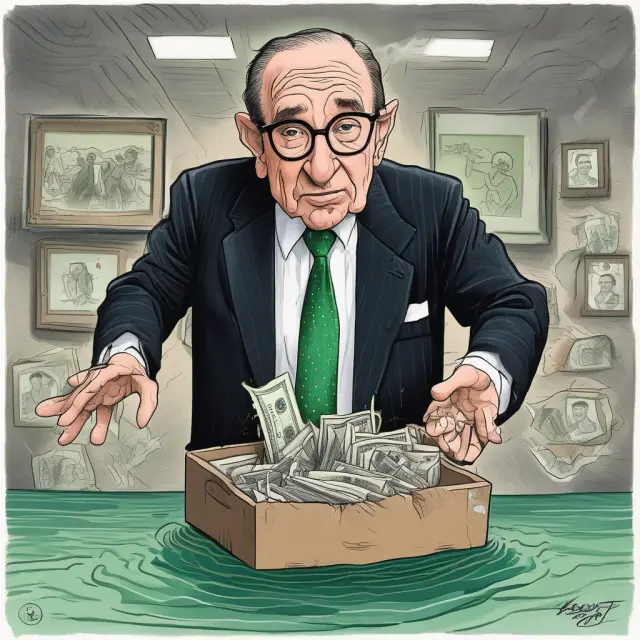
Exploring the concept of the Greenspan Put - an unintended consequence of Federal Reserve policies that influenced stock market behavior in the late 1990s.
Introduction to Greenspan Put
The term “Greenspan put” refers to Alan Greenspan’s monetary policy during his tenure as Federal Reserve Chair, which is believed to have provided a safety net for investors against significant market declines. This concept is often compared to an actual put option in options trading—an insurance contract that grants the holder the right but not the obligation to sell a security at a specified price before expiration.
Greenspan’s role as a Fed chairman began following the 1987 stock market crash, during which he implemented rate cuts to help companies recover from the crisis, establishing a precedent for intervention in times of turmoil. This assumption of intervention and support from the Fed encouraged risk-taking, making trading and investing more attractive as valuations rose beyond acceptable ranges. Investors, particularly those dealing with internet stocks, faced challenges assessing the rationality behind certain stock investments given the wild price fluctuations. As a result, put options gained popularity as an insurance policy to protect investors’ portfolios against excessive market declines—precipitated by the inevitable bursting of market bubbles.
This investor behavior was further supported during Greenspan’s term through a series of rate decreases lasting until approximately 1993 and several instances where the Fed intervened to support risk-taking, including market-moving events such as the savings and loan crisis, Gulf War, Mexican crisis, Asian financial crisis, Long-Term Capital Management (LTCM) crisis, Y2K, and the bursting of the dotcom bubble following the market’s peak in 2000.
The term “Greenspan put” came to prominence during this period as investors held the belief that the Greenspan-led Fed would be extremely proactive in halting excessive stock market declines, much like a regular put option would protect against losses. As shown in the chart below, average implied volatility began to rise and remained elevated through 2004, giving historical support for this investor sentiment.
One of Greenspan’s first notable actions as chairman came following the 1987 stock market crash, where he lowered rates to help companies recover and set a precedent for intervention in times of crisis. This assumption of intervention encouraged risk-taking and made trading and investing more attractive despite rising valuations beyond acceptable ranges. With the environment favoring excessive risk-taking, it became increasingly challenging for experienced investors to buy stocks without considering put-option protection. The wild stock price fluctuations fueled the need for such insurance as investors looked to mitigate losses and potentially profit while still holding their stock positions.
As Greenspan continued his term, he instituted a series of rate decreases lasting until approximately 1993. Throughout Greenspan’s time as chair, there were several instances where the Fed intervened to support risk-taking during market-moving events like the savings and loan crisis, Gulf War, Mexican crisis, Asian financial crisis, LTCM crisis, Y2K, and the bursting of the dotcom bubble following the market’s peak in 2000.
The Greenspan put ushered in an era characterized by risk-taking since it was expected that the Fed would be implicitly providing insurance against excessive market declines, similar to a regular put option. Greenspan most often used a reduction in interest rates to stem market declines, as evidenced by the general downward trend of the federal funds target rate during his time as chair. The cheap borrowing environment provided by such policies encouraged investors to take on more debt and invest in securities, further fueling the risk-taking behavior.
As Bernanke took over as Federal Reserve Chair on February 1, 2006, he followed a similar strategy to Greenspan in 2007 and 2008. Although these policies have been attributed to contributing conditions that led to the 2008 financial crisis, the results of such policies post-crisis were not as evident in terms of excessive risk as during the preceding decade. The same policies implemented by Greenspan and Bernanke continued with subsequent chairs Janet Yellen and Jerome Powell, who demonstrated, on average, much less volatility in both stock and option prices than the period that preceded it.

Greenspan’s Background and Early Actions as Federal Reserve Chair
Alan Greenspan, a distinguished economist with an extensive background in academia, business, and government, served as the Chairman of the Federal Reserve (Fed) from 1987 to 2006. Greenspan became renowned for his role in implementing proactive policies aimed at supporting the U.S. economy, particularly in regards to the stock markets. His tenure witnessed the Fed acting as an unofficial insurer against excessive market declines, a concept referred to as the “Greenspan put.”
Following his appointment as Federal Reserve Chair, Greenspan was faced with the significant challenge of rebuilding investor confidence in the aftermath of the 1987 stock market crash. In response, he lowered interest rates and employed other policies designed to encourage economic recovery. This intervention set a precedent for future crises, as investors began to anticipate that the Fed would act to prevent excessive declines in the markets.
The belief that the Fed would intervene during periods of market instability led investors to adopt riskier strategies, including overvaluing stocks and relying on put options as a form of insurance against potential losses. With Greenspan’s commitment to supporting the stock markets, even at elevated valuations, put options became an increasingly popular strategy for managing risk.
In the early 1990s, Greenspan implemented a series of rate decreases, which contributed to an environment that further incentivized investors to engage in higher-risk investment strategies. This period saw the emergence and subsequent growth of the technology sector, marked by rapidly rising stock prices and increased volatility. In this climate, put options gained favor among those seeking to protect their portfolios from the uncertainty brought about by the market’s fluctuations.
As a result, the use of put options grew in popularity during Greenspan’s tenure, reflecting an environment where risk-taking was encouraged and investors relied on the Fed for support. By intervening to halt declines in the markets, Greenspan unintentionally created a market belief that the Fed would continue to act as a safety net, making put options an attractive hedging strategy.
In summary, Alan Greenspan’s actions during his time as Federal Reserve Chair shaped investors’ perceptions and strategies through the implementation of what became known as the “Greenspan put.” By acting as an insurer against excessive stock market declines, Greenspan inadvertently fueled an environment of increased risk-taking and volatility. The impact of this policy extended far beyond his tenure, shaping markets for years to come.
In the following sections, we will delve deeper into the concept of the Greenspan put, exploring its effects on stock prices, option prices, and market volatility during his time as chairman, as well as examining how it influenced later Fed policies under Bernanke and Yellen.
Rising Valuations and Put Options
During Greenspan’s tenure at the Federal Reserve, the stock market experienced a significant surge in valuations as investors became increasingly optimistic about the potential growth of technology stocks. However, this optimism led to a growing concern among investors about excessive risk-taking and potential market volatility. To mitigate these concerns, investors began considering the use of put options – a type of derivative that grants its owner the right to sell an underlying asset at a specified price within a specific time frame – as insurance against the possibility of large losses due to market declines.
Investors’ growing reliance on put options can be attributed to the belief, fueled by Greenspan’s actions during his chairmanship, that the Federal Reserve would step in to support the stock market and prevent excessive declines. This perception, known as the Greenspan put, created a sense of security for investors, enabling them to take on more risk without fearing the potential consequences of market downturns.
Greenspan’s early actions as chairman, such as his intervention following the 1987 stock market crash and subsequent rate decreases in the early 1990s, reinforced this belief. As valuations continued to rise beyond acceptable ranges, put options became an increasingly attractive tool for investors looking to protect their portfolios from potential losses during the inevitable market corrections.
The widespread use of put options had far-reaching implications on both stock and option prices as well as market volatility. This strategy helped investors preserve their gains while still holding onto their stocks, particularly in sectors like technology where valuations were particularly high. The popularity of put options also made these instruments more profitable, especially during times of crisis or heightened uncertainty.
As the market continued to surge throughout the late 1990s and early 2000s, the Greenspan put became an integral part of investors’ risk management strategies, contributing to an environment of increased risk-taking and ultimately leading to more volatile markets. Despite its unintended consequences, the Greenspan put persisted as a significant market influence even after Greenspan stepped down as chairman in 2006.
Bernanke, who succeeded Greenspan, followed a similar strategy of intervening in the stock market to prevent excessive declines and continued the legacy of the Greenspan put. However, the historical results following the financial crisis in 2008 demonstrated less volatility on average compared to the decade preceding it. This suggests that the impact of the Greenspan put has been somewhat diminished as investors have become more cautious and risk-averse in their investment strategies.
In conclusion, the Greenspan put – the belief that the Federal Reserve would intervene to prevent excessive stock market declines – played a significant role in shaping the investment landscape during his tenure at the Fed. The widespread use of put options as a protective measure against potential losses contributed to increased volatility and ultimately had far-reaching implications on both stock and option prices. Although its impact has lessened over time, the Greenspan put remains an essential part of financial market history and serves as a reminder of the complex relationship between investor behavior, monetary policy, and risk management strategies.
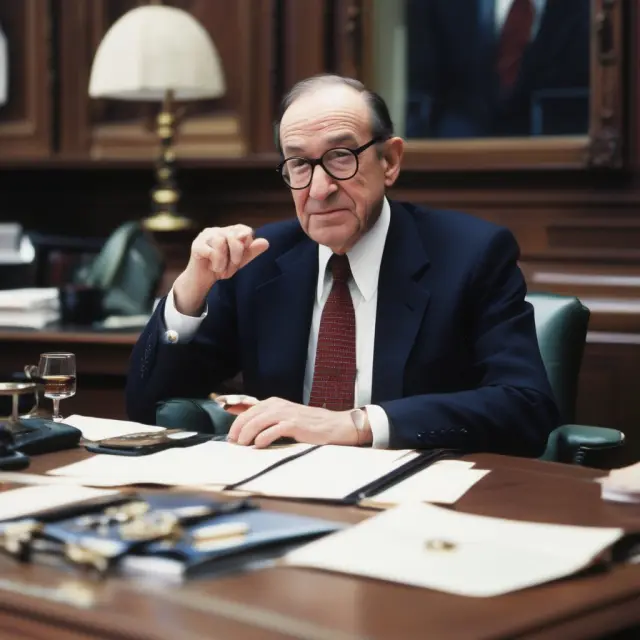
Fed’s Supportive Role During the 1990s
Alan Greenspan, as Federal Reserve Chair from 1987 to 2006, sought to maintain a strong economy by actively employing the federal funds rate and other policies to support the markets. His actions earned him the moniker “Greenspan put,” which refers to the belief that the Fed would intervene in the stock market when it declined by over 20%, thereby preventing bear markets. This notion is similar to an options trading strategy known as a put option, where investors buy the right to sell stocks at a specified price within a defined timeframe. The term Greenspan put, though not officially confirmed, was based on the perception that the Fed would halt excessive stock market declines.
Throughout his tenure, Greenspan set a precedent for intervention following the 1987 stock market crash by lowering rates to help companies recover. His actions encouraged risk-taking, leading investors to believe that the Fed would provide insurance against significant losses. Consequently, they resorted to buying put options as protection against excessive volatility precipitated by potential bursting market bubbles.
In the late 1990s, Greenspan implemented a series of rate decreases, which made borrowing funds cheaper and encouraged risk-taking. His actions during this time included intervening in various market-moving events such as the savings and loan crisis, Gulf War, Mexican crisis, Asian financial crisis, Long-Term Capital Management (LTCM) crisis, Y2K, and the bursting of the dotcom bubble in 2000.
The Greenspan put era ushered in an environment that fostered risk-taking. The Fed’s rate reductions made it easier for investors to borrow funds at lower interest rates to invest in securities markets, which further contributed to riskier investments. The chart below illustrates the general downward trend of the federal funds target rate throughout Greenspan’s tenure and its potential impact on risk-taking:
The effects of the Fed’s supportive policies continued even after Greenspan. Bernanke, who succeeded him in 2006, employed a similar strategy. However, their actions have also been linked to contributing factors that led to the conditions leading up to the 2008 financial crisis. Nevertheless, subsequent chairs Janet Yellen and Jerome Powell continued implementing the same policies with less volatility evident in both stock and option prices compared to the decade prior.
This section is an adaptation of the original content, focusing on expanding the discussion around Greenspan’s actions during his tenure as Federal Reserve Chair that led to the widespread use of put options. It also touches upon how these policies continued to influence markets post-Greenspan and their potential implications.
Greenspan Put’s Impact on Stock and Option Prices
The Greenspan put, a term coined to describe former Federal Reserve Chair Alan Greenspan’s policies aimed at propping up the US economy, had a significant impact on both stock and option prices during his tenure. This impact can be attributed to the belief that the Fed would intervene to prevent excessive stock market declines, providing insurance against potential losses.
The term “Greenspan put” was not officially confirmed by Greenspan himself, but investors widely believed that a decline of over 20% in the stock market – generally considered indicative of a bear market – would result in the Fed lowering interest rates to halt the decline. This belief led to increased risk-taking and made put option strategies more attractive as a means of protecting portfolios from potential losses.
During Greenspan’s time as chairman, from 1987 to 2006, there were several instances where the Fed intervened to support the market following crises such as the savings and loan crisis, Gulf War, Mexican crisis, Asian financial crisis, Long-Term Capital Management (LTCM) crisis, Y2K, and the dotcom bubble. Each of these interventions further reinforced investor confidence in the belief that the Fed would prevent significant market declines, making put option strategies an essential component of many investors’ portfolios.
The widespread use of put options led to a rise in average implied volatility from 1997 to 2004, as shown in the chart below. This volatility was driven by the uncertainty surrounding market movements and the potential for significant declines that could be mitigated with put option protection:
While the term Greenspan put was more heavily referenced during this time, it can be argued that his philosophy for accomplishing the Fed’s goals contributed to its widespread acceptance. Greenspan believed in lowering interest rates as a means of preventing market declines and encouraging economic growth – a strategy that was particularly effective during the late 1990s when valuations rose beyond acceptable levels and risk-taking became more prevalent.
The impact of the Greenspan put on stock prices can be seen in the general downward trend of the federal funds target rate throughout his chairmanship. This decline in interest rates enabled investors to borrow funds more cheaply, increasing their ability to invest in the securities market and contributing to an environment of heightened risk-taking:
The effects of this policy continued after Greenspan’s retirement. Bernanke, who succeeded him as chairman in 2006, followed a similar strategy during the subprime mortgage crisis in 2007 and 2008, further reinforcing investor confidence in the notion that the Fed would prevent excessive market declines. However, following the financial crisis, the results of such policies did not appear as evident, with both stock and option prices demonstrating less volatility on average:
In conclusion, the Greenspan put significantly impacted both stock and option prices during Alan Greenspan’s tenure as chairman of the Federal Reserve. This belief in the Fed’s intervention to prevent market declines led to increased risk-taking and widespread use of put options, creating an environment of heightened volatility that continued even after his retirement. While the long-term implications of this policy are still debated, it is clear that the Greenspan put left a lasting impact on financial markets.
Put Protection Strategy and Historical Support
The Greenspan put is a term coined to describe the perceived commitment of the Federal Reserve (Fed) under Alan Greenspan’s tenure to intervene in the stock market when significant declines occurred, similar to a traditional put option. This belief stemmed from his actions following the 1987 stock market crash and continued throughout his time as chair.
Greenspan’s response to the crash was to lower interest rates to help companies recover and set a precedent for the Fed to intervene during times of crisis, which induced risk-taking in both trading and investing. As valuations rose beyond acceptable ranges, professional investors increasingly turned to put options for insurance against excessive market declines and to protect their portfolios.
Historical data supports this notion as the average implied volatility began to rise from 1997 onwards, remaining high until 2004 (as shown in the chart above). This coincided with the period when Greenspan’s “put” was most frequently referenced. However, it wasn’t merely a specific investing or trading methodology but rather a commitment to market intervention and support from the Fed that investors held.
As Greenspan continued to lower interest rates throughout the 1990s and intervened during various market-moving events, such as the savings and loan crisis, Gulf War, Mexican crisis, Asian financial crisis, LTCM crisis, and Y2K, risk-taking became more attractive due to the belief that the Fed would provide insurance against significant declines.
Although it is challenging to measure the exact effectiveness of the Greenspan put as a trading strategy, historical data suggests that put options were an increasingly popular choice during this period, especially in times surrounding crises. For example, when internet stocks fell drastically between 2000 and 2002, some investors profited significantly by employing put protection strategies.
Put protection strategies involve buying a put option to offset the risks of price volatility and potential losses. The idea was that if you owned an internet stock with high growth prospects, purchasing a put option could help mitigate losses should the market take a downturn. By doing so, investors could maintain their exposure to the underlying stock while protecting themselves from significant declines.
However, it’s essential to note that this strategy differs from the traditional Greenspan put concept. The latter refers to the generalized belief that the Fed would intervene when excessive market declines occurred, similar to a regular put option providing protection against potential losses. It is an unofficial guarantee, which could lead to excessive risk-taking and potentially create market bubbles.
The Greenspan put contributed significantly to the financial markets during his time as chair, but it also had its downsides. The belief that the Fed would intervene when needed led some investors to take on excessive risks. This environment made it challenging for seasoned investors to make informed decisions regarding which stocks to buy and when to exit positions.
The Greenspan put continued into the post-Greenspan era, with Bernanke following a similar approach during 2007 and 2008. While their strategies contributed to risk-taking, they were not solely responsible for the conditions that led to the 2008 financial crisis. However, it’s an essential aspect of understanding the historical context that led to those events.
In conclusion, the Greenspan put was a market belief that the Federal Reserve would intervene and halt excessive stock market declines when needed, similar to a regular put option. This notion stemmed from Alan Greenspan’s actions during his time as chair and contributed significantly to financial markets, encouraging risk-taking and potentially creating market bubbles. However, it also had its downsides, leading some investors to make decisions based on assumptions rather than thorough analysis of the underlying securities.
Greenspan’s Later Actions as Federal Reserve Chair
Throughout Alan Greenspan’s tenure at the helm of the Federal Reserve, he sought to support the U.S. economy by actively employing various policies from the Fed’s arsenal. This approach proved especially impactful during the late 1990s when Greenspan became widely known for his supportive role in the stock markets, earning him the moniker “Greenspan put.”
One of Greenspan’s earliest significant actions as chair occurred following the 1987 stock market crash. In response to the crisis, he lowered interest rates to help companies recover and set a precedent for future intervention during crises. This assumption of intervention made trading and investing more attractive, leading investors to take on increased risk.
As valuations rose beyond acceptable ranges, it became challenging for professional investors to justify participating in certain stocks, particularly internet-related stocks, which were experiencing unprecedented growth. In this environment, stock prices could experience wild fluctuations, making put options an increasingly popular insurance for investors. The inflationary valuations and rising prices forced seasoned investors to consider purchasing put-option protection when buying stocks.
In the early 1990s, Greenspan implemented a series of rate decreases that lasted until approximately 1993. Throughout his tenure, there were also several instances where the Fed intervened to support risk-taking in the stock market during market-moving events such as the savings and loan crisis, Gulf War, Mexican crisis, Asian financial crisis, Long-Term Capital Management (LTCM) crisis, Y2K, and the bursting of the dotcom bubble following the market’s peak in 2000.
Greenspan most often used a reduction in interest rates to stem market declines. The effects of the Fed’s rate reductions helped investors borrow funds more cheaply to invest in securities markets, further encouraging an environment of risk-taking. However, this approach ultimately led to unintended consequences.
The chart below illustrates how the average implied volatility began to rise and remained elevated throughout the late 1990s, a period when the notion of the Greenspan put became more prevalent. This environment made it increasingly difficult for experienced investors to justify not purchasing put options as market insurance against excessive declines, particularly in the tech sector.
The inflated valuations and rising prices made it challenging for investors to buy stocks without considering put-option protection. As the stock markets continued to climb, a significant number of traders began buying put options to protect their portfolios from potential losses due to market volatility. The widespread usage of put options contributed to the growing popularity of this insurance strategy, which eventually became known as the Greenspan put.
Greenspan’s actions during his time at the Fed laid the groundwork for a new era of risk-taking and speculation in the financial markets. As stock prices continued to rise, the expectations that the Fed would intervene if the market experienced a significant decline only fueled more buying frenzies and irrational exuberance.
Despite the widespread belief in the Greenspan put, it’s important to note that no official trading strategy exists for this concept. The term “Greenspan put” simply represents the notion that the Fed would do everything in its power to prevent excessive market declines. However, this idea was not explicitly confirmed by Greenspan or the Federal Reserve during his tenure.
The legacy of the Greenspan put can still be felt today as investors and traders continue to use put options to protect their portfolios from potential losses in volatile markets. The chart below shows how, following the 2008 financial crisis, average implied volatility remained significantly higher compared to the previous decade.
While Greenspan’s policies may have contributed to excessive risk-taking and market volatility during his tenure, it is essential to recognize that his actions were driven by a desire to support the U.S. economy and maintain stability in financial markets. The unintended consequences of these policies serve as valuable lessons for future central bankers and investors alike, highlighting the importance of considering both the intended and unintended outcomes when implementing monetary policy.
In conclusion, Greenspan’s later actions as Federal Reserve Chair contributed to the creation of an environment that encouraged excessive risk-taking in the financial markets. His policies, which included lowering interest rates and intervening during crises, made trading and investing more attractive while making put options a popular insurance strategy against market volatility. The Greenspan put became synonymous with the Fed’s commitment to preventing excessive declines in the stock market and continues to influence investor behavior today.
FAQs:
What is the Greenspan put?
The Greenspan put is a term used to describe the belief that the Federal Reserve, under Alan Greenspan’s leadership, would intervene to halt excessive stock market declines, similar to how a put option functions.
How did Alan Greenspan influence the stock markets during his tenure at the Fed?
Greenspan’s actions, including lower interest rates and intervention during crises, contributed to an environment that encouraged excessive risk-taking in the financial markets and made put options a popular insurance strategy against market volatility.
What is the difference between the Greenspan put and a regular put option?
The main difference lies in the fact that the Greenspan put is not an official trading strategy, but rather a belief held by the market regarding the Fed’s commitment to preventing excessive stock market declines. A regular put option is a financial derivative contract granting its holder the right, but not the obligation, to sell an underlying asset at a specified price before a certain date.
How did Greenspan’s policies contribute to excessive risk-taking in the markets?
Greenspan’s policies, which included lower interest rates and intervention during crises, made trading and investing more attractive, encouraging investors to take on greater risks. This led to inflated valuations and market bubbles, making put options a popular insurance strategy against potential losses.
What impact did Greenspan’s policies have on the usage of put options?
Greenspan’s policies contributed to an environment where put options became a widely used insurance strategy among investors seeking to protect their portfolios from market volatility and potential losses. The popularity of put options grew significantly during his tenure.
Fed Policies Post-Greenspan: Bernanke to Powell
Alan Greenspan’s policies as Federal Reserve Chair left a significant impact on the financial markets, particularly in regards to volatility and risk-taking. The belief that the Fed would intervene during market declines became increasingly popular, often referred to as the “Greenspan put.” This idea held true even after Greenspan’s departure, with his successors, Ben Bernanke and Janet Yellen, continuing his legacy.
Bernanke followed in Greenspan’s footsteps by implementing a series of rate reductions in the early 2000s to support economic growth following the dotcom bubble burst. The combination of Greenspan and Bernanke’s policies laid the groundwork for excessive risk-taking, which many attribute as a contributing factor to the 2008 financial crisis.
Despite the crisis, the Fed continued its interventionist approach during Janet Yellen’s tenure from 2014 to 2018. Yellen’s policies aimed at maintaining low interest rates to promote economic recovery. Although her actions resulted in less volatility than the previous decade, some argue that it also encouraged risk-taking and asset price bubbles, as seen in the increasing valuations of tech stocks during her term.
Currently, Jerome Powell continues these policies, which has led to a record-breaking bull market and an increase in stock prices since his appointment in 2018. However, it remains to be seen how Powell’s policies will impact the markets in the long run.
It is important to note that the term “Greenspan put” doesn’t denote a specific trading strategy or investment technique. Instead, it symbolizes the market belief that the Fed would intervene during excessive stock market declines, acting as a form of insurance against losses. This perception influenced investors to take on more risk and rely on put options for protection.
The chart below illustrates how this belief began to take hold in the late 1990s when average implied volatility started to rise and remained high until around 2004. The Fed’s intervention during market-moving events, such as the Asian financial crisis and the bursting of the dotcom bubble, added weight to this notion.
In summary, Greenspan put significantly shaped the investment landscape from the late 1990s to early 2000s by encouraging risk-taking and excessive valuations. The belief that the Fed would intervene during market declines led investors to turn to put options for protection, contributing to higher implied volatility. His successors continued these policies, which had both positive and negative implications on the markets. Ultimately, understanding this concept is crucial for investors seeking to navigate the ever-changing financial landscape.
FAQs about Greenspan Put
What is a Greenspan put?
A: The Greenspan put refers to the belief that the Federal Reserve would intervene during stock market declines, acting as insurance against losses for investors.
When did the term Greenspan put originate?
A: The term Greenspan put first emerged in the late 1990s when the Fed began intervening more frequently to support markets following the Asian financial crisis and the bursting of the dotcom bubble.
What was Alan Greenspan’s role in shaping the Greenspan put?
A: Alan Greenspan, as Federal Reserve Chair, implemented a series of policies that led investors to believe the Fed would intervene during market declines, encouraging risk-taking and excessive valuations.
How did the belief in Greenspan put impact investors?
A: Investors relied on put options for protection during market declines due to the perceived intervention from the Federal Reserve, contributing to higher implied volatility and increased risk-taking.
Who followed Greenspan’s policies after his departure?
A: Ben Bernanke, Janet Yellen, and Jerome Powell continued Greenspan’s interventionist approach, which had both positive and negative implications on the markets.

Conclusion and Criticism of Greenspan Put
The Greenspan put has been a topic of significant interest since its inception during Alan Greenspan’s time as the Federal Reserve (Fed) Chair. As discussed, the Greenspan put was an unofficial policy that emerged from the belief that the Fed would step in to limit excessive stock market declines. This perception arose due to several instances where Greenspan and his successors used various measures to support the markets during crises and periods of high volatility.
One of the most significant consequences of this put was an increase in risk-taking behaviors among investors, particularly those involved in put option derivative strategies. The widespread belief that the Fed would intervene in times of market turmoil encouraged traders to pursue more aggressive investments and hold onto stocks for extended periods. This mentality contributed to a rise in valuations and stock prices, often reaching unsustainable levels.
However, there were also criticisms regarding the Greenspan put’s long-term implications. Some argued that the repeated interventions by the Fed might have created an unhealthy reliance on government intervention in financial markets. Furthermore, critics believed these policies could potentially contribute to asset bubbles and increased market volatility.
The most prominent example of such consequences was the 2008 financial crisis. Though not directly caused by the Greenspan put, some argue that the prevailing attitude of government support for risky investments played a significant role in the subsequent crisis. The easy availability of credit and low interest rates during Greenspan’s tenure led to increased borrowing and speculation, particularly in the housing market. These actions eventually culminated in the bursting of the housing bubble and the subsequent financial collapse.
In summary, the Greenspan put was a policy perceived as providing insurance against excessive stock market declines. Its presence contributed to an increase in risk-taking behaviors and widespread use of put option derivative strategies. Although it provided short-term comfort to investors during volatile markets, its long-term implications were subject to criticism. The potential for unintended consequences, such as the 2008 financial crisis, underscores the importance of a balanced approach in managing financial markets and maintaining investor confidence.
FAQs about Greenspan Put
What is the origin of the term “Greenspan put”?
Answer: The Greenspan put refers to the unofficial policy that emerged from the belief that the Federal Reserve, under Alan Greenspan’s leadership, would intervene in times of stock market turmoil to limit excessive declines. This perception arose due to several instances where Greenspan and subsequent Fed chairs used various measures to support the markets during periods of high volatility.
What were some unintended consequences of the Greenspan put?
Answer: The Greenspan put led to an increase in risk-taking behaviors, particularly those involving put option derivative strategies. However, it was also criticized for potentially contributing to asset bubbles and increased market volatility. The most significant example of these consequences was the 2008 financial crisis, which some argue was influenced by the prevailing attitude of government support for risky investments.
How did the Greenspan put impact stock and option prices?
Answer: The Greenspan put encouraged investors to hold onto stocks for extended periods, driving up valuations and stock prices. At the same time, it led to increased demand for put options as insurance against potential declines. This heightened activity in both stocks and options markets resulted in higher average implied volatility during Greenspan’s tenure compared to subsequent years.
When did the Greenspan put begin and end?
Answer: The term “Greenspan put” was commonly used during Alan Greenspan’s time as Federal Reserve Chair, from 1987 to 2006. It gained widespread usage following his interventions in the stock market during the late 1990s and early 2000s. The term lost popularity after Greenspan’s departure from the Fed, with subsequent chairs Ben Bernanke, Janet Yellen, and Jerome Powell adopting similar policies in more measured degrees.
What are some criticisms of the Greenspan put?
Answer: Critics argue that the Greenspan put could create an unhealthy reliance on government intervention in financial markets. Some also believe it might contribute to asset bubbles and increased market volatility, as seen in the 2008 financial crisis. Additionally, others argue that the policy encouraged risk-taking behaviors and speculative investments, potentially leading to long-term negative consequences for investors and the broader economy.

FAQs about Greenspan Put
What is the Greenspan put?
The Greenspan put refers to a market belief, originating during Alan Greenspan’s tenure as Federal Reserve Chair from 1987 to 2006, that the Fed would intervene in the stock markets to prevent significant declines. This belief was akin to a put option, offering insurance against losses.
What caused the term “Greenspan put” to emerge?
The term “Greenspan put” emerged when it became widely believed that the Fed, under Alan Greenspan’s leadership, would step in and halt stock market declines beyond certain thresholds through interest rate decreases or other interventions. This perception was reinforced by several instances of the Fed taking action to stabilize markets during the 1990s.
Was there a specific trading strategy called “Greenspan put”?
No, there was no formal Greenspan put trading strategy; instead, it represented the notion that the Fed would intervene in the market to prevent excessive declines. Some investors utilized put options as a hedging strategy to protect their portfolios from potential losses related to market volatility, especially during periods of heightened risk-taking and elevated valuations.
How did Greenspan’s actions as Federal Reserve Chair influence the use of put options?
Greenspan’s policies created an environment that encouraged excessive risk-taking in the stock markets. As a result, many investors sought protection through put options to mitigate potential losses due to market volatility and uncertainty. The increasing demand for put options contributed to a rise in implied volatility during Greenspan’s tenure.
What were some significant events during Greenspan’s term as Fed Chair that influenced the belief in the Greenspan put?
The savings and loan crisis, Gulf War, Mexican crisis, Asian financial crisis, Long-Term Capital Management (LTCM) crisis, Y2K, and the bursting of the dotcom bubble were some instances where the Fed intervened to support risky investments. This intervention led investors to believe that the Fed would continue to provide insurance against significant market declines, reinforcing the notion of the Greenspan put.
How did Bernanke’s actions as Federal Reserve Chair after Greenspan influence market volatility?
Bernanke followed a similar strategy to Greenspan during his tenure from 2006 to 2014, which some argue contributed to the conditions leading to the 2008 financial crisis. However, historical results post-financial crisis demonstrated less average volatility in both stock and option prices than the decade preceding it.
Did Greenspan put contribute to excessive risk-taking?
Yes, the belief in the Greenspan put led investors to take on more risk, as they believed that the Fed would intervene to prevent significant market declines. This encouraged a “risk-on” mentality and contributed to the creation of bubbles, which eventually burst, causing substantial losses for some investors.
What were the consequences of Greenspan put policies?
The Greenspan put created an environment where excessive risk-taking was encouraged, ultimately leading to market bubbles and heightened volatility. This volatility could potentially have contributed to the 2008 financial crisis as investors found themselves exposed to significant losses when the markets corrected.
How did the Greenspan put influence the use of derivatives?
The belief in the Greenspan put made put options more attractive, as investors sought protection against potential market volatility and losses. This increased demand for put options led to a rise in implied volatility during Greenspan’s term as Fed Chair. Additionally, it could have influenced the use of other derivatives, such as call options and futures, as part of an overall hedging strategy to manage risk.
 Next entry · No. 1,916Greenwashing: Deceptive Marketing Tactics and Their Impact on Investors
See also
-
 No. 2,449
07 Jan 2025
20 min
Understanding Interest Rate Call Options: Benefits and Applications for Institutional Investors
Finance Policy
No. 2,449
07 Jan 2025
20 min
Understanding Interest Rate Call Options: Benefits and Applications for Institutional Investors
Finance Policy -
 No. 2,073
07 Dec 2024
19 min
Understanding Hedges and Effective Techniques for Managing Risk in Finance and Investment
Business Finance
No. 2,073
07 Dec 2024
19 min
Understanding Hedges and Effective Techniques for Managing Risk in Finance and Investment
Business Finance -
 No. 5,796
08 Oct 2025
19 min
Understanding Workout Periods: What Every Institutional Investor Should Know
Finance Policy
No. 5,796
08 Oct 2025
19 min
Understanding Workout Periods: What Every Institutional Investor Should Know
Finance Policy -
 No. 5,728
02 Oct 2025
22 min
Understanding Wildcat Banking: A Historical Perspective of Unregulated State-Chartered Banks in the United States
Finance Policy
No. 5,728
02 Oct 2025
22 min
Understanding Wildcat Banking: A Historical Perspective of Unregulated State-Chartered Banks in the United States
Finance Policy -
 No. 4,054
18 May 2025
22 min
Understanding Price Ceilings: Advantages and Disadvantages for Institutional Investors
Finance Policy
No. 4,054
18 May 2025
22 min
Understanding Price Ceilings: Advantages and Disadvantages for Institutional Investors
Finance Policy -
 No. 3,680
18 Apr 2025
17 min
China’s One-Child Policy: Causes, Consequences, and Impact on Demographics
Finance Policy
No. 3,680
18 Apr 2025
17 min
China’s One-Child Policy: Causes, Consequences, and Impact on Demographics
Finance Policy