Cap and Trade: Understanding the Pros, Cons, and Challenges of a Market System for Reducing Emissions

Learn the ins and outs of Cap and Trade programs, their pros, cons, challenges, and real-world examples. Understand how this market system impacts energy…
Introduction to Cap and Trade Programs
Cap and trade is an innovative policy solution for reducing greenhouse gas (GHG) emissions, specifically carbon dioxide (CO2). This market-based approach involves establishing a legal limit on the total quantity of GHG emissions that can be released by industries or sectors. In turn, companies are granted permits or allowances for their allocated share of these emissions, which they can then trade among themselves.
The primary objective of cap and trade is to incentivize industries to invest in cleaner technologies and innovations, gradually lowering their overall emissions below the established cap. By creating an economic value for each permit, it offers companies a financial motivation to reduce their emissions more efficiently while providing them with flexibility to sell or buy permits depending on their progress towards meeting the cap.
Section Title: How Cap and Trade Programs Work
In essence, a cap is set as the total allowed amount of GHG emissions for an industry or sector. The government then allocates permits corresponding to this cap among participating companies. These permits represent the right to emit a specific volume of CO2. Each year, industries must surrender a sufficient number of permits equivalent to their actual emissions during that period.
The key features of a successful cap and trade system include:
- A declining total emission cap: The overall limit for GHG emissions is set to decrease over time, incentivizing companies to invest in cleaner technologies or processes.
- Trading permits: Companies can buy, sell or trade their surplus permits with other entities. This flexibility encourages innovation and promotes the most efficient allocation of resources.
- Regular reporting and auditing: Continuous monitoring and reporting are essential for ensuring compliance with emission caps and preventing potential cheating within the system.
- Penalties for exceeding the cap: Companies that emit more than their allocated amount must either purchase additional permits or face financial penalties, further encouraging adherence to the established cap.
Upcoming sections will delve deeper into the advantages, disadvantages, challenges, and real-life examples of cap and trade programs. Stay tuned for further insights on this fascinating subject!

How Cap and Trade Works
Cap and trade is a market-based approach for reducing emissions that relies on government regulations to set an overall limit, or “cap,” on the total amount of pollutants, primarily carbon dioxide (CO2), that can be released into the atmosphere by industries. The system incentivizes companies to reduce their emissions efficiently and invest in cleaner technologies by granting them tradable permits for their emissions.
In a cap and trade program, the government sets a limit on total emissions and distributes allowances or permits to individual companies based on their historical emissions levels. Companies that emit less than their allocated amount of CO2 can sell or trade their unused emission credits to other companies that exceed their caps, creating a financial incentive for efficient emissions reduction.
As the cap declines over time, companies have an incentive to invest in cleaner technologies or face increasing costs for purchasing more permits. The government may auction off some of these permits, generating revenue for the implementation and enforcement of the program and further funding research and development of renewable energy sources.
A well-designed cap and trade system offers various advantages. By establishing a market price for emissions, it creates an economic incentive for companies to innovate and invest in cleaner technologies while ensuring that the costs are borne by the industries responsible for the pollution rather than being passed on to consumers or taxpayers. Moreover, the revenue generated can be used to fund social programs, infrastructure projects, or investments in renewable energy sources.
However, critics argue that caps set too high may not force companies to invest in clean technologies fast enough, and the trading mechanism may lead to the overproduction of emissions up to the maximum allowed levels. Additionally, some companies may cheat by falsifying emissions reports, leading to a lack of trust in the system. The effectiveness of cap and trade programs depends on accurate monitoring systems, transparent reporting, and strong enforcement mechanisms.
Let’s explore real-world examples of successful and unsuccessful cap and trade systems to better understand their implications and limitations. In the next section, we will discuss some of the challenges faced by governments and industries when implementing these programs.
Pros and Cons of Cap and Trade
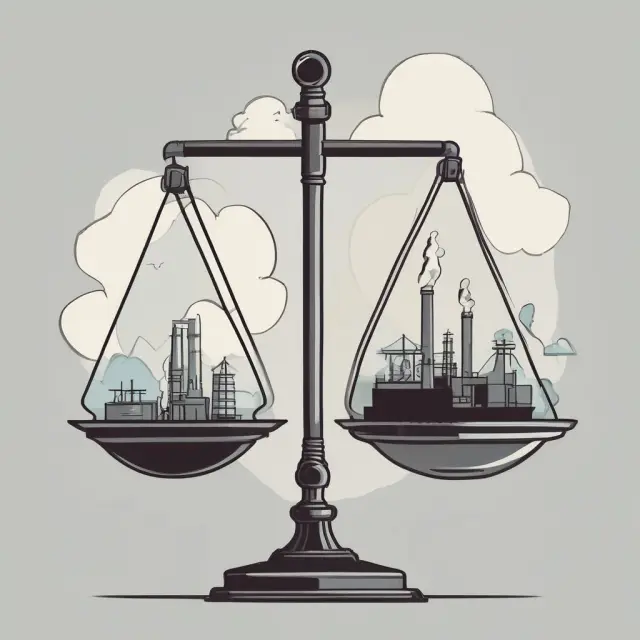
Cap and trade programs have emerged as a popular alternative for governments and industries seeking to limit industrial emissions, with notable successes seen in the European Union (EU) Emissions Trading System (ETS) and California’s system. In this section, we dive into the advantages and disadvantages of implementing cap and trade policies.
Pros:
- Economic incentives: Cap and trade provides economic incentives to companies by offering them financial benefits when they reduce their emissions below their allocated limit. This encourages corporations to invest in cleaner technologies and innovate, leading to a more sustainable future for industries while promoting growth.
- Cleaner technologies: By implementing these programs, governments create an impetus for industries to invest in greener alternatives as the cost of buying permits increases over time. This not only reduces emissions but also results in technological advancements that benefit both businesses and consumers.
- Revenue generation: Cap and trade allows governments to generate revenue through the sale or auctioning of emissions permits. This can be a significant source of income for countries looking to address budget deficits, fund social programs, or invest in cleaner technologies.
- Consumer power: The consumer is given the power to vote with their wallet by choosing to support companies that comply with emissions regulations, further incentivizing businesses to reduce their environmental impact and invest in more sustainable practices.
- Global cooperation: Cap and trade systems can be designed on a global scale to address climate change effectively, making it essential for international collaboration to create consistent caps and standards across industries and countries.
Cons:
- Overproduction of emissions: A cap set too high may lead to overproduction of emissions up to the maximum limit, slowing the transition towards cleaner alternatives. This is a valid concern as some companies might argue that they should maximize their profits while emissions are still within the cap, delaying investments in greener technologies.
- Cost to consumers: Increased costs for industries implementing cap and trade programs may ultimately be passed on to consumers through higher prices for goods and services. This could potentially outweigh any long-term benefits, making it crucial for governments to strike a balance between economic growth and environmental responsibility.
- Cheating the system: Implementing effective monitoring systems is essential in preventing companies from cheating the system and underreporting their emissions, which can lead to inconsistencies and undermine the entire initiative.
- Lack of global consistency: As each country has its unique standards for emissions caps, the absence of a unified international consensus makes it challenging for cap and trade systems to effectively address climate change on a global scale.
- Comparison with carbon tax: Cap and trade and carbon taxes are two popular methods for reducing emissions, with distinct advantages and disadvantages. Understanding both mechanisms will help governments make informed decisions about which approach is most effective for their industries and economies.
In the subsequent sections, we’ll delve deeper into specific examples of cap and trade systems, its comparison with carbon taxes, and the role technology plays in implementing these initiatives. Stay tuned!

Challenges in Implementing Cap and Trade
One significant challenge when implementing cap and trade policies is determining the appropriate cap on emissions for various industries. A cap that is set too high may result in minimal reductions, while a cap that is overly restrictive could burden companies and ultimately impact consumers. Another hurdle lies in obtaining precise emission data to ensure accurate calculations of emissions levels and caps.
Moreover, achieving international consensus on cap and trade policies can be difficult due to differing priorities among countries. Cap-and-trade programs typically involve the exchange of permits between participating countries, requiring a strong foundation of trust and cooperation. In addition, transaction costs and administrative complexities often make it challenging to implement these systems on a global scale.
A further challenge is predicting the long-term implications of cap and trade policies. While these initiatives can lead to reductions in emissions, they may also increase the cost of energy for consumers and businesses by raising the price of fossil fuels. This could negatively impact the economy and potentially hinder investment in alternative energy solutions.
Real-world examples of cap and trade systems illustrate both their potential benefits and challenges. The European Union Emissions Trading System (EU ETS), implemented in 2005, aimed to reduce carbon emissions by setting a total cap on emissions for participating countries. Despite some success—the EU estimated a 21% reduction in emissions from the covered sectors by 2020—challenges remain, including concerns over ensuring an accurate and complete reporting of emissions data and addressing potential loopholes that allow companies to evade regulations.
Another challenge is comparing and contrasting cap and trade with alternative policies, such as carbon pricing or regulation-based approaches. Each option has its advantages and disadvantages, requiring a thorough analysis of their implications for various stakeholders. By understanding these complexities, governments and policymakers can make informed decisions to address climate change while minimizing economic disruption.
In conclusion, implementing a cap and trade system comes with unique challenges related to determining the correct cap on emissions, obtaining accurate emission data, achieving international consensus, and predicting long-term implications. By addressing these obstacles and combining cap and trade with other complementary policies, governments can effectively reduce greenhouse gas emissions while minimizing negative economic consequences for businesses and consumers alike.
Examples of Cap and Trade Policies
Cap and trade schemes have been implemented across the globe as a means of controlling emissions from various industries. Two prominent examples include the European Union’s Emissions Trading System (EU ETS) and California’s Cap-and-Trade Program, which will be discussed below.
European Union Emissions Trading System (EU ETS)
In 2005, the European Union (EU) introduced the world’s first international cap and trade program in an effort to reduce carbon emissions. The EU ETS is a market-based approach that sets a total allowable amount of greenhouse gas emissions for each participating country within the EU. This limit is then allocated among individual installations based on their historical emission levels.
Under the EU ETS, companies receive an allotment of emissions allowances per year, which they can either use or trade with other companies. Companies that emit less than their allotted amount may sell their unused credits to others, providing a financial incentive for reducing emissions. The total cap declines over time, requiring companies to become increasingly efficient or invest in cleaner technologies to maintain profitability.
As of 2019, the EU ETS is estimated to result in a 21% reduction in emissions from sectors covered by the system by 2020 compared to 2005 levels. However, there have been criticisms regarding its effectiveness and fairness, particularly concerning free allocation of emission allowances and loopholes for industries like aviation and shipping.
California Cap-and-Trade Program
Another prominent example of a cap and trade system is California’s program, which was established in 2013 with the aim to reduce greenhouse gas emissions to 1990 levels by 2020. The state’s cap and trade market covers over 85% of California’s total greenhouse gas emissions, including those from the power sector, transportation, industrial processes, and natural gas and oil production.
Under California’s program, businesses are allocated a specific number of allowances based on their historical emission levels or through an auction. Companies that reduce their emissions below their allotted amount can sell their excess credits to other companies in need of additional allocations. The price for these credits is determined by market forces and fluctuates based on demand and supply.
As of 2019, California’s cap and trade program had achieved a reduction of around 14% compared to the 1990 baseline, with expectations of further reductions in future years. However, challenges remain, including potential economic consequences for businesses, the need for border adjustments to avoid competitive disadvantages for domestic industries, and ensuring effective monitoring and enforcement.
These examples demonstrate both the potential benefits and challenges that come with implementing cap and trade policies. By understanding their strengths and limitations, we can gain valuable insights into the role they play in sustainable investing and the future of emissions reduction efforts.

Cap and Trade vs. Carbon Tax
When it comes to reducing emissions, two popular methods have emerged as leading options: cap and trade and carbon tax. While both systems aim to address climate change by encouraging emission reductions, they differ significantly in their implementation and implications for consumers and businesses. In this section, we will compare the advantages, disadvantages, and key differences between these two policy approaches.
Cap-and-trade programs are government regulatory frameworks that set a limit on emissions for industries or sectors. The total emissions permitted are split into allowances, which companies can trade with each other. Companies that reduce their emissions can sell the excess allowances to other companies that exceed the cap, creating an economic incentive for investing in clean alternatives.
On the other hand, carbon taxes impose a direct price on emitting carbon dioxide or other greenhouse gases. The tax is paid by corporations and eventually passed on to consumers through higher prices on goods and services. By making it more costly to emit carbon, carbon taxes incentivize businesses to find cleaner alternatives.
Comparing the Pros and Cons:
Cap-and-Trade:
Pros:
- Creates a new economic resource for industries by allowing for trading emissions credits
- Encourages investments in clean technology through increasing permit costs over time
- Generates revenue for governments
- Provides consumers with more choices through market forces
- Facilitates international cooperation if implemented on a global scale
Cons:
- Allowed emissions levels might be set too high, slowing the transition to clean energy
- Prices of credits or fines for exceeding the cap may be cheaper than converting to cleaner technologies
- Companies can cheat by manipulating emissions data or underreporting their emissions
- Higher prices on goods and services due to increased production costs
- Lack of a unified, global system can lead to inconsistencies
Carbon Tax
Pros:
- Encourages emission reductions by making it more expensive to emit carbon
- Incentivizes investment in clean technology through price signals
- Generates revenue for governments
- Provides clear economic incentives for businesses and consumers
Cons:
- Could result in increased costs on consumers, potentially impacting affordability and competitiveness
- May require significant political will to implement and maintain a stable tax rate
- Some industries might be disproportionately affected, leading to potential job losses or economic hardships
- Difficult to design and implement effectively across borders
Key Differences:
Apart from the differences in implementation, it’s important to note that both cap and trade and carbon tax systems can coexist and even complement each other. For instance, a country could implement a carbon tax on top of an existing cap-and-trade program to enhance the overall effectiveness of emissions reduction efforts.
Additionally, the choice between these two methods depends significantly on the political, economic, and social contexts of the regions or countries that adopt them. A thorough understanding of their respective advantages, disadvantages, and potential trade-offs is crucial in determining which approach best fits a specific situation.

The Role of Technology in Cap and Trade
Cap and trade has been proposed as an effective market-based solution for reducing emissions and addressing climate change. However, it heavily relies on technology to ensure accuracy, transparency, and efficiency in managing emissions trading and monitoring. In this section, we’ll explore the significance of technology in cap and trade programs.
Measuring Emissions
A crucial aspect of cap and trade is accurately measuring, reporting, and verifying emissions. This requires advanced technologies like satellite imagery, remote sensing, and real-time emission monitoring systems to track and quantify greenhouse gas (GHG) emissions. These tools provide governments and businesses with the necessary data for managing their respective permit allocations and ensuring compliance with the emissions cap.
Cleaner Technologies
As companies seek to reduce their emissions, technology plays a significant role in developing and implementing cleaner alternatives. Cap and trade incentivizes industries to invest in innovative technologies that can help them stay within their allocated emission limits while maintaining productivity. Renewable energy sources like wind, solar, and geothermal power, as well as carbon capture, utilization, and storage (CCUS) technologies are some examples of how technology is advancing the goals of cap and trade programs.
Monitoring Systems
The success of a cap and trade system relies on robust monitoring systems that ensure compliance with emission caps and facilitate efficient trading. Real-time monitoring allows for prompt identification and resolution of noncompliance issues, minimizing potential harm to the environment while maintaining a level playing field among participants. Effective monitoring also ensures transparency in the emissions market and helps build trust between stakeholders.
International Cooperation
As countries continue to implement cap and trade programs, it is essential that they collaborate and share technologies to create a global framework for reducing emissions. This includes the exchange of best practices, advancements in monitoring technologies, and cross-border trading systems. International cooperation is critical in creating a level playing field and fostering competition among industries, encouraging innovation and driving down costs for cleaner alternatives.
Conclusion:
In conclusion, technology plays an essential role in cap and trade programs by providing accurate measurements, promoting cleaner technologies, supporting robust monitoring systems, and enabling international cooperation. With continuous advancements in technology, cap and trade remains a promising approach for reducing greenhouse gas emissions while minimizing economic disruption. As the world continues to address climate change, the importance of technology will only grow, making it crucial that we invest in its development and deployment.

International Cooperation in Cap and Trade
One crucial aspect for the effectiveness of cap and trade systems is international cooperation, as climate change does not have borders. A global consensus on emissions caps is essential to tackle this issue efficiently, as countries emit different levels of greenhouse gases. This section will discuss challenges in achieving a cooperative approach and potential solutions.
One challenge is setting the correct cap for producers of emissions internationally. An inappropriately high cap might lead to higher emissions, while an excessively low cap would put an undue burden on industries and potentially stifle economic growth. Accurate emission data collection is another concern. Estimating past, present, and future emissions varies widely among industries, and obtaining reliable data involves a costly process that can take years to complete.
Another challenge in implementing international cap and trade policies lies in achieving an international consensus on emissions caps since every country has different priorities and perspectives. A lack of agreement could hinder the overall progress towards reducing global greenhouse gas emissions effectively. Furthermore, transaction and administrative costs associated with a complex system of international permits can be significant.
Predicting long-term effects and benefits is also a challenge, as cap and trade systems may increase the cost of oil, coal, and natural gas to force companies to switch to alternative energy sources, which could impact economic growth negatively.
Despite these challenges, several international examples of successful cap and trade programs demonstrate their potential for reducing emissions while encouraging economic growth:
- The European Union’s Emissions Trading System (EU ETS) was launched in 2005 as the world’s first international cap and trade program with the goal to reduce carbon emissions by an estimated 21% by 2020.
- California, USA, introduced its own Cap-and-Trade Program in 2013. It aims at reducing greenhouse gas emissions from industrial sectors and the electricity generation sector to meet the state’s legislative goals, including a reduction of 40% below 1990 levels by 2030.
Collaboration among countries is crucial in creating an effective global response to climate change through cap and trade programs. The Paris Agreement, signed in 2015, sets a global framework for reducing greenhouse gas emissions to limit the increase in global temperatures to well below 2 degrees Celsius above pre-industrial levels and pursuing efforts to limit the temperature increase to 1.5 degrees Celsius.
Several international organizations, such as the World Bank and the International Monetary Fund, support cooperation among countries in implementing carbon pricing mechanisms, including cap and trade systems. These initiatives can help foster a collaborative approach towards reducing greenhouse gas emissions effectively while promoting economic growth.

Cap and Trade and Its Impact on Energy Markets
The implementation of a cap and trade policy can significantly influence energy markets, with potential consequences for various commodities like oil, coal, natural gas, and renewable energy sources. As part of this system, the government sets an overall limit on emissions from specific industries and issues permits or allowances to emit a certain amount of greenhouse gases (GHGs). Companies can either reduce their emissions below their allocation or buy additional credits from other companies that have saved up excess allowances. The total cap declines over time, creating an incentive for companies to invest in cleaner technologies and trade emission rights to minimize costs.
One primary impact of a cap and trade program is the price fluctuations of carbon-intensive fuels such as oil, coal, and natural gas. As the emissions cap gets stricter over time, demand for these fuels decreases since companies are encouraged to switch to cleaner alternatives. This shift can lead to lower consumption and subsequently lower prices in the energy markets. On the other hand, industries that heavily rely on fossil fuels could experience increased costs due to the rising price of emissions permits or carbon credits.
Moreover, cap and trade policies have implications for specific sectors and industries, such as power generation, transportation, manufacturing, and agriculture. Power generators may face higher costs if they are dependent on coal-fired plants and must invest in renewable energy sources to stay within the emissions cap. Industries that rely on heavy machinery or transportation, like steel and cement production, may also feel pressure to adopt cleaner technologies to reduce their overall carbon footprint.
The price volatility of carbon credits can have significant impacts on businesses and consumers alike. Companies with high carbon emissions could face higher operating costs due to the need to purchase emission allowances. On the other hand, those that are able to decrease their emissions may be able to sell their excess credits for profit or use them as a bargaining chip in negotiations with competitors. Consumers might also face higher prices for goods and services produced by companies with larger carbon footprints, as the cost of emissions permits gets passed on to consumers through increased product pricing.
In addition, international cooperation and consistency are crucial factors in the success of cap and trade policies. Without a unified approach across countries and regions, industries may continue to move production to areas with less stringent regulations, undermining the intended benefits of the policy. For instance, if one country does not enforce an adequate emissions cap while another imposes strict limitations, companies might choose to relocate their operations to the former, leading to a net increase in global emissions rather than a reduction.
Another challenge for implementing cap and trade policies is monitoring compliance, especially given that many industries do not have efficient systems in place to measure and report their carbon emissions accurately. Enforcing emissions caps requires reliable data from companies, which can be expensive and time-consuming to collect and analyze. Inaccurate reporting or noncompliance could lead to a lack of trust in the system and potentially undermine its effectiveness.
In conclusion, cap and trade policies can significantly impact energy markets by changing the cost structure for carbon-intensive fuels, altering consumer behavior, influencing industrial sector investments, and encouraging international cooperation. While these systems offer opportunities for emissions reductions, they also present challenges related to pricing volatility, monitoring compliance, and ensuring global consistency. Effective implementation of a cap and trade policy requires careful consideration of these factors and ongoing collaboration between governments, industries, and consumers.

Conclusion: Cap and Trade’s Role in Sustainable Investing
As a market-based solution for reducing emissions, cap and trade has significant implications for sustainable investing, with both pros and cons to consider. On the positive side, cap and trade provides an incentive for companies to invest in cleaner technologies as they become more economically viable than purchasing permits. It also creates a new revenue stream for governments, which can be used to fund further environmental initiatives, invest in green technologies, or even help balance budgets. Consumers play a role as well, with the power to vote with their wallets by choosing to support companies that are making progress towards reducing their emissions.
However, critics argue that caps could be set too high, allowing companies to delay investment in cleaner alternatives for too long. Additionally, the cost of permits may be cheaper than investing in new technologies, which could hinder innovation and limit progress toward a more sustainable future. There is also concern over the potential for cheating the system through underreporting or outright fraud, as well as the challenge of achieving international consensus on emissions targets.
Understanding these pros and cons can help investors make informed decisions when it comes to allocating capital in the context of a changing regulatory landscape. As governments continue to explore market-based solutions like cap and trade as a means of addressing climate change, staying informed about the potential risks and rewards of this approach is crucial for those seeking to build long-term, sustainable investment portfolios.
To further understand the role of cap and trade in sustainable investing, it’s important to examine real-world examples and compare it to alternative approaches, such as a carbon tax. In the next section, we’ll look at some case studies from around the world to see how this market mechanism has been implemented and its impact on various industries and economies. We’ll also explore the advantages and disadvantages of carbon pricing versus cap and trade in more detail.
By considering the strengths and weaknesses of both approaches, you will be better positioned to make informed investment decisions as the world transitions towards a low-carbon economy. With this knowledge, you’ll be able to identify opportunities for growth in industries that are leading the charge towards sustainability while minimizing exposure to potential risks from companies that lag behind.
In conclusion, cap and trade is an essential piece of the puzzle when it comes to addressing climate change through market-based solutions. Its role in sustainable investing is significant, offering both opportunities and challenges for those looking to build long-term, profitable portfolios while contributing to a more sustainable future. As we delve deeper into real-world examples and compare cap and trade with other approaches, you’ll come away with a better understanding of this crucial topic and its impact on the global economy.

FAQ: Frequently Asked Questions about Cap and Trade
Cap and trade, an increasingly popular term for government regulatory programs, is designed to limit emissions by issuing permits or allowances that set the maximum amount of pollutants a company can emit. Proponents argue it offers economic incentives and fosters international cooperation, but critics raise concerns over potential complications and ineffectiveness. In this FAQ, we clarify some common questions regarding cap and trade.
1. What is the difference between cap-and-trade and carbon tax? Both mechanisms aim to reduce emissions, but they differ fundamentally. Cap-and-trade sets a limit on total emissions, creating a market for emissions permits that companies can buy, sell, or trade. Carbon taxes impose a direct financial cost per unit of emitted greenhouse gases, providing no explicit market for trading permits.
2. What are the environmental benefits of cap-and-trade? Cap-and-trade programs create economic incentives for companies to invest in clean alternatives and reduce their emissions more efficiently. This results in a gradual decrease in pollution levels over time.
3. How does cap-and-trade work in practice? In a typical cap-and-trade system, governments set an overall cap on emissions and issue permits corresponding to this limit. Companies may then buy or sell these permits, allowing those who exceed the cap to offset their emissions by purchasing permits from those that have reduced theirs.
4. What are the advantages of cap-and-trade? Cap-and-trade generates revenue for governments through permit sales, making it an attractive alternative to expensive carbon taxes or subsidies. It also provides flexibility for companies to meet emissions targets by allowing them to buy permits from other companies instead of investing in costly new technologies.
5. What are the disadvantages of cap-and-trade? Cap-and-trade programs rely on accurate and up-to-date emission data, making monitoring and enforcement a challenge. Additionally, the potential for permit trading can create loopholes that companies may exploit to evade emissions targets.
6. How effective is cap-and-trade at reducing emissions? Cap-and-trade systems have shown success in various industries, such as electricity generation and aviation. However, their effectiveness depends on the stringency of the emission caps and the reliability of monitoring and enforcement systems.
7. What are some real-world examples of cap-and-trade systems? The European Union Emissions Trading System (EU ETS) is the largest and most established cap-and-trade system, with participation from over 30 European countries. California’s Cap-and-Trade Program focuses on reducing emissions from its transportation sector by auctioning and trading emission allowances among companies in industries such as oil refineries and power plants.
8. What are some alternatives to cap-and-trade? Carbon taxes, direct regulation, and subsidies for renewable energy and clean technologies are alternative methods for reducing emissions. Each approach has its strengths and weaknesses, making the selection of the optimal policy instrument dependent on specific circumstances.
 Next entry · No. 596Capacity Utilization Rate: A Key Metric for Measuring Business and Economic Productivity
See also
-
 No. 624
09 May 2024
20 min
Understanding Carbon Credits: A Mechanism for Reducing Greenhouse Gas Emissions
Green Investing
No. 624
09 May 2024
20 min
Understanding Carbon Credits: A Mechanism for Reducing Greenhouse Gas Emissions
Green Investing -
 No. 1,721
27 Oct 2024
20 min
Understanding the Group of Seven (G-7): Its Role, History, Functions, and Significance in Global Economy
Global Finance
No. 1,721
27 Oct 2024
20 min
Understanding the Group of Seven (G-7): Its Role, History, Functions, and Significance in Global Economy
Global Finance -
 No. 4,089
21 May 2025
21 min
Understanding Private Finance Initiatives: Advantages, Disadvantages & Real-World Examples
Business Finance
No. 4,089
21 May 2025
21 min
Understanding Private Finance Initiatives: Advantages, Disadvantages & Real-World Examples
Business Finance -
 No. 3,692
19 Apr 2025
20 min
Maximizing Profits through Online-to-Offline (O2O) Commerce: Bridging the Gap between E-Commerce and Retail
Business Strategy
No. 3,692
19 Apr 2025
20 min
Maximizing Profits through Online-to-Offline (O2O) Commerce: Bridging the Gap between E-Commerce and Retail
Business Strategy -
 No. 3,662
16 Apr 2025
18 min
Understanding Oil Reserves: Size, Importance, and Components
Energy Finance
No. 3,662
16 Apr 2025
18 min
Understanding Oil Reserves: Size, Importance, and Components
Energy Finance -
 No. 3,549
07 Apr 2025
25 min
Understanding Nonrenewable Resources: Their Significance and Impact on Climate Change
Energy Finance
No. 3,549
07 Apr 2025
25 min
Understanding Nonrenewable Resources: Their Significance and Impact on Climate Change
Energy Finance