Capacity Utilization Rate: A Key Metric for Measuring Business and Economic Productivity

Explore Capacity Utilization Rate - A critical metric for assessing business productivity and efficiency. Learn calculation methods, trends, & consequences.
Understanding Capacity Utilization Rate
Capacity utilization rate is an essential metric for measuring business and economic productivity. It indicates how efficiently organizations are utilizing their resources to produce goods or services compared to their total potential output. This section explores the concept, significance, and calculation methods for capacity utilization rate.
Concept of Capacity Utilization Rate
Capacity utilization rate is a percentage that shows the ratio of actual production output to potential output. A lower figure suggests less-than-optimal production levels, leaving room for expansion without incurring substantial additional costs. Businesses and economists employ this metric to evaluate efficiency levels, determine cost structures, and inform fiscal and monetary policies.
Importance of Capacity Utilization Rate
For companies, capacity utilization rate helps assess current operating efficiency and identify production growth opportunities, reducing the need for expensive new equipment or facilities. For economies, it provides insights into industry performance, influences monetary policy decisions, and highlights potential productivity concerns.
Calculating Capacity Utilization Rate
To calculate the capacity utilization rate, follow this formula: (Actual Output / Potential Output) x 100 = Capacity Utilization Rate. A ratio under 100% implies untapped production possibilities, making it a valuable tool for businesses and policymakers seeking to maximize productivity and growth.
Business Capacity Utilization Rates
Companies employ capacity utilization rate to evaluate their operating efficiency, determine production expansion possibilities, and understand cost structures. By understanding their current level of capacity utilization, businesses can identify opportunities to scale up production without significant overhead costs.
Capacity Utilization Rate vs. Business Cycle
The business cycle influences capacity utilization rates as companies adjust production levels in response to changing demand conditions. During recessions, demand decreases, resulting in lower capacity utilization rates. Conversely, during periods of strong economic growth, high capacity utilization rates suggest a need for investment to meet increasing demand and expand output.
Historical Capacity Utilization Rates in the US Economy
The Federal Reserve has monitored U.S. industry-level capacity utilization since the 1960s, providing valuable insights into long-term trends and fluctuations. The deepest declines occurred in 1982 and 2009 when rates fell to 70.9% and 66.7%, respectively.
Effects of Low Capacity Utilization
Low capacity utilization can lead to economic challenges for fiscal and monetary policymakers, as seen during the European recession in 2015 and 2016. Despite low-interest rates, persistent unemployment, and excess capacity created a challenging environment for recovery and inflation targets.
FAQs on Capacity Utilization Rate
This section answers common questions about capacity utilization rate, including measurement methods, business expansion opportunities, and ideal levels. Understanding these aspects enables businesses and policymakers to make informed decisions based on the metric’s insights.
Industry-Specific Capacity Utilization Rates
Capacity utilization rates vary across industries, with manufacturing typically being the most relevant due to its tangible output focus and significant production costs. However, service industries also benefit from tracking capacity utilization to optimize resources and address productivity concerns.
Calculating Capacity Utilization Rate for Different Business Models
The calculation method for capacity utilization rate can differ depending on a business’s cost structure and production methods, requiring adaptation to ensure accurate assessment of overall efficiency and potential growth opportunities.

Business Capacity Utilization Rates
Capacity utilization rate is a vital metric for evaluating business efficiency and production capabilities. It measures the proportion of an organization’s potential output that it actually achieves during a specific period, represented as a percentage below 100%. A lower capacity utilization rate indicates that a business can increase its production without investing in new equipment or facilities. Companies use this information to optimize their operations and inform strategic decision-making on expansion, costs, and investment.
To calculate capacity utilization rate, businesses subtract the actual output from their potential output and divide the result by the potential output, then multiply the quotient by 100: (Actual Output / Potential Output) x 100 = Capacity Utilization Rate. For example, if a company manufactures 50,000 units of its product while its production line can produce up to 100,000 units, its capacity utilization rate is 50%.
Capacity utilization rate offers insights into the short and long-term cost structure for businesses. It helps companies determine the optimal level of production before experiencing a rise in unit costs, enabling them to maximize profits while minimizing expenses. By closely monitoring their capacity utilization rate, organizations can maintain an efficient workforce, reduce waste, and optimize their production processes.
Additionally, the Federal Reserve publishes industry-specific capacity utilization rates for various sectors such as manufacturing, mining, and utility services, providing valuable context for understanding national economic trends. In the U.S., the historical low for this metric was recorded in 2009 at 66.7%, while the latest data from the fourth quarter of 2020 reveals a rate of 73.4%.
Understanding capacity utilization rate and its significance for businesses is essential, as it serves as a crucial benchmark for evaluating organizational efficiency and production capabilities in various economic conditions. Companies can leverage this metric to inform operational decisions and adapt to market fluctuations, ensuring that they maintain a competitive edge while maximizing profits.

Capacity Utilization Rate vs. Business Cycle
The relationship between capacity utilization and the business cycle is significant as the economic environment influences an organization’s production level. During recessions, demand decreases leading businesses to adjust their production accordingly. The Federal Reserve’s historical data on capacity utilization reveals how it fluctuates with the business cycle. Capacity utilization rate measures the percentage of a company or national economy’s potential output that is currently being achieved. This metric is crucial for assessing operating efficiency and cost structure, providing valuable information to executives and economists.
In a business context, companies use capacity utilization rate as an indicator of their production inefficiencies and cost structures. For instance, if Company XYZ produces 10,000 widgets at $0.50 per unit and has the potential to produce 15,000 without increasing costs, its capacity utilization rate is 67%. This data can inform executives whether they should invest in expanding their production facilities or maintain the current level of output.
Historically, the U.S. Federal Reserve has monitored capacity utilization rates since the 1960s and publishes the figures for 89 industries, including manufacturing, mining, and gas and electric utilities. The rate reached all-time highs near 90% in the late 1960s and early 1970s but experienced significant declines during economic downturns, reaching a low of 66.7% in 2009.
The correlation between capacity utilization rate and the business cycle is evident in these historical figures. In recessions, capacity utilization rates decrease as demand wanes, leading to decreased production levels. On the other hand, during economic expansions, capacity utilization increases due to rising demand for goods and services. A robust economy with a high level of capacity utilization can lead to increased investment in new equipment and facilities, further driving economic growth.
A low capacity utilization rate can result in several negative consequences for businesses and economies alike. In the European Union during 2015 and 2016, countries like France and Spain experienced the effects of low capacity utilization despite monetary stimulus leading to historically low-interest rates. However, inflation remained below target levels, and the threat of deflation loomed due to ample excess capacity and high unemployment rates. This slack in the economy made it challenging for prices to react to monetary efforts, effectively hindering economic recovery.
To address these challenges, policymakers can employ various strategies, such as fiscal stimulus or targeted investments in industries with low capacity utilization. This approach can help increase production levels and spur economic growth without significant investment costs.
In conclusion, capacity utilization rate plays a vital role in assessing the health of an organization and an economy. Its correlation with the business cycle highlights its importance in understanding production efficiency and economic trends. By monitoring this key metric, businesses and policymakers can make informed decisions regarding expansion, investment strategies, and fiscal and monetary policies.
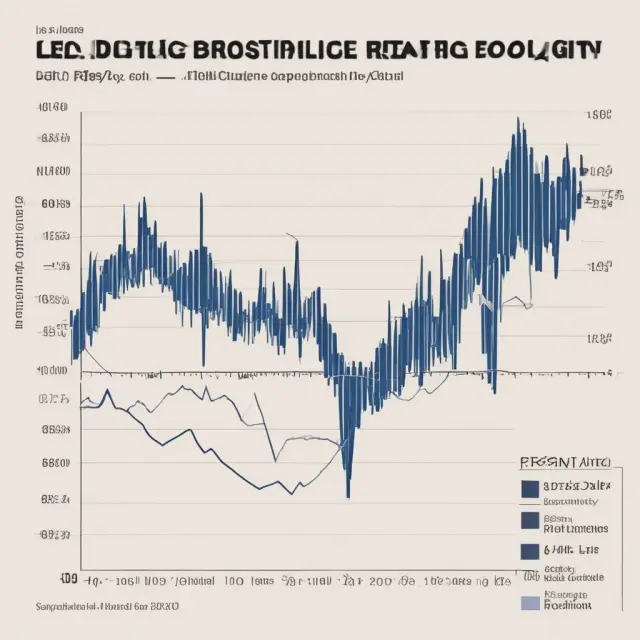
Historical Capacity Utilization Rates in the US Economy
The Federal Reserve’s role in tracking and publishing capacity utilization rates for various industries within the U.S. economy is a crucial aspect of understanding this essential metric. The concept of capacity utilization provides insight into how close an organization or national economy is approaching its full potential. By examining historical trends in capacity utilization, we can grasp its significance and fluctuations over time.
Capacity utilization rates are most relevant to industries producing physical goods due to their quantifiable nature. In the United States, the Federal Reserve collects and publishes data for 89 industry sub-sectors within manufacturing, mining, and gas and electric utilities. These statistics encompass a multitude of economic cycles spanning several decades.
Understanding Capacity Utilization and Its Significance
Capacity utilization rate refers to the percentage of an organization’s potential output that is currently being realized. This metric gauges the degree of operational efficiency for a company or economy. The calculation formula involves dividing the actual output by potential output, then multiplying the result by 100: (Actual Output / Potential Output) x 100 = Capacity Utilization Rate
A ratio below 100% signifies that there is room for increased production without incurring additional costs. For example, if a company manufactures 10,000 units at $0.50 per unit and can produce up to 15,000 units without increasing the cost per unit, its capacity utilization rate is 67% (10,000/15,000).
Historical Perspective: Capacity Utilization and U.S. Economy
The Federal Reserve has published capacity utilization data for the United States economy since the 1960s. During this period, the deepest declines occurred in 1982 and 2009 when the rate fell to 70.9% and 66.7%, respectively (Revised Capacity Utilization Rate for All U.S. Industry, 2020 Q4). In comparison, capacity utilization rates reached all-time highs near 90% during the late 1960s and early 1970s.
Capacity Utilization and Business Cycles
The business cycle influences capacity utilization rates significantly as businesses adjust production levels to accommodate changes in demand. During recessions, companies decrease their production volumes due to lower demand, resulting in reduced capacity utilization rates. The reverse happens during periods of strong demand, allowing businesses to increase their output and improve the economy’s overall capacity utilization rate.
Implications of Low Capacity Utilization Rates
Low capacity utilization rates can be concerning for fiscal and monetary policymakers. In the European Union during 2015 and 2016, countries such as France and Spain faced challenges due to high unemployment and low capacity utilization despite monetary stimulus resulting in historically low interest rates. The excess production capacity and slow price reaction to stimuli posed a challenge for policymakers aiming to boost inflation above target levels and avoid deflation.

Effects of Low Capacity Utilization
Low capacity utilization rates have significant consequences for businesses and economies. Both companies and national governments must address this issue due to its impact on production levels, costs, and overall economic performance. In this section, we will explore the negative effects of low capacity utilization and discuss potential strategies to mitigate these issues.
For a business, producing at less than full capacity can result in increased per-unit costs, reduced profitability, and missed revenue opportunities. When a company’s production falls below its maximum capacity, it often pays for fixed costs (such as rent or depreciation) on a larger proportion of its total output. As the utilization rate decreases, these fixed costs become a larger portion of the overall cost structure. In turn, this can lead to higher per-unit costs and reduced profitability. Additionally, low capacity utilization means missed opportunities for generating additional revenue by producing more goods or services at current demand levels.
On a national scale, economies with low capacity utilization face challenges related to inflation, unemployment, and overall economic growth. In a recessionary environment, declining demand results in lower production volumes, pushing down the economy’s capacity utilization rate. This situation can lead to a variety of negative consequences:
- Inflation: When an economy is operating below full capacity, there may be excess labor and idle resources. However, if monetary policy attempts to stimulate inflation through low interest rates or quantitative easing, these unused resources may enter the economy quickly, causing a sudden increase in prices. This can result in unintended consequences, such as rising costs for consumers and businesses.
- Unemployment: During periods of low capacity utilization, job losses often occur due to decreased demand for labor. High levels of unemployment contribute to decreased consumer spending, which further weakens economic activity. In addition, the human capital that becomes unemployed can be wasted, as it takes time and resources to train and re-employ displaced workers.
- Economic growth: Low capacity utilization rates are a hindrance to long-term economic growth because they represent unused potential. Economies with low capacity utilization struggle to reach their full potential in terms of production and overall Gross Domestic Product (GDP). As such, it is essential for policymakers to address this issue to ensure sustainable growth over time.
In conclusion, understanding the concept of capacity utilization rate and its effects on businesses and economies is crucial for both business leaders and policy makers. Low capacity utilization rates can result in increased costs, missed revenue opportunities, and decreased economic performance. By addressing the root causes of low capacity utilization and implementing strategies to boost production levels, organizations and governments can improve their overall economic outlook. In the following sections, we will explore ways for businesses to increase their capacity utilization rate and discuss historical trends in the U.S. economy’s capacity utilization rates.

FAQs on Capacity Utilization Rate
Capacity utilization rate is an essential metric that businesses and economists use to evaluate an organization or a national economy’s production efficiency. In this FAQ section, we provide answers to frequently asked questions about the calculation, measurement, interpretation, and significance of capacity utilization rates.
What Is Capacity Utilization Rate?
Capacity utilization rate is a ratio that shows the percentage of an organization’s potential output (capacity) that is being realized through actual production. A company or a national economy can use it to gauge their efficiency in utilizing resources, identify areas for improvement, and plan future investments. The calculation formula is: (Actual Output / Potential Output ) x 100 = Capacity Utilization Rate
Why Is Capacity Utilization Rate Important?
The capacity utilization rate provides valuable insights into a company’s current production efficiency and its ability to increase output without significant costs or investments. For a national economy, it helps track industry performance within the economic environment and inform fiscal and monetary policy decisions.
How Does a Company Increase Capacity Utilization?
Businesses can decide to increase their capacity utilization by expanding their production capabilities without incurring significant additional costs per unit. However, this depends on current demand levels and market conditions.
What Is the Ideal Capacity Utilization Rate for a Business?
An ideal 100% score indicates that a business is fully utilizing its resources to reach maximum capacity; however, it’s not sustainable in the long term as growth requires expansion. Therefore, companies aim for high rates while maintaining flexibility to expand production further when demand increases.
Does Investment Increase When the Capacity Utilization Rate Is High?
Yes, a high capacity utilization rate implies that an organization is effectively utilizing its resources and may invest in expanding production to meet increasing demand or capture market opportunities.
How Does Manufacturing Capacity Utilization Differ from Overall Capacity Utilization?
Manufacturing capacity utilization focuses on the efficiency of manufacturing processes and equipment. It determines whether a business can increase output without significant per-unit costs by upgrading its machinery or investing in additional equipment.
What Are Historical Capacity Utilization Rates for U.S. Industries?
The Federal Reserve publishes capacity utilization rates for 89 industry sub-sectors, including manufacturing, mining, and gas and electric utilities. The lowest recorded rate was 66.7% during the Great Recession in 2009.
What Happens When Capacity Utilization Rates Are Low?
Low capacity utilization rates may indicate underperforming industries or a weak economy. Policymakers must carefully assess the situation and consider implementing measures to stimulate demand, boost investment, or spur productivity growth.

Industry-Specific Capacity Utilization Rates
Capacity utilization rates are particularly relevant for industries that produce physical goods, as opposed to those providing services. The Federal Reserve closely monitors capacity utilization in the U.S. economy across 89 industries within the mining, manufacturing, and utility sectors. These sector-specific rates reveal insights about overall production efficiency and economic performance.
In the context of industries, capacity utilization is crucial for businesses looking to assess their current operating efficiency. It helps them determine the point at which they can increase production without experiencing a rise in unit costs, known as the “pain point.” This information is essential for both short-term and long-term decision making.
For instance, Company XYZ produces 10,000 widgets with a unit cost of $0.50. By calculating its capacity to produce up to 15,000 widgets without incurring additional per-unit costs, the company determines that it’s operating at a 67% capacity utilization rate. This finding suggests that there is potential for increasing production to meet demand without investing in new equipment or facilities.
Historically, manufacturing industries have been subjected to considerable scrutiny regarding their capacity utilization rates due to the substantial impact they have on overall economic performance. For example, during the Great Depression, low levels of capacity utilization contributed significantly to high unemployment and widespread economic hardship. In contrast, economies experiencing full employment typically exhibit high capacity utilization rates, which is indicative of strong economic growth and a healthy business environment.
Industry-specific capacity utilization rates have varied over time due to changes in demand, technology advancements, and other factors. For instance, the manufacturing sector experienced record-high capacity utilization during the 1960s, with rates close to 90%. However, capacity utilization dipped significantly during the recession of 1982, reaching a low of 70.9%. More recently, in the aftermath of the global financial crisis of 2008-2009, capacity utilization rates across major industries dropped to a low of 66.7%.
Understanding industry-specific capacity utilization rates can offer valuable insights for policymakers, investors, and economists alike. These rates serve as an essential tool for assessing the overall health of various sectors and the economy at large. Moreover, they provide important context when interpreting trends in economic data, such as employment levels, inflation, and output growth.
In conclusion, capacity utilization is a critical metric used to measure the productivity and efficiency of both businesses and economies. By examining capacity utilization rates across industries, we gain valuable insights into production trends, cost structures, and economic performance. This information can help guide policy decisions, inform investment strategies, and support overall economic growth.

Calculating Capacity Utilization Rate for Different Business Models
Capacity utilization rate is a crucial metric to assess a company’s production efficiency and evaluate its cost structure. However, calculating this rate can differ significantly depending on the business model or industry. In simple terms, capacity utilization measures the percentage of an organization’s potential output that is actually being produced. The formula for finding the rate is: (Actual Output / Potential Output ) x 100 = Capacity Utilization Rate
A company running at less than 100% capacity utilization can theoretically increase production without incurring significant additional costs. This is a valuable insight for businesses looking to optimize their operations and allocate resources effectively. Let’s explore how the calculation of capacity utilization rate varies between different business models:
Service Businesses vs. Manufacturing Businesses
Service-based industries often lack the tangible production metrics that manufacturing businesses employ to calculate their capacity utilization rates. Instead, these industries focus on factors like labor hours, customer demand, and service availability to gauge their efficiency. For instance, a call center may measure its capacity utilization rate by calculating the average number of calls handled per hour against the maximum possible number based on available agents.
Batch Production vs. Continuous Processes
In batch production systems, where goods are produced in smaller quantities at different times, capacity utilization calculation can be more complex since equipment or labor may not be fully utilized between batches. The time spent on setup and downtime must be factored into the calculation to determine an accurate capacity utilization rate. Continuous process industries like oil refineries or chemical plants typically have higher capacity utilization rates due to their constant flow of production.
Job Shop vs. Process Line
In job shop environments, where each piece of equipment is used for multiple tasks and produces different items, calculating capacity utilization may require more time and analysis since individual pieces of machinery have varying levels of usage. Process lines, on the other hand, produce identical goods continuously, making it easier to calculate their capacity utilization rate based on production volume.
Single Shift vs. Multiple Shifts
Businesses operating with a single shift may find calculating capacity utilization simpler since production levels for that specific time frame can be easily determined. However, businesses running multiple shifts must consider the combined output of all shifts to arrive at an accurate capacity utilization rate. This can help determine the optimal number of shifts and labor requirements to maximize efficiency and minimize costs.
Capacity utilization is a vital tool for business executives and policymakers alike to assess economic performance and make informed decisions. By understanding how capacity utilization rates vary between different business models, companies can optimize their operations, allocate resources effectively, and remain competitive in the market.

Capacity Utilization in Developing Economies
Understanding Capacity Utilization Rates in Developing Economies
Capacity utilization is an essential metric for measuring productivity levels within a business or economy. Developing economies face unique challenges when it comes to capacity utilization, as they often struggle with infrastructure deficiencies, resource scarcity, and economic instability. This section explores the importance of capacity utilization rates in developing economies and strategies for improving efficiency.
Capacity utilization rate is a measure of how efficiently an organization or economy is utilizing its resources to produce goods and services. A low capacity utilization rate indicates that a significant portion of available resources remains underutilized, leading to wasted resources, higher unit costs, and missed opportunities for growth. In developing economies, where resources and infrastructure are often limited, optimizing capacity utilization becomes even more critical.
Challenges Facing Developing Economies in Capacity Utilization
Developing economies face various challenges when it comes to achieving optimal capacity utilization levels. Some of these challenges include:
1. Infrastructure deficiencies: Lack of reliable electricity, transportation networks, and other essential infrastructure can significantly hinder a developing economy’s ability to efficiently utilize its resources. For instance, frequent power outages force businesses to rely on backup generators, increasing operational costs and reducing capacity utilization.
2. Resource scarcity: Limited access to raw materials and labor can impact a developing economy’s capacity utilization rate. In industries that heavily depend on natural resources, such as mining or agriculture, efficient resource management is crucial for maintaining high levels of productivity.
3. Economic instability: Political instability, inflation, and macroeconomic challenges can cause fluctuations in demand and supply, making it difficult for businesses to maintain consistent production levels and capacity utilization rates. Additionally, economic uncertainty may discourage private investment and hinder long-term planning.
Strategies for Improving Capacity Utilization Rates in Developing Economies
Despite the challenges, several strategies can help developing economies improve their capacity utilization rates:
1. Infrastructure development: Governments and private sector investors must prioritize infrastructure development to ensure reliable electricity, transportation, and communication networks. This investment can lead to increased productivity, reduced costs, and improved competitiveness.
2. Resource efficiency: Developing economies must focus on optimizing resource use through efficient production processes, recycling programs, and waste management initiatives. By reducing the amount of resources wasted in manufacturing and other industries, capacity utilization rates can be significantly boosted.
3. Technological advancements: Embracing technological innovations, such as automation, renewable energy, and digitalization, can help developing economies increase their capacity utilization rates while reducing operational costs. For instance, modern manufacturing processes can lead to higher productivity and lower labor requirements.
4. Economic stability: Stabilizing the macroeconomic environment through responsible fiscal and monetary policies can provide businesses with a more predictable operating climate, making it easier for them to plan for the future and maintain consistent production levels.
5. Collaborative partnerships: Public-private partnerships (PPPs) between governments and private sector organizations can help bridge infrastructure gaps, encourage investment, and foster innovation in developing economies. These partnerships can result in shared resources and expertise, leading to increased capacity utilization rates for all parties involved.
In conclusion, improving capacity utilization rates is essential for developing economies looking to boost productivity, reduce costs, and accelerate economic growth. By addressing infrastructure deficiencies, optimizing resource use, embracing technological advancements, promoting economic stability, and forming collaborative partnerships, developing economies can overcome the challenges they face and unlock their full potential.
Capacity Utilization Rate and Monetary Policy
The capacity utilization rate is an essential metric for businesses and economies alike, serving as a measure of production efficiency. This concept is particularly relevant when it comes to monetary policy decisions made by central banks, such as the U.S. Federal Reserve. By examining the relationship between capacity utilization rates and monetary policy, we can gain valuable insights into how these two vital areas interconnect.
Monetary Policy Impact on Capacity Utilization Rates
Central banks employ various tools to manage inflation and interest rates within their economies. One primary objective of monetary policy is to ensure stable economic growth while maintaining price stability. By adjusting interest rates, the Federal Reserve can influence borrowing costs, affecting businesses’ incentives to invest in new capacity or expand existing production capabilities. Lower interest rates make it more affordable for companies to borrow money and expand their operations, thereby increasing demand for resources and potentially pushing up capacity utilization rates. Conversely, higher interest rates increase borrowing costs, which may discourage investment and lead to lower capacity utilization rates.
Capacity Utilization Rates and the Fed’s Objectives
The Federal Reserve closely monitors national capacity utilization rates when setting its monetary policy objectives. By analyzing historical trends and current industry data, the Fed can assess how efficiently resources are being utilized, identify areas requiring stimulus or tightening, and evaluate the overall economic health. With this information, they can make informed decisions regarding interest rates to strike a balance between promoting growth and controlling inflation.
Impact of Capacity Utilization Rates on Inflation
High capacity utilization rates can lead to inflationary pressures if demand significantly outpaces supply. This scenario occurs when businesses struggle to meet the increased demand for their products or services, resulting in price increases to maintain or restore profitability. Conversely, low capacity utilization rates may contribute to deflationary pressures, as oversupply and weak demand lead to falling prices. By managing interest rates, central banks can help balance supply and demand and maintain stable prices while supporting economic growth.
Capacity Utilization Rates and Business Cycles
Understanding the correlation between business cycles and capacity utilization rates is essential for monetary policymakers. During economic expansions, capacity utilization rates tend to rise as businesses increase production in response to heightened demand. Conversely, during recessions or contractions, capacity utilization rates decline due to decreased demand and reduced production levels. Central banks can use this information to tailor their monetary policies effectively and respond appropriately to economic shifts, ensuring stable prices and promoting sustainable growth.
Historical Analysis of Capacity Utilization Rates
Analyzing historical capacity utilization data can provide valuable insights into how the Federal Reserve has responded to changing economic conditions over time. For instance, during times of high capacity utilization rates, such as in the late 1960s and early 1970s when all-time high levels approached 90%, the Fed implemented policies aimed at cooling down the economy by raising interest rates to curb inflationary pressures. Conversely, during periods of low capacity utilization, like the 2009 financial crisis when capacity utilization fell to a record low of 66.7%, the Fed employed accommodative monetary policy measures such as lowering interest rates and engaging in quantitative easing to stimulate growth.
In conclusion, the relationship between capacity utilization rates and monetary policy is a critical one that significantly impacts economic stability and growth. By closely monitoring capacity utilization trends and adjusting monetary policies accordingly, central banks like the Federal Reserve can help ensure stable prices, sustainable growth, and overall economic health.
 Next entry · No. 597Understanding the Cyclically Adjusted Price to Earnings Ratio (CAPE): A Powerful Valuation Tool for Institutional Investors
See also
-
 No. 1,470
20 Sep 2024
25 min
Understanding the Federal Reserve’s Balance Sheet: A Key Indicator of Monetary Policy and Economic Health
Finance Policy
No. 1,470
20 Sep 2024
25 min
Understanding the Federal Reserve’s Balance Sheet: A Key Indicator of Monetary Policy and Economic Health
Finance Policy -
 No. 4,106
22 May 2025
17 min
Maximizing Production Efficiency: Measuring Optimal Output and Capacity in Economics
Economics
No. 4,106
22 May 2025
17 min
Maximizing Production Efficiency: Measuring Optimal Output and Capacity in Economics
Economics -
 No. 4,099
22 May 2025
19 min
Procyclic: Understanding the Correlation between Economic Indicators and Business Cycles
Economics
No. 4,099
22 May 2025
19 min
Procyclic: Understanding the Correlation between Economic Indicators and Business Cycles
Economics -
 No. 3,342
20 Mar 2025
18 min
Understanding the National Average Wage Index (NAWI): A Measure of U.S. Wage Trends
Economics
No. 3,342
20 Mar 2025
18 min
Understanding the National Average Wage Index (NAWI): A Measure of U.S. Wage Trends
Economics -
 No. 3,031
23 Feb 2025
19 min
Understanding M1 Money Supply and Its Role in Economics: Definition, Calculation, and Impact on Inflation
Economics
No. 3,031
23 Feb 2025
19 min
Understanding M1 Money Supply and Its Role in Economics: Definition, Calculation, and Impact on Inflation
Economics -
 No. 2,530
14 Jan 2025
18 min
Understanding the Industrial Production Index (IPI): A Comprehensive Guide
Economics
No. 2,530
14 Jan 2025
18 min
Understanding the Industrial Production Index (IPI): A Comprehensive Guide
Economics