Understanding the Cyclically Adjusted Price to Earnings Ratio (CAPE): A Powerful Valuation Tool for Institutional Investors

Understand the power of Cyclically Adjusted Price to Earnings Ratio (CAPE) as a valuation tool for institutional investors. Learn how to calculate and…
What is CAPE Ratio?
The Cyclically Adjusted Price to Earnings (CAPE) ratio, often referred to as the Shiller P/E ratio, is a valuation metric used by investors to assess whether the stock market or an individual company is undervalued or overvalued. Introduced by Yale University professor Robert J. Shiller in 1982, the CAPE ratio considers the impact of economic cycles on earnings and provides a more stable representation of a company’s long-term financial health compared to traditional P/E ratios which can fluctuate significantly based on short-term market conditions.
The CAPE ratio is calculated by dividing the current price index of a particular stock or index by its ten-year average real earnings (adjusted for inflation). This methodology provides a more accurate and comprehensive view of a company’s valuation by taking into account various economic cycles that may impact profits, such as recessions or expansions.
The CAPE ratio is an essential tool in the investment landscape due to its predictive capabilities. By analyzing historical data on earnings growth and price-to-earnings ratios during various economic cycles, investors can use the CAPE ratio to make more informed decisions about their investments. In this section, we delve deeper into understanding the significance of the CAPE ratio and how it differs from other valuation measures like P/E ratios.
Understanding the Significance of the CAPE Ratio:
The CAPE ratio is an essential tool for evaluating a company’s long-term financial performance by accounting for the impact of economic cycles on earnings. By analyzing the ratio, investors can make more informed investment decisions and assess whether the current market conditions are undervalued or overvalued.
As we explore further in this article, the CAPE ratio has proven to be an effective predictor of long-term stock market returns. Historical data shows that when the ratio is high, it tends to indicate a bearish outlook for stocks, while a low CAPE ratio suggests a bullish sentiment. This information can be valuable in guiding investment strategies and portfolio management decisions.
The Importance of the CAPE Ratio for Institutional Investors:
Institutional investors often face unique challenges when it comes to making informed investment decisions due to the sheer size and complexity of their portfolios. The CAPE ratio provides these investors with a powerful valuation tool that offers valuable insights into both individual companies and entire markets. By analyzing the historical data and trends in CAPE ratios, institutional investors can make more informed investment decisions based on sound financial data rather than relying solely on speculative market sentiment or short-term performance indicators.
In the following sections, we will delve deeper into the specifics of calculating the CAPE ratio, its historical usage and predictions, limitations, comparisons with P/E ratios, and real-world examples of its application by successful investors. Stay tuned to learn more about this essential investment tool and how it can help you make informed decisions for your portfolio!
In conclusion, the CAPE ratio is a valuable valuation tool that provides insight into a company’s long-term financial performance by taking into account various economic cycles. By calculating the average earnings over a ten-year period and adjusting for inflation, investors can make more informed decisions about whether an investment is undervalued or overvalued. In this article, we will explore the significance of the CAPE ratio, its history, limitations, comparisons with P/E ratios, and real-world examples to help you better understand how this powerful tool can benefit your investment strategy.

Calculating CAPE Ratio
The CAPE ratio is a powerful valuation tool used by institutional investors to assess the long-term financial performance of publicly held companies, taking into account various economic cycles’ impact on their earnings. Developed by Yale University professor Robert Shiller, this ratio is also known as the cyclically adjusted price-to-earnings (CAPE) or the Shiller P/E ratio. It measures a company’s current stock price against its average real earnings over a 10-year period, adjusted for inflation, to provide a more stable valuation measure than traditional price-to-earnings (P/E) ratios.
To calculate the CAPE ratio:
Step 1: Identify the company’s inflation-adjusted Earnings Per Share (EPS) over the past 10 years.
Step 2: Sum these earnings values and divide by ten to find the average real earnings per share for the period.
Step 3: Divide the current stock price by the 10-year average real earnings per share obtained in step 2.
For instance, let’s assume a company’s inflation-adjusted EPS for the last ten years were $4, $6, $8, $5, $9, $7, $11, $8, and $10. To calculate the CAPE ratio:
- Sum up the earnings: $4 + $6 + $8 + $5 + $9 + $7 + $11 + $8 + $10 = $60
- Find the average real earnings per share by dividing the sum of the last decade’s inflation-adjusted EPS values by 10: $60 / 10 = $6
- Calculate the CAPE ratio by dividing the current stock price ($200) by the 10-year average real earnings per share: $200 / $6 = 33.33
The CAPE ratio of 33.33 indicates that the company’s stock price is 33.33 times its ten-year average real EPS. Investors can interpret a low CAPE ratio as an undervalued stock, while a high CAPE ratio may suggest an overvalued stock.
Investors use the CAPE ratio to determine whether a company’s stock is under- or overvalued based on historical trends and economic cycles, offering a more informed perspective for investment decisions.

Historical Use of CAPE Ratio
The historical significance of CAPE ratio as a powerful valuation tool for institutional investors lies in its ability to predict stock market trends based on past performance. First introduced by Robert Shiller and John Campbell in 1998, the CAPE ratio has since been used extensively to analyze the U.S. stock market’s long-term financial performance and make informed investment decisions.
When Shiller and Campbell presented their research to the Federal Reserve in December 1996, they noted that stock prices were growing much faster than earnings. In January 1997, their groundbreaking article “Valuation Ratios and the Long-Run Stock Market Outlook” used a 10-year average of real earnings (adjusted for inflation) to calculate CAPE ratios for the S&P 500 dating back to 1872. The ratio stood at a record high of 28, with the only other comparable instance occurring in 1929.
Shiller and Campbell’s forecast predicted that the real value of the market would be 40% lower within ten years due to an impending stock market correction. This prediction proved accurate as the U.S. economy experienced a major crash in 2008, leading the S&P 500 to plunge by approximately 60% from October 2007 to March 2009.
The CAPE ratio for the S&P 500 continued to rise throughout the second decade of this millennium as the economic recovery gained momentum, with stock prices reaching new records. By June 2018, the CAPE ratio stood at an elevated level of 33.78 compared to its long-term average of 16.80. This condition ignited intense debates among financial experts regarding potential market corrections and future equity returns.
However, it’s important to note that critics argue against the CAPE ratio’s utility due to its backward-looking nature and reliance on GAAP earnings which have undergone significant changes in recent years. Despite these criticisms, the CAPE ratio remains a popular tool among institutional investors seeking to gain valuable insights into long-term financial performance and anticipate market trends.
In the next section, we’ll explore how CAPE ratios are calculated and discuss their limitations as a predictive tool for stock market returns.

Limitations of CAPE Ratio
Despite its widespread use as a predictive tool for stock market returns, the CAPE ratio has faced criticism from some quarters due to its limitations. One common objection is that it is backward-looking rather than forward-looking. The CAPE ratio’s focus on historical earnings might not account for future developments in industries or changes in interest rates and other macroeconomic factors that could significantly impact a company’s profitability. Additionally, the ratio relies on Generally Accepted Accounting Principles (GAAP) earnings, which have undergone significant modifications over the years.
Critics argue that these inconsistencies in earnings data may hinder the CAPE ratio’s ability to accurately forecast future stock market returns. For instance, Jeremy Siegel, a professor at the Wharton School, published a paper in June 2016 where he questioned the predictive power of the CAPE ratio due to changes in GAAP earnings. He proposed using alternative measures like operating earnings or National Income and Product Accounts (NIPA) after-tax corporate profits instead, which might provide more accurate forecasts and yield higher anticipated U.S. equity returns.
Another concern is that the CAPE ratio does not factor in interest rates and other macroeconomic factors, such as inflation and exchange rates, which can significantly impact earnings growth. Furthermore, some industries are more volatile than others, making it essential to adjust the CAPE ratio for sector-specific risks. For instance, technology stocks’ rapid price growth can lead to high CAPE ratios, even when earnings are not exceptionally strong. In such cases, considering additional factors like revenue growth, cash flow, and dividends may be necessary for a more comprehensive understanding of a stock’s intrinsic value.
In conclusion, while the CAPE ratio offers valuable insights into a company or market’s valuation by considering long-term earnings trends in the context of economic cycles, its limitations call for using it as part of an investment strategy rather than relying on it alone. A prudent approach would be to combine various indicators, including earnings multiples, revenue growth, dividend yields, and macroeconomic factors, to make informed decisions about buying or selling stocks.

Comparative Analysis of CAPE with P/E Ratios
Understanding the differences and similarities between the Cyclically Adjusted Price-to-Earnings (CAPE) ratio and traditional Price-to-Earnings (P/E) ratios can help investors make more informed decisions when assessing a company’s stock value. Both methods provide valuable insights, but they differ in their approach to evaluating earnings stability over time and their applicability to various market conditions.
The CAPE ratio, also known as the Shiller P/E ratio, is calculated using 10-year average real earnings adjusted for inflation instead of the current or trailing 12 months’ earnings that form the basis for a traditional P/E ratio. This approach aims to account for the effects of economic cycles on a company’s profitability and smoothen out fluctuations in earnings, making it an essential tool for long-term investors.
On the other hand, the P/E ratio is a more commonly used valuation measure that compares a stock’s current market price to its earnings per share (EPS) over the last 12 months. While straightforward and widely adopted, this metric can be less reliable in volatile or rapidly changing economic environments as it does not account for the impact of inflation or long-term trends in earnings growth.
When comparing CAPE with P/E ratios, it’s essential to understand their respective strengths and weaknesses. The primary advantage of using the CAPE ratio lies in its ability to assess a company’s valuation in relation to its historical earnings trends and economic cycles. This can prove particularly useful during periods of market turbulence or prolonged bull/bear markets when P/E ratios may become distorted, providing investors with a more stable benchmark to determine whether a stock is undervalued or overvalued.
However, it’s essential to acknowledge that the CAPE ratio has its limitations. Critics argue that focusing on past earnings trends and relying on backward-looking data might not be ideal for anticipating future market movements. Moreover, as Jeremy Siegel points out in his 2016 paper, using different methods for calculating earnings or adjusting for changes in accounting standards can significantly impact the predictive power of the CAPE ratio.
In summary, both CAPE and P/E ratios offer valuable insights into a company’s valuation when applied judiciously. The choice between them depends on an investor’s investment horizon, market conditions, and personal preferences. A well-diversified portfolio that includes a mix of long-term growth stocks and value investments can benefit from utilizing both CAPE and P/E ratios to optimize returns and minimize risks.

CAPE Ratio in Context of Economic Cycles
The CAPE ratio plays a crucial role for institutional investors in understanding a company’s long-term financial performance by considering how various economic cycles impact its earnings. A strong economy typically results in increased consumer spending and profitability, while a recession sees consumers buying less and, in some cases, turning profits into losses. Although cyclical sectors like commodities and finance experience larger profit swings than defensive sectors such as utilities or pharmaceuticals, few companies can consistently maintain high profitability throughout economic downturns.
The volatility seen in per-share earnings results in fluctuating price-earnings (P/E) ratios, which is why Graham and Dodd recommended using a 7 to 10-year average of earnings for evaluating valuation ratios. The CAPE ratio, as an improvement over the P/E ratio, offers this advantage by taking into account the impact of economic cycles by comparing stock prices to average earnings, adjusted for inflation, over a decade-long period.
An early application of the CAPE ratio’s significance came during December 1996 when Robert Shiller and John Campbell presented their research on the Federal Reserve Board. Their findings suggested that the stock market was growing faster than earnings. In the winter of 1998, they published an article titled “Valuation Ratios and the Long-Run Stock Market Outlook,” in which they calculated the average real earnings over ten years for the S&P 500 dating back to 1872. The CAPE ratio reached a record 28 at that time with only one other comparable instance occurring in 1929.
Shiller and Campbell warned of a potential 40% decline in real value of the market within ten years, which proved prophetic as the stock market crash of 2008 resulted in an approximate 60% drop from October 2007 to March 2009. The S&P 500’s CAPE ratio climbed steadily during the economic recovery following this decline and reached a record high of 33.78 by June 2018, compared with its long-term average of 16.80.
Critics argue that the backward-looking nature of the CAPE ratio and reliance on GAAP earnings limit its usefulness as a predictive tool for future stock market returns. However, its historical accuracy in predicting major market corrections and bull markets adds significant value to institutional investors’ investment strategies when considering long-term financial performance.

Advantages of Using CAPE for Institutional Investors
One of the most compelling reasons why institutional investors should use the Cyclically Adjusted Price to Earnings (CAPE) ratio in their investment strategies lies in its ability to provide a more accurate and stable valuation measure than traditional Price to Earnings (P/E) ratios. The CAPE ratio, developed by Yale University professor Robert Shiller, offers a unique advantage by considering the impact of economic cycles on earnings over an extended period.
Historical market data shows that profitability is subjected to significant fluctuations as a result of various economic cycle influences. During periods of expansion, profits rise significantly due to increased consumer spending. Conversely, during recessions, consumers buy less, leading to substantial profit declines or even losses for some companies. While cyclical sectors such as commodities and finance experience larger swings in earnings than defensive sectors like utilities and pharmaceuticals, few companies can consistently maintain steady profitability throughout economic cycles.
The P/E ratio is a widely used valuation metric to measure a stock’s price relative to its current Earnings Per Share (EPS). However, the P/E ratio’s utility as an evaluation tool can be limited due to short-term earnings fluctuations caused by economic conditions. To mitigate this issue, Graham and Dodd suggested using an average of earnings over a 7 or 10-year period for evaluating valuation ratios in their influential book, Security Analysis, published in 1934.
The CAPE ratio provides institutional investors with the following benefits:
1. Stable Valuation Metric: The CAPE ratio’s primary advantage is its ability to smooth out earnings volatility by using the average of real earnings over a 10-year period, adjusted for inflation, which results in more stable and reliable valuation ratios. This feature helps institutional investors make informed investment decisions based on historical trends rather than short-term market fluctuations.
2. Long-Term Perspective: By focusing on long-term financial performance, the CAPE ratio provides institutional investors with a valuable perspective to analyze individual companies’ health and performance during various economic cycles, which can be critical in determining asset allocation strategies.
3. Market Cycle Insights: The CAPE ratio serves as a valuable tool for evaluating market cycle trends and identifying potential opportunities or risks. Institutional investors can use the ratio to identify undervalued or overvalued markets based on historical data, which can inform their investment decisions during different economic conditions.
4. Risk Management: By utilizing the CAPE ratio to assess a company’s valuation relative to its historical averages and market trends, institutional investors can better manage risks associated with stock market volatility. This knowledge empowers them to make strategic asset allocation decisions in response to changing economic environments and potential market downturns.
5. Informed Decision Making: The CAPE ratio’s historical context allows institutional investors to make informed decisions based on a company’s long-term financial performance, enabling them to optimize their portfolios according to the given market conditions. This approach is vital for institutional investors as they manage large assets and seek to minimize risk while maximizing returns over extended periods.
Examples of CAPE Ratio Use by Institutional Investors
One notable instance of the CAPE ratio’s application by institutional investors was in December 1996, when Robert Shiller and John Campbell presented their research to the Federal Reserve regarding soaring stock prices that surpassed earnings growth. Their findings, published in a groundbreaking article titled “Valuation Ratios and the Long-Run Stock Market Outlook” in 1998, demonstrated that using a 10-year average of real earnings adjusted for inflation significantly improved the accuracy and consistency of stock market forecasts. As a result, their work helped institutional investors make informed decisions on asset allocation during the tech bubble and subsequent market correction.
In conclusion, the CAPE ratio provides institutional investors with a robust valuation tool that allows them to assess a company’s long-term financial performance in the context of different economic cycles. Its benefits include more stable and reliable ratios, a long-term perspective, insights into market cycle trends, effective risk management, and informed decision making, which are all crucial factors for managing large assets over extended periods. By utilizing the CAPE ratio as part of their investment strategies, institutional investors can make strategic decisions that minimize risks while maximizing returns in a constantly changing financial landscape.
Interpreting CAPE Ratios
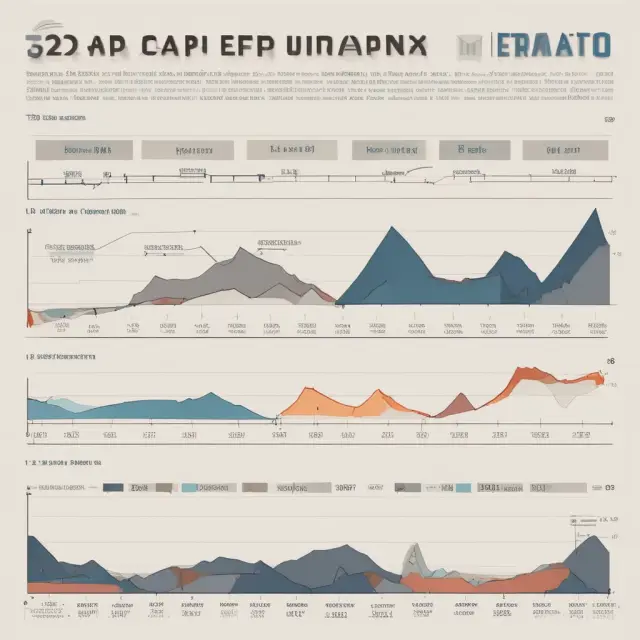
The CAPE ratio provides essential insights into a company or market’s valuation but interpreting its value requires a deep understanding of both historical context and economic factors. The CAPE ratio compares the current stock price to the average inflation-adjusted earnings over a 10-year period, revealing whether stocks are considered undervalued, overvalued, or fairly priced.
Comparing CAPE ratios across different periods can help investors assess market conditions and make informed investment decisions. For instance, an elevated CAPE ratio suggests that the market may be overvalued, signaling potential for a correction. Conversely, a low CAPE ratio might indicate an undervalued market or a buying opportunity.
It’s important to recognize that historical data is the foundation of CAPE ratios. As previously mentioned, this measure was first introduced by Robert Shiller in 1996 and has been used extensively to assess stock market conditions over extended timeframes. By examining trends in CAPE ratios throughout history, investors can make informed decisions about their investment strategies.
Moreover, the CAPE ratio is particularly valuable when comparing it against other valuation metrics, such as P/E ratios or price-to-book (P/B) ratios. While these traditional measures offer insights into a company’s current financial performance, CAPE ratios provide an essential perspective on historical earnings trends, helping to contextualize present market conditions and potential future developments.
Furthermore, the CAPE ratio is most effective when applied to broad equity indices like the S&P 500, as it offers a comprehensive view of the overall market valuation rather than focusing on individual stocks. This approach can help investors make strategic decisions based on larger economic trends and cyclical market influences.
However, it’s important for institutional investors to understand that no single valuation metric is infallible, and CAPE ratios should be used in conjunction with other financial analysis tools, such as fundamental analysis or technical analysis, to make well-informed investment decisions. Additionally, investors must remain aware of the limitations of historical data, as it cannot fully capture future market conditions and external factors that could impact company earnings.
In conclusion, the CAPE ratio is a valuable tool for institutional investors seeking to assess long-term financial performance in the context of economic cycles. By interpreting this metric in conjunction with other valuation measures and maintaining a comprehensive understanding of historical trends and market conditions, investors can make informed decisions that drive successful investment strategies.

Case Studies of Using CAPE Ratios
The cyclically adjusted price-to-earnings (CAPE) ratio has proven to be a valuable valuation tool for institutional investors, particularly during periods of market volatility. The CAPE ratio’s ability to smooth out earnings data over a ten-year period offers a more accurate reflection of a company or index’s fundamental value. Let us examine some real-world examples demonstrating how the CAPE ratio has been effectively used in making strategic investment decisions.
The first noteworthy instance occurred during December 1996 when Robert Shiller and John Campbell presented research to the Federal Reserve, warning that stock prices were running up much faster than earnings. The pair’s groundbreaking paper, published in Winter 1998, utilized an average of real earnings over the preceding ten years to create the CAPE ratio. At that time, the CAPE ratio for the S&P 500 stood at a record-high 28, with only one other instance (in 1929) having reached such levels. Shiller and Campbell’s bold claim that the real value of the market would be 40% lower in ten years proved to be incredibly prescient. As markets crashed during the 2008 financial crisis, the S&P 500 saw a 60% decline from October 2007 to March 2009.
Fast forward to June 2018; the CAPE ratio for the S&P 500 had risen steadily as the economic recovery gained momentum, with stock prices reaching record levels. At that time, the ratio stood at an elevated level of 33.78 compared to its long-term average of 16.80. This prompted a lively debate among investors regarding whether the high CAPE ratio signaled an impending major market correction.
However, it is essential to acknowledge that some critics argue the CAPE ratio’s limitations as a predictor of future stock market returns. One criticism is that the ratio is inherently backward-looking rather than forward-looking. Additionally, its reliance on GAAP earnings, which have undergone significant changes in recent years, has been questioned. In response to these criticisms, Jeremy Siegel, professor at the Wharton School, published a paper suggesting that using consistent earnings data like operating earnings or NIPA after-tax corporate profits can improve the forecasting ability of the CAPE model and yield higher U.S. equity returns.
Nonetheless, it is essential to remember that no single valuation metric offers a definitive answer when making investment decisions. Instead, investors should consider various factors, including fundamental analysis, economic data, and market sentiment. The CAPE ratio serves as an essential piece of the puzzle in understanding a company’s long-term financial performance and assessing its value relative to the broader market.

FAQs About CAPE Ratio
The CAPE ratio (Cyclically Adjusted Price-to-Earnings) is a well-known valuation metric used by investors to determine if the market, index, or specific stock is undervalued or overvalued. Introduced by Yale University professor Robert Shiller in his book “Irrational Exuberance,” this ratio measures the current price level of an asset relative to its earnings over a 10-year period, adjusted for inflation. Below, we answer some frequently asked questions regarding the CAPE ratio and its use in financial analysis.
What is the difference between P/E ratio and CAPE ratio?
While both ratios are used to assess a stock’s value relative to earnings, the primary distinction lies in their time frames of analysis: P/E ratio focuses on current or trailing 12-month earnings, while CAPE ratio considers the historical average of earnings over a longer period (typically 10 years). The CAPE ratio is more comprehensive and less volatile as it smoothes out short-term fluctuations in corporate profits caused by economic cycles.
What is the formula for calculating the CAPE ratio?
To calculate a company’s or index’s CAPE ratio, divide the current market price per share by its 10-year average real earnings (earnings adjusted for inflation). For example: CAPE ratio = Current Market Price / Average Real Earnings (10 year period)
Why is the CAPE ratio important?
The CAPE ratio helps investors understand a stock’s valuation in the context of its long-term performance and economic cycles. It provides valuable information for assessing whether an investment is undervalued or overvalued, which can aid decision-making when it comes to buying or selling stocks.
How does the CAPE ratio predict future returns?
While the CAPE ratio doesn’t directly predict future returns, it can be used as a guide for estimating potential future returns based on historical data. Generally, high ratios may indicate overvalued assets, while low ratios suggest undervalued ones. However, it is essential to keep in mind that past performance does not guarantee future results.
What is the historical significance of the CAPE ratio?
The CAPE ratio has been instrumental in various economic studies and predictions throughout history, such as Robert Shiller’s work on market bubbles and crashes. It has proven its value as a leading indicator of long-term stock market trends, offering valuable insights for investors seeking to make informed decisions.
What are the limitations of using the CAPE ratio?
While the CAPE ratio is a powerful tool, it does have certain limitations. For instance, its backward-looking nature makes it inherently historical, and it relies on GAAP earnings, which may not accurately represent a company’s true performance due to changes in accounting standards over time. It’s essential for investors to consider these factors when using the CAPE ratio as part of their investment strategy.
In conclusion, the CAPE ratio is an essential valuation tool for institutional investors seeking to gain a deeper understanding of a stock or index’s value relative to its long-term earnings history and economic cycles. By addressing some frequently asked questions about this ratio, we hope to provide readers with a clearer understanding of its significance and limitations in the context of investment analysis.
 Next entry · No. 598Capital Investment: Understanding Long-Term Business Growth
See also
-
 No. 475
25 Apr 2024
20 min
Understanding Bond Ratings: An Essential Measure for Institutional Investors
Investments
No. 475
25 Apr 2024
20 min
Understanding Bond Ratings: An Essential Measure for Institutional Investors
Investments -
 No. 1,244
18 Aug 2024
21 min
The Efficient Market Hypothesis: Understanding Its Validity and Implications for Investors
Business Finance
No. 1,244
18 Aug 2024
21 min
The Efficient Market Hypothesis: Understanding Its Validity and Implications for Investors
Business Finance -
 No. 212
07 Apr 2024
20 min
Understanding the Aroon Indicator: Identifying Trend Changes in Finance and Investment
Financial Tools
No. 212
07 Apr 2024
20 min
Understanding the Aroon Indicator: Identifying Trend Changes in Finance and Investment
Financial Tools -
 No. 80
07 Apr 2024
21 min
Understanding Accretion of Discount: An Essential Concept for Institutional Investors
Corporate Finance
No. 80
07 Apr 2024
21 min
Understanding Accretion of Discount: An Essential Concept for Institutional Investors
Corporate Finance -
 No. 1,132
01 Aug 2024
19 min
Understanding Direct Participation Programs (DPPs): A Comprehensive Guide for Institutional Investors
Investments
No. 1,132
01 Aug 2024
19 min
Understanding Direct Participation Programs (DPPs): A Comprehensive Guide for Institutional Investors
Investments -
 No. 825
15 Jun 2024
19 min
Understanding Credit Ratings: A Comprehensive Guide for Professional and Institutional Investors
Investments
No. 825
15 Jun 2024
19 min
Understanding Credit Ratings: A Comprehensive Guide for Professional and Institutional Investors
Investments