Estimated Ultimate Recovery (EUR): A Key Metric for Oil and Gas Investors

Understanding Estimated Ultimate Recovery (EUR) is vital for oil & gas investors. Learn how it's calculated, its importance, & case studies.
What Is Estimated Ultimate Recovery?
Estimated ultimate recovery (EUR) is a significant metric in the oil and gas industry, representing the overall volume of hydrocarbons that can be extracted from a reservoir or field. It’s crucial for investors, analysts, and oil companies alike to assess the potential production output of an oil well or deposit. EUR encompasses three levels of confidence: proven reserves, probable reserves, and possible reserves.
Proven Reserves are those with a greater than 90% likelihood of being recovered using existing technology. The quantity of these reserves is based on a high degree of certainty since they have been discovered through drilling.
Probable Reserves carry a higher uncertainty level, with recovery chances ranging from 51% to 90%. While some portion of probable reserves may remain untapped due to technological or economic limitations, there’s still a strong likelihood that they can be produced in the future.
Lastly, Possible Reserves are those with less than 50% chance of recovery. These reserves may remain untouched if current technology and economics cannot justify their development. However, advancements in technology or changes in market conditions might make it profitable to recover these reserves at a later stage.
EUR plays an essential role in the calculation of net present value (NPV) for oil exploration and drilling projects. The NPV is computed by taking into account the project’s upfront costs, estimated cash flows, discount rate, and EUR. Accurately estimating EUR helps investors determine whether a drilling project is financially viable and likely to generate substantial returns.
The calculation of EUR can vary based on the methodology used and units involved in different studies and projects. As technology advances and oil prices change, the likelihood of recovering the entire EUR may shift. Understanding Estimated Ultimate Recovery is vital for making informed investment decisions and assessing the profitability potential of oil companies.
In conclusion, EUR is a crucial metric that provides valuable insight into the recoverable reserves in the oil and gas industry. By understanding EUR’s components and its role in valuing oil projects, investors can make well-informed decisions on potential investments in the sector.
Calculating Estimated Ultimate Recovery
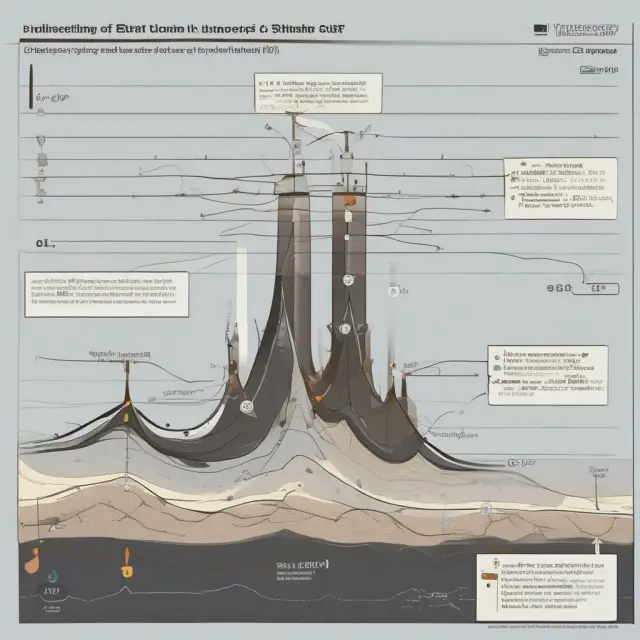
Estimated ultimate recovery (EUR) is a critical metric in the oil and gas industry used to assess the economic feasibility and profitability of drilling projects. It represents the total volume of hydrocarbons, such as crude oil or natural gas, that are technically recoverable from a reservoir or deposit with the current technology and under specified economic conditions. The calculation of EUR can differ depending on the project or study being conducted, but it is essential that any drilling effort meets a minimum acceptable threshold for viability.
Estimated ultimate recovery is typically categorized as proven reserves, probable reserves, and possible reserves based on the degree of confidence in their recoverability. Proven reserves constitute a substantial portion of EUR and hold a high level of certainty, with over 90% likelihood that the hydrocarbons can be recovered. Probable reserves follow with a greater than 50% chance of actual recovery. The remaining portion is considered possible reserves, which have a significant but uncertain potential for extraction.
The importance of EUR stems from its role in providing valuable insights to oil companies, analysts, and investors alike. EUR serves as an essential input when evaluating the net present value (NPV) of exploration projects and determining their financial viability. The calculation of NPV requires inputs like the initial capital investment, the cost of borrowing capital, long-term oil prices, and most significantly, the ultimate quantity of hydrocarbons that will be recovered.
The estimation of EUR can be influenced by various factors such as improvements in recovery techniques, advances in technology, changes in oil prices, and geological uncertainties. Oil fields often experience fluctuations in their reserve classifications over time due to these factors. For instance, a decline in oil prices may cause reserves previously deemed proven to be reclassified as probable or even possible. Conversely, when oil prices rise, more expensive-to-produce reserves can become economically viable and potentially convert into proven reserves.
As such, understanding the EUR concept is crucial for making informed investment decisions and assessing a company’s financial health within the oil and gas sector.

Importance of Estimated Ultimate Recovery for Oil Companies
Estimated Ultimate Recovery (EUR) plays a pivotal role in the success and profitability of oil companies. EUR, which represents the total quantity of oil or gas that can be extracted from a reservoir or a well, is crucial for making informed investment decisions, planning drilling projects, and evaluating a company’s financial potential.
One of the primary uses of EUR is to calculate the net present value (NPV) in determining whether an oil exploration project is viable. To accurately compute NPV, investors need reliable estimates of the project’s costs, capital requirements, and expected production over its entire life cycle. The EUR serves as a critical component for assessing the ultimate revenue potential of a drilling project.
For companies, EUR acts as a valuable metric to understand their reserves and future cash flow generation. Accurate EUR estimates help oil companies secure financing, allocate resources effectively, and set realistic production targets. Moreover, it enables them to make informed decisions when selling or acquiring new assets based on their long-term growth strategies.
EUR plays an essential role in the financial reporting of oil companies as well. Companies must report their reserves to regulatory agencies like the Securities and Exchange Commission (SEC) according to specific guidelines, including the Society of Petroleum Engineers – American Petroleum Institute (SPE-API). Complying with these regulations ensures transparency for investors and regulators, as they rely on EUR estimates to evaluate a company’s reserves and potential financial performance.
Additionally, EUR is a key factor in determining the profitability of individual wells or entire oil fields. As technology advances, it becomes possible to recover more oil from previously exhausted reservoirs using enhanced recovery techniques such as water injection, gas injection, and thermal methods. By updating their EUR estimates periodically, companies can reevaluate the potential returns on underperforming assets, enabling them to invest in new technologies or drill additional wells.
In summary, Estimated Ultimate Recovery is a crucial metric for oil companies in various aspects, from investment decision making and project planning to financial reporting and profitability evaluation. By accurately estimating EUR, companies can make informed decisions, optimize their resources, and secure long-term success in the ever-evolving oil and gas industry.
Proven Reserves vs. Probable and Possible Reserves
Estimated Ultimate Recovery (EUR) is a vital metric in the oil and gas industry for assessing both individual wells and entire fields. EUR represents an approximation of the amount of recoverable oil or gas from a reserve or well, which plays a significant role in investment decisions, drilling projects, and profitability estimations.
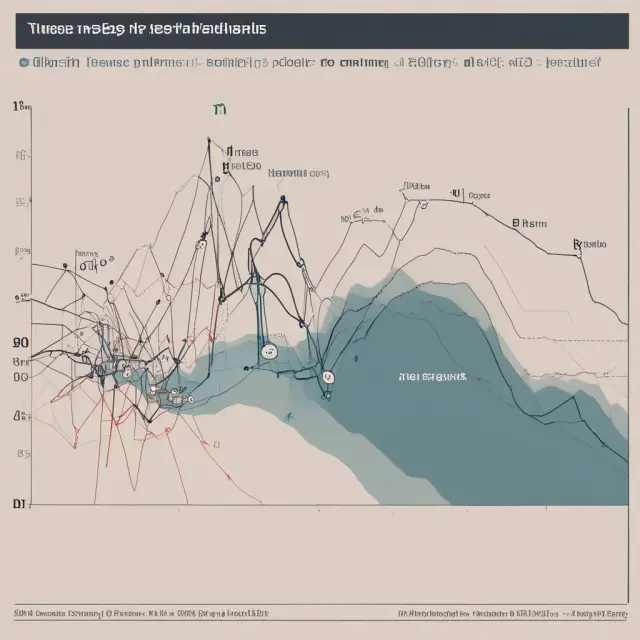
One important aspect of EUR is the classification of reserves based on the level of confidence in their recovery. EUR comprises three categories: proven reserves, probable reserves, and possible reserves.
Proven Reserves
Proven reserves refer to oil or gas that has a greater than 90% probability of being recovered using current technology and economic conditions. These reserves represent the most reliable portion of an oil field’s resources. Proven reserves are critical for investors and companies as they serve as a solid foundation for future production and revenue growth.
Probable Reserves
Probable reserves, on the other hand, have a greater than 50% chance of being recovered using existing technology and economic conditions. Although not as certain as proven reserves, probable reserves still hold considerable value due to their potential to contribute to an oil company’s future production and income.
Possible Reserves
The third category, possible reserves, have a significant likelihood (less than 50%) of being recovered using existing technology and economic conditions. The possibility for recovery is not definitive, making the value of these resources less certain. However, advancements in technology or changes in market conditions could lead to their re-classification as proven or probable reserves.
It’s crucial to note that proven reserves can change over time due to factors like technology improvements and shifts in oil prices. As oil prices rise, previously uneconomical recoveries become viable, increasing the amount of proven reserves. Conversely, declining oil prices can cause some proven reserves to be reclassified as probable or possible reserves when they become economically unfeasible to produce.
By understanding this classification system and how EUR is utilized within it, investors can make informed decisions on which oil companies and projects have the greatest potential for long-term growth and profitability.

Factors Influencing Estimated Ultimate Recovery
Estimated ultimate recovery (EUR) is a vital metric for oil companies and investors involved in the exploration and production sector. EUR, which refers to the total amount of hydrocarbons that can be extracted from a reservoir or well, serves as an essential factor in assessing project viability and profitability. In this section, we’ll discuss various factors impacting estimated ultimate recovery, including oil prices, technological advancements, and geological conditions.
Oil Prices: The price of crude oil plays a significant role in the estimation of EUR. Higher oil prices make it economically feasible to recover reserves that were previously unprofitable. As oil prices increase, reserves categorized as probable or possible may be reclassified as proven due to improved economic conditions, thereby increasing the overall EUR. Conversely, lower oil prices can lead to lower production and result in a decrease in EUR as uneconomical reserves are left untapped.
Technological Advancements: Innovations and advancements in exploration, drilling, and recovery technologies have significantly impacted estimated ultimate recoveries. Enhanced oil recovery (EOR) techniques such as water flooding, gas injection, and thermal methods can extract more hydrocarbons from mature fields that were previously considered depleted. These advancements allow companies to reclassify reserves from probable or possible to proven and extend the life of aging oil fields.
Geological Conditions: Geological conditions are another crucial factor influencing estimated ultimate recovery. The porosity, permeability, and structural complexity of reservoirs can significantly impact the amount of hydrocarbons that can be extracted. Reservoirs with high porosity and permeability allow for more extensive oil or gas extraction, while reservoirs with low values of these properties may yield less overall EUR. Additionally, complex geological structures like faults and fractures can act as barriers to hydrocarbon flow, making it challenging to extract all the resources from the reservoir.
Understanding how these factors impact estimated ultimate recovery is crucial for investors seeking to make informed decisions in the oil and gas industry. By analyzing trends and forecasting price movements, technological advancements, and geological conditions, investors can make better investment choices and stay ahead of their competition.

Why Is Estimated Ultimate Recovery Important for Institutional Investors?
Estimated ultimate recovery (EUR) is a crucial metric in the financial evaluation and decision-making process for institutional investors investing in the oil and gas sector. EUR is an essential tool used to determine the value of an oil company’s reserves, which impacts its stock price, profitability, and overall investment potential. By evaluating the EUR of various oil companies, institutional investors can assess the financial viability of drilling projects, gauge a company’s growth prospects, and make informed investment decisions.
Institutional investors primarily rely on EUR as a means to compute net present value (NPV) for oil exploration projects. NPV is an essential valuation metric used in capital budgeting that helps determine the profitability of investments by considering the time value of money. To calculate the NPV of an oil project, one must consider factors such as initial investment costs, projected cash flows, and discount rates. EUR plays a vital role as it represents the ultimate amount of recoverable oil or gas from a reservoir or well. A higher EUR indicates greater potential for profitability due to higher future cash inflows, making the project more attractive to investors.
Additionally, EUR is used by institutional investors as an indicator of a company’s ability to generate free cash flow in the long term. Free cash flow represents the amount of money that a business generates after accounting for all operating expenses and capital expenditures. By analyzing a company’s EUR trends over time, investors can assess its capacity to create future value through new exploration projects or by enhancing existing ones.
Investors also use EUR to compare the performance of different oil companies, as it provides insight into the overall size and potential profitability of a company’s reserves. This information is significant for institutional investors as they often invest in multiple companies within the energy sector, allowing them to make informed decisions about portfolio allocation based on each company’s EUR relative to its peers.
EUR is also crucial for monitoring a company’s operational performance and growth prospects. A decline in EUR can indicate decreasing production levels or aging oil fields that may require significant investments to maintain profitability. Conversely, an increase in EUR may suggest new discoveries or improvements in drilling technologies, potentially driving stock prices higher.
In summary, Estimated ultimate recovery (EUR) plays a crucial role for institutional investors as it is a primary metric used to value oil and gas reserves, compute net present value, evaluate growth prospects, and compare the performance of various companies within the energy sector. By closely examining EUR trends and projections, institutional investors can make informed investment decisions that maximize returns while minimizing risk.
Estimated Ultimate Recovery and Net Present Value (NPV)
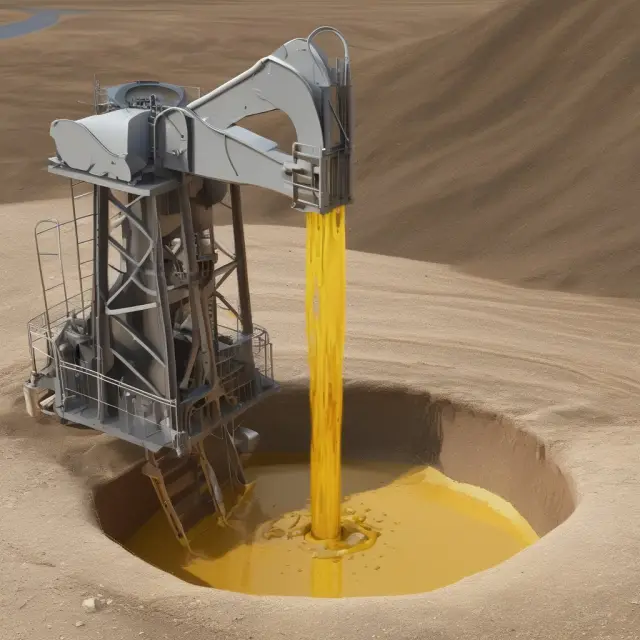
The Estimated Ultimate Recovery (EUR) plays a pivotal role in evaluating the financial viability and potential profitability of oil projects for both companies and investors. EUR represents the total quantity of hydrocarbons that can be extracted from a particular reservoir or deposit, offering valuable insights into the commercial potential of an asset. This section focuses on how EUR is employed to compute Net Present Value (NPV) for oil projects.
To better grasp the significance of this connection, let us first establish the concept of NPV and its relevance to capital investments. In finance, NPV represents the difference between the present value of cash inflows generated by an investment and the initial cost of that investment. When considering oil drilling projects, NPV analysis offers a rational approach to assessing whether the potential revenues from a well will outweigh its costs over the project’s life cycle.
To compute the NPV for an oil drilling project, investors and companies rely on several key inputs: the cost of bringing the first barrel to production (initial capital investment), the long-term price of oil, and the ultimate amount of oil that will be produced, i.e., the Estimated Ultimate Recovery. EUR provides a critical piece of information for project valuation as it helps determine the expected cash flows from the well over its entire life cycle.
The calculation of EUR can employ various methods depending on the study’s scope and objective. For instance, in deterministic approaches, engineers may utilize historical production data and reservoir engineering models to make linear or polynomial extrapolations to estimate ultimate recovery. Alternatively, probabilistic techniques like Monte Carlo simulations can be employed to account for uncertainties by considering a range of possible outcomes.
As the oil industry strives to optimize resource utilization and minimize risk, understanding EUR becomes essential for making informed investment decisions. For example, companies may use this metric as a threshold for evaluating projects’ viability, ensuring that potential investments meet an acceptable EUR level to guarantee profitability over their life cycle.
Moreover, investors rely on accurate EUR estimates when comparing potential investments and assessing the risk-reward profile of each opportunity. A higher estimated ultimate recovery implies lower per-barrel production costs, which can translate into greater overall revenue and a stronger financial case for investment. Inversely, a lower EUR estimate may prompt investors to reconsider their interest in a project due to reduced potential returns.
In conclusion, the Estimated Ultimate Recovery (EUR) is an essential metric for oil companies and investors alike as it provides valuable insights into the financial potential of drilling projects by serving as one of the primary inputs for Net Present Value (NPV) calculations. By accurately estimating EUR, companies can make more informed decisions when investing in new projects, while investors can use this information to compare various opportunities and evaluate their risk-reward profile.

Impact of EUR on Oil Drilling Projects
Estimated Ultimate Recovery (EUR) is a crucial factor in determining whether drilling projects are viable and profitable for oil companies. By estimating the amount of recoverable oil or gas, investors can assess the potential financial rewards of an exploration project and evaluate its risks. The importance of EUR is highlighted when considering that most drilling projects require significant initial investments and long-term commitments.
EUR is determined using several methods, with the two most common being the deterministic and probabilistic approaches. The deterministic method employs a single point estimate for the ultimate recovery, assuming constant production rates over the life of a well or reservoir. In contrast, the probabilistic approach uses a range of possible outcomes, enabling oil companies to quantify uncertainty and risk associated with their investments.
When evaluating the profitability of an oil drilling project, investors compare its estimated EUR against its break-even point or the minimum amount of recoverable resources necessary to cover the costs of exploration, drilling, and production. If the estimated EUR exceeds the break-even point, the project can be considered financially viable. Conversely, if the EUR falls below this threshold, it may not be worth pursuing.
The importance of accurately estimating an oil reservoir’s EUR is magnified by the volatile nature of oil prices and advancements in extraction technologies. Oil prices can significantly impact a project’s financial viability as they influence the breakeven price for recovery. Similarly, advancements in oil recovery techniques, such as enhanced oil recovery (EOR), can boost EUR by extracting previously unrecoverable reserves.
The consequences of misjudging an oil reservoir’s EUR can be severe, leading to costly mistakes and financial losses for investors. For instance, underestimating EUR might result in abandoning a project before fully realizing its potential economic benefits, while overestimation could lead to investing more resources than necessary.
Institutional investors, including mutual funds, pension funds, and hedge funds, heavily rely on accurate EUR estimates when assessing the value of oil companies. An underperforming asset can negatively impact an investor’s portfolio returns, while a well-performing stock can bring substantial gains. As such, understanding Estimated Ultimate Recovery is essential for any investor seeking to make informed investment decisions in the oil and gas sector.

Case Studies: Estimated Ultimate Recovery Successes and Failures
Estimated ultimate recovery (EUR) plays a pivotal role in determining the viability and profitability of oil drilling projects. Let’s explore some real-life examples to illustrate the importance of EUR in the oil industry.
One noteworthy success story is that of the Ghawar Oil Field in Saudi Arabia, which holds an estimated ultimate recovery of 64 billion barrels. Discovered in 1948, this mammoth field has consistently maintained its position as the world’s largest oil field for several decades. Its immense EUR was a significant factor in making it a profitable investment for Saudi Aramco, the national petroleum company that owns and operates the field.
On the other hand, there are instances where EUR estimates were not met or exceeded, leading to financial losses for companies. For example, the Mars Oil Field located off the coast of California was initially estimated to have a recovery rate of 40 billion barrels. However, production ceased in 1992, and by then only about 3.5 billion barrels had been extracted. This significant discrepancy between estimated and actual EUR resulted in substantial losses for investors.
Increasing oil prices can lead to a shift in the classification of proven reserves as new recovery techniques become viable, increasing an oil field’s estimated ultimate recovery. For instance, the North Sea oil fields were once considered exhausted, but technological advancements like horizontal drilling and water injection techniques have allowed for the reclassification of some previously unproductive reserves to proven, boosting their EUR.
However, it is crucial to note that EUR is an estimation and not a definitive figure. There are several factors that can influence its accuracy, including technological advancements, changing oil prices, geological conditions, and the efficiency of extraction processes. As such, it’s essential for investors to conduct thorough due diligence on companies in the industry to assess their track record in estimating EUR and their ability to adapt to shifting market conditions. By understanding the concept of Estimated Ultimate Recovery and how it is applied in practice through case studies, investors can make more informed decisions when considering opportunities within the oil and gas sector.

FAQs about Estimated Ultimate Recovery
What exactly is Estimated Ultimate Recovery (EUR)?
Estimated ultimate recovery, also known as “ultimate recoverable resources,” refers to the total quantity of hydrocarbons that can be economically extracted from a reservoir or field over its entire life cycle. EUR is crucial in investment decisions and helps oil companies determine the profitability of drilling projects by providing an estimate of future production potential.
How is Estimated Ultimate Recovery calculated?
Calculating EUR involves various methods, such as material balance calculations, engineering reserves assessments, or geological estimates using geostatistical models. These methods aim to evaluate the hydrocarbon volume in place and predict the percentage that can be recovered.
What are the components of Estimated Ultimate Recovery?
The components of EUR consist of three categories: proven reserves (reserves with a high degree of confidence), probable reserves (reserves with some uncertainty), and possible reserves (resources with a lower level of confidence). The classification can change depending on oil prices, technological advancements, and other factors.
Why is Estimated Ultimate Recovery crucial for investors?
Estimated ultimate recovery plays a significant role in the financial evaluation of an oil company. It helps institutional investors gauge a company’s profit potential by assessing its reserves and comparing them with industry benchmarks and competitors. Additionally, EUR is used as a primary input when valuing drilling projects to determine their net present value (NPV).
How does Estimated Ultimate Recovery impact oil prices?
EUR influences the price of oil in various ways. If the total EUR of an oil field or reservoir is high, it can contribute to increased production levels and put downward pressure on oil prices. Conversely, a low EUR can result in reduced production and upward pressure on prices.
How does Estimated Ultimate Recovery differ from proven reserves?
Proven reserves are a subset of an oil field’s or reservoir’s total recoverable resources. Proven reserves represent the portion of the resource that has undergone detailed engineering analysis and geological evaluation, resulting in a high level of confidence in their recovery. EUR encompasses the entire spectrum of recoverable resources, including proven, probable, and possible reserves.
Can Estimated Ultimate Recovery change over time?
Yes, EUR can change over time due to various factors like oil prices, technology advancements, and new discoveries. For instance, as technology improves, previously classified probable or possible reserves may be reclassified as proven reserves, increasing the total EUR of a reservoir. Conversely, if oil prices drop significantly, some previously economically recoverable resources may become uneconomical, resulting in a decrease in overall EUR.
 Next entry · No. 1,343Understanding Exchange-Traded Funds (ETFs): Types, Benefits, and How to Buy
See also
-
 No. 5,103
12 Aug 2025
18 min
Total Shareholder Return (TSR): Understanding This Investment Performance Metric
Business Finance
No. 5,103
12 Aug 2025
18 min
Total Shareholder Return (TSR): Understanding This Investment Performance Metric
Business Finance -
 No. 1,654
18 Oct 2024
18 min
Understanding Forward Rates: A Comprehensive Guide for Institutional Investors
Business Finance
No. 1,654
18 Oct 2024
18 min
Understanding Forward Rates: A Comprehensive Guide for Institutional Investors
Business Finance -
 No. 1,366
05 Sep 2024
19 min
Understanding and Utilizing the Enterprise Value-to-Revenue Multiple (EV/R)
Business Finance
No. 1,366
05 Sep 2024
19 min
Understanding and Utilizing the Enterprise Value-to-Revenue Multiple (EV/R)
Business Finance -
 No. 741
31 May 2024
22 min
Understanding Conflict Theory: A Perspective on Social Inequality and Power Struggles
Business Strategy
No. 741
31 May 2024
22 min
Understanding Conflict Theory: A Perspective on Social Inequality and Power Struggles
Business Strategy -
 No. 5,830
11 Oct 2025
19 min
X-Efficiency: Understanding the Concept and Its Significance for Institutional Investors
Business Finance
No. 5,830
11 Oct 2025
19 min
X-Efficiency: Understanding the Concept and Its Significance for Institutional Investors
Business Finance -
 No. 5,789
07 Oct 2025
19 min
Understanding Working Capital Loans: A Comprehensive Guide for Institutional Investors
Business Finance
No. 5,789
07 Oct 2025
19 min
Understanding Working Capital Loans: A Comprehensive Guide for Institutional Investors
Business Finance