Exploring Econometrics: Techniques and Applications for Economic Analysis

Discover how econometrics is used as a statistical tool in economics and finance. Learn techniques from regression analysis to time series analysis.
What Is Econometrics?
Econometrics is a powerful statistical methodology that plays an essential role in economics and finance by allowing researchers to analyze and model economic relationships based on data. By subjecting real-world information to rigorous statistical tests, econometricians can challenge existing theories or generate new hypotheses, provide insights into the relationship between variables, and make predictions about future trends.
Econometrics’ foundation lies in mathematical and statistical models that enable researchers to quantify economic theories using observed data. Econometric techniques include regression analysis, time series analysis, frequency distributions, probability, and probability distributions, among others. These methods have been instrumental in addressing various economic questions, from understanding the relationship between income and consumption to predicting stock market trends based on historical data.
The origins of econometrics can be traced back to the pioneering work of scholars like Lawrence Klein, Ragnar Frisch, and Simon Kuznets. These economists made significant contributions by applying statistical methods to economic theory, leading to the development of new insights and tools for analyzing data. Today, econometric analysis is a widely used practice among academics, financial professionals, and policymakers alike.
At its core, econometrics involves testing hypotheses about the relationships between variables using empirical data. To do this, researchers first gather relevant data and define a specific hypothesis that explains the nature and shape of the dataset. Next, they employ statistical models to analyze the data and test the proposed hypothesis. The most common econometric method is multiple linear regression, where more than one explanatory variable is used to explain the behavior of the dependent variable.
Econometricians rely on software packages such as STATA, SPSS, or R for conducting analyses that offer features like statistical significance testing, which helps determine if correlations might be occurring by chance. Common techniques include R-squared, t-tests, p-values, and null hypothesis testing.
Despite its widespread use and the valuable insights it provides, econometrics does have limitations. Critics argue that overreliance on statistical models can lead to a lack of economic reasoning and causal mechanisms, which is essential for truly understanding economic phenomena. It’s crucial to remember that correlation does not imply causation and that econometric findings must be rooted in sound theory or risk being misinterpreted or misunderstood. Additionally, the possibility of endogeneity—where the error term might be correlated with other variables—needs to be carefully accounted for to ensure accurate results.
In conclusion, econometrics is an essential tool for analyzing economic relationships and understanding complex systems, providing valuable insights into the behavior of financial markets, macroeconomic trends, and consumer spending patterns. By applying statistical methods to real-world data, econometricians can test hypotheses, uncover relationships, and make predictions that inform economic policy, business strategies, and academic research.

Data Collection and Preparation
The initial phase of any econometric analysis involves obtaining suitable data for the study. Econometrics requires comprehensive, accurate, and reliable data from various sources. The data could be historical price series, survey responses, or time-series variables such as inflation rates or employment levels. In the context of our example, if we aim to examine the relationship between the annual percentage change in the S&P 500 stock index and unemployment rates, we would first need to gather both sets of data from credible sources, like the Federal Reserve Economic Data (FRED) and Bureau of Labor Statistics.
The next stage is data preparation. This process entails cleaning and transforming raw data into an appropriate format for econometric analysis. The primary objective is to eliminate errors, inconsistencies, or missing values that could skew results or make interpretation difficult. Common techniques include:
- Imputation: This method involves replacing missing or incorrect data points using statistical formulas based on available data, such as mean, median, mode, or regression analysis.
- Outlier removal: Identifying and eliminating data points that significantly deviate from the norm to maintain a reasonable sample size and improve model stability.
- Transformation: Applying mathematical functions to non-linear data to ensure linearity before applying econometric models. For example, taking logarithmic or square root transformations of variables to make them more suitable for regression analysis.
- Normalization: Scaling variables by dividing each observation by a constant value, so all variables have the same units and fall within a specific range. This simplifies model interpretation and ensures equal importance among predictors.
- Stationarity: Testing whether a time series is stationary or non-stationary before applying econometric models. A stationary series has constant statistical properties over time, which makes it easier to analyze.
Once the data is cleaned and transformed, it is then merged into a single dataset for further analysis, including descriptive statistics and visualizations to better understand the data’s structure and relationships. Careful data collection and preparation are crucial steps that ensure the validity and reliability of econometric results.

Statistical Inference and Hypothesis Testing
In the realm of econometrics, statistical inference plays a crucial role as it provides insights into the relationship between economic theories and real-world data. Statistical inference is the process of making deductions about a population based on information contained within a sample. Hypothesis testing, specifically, is an application of statistical inference that assesses the validity of a given hypothesis.
Suppose we have an economic theory and we want to determine if it holds true using real-world data. We form a hypothesis based on our theory, and then test it against the available data to see if the evidence supports or rejects the hypothesis. If the data is in agreement with the hypothesis, we consider it statistically significant.
To illustrate this process, let us explore an example using simple regression analysis. In its most basic form, a linear regression model expresses the relationship between two variables as a straight line. In our case, we are interested in whether there is a causal link between an economic variable x and another economic variable y.
The null hypothesis (H0) states that there is no statistically significant relationship between the variables x and y. Conversely, the alternative hypothesis (Ha) asserts that there is indeed a relationship between the two variables.
To determine if H0 or Ha is correct, we collect data points (x1, y1), (x2, y2), … (xn, yn) from our sample and perform statistical analysis. One popular method for testing regression relationships is the t-test. In this procedure, a test statistic called the t-value is calculated to assess the significance of the coefficient of x in the regression equation.
If the absolute value of the t-value exceeds the critical value determined from the chosen level of significance (often 0.05), then we reject H0 and accept Ha, concluding that there is a statistically significant relationship between variables x and y.
However, it is essential to remember that correlation does not necessarily imply causation, as it is possible for spurious relationships to emerge due to random chance. Consequently, econometricians must always be cautious about making definitive statements based on statistical analyses alone.
Additionally, there are several types of econometrics methods beyond simple and multiple regression, including time series analysis and panel data analysis. The choice between them depends on the nature of the data being analyzed.
In conclusion, statistical inference and hypothesis testing serve as essential components of econometric analysis, enabling us to examine economic theories against real-world evidence to validate or reject hypotheses. However, it is imperative to remember that correlation does not equal causation, and careful interpretation of results is a must when making conclusions based on econometric analyses.
Regression Analysis
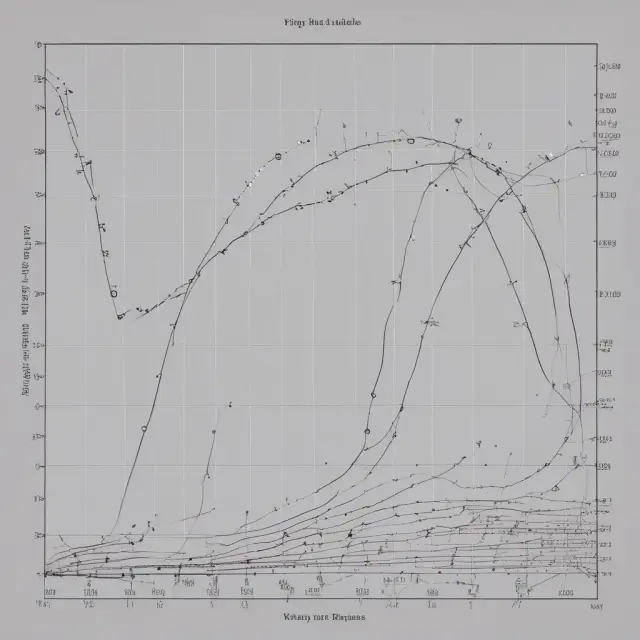
Regression analysis is a powerful statistical technique used extensively within the realm of economics and finance to explore relationships between variables. It’s a critical component of econometrics, which involves applying mathematical methods to develop theories or test hypotheses. The regression analysis methodology relies on the identification of a relationship—often linear—between an independent variable, typically referred to as the explanatory variable, and a dependent variable (the outcome variable). The goal is to ascertain whether the change in the value of the explanatory variable is associated with changes in the dependent variable.
Two primary regression analysis approaches are simple and multiple regression. With simple regression analysis, a single independent variable determines the relationship between two variables, while multiple regression analysis incorporates the influence of more than one independent variable on the dependent variable. For example, you might be interested in discovering the relationship between inflation rates and Gross Domestic Product (GDP) growth. In such an instance, the inflation rate is the dependent variable, whereas the GDP growth rate would be an independent variable.
A crucial aspect of regression analysis involves evaluating the statistical significance of the results. R-squared is a measure that indicates the proportion of variance in the dependent variable explained by the independent variables within the model. The higher the R-squared value, the stronger the relationship between the independent and dependent variables. T-tests determine if there’s a statistically significant difference between the means of two groups. P-values reveal whether there is a significant correlation or association between two variables. Null hypothesis testing assesses whether it can be assumed that the observed results are due to chance alone.
In certain cases, econometric models might face autocorrelation issues, which necessitates the use of techniques like generalized method of moments (GMM) or vector autoregression (VAR). Autocorrelation occurs when a variable’s value at one point in time is influenced by its previous value(s). Econometricians must carefully consider these issues to ensure accurate and unbiased results.
In situations where the goal is to analyze binary outcomes, such as whether an individual defaults on a loan or not, economists employ logistic regression (or probit models), which are extensions of linear regression analysis. Logistic regression enables the modeling of probability distributions for categorical data, making it invaluable when dealing with binary and dichotomous outcomes.

Autocorrelation and Time Series Analysis
Autocorrelation, also known as serial correlation or autoregressive correlation, measures the relationship between a variable and its past values, particularly useful for analyzing time-series data. This concept is essential for understanding how past observations influence future trends in econometrics.
In time series analysis, autocorrelation examines the correlation between the current value of a variable with previous values. For instance, when studying stock prices, an analysis might reveal that present prices have a stronger correlation with their past values than with unrelated variables. This phenomenon is crucial for investors and traders in financial markets, as it can help them predict future price movements and manage risks more effectively.
To illustrate the importance of autocorrelation, let’s consider a simple example. Imagine you are an investor looking to buy stocks based on historical data. You have access to daily stock prices for a particular company over several years. By examining the autocorrelation between the daily price returns, you can determine whether past stock price movements influence future price changes. If your analysis shows strong positive autocorrelation (i.e., recent price movements influence future price movements), you might adjust your investment strategies accordingly to account for this trend.
The presence of autocorrelation in econometric data poses challenges, as it may lead to spurious correlation and biased estimates when using ordinary least squares (OLS) regression methods. To address these issues, various techniques have been developed, such as ARMA (Autoregressive Moving Average) models, which can help account for autocorrelation in time series data.
Another critical aspect of econometric analysis is dealing with endogeneity, where the error term may be correlated with one or more independent variables. When this occurs, it can lead to biased parameter estimates and incorrect conclusions about causality. To mitigate the impact of endogeneity, researchers often employ instrumental variable methods (IV), which use exogenous variables to address the correlation between endogenous variables and errors in econometric models.
It is essential to recognize that while autocorrelation and endogeneity can significantly influence the results of econometric analyses, they are not unique challenges. Econometricians must also consider other factors such as heteroscedasticity, multicollinearity, and nonlinearities when interpreting their results. By understanding these issues and employing appropriate analytical techniques, researchers can generate more accurate and reliable findings that contribute to our broader knowledge of economic phenomena.

Endogeneity and Instrumental Variables
In econometrics, one crucial assumption is the exogeneity of independent variables; that is, they don’t influence each other or have a causal relationship, but rather are causes for the dependent variable. However, it’s common to encounter situations where endogenous variables—those influenced by the independent variable or having a reciprocal relationship with it—may exist in econometric models. Endogeneity can lead to biased and inconsistent parameter estimates as the error term may be correlated with one or more independent variables. This results in OLS (ordinary least squares) estimates failing to meet the unbiasedness and efficiency criteria.
To address the issue of endogeneity, econometricians employ instrumental variable methods. Instrumental variable analysis is a two-step technique: first, identifying valid instruments (IVs), which are variables that influence an endogenous variable but not directly related to the error term. Then, using these IVs to estimate parameters in the econometric model. By doing so, one can isolate the causal effect of independent variables on the dependent variable, despite their correlation.
The identification of valid instruments requires a solid understanding of economic theory and data. One example includes using lagged values as instrumental variables, assuming they don’t directly influence the error term but have an impact on the endogenous variable. For instance, if you are studying the relationship between education (an endogenous variable) and income, you can use previous education levels as instruments since past educational attainment may affect current education without being related to the error term.
Another application of instrumental variables is in estimating causal effects in regression models with two or more correlated explanatory variables, where OLS fails due to multicollinearity issues. In these cases, one can use an instrumental variable to isolate the individual effect of each variable on the dependent variable.
The choice and validity of instrumental variables are essential for accurate estimation results in econometric studies. Violating the exogeneity assumption can lead to biased parameter estimates, incorrect causal conclusions, and potentially detrimental policy decisions based on these findings.

Limitations and Criticisms of Econometrics
Despite its widespread use and successes, econometrics has faced criticisms from some quarters for overemphasizing statistical correlation over economic reasoning. A prominent critique comes from the renowned economist John Maynard Keynes, who famously declared that “the long-run is a misleading guide to current affairs.” Keynes argued that focusing on historical data might not provide accurate predictions for future economic trends, as economic systems are inherently complex and dynamic.
Moreover, critics argue that econometrics’ reliance on correlation analysis does not prove causation. For example, finding a strong correlation between ice cream sales and drownings may not imply that ice cream causes drowning. Instead, it might merely reflect the fact that both activities are more popular during hot summer months.
Econometric models also have certain limitations in terms of their assumptions. For instance, the assumption of linearity might be inappropriate for complex economic phenomena, such as non-linear relationships or discontinuities. Furthermore, econometrics may not capture important factors that are difficult to quantify, such as human behavior and institutional factors.
Another concern is that econometric models might overlook important endogeneity issues. Endogeneity refers to a situation where the causal relationship between variables is not clear, as one variable could influence another. In some cases, this can lead to biased or inconsistent results, particularly in regression analyses. To address this issue, researchers may use instrumental variables to help identify causal relationships more accurately.
In summary, econometrics provides valuable insights into economic phenomena by applying statistical methods to real-world data. However, it is essential to recognize its limitations and potential shortcomings, such as the need for economic reasoning, the importance of avoiding false causality, and the challenges in modeling complex systems with many interdependent variables. By being aware of these issues and striving for rigorous methodology, econometricians can continue to contribute meaningful analyses that inform economic understanding and policy decisions.

Real-World Applications of Econometrics
Econometrics has gained immense popularity within both the academic and professional spheres due to its ability to provide insights into economic phenomena using quantifiable data analysis. Econometric techniques, such as regression analysis and statistical inference, are widely used across various domains for testing theories, developing hypotheses, and forecasting future trends. This section explores a few real-life applications of econometrics.
One significant application can be found in academic research. Economists frequently employ econometric models to investigate complex relationships within economic systems by analyzing large datasets. For example, researchers may use econometric analysis to explore the relationship between interest rates and inflation or to study the impact of fiscal policies on economic growth. By providing rigorous quantitative evidence, such research can contribute valuable knowledge to the academic community and inform policymakers about potential courses of action.
Businesses also utilize econometrics for various purposes, including forecasting sales trends, optimizing pricing strategies, and assessing risks in financial markets. For instance, retailers might employ econometric models to anticipate consumer demand based on historical data and seasonality patterns. This knowledge can help businesses better manage inventory levels, allocate resources more effectively, and make data-driven decisions for marketing campaigns and sales promotions.
Econometrics is not limited to the private sector; it also plays a crucial role in policy analysis and implementation. Government agencies and international organizations, such as the World Bank and the International Monetary Fund, utilize econometric techniques extensively in their work. Economists often employ econometric models to evaluate the potential impact of various economic policies on key indicators like employment, inflation, or GDP growth. This information can help policymakers make informed decisions about fiscal or monetary policy adjustments and allocate resources more effectively.
Furthermore, econometrics plays a critical role in forecasting future trends by analyzing historical data and identifying patterns. For instance, central banks use econometric models to predict inflation rates, allowing them to set interest rates accordingly and maintain price stability. Similarly, financial institutions use econometric techniques to assess the risk of various investments based on historical performance data. This information is crucial for investors as it enables them to make more informed decisions about their portfolios and manage risks more effectively.
In conclusion, econometrics is an invaluable tool for economic analysis across various domains. By providing quantifiable evidence and insights into complex relationships, econometric techniques have transformed the way we approach economic research, business decision-making, and policy analysis. Understanding econometrics is essential for anyone interested in economics or finance, as it offers a powerful means of analyzing data to make informed decisions based on sound statistical evidence.

Software Packages for Econometric Analysis
When it comes to econometrics analysis, one essential aspect is the software package used to perform the required computations and generate the necessary results. Econometric analysis often involves complex statistical calculations and modeling techniques that can be time-consuming and intricate, making an appropriate software package crucial for accurately analyzing data. In this section, we will discuss some popular econometrics software packages and their significance in the field.
Commonly Used Software Packages
1. STATA
Stata is a widely-used statistical software for data analysis, data management, and statistical modeling, including econometric applications. Its powerful features, extensive documentation, and user-friendly interface make it an ideal choice for researchers and practitioners alike (StataCorp LLC, 2019). Some of its key econometric capabilities include:
– Multiple regression analysis
– Time series analysis
– Autoregressive distributed lag (ADL) models
– Autoregressive integrated moving average (ARIMA) models
– Generalized method of moments (GMM) estimation
2. SPSS
SPSS, an acronym for Statistical Package for the Social Sciences, is another popular software used for statistical analysis and econometric applications. It has a user-friendly graphical interface and offers various features such as:
– Regression analysis
– Time series analysis
– Autoregressive integrated moving average (ARIMA) models
– Generalized linear models (GLM)
– Longitudinal data analysis (LDA)
3. R
R is an open-source programming language and software environment for statistical computing and graphics. It offers a vast array of packages, including those specifically designed for econometric analysis:
– ggplot2 for data visualization
– lm() function for linear regression
– arima() function for time series analysis
– glmnet package for generalized linear models
– quantreg package for quantile regression and related methods
Selecting the Appropriate Software Package
The choice of software depends on factors such as the data size, available resources, level of expertise, and personal preference. For smaller datasets or basic econometric analysis, STATA or SPSS may be more suitable due to their ease-of-use and graphical interface. However, for large datasets or more complex analyses, R’s flexibility and customization options make it a popular choice among researchers.
In conclusion, software packages play an essential role in econometric analysis by providing the necessary tools for data manipulation, statistical computations, and model estimation. Choosing the right software package is crucial to ensure accurate results and efficient analysis of economic and financial data.

FAQs and Best Practices for Econometrics Analysis
Econometrics is an essential tool for analyzing economic trends and testing hypotheses, but it also comes with its own set of challenges and considerations. Here are some frequently asked questions and best practices to help you get the most out of your econometric analysis.
What Is Econometrics?
Econometrics is a quantitative approach for analyzing economic theories using statistical techniques, such as regression analysis and time-series methods, with real-world data. It aims to test or develop economic hypotheses by generating models that best fit the data and then assessing their validity through statistical tests. Econometricians may use various software packages like STATA, SPSS, or R to perform the analyses.
What Are the Different Types of Regression Models?
There are several types of regression models available for econometric analysis: simple linear regression, multiple linear regression, and nonlinear regression. The most commonly used model is multiple linear regression, where more than one explanatory variable is included to explain the dependent variable. Logistic regression or probit models can be applied when dealing with binary outcomes (yes-no).
What Are Autocorrelation and Endogeneity?
Autocorrelation measures the relationship between a single variable at different time periods, while endogeneity deals with variables that are influenced by changes in other variables. Econometricians must account for autocorrelation to ensure accurate results, and they should carefully consider potential endogeneity issues when designing their models. Instrumental variables can help address endogeneity concerns by introducing a third variable not directly related to the error term.
What Are Some Best Practices for Econometric Analysis?
To conduct effective econometric analysis, follow these best practices:
– Carefully prepare your data, including cleaning and transforming it as needed.
– Consider multiple models and choose the most appropriate one based on theoretical underpinnings and statistical tests.
– Incorporate robustness checks to ensure model validity and reliability.
– Interpret your results in light of economic theory and real-world contexts.
– Ensure transparency by documenting your methods, assumptions, data sources, and limitations.
What Are Some Limitations of Econometrics?
Econometrics has its challenges:
– It does not prove causation; correlation does not imply causality.
– It relies on assumptions (e.g., linearity, homoscedasticity) that might be violated in real-world data.
– Estimates can be sensitive to small changes in data or model specifications.
How Can Econometrics Be Used?
Econometric analysis is applied across various fields, from academia to finance and policymaking. It can help uncover relationships between variables, test economic theories, identify causal factors, and generate forecasts. In the financial sector, econometric models are used for portfolio management, risk assessment, time series forecasting, and option pricing.
What Are Common Software Packages Used in Econometrics?
Popular software packages for econometric analysis include STATA, SPSS, and R, which offer various modeling techniques and statistical tests to help researchers test hypotheses and generate insights from their data.
 Next entry · No. 1,203Understanding and Utilizing the Economic Calendar for Investment and Trading
See also
-
 No. 1,156
05 Aug 2024
21 min
Understanding the Durbin-Watson Statistic: Testing for Autocorrelation in Regression Analysis
Finance Policy
No. 1,156
05 Aug 2024
21 min
Understanding the Durbin-Watson Statistic: Testing for Autocorrelation in Regression Analysis
Finance Policy -
 No. 4,266
05 Jun 2025
17 min
Understanding R-Squared: The Statistical Measure of Correlation in Finance and Investment
Financial Data Analysis
No. 4,266
05 Jun 2025
17 min
Understanding R-Squared: The Statistical Measure of Correlation in Finance and Investment
Financial Data Analysis -
 No. 1,330
31 Aug 2024
20 min
Understanding Error Terms in Finance: An Essential Concept for Institutional Investors
Financial Data Analysis
No. 1,330
31 Aug 2024
20 min
Understanding Error Terms in Finance: An Essential Concept for Institutional Investors
Financial Data Analysis -
 No. 5,450
09 Sep 2025
17 min
Understanding Variance Inflation Factor (VIF) and Multicollinearity in Regression Analysis
Business Finance
No. 5,450
09 Sep 2025
17 min
Understanding Variance Inflation Factor (VIF) and Multicollinearity in Regression Analysis
Business Finance -
 No. 2,806
05 Feb 2025
18 min
The Least Squares Criterion in Finance and Investment: Understanding the Mathematical Formula and Its Applications
Business Finance
No. 2,806
05 Feb 2025
18 min
The Least Squares Criterion in Finance and Investment: Understanding the Mathematical Formula and Its Applications
Business Finance -
 No. 870
23 Jun 2024
18 min
Understanding Data Analytics: A Comprehensive Guide for Institutional Investors
Financial Tools
No. 870
23 Jun 2024
18 min
Understanding Data Analytics: A Comprehensive Guide for Institutional Investors
Financial Tools