Exploring the Role and Impact of the National Bureau of Economic Research in Modern Economics and Finance

Discover the significance and impact of the National Bureau of Economic Research on modern economics and finance, including its history, focus areas, and…
Introduction to NBER: A Brief Overview
The National Bureau of Economic Research (NBER) stands as a vital cornerstone in the world of economics and finance, renowned for its significant contribution to expanding economic knowledge. Established as a private, non-profit organization, NBER’s primary goal is to advance our understanding of the economy through extensive research and dissemination of findings among public policymakers, business professionals, and academia.
NBER: Mission and Significance
The NBER’s significance lies in its role as a nexus for academic discourse and collaboration among economists and researchers, providing a platform for the sharing of groundbreaking research, insights, and findings that impact our economy. As a key player in advancing economic knowledge, the organization has played an essential role in informing public policy decisions and shaping economic theory.
The Reach of NBER: Four Focus Areas
The research conducted by hundreds of leading scholars affiliated with NBER primarily focuses on four areas: developing new statistical measurements, estimating quantitative models of economic behavior, assessing the effects of public policies on the U.S. economy, and projecting the potential impact of alternative policy proposals. This comprehensive approach ensures that a diverse range of perspectives is represented within the organization’s research, enhancing its value to both academic and professional communities.
NBER: The Old Boy Network or Game Changer?
Despite being referred to as “the old-boy network of economics,” the NBER’s role in promoting economic knowledge and insight transcends the moniker. With a diverse range of scholars from various backgrounds, institutions, and expertise, NBER functions as an essential bridge between academia and policy circles. It provides a space for the rapid dissemination and exchange of ideas, fostering innovation within the field of economics and informing vital decisions that shape our economic landscape.
Stay tuned for more in-depth exploration into the history, origins, research focus areas, funding sources, and impact of NBER in future sections!

History and Origins of the NBER
The National Bureau of Economic Research (NBER) is a renowned private, nonprofit research organization dedicated to understanding the complexities of modern economics. Established in 1920 by a group of influential scholars, including Harvard Professor Allyn Young, Wesley C. Mitchell, and Henry Raeder, NBER’s primary objective has been to promote greater knowledge of the workings of the economy through advanced research and analysis.
This prestigious organization plays a significant role in shaping economic discourse among academics, policymakers, and industry professionals. NBER was founded in response to the need for independent and unbiased economic research during a period marked by economic volatility and uncertainty. It was the first organization of its kind to focus on regular, ongoing analysis of economic conditions and trends.
The establishment of the NBER reflected a growing recognition among scholars that economics needed a more rigorous, data-driven approach. During the early 20th century, economists relied heavily on theoretical models and speculation to understand economic phenomena. However, as the economy grew increasingly complex, there was a pressing need for empirical research to supplement these theories.
The NBER responded to this demand by focusing on four primary areas of research: developing new statistical measurements, estimating quantitative models of economic behavior, assessing the effects of public policies on the U.S. economy, and projecting the effect of alternative policy proposals. The organization’s work has since laid the foundation for many important advancements in the field of economics.
In the 1930s, during a time of profound economic upheaval marked by the Great Depression, NBER played a crucial role in shedding light on the causes and consequences of this historic downturn. The organization’s research helped shape policymakers’ understanding of the crisis and paved the way for new approaches to economic management.
Today, NBER continues its mission to promote greater understanding of economic phenomena through cutting-edge research and analysis. Its contributions have been instrumental in advancing our knowledge of the economy and shaping public policy debates.

The Research Focus Areas of NBER
The National Bureau of Economic Research (NBER) is a renowned research organization dedicated to enhancing our collective understanding of the intricacies of modern economics and finance. By bringing together hundreds of leading scholars from academia, business, and public policy institutions, NBER plays a significant role in fostering new ideas, advancing quantitative analysis, assessing the impact of policies on the economy, and projecting potential outcomes under various policy scenarios.
Four primary focus areas for research at the National Bureau of Economic Research encompass:
1. Developing New Statistical Measurements:
NBER’s first area of emphasis is to innovate and refine statistical methods used in economics, allowing researchers to better analyze economic trends and phenomena with greater depth and accuracy. This focus area contributes significantly to the broader field by providing more precise measures, which are critical for understanding complex relationships among various economic variables.
2. Estimating Quantitative Models of Economic Behavior:
A second priority for NBER is estimating quantitative models that capture the underlying dynamics of economic behavior and help economists make predictions about how individual agents (consumers, businesses, or governments) act in response to different circumstances. These models can range from relatively simple regression analyses to sophisticated agent-based simulations, providing insights into a wide range of economic phenomena.
3. Assessing the Effects of Public Policies on the U.S. Economy:
Another crucial area of study for NBER researchers is evaluating the impact of public policies on the economy. By employing rigorous research methodologies, NBER sheds light on both the intended and unintended consequences of government interventions, allowing policymakers, scholars, and other stakeholders to make more informed decisions about policy design and implementation.
4. Projecting the Effects of Alternative Policy Proposals:
Lastly, the National Bureau of Economic Research focuses on assessing the potential outcomes of alternative policy proposals. By using advanced econometric techniques and modeling approaches, NBER researchers generate insights into how proposed policies might affect various economic sectors and overall macroeconomic trends, offering valuable information to policymakers and the public alike.
The research produced by the National Bureau of Economic Research is disseminated primarily through working papers, which are circulated among academics, policy experts, and other interested parties shortly after completion. These working papers serve as a platform for discussion, debate, and further refinement, ensuring that new developments within the field remain at the forefront of academic discourse.

The NBER’s Role in Economic Research
As a non-profit, private research organization, the National Bureau of Economic Research (NBER) plays a vital role in advancing economic knowledge and research. By gathering some of the world’s leading scholars and researchers in economics and business, the NBER supports cutting-edge investigation into major economic issues and disseminates their findings to a broad audience.
The organization facilitates four primary areas of empirical research:
- Developing new statistical measurements
- Estimating quantitative models of economic behavior
- Assessing the effects of public policies on the U.S. economy
- Projecting the effect of alternative policy proposals
NBER’s researchers, comprised of over 1,600 faculty research fellows (junior scholars) and research associates (tenured professors), make substantial contributions to their respective fields by focusing on these research areas. These researchers are not only influential in academia but also among public policymakers, business professionals, and the general public.
The NBER’s funding comes from various sources such as government agencies, private foundations, investment income, and donations from individuals and corporations. The organization’s annual revenue was $32 million in 2020 according to their financial statement.
Economist Paul Krugman describes the NBER as “the old-boy network of economics made flesh.” This is because the organization’s influence extends beyond its small offices, with most well-known economists serving as NBER research associates. These associates release new research under the NBER working paper series to encourage open dialogue and criticism among the academic community.
The importance of the NBER in modern economics is significant. Its working papers function as a primary source for economists to stay informed about new developments and findings in their fields, making them indispensable tools for research and collaboration. Additionally, public policymakers rely on this research to inform their decision-making processes.
In conclusion, the National Bureau of Economic Research is an influential non-profit organization that advances economic knowledge by gathering and supporting leading scholars, funding research, and disseminating findings. The NBER’s role in economic research continues to be essential for both academia and policymakers.

Leading Scholars and Affiliations at NBER
The National Bureau of Economic Research (NBER) boasts a roster of some of the world’s leading scholars and thinkers in economics and finance. These researchers are responsible for driving innovation, advancing knowledge, and shaping policy discussions within their fields. Comprised primarily of Faculty Research Fellows (FRFs) and Research Associates (RAs), these individuals hold tenured positions at their respective universities or institutions, with the backing and support from NBER.
The distinction between the two groups is based on their career stages: FRFs typically represent up-and-coming researchers, while RAs are established scholars whose contributions to economics have been acknowledged by the academic community. In fact, as of 2021, thirty-eight current or past NBER board members and research affiliates have received the Nobel Prize in Economics.
The National Bureau of Economic Research is not only a prestigious platform for researchers but also an essential resource for those within the economics and finance communities. The organization’s influence extends far beyond its offices, with its researchers producing and disseminating knowledge through their NBER working papers. These working papers serve as valuable tools for economists, allowing them to engage in thoughtful dialogue around new developments and research findings within their field.
The importance of the NBER working paper series can be observed through Paul Krugman’s perspective in The New York Times: “In many sub-fields of economics, just about anyone well-known in the profession is an NBER research associate; it’s normal for these associates to release new research as NBER working papers. The function of these papers, in turn, is to get research out quickly so other economists can discuss it (which includes criticizing it). For working economists, the NBER WP series provides what amounts to one-stop shopping for new developments in their field.”
The financial support for the NBER comes from a combination of research grants from government agencies and private foundations, investment income, and contributions from individuals and corporations. In the fiscal year ending June 30, 2020, the organization reported an intake of $32 million.
The role of the National Bureau of Economic Research in modern economics and finance is indispensable, as it not only fosters research but also functions as a critical nexus for economists to collaborate, engage with one another, and contribute to the ongoing discourse within their fields.

NBER’s Funding and Financial Support
The National Bureau of Economic Research (NBER) relies on various sources to maintain its operations and sustain its mission. As a private, nonpartisan organization, it is primarily funded by research grants from both governmental agencies and private foundations, investment income, and contributions from individuals and corporations. In the fiscal year ending June 30, 2020, the NBER generated $32 million in revenue.
One of the most significant sources of support for the NBER comes from government entities such as the National Science Foundation (NSF), National Institutes of Health (NIH), and the U.S. Department of Agriculture’s Economic Research Service (ERS). These grants are crucial for funding various research projects, conferences, and initiatives to assess economic trends and patterns.
Private foundations also provide considerable financial assistance to NBER in support of its objectives. The Alfred P. Sloan Foundation, the Ford Foundation, and the Earhart Foundation are among the most notable supporters of the organization. Their contributions help sustain research projects, workshops, and other activities aimed at advancing economic knowledge and addressing current issues.
Additionally, NBER’s operations are supported by investment income. The organization generates revenue through its investments, which includes a substantial endowment. These funds enable it to maintain ongoing research programs and cover administrative expenses while providing financial stability for long-term planning.
Lastly, individual and corporate donations serve as vital contributions to the NBER’s mission. Support from these contributors ensures that the organization remains accessible to a diverse range of scholars and promotes a dialogue between academia and the broader community. These donations also help fund various initiatives like public events, conferences, and publications that expand the reach and impact of NBER research.
In summary, the NBER’s financial support comes from a combination of government grants, private foundations, investment income, and individual contributions. This diverse funding base allows the organization to continue its essential role in conducting cutting-edge economic research and disseminating findings to policymakers, academics, and the public alike.

The Influence and Impact of NBER Working Papers
NBER research is disseminated through its working paper series. These working papers serve as important catalysts within the academic and economic community, influencing discourse and fostering debate among scholars. Working papers represent a critical step in the publication process, allowing researchers to share their findings with colleagues before they are fully polished for peer-reviewed journals.
NBER working papers carry significant weight, as many are produced by prominent economists and experts in their fields. The quick dissemination of research through this format enables academics to engage in critical discussions surrounding new developments within their respective specializations. Moreover, the open-access nature of these working papers ensures that a wide audience can benefit from the latest economic insights, including policymakers and industry professionals.
The significance of NBER working papers extends beyond the academic sphere. As Paul Krugman, Nobel laureate in economics, emphasized in a New York Times article, “the function of [NBER] WP series is to get research out quickly so other economists can discuss it.” Criticisms and counterarguments help strengthen the overall body of economic knowledge.
The speed at which NBER working papers are released provides a competitive edge for researchers seeking recognition in their field. Scholars who produce influential working papers that spark debate and generate substantial discussions may gain attention from editors, funding agencies, and peers. This positive feedback can ultimately lead to further collaborations, research grants, and eventual publication in prestigious academic journals.
The impact of NBER working papers is not limited to the scholarly community. Policy makers and financial professionals often rely on this research to inform their decision-making processes. The timely dissemination of research findings enables these individuals to respond effectively to economic trends, assess potential policy implications, and address pressing issues.
Additionally, NBER working papers contribute significantly to the development of new statistical measurements, quantitative models, and policy proposals within the field of economics and finance. These advancements can have profound implications on individual investments, industry sectors, and the overall economy.
In summary, NBER working papers play a pivotal role in advancing economic research and knowledge through open communication, critical discourse, and timely dissemination of new findings. Their influence extends beyond academia to policymakers and professionals, ultimately contributing to a better understanding of economic phenomena and the development of effective solutions for pressing issues.
Recognition and Achievements: Nobel Prize Winners
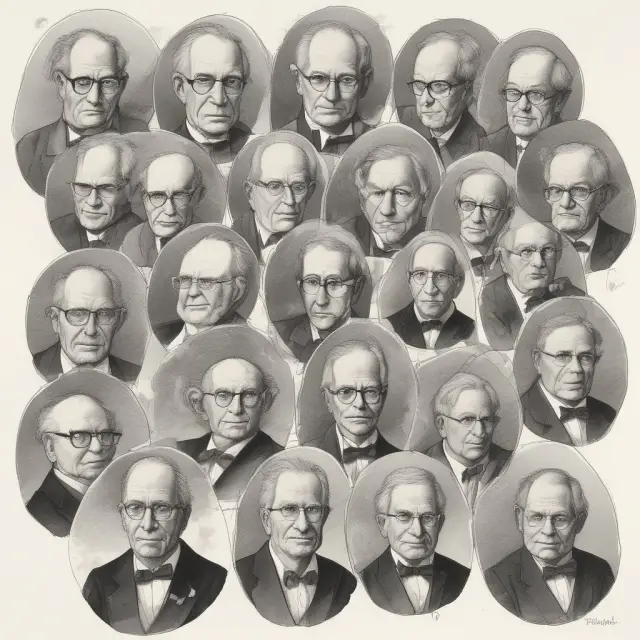
The National Bureau of Economic Research (NBER) is a renowned institution, known for its significant role in fostering cutting-edge research and analysis within the economic field. Among the numerous accolades it has received, perhaps the most prestigious are those bestowed by the Nobel Memorial Prize in Economic Sciences. As of 2021, thirty-eight current or past NBER board members and research affiliates have been awarded this esteemed recognition for their groundbreaking achievements.
Nobel laureates affiliated with NBER have graced the organization with a wealth of knowledge and expertise across various disciplines within economics and finance. The Nobel Prize is an annual international award given to individuals who make outstanding contributions in the fields of Physics, Chemistry, Literature, Peace, and Economic Sciences. In 1968, the Sveriges Riksbank, Sweden’s central bank, established the Memorial Prize in Economic Sciences in memory of Alfred Nobel, the inventor of dynamite.
The collaboration between NBER researchers and Nobel laureates has led to a significant impact on economic theory and policy. Many of the most influential ideas and models in modern economics have originated from researchers affiliated with the esteemed organization. Moreover, the dissemination of research through NBER working papers has facilitated constructive dialogues within the academic community and among policymakers, further strengthening the importance of the institution.
Among the notable laureates who have made significant contributions while associated with the NBER are:
1. Robert Shiller – 2013 Nobel Memorial Prize in Economic Sciences
Robert Shiller is a Yale University economics professor and an NBER Research Associate. He was awarded the prize for his work on asset pricing, including the development of indexes for stock markets and housing markets. Shiller’s research has helped researchers and investors better understand market behavior and financial trends.
2. Paul Krugman – 2008 Nobel Memorial Prize in Economic Sciences
Paul Krugman, a Princeton University professor and former NBER Research Associate, was awarded the Nobel Prize for his work on international trade theory. His research has significantly influenced economic policy discussions on topics such as globalization, economic growth, and income distribution.
3. A. Michael Spence – 2001 Nobel Memorial Prize in Economic Sciences
A. Michael Spence, a Harvard University professor and former NBER Research Associate, was awarded the prize for his work on markets for “lemon” goods: products where information is asymmetrically distributed between buyers and sellers. This research has helped shape our understanding of market mechanisms and their role in promoting efficient exchange in various industries.
The list of Nobel laureates with NBER affiliations includes many other distinguished scholars, such as Lars Peter Hansen, Thomas Sargent, and Christopher A. Sims, to name a few. The impact of these individuals on the economic theory and policy landscape is undeniable, as their research has shaped our understanding of financial markets, market efficiency, and the role of incentives in shaping behavior.
The recognition of Nobel Prize-winning researchers at the National Bureau of Economic Research not only reflects the organization’s commitment to fostering cutting-edge economic research but also demonstrates its influence on the academic community and beyond.

NBER’s Role in Economic Policy Decisions
The National Bureau of Economic Research (NBER) plays a significant role in shaping economic policy decisions by providing cutting-edge research and insights to policymakers, businesses, and academics. Its contributions are particularly crucial during periods of economic uncertainty or recession. The organization’s primary focus areas—new statistical measurements, estimating quantitative models of economic behavior, assessing the effects of public policies on the U.S. economy, and projecting the effect of alternative policy proposals—align closely with the needs of policymakers seeking evidence-based research to inform their decisions.
The NBER’s influence can be traced back to its status as a hub for leading economists who serve as researchers and collaborators. Economists such as Robert Shiller, Thomas J. Sargent, and Peter A. Diamond are just a few of the Nobel laureates among NBER’s network. These scholars contribute their expertise and findings to the organization’s research projects and disseminate their work through the NBER Working Paper series.
When it comes to policy decisions, timely access to relevant research is essential. NBER addresses this need by releasing its working papers quickly, often within days of being accepted for publication. This rapid dissemination process enables policymakers to consider the most recent research in their deliberations. Additionally, NBER conferences and seminars provide a platform for economists to discuss emerging topics and share their perspectives with one another, fostering a collaborative environment that can lead to innovative ideas and improved understanding of economic phenomena.
The influence of NBER’s research is particularly evident during periods of economic instability or crisis. For instance, in 2020, the U.S. economy entered a recession following the COVID-19 pandemic. At this time, the NBER released data on various aspects of the economy and published working papers analyzing the potential impacts of the crisis and possible policy responses. This research provided valuable insights to policymakers, helping them craft targeted and effective interventions to mitigate the economic fallout and support a swift recovery.
The importance of the National Bureau of Economic Research in shaping economic policy decisions cannot be overstated. Its role as a facilitator of cutting-edge research, its network of leading scholars, and its rapid dissemination process make it an indispensable resource for policymakers, businesses, and academics alike.

The Significance of NBER During a Recession
During economic downturns, the role of the National Bureau of Economic Research (NBER) becomes increasingly crucial. As a leading non-profit research organization, NBER’s contributions to understanding economic conditions and trends are highly sought after by both the academic community and public policymakers during times of economic instability.
When the U.S. economy enters a recession, the NBER plays an instrumental role in identifying its onset and characteristics. The organization’s Business Cycle Dating Committee determines when a recession begins and ends based on the economy’s economic indicators. This information is vital for policymakers to design effective strategies aimed at mitigating the negative impacts of the downturn on individuals, businesses, and the overall economy.
One of NBER’s primary strengths lies in its extensive research capabilities. The organization’s researchers produce numerous working papers, which are released swiftly to keep the academic community informed about new developments within their field. These working papers serve as essential sources of knowledge during economic downturns, as they provide timely insights on topics relevant to understanding and addressing the causes and consequences of a recession.
NBER’s research focus areas—developing new statistical measurements, estimating quantitative models of economic behavior, assessing the effects of public policies on the U.S. economy, and projecting the effect of alternative policy proposals—are particularly significant during an economic downturn. This research enables economists and policymakers to gain a comprehensive understanding of various aspects of the recession, including its causes, severity, and potential solutions.
Furthermore, NBER’s research on historical recessions can provide valuable insights for current policymakers, helping them learn from past experiences and build more effective economic recovery strategies. As Paul Krugman, a Nobel laureate economist, noted in the New York Times, “The function of these papers is to get research out quickly so other economists can discuss it—which includes criticizing it.” This dialogue among scholars contributes significantly to the development and refinement of theories and policies aimed at addressing economic downturns.
In summary, the National Bureau of Economic Research’s role in disseminating timely, high-quality research during a recession is crucial for both academic and policy circles. Its extensive research capabilities, combined with its ability to quickly release working papers, make it an indispensable resource for understanding economic downturns and developing effective policy responses.

FAQs About National Bureau of Economic Research
The National Bureau of Economic Research (NBER) is a renowned private, non-profit organization dedicated to conducting economic research and disseminating its findings among the public, policymakers, and academia. Founded in 1920 during a time when the U.S. economy was grappling with economic downturns, the NBER has remained an influential force in economics for almost a century. Below, we address some frequently asked questions regarding this esteemed research organization.
**What Is the National Bureau of Economic Research?**
The National Bureau of Economic Research (NBER) is a non-profit, non-partisan research organization committed to promoting a deeper understanding of economic phenomena and their implications. Its primary role involves the production and dissemination of economic research in various domains.
**What Are the Focus Areas of NBER’s Research?**
The NBER concentrates on four main research areas: developing new statistical measurements, estimating quantitative models of economic behavior, assessing the effects of public policies on the U.S. economy, and projecting the impact of alternative policy proposals.
**Who Are the Economists Associated with the NBER?**
The NBER is home to hundreds of leading economists and business professionals who serve as Faculty Research Fellows (junior scholars) or Research Associates (senior scholars holding tenured positions at their respective institutions). These affiliations are approved by the NBER Board of Directors.
**How Is NBER Funded?**
The organization is supported through research grants from government agencies, private foundations, investment income, and contributions from individuals and corporations. The financial statement for the year ended June 30, 2020, indicates that the NBER took in $32 million during this period.
**What Role Does NBER Play in Academic Discourse and Policy Decisions?**
The NBER plays a significant role in disseminating economic research findings to academics, policymakers, and the public through its more than 1,200 working papers and over 120 scholarly conferences each year. Its quick release of research enables open debate among scholars and influences policy decisions.
**How Does NBER Define a Recession?**
The National Bureau of Economic Research officially declares the end or beginning of economic expansions and recessions based on an analysis of employment, real income, industrial production, and sales. The group announced that the U.S. economy entered a recession in February 2020 during the economic crisis.
**What Is the Significance of NBER Working Papers?**
NBER working papers are essential for economists as they provide quick access to new research developments within their field, allowing for open debate and criticism among scholars. These papers serve as a valuable resource for staying informed about emerging ideas in economics.
 Next entry · No. 3,365Understanding Nonbank Financial Companies (NBFCs): Role, Types, Controversy, and Real-World Examples
See also
-
 No. 5,679
29 Sep 2025
20 min
Understanding Welfare Economics: Maximizing Social Utility and Efficiency
Economics
No. 5,679
29 Sep 2025
20 min
Understanding Welfare Economics: Maximizing Social Utility and Efficiency
Economics -
 No. 4,287
06 Jun 2025
19 min
Understanding Rational Expectations Theory: Predicting Future Economic Outcomes
Economics
No. 4,287
06 Jun 2025
19 min
Understanding Rational Expectations Theory: Predicting Future Economic Outcomes
Economics -
 No. 3,977
12 May 2025
20 min
Understanding the Complex Relationship Between Inflation and Unemployment: The Phillips Curve
Economics
No. 3,977
12 May 2025
20 min
Understanding the Complex Relationship Between Inflation and Unemployment: The Phillips Curve
Economics -
 No. 3,900
05 May 2025
20 min
Understanding Pareto Efficiency and Its Relevance to Institutional Investors
Economics
No. 3,900
05 May 2025
20 min
Understanding Pareto Efficiency and Its Relevance to Institutional Investors
Economics -
 No. 3,531
05 Apr 2025
19 min
Understanding Nonfarm Payrolls: Key Components, Data, and Impact on Financial Markets
Economics
No. 3,531
05 Apr 2025
19 min
Understanding Nonfarm Payrolls: Key Components, Data, and Impact on Financial Markets
Economics -
 No. 2,576
18 Jan 2025
16 min
James Tobin: Nobel Laureate Economist Who Pioneered Portfolio Selection Theory and the ‘Tobin Tax’
Economics
No. 2,576
18 Jan 2025
16 min
James Tobin: Nobel Laureate Economist Who Pioneered Portfolio Selection Theory and the ‘Tobin Tax’
Economics