Exponential Moving Averages (EMA): Understanding the Technical Indicator That Places Greater Emphasis on Recent Data

Explore the world of Exponential Moving Averages (EMA), a powerful technical indicator focusing on recent data. Learn how it differs from SMA, calculation…
Introduction to Exponential Moving Averages (EMA)
Exponential moving averages (EMAs) represent a type of moving average that provides more significant weight to recent data points as compared to a simple moving average (SMA). By emphasizing the most current price data, EMAs are highly sensitive and responsive indicators for trend identification and signal generation. In this article, we will discuss what exponential moving averages are, how they differ from simple moving averages, methods for calculating them, their components, and common trading strategies that utilize these technical indicators.
The Importance of Exponential Moving Averages (EMAs) in Finance
Exponential moving averages serve as valuable tools for traders looking to identify trends and generate buy/sell signals based on the crossover and divergence from historical averages. EMAs are commonly used to analyze both short-term and long-term market movements, making them an essential component of any well-rounded trading arsenal. Traders often employ multiple EMA lengths, including 10-day, 50-day, and 200-day moving averages, to better understand the evolving dynamics of their chosen security or financial instrument.
Comparing Simple Moving Averages (SMA) vs Exponential Moving Averages (EMA)
Though both simple and exponential moving averages serve similar purposes, there are essential differences between the two indicators. The primary distinction lies in how each moving average calculates and assigns weight to data points. In the following section, we will delve into the formulas for SMA and EMA, highlighting their unique characteristics and implications.
Formula for Exponential Moving Average (EMA)
The calculation of an exponential moving average involves a smoothing factor that places greater emphasis on recent data points as compared to the equal weight assigned by a simple moving average. In this section, we will discuss the formula for calculating an EMA and explore the components required for its implementation.
Components of Exponential Moving Averages (EMA)
Understanding the role of smoothing factors in generating exponential moving averages is crucial to effectively interpreting their implications for trend identification and signal generation. In this section, we will examine the multiplier concept and discuss how it contributes to the overall functionality of EMAs.
Trading Strategies Using Exponential Moving Averages (EMAs)
Exponential moving averages are integral components of several popular trading strategies, including MACD and PPO. In this section, we will explore these strategies in detail, shedding light on their application, interpretation, and effectiveness in various market conditions.
The Advantages and Disadvantages of Exponential Moving Averages (EMA)
Exponential moving averages offer numerous benefits for traders seeking to identify trends and generate profitable signals. However, no indicator is without its limitations. In this section, we will discuss the advantages and disadvantages of using EMAs, helping you to make an informed decision regarding their suitability for your specific trading style and objectives.
Common Misconceptions About Exponential Moving Averages (EMA)
Despite their widespread use and popularity among traders, misconceptions surrounding exponential moving averages persist. In this section, we will address some of the most common misconceptions regarding EMAs, providing clarity on topics such as reliability, accuracy, and interpretation.
FAQ: Frequently Asked Questions About Exponential Moving Averages (EMA)
To further enhance your understanding of exponential moving averages, this section will address frequently asked questions, covering topics such as calculation methods, uses, interpretations, and potential applications in various trading scenarios.

How Is an EMA Different from a Simple Moving Average (SMA)?
An exponential moving average (EMA) and a simple moving average (SMA) are both popular technical indicators used to analyze stock price trends; however, they differ significantly in terms of their calculation methodologies, reactions to market moves, and interpretations. An EMA is a type of moving average that places more weight on the most recent data points compared to an SMA, which assigns equal weights to all observations within a specified period.
Formula for Exponential Moving Average (EMA)
Calculating an EMA involves using an exponentially decreasing weighting factor as the number of periods increases. The formula for calculating an EMA is as follows:
EMAtoday = (PriceToday ∗ Multiplier) + EMAYesterday ∗ (1 – Multiplier)
Where:
– EMAtoday represents the new value of the exponential moving average
– PriceToday refers to today’s closing price
– Multiplier is a factor that determines the weight given to the most recent data point. The most common choice for smoothing (weighting) the EMA is 2.
– EMAyesterday represents the previous day’s exponential moving average value
Comparing the Calculation Methodologies of EMA and SMA
Several differences exist between the way EMA and SMA are calculated. A simple moving average (SMA) calculates an average by summing up the closing prices in a given time frame, such as 5, 10, or 20 days, and dividing that total by the number of periods within that time frame. On the other hand, an EMA utilizes a weighted average, whereby the most recent data point has a greater influence on the calculation than older data points due to the multiplier factor.
Responsiveness of EMA vs SMA
EMAs are more responsive and quicker to react to new trends compared to SMAs due to their greater emphasis on recent data points. This property makes them useful for identifying turning points and trend reversals. In contrast, an SMA typically lags behind price movements because it assigns equal weight to all historical data points.
Advantages of Using EMAs over SMAs
EMAs offer several advantages over SMAs, such as:
- Quicker response time: Since EMAs place more weight on recent data points, they react more quickly to price changes than an SMA with the same period length.
- Trend identification: EMAs are effective in identifying trends and confirming trend reversals due to their adaptive nature and sensitivity to new price data.
- Flexibility: Traders can use multiple EMAs with different time frames to analyze various trends at different frequencies. This versatility allows traders to tailor their analysis to their trading strategy and market conditions.
- Enhanced accuracy in volatile markets: In volatile markets, where price movements are frequent and large, EMAs offer a more accurate representation of the underlying trend than SMAs due to their adaptive nature.
Limitations of Using EMAs
Despite its advantages, using an EMA comes with some limitations. Some investors argue that EMAs place too much emphasis on recent data points and create a bias that can lead to false signals or missed opportunities. Additionally, it’s important to consider the underlying assumption that markets are efficient and that historical price data may not accurately predict future trends.
In conclusion, an exponential moving average (EMA) is a valuable technical indicator that offers numerous advantages over its counterpart, the simple moving average (SMA). By placing greater weight on recent data points, EMAs provide quicker responses to market trends and more accurate trend identification in volatile markets. While there are limitations to using an EMA, its versatility and adaptive nature make it a powerful tool for traders seeking to gain insights into stock price movements.

Calculating Exponential Moving Averages (EMAs)
An exponential moving average (EMA) is a type of moving average that places greater emphasis on recent data points compared to simple moving averages (SMA). To calculate an EMA, we utilize a specific formula and smoothing factor. In this section, we will discuss the process for calculating EMAs and provide examples.
Formula and Methodology
The EMA is calculated using the following formula:
EMA_t = (Price_t * (2/(N+1)) + EMA_{t-1} * (1 – (2/(N+1)))
Where:
– EMA_t represents the current Exponential Moving Average value.
– Price_t is the most recent price data point.
– N represents the number of time periods used for calculating the EMA.
– EMA_{t-1} is the previous period’s EMA value.
For instance, if you choose a 20-day EMA, you would calculate it as follows:
EMA_20 = (Price_t * (2/21) + EMA_{19} * (1 – (2/21)))
In this example, the multiplier for the 20-day EMA is calculated to be 2/21. This value indicates that recent prices have a greater influence on the EMA compared to older data points.
Calculating Exponential Moving Averages Requirements
To calculate an exponential moving average, you need to have the following inputs:
- Historical price data for the desired time period
- Desired length or number of periods for the EMA calculation (e.g., 5, 10, 20, 50, etc.)
- Initial value for the first EMA calculation, which is usually set to the simple moving average of the same length as the desired EMA.
For example, if you want to calculate a 20-day EMA, you would first find the 20-day SMA from your historical price data. This initial value would be used as the starting point for your EMA calculation.
Interpreting Exponential Moving Averages
Once you have calculated an exponential moving average, you can interpret it in various ways:
- As a trend following indicator – The EMA can help identify trends and provide buy/sell signals based on crossovers of the short-term and long-term averages.
- As a support or resistance level – A rising EMA line can serve as a support level, while a falling EMA line can act as resistance for the underlying asset’s price action.
- To gauge momentum – The rate at which the EMA changes can indicate the strength of the trend. Rapid changes in the EMA may suggest strong momentum and potentially profitable opportunities.
Advantages and Disadvantages
Exponential moving averages have several advantages over simple moving averages, including:
- Faster response to price changes – The greater weight given to recent data allows for a quicker reaction to current market conditions.
- Better suitability for trending markets – EMAs can more effectively identify and confirm trends compared to SMAs.
- Improved accuracy in noisy markets – By placing a higher weight on newer data, EMAs are better able to filter out random price fluctuations and noise.
However, there are also some disadvantages to using EMAs:
- Increased computational complexity – Calculating an EMA requires more complex mathematics compared to SMAs.
- Potential for false signals – Due to their sensitivity to recent data, EMAs may produce false signals in ranging or volatile markets.
- Lagging indicators – Like all moving averages, EMAs are lagging indicators that only provide information about past price trends.
Conclusion
Exponential moving averages (EMAs) are a powerful and versatile technical indicator used to identify trends, generate signals, and provide support or resistance levels. By understanding the formula, calculation process, advantages, and disadvantages of EMAs, traders can make informed decisions and maximize their potential in various market conditions.
Components of Exponential Moving Averages (EMA)
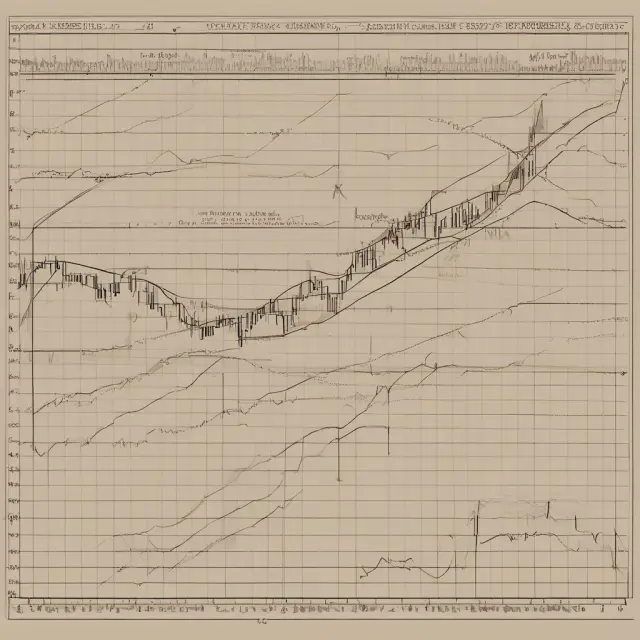
An exponential moving average (EMA) is a technical indicator that places more emphasis on recent data points compared to a simple moving average (SMA), which assigns equal weights to all observations. EMA’s significant responsiveness to new data sets it apart from SMA, making it particularly appealing to traders in fast-moving markets.
To calculate an EMA, a multiplier and smoothing factor are employed. The exponential moving average is calculated using the following formula:
EMA_t = (Price_t * Multiplier) + EMA_(t-1) * (1 – Multiplier)
The multiplier determines the influence of recent data in comparison to older data. It can be calculated using the smoothing factor, defined as Smoothing Factor = 2 / (Number of Observations + 1). For example, for a 20-day moving average, the smoothing factor is 0.0952 and the multiplier is 1 – Smoothing Factor = 0.9048.
The formula for EMA shows that previous day’s EMA (EMA_t-1) plays a role in calculating today’s EMA, but the impact of older values decreases exponentially as we move further back in time. Consequently, more recent data has a greater influence on the EMA line.
Traders often use different EMA lengths (e.g., 10-day, 50-day, and 200-day) to analyze various trends or generate signals. The responsiveness of EMAs varies depending on their length: shorter periods (such as 5, 9, or 13 days) are more sensitive to recent price movements while longer periods (such as 50, 100, or 200 days) smooth out price fluctuations more.
For example, a stock trading at $48 with an 18-day EMA of $52 and a 38-day EMA of $50 is showing a bearish divergence, suggesting that the shorter-term moving average may have peaked while the longer-term moving average continues to rise. This could be considered as a potential sell signal in the stock.
In summary, an exponential moving average (EMA) is a versatile and widely-used technical indicator that reacts more significantly to recent price changes than a simple moving average (SMA). Its calculation involves a multiplier and smoothing factor which determines its responsiveness to new data and sets it apart from SMA. Traders use different EMA lengths for various purposes, including trend following and generating signals.
Interpreting Exponential Moving Averages (EMAs)
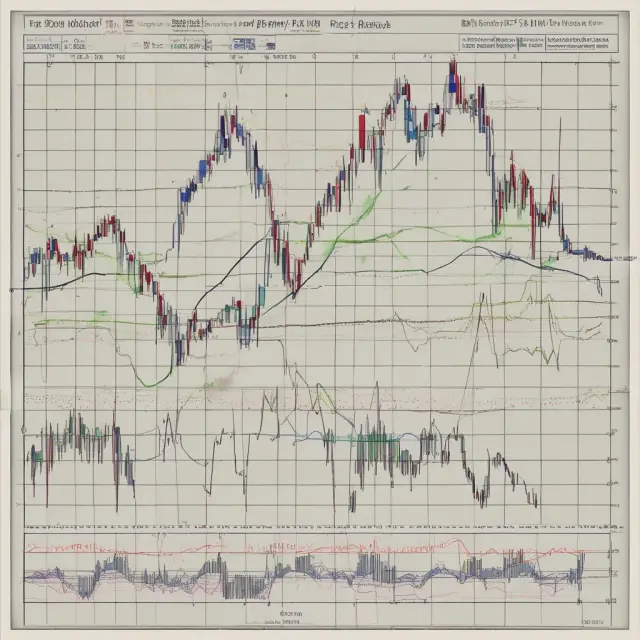
Exponential moving averages (EMAs), a type of technical indicator, place greater weight on recent data compared to simple moving averages (SMAs). In doing so, they offer quicker and more responsive reactions to market trends. EMAs can serve as support or resistance levels when interpreting price action.
Rising EMA lines represent a trend’s support level, while falling EMA lines function as resistance. This interpretation is based on the notion that a rising EMA supports the upward price movement and indicates that buyers have been dominant in the recent period. Conversely, a declining EMA represents resistance to further price increases, indicating sellers have held their ground recently.
By observing these levels, traders can make informed decisions when buying or selling securities based on the market trend and the relationship between the price and EMA lines. For instance, bullish traders might look for opportunities to purchase when the stock price is near the rising EMA line. Conversely, bearish traders may consider selling when the price is close to a falling EMA line.
Additionally, EMAs can be used in conjunction with other technical indicators such as moving average convergence divergence (MACD) and percentage price oscillator (PPO). In these cases, an EMA forms part of the underlying moving averages that generate buy/sell signals.
The primary difference between EMAs and SMAs lies in their reaction to changes in data. The EMA places a greater weight on recent data points, making it more responsive and quicker to react to current market trends than an SMA. This trait makes EMAs particularly useful for traders who focus on fast-moving markets or require more frequent updates on price movements.
In conclusion, interpreting EMAs involves understanding their significance as support or resistance levels based on their trend direction and price action relationship. By using rising and falling EMA lines to inform buying and selling decisions, traders can potentially capitalize on market trends and minimize potential losses.

Advantages and Disadvantages of Exponential Moving Averages (EMA)
An exponential moving average (EMA) offers several advantages over a simple moving average (SMA). By assigning greater weight to more recent data points, the EMA reacts quicker to new trends and price movements. This responsiveness makes it an ideal choice for intraday and fast-moving markets. However, the EMA’s sensitivity to recent data may lead to false alarms or an increased risk of misinterpretation. Additionally, its reliance on historical data raises questions about its ability to predict future market trends accurately.
One significant advantage of using an EMA is its adaptability to trend reversals and price changes. As a result, traders can employ it to create trading strategies such as the moving average convergence divergence (MACD) and percentage price oscillator (PPO). These indicators provide valuable insights into market trends and momentum shifts. In contrast, SMAs are less responsive to short-term price fluctuations, making them less suitable for capturing trend reversals and generating signals in a timely manner.
Moreover, EMAs can serve as both support and resistance levels. A rising EMA acts as a potential support level, indicating a floor for the price action. Conversely, a falling EMA acts as a resistance level, capping the upward trend. By closely observing these levels, traders can make informed decisions on buying or selling positions based on their market bias.
However, the EMA also presents some limitations. Placing excessive emphasis on recent data may lead to false alarms or misinterpretations of market trends. For instance, sudden price movements could cause the EMA to shift drastically, potentially generating incorrect signals. Traders must be cautious when using EMAs in trendless markets, as they might produce a high number of false crossovers.
Another limitation of the EMA is its reliance on historical data. Economists argue that markets are efficient and reflect all available information. As such, relying solely on historical data to predict future market trends may be questionable. Traders must consider alternative sources of information, such as economic indicators and fundamental analysis, to make well-informed decisions.
In conclusion, the EMA offers numerous advantages over SMAs in terms of responsiveness and adaptability to price movements. However, it also presents some limitations and risks that traders must be aware of when making trading decisions. By understanding these pros and cons, investors can effectively utilize the EMA as a valuable tool for trend identification and strategy implementation.
Trading Strategies Using Exponential Moving Averages (EMAs)
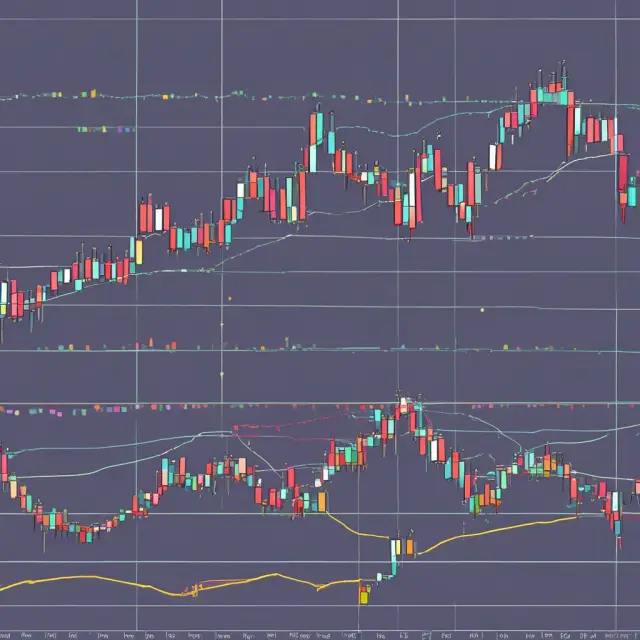
Exponential moving averages (EMAs) can be employed in various trading strategies, such as moving average convergence divergence (MACD) and percentage price oscillator (PPO), to generate buy and sell signals. EMAs are particularly useful for short-term traders due to their quick responsiveness to recent price changes compared to simple moving averages (SMAs).
The most popular EMA lengths used in trading strategies include 12, 26, 50, and 200 days. The 12-day and 26-day EMAs are often combined to create indicators like MACD and PPO for short-term trading. On the other hand, longer-term traders primarily focus on the 50-day and 200-day EMAs to identify significant trends.
One common strategy is employing an EMA as a trend filter. This method involves entering long positions when the EMA is rising and short positions when it is falling. The following are some popular strategies that incorporate EMAs:
1. Moving Average Convergence Divergence (MACD): MACD calculates the difference between two moving averages, a 12-day EMA and a 26-day EMA. A histogram plotting the difference between the two moving averages helps traders identify trend direction. When the short-term line crosses above the long-term line, it generates a buy signal, while a cross below indicates a sell signal.
2. Percentage Price Oscillator (PPO): Similar to MACD, PPO measures the difference between two moving averages: a 10-day and a 34-day EMA, both calculated using price percentage change instead of raw prices. A buy signal is generated when the shorter-term line crosses above the longer-term line, while a sell signal occurs when it falls below.
3. Double EMA: In this strategy, two EMAs with different lengths (e.g., 50 and 200 days) are used to create buy and sell signals. When the shorter-term EMA crosses above the longer-term one, a buy signal is generated, while a sell signal occurs when the opposite happens.
4. Triple EMA: This strategy involves using three EMAs with different lengths (e.g., 50, 100, and 200 days). A long position is taken when the middle EMA crosses above the other two, while a short position is opened when it falls below.
EMAs have gained popularity due to their quicker response to recent price changes compared to SMAs. However, they can be sensitive to market noise and should be used in conjunction with other technical analysis tools for accurate trading decisions. To further enhance your understanding of EMAs, delve deeper into the concepts of calculating, interpreting, and employing this versatile technical indicator.

Comparing the Performance of Simple Moving Averages (SMA) vs Exponential Moving Averages (EMA)
An important distinction between simple moving averages (SMAs) and exponential moving averages (EMAs) lies in their responsiveness to market movements. Both types of moving averages are crucial tools for trend analysis, but they react differently to changing price dynamics due to their underlying formulas and weighting mechanisms.
First, let us clarify that both SMAs and EMAs serve the same primary purpose: smoothing out price fluctuations in a time series to make it easier to identify trends. However, the way they accomplish this goal differs significantly.
An SMA calculates the average of a given set of prices over a predetermined time frame (i.e., 10 days, 20 days, or 50 days). All data points are assigned an equal weight when computing the calculation. For example, in a 20-day simple moving average (SMA), each data point within that timeframe will carry the same importance as any other data point.
In contrast, EMAs place more emphasis on recent price changes by assigning exponentially decreasing weights to historical observations as they get older. The most recent price action carries a greater influence in determining the value of the EMA than older prices. This characteristic makes EMAs more responsive and sensitive to current market trends compared to their SMA counterparts.
The formula for calculating an EMA is slightly more complex, requiring an initial condition (i.e., specifying the number of observations and the time frame). The multiplier used in the calculation plays a crucial role in determining how quickly the EMA adjusts to new data. For instance, a shorter-term EMA (such as 10 or 20 periods) will have a higher weighting for more recent prices, while longer-term EMAs (50 or 200 periods) place less emphasis on current price action.
One significant advantage of using an EMA is its ability to react faster to price changes and trend reversals compared to an SMA. As market conditions evolve, the EMA’s sensitivity to new data allows it to adapt more efficiently. This trait can prove particularly valuable for traders seeking timely entry or exit signals based on market trends.
However, there is a trade-off when using EMAs. Since they place greater weight on recent price movements, they are also more prone to generating false signals, especially during periods of high volatility. This issue can be mitigated by using multiple timeframes and analyzing the relationship between EMAs of various lengths.
In summary, both SMAs and EMAs offer valuable insights into market trends through their unique approaches to averaging price data. While an SMA provides a stable, lagging indicator, an EMA offers a more responsive, trend-following tool with increased sensitivity to recent price changes. Ultimately, the choice between the two depends on an investor’s trading style, time horizon, and risk tolerance.
For those looking for a more reactive and adaptive solution, an EMA can provide a valuable edge in identifying trends and generating entry or exit signals. However, it is essential to understand the inherent risks associated with their greater sensitivity to market volatility. In contrast, SMAs offer a steadier, more dependable guide for long-term trend identification but may not respond as swiftly to sudden price changes.
As always, proper risk management and thorough analysis of multiple indicators should be considered when making any investment decisions based on moving averages.

Common Misconceptions About Exponential Moving Averages (EMA)
Exponential moving averages (EMAs) have gained widespread popularity among traders due to their ability to react more significantly to recent market movements compared to simple moving averages (SMAs). However, there are several common misconceptions surrounding EMAs that can potentially lead to incorrect interpretations and ineffective trading strategies. In this section, we clarify the top misunderstandings regarding EMAs.
1. EMA is a magic indicator: EMA is not an infallible tool for predicting market trends; it only offers insights into past price action, acting as a lagging indicator. Traders should use it in combination with other indicators and analysis techniques to make informed decisions.
2. EMAs are always better than SMAs: While EMAs offer more responsiveness to recent price changes, they may also create false signals due to their greater sensitivity to short-term market movements. Therefore, understanding both moving averages’ strengths and limitations is vital for effective trading.
3. Only one EMA length is sufficient: Using a single EMA length might not provide an accurate representation of the market trend since it only focuses on specific time frames. Instead, using multiple EMA lengths can help traders identify various trends and confirm potential buy or sell signals.
4. EMAs eliminate all lags: Although EMAs react more quickly than SMAs due to their weighting of recent data, they still have a lag effect as they rely on historical price data. It’s essential for traders to consider the implications of this inherent delay when employing EMAs in their trading strategies.
5. EMA crossovers are automatic buy or sell signals: While EMA crossings can offer valuable insights, traders should not blindly follow these signals without considering other factors like market conditions, price action, and confirmation from additional technical indicators.
In conclusion, understanding the misconceptions surrounding EMAs is crucial for traders looking to effectively incorporate this powerful moving average indicator into their trading strategies. By debunking common misunderstandings and focusing on its strengths while addressing limitations, traders can develop a solid foundation for making informed decisions and maximizing the potential benefits of using Exponential Moving Averages.

FAQ: Frequently Asked Questions About Exponential Moving Averages (EMA)
Q1: What is an exponential moving average (EMA)?
A: An exponential moving average (EMA) is a type of moving average that places a greater weight and significance on the most recent data points. Unlike simple moving averages, which assign equal weights to all observations, EMAs react more significantly to recent price changes. They are widely used in technical analysis for generating buy and sell signals based on crossovers and divergences from historical averages.
Q2: What is the difference between a simple moving average (SMA) and an exponential moving average (EMA)?
A: The primary distinction lies in the weighting given to data points. An SMA applies equal weight to all observations within the specified period, whereas an EMA assigns greater weight to more recent data points based on their exponentially decreasing relevance as they age. This characteristic makes EMAs quicker to react and adapt to changing market conditions.
Q3: How do you calculate exponential moving averages?
A: To calculate an exponential moving average, follow these steps: (1) Determine the smoothing factor or multiplier using the formula [2/(number of observations + 1)]. (2) Multiply the closing price by the smoothing factor and add it to the previous EMA value, while subtracting the same product multiplied by (1 – the smoothing factor). The result is the new EMA value.
Q4: What are common applications of exponential moving averages in trading?
A: Exponential moving averages are used in various trading strategies like Moving Average Convergence Divergence (MACD) and Percentage Price Oscillator (PPO). They also help confirm trends, establish entry/exit points, and generate signals for potential price reversals. Additionally, they can be applied to different time frames to suit specific market conditions.
Q5: Why do traders prefer exponential moving averages over simple moving averages?
A: EMAs are more responsive to recent price movements than SMAs due to their exponentially decreasing weighting of historical data points as they age. This means that EMAs tend to follow market trends more closely, which can result in quicker and more accurate buy/sell signals for traders.
Q6: What are some limitations or drawbacks of exponential moving averages?
A: One limitation is the overemphasis on recent data points, potentially leading to increased false alarms when markets exhibit volatile price swings. Additionally, EMAs may not capture long-term trends as effectively as SMAs due to their decreasing weighting of older observations.
Q7: What are some commonly used exponential moving average timeframes?
A: Some common EMA time frames include the 10-day, 20-day, 50-day, and 200-day moving averages. Traders can select different timeframes based on their investment horizon and market volatility expectations. For example, short-term traders may prefer 8 or 14 day EMAs, while long-term investors might use 50 or 200 day EMAs.
Q8: How do you interpret exponential moving averages in a chart?
A: Generally, a rising EMA serves as support for price action, while a falling EMA acts as resistance. Traders may buy when the price is near a rising EMA and sell when it’s close to a falling EMA, looking for potential trend reversals or confirming existing trends.
 Next entry · No. 1,258A Comprehensive Guide to Email Money Transfers: What It Is, How It Works, Benefits, Risks, and Qualifications
See also
-
 No. 3,288
16 Mar 2025
21 min
Understanding Moving Averages in Finance: Simple vs Exponential
Business Finance
No. 3,288
16 Mar 2025
21 min
Understanding Moving Averages in Finance: Simple vs Exponential
Business Finance -
 No. 3,807
28 Apr 2025
19 min
Understanding the Oscillator of Moving Average (OsMA): A Comprehensive Guide for Institutional Investors
Financial Data Analysis
No. 3,807
28 Apr 2025
19 min
Understanding the Oscillator of Moving Average (OsMA): A Comprehensive Guide for Institutional Investors
Financial Data Analysis -
 No. 2,899
12 Feb 2025
19 min
Understanding Linearly Weighted Moving Average (LWMA): Definition, Calculation, and Significance
Financial Data Analysis
No. 2,899
12 Feb 2025
19 min
Understanding Linearly Weighted Moving Average (LWMA): Definition, Calculation, and Significance
Financial Data Analysis -
 No. 2,718
29 Jan 2025
17 min
Understanding the Klinger Oscillator: A Powerful Technical Indicator for Trend Identification and Reversal Signals
Financial Data Analysis
No. 2,718
29 Jan 2025
17 min
Understanding the Klinger Oscillator: A Powerful Technical Indicator for Trend Identification and Reversal Signals
Financial Data Analysis -
 No. 5,084
10 Aug 2025
21 min
Understanding and Utilizing the Triple Exponential Moving Average (TEMA) in Finance and Investment
Financial Tools
No. 5,084
10 Aug 2025
21 min
Understanding and Utilizing the Triple Exponential Moving Average (TEMA) in Finance and Investment
Financial Tools -
 No. 4,845
21 Jul 2025
18 min
Maximizing Profits with Take-Profit Orders in Investing
Finance Policy
No. 4,845
21 Jul 2025
18 min
Maximizing Profits with Take-Profit Orders in Investing
Finance Policy