Understanding and Utilizing the Triple Exponential Moving Average (TEMA) in Finance and Investment

Discover the power of Triple Exponential Moving Average (TEMA) in finance and investment. Learn how to calculate, interpret, and use it for trend direction…
Introduction to the Triple Exponential Moving Average (TEMA)
The Triple Exponential Moving Average (TEMA), a derivative of the Exponential Moving Average (EMA), is a trend following indicator designed to mitigate the lag that comes with traditional moving averages (MAs). TEMA uses three layers of EMAs and calculates it by taking the difference between the third exponential moving average and the second exponential moving average, both of which are calculated using the original EMA.
The TEMA is a versatile tool for financial market analysis, helping investors and traders identify trends, potential short-term trend changes or pullbacks, and provide support or resistance levels. In this article, we’ll explore what the Triple Exponential Moving Average is, its formula, calculation process, and how to interpret it in the context of finance and investment.
Understanding the TEMA Formula
The foundation for calculating TEMA comes from the EMA. Let’s first understand the exponential moving average, which is a type of MA used to analyze trends in financial instruments. An EMA is calculated using the following formula:
EMA = [(Price at current time * (2 / (period + 1))] + [[Preceding EMA] * (Period – 1)]
The EMA is sensitive to recent price movements and adjusts faster to them compared to a simple moving average. This quick reaction to new data makes the EMA a popular choice for short-term traders.
However, since the EMA reacts quickly to current prices, it may not smooth out the data as much as investors would like. To address this, we create the TEMA by calculating multiple EMAs and using the difference between them in our calculations.
The TEMA is calculated using the following formula:
TEMA = (3 * EMA) – (3 * EMA) + EMA
In the above formula, we first calculate a primary EMA with a given lookback period. Next, we calculate two EMAs for this initial EMA – one with the same lookback period and another with a shorter lookback period. We then calculate the TEMA by taking the difference between these three EMAs: 3 * EMA1 (longest lookback period) – 3 * EMA2 (same lookback period as EMA1) + EMA3 (shortest lookback period).
By using the triple exponential moving average, we can create a trend following indicator that reacts quickly to price changes while reducing some of the inherent lag that comes with MAs. This makes it an attractive choice for those looking to identify trends and potential opportunities in financial markets. In the next sections, we’ll discuss how traders use the TEMA to interpret market conditions and make informed decisions.
Stay tuned for further insights on using the TEMA for trend direction, support and resistance levels, comparing it to other EMAs like the DEMA, and its limitations in finance and investment.

Background: What are Exponential Moving Averages (EMAs) and How Are They Calculated?
Exponential moving averages (EMAs) are a type of trend-following indicator widely used in trading to identify trends, smoothing price data. They differ from simple moving averages (SMAs), which calculate the average using an arithmetic mean of the past N periods, by giving more weight to recent prices. EMAs apply exponentially decreasing weights to historical data, with greater significance given to recent observations. This makes them quicker to respond to price changes compared to SMAs.
EMA calculation involves taking the sum of the current period’s closing price and the previous period’s EMA multiplied by a smoothing factor, typically 2/N or 3/N. The result is then divided by (1 + smoothing factor), as shown below:
EMA_t = (Closing_price_t + EMA_{t-1} * Smoothing_factor) / (1 + Smoothing_factor)
In the context of TEMA, three different EMAs are involved in its calculation. To understand this better, let’s explore how the triple exponential moving average is derived from a single EMA.
Understanding the TEMA Formula
Triple Exponential Moving Average (TEMA) is calculated using three sequential EMA calculations of varying lengths, which are subtracted and added to create the final TEMA line. Specifically, we calculate:
- A shorter-term EMA (EMA_short) with a smaller lookback period (N_short).
- An intermediate-term EMA (EMA_medium) with a moderate lookback period (N_medium).
- A longer-term EMA (EMA_long) with a larger lookback period (N_long).
The TEMA calculation formula is: TEMA = (3 * EMA_short) – (3 * EMA_medium) + EMA_long
This triple smoothing process helps to eliminate some of the lag inherent in traditional moving averages, making the TEMA a more responsive indicator. By combining three different EMAs, we can create a trend-following tool that is quicker to react to price changes while also providing an overall trend direction indication.
In the next section, we will discuss how the TEMA’s angle and location can help us understand trend direction and potential signals.

Understanding the TEMA Formula
The Triple Exponential Moving Average (TEMA) is an advanced technical indicator that uses multiple exponential moving averages (EMAs) to filter out noise, increase smoothing, and provide more accurate trend identification than traditional single or double EMAs. This section will delve into the TEMA formula and its calculation process.
Exponential Moving Averages (EMAs) are an advanced type of moving average that put greater emphasis on recent data points as compared to simple moving averages (SMAs). They are calculated using a specific mathematical formula, which adjusts for both price changes and the time period in question. The TEMA builds upon this concept by taking the EMA of an EMA, creating a more responsive indicator with quicker reaction times than traditional moving averages.
The TEMA formula is as follows:
TEMA = (3 * EMA1) – (3 * EMA2) + EMA3
Let’s break down the components of this equation and discuss their purpose in the context of calculating the TEMA:
– EMA1: This represents the primary Exponential Moving Average, which is typically calculated using a predetermined lookback period. For example, if a 20-period EMA is used for calculating the TEMA, the first step involves computing the 20-period EMA of the underlying asset’s price.
– EMA2: This stands for the Exponential Moving Average of the primary EMA (EMA1). The EMA2 is calculated by applying the same lookback period to the primary EMA, effectively creating a moving average of the moving average.
– EMA3: The final component of the TEMA formula is the Exponential Moving Average of the second EMA (EMA2). This calculation further refines the indicator’s smoothing effect by taking the moving average of the second moving average.
Plugging these components into the equation yields the Triple Exponential Moving Average (TEMA) for a specific lookback period. This result provides a trend-following indicator that reacts more quickly to price changes as compared to traditional single or double EMAs.
The TEMA can be used in several ways, including identifying trend direction, anticipating potential short-term trend changes, and serving as support or resistance for price movements. The next sections will explore these applications in greater detail.

Interpreting the TEMA: Trend Direction and Signals
The Triple Exponential Moving Average (TEMA) is designed to provide a more responsive trend following indicator by applying multiple EMAs to the original data. In doing so, it can help traders identify trend direction and potential short-term trend changes or pullbacks while reducing lag. Let’s dive deeper into understanding how the TEMA functions as an indicator of trend direction and its underlying signals.
The Triple Exponential Moving Average: A quick reminder
Before discussing trend direction, let us briefly recap what a triple exponential moving average is and how it differs from traditional moving averages (MA) or exponential moving averages (EMA). The TEMA uses three EMAs of the same lookback period to smooth price fluctuations, with the first being the original data. Each subsequent EMA serves as an exponentially smoothed average of the previous one. By subtracting out some lag, the TEMA reacts more quickly to price changes than traditional moving averages, providing a valuable tool for traders looking to identify trends in their financial instruments.
Interpreting TEMA’s trend direction signals
The primary function of the TEMA is to determine the overall trend direction by analyzing its angle and location relative to the underlying asset’s price action. When the line is angled upwards, it indicates an uptrend; conversely, a downward-angled TEMA suggests a downtrend. It is essential for traders to understand that while the TEMA provides valuable insights into short-term trend direction, there will still be some lag inherent in its calculations.
The location of the price relative to the TEMA line further enhances this interpretation. When prices are above the TEMA line, it confirms an uptrend for the chosen lookback period; on the other hand, when prices fall below the TEMA line, a downtrend is indicated for that specific time frame.
Identifying short-term trend changes and pullbacks
One significant advantage of using the triple exponential moving average is its ability to signal potential short-term trend changes or pullbacks. For instance, if the price is above the TEMA line but subsequently drops below it, this can be a bearish reversal signal that the uptrend may be reversing or entering a pullback phase.
Conversely, if prices are below the TEMA and then cross above it, this bullish crossover can confirm an uptrend’s continuation or a bottom in a downtrend. The TEMA can thus help traders make informed decisions regarding entering or exiting positions by providing timely signals based on the underlying trend direction.
TEMA as support and resistance: An alternative approach
Besides using the TEMA for trend identification and short-term trend changes, some traders employ it to provide support or resistance for price action. In this regard, the TEMA acts similarly to traditional moving averages as a reference line for potential buying or selling opportunities based on price interaction with the indicator’s level.
For example, during an uptrend, prices may frequently drop and rebound off the TEMA line, creating an opportunity for traders to enter long positions when the price approaches the support level of the TEMA. Conversely, during a downtrend, the TEMA can act as resistance, signaling selling opportunities as the price tests its upper boundary.
Understanding the limitations: A word of caution
While the TEMA provides valuable insights into trend direction and potential short-term signals, it is essential to recognize that the indicator has some inherent limitations. As a result, traders should be mindful when using the TEMA as their sole analysis tool or relying too heavily on its signals. Instead, they should employ the TEMA in conjunction with other forms of analysis, such as price action and fundamental research, to increase the accuracy of their investment decisions.
In conclusion, the triple exponential moving average is a powerful trend following indicator that can help traders identify short-term trend direction and potential signals while reducing the lag associated with traditional moving averages. By understanding how to interpret the TEMA’s angle and location in relation to price action, traders can use this versatile indicator as part of their overall investment strategy to make more informed decisions.
Using the TEMA for Support and Resistance
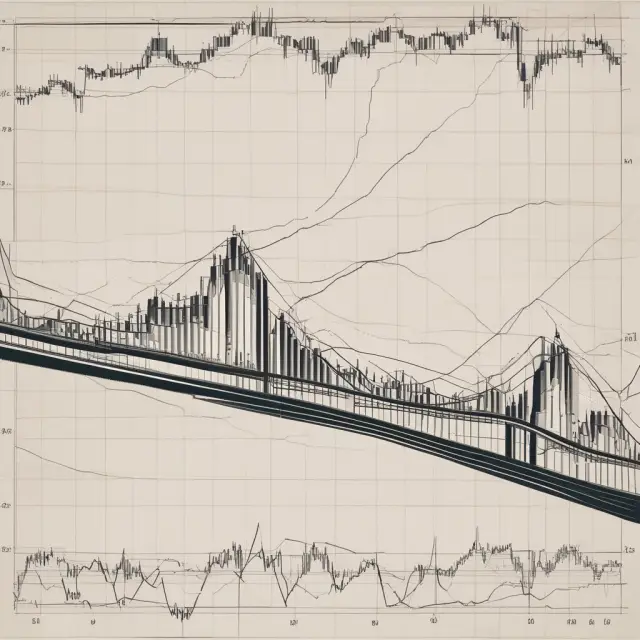
The Triple Exponential Moving Average (TEMA) can act as a powerful tool when it comes to identifying support and resistance levels in the financial markets. The TEMA, which is calculated using multiple Exponential Moving Averages (EMAs), reacts more quickly to price movements compared to traditional moving averages, making it an attractive choice for traders who want to capitalize on short-term trends. In this section, we will delve deeper into how the TEMA can be used to provide support and resistance for price movements.
Support levels are crucial price zones where buyers are willing to step in and prevent a further decline in price. Resistance levels, on the other hand, represent prices where sellers are eager to exit their positions or enter new shorts. By recognizing these levels, traders can make more informed decisions regarding entry and exit points, thus minimizing potential losses and optimizing profits.
In uptrends, the TEMA line may function as a support level. When the price declines during an uptrend, it often finds temporary solace near or at the TEMA line before resuming its upward trajectory. In this scenario, the TEMA can act as a crucial reference point for traders to determine if they should buy more when the price dips towards it.
On the contrary, in downtrends, the TEMA may represent a resistance level. When the price is advancing during a downtrend and reaches the TEMA line, sellers might choose to take profits or enter new short positions, pushing the price back down. By being aware of these potential scenarios, traders can be prepared to act on entry and exit opportunities as they arise.
It’s essential to remember that for the TEMA to provide effective support or resistance, it should have already demonstrated its ability to do so in previous market conditions. For instance, if the TEMA failed to function as a support level during past bearish periods, it may not offer such support during future bearish phases.
Additionally, traders should note that different assets and markets might require varying lookback periods for the TEMA to be effective. Thus, it’s crucial to backtest the strategy with historical data before applying it in live trading scenarios. This will ensure a more accurate assessment of the TEMA’s ability to function as support or resistance and enable traders to fine-tune their approach accordingly.
In conclusion, the Triple Exponential Moving Average (TEMA) can be an invaluable asset for traders seeking to identify potential support and resistance levels. By understanding how the TEMA reacts during uptrends and downtrends, traders can make more informed decisions when it comes to entering or exiting positions, thus optimizing their profits and minimizing potential losses. However, as with any technical analysis tool, it’s essential to be aware of its limitations and adapt it to the specific requirements of each asset or market.

Comparing TEMA to Double Exponential Moving Average (DEMA)
The triple exponential moving average (TEMA) and double exponential moving average (DEMA) are both advanced technical indicators that help traders and investors understand market trends, identify trend reversals, and provide support and resistance levels. The primary difference between these two indicators lies in their formulas and how they react to price changes.
The TEMA is an extension of the EMA, which smoothes out price movements by applying exponential weighting to recent data points. To calculate a TEMA, three exponential moving averages (EMAs) are employed: EMA1, EMA2, and EMA3. The formula for calculating the TEMA is as follows:
TEMA = 3 * EMA(EMA1) – 3 * EMA(EMA2) + EMA(Price)
Here, EMA(Price) refers to the original EMA of the price series, while EMA(EMA1), and EMA(EMA2) represent EMAs calculated on the EMAs themselves.
In comparison, DEMA is a moving average that minimizes the lag inherent in standard moving averages (MAs). The DEMA formula is:
DEMA = 2 * EMA(Price) – EMA(EMA(Price))
The primary difference between TEMA and DEMA lies in their responses to price changes. TEMA, by using multiple EMAs, provides a quicker reaction time and smoother trend following than the traditional EMA or SMA, while still reducing lag compared to standard MAs. The DEMA, on the other hand, is designed to provide a faster response time to price movements than an EMA or SMA, but without having to sacrifice as much lag reduction as the TEMA.
When considering which indicator to use, it’s important to understand that neither the TEMA nor DEMA is inherently better for all traders and market conditions. The choice ultimately comes down to personal preference, strategy, and specific asset class you are trading in. It might be useful for a trader to try both indicators on historical data and backtest their performance under various market conditions before deciding which one best suits their needs.
It’s important to remember that no single indicator can provide an infallible prediction of market movements or ensure profits, as each comes with its inherent limitations. Instead, these advanced moving averages should be used in conjunction with other forms of analysis, such as price action analysis and fundamental analysis, to gain a comprehensive understanding of the market’s dynamics.

Limitations of Using the TEMA
While the triple exponential moving average (TEMA) offers several advantages over traditional moving averages, such as quicker reaction to price changes and potential support/resistance level formation, it does come with some limitations and challenges. Understanding these limitations is essential for traders to make informed decisions when using this technical indicator.
1. Increased Complexity: The TEMA calculation involves three exponential moving averages (EMAs), which adds complexity compared to simple moving averages (SMA) or even single EMAs. This added complexity can lead to increased computational requirements and may make it more challenging for some traders to implement the indicator effectively.
2. Potential Over-reaction: Because the TEMA reacts more quickly to price changes than traditional MAs, it might overreact to short-term price movements, producing false signals. In a highly volatile market, the indicator could result in more frequent buy and sell decisions based on temporary price fluctuations rather than long-term trends.
3. Increased Sensitivity: The TEMA’s enhanced sensitivity to price changes can lead to more frequent trend reversals or crossovers, making it essential for traders to be attentive to the market conditions and choose appropriate lookback periods. This increased sensitivity could also result in a high number of false signals, especially during sideways markets with minimal trend direction.
4. Lookback Period Selection: Properly selecting a suitable lookback period is vital for any moving average indicator’s effectiveness. However, since the TEMA can react more quickly to price changes due to its triple EMA design, traders may need to experiment with shorter lookback periods, which could result in increased noise or false signals if not used correctly.
5. Comparison to Other Indicators: The TEMA should not be considered a standalone indicator and should be used alongside other technical indicators, such as the Relative Strength Index (RSI), Stochastic Oscillator, Bollinger Bands, or candlestick charts to provide more comprehensive insights into market trends.
6. Market Conditions: The TEMA may not perform optimally under all market conditions. In consolidating markets with no clear trend direction, the indicator might prove less effective due to the increased volatility and frequent price swings. Traders should exercise caution when using the TEMA in such conditions or consider alternative indicators that are more suitable for sideways markets.
7. Misinterpretation: Overreliance on a single indicator like the TEMA could lead to misinterpretations of market trends, potentially resulting in incorrect trading decisions. To minimize this risk, traders should always cross-reference their analysis with multiple indicators and fundamental data sources.
8. Overtrading: The quicker response time of the TEMA can lead to increased trading activity for some investors. This heightened level of trading could result in higher transaction costs and may not be suitable for all investment strategies, especially those aimed at long-term capital appreciation.
In conclusion, while the triple exponential moving average offers several advantages over traditional moving averages, it is essential to be aware of its limitations and challenges. By understanding these aspects, traders can better utilize the TEMA to enhance their overall trading performance and make informed decisions in a more effective manner.
Applying the TEMA in Trading: Use Cases and Strategies
The Triple Exponential Moving Average (TEMA) is a popular trend following technical indicator that can provide valuable insights when used correctly. This section will discuss some common use cases, strategies for utilizing the TEMA effectively, as well as potential limitations.
1. Identifying Trend Direction and Potential Reversals
One primary use of the TEMA is for determining overall trend direction. The angle of the indicator line shows the short-term average price direction. When the price is above the TEMA, it indicates a bullish trend, while below it, a bearish trend holds true. By studying the relationship between the price and the TEMA over time, traders can identify potential reversal points. For instance, if prices drop significantly below the TEMA and then move back up, it could signal an uptrend reversal or a short-term pullback. Conversely, when the price rises above the TEMA after being below for some time, it could indicate a bear market reversal or a bullish bounce.
2. Providing Support and Resistance Levels
The TEMA can also provide support and resistance levels that may help traders to manage risk. These levels are determined by historical price action around the TEMA indicator line. For instance, if the price has previously bounced back from the TEMA several times before, it could potentially do so again in the future. On the other hand, when the price moves significantly above or below the TEMA, it may indicate a potential breakout or continuation of an existing trend. Traders might then consider entering long or short positions based on these levels and trends.
3. Combining with Other Technical Analysis Tools
The TEMA is often used in conjunction with other technical indicators for a more comprehensive view of the market. For example, combining it with Bollinger Bands can help to identify potential entry and exit points by looking for crossovers or divergences between the two indicators. Additionally, price action analysis and volume patterns can provide confirmation of trend direction and potential reversals. By employing multiple tools in tandem, traders increase their chances of making informed decisions based on the market’s movements.
4. Adjusting Lookback Periods
Selecting the appropriate lookback period for a specific asset class or market condition is crucial when using the TEMA effectively. For instance, a shorter lookback period such as 5 or 10 periods may be suitable for day trading or short-term strategies, while longer periods of 21, 50, or even 100 periods might serve better for long-term investment plans. The choice of lookback period depends on the trader’s personal preferences and risk appetite.
5. Comparing TEMA to Other Moving Averages
The TEMA can be compared with other moving averages like Simple Moving Averages (SMA) or Double Exponential Moving Averages (DEMA). Although all three share the common goal of smoothing price data, they differ in how they process and react to market trends. Understanding their distinct characteristics can help traders decide which indicator best fits their trading strategy.
6. Limitations and Challenges
While the TEMA is a powerful tool for identifying trends and potential reversals, it does come with some limitations. As previously mentioned, MAs are most effective in trending markets with consistent price movements. When the market experiences high volatility or is range-bound, the TEMA might not provide clear signals and may generate false crossovers. Traders should be aware of these challenges when implementing the indicator in their trading strategies.
In summary, understanding how to apply and interpret the Triple Exponential Moving Average (TEMA) can offer valuable insights for traders looking to navigate various market conditions. By using it alongside other technical indicators and price analysis tools, they can make informed decisions based on the trend direction, potential support and resistance levels, and overall market movements.
Choosing a Lookback Period
The Triple Exponential Moving Average (TEMA) is an advanced trend following indicator that provides quicker reaction times compared to traditional moving averages (MAs) and other exponential moving averages (EMAs). One crucial factor in utilizing the TEMA effectively for financial analysis and investment strategies is selecting the appropriate lookback period. This section will explore various aspects of choosing a TEMA lookback period, taking into consideration different asset classes and market conditions.
Understanding Moving Averages
Before diving deeper into the TEMA, it’s essential to understand the concept of moving averages (MAs). MAs are used to smooth out price data and identify trends by calculating the average value of an asset’s price over a specific time frame. Traditional moving averages (SMAs) calculate this average using a fixed number of periods, while EMAs assign greater weight to more recent data points.
The TEMA differs from both traditional SMAs and standard EMAs by incorporating three different exponential moving averages in its calculation. The first EMA is calculated with the chosen lookback period (EMA1). Next, a second EMA (EMA2) is generated using the same lookback period as the first one. A third EMA (EMA3) is calculated based on EMA2 instead of the original price data. Finally, the TEMA formula combines these three moving averages to create the final result.
Selecting a Lookback Period: Importance and Considerations
Choosing the correct lookback period for a given asset class and market condition can significantly impact the effectiveness of using the TEMA. In general, shorter lookback periods provide more responsiveness to short-term price movements, while longer lookback periods highlight the overall long-term trend.
Shorter Lookbacks
For those trading actively or focusing on short-term investments, a shorter lookback period may be preferred. With smaller time frames, the TEMA reacts swiftly to price changes and can provide earlier indications of potential reversals and trends. However, this comes at the cost of increased noise due to the higher sensitivity to market fluctuations.
Medium Lookbacks
For more balanced approaches to trading or investing, medium-length lookback periods might be suitable. These periods strike a balance between responsiveness to short-term price movements and long-term trend identification. Asset classes like equities, commodities, and cryptocurrencies can benefit from medium-length TEMAs in various market conditions.
Longer Lookbacks
For long-term investors or traders focused on more stable assets, such as bonds or ETFs, longer lookback periods could be a better fit. Longer time frames help smooth out the noise and provide clearer trend signals over extended periods. However, the downside is that these longer TEMAs may not react as quickly to short-term price changes, potentially missing opportunities or generating false signals.
Considerations for Different Asset Classes
Choosing an appropriate lookback period depends on various factors, including asset volatility and trading frequency. For example, in highly volatile markets like cryptocurrencies, a shorter TEMA lookback period could be more advantageous due to the rapid price fluctuations. Conversely, for less volatile assets like bonds, medium or longer lookbacks may be preferable to minimize noise and identify long-term trends.
Choosing the Right Lookback Period: Best Practices
- Experiment with various lookback periods to determine which is best suited for your investment strategy, risk tolerance, and time horizon.
- Monitor the performance of the TEMA using different lookbacks on a trial basis before relying on it in live trading.
- Combine the TEMA with other analysis tools, such as price action, fundamental data, or additional technical indicators to enhance your decision-making process.
- Adapt the lookback period as market conditions change to maintain the effectiveness of the indicator.

FAQs: Common Questions About the TEMA
What is a Triple Exponential Moving Average (TEMA)?
The triple exponential moving average (TEMA) is an advanced trend-following momentum indicator that smoothens price data by using multiple calculations of exponential moving averages (EMA). TEMA reacts more swiftly to price changes compared to traditional moving averages, making it a popular choice for quicker trend detection in financial markets.
How is the Triple Exponential Moving Average calculated?
The calculation of the TEMA involves using three EMAs – EMA1, EMA2, and EMA3, which are derived from one another. The TEMA formula consists of subtracting the first EMA from the second and then adding the third EMA: TEMA = (3*EMA1) – (3*EMA2) + EMA3.
What does the Triple Exponential Moving Average indicate?
The TEMA reacts to price changes quicker than traditional moving averages, aiding traders in trend identification and potential short-term trend changes or pullbacks. It can also provide support or resistance for prices. The angle of the TEMA indicates the overall trend direction, while its location relative to the price provides clues on the price’s movement for a specific lookback period.
What is the difference between Triple Exponential Moving Average and Double Exponential Moving Average?
The primary difference lies in their formulas: The DEMA is calculated by multiplying the EMA of the price by two, then subtracting an EMA of the original EMA. TEMA uses three EMAs to reduce lag more effectively than DEMA, resulting in quicker reaction times for trend detection.
Can I use the Triple Exponential Moving Average with any lookback period?
The choice of the lookback period is crucial for making accurate interpretations from the TEMA. Shorter periods allow for quicker reactions to price changes but may generate false signals, while longer periods provide more stability but lag behind price movements. It’s essential to choose a lookback period that suits your trading strategy and the asset class you are analyzing.
What limitations does the Triple Exponential Moving Average have?
The TEMA can be less effective during choppy markets where prices move erratically without sustained trends, potentially generating false signals due to its quicker reaction times. Like other moving averages, it should ideally be used in conjunction with multiple analysis tools for comprehensive insights into financial market data.
 Next entry · No. 5,085Triple Net Leases: Understanding the Pros, Cons and Advantages for Tenants and Landlords
See also
-
 No. 5,418
07 Sep 2025
19 min
Value Averaging vs Dollar Cost Averaging: Which Investment Strategy Is Right for You?
Investments
No. 5,418
07 Sep 2025
19 min
Value Averaging vs Dollar Cost Averaging: Which Investment Strategy Is Right for You?
Investments -
 No. 5,072
09 Aug 2025
20 min
Understanding the Power and Limitations of Trend Analysis in Finance and Investment
Investments
No. 5,072
09 Aug 2025
20 min
Understanding the Power and Limitations of Trend Analysis in Finance and Investment
Investments -
 No. 4,369
13 Jun 2025
18 min
Understanding Relative Value: A Comparative Approach to Valuing Assets in Finance
Business Finance
No. 4,369
13 Jun 2025
18 min
Understanding Relative Value: A Comparative Approach to Valuing Assets in Finance
Business Finance -
 No. 2,899
12 Feb 2025
19 min
Understanding Linearly Weighted Moving Average (LWMA): Definition, Calculation, and Significance
Financial Data Analysis
No. 2,899
12 Feb 2025
19 min
Understanding Linearly Weighted Moving Average (LWMA): Definition, Calculation, and Significance
Financial Data Analysis -
 No. 2,686
27 Jan 2025
19 min
Understanding Keltner Channels: A Comprehensive Guide for Institutional Investors
Finance Policy
No. 2,686
27 Jan 2025
19 min
Understanding Keltner Channels: A Comprehensive Guide for Institutional Investors
Finance Policy -
 No. 1,850
15 Nov 2024
18 min
Understanding the Power and Significance of the Golden Cross in Finance and Investment
Business Finance
No. 1,850
15 Nov 2024
18 min
Understanding the Power and Significance of the Golden Cross in Finance and Investment
Business Finance