High-Frequency Trading (HFT): Understanding the Controversial Practice in Finance and Investment

Explore High-Frequency Trading (HFT), a controversial finance practice with vast benefits and critiques. Learn how it impacts markets and investors.
What is High-Frequency Trading?
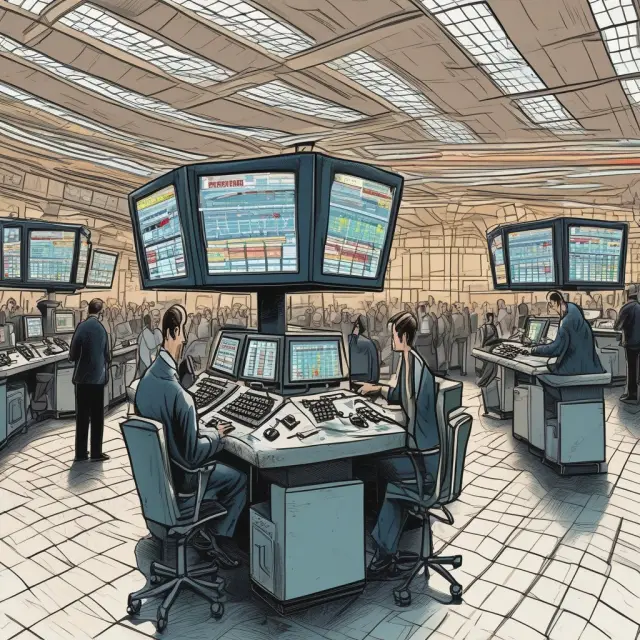
High-frequency trading (HFT) is a powerful and intricate financial practice that leverages advanced technology to execute large numbers of orders in a fraction of a second, typically between 10 to 500 microseconds. This approach to trading relies on sophisticated algorithms that analyze multiple markets in real-time, making decisions based on market conditions and executing trades at lightning speeds. The primary goal of HFT is to profit from small price discrepancies across various markets, which can result in considerable gains over time. High-Frequency Trading has garnered significant attention due to its unique characteristics. It boasts high turnover rates—some firms execute several million trades per day—and an exceptionally high order-to-trade ratio that exceeds 100:1, meaning over a hundred orders are placed for every single trade executed. Notable HFT firms include Tower Research, Citadel LLC, and Virtu Financial.
The practice of High-Frequency Trading can be traced back to the late 1990s when stock exchanges introduced new initiatives to increase market competition and liquidity in response to heightened investor concerns following the collapse of Long-Term Capital Management. To encourage firms to become liquidity providers, these exchanges started offering incentives. For instance, the New York Stock Exchange (NYSE) introduced a group of liquidity providers called Supplemental Liquidity Providers (SLPs). SLPs are tasked with adding competition and liquidity for existing quotes on the exchange. In return, they receive a fee or rebate for providing this added liquidity. The success of HFT can be seen in the sheer number of transactions carried out daily. Millions of trades occur every day, generating substantial profits for firms involved in this practice.
Understanding High-Frequency Trading (HFT): Origins and Evolution
The origins of High-Frequency Trading can be traced back to the late 1990s, when exchanges started introducing initiatives designed to boost market competition and liquidity following the collapse of Long-Term Capital Management. The New York Stock Exchange (NYSE) responded by creating a group of liquidity providers called Supplemental Liquidity Providers (SLPs), tasked with adding competition and liquidity for existing quotes on the exchange. To incentivize these firms, the NYSE introduced a fee or rebate system to reward them for their efforts. As HFT evolved, it became increasingly complex, requiring extensive computing power, high-speed networks, and advanced algorithms to analyze markets in real-time and execute trades at record speeds. Today, HFT is an integral part of modern financial markets, with firms using sophisticated technology and machine learning models to make decisions and capture profits from small price discrepancies across multiple markets.
Stay tuned for the following sections, where we’ll explore the benefits and critiques of High-Frequency Trading (HFT), how it works in detail, instances of market instability caused by HFT, efforts to regulate HFT, its impact on small investors, and future trends in this controversial practice.

The Emergence and Evolution of HFT
High-frequency trading, or HFT, emerged as a response to incentives offered by stock exchanges for market liquidity. In the aftermath of the 2008 financial crisis, when liquidity was a major concern, exchanges such as the New York Stock Exchange (NYSE) began offering fees or rebates to companies that added competition and enhanced liquidity to their markets. HFT’s rise was further fueled by advancements in technology, including fiber-optic networks, high-speed computers, and sophisticated algorithms capable of processing vast amounts of market data in real-time. With millions of transactions executed daily, this lucrative activity generates significant profits for the exchanges, making it an attractive business proposition.
The NYSE’s use of Supplemental Liquidity Providers (SLPs) is a prime example of how exchanges have encouraged HFT practices. Introduced after the Lehman Brothers collapse, SLPs aim to add competition and liquidity for existing quotes on the exchange. In return for providing this service, these companies receive a fee or rebate for their efforts—a win-win situation for both parties involved. However, as HFT became increasingly popular, critics raised concerns about its potential impact on markets and investors.
Critics argue that HFT has replaced human decision-making with complex mathematical models and algorithms. Decisions in the financial markets are now made within milliseconds, potentially leading to market instability and big moves without a clear reason. One infamous example is the May 6, 2010, “Flash Crash,” during which the Dow Jones Industrial Average (DJIA) experienced its largest intraday point drop ever, declining 1,000 points in just 20 minutes before recovering again. Although an investigation later blamed a massive order for triggering this sell-off, many believe that HFT played a significant role in exacerbating the situation.
Another critique of HFT is its potential for creating an uneven playing field between large corporations and individual investors. The liquidity provided by HFT firms is often referred to as “ghost liquidity”—available to the market one second and gone the next, making it virtually impossible for other traders to capitalize on this fleeting opportunity. This lack of transparency and accessibility raises concerns among regulators, who seek to balance the need for efficient markets with the protection of investors and fair competition.

Benefits of High-Frequency Trading (HFT)
High-Frequency Trading (HFT), also known as algorithmic trading or quantitative trading, is a sophisticated investment strategy that uses powerful computers and advanced algorithms to analyze large volumes of market data and execute trades at extraordinarily high speeds. HFT has become increasingly popular in the financial industry due to its proven ability to add liquidity to markets and eliminate small bid-ask spreads. In fact, it’s estimated that over half of all trading volume on major exchanges is attributable to HFT.
The emergence of HFT can be traced back to the late 1990s when electronic trading began to dominate financial markets. With the rise of electronic markets came greater competition for liquidity providers, and exchanges began offering incentives to firms willing to provide market liquidity. For instance, the New York Stock Exchange (NYSE) introduced Supplemental Liquidity Providers (SLPs), a group of market participants whose primary role is to ensure competitive quotes and deepen liquidity in their respective markets. SLPs are compensated through various means, including rebates on trade executions or fees charged to other traders for using the SLP’s quotes.
One major benefit of HFT is its positive impact on market liquidity. By providing continuous liquidity and maintaining orderly markets, HFT firms help improve overall market efficiency and reduce transaction costs for investors. In fact, studies have shown that the presence of HFT leads to tighter bid-ask spreads and increased trading volumes. For example, a research paper published in the Journal of Financial Economics found that the introduction of high-frequency traders on the London Stock Exchange led to a 40% reduction in bid-ask spreads for small stocks and a 16% reduction for larger stocks.
Moreover, HFT’s ability to eliminate small bid-ask spreads is crucial for maintaining market stability during volatile periods. When markets become turbulent, bid-ask spreads can widen significantly as investors rush to buy or sell securities. HFT firms help mitigate these price discrepancies by providing competitive quotes and executing trades in fractions of a second, ensuring that the market remains orderly even during times of stress.
Despite its numerous advantages, high-frequency trading is not without controversy. Critics argue that it can lead to market instability, create an unequal playing field for small investors, and potentially replace human decision-making with automated processes. The next section will explore some of the criticisms leveled against HFT and discuss potential responses from regulators and industry professionals.
As we delve deeper into this topic, it is essential to remember that high-frequency trading, like any other investment strategy, carries risks and rewards. While it can bring benefits such as improved liquidity, lower transaction costs, and enhanced market efficiency, it also comes with the potential for increased systemic risk and an increased role of algorithms in decision-making processes. It is crucial to understand both sides of this debate to make informed decisions about investing in today’s complex financial markets.

Critiques of HFT
High-Frequency Trading (HFT), despite its numerous advantages, has been met with criticism due to concerns over market stability, fairness, and the diminishing role of human decision-making in trading.
Firstly, some argue that HFT replaces human decision-making and interaction with complex algorithms and mathematical models, potentially leading to big market moves without sufficient reason or understanding. An infamous example is the “Flash Crash” on May 6, 2010, where the Dow Jones Industrial Average (DJIA) experienced its largest intraday point drop ever, declining an astounding 1,000 points in just 20 minutes before recovering. Although various factors contributed to this event, a massive order triggering a sell-off was identified as one of the primary causes. Critics argue that such unpredictable and rapid market movements could potentially destabilize markets, causing panic and confusion among traders.
Secondly, HFT is accused of creating an uneven playing field between large corporations and individual investors or small trading firms. High-frequency traders can profit from their quick transactions by exploiting market inefficiencies and capitalizing on tiny price discrepancies across different exchanges and markets. In turn, smaller traders often struggle to compete due to the high entry barriers and technological requirements of HFT. Some argue that this situation could lead to a concentration of power among large financial institutions, potentially threatening fair competition and overall market integrity.
Lastly, HFT’s “ghost liquidity” is a significant point of contention. Since liquidity provided by HFT is available for only a moment before disappearing, traders are unable to capitalize on it, making it inaccessible for arbitrage opportunities or other profitable trading strategies. Additionally, the transient nature of this liquidity can potentially create confusion among traders and market participants, resulting in increased volatility and potential instability in certain markets.
The controversies surrounding HFT have led to an ongoing debate regarding its role within the investment industry and the need for effective regulation to ensure that all market participants are treated fairly and that market stability is maintained. The Financial Industry Regulatory Authority (FINRA) and Securities and Exchange Commission (SEC) have made strides in regulating HFT through measures such as circuit breakers, which temporarily halt trading when specific market conditions are met. However, more extensive regulation may be necessary to address concerns related to fairness and potential risks to the broader financial system.

How Does High-Frequency Trading Work?
High-frequency trading (HFT) is a sophisticated financial practice that involves executing vast numbers of trades in mere seconds using advanced algorithms and powerful technology. This form of algorithmic trading has become increasingly popular due to the incentives offered by exchanges to market participants who provide liquidity and add competition to existing quotes.
To understand how high-frequency trading works, consider the following steps:
1. Complex Algorithms: HFT relies on intricate algorithms that analyze vast amounts of real-time data from multiple markets to identify profitable opportunities within fractions of a second. These algorithms employ mathematical models and statistical analysis, enabling traders to execute trades with lightning speed.
2. Millisecond Decisions: In the high-frequency trading world, decisions must be made in milliseconds – thousandths of a second. The success or failure of a trade can hinge on making the right decision at exactly the right moment. HFT firms employ hardware acceleration and other optimizations to achieve this speed advantage.
3. Market Microstructure: Understanding the market microstructure is essential for high-frequency traders. It refers to the organization and function of different markets and their components, such as bid-ask spreads, orders, and quotes. HFT algorithms are designed to exploit the intricacies of this structure to profit from price discrepancies across multiple markets or instruments.
HFT is often criticized for several reasons, including the replacement of human decision making with complex mathematical models and its potential impact on market stability. However, it also offers benefits such as improved market liquidity and reduced bid-ask spreads that make it an attractive proposition for investors. In the following sections, we will explore both sides of the high-frequency trading debate in detail.
In conclusion, high-frequency trading is a complex and controversial practice in finance and investment. Its ability to analyze large amounts of data and execute trades at lightning speed offers significant benefits but also poses risks that warrant careful consideration. Understanding the intricacies of HFT, its algorithms, and market microstructure is crucial for investors looking to make informed decisions in today’s fast-paced financial markets.

Instances of Market Instability Caused by HFT
High-Frequency Trading (HFT) has been a topic of intense debate since its emergence in the late 1990s. Critics argue that it can contribute to market instability and even cause significant declines, while proponents claim that it adds liquidity and efficiency to markets. In this section, we will examine instances where HFT was a contributing factor to market volatility.
One notable event occurred on May 6, 2010, when the Dow Jones Industrial Average (DJIA) experienced its largest intraday point drop in history. In just 20 minutes, the DJIA dropped 1,000 points or 10% before recovering. The causes of this sudden market decline are still debated; however, a massive order that triggered a sell-off was believed to be a significant contributing factor. According to the Financial Industry Regulatory Authority (FINRA), the order was sent by Waddell & Reed, a financial services firm, to sell approximately 50,000 shares of the ProShares Ultra Short QQQ exchange-traded fund (SSO). This order size and its execution during volatile market conditions created a cascade effect, exacerbating the decline in stock prices.
Another instance where HFT was suspected to be involved in market instability occurred on August 1, 2012, when the S&P 500 Index plunged around 6% within minutes due to a software glitch at one of the largest financial exchanges, Knight Capital Group. The flash crash resulted from an erroneous order that was transmitted by their system, causing significant losses for the firm. It took several hours for the market to recover from this incident, demonstrating the potential consequences of a single incorrect order in the hands of HFT algorithms.
These examples highlight the importance of monitoring and regulating HFT activities to prevent market instability and protect investors. In the next section, we will discuss efforts made by regulators to address concerns related to high-frequency trading.
As a reminder: The following sections will cover the benefits and critiques of HFT, its working mechanism, and future implications for markets. Stay tuned!

Regulating High-Frequency Trading
Since its inception, high-frequency trading (HFT) has been met with both praise and criticism, leading policymakers and regulatory bodies to closely examine its impact on financial markets. The debate around HFT revolves around several contentious issues, including market stability, fairness, transparency, and the potential for systemic risks.
In recent years, numerous regulatory initiatives have been implemented to address these concerns. For instance, in Europe, the Markets in Financial Instruments Directive II (MiFID II) introduced new rules requiring increased transparency and stricter reporting requirements for HFT firms. The US Securities and Exchange Commission (SEC) and the Commodity Futures Trading Commission (CFTC), in collaboration with the Financial Industry Regulatory Authority (FINRA), have proposed various regulations to manage potential risks associated with HFT.
One of the most notable initiatives aimed at regulating HFT is the SEC’s Plan for Enhanced Automated Trading Surveillance, which includes measures such as:
- Expanding real-time market data access and analysis
- Improving market surveillance tools and algorithms to detect potential abuses
- Increasing cooperation with international regulatory bodies
Despite these efforts, the debate around HFT regulation remains contentious. Some argue that additional regulations may stifle innovation and competitiveness within financial markets while others believe stricter rules are necessary to protect investors and ensure market stability.
The potential consequences of HFT regulation are significant. A study by the Federal Reserve Bank of New York (NY Fed) found that an outright ban on HFT could result in a decrease in market liquidity, causing wider bid-ask spreads and lower trading volume. On the other hand, stronger regulations could lead to improved transparency and fairness for all investors, mitigating potential risks associated with HFT.
As the regulatory landscape surrounding HFT continues to evolve, it’s crucial for investors and market participants to stay informed about the latest developments and their implications. This includes understanding the impact of regulations on market structure, liquidity, and overall market efficiency.
In conclusion, high-frequency trading is an intriguing yet controversial practice in finance that has both advantages and disadvantages. While it adds liquidity to markets and reduces small bid-ask spreads, it also raises concerns over market stability and fairness. The ongoing regulatory debate highlights the importance of balancing innovation and competitiveness with investor protection and market integrity.
I hope you found this detailed exploration on High-Frequency Trading insightful and informative. Stay tuned for more captivating content covering the intricacies of finance and investment.
Keywords: high-frequency trading, HFT, financial markets, regulation, market stability, investor protection, market structure, liquidity, transparency, fairness, regulatory bodies, SEC, CFTC, FINRA, MiFID II.

Impact of HFT on Small Investors
High-Frequency Trading (HFT) has significantly changed the investment landscape in recent years, allowing large corporations to gain an upper hand over individual investors through superior technological capabilities and high-speed algorithms. The controversy surrounding HFT is rooted in its perceived impact on small investors’ ability to compete fairly in the market.
The emergence of HFT was facilitated by exchanges offering incentives for companies to provide liquidity, such as the New York Stock Exchange (NYSE) paying a fee or rebate to Supplemental Liquidity Providers (SLPs). This practice led to an increase in profits for large corporations that could profit from providing market liquidity. However, this has resulted in a significant imbalance between institutional investors and small retail traders.
Small investors lack the technological resources and infrastructure necessary to compete with HFT firms. The speed at which HFT algorithms can process vast amounts of data and execute trades is virtually impossible for individuals to match. As a result, small investors are often left at a disadvantage in the market, unable to react to rapid price movements before they dissipate.
Moreover, HFT’s ‘ghost liquidity’ further complicates matters for small investors. The liquidity provided by these firms is available only for a fraction of a second, making it difficult or impossible for retail traders to execute trades on it. This leaves many feeling frustrated and at a significant disadvantage when attempting to compete in the market.
The unequal playing field created by HFT has led to an increase in concerns about fairness in financial markets. The speed advantage enjoyed by large corporations can lead to substantial profits, often coming at the expense of smaller investors. This issue is further compounded by the fact that small investors may not be aware of the role that HFT plays in their trading experience and its potential impact on their returns.
This unequal playing field has also been a topic of debate among regulators, with calls for increased oversight and transparency to ensure fairness in financial markets. While some argue that the benefits of HFT, such as improved market liquidity, outweigh the drawbacks, others are concerned about its impact on smaller traders and the potential for market instability caused by rapid and often unpredictable price movements.
In conclusion, High-Frequency Trading (HFT) is a controversial practice that has fundamentally changed the investment landscape in recent years. While it brings benefits such as improved liquidity, elimination of small bid-ask spreads, and increased market efficiency, it also creates an unequal playing field between large corporations and individual traders. Small investors are left at a significant disadvantage due to their lack of technological capabilities and inability to compete with HFT firms’ superior algorithms and speed. As the debate around HFT continues, it is crucial for individuals and regulators alike to understand its implications and potential consequences on fairness in financial markets.

The Future of High-Frequency Trading
High-frequency trading (HFT), once a controversial practice in financial markets, has become an integral part of modern finance due to its ability to provide significant liquidity and contribute to improved market efficiency. However, this evolution has not come without challenges, with critics raising concerns regarding the potential risks and implications for investors. In this section, we explore the anticipated trends, possible impacts on markets, and future regulations surrounding high-frequency trading.
Advancements in technology have led to rapid growth in HFT capabilities, allowing traders to execute trades at lightning speed and analyze market data in real-time. One significant development is the rise of artificial intelligence (AI) and machine learning algorithms that can process vast amounts of data more efficiently than ever before. These advancements are expected to further enhance the role and impact of high-frequency trading in financial markets, making it increasingly essential for investors and traders to understand its implications.
One potential future trend is the increasing use of HFT in alternative investment classes such as cryptocurrencies, commodities, and foreign exchange markets. The decentralized nature of these markets creates unique challenges that traditional market structures are not fully equipped to address. High-frequency trading can bring much-needed liquidity and improve price discovery, allowing investors to take advantage of opportunities in real-time.
The impact of high-frequency trading on financial markets is far-reaching, with both positive and negative implications for various stakeholders. On the one hand, HFT brings significant benefits such as increased market depth, reduced bid-ask spreads, and improved market efficiency. However, concerns regarding market instability due to rapid price movements and the potential for manipulative trading practices persist.
Regulators have taken notice of these challenges and are actively working on addressing them through various regulatory measures. For instance, the Securities and Exchange Commission (SEC) in the United States and the European Securities and Markets Authority (ESMA) in Europe have been investigating potential risks associated with HFT and implementing regulations to mitigate those risks. One such regulation is the European Market Infrastructure Regulation (EMIR), which aims to ensure transparency, accountability, and risk management in OTC derivatives markets, including high-frequency trading.
As investors and traders navigate this evolving landscape, it becomes crucial to stay informed about the latest developments, trends, and potential risks associated with high-frequency trading. Understanding its implications can help you make more informed investment decisions and capitalize on opportunities in today’s fast-paced financial markets.
FAQ: Frequently Asked Questions about HFT
Question 1: What exactly is High-Frequency Trading (HFT)?
Answer: High-frequency trading refers to a type of algorithmic trading in which large volumes of orders are executed within seconds. These trades rely on complex algorithms to analyze multiple markets and execute transactions based on market conditions. HFT’s key characteristics include high turnover rates, order-to-trade ratios, and the ability to execute trades at incredibly fast speeds.
Question 2: How did High-Frequency Trading (HFT) gain popularity?
Answer: The emergence of HFT can be attributed to market incentives. Exchanges started offering rebates or fees for liquidity providers, encouraging companies to add competition and provide liquidity for existing quotes on the exchange. This arrangement is beneficial for exchanges as it reduces the risk of market illiquidity.
Question 3: What benefits does High-Frequency Trading (HFT) offer?
Answer: HFT has significantly improved market liquidity and eliminated small bid-ask spreads, ensuring that trades can be executed efficiently at fair prices. This was demonstrated in a study on the impact of fees on Canadian markets, which found that bid-ask spreads increased by 13% when HFT fees were introduced.
Question 4: What are some criticisms of High-Frequency Trading (HFT)?
Answer: HFT has faced criticism for replacing human decision-making with complex algorithms and mathematical models. Decisions are made in milliseconds, which could lead to sudden, unexplained market movements. Additionally, the liquidity provided by HFT is only available for a brief period before disappearing, making it difficult for other traders to access it.
Question 5: What impact has High-Frequency Trading (HFT) had on market stability?
Answer: The role of HFT in causing market instability was highlighted during the infamous ‘Flash Crash’ on May 6, 2010. A massive order triggered a sell-off in the Dow Jones Industrial Average, leading to a 1,000-point drop and a 10% decline within just 20 minutes before it recovered. The causes of this event are still debated, but some argue that HFT was a contributing factor.
Question 6: How does High-Frequency Trading (HFT) impact small investors?
Answer: Critics claim that HFT provides an uneven playing field for traders, as large corporations and well-funded firms have the resources to engage in this practice, leaving smaller investors at a disadvantage. This can potentially lead to widening bid-ask spreads and reduced liquidity for small trades.
Question 7: What does the future hold for High-Frequency Trading (HFT)?
Answer: Regulators have shown interest in introducing regulations to address concerns around market stability, fairness, and transparency. These measures may include limiting the speed at which orders can be executed, imposing a minimum order size, or requiring HFT firms to disclose their trading algorithms.
In conclusion, High-Frequency Trading (HFT) is a contentious practice that offers both benefits and challenges for the financial markets. It’s important for investors to understand how it operates, its implications for market liquidity and stability, and the ongoing debates around its regulation.
 Next entry · No. 2,112Understanding the High-Low Index: A Powerful Tool for Confirming Market Trends
See also
-
 No. 3,199
09 Mar 2025
19 min
Understanding MiFID II: A Comprehensive Guide for Institutional Investors
Finance Policy
No. 3,199
09 Mar 2025
19 min
Understanding MiFID II: A Comprehensive Guide for Institutional Investors
Finance Policy -
 No. 5,728
02 Oct 2025
22 min
Understanding Wildcat Banking: A Historical Perspective of Unregulated State-Chartered Banks in the United States
Finance Policy
No. 5,728
02 Oct 2025
22 min
Understanding Wildcat Banking: A Historical Perspective of Unregulated State-Chartered Banks in the United States
Finance Policy -
 No. 5,711
01 Oct 2025
18 min
Understanding Wholesale Money Markets: A Critical Component of the Financial System
Finance Policy
No. 5,711
01 Oct 2025
18 min
Understanding Wholesale Money Markets: A Critical Component of the Financial System
Finance Policy -
 No. 5,627
24 Sep 2025
20 min
Wash Trading: An Illicit Practice in Finance and Investment
Finance Policy
No. 5,627
24 Sep 2025
20 min
Wash Trading: An Illicit Practice in Finance and Investment
Finance Policy -
 No. 5,527
16 Sep 2025
25 min
Understanding Volume of Trade: A Key Metric for Institutional Investors
Finance Policy
No. 5,527
16 Sep 2025
25 min
Understanding Volume of Trade: A Key Metric for Institutional Investors
Finance Policy -
 No. 5,351
01 Sep 2025
21 min
Understanding the Urban Development Act of 1970: Impacts, Programs, and Key Takeaways
Finance Policy
No. 5,351
01 Sep 2025
21 min
Understanding the Urban Development Act of 1970: Impacts, Programs, and Key Takeaways
Finance Policy