John Bogle: The Pioneer of Passive Investing

Explore the life of John C. Bogle, a pioneer in the world of finance who revolutionized investing through index funds and passive strategies.
Biography of John Bogle
John Bogle is a renowned figure in finance, having founded Vanguard Group, one of the world’s largest investment firms. His pioneering work in passive investing revolutionized the mutual fund industry and made it accessible to average investors. Born on May 8, 1929, in Montclair, New Jersey, Bogle’s early life was shaped by his family’s financial struggles following the stock market crash of 1929. He went on to study economics at Princeton University before joining Wellington Management Company in 1951.
At Wellington, Bogle championed a strategy focusing on many investment funds rather than one. In time, he became its chairman but was eventually let go after an unsuccessful merger. Undeterred, he founded Vanguard Group in 1974, introducing the groundbreaking concept of mutual fund investors becoming indirect owners through a unique ownership structure. This innovative approach allowed the firm to reinvest any profits, reducing investment costs for fundholders.
In 1976, Bogle launched the first index fund, Vanguard 500, which tracks the S&P 500, providing retail investors with their first access to index funds. This marked a significant shift towards low-cost investing and passive management in mutual funds. He retired as CEO and chairman of Vanguard in 1999 but continued writing, including his seminal book “Common Sense on Mutual Funds: New Imperatives for the Intelligent Investor.”
John Bogle’s impact on finance is undeniable, leading the way to passive investing as an alternative to active management. His philosophy emphasizes index funds, which match a benchmark market index, and their low costs, providing investors with a simple yet effective investment strategy. Despite his net worth of around $80 million at the time of his death in 2019, Bogle’s true legacy lies in the accessibility he brought to investing for the average person. His passive investing approach continues to shape the industry today.
John Bogle’s biography showcases a man who overcame adversity and revolutionized finance by democratizing investing through index funds and passive management. By making it accessible and affordable, he paved the way for generations of investors to secure their financial futures.

Early Career: Wellington Management
John Bogle’s career began at Wellington Management Company in 1951, where he served as an assistant portfolio manager. During his time at Wellington, he advocated for the firm to broaden its investment offerings beyond their flagship fund. Although he made significant progress and became the chairman of Wellington in 1960, Bogle was eventually let go after a poorly executed merger with Thorndike, Doran, Paine & Lewis in 1970. Despite being terminated from his position at Wellington, this experience shaped Bogle’s future endeavors by reinforcing the importance of offering multiple investment options to investors and reducing costs for them.
Bogle left Wellington Management with a profound understanding that most investors could not beat the market through active management consistently. He believed passive investing, where the goal is to mirror an index or market benchmark, would provide better outcomes for average investors over the long term. This conviction would eventually lead him to found the Vanguard Group in 1974 and establish the first index fund in 1976.
As Bogle’s career progressed at Wellington Management, he became increasingly determined to offer a more diverse range of investment options to investors. He recognized that many individuals and institutions were interested in different types of investments beyond a single large-cap value fund. However, his vision was not shared by the company’s management, who preferred to focus on their successful flagship fund.
Bogle’s determination did not go unnoticed, and he eventually rose through the ranks to become chairman of Wellington in 1960. Yet, despite this achievement, Bogle still faced challenges in realizing his vision for a more diversified investment offering at Wellington. His persistence paid off when, in 1970, Wellington merged with Thorndike, Doran, Paine & Lewis. However, the merger was poorly executed and led to significant losses for shareholders. Bogle, who became a scapegoat for these losses, was ultimately let go from his position at the company.
Despite this setback, Bogle’s experience at Wellington had instilled in him a strong belief that most investors could not consistently beat the market through active management. This conviction would later fuel his creation of index funds and passive investing with the founding of Vanguard Group.

Founding Vanguard
John Bogle’s entrepreneurial spirit was ignited when he joined Wellington Management in 1951 as a researcher. He recognized that focusing on only one investment fund wasn’t the best approach for investors. Bogle attempted to persuade the company to change its strategy, but his ideas were not embraced. Despite being named chairman of Wellington, he was eventually fired following a poorly executed merger.
With newfound determination and vision, Bogle established the Vanguard Group in 1974. He introduced an innovative ownership structure, allowing fund investors to become indirect owners of the firm itself. The funds owned the investment company, reducing costs for investors by incorporating any profits into the operating structure.
In 1976, Bogle launched the first index fund, Vanguard 500 Fund, which closely tracked the S&P 500 index. This marked a significant milestone in the investment industry as it was the first index fund marketed to retail investors. Today, this fund manages over $709 billion in assets (as of July 28, 2022).
Bogle’s unconventional structure made Vanguard well-suited for offering no-load mutual funds – those without a commission on investment purchases. The index investing approach, which requires managers only to ensure that the fund’s holdings match the benchmark index, is an essential component of passive investing. This strategy aims to provide lower costs and minimize expenses associated with active management.
The Vanguard 500 Fund raised a modest $11 million during its initial underwriting in 1976 but has since grown significantly due to its low-cost offering and passive approach. Bogle’s philosophy of investing based on the overall market index, rather than attempting to beat it actively, resonated with investors seeking long-term growth at a reasonable cost.
Bogle retired as CEO and chair of Vanguard in 1999 and published his classic book, “Common Sense on Mutual Funds: New Imperatives for the Intelligent Investor,” that year. His groundbreaking work in passive investing laid the foundation for an entire industry dedicated to index funds and exchange-traded funds (ETFs).
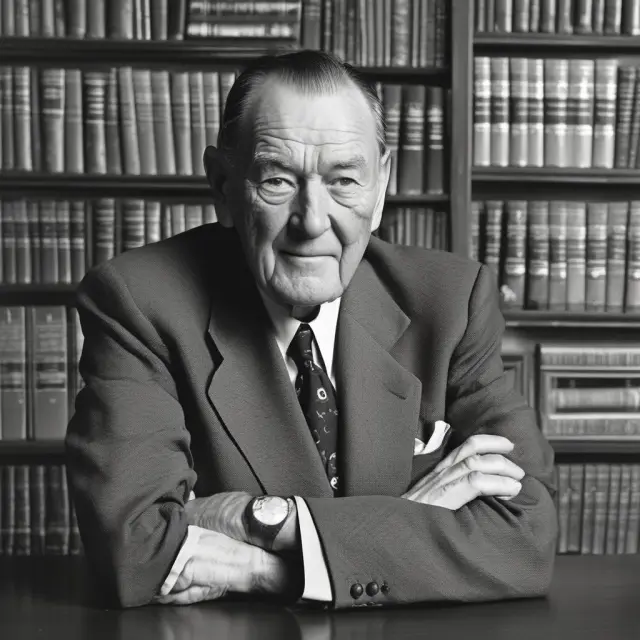
Vanguard’s Success: The Vanguard 500 Fund
One of Bogle’s most significant achievements was the launch of the first index fund, the Vanguard 500 Fund, in 1976. This marked a turning point for individual investors and the world of finance as it provided the opportunity to invest in index funds that tracked broader market indices at an affordable cost. The Vanguard 500 Fund, which tracks the S&P 500 index, is still popular among investors today. As of July 28, 2022, this fund manages over $709 billion in assets, making it one of the largest mutual funds in existence.
The introduction of the Vanguard 500 Fund was a game-changer as it represented the first index fund to be marketed to retail investors. Previously, passive investment strategies were mostly accessible only to institutions and larger investors. Bogle’s innovation allowed individual investors to benefit from the diversification and lower costs associated with index funds. This shift has been instrumental in making investing more accessible and democratizing wealth management.
Index investing, a passive investment strategy where an investor aims to match the performance of a specific market index, has become increasingly popular over the years due to its simplicity, low cost, and potential for long-term growth. In contrast to actively managed funds, which aim to outperform their respective benchmarks through active trading and manager selection, index funds typically have lower expenses since they follow an index’s holdings passively.
The Vanguard 500 Fund serves as a prime example of the success of passive investing. Since its inception, it has consistently delivered returns that closely match the S&P 500 index and provided investors with a reliable, cost-effective option for long-term growth. As of July 28, 2022, the fund’s one-year return was 17.9%, three-year return was 21.4%, five-year return was 15.6%, and ten-year return was 14.3%. These figures underscore the potential of index investing for those seeking long-term wealth generation.
In conclusion, John Bogle’s creation and marketing of the Vanguard 500 Fund revolutionized the investment landscape by making passive index funds accessible to individual investors. This achievement marked the beginning of a new era in finance, providing the average investor with an efficient, cost-effective, and proven strategy for long-term wealth accumulation.

Bogle’s Philosophy: Index Investing
John Bogle championed index investing as a simple yet powerful investment strategy for the average investor. He believed that most individuals would struggle to beat the market through actively managed funds, given high costs and inconsistent performance. Instead, he emphasized passive investing as an accessible alternative.
Index investing is a passive investment approach that involves buying securities or assets that closely mirror a specific benchmark index. This strategy aims to track the overall market performance rather than attempting to beat it with individual stock picks. Bogle’s focus on indexing was rooted in his desire for transparency, low costs, and simplicity.
Investors can benefit from various advantages of index investing:
- Lower expenses: Index funds generally charge lower expense ratios as they involve little to no managerial intervention, making them a more cost-effective option compared to actively managed funds.
- Diversification: By including a broad range of securities that mirror an index, investors automatically gain exposure to various industries and sectors without having to handpick individual stocks.
- Reduced emotion: Index investing removes the need for frequent decisions based on market conditions or emotions. It fosters long-term investment commitment and discipline, enabling investors to ride out market volatility.
Bogle’s indexing philosophy is embodied in Vanguard’s first retail index fund – The Vanguard 500 Fund (VFIAX). Launched in 1976, this groundbreaking fund tracks the S&P 500 index and has since grown exponentially. As of July 28, 2022, the fund manages over $709 billion in assets.
Bogle’s commitment to passive investing through indexing had a significant impact on the investment industry as a whole. He paved the way for other passive investment strategies such as exchange-traded funds (ETFs), which have become increasingly popular among investors seeking low-cost, diversified investment options.
In summary, John Bogle’s philosophy of index investing offers a simple yet powerful alternative to traditional actively managed funds. By emphasizing transparency, lower costs, and long-term commitment, he provided the average investor with an accessible means to participate in the broader market and build wealth over time.

Bogle’s Legacy: The Father of Passive Investing
John Bogle’s impact on the investment industry is unparalleled as the inventor of passive investing. After founding the Vanguard Group in 1974, he introduced a new era in index investing. Bogle’s innovative approach significantly altered the investment landscape, paving the way for low-cost investment options accessible to ordinary investors.
Before Vanguard, mutual funds were typically actively managed, charging high fees and requiring substantial minimum investments. With passive investing, Bogle demonstrated that investors didn’t need a financial genius to generate decent returns; they simply needed access to the entire market through an index fund.
In 1976, Bogle launched the Vanguard 500 Fund, the world’s first index mutual fund, which aimed to match the performance of the S&P 500 Index. This groundbreaking move marked the start of a new industry and provided an opportunity for millions of investors to gain market exposure at minimal costs.
Bogle’s philosophy was simple: average investors could not consistently beat the overall market through stock picking or active management, and their hard-earned savings would be better served by paying low fees for passive investment vehicles. This ideology contributed significantly to the shift from actively managed funds towards index funds, ultimately becoming a game changer in the investment world.
The Vanguard Group’s success was built upon Bogle’s commitment to transparency and low costs. He created the first index fund available to retail investors, demonstrating that lower expenses could lead to better long-term returns for individuals. This approach challenged traditional investment firms, forcing them to adapt and reconsider their business models.
Bogle’s legacy continues to influence the industry as passive investing becomes increasingly popular among individual and institutional investors alike. The Vanguard Group, under his leadership, grew into a global powerhouse managing more than $7 trillion in assets as of 2022. Bogle’s philosophy, which focused on index investing and low fees, remains a cornerstone of the firm’s success.
In summary, John Bogle is considered the father of passive investing due to his pioneering work with index funds and his belief that average investors should have access to low-cost investment options. His contributions to the industry have reshaped the way individuals invest in the stock market, providing opportunities for millions to save for their future while minimizing risk and fees.

John Bogle’s Net Worth
John Bogle had an estimated net worth of approximately $80 million at the time of his death in 2019. A significant portion of that wealth came from the Vanguard Group, the investment firm he founded in 1974. Bogle’s innovative approaches to mutual funds and passive investing revolutionized the industry.
The Vanguard Group introduced a unique ownership structure where fund investors became indirect owners of the company. This allowed the firm to reinvest profits into its operations, reducing costs for shareholders. With this, Bogle created a cost-effective investment vehicle for retail investors – the index fund.
In 1976, Vanguard launched the first index fund, the Vanguard 500 Fund. This fund mirrored the performance of the S&P 500 and proved to be an instant hit amongst investors seeking lower costs and higher transparency. As of July 28, 2022, the Vanguard 500 Fund manages over $709 billion in assets.
Bogle’s philosophy advocated for passive investing as a more accessible and cost-effective alternative to active management for individual investors. He believed that the average investor would struggle to consistently beat the market through active strategies. His low-cost investment approach resonated with many, making him a trailblazer in the financial industry.
Passive investing involves holding a diversified portfolio that mirrors the performance of a specific index rather than trying to outperform the market through individual stock selection or market timing. Passive funds generally have lower fees due to their simpler investment strategies and limited trading activity, making them more attractive for long-term investors.
Bogle’s contributions significantly impacted the world of investing, shaping it into a more accessible and cost-effective landscape for individual investors. His influence extended beyond index funds as well; his 1994 book, “Common Sense on Mutual Funds: New Imperatives for the Intelligent Investor,” remains a classic text for understanding the principles of passive investing.
Bogle’s net worth is a testament to the success and impact of his groundbreaking ideas in the investment world. His legacy continues to inspire future generations of investors and financial professionals, demonstrating that innovative approaches and a focus on lower costs can create substantial value for investors.

Passive vs. Active Investing
John Bogle’s philosophy was simple; he believed that most investors could not beat the market consistently over time. Instead of focusing on picking individual stocks or actively managing a portfolio, he proposed passive investing as an alternative. Passive investment strategies aim to replicate the performance of a particular benchmark index by holding securities that match its composition and maintaining them with minimal intervention.
Passive Investing vs. Active Investing
Active investing, on the other hand, involves actively managing a portfolio in an attempt to outperform the market through research, analysis, and stock selection. The primary goal of active investing is to beat the benchmark index by selecting undervalued stocks and avoiding overvalued ones.
Advantages of Passive Investing
- Lower costs: Since passive funds don’t require frequent trading or human intervention, they generally have lower expense ratios than actively managed funds.
- Simplified investment strategy: Passive investing eliminates the need to pick stocks and make continuous adjustments to a portfolio. This simplifies the process and reduces the risk of making emotional decisions based on market volatility.
- Tax efficiency: Passive funds generate fewer capital gains as they have lower turnover rates, which can lead to more tax-efficient returns for investors.
- Reduced human error: Passive investing eliminates the potential for human errors that can come with active management, such as market timing or stock selection mistakes.
Disadvantages of Passive Investing
- Limited customization: Since passive funds are designed to track specific indexes, they offer little room for investors to tailor their investments according to their individual goals and preferences.
- Inability to react to market changes: Passive investing may not be ideal for investors who wish to respond quickly to market shifts or capitalize on unique opportunities.
- No control over dividend reinvestment: Unlike actively managed funds, passive index funds don’t offer the ability to reinvest dividends at discretion. Instead, the dividends are typically distributed in cash.
Role of Index Funds in Passive Investing
Index funds represent a crucial component of passive investment strategies as they provide a simple and cost-effective way for investors to track various indices while benefiting from diversification, ease of access, and low fees. By investing in index funds, individuals can gain exposure to a broad range of stocks or bonds without the need to pick individual securities or actively manage their portfolio.
In conclusion, passive investing offers a lower-cost alternative to active investing that requires less human intervention, fewer decision-making responsibilities, and a more simplified approach to managing investments. Index funds play a significant role in this investment strategy by enabling investors to track market indices while enjoying the advantages of diversification, tax efficiency, and minimal management fees. With passive investing’s growing popularity, it is becoming increasingly clear that John Bogle’s impact on the financial industry will continue to be felt for generations to come.

Bogle’s Books: Common Sense on Mutual Funds
John Bogle left a significant mark on the investment industry through his advocacy of index funds and passive investing. In 1994, he published “Common Sense on Mutual Funds: New Imperatives for the Intelligent Investor,” which remains a must-read book for investors today.
In this classic work, Bogle presents a compelling case for why individual investors should shift their focus from actively managed funds to index funds. He argues that the average investor is unlikely to outperform the market and would save considerable amounts of money by choosing passive investments instead of active ones.
Bogle’s book covers various aspects of mutual fund investing, including fees, taxes, turnover, performance measurement, and investor behavior. With clear explanations, real-life examples, and practical advice, he debunks common myths surrounding mutual funds and offers valuable insights for all types of investors.
One essential concept that Bogle emphasizes in “Common Sense on Mutual Funds” is the importance of understanding the true costs of active fund management. He explains how these hidden fees can significantly impact long-term returns, making passive indexing an attractive alternative.
Moreover, he sheds light on various investor biases that hinder achieving optimal investment outcomes. These biases include recency bias, home country bias, and the tendency to chase performance. By being aware of these pitfalls and embracing the philosophy of index investing, Bogle believes that investors can improve their chances of building a successful long-term investment portfolio.
“Common Sense on Mutual Funds: New Imperatives for the Intelligent Investor” is not just a book about mutual funds but also a comprehensive guide to understanding various aspects of personal finance and investment management. Its insights and principles continue to resonate with investors seeking a clear, easy-to-understand approach to building wealth over time.
Bogle’s writing style in the book is engaging, accessible, and informative, making it an excellent resource for individuals interested in learning about investing from one of its most influential pioneers. By focusing on practical knowledge and real-life examples, “Common Sense on Mutual Funds: New Imperatives for the Intelligent Investor” has stood the test of time and remains a valuable asset for anyone seeking to make informed investment decisions.

FAQs
Who is John Bogle?
John Bogle was a distinguished investor and founder of The Vanguard Group, a leading investment firm. He is best known for his pioneering work in index investing, which allows investors to buy funds that track the broader market at low costs. With an estimated net worth of approximately $80 million, he left a lasting impact on the financial industry.
What is John Bogle’s background?
Born May 8, 1929, in Montclair, New Jersey, John Bogle earned his economics degree at Princeton University. He began his career at Wellington Management and later established Vanguard in 1974.
What is passive investing?
Passive investing refers to a strategy where an investor aims to mirror the performance of a specific index or market instead of actively trying to beat it by selecting individual stocks or bonds. John Bogle is known for popularizing passive investing through index funds.
What are index funds?
Index funds are mutual funds that aim to replicate the returns of a specific market index, such as the S&P 500. They are typically associated with lower fees and expenses compared to actively managed funds because they involve less trading and fewer manager decisions.
How did John Bogle’s career begin?
John Bogle joined Wellington Management in 1951, where he attempted to persuade the company to adopt a multi-fund approach. However, after being appointed chairman, he was later dismissed following a poorly executed merger. This setback led him to establish his own mutual fund company, Vanguard, in 1974.
What are some of John Bogle’s accomplishments?
Bogle introduced the first index mutual fund, the Vanguard 500 Fund, in 1976. He also implemented a unique ownership structure for Vanguard where fund investors became indirect owners of the company, leading to lower costs and fees for investors.
What is the significance of John Bogle’s philosophy on passive investing?
Bogle believed that average investors would struggle to outperform the market, making low-cost index funds an appealing alternative. His philosophy emphasized reducing investment expenses and offered a more accessible approach to long-term investing for individuals.
What is the difference between ETFs and index funds?
ETFs (Exchange-Traded Funds) can be bought and sold throughout the day on an exchange, while index funds can only be traded at their net asset value at the end of the trading day. The primary difference lies in their flexibility and pricing structures.
What was John Bogle’s net worth?
At the time of his death in 2019, John Bogle had an estimated net worth of approximately $80 million. His wealth primarily came from his role as founder of The Vanguard Group.
Who can benefit from passive investing?
Passive investing is suitable for investors looking to minimize risk while still achieving decent returns over the long term. This investment strategy is particularly beneficial for those who may not have the time, expertise, or resources to actively manage their investments.
John Bogle’s legacy continues to shape the financial industry through his groundbreaking contributions in passive investing and low-cost index funds. His work has influenced generations of investors, providing a more accessible and cost-effective approach to long-term wealth accumulation.
 Next entry · No. 2,614Understanding Keynesian Economics: Theory, Principles, and Legacy of John Maynard Keynes
See also
-
 No. 4,677
08 Jul 2025
19 min
Understanding Smart Beta ETFs: A New Approach to Index Investing for Institutional Investors
Business Finance
No. 4,677
08 Jul 2025
19 min
Understanding Smart Beta ETFs: A New Approach to Index Investing for Institutional Investors
Business Finance -
 No. 3,250
13 Mar 2025
17 min
Understanding Money Managers: Expertise, Fee Structures, and Top Players
Business Finance
No. 3,250
13 Mar 2025
17 min
Understanding Money Managers: Expertise, Fee Structures, and Top Players
Business Finance -
 No. 2,688
27 Jan 2025
17 min
Kenneth I. Chenault: The First Black Fortune 500 CEO
Business Finance
No. 2,688
27 Jan 2025
17 min
Kenneth I. Chenault: The First Black Fortune 500 CEO
Business Finance -
 No. 2,367
31 Dec 2024
21 min
Understanding Indexing: A Comprehensive Guide for Institutional Investors
Business Finance
No. 2,367
31 Dec 2024
21 min
Understanding Indexing: A Comprehensive Guide for Institutional Investors
Business Finance -
 No. 2,365
31 Dec 2024
24 min
Understanding Index Funds: A Comprehensive Guide for Institutional Investors
Business Finance
No. 2,365
31 Dec 2024
24 min
Understanding Index Funds: A Comprehensive Guide for Institutional Investors
Business Finance -
 No. 5,934
06 Sep 2026
15 min
Index Funds vs ETFs: Fees, Taxes, and Which to Pick
Investments
No. 5,934
06 Sep 2026
15 min
Index Funds vs ETFs: Fees, Taxes, and Which to Pick
Investments