Understanding Keynesian Economics: Theory, Principles, and Legacy of John Maynard Keynes
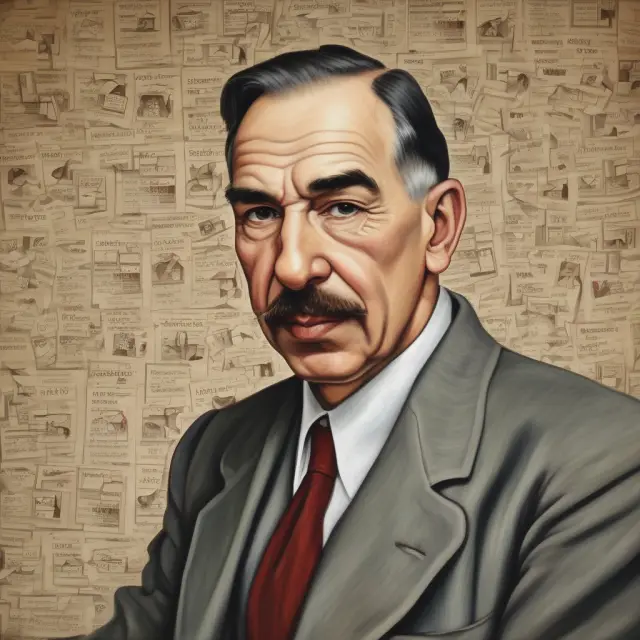
Keynesian economics is the theory, set out in John Maynard Keynes's 1936 General Theory of Employment, Interest and Money, that total spending in the economy (aggregate demand) is the main driver of output and employment, so government intervention, especially public spending, can help moderate booms and busts.
Introduction
John Maynard Keynes was a groundbreaking economist who is widely recognized as the founder of modern macroeconomics. Born in 1883, he attended some of the most prestigious educational institutions in England and excelled in mathematics before shifting his focus to economics. His early career included roles within the British Civil Service and the British Treasury, as well as academic appointments at Cambridge University. However, it was during the Great Depression that Keynes’ perspective on economic theory significantly evolved, leading him to advocate for government intervention. This section delves into Keynes’ biography and his contribution to economics through the concept of Keynesian Economics.
Biography of John Maynard Keynes: Born in Cambridge, England, in 1883, John Maynard Keynes studied at Eton College and Cambridge University, where he initially focused on mathematics before transitioning into economics. Keynes’ father was an advocate of laissez-faire economics, but the economist himself held conventional beliefs in this regard during his time at Cambridge. However, after the devastating stock market crash in 1929 and the subsequent Great Depression, Keynes came to believe that a free market economy needed reformulation to function effectively and outperform alternative systems like communism.
Keynesian Economics: Keynes is best known for his seminal work, The General Theory of Employment, Interest, and Money, published in 1936. In this book, he advocated for governments to adopt an active role in their economies, particularly in times of recession. One of the fundamental principles of Keynesian economics is that demand drives supply; total spending determines all economic outcomes. Another essential concept is that increasing government spending can boost demand, stimulate production and employment, even if it requires going into debt.
In contrast to conventional economic wisdom that held that governments should minimize intervention, Keynes’ theories challenged the notion and laid the foundation for modern macroeconomics. Subsequent sections will discuss his shift from laissez-faire economics, principles of Keynesian economics, criticisms, influence on policy during the New Deal, and comparisons to laissez-faire economics.
Stay tuned for more insights into John Maynard Keynes and his groundbreaking contributions to economics!
Section Conclusion
John Maynard Keynes was a prominent British economist who is remembered as the founder of Keynesian economics, an economic theory that emphasizes government intervention during economic downturns. In the next sections, we will explore his biography, the principles of Keynesian economics, criticisms, and impact on policy through the New Deal, as well as comparisons to laissez-faire economics.
Early Life and Education
John Maynard Keynes was born into a prominent family in Cambridge, England, on June 5, 1883. His father, John Neville Keynes, was an Economics lecturer at the University of Cambridge. His mother, Florence Ada Brown, was one of Cambridge’s first female graduates and an active philanthropist. Keynes was awarded scholarships to two of the most prestigious English schools: Eton College and the University of Cambridge, where he earned a Bachelor’s degree in mathematics in 1904. Although his academic achievements were impressive, Keynes had no formal training in economics at the time. Instead, he excelled in mathematics and lectured on probability theory while holding the position of Fellow at King’s College, Cambridge University.
Government Roles and Early Economic Beliefs
Keynes began his career as a conventional believer in laissez-faire economics, an economic philosophy that advocates minimal government intervention in markets. He also invested extensively in the stock market. However, after the devastating 1929 stock market crash, which led to the Great Depression, Keynes’ perspective on economics began to shift. He came to believe that free-market capitalism was inherently flawed and needed reforms to effectively address economic downturns and maintain full employment. As a result, he became an advocate for government intervention in the economy through increased spending during recessions.
Education and Early Career: An In-Depth Look
Born into a middle-class family with a strong emphasis on education, John Maynard Keynes attended two of the most prestigious schools in England: Eton College and the University of Cambridge. He was an intelligent and dedicated student, excelling in mathematics despite having no formal training in economics. Keynes’ father, John Neville Keynes, had a significant impact on his interest in economics. As an Economics lecturer at Cambridge, he imparted crucial knowledge and inspired young John to pursue a career in the field.
During his early academic years, Keynes gained renown for his expertise in mathematics. He went on to lecture on probability theory while holding the position of Fellow at King’s College at Cambridge University. Before the 1929 stock market crash and subsequent Great Depression, John Maynard Keynes was a conventional believer in laissez-faire economics, the economic philosophy that supports minimal government intervention in markets. He also invested heavily in the stock market, reflecting his belief in the power of free enterprise. However, after witnessing the devastating economic consequences of the 1929 stock market crash and the ensuing Great Depression, Keynes’ perspective on economics began to evolve dramatically.
The Emergence of Keynesian Economics: An Overview
During this period, Keynes began to challenge the prevailing economic orthodoxy by advocating for government intervention as a means to address unemployment and correct economic recessions. His most influential work, The General Theory of Employment, Interest, and Money, posited that demand drives supply in an economy, which was a radical departure from the conventional wisdom that held the opposite view: supply creates demand. By focusing on aggregate demand, Keynes’ theories opened up new avenues for understanding economic cycles, and his ideas laid the foundation for modern macroeconomics.
In conclusion, John Maynard Keynes’ early life and education played a significant role in shaping his career and groundbreaking contributions to economics. Born into an educated family, he attended two of England’s most prestigious schools, excelling in mathematics despite having no formal training in economics. As he transitioned from academia to government roles during the Great Depression, Keynes began advocating for active government intervention as a means to address unemployment and correct economic recessions, laying the foundation for modern macroeconomics and Keynesian economics.
Adoption of Government Intervention in the Economy
John Maynard Keynes, a renowned British economist, initially subscribed to conventional economic wisdom that advocated for minimal government intervention in the economy. However, after witnessing the devastating impact of the 1929 stock market crash and subsequent Great Depression, Keynes shifted his perspective. He became an advocate for active government intervention as a means to combat high unemployment and correct economic downturns.
The Great Depression was a pivotal moment in Keynes’ life and career. As a result of this catastrophic event, he began questioning the viability of laissez-faire economics—an economic philosophy that opposes government intervention—and started to argue for a new approach that recognized the importance of demand-side economics.
Keynes was initially skeptical about government intervention, having been raised in an environment where his father, John Neville Keynes, strongly advocated for free-market principles. However, after witnessing the destructive effects of the Great Depression on millions of people, he came to believe that the free market alone was insufficient to address economic downturns and unemployment.
In response to this crisis, Keynes began promoting a more active role for governments in managing their economies through fiscal policy (government spending and tax policies) to influence economic conditions. He believed that government intervention, such as increasing spending during recessions, could stimulate consumer demand and drive production, leading to full employment and economic recovery.
The most significant principle of Keynesian economics is the belief that aggregate demand—the total spending for goods and services by both the private sector and the government—drives supply and determines all economic outcomes. This perspective contrasted with the prevailing view at the time, which held that supply creates its own demand. By focusing on aggregate demand, Keynes introduced a new way to think about the economy and laid the foundation for modern macroeconomics.
One of the most critical ways in which governments could use fiscal policy to stimulate the economy was through increased spending during economic downturns. This strategy was essential as private sector demand might be insufficient, leaving unemployed resources (labor and factories) idle. By increasing government expenditures on public works or other initiatives, Keynes believed that the government could put these idle resources back to work, generating employment and income for households.
Although some economists and policymakers initially resisted the idea of increased government intervention in the economy, the evidence of its success during the Great Depression became increasingly compelling. For example, President Franklin D. Roosevelt’s New Deal programs in the United States adopted many Keynesian principles, including large-scale public works projects and direct relief to unemployed Americans, to spur economic recovery.
The legacy of John Maynard Keynes has had a profound impact on macroeconomic theory, informing policy responses to subsequent economic crises, such as the Great Recession of 2007–2009 and the COVID-19 pandemic. His ideas have continued to shape modern economics, ensuring that governments play an active role in managing their economies and addressing economic downturns while maintaining a balance between free markets and government intervention.
In conclusion, John Maynard Keynes’ advocacy for government intervention during the Great Depression transformed the way economists think about economic policy and the role of the government in managing business cycles. His insights into aggregate demand and the importance of fiscal policy continue to influence modern economics and have left an indelible mark on economic theory.
Principles of Keynesian Economics
John Maynard Keynes is renowned for his contribution to economics, particularly through the concept of Keynesian economics. This branch of economic theory emphasizes the importance of active government intervention in economies during times of recession to create jobs and boost consumer buying power. One of the fundamental tenets of Keynesian economics is that demand drives supply and not the other way around.
The Principle of Effective Demand
Keynes asserted that effective demand plays a crucial role in determining economic outcomes such as production, employment, and inflation. Effective demand represents the amount of spending or consumption required to fully utilize an economy’s resources and achieve full employment. It is essential for policymakers and economists to recognize this concept since it highlights the importance of aggregate demand in shaping supply and prices within an economic system.
The Multiplier Effect
Another critical principle of Keynesian economics is the multiplier effect, which demonstrates how a single unit of expenditure can generate more than one unit of output through a series of interconnected transactions between various sectors in the economy. This concept underscores the significance of government spending as an effective tool to stimulate economic activity and promote recovery from recessionary conditions.
Active Government Intervention
Government intervention is another essential principle of Keynesian economics. During economic downturns, the role of the government is to increase spending and decrease taxes to spur consumer demand, which in turn leads to increased production and employment. By boosting aggregate demand, governments can create a virtuous cycle that helps pull an economy out of a recession.
Criticisms of Keynesian Economics
Despite its widespread influence, Keynesian economics has faced criticisms for promoting deficit spending, discouraging private investment, and leading to inflation. Critics argue that excessive government intervention may result in inefficiencies, distortions, and long-term economic damage due to the potential misallocation of resources.
In Conclusion
John Maynard Keynes’ theories on economics have had a profound impact on economic policy, particularly during times of recession or financial instability. The principles of effective demand, the multiplier effect, and active government intervention serve as cornerstones for understanding this influential economic philosophy. By recognizing the importance of aggregate demand in shaping economic outcomes and acknowledging the role of governments in mitigating downturns, we can begin to grasp the significance of Keynesian economics in modern economic thought.
Criticism and Counterarguments
Despite its widespread influence, Keynesian economics has also faced criticisms since its inception. Critics argue that it promotes deficit spending, stifles private investment, and causes inflation.
One of the most notable critiques comes from Milton Friedman and monetarists who advocate for a free-market approach. They contend that business cycles are part of the natural order of things and that direct government intervention only worsens the recovery process. Instead, they suggest relying on monetary policy, like controlling the overall money supply, to foster economic stability (Friedman & Schwartz, 1963).
Another criticism focuses on the concept of big government—the expansion of federal initiatives required for active involvement in the economy. Rival schools of thought argue that smaller governments and deregulation would result in better economic performance.
Keynesian economics has also been criticized for its potential impact on inflation. The theory assumes that increased government spending will stimulate consumer demand, leading to production and employment growth. However, critics warn that if this spending is not accompanied by underlying economic growth, it may lead to inflationary pressure. This issue was exemplified during the stagflation of the 1970s, a period marked by high unemployment, low production, but also high inflation and high-interest rates (Friedman & Schwartz, 1963).
Furthermore, some argue that Keynes himself was not as committed to his theories as he appeared. As the economic situation changed during his lifetime, he began to reconsider his stance on government intervention and free-market capitalism. He even expressed interest in Adam Smith’s invisible hand theory towards the end of his life (Skidelsky, 1992).
In conclusion, Keynesian economics has had a profound impact on macroeconomic thought, but it is not without controversy. Critics argue that it promotes deficit spending, stifles private investment, and causes inflation. Monetarists challenge the need for government intervention and advocate for monetary policy to control economic fluctuations. Understanding these criticisms is essential for fully appreciating the significance of Keynesian economics and its ongoing role in shaping economic theory and policy.
References:
Friedman, M., & Schwartz, A. J. (1963). A Monetary History of the United States, 1867-1960. Princeton University Press.
Skidelsky, R. (1992). John Maynard Keynes: The Economist as Savant. W.W. Norton & Company.
Influence on Economic Policy: The New Deal
The New Deal, a series of government programs enacted during Franklin D. Roosevelt’s presidency in response to the Great Depression, represents one of the most significant applications of Keynesian economics in modern history. Keynes’ theories on government intervention to combat unemployment and stimulate demand became the cornerstone of the New Deal policies designed to address the economic crisis that gripped America during the 1930s.
Before the Great Depression, John Maynard Keynes held traditional views regarding limited government intervention in the economy. However, his perspective began to change as he witnessed the devastating impact of mass unemployment and widespread suffering across Europe and North America. As a result, he became an advocate for active fiscal policy to influence economic conditions and restore full employment.
President Roosevelt embraced Keynesian economics when crafting the New Deal to counteract the Great Depression’s devastating effects. The New Deal initiatives aimed to create jobs through public works projects, increase spending, and provide relief to millions of unemployed Americans. Some notable programs include:
- Civilian Conservation Corps (CCC): Created in 1933, this work-relief program provided employment opportunities for young men by enrolling them in the CCC and assigning them to various conservation projects, including reforestation, flood control, and erosion prevention.
- Civil Works Administration (CWA): In 1933, President Roosevelt signed an executive order creating this agency to provide jobs to unemployed, unskilled workers by funding public works projects like building schools, bridges, and other infrastructure. The CWA employed 4 million workers before it was dismantled in 1934 due to budgetary constraints.
- Works Progress Administration (WPA): Succeeding the CWA, the WPA was established in May 1935 to provide jobs for artists, musicians, writers, and other professional and unskilled workers. The agency oversaw projects that ranged from public art installations to building roads, parks, and community centers.
- Social Security Administration: In August 1935, President Roosevelt signed the Social Security Act, which established the federal Old-Age, Survivors, and Disability Insurance program, known as Social Security. This insurance system provides a monthly cash benefit to retirees, disabled workers, and their dependents based on their past contributions.
- National Recovery Administration (NRA): The NRA, implemented in June 1933, was designed to regulate wages, prices, and hours of work through codes governing various industries, with the intent of boosting economic demand by creating jobs and stabilizing prices. Although it generated some initial successes, the NRA’s complex regulatory structure proved unwieldy, and it was eventually dismantled in 1935 after being declared unconstitutional.
- Agricultural Adjustment Administration (AAA): Created in May 1933, the AAA provided subsidies to farmers to reduce agricultural production and increase prices through voluntary production reduction programs, ultimately aiming to improve the economic situation for farmers and stabilize food prices.
- Federal Deposit Insurance Corporation (FDIC): Established on January 16, 1934, the FDIC was created to restore public confidence in the banking system by providing insurance coverage for depositors’ funds up to $2,500 per account. This assurance helped prevent bank runs and stabilized the financial sector during the Great Depression.
The New Deal programs, inspired by Keynesian economic principles, aimed to boost aggregate demand, create jobs, and alleviate suffering brought about by the Great Depression. These initiatives were a significant departure from the previous laissez-faire approach to economic policy, setting the stage for more active government intervention in economic matters during times of crisis or recession.
In summary, John Maynard Keynes’ ideas on government intervention and stimulus spending significantly influenced Franklin Roosevelt’s New Deal programs during the Great Depression. By increasing demand through public works projects, creating jobs, and providing relief to unemployed Americans, the New Deal demonstrated the application of Keynesian economics in real-world economic policy.

Keynesian Economics During the Great Recession and COVID-19 Pandemic
The global financial crisis of 2008 and subsequent recession brought renewed attention to the principles of John Maynard Keynes, particularly his advocacy for increased government intervention during economic downturns. Keynesian economics argues that demand is the driving force in an economy and that governments should actively spend to stimulate spending and consumption to create jobs and boost economic activity. This was evident during both the Great Recession and the COVID-19 pandemic response.
During the Great Recession, governments worldwide implemented Keynesian policies, such as fiscal stimulus packages and bailouts of troubled industries and financial institutions. In the U.S., President Barack Obama’s American Recovery and Reinvestment Act of 2009 was a $787 billion stimulus package intended to jumpstart economic growth through increased government spending on infrastructure, education, and other programs. Similarly, in Europe, the European Central Bank provided liquidity support to troubled banks and governments implemented fiscal packages to mitigate the economic impact of the crisis.
During the COVID-19 pandemic, governments worldwide once again turned to Keynesian principles to address the economic fallout from lockdowns and social distancing measures. In the U.S., the CARES Act provided direct payments to individuals, expanded unemployment benefits, and offered loans and grants to small businesses and industries most impacted by the crisis. Additionally, the Federal Reserve implemented various measures to provide liquidity to the financial markets and keep interest rates low to stimulate borrowing and investment.
Despite their successes, Keynesian policies have not been without criticism. Critics argue that such intervention stifles private sector innovation, encourages excessive government spending, and can lead to inflation. However, proponents of Keynesian economics maintain that it provides a necessary counterbalance to laissez-faire economic principles during times of crisis and ensures that the most vulnerable members of society are protected from the worst economic consequences.
In conclusion, the principles of John Maynard Keynes have continued to shape economic policy responses to crises throughout history, from the Great Depression to the Great Recession and the COVID-19 pandemic. While debates continue over the merits and limitations of his ideas, there is no denying that Keynesian economics has left a lasting impact on modern economies and continues to provide a framework for governments to address economic downturns and support their populations during times of need.
Comparison to Laissez-Faire Economics
When discussing the economic theories of John Maynard Keynes, it is essential to understand the context in which his ideas emerged and how they contrasted with existing economic perspectives—namely, laissez-faire economics. The debate between these two opposing schools of thought on government intervention in the economy has continued to shape modern economic policy and theory.
Laissez-Faire Economics: Free Market Ideology
Laissez-faire economics is an economic philosophy advocating minimal interference by governments in the operation of domestic and international economies, focusing primarily on private enterprise and individual freedom. The term “laissez-faire” translates to “let do,” or “allow” in French, emphasizing the belief that individuals and businesses should be left free from government regulation in both economic and social matters. This idea originated in 18th-century France as part of the Enlightenment movement and has since influenced various aspects of economic thought and policy, particularly in the United States.
Key Principles
The core tenets of laissez-faire economics include:
- Free trade: Minimal trade barriers between countries to facilitate the exchange of goods and services across borders.
- Limited government intervention: The belief that governments should minimize their involvement in economic activities, allowing markets to regulate themselves.
- Private property rights: Ensuring individual ownership of private property and its protection by the state is essential for a well-functioning market economy.
- Freedom of contract: Allowing individuals to make contracts with one another without government interference or coercion.
- Nonintervention in wages and prices: Letting wages and prices be determined freely by supply and demand.
Keynesian Economics: Active Government Intervention
John Maynard Keynes’ economic theories, on the other hand, are characterized by the idea that governments should play an active role in their countries’ economies through interventionist fiscal policy. In contrast to laissez-faire economics, Keynes argued that demand drives supply and that healthy economies spend or invest more than they save. During a recession, he believed governments should increase spending to stimulate demand, boosting consumption, production, and ultimately achieving full employment.
Criticism and Counterarguments
The adoption of Keynesian economics after the Great Depression drew considerable criticism from various sources, particularly those advocating for free-market ideology like Milton Friedman and his Chicago School of Economics. Criticisms include:
- Deficit Spending: Accusations that Keynes’ promotion of deficit spending would lead to unsustainable government debt levels.
- Disincentives to save: Belief that increasing government spending would discourage private savings and investment.
- Inflation: Concerns that excessive government intervention could result in inflation, a sustained increase in the general price level of goods and services, eroding purchasing power and economic stability.
Conclusion
Understanding the differences between Keynesian and laissez-faire economics is crucial to comprehending how economies function and why governments choose certain policy paths over others. Both ideologies have their merits and limitations, making them valuable in various contexts and debates. However, it is essential to remember that economic theories should not be viewed as rigid dogmas but rather as evolving frameworks to guide policy decisions and address real-world challenges. As the world continues to face economic uncertainties and crises, the ongoing dialogue between Keynesian and laissez-faire economics will undoubtedly persist and shape future economic policy and theory.
In the following sections, we delve deeper into John Maynard Keynes’ life, education, and career, exploring how these experiences shaped his beliefs on government intervention in the economy. We also examine the implementation of Keynesian principles during significant historical events like the Great Depression and modern financial crises.

FAQs: Common Questions and Misconceptions about Keynesian Economics
Keynesian economics, founded by British economist John Maynard Keynes, is an economic theory advocating government intervention in the economy. This section addresses common misconceptions about this influential economic philosophy, including its relationship to socialism, Keynes’ views on spending your way out of a recession, and accusations that he predicted the rise of Nazi Germany.
Did Keynesian Economics Predict the Rise of Socialism?
While it is true that Keynes had an interest in socialist regimes and showed support for government intervention, it is not accurate to label him as a socialist. He did not advocate for governments taking over industries but instead believed in central authorities stimulating economic recovery without necessarily controlling methods of production. Keynesian economics promotes active government involvement but does not call for complete state control, making it different from traditional socialist ideas.
Did Keynes Advocate Spending Your Way Out of a Recession?
Milton Friedman famously criticized the idea that governments can spend their way out of a recession, arguing instead that deficit spending leads to inflation and a decrease in value for both money and wages. However, it is essential to note that Keynes did not advocate for infinite deficits or continued spending once the economy recovered. Instead, he believed that government intervention during periods of high unemployment would eventually lead to economic recovery through increased consumer demand and stimulated production.
Did Keynes Predict the Rise of Nazi Germany?
While it is true that Keynes was a vocal critic of harsh economic measures imposed on Germany at the Versailles Peace Conference in 1919, it is a misconception to claim that he predicted the rise of Nazi Germany. Although his book, “The Economic Consequences of the Peace,” strongly influenced public opinion against the treaty, it does not contain any explicit predictions about the political and economic turmoil leading to World War II.
In summary, Keynesian economics has been a significant force in shaping macroeconomic policy since its introduction, and many misconceptions have emerged around its principles and origins. Understanding the nuances of this influential economic philosophy is crucial for assessing its validity and relevance in today’s economic climate.

Legacy and Impact
The groundbreaking theories of John Maynard Keynes, known as Keynesian economics, continue to shape modern economic thinking and policy-making, especially during periods of economic uncertainty or recession. Keynes’ ideas revolutionized the field by advocating active government intervention to manage economies and stimulate demand in the face of business downturns (Sweezy & Magdoff, 1970).
During World War II, Keynesian economics gained widespread acceptance as governments implemented Keynes’ ideas through large-scale interventions like the New Deal programs in the United States. This period marked a significant shift towards government involvement in managing economies and proved that these interventions could be effective in stimulating economic growth (Mankiw, 2014).
However, as Milton Friedman, the leading advocate of free-market economics, rose to prominence in the late 1950s, Keynesian economics faced renewed criticism. Critics accused it of promoting big government, discouraging private investment, and causing inflation (Tobin, 1980).
Despite these criticisms, Keynesian principles continued to influence economic policy during major financial crises, such as the Great Recession in 2007–2009 and the COVID-19 pandemic. Governments worldwide implemented various measures to stimulate demand and mitigate economic downturns, demonstrating the ongoing relevance of Keynesian economics (Krugman & Wells, 2011).
The influence of Keynes’ ideas is also evident in contemporary debates on economic policy. The debate between Keynesian economics and its opponents, like the Chicago School of Economics, continues to shape discussions surrounding government intervention in the economy, monetary versus fiscal policy, and the appropriate role of governments in managing business cycles (Friedman, 1968).
Moreover, some critics argue that Keynesian economics is essential for addressing climate change through green economic policies, as it calls for increased public spending to counteract private sector declines during the transition towards a low-carbon economy (Heintzelmann & Peeters, 2012).
In conclusion, John Maynard Keynes’ theories have had a profound impact on modern economics. His advocacy of active government intervention has shaped economic policy in times of crisis and continues to inform ongoing debates surrounding the role of governments in managing economies and counteracting business downturns. The ongoing relevance of his ideas demonstrates the enduring influence of Keynesian economics on economic theory and policy-making.
 Next entry · No. 2,615Understanding Joint and Several Liability in Finance and Investment – How It Impacts Your Business
See also
-
 No. 2,698
27 Jan 2025
20 min
Understanding Keynesian Economics: Origins and Key Concepts
Economics
No. 2,698
27 Jan 2025
20 min
Understanding Keynesian Economics: Origins and Key Concepts
Economics -
 No. 1,902
23 Nov 2024
22 min
The Great Depression: Causes, Impact and Recovery
Economics
No. 1,902
23 Nov 2024
22 min
The Great Depression: Causes, Impact and Recovery
Economics -
 No. 5,179
17 Aug 2025
21 min
Understanding Underemployment Equilibrium: The Persistent State of Unemployment Above Full Employment
Economics
No. 5,179
17 Aug 2025
21 min
Understanding Underemployment Equilibrium: The Persistent State of Unemployment Above Full Employment
Economics -
 No. 5,178
17 Aug 2025
21 min
Underconsumption: An Economic Theory of Persistent Depression
Economics
No. 5,178
17 Aug 2025
21 min
Underconsumption: An Economic Theory of Persistent Depression
Economics -
 No. 5,078
10 Aug 2025
21 min
Trickle-Down Economics: Understanding the Theory and Its Controversies
Economics
No. 5,078
10 Aug 2025
21 min
Trickle-Down Economics: Understanding the Theory and Its Controversies
Economics -
 No. 4,749
14 Jul 2025
21 min
Understanding Sticky Wage Theory: Implications for Employment and Macroeconomics
Economics
No. 4,749
14 Jul 2025
21 min
Understanding Sticky Wage Theory: Implications for Employment and Macroeconomics
Economics