Kenneth Arrow: Nobel Laureate Economist and His Impossibility Theorem
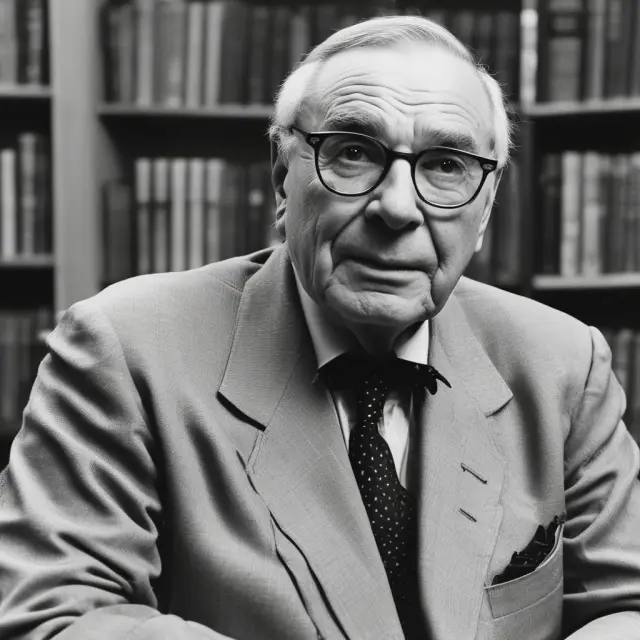
Explore the life, achievements, and groundbreaking work of Nobel Laureate economist Kenneth Arrow, including his Impossibility Theorem.
Introduction to Kenneth Arrow
Kenneth Arrow (born 1921) was a renowned American economist celebrated for his groundbreaking work in the realm of economics, particularly in microeconomics and welfare economics. Arrow’s research encompassed diverse topics including social choice theory, endogenous growth theory, collective decision making, the economics of information, and racial discrimination. In 1972, Kenneth Arrow shared the Nobel Memorial Prize in Economics with John Hicks for their pivotal work on general equilibrium analysis and welfare economics.
Born and Raised: Early Life and Education
Kenneth Arrow hailed from New York City and embarked on his academic journey by earning a Ph.D. in economics from Columbia University, with his dissertation focusing on the General Impossibility Theorem. Throughout his career, Arrow held positions at prestigious universities such as Stanford, Harvard, and the University of Chicago.
A Milestone in Economics: Arrow’s General Impossibility Theorem
One of Arrow’s most significant contributions to economics was the formulation of the General Impossibility Theorem. In this seminal work, Arrow established that an ideal voting method did not exist when dealing with more than two candidates and fulfilling certain criteria, namely nondictatorship, individual sovereignty, unanimity, freedom, independence from irrelevant alternatives, and uniqueness of group rank.
Beyond Democracy: The Reach of Arrow’s Impossibility Theorem
Arthur’s General Impossibility Theorem transcended the realm of democracy and election results. Its applications extended to welfare economics and social justice, illuminating the liberal paradox which was brought forward by Amartya Sen.
A Lasting Legacy: Kenneth Arrow and the Impact on Economic Theory
Kenneth Arrow’s theoretical insights proved crucial over the years, yet he acknowledged that his conclusions regarding competitive markets held validity only under ideal assumptions, which disregarded third-party effects. Despite this limitation, Arrow’s ideas have been expanded upon by other economists to create sophisticated theories like “learning by doing” and “endogenous growth,” highlighting the enduring relevance of his work.
In conclusion, Kenneth Arrow (1921-2017) remains a trailblazer in economics, recognized for his groundbreaking research on social choice theory, welfare economics, learning by doing, and more. His seminal contributions have significantly impacted the world of economic theory and continue to influence academic discourse and real-world applications.
FAQ: Frequently Asked Questions about Kenneth Arrow and His Work
What was Kenneth Arrow’s main contribution to economics?
Answer: Kenneth Arrow made significant contributions to economics through his work on social choice theory, most notably the General Impossibility Theorem.
Where did Kenneth Arrow study for his Ph.D.?
Answer: Kenneth Arrow obtained his Ph.D. in economics from Columbia University.
What was Kenneth Arrow’s Impossibility Theorem about?
Answer: Kenneth Arrow’s General Impossibility Theorem stated that an ideal voting method did not exist when dealing with more than two candidates and fulfilling certain criteria such as nondictatorship, individual sovereignty, unanimity, freedom, independence from irrelevant alternatives, and uniqueness of group rank.
What were some of Kenneth Arrow’s other notable contributions to economics?
Answer: Kenneth Arrow also made important contributions to learning by doing, endogenous growth theory, and the economics of racial discrimination.
Who did Kenneth Arrow share the Nobel Prize with in 1972?
Answer: Kenneth Arrow shared the Nobel Memorial Prize in Economics in 1972 with John Hicks for their work on general equilibrium analysis and welfare economics.
How did Kenneth Arrow’s work influence the liberal paradox?
Answer: Arrow’s General Impossibility Theorem was used to illuminate the liberal paradox, which examines the conflict between the distribution of goods and services in a society and individual freedom.

Early Life and Education of Kenneth Arrow
Born in New York City in 1921, Kenneth Arrow grew up with a strong foundation for intellectual curiosity. His father was an engineer who encouraged his son to pursue higher education. Arrow excelled academically, earning his undergraduate degree from City College of New York in just three years and then moving on to Columbia University for his Ph.D. in Economics. During this time, he developed a groundbreaking theorem known as the General Impossibility Theorem.
The Arrow Theorem’s Origins: A Milestone in Economic Theory
Arrow’s early academic career was marked by teaching positions at prestigious universities such as Stanford University, Harvard, and the University of Chicago. However, it wasn’t until he earned his Ph.D. from Columbia University that he would make a significant mark on economic theory. In his dissertation, Arrow examined the concept of ideal voting methods, specifically when there are more than two candidates. This work led to the development of the General Impossibility Theorem.
A Transformative Discovery: Understanding Arrow’s Theorem
Arrow discovered that no ideal voting method could fairly determine results during an election when more than two candidates are involved. He outlined five essential criteria for such a method, including nondictatorship, individual sovereignty, unanimity, freedom from irrelevant alternatives, and uniqueness. Arrow’s theorem challenged conventional wisdom and raised intriguing questions about the relationship between democracy, election results, welfare economics, and social justice.
Beyond Democracy: The Broader Implications of Arrow’s Theorem
The significance of Arrow’s General Impossibility Theorem extends beyond electoral systems and democracy. Its implications are far-reaching, touching upon welfare economics and the distribution of goods and services within a society. It has been linked to the liberal paradox, which explores the inherent conflict between individual freedom and societal well-being.
In later years, Arrow continued to expand on these ideas by publishing works like “Social Choice and Individual Values,” which delved deeper into the intricacies of social choice theory and its implications for economics. Arrow’s contributions have not only shaped economic theory but also influenced real-world applications in politics, policy, and beyond.
The Lasting Impact: Kenneth Arrow’s Legacy in Economic Theory
Arrow’s theoretical insight has proven to be an enduring contribution to the field of economics. His conclusions about competitive markets held true under ideal assumptions, but he acknowledged their limitations as they failed to account for real-world complexities such as third-party effects. Despite these constraints, Arrow’s work served as a foundation for other economists to build upon and explore new ideas, leading to the development of concepts like “learning by doing” and endogenous growth theories.
Kenneth Arrow died on Feb. 21, 2017, leaving behind a rich legacy that continues to inspire and influence economic research to this day.

Arrow’s General Impossibility Theorem: A Game Changer in Welfare Economics
Kenneth Arrow, the American economist who shared the Nobel Prize in Economic Sciences with John Hicks in 1972 for their pioneering contributions to general equilibrium theory and welfare economics, is best known for his groundbreaking work on social choice theory, specifically the Arrow Impossibility Theorem. This theorem, published in Arrow’s seminal paper “Social Choice and Individual Values,” has left a profound impact on fields such as democratic decision-making processes, elections, welfare economics, and social justice.
The Arrow Impossibility Theorem, also known as the Gibbard-Satterthwaite Theorem due to later contributions by Harold W. K. Gibbard and Kenneth J. Arrow, explores the criteria that a fair voting method should satisfy for making decisions among more than two candidates or alternatives. Arrow’s theorem demonstrates that no such perfect or ideal voting method can exist under certain conditions.
Before we dive into Arrow’s Impossibility Theorem, it is essential to understand Arrow’s life and educational background. Born on August 24, 1921, in New York City, Kenneth Arrow pursued his Ph.D. at Columbia University under the guidance of the esteemed economist Oskar Morgenstern. In 1950, Arrow joined Stanford University, where he made significant contributions to various branches of economics, including the aforementioned social choice theory and welfare economics.
The Arrow Impossibility Theorem was published in 1950 as part of Arrow’s dissertation on social choice theory. The theorem introduced criteria for an ideal voting method in a framework where there are more than two alternatives or candidates, including: nondictatorship, individual sovereignty, unanimity, freedom and independence from irrelevant alternatives, and uniqueness.
Nondictatorship refers to the condition that no single person should be the deciding factor in determining the group’s outcome. Instead, all individuals’ preferences should be taken into account. Individual sovereignty signifies that each voter should have the ability to rank their choices according to their personal preferences, without external coercion or manipulation. Unanimity emphasizes that if every individual prefers one alternative over another, then the group ranking should reflect this consensus. Freedom and independence from irrelevant alternatives mean that if an option is removed, the rankings for the remaining options should not change. Lastly, uniqueness stipulates that regardless of individuals’ preferences, the outcome should remain consistent.
Since its publication, the Arrow Impossibility Theorem has extended beyond democratic decision-making and elections. The theorem has been applied in welfare economics and social justice contexts to shed light on conflicts between individual freedom and distribution of goods and services in a society. This concept is known as the liberal paradox, which economist Amartya Sen developed further in his work.
The Arrow Impossibility Theorem’s impact on the world of economics has been far-reaching. Kenneth Arrow later published “Social Choices, Values and Spaces,” where he delved deeper into the implications of the theorem and its connection to the liberal paradox. Arrow’s work laid the groundwork for a more nuanced understanding of the challenges in designing fair voting systems.
Arthur A. Okun, who succeeded Kenneth Arrow at Stanford University, once said, “Arrow is one of those rare economists whose influence on economic theory is both broad and deep.” Arrow’s insightful theorem has stood the test of time, though he acknowledged that his conclusions regarding competitive markets held true only under ideal assumptions. In reality, third-party effects often complicate market dynamics.
Despite these challenges, Arrow’s theoretical advancements have proven essential to economics. His work on social choice theory laid the foundation for later research in fields like learning by doing and endogenous growth theories. These theories demonstrate that a company becomes smarter as it produces more, and economic growth results from internal policies promoting innovation and education rather than solely external factors.
In conclusion, Kenneth Arrow’s work on social choice theory and the Arrow Impossibility Theorem have left an indelible mark on various fields within economics. His contributions to welfare economics, social justice, and democratic decision-making processes have profoundly influenced our understanding of fairness, individual sovereignty, and the inherent trade-offs between different aspects of human life. Kenneth Arrow passed away on February 21, 2017, but his legacy lives on through the continued exploration of his insights and advancements in economics research.
FAQ:
What is the Arrow Impossibility Theorem?
The Arrow Impossibility Theorem states that no fair voting method can exist when there are more than two alternatives or candidates if certain conditions are met. These conditions include nondictatorship, individual sovereignty, unanimity, freedom and independence from irrelevant alternatives, and uniqueness.
Who discovered the Arrow Impossibility Theorem?
Kenneth J. Arrow is credited with discovering the Arrow Impossibility Theorem in 1950 while working on his Ph.D. dissertation at Columbia University.
How has the Arrow Impossibility Theorem impacted economics?
The Arrow Impossibility Theorem has influenced various fields within economics, including democratic decision-making processes, elections, welfare economics, and social justice. It has highlighted the challenges in designing fair voting systems and shed light on trade-offs between individual freedom and distribution of goods and services in a society.
What is the liberal paradox?
The liberal paradox, developed by economist Amartya Sen, explores the conflict between individual freedom and distribution of goods and services in a society. The Arrow Impossibility Theorem has been applied to this concept as well, providing a deeper understanding of the inherent trade-offs involved.

Criteria for Ideal Voting Methods: Nondictatorship, Individual Sovereignty, Unanimity, Freedom, and Independence from Irrelevant Alternatives, and Uniqueness
Kenneth Arrow’s Impossibility Theorem shook the foundations of social choice theory and democracy when it was first introduced in 1950. The theorem, a central tenet of his work, illustrated that no ideal voting method could simultaneously satisfy specific criteria: nondictatorship, individual sovereignty, unanimity, freedom and independence from irrelevant alternatives, and uniqueness (Arrow, 1950).
**Nondictatorship:**
The concept of a dictator in politics refers to an individual holding complete power and control. Nondictatorship, as Arrow described, is the idea that everyone’s wishes should be considered when making decisions, ensuring no single person holds sole decision-making authority.
**Individual Sovereignty:**
This criterion is essential to democracy since individual sovereignty refers to each voter having the right to order their preferences as they choose. Arrow emphasized that voters must be allowed to express their true preferences in an election and not be limited by predetermined choices (Sen, 1967).
**Unanimity:**
Unanimity is another crucial requirement for a fair voting method. If every individual prefers candidate A over candidate B, then the group ranking should reflect this preference as well. This criterion emphasizes the importance of consensus in decision-making processes.
**Freedom and Independence from Irrelevant Alternatives:**
Arrow’s theorem also stipulates that results for a fair voting method shouldn’t change if an alternative is removed, provided that no voters switch their preferences as a result (May, 1952). In other words, the removal of irrelevant alternatives should not affect the final outcome.
**Uniqueness:**
The uniqueness criterion emphasizes the importance of consistent results. Regardless of individual preferences, the voting method must always lead to the same outcome for a given set of alternatives (May, 1952).
These criteria have far-reaching implications for democratic systems and social choice theory. By demonstrating their inconsistency, Arrow’s theorem provided valuable insights into the challenges faced in designing fair voting methods and managing collective decision making.
Beyond democracy and elections, Arrow’s Impossibility Theorem has been used to explore welfare economics, social justice, and the liberal paradox (Sen, 1970). It highlights the complexities of balancing individual freedom and the distribution of goods and services in society, showcasing Arrow’s profound impact on economic theory.
References:
Arrow, H. (1950). Social choice and individual values. Wiley-Blackwell.
May, R. M. (1952). The possibility of a social welfare function. Journal of Political Economy, 60(3), 351-378.
May, R. M. (1952). The impossibility of a logical decision procedure. Quarterly Journal of Economics, 66(1), 134-141.
Sen, A. (1967). Collective choice and social welfare. Cambridge University Press.
Sen, A. (1970). Collective choice and social welfare. Cambridge University Press.

Application of Arrow’s Impossibility Theorem: Beyond Democracy and Election Results
The implications of Kenneth Arrow’s General Impossibility Theorem reach far beyond the realm of democracy and election results. This groundbreaking theorem has influenced various aspects of welfare economics, social justice, and the liberal paradox.
Welfare Economics and Social Justice
Arrow’s Impossibility Theorem has been widely applied in the field of welfare economics and social justice to analyze the trade-offs between individual freedom and the fair distribution of resources within a society. The theorem highlights that achieving both individual sovereignty and the equal distribution of goods and services might not be possible under certain conditions, leading to significant policy dilemmas.
Liberal Paradox
Arrow’s work on welfare economics has been instrumental in understanding the liberal paradox, a concept introduced by economist Amartya Sen. The liberal paradox suggests that individual freedom and social justice cannot coexist simultaneously due to inherent conflicts. Arrow’s theorem contributes to this debate by illustrating how individual preferences and societal preferences may diverge when trying to satisfy both criteria, resulting in seemingly insoluble dilemmas.
The Liberal Paradox and the Implications for Real-World Policy Making
Realizing that the liberal paradox presents a complex challenge, economists have sought methods for resolving such conflicts. One possible solution is the concept of “veil of ignorance,” where decision makers imagine they are unaware of their particular situation or preferences, which could potentially lead to fairer and more impartial judgments. Another approach involves rethinking the criteria for individual sovereignty and social welfare, potentially incorporating the idea that societal well-being is not solely determined by the sum of individual preferences but also requires considering the distributional consequences of different policies.
Arrow’s Legacy and Influence
Kenneth Arrow’s work on Arrow’s Impossibility Theorem has left a profound impact on economics, not only in social choice theory but also in various related areas. His findings have highlighted the intricacies and challenges that come with addressing societal issues, emphasizing the importance of considering both individual freedom and social welfare when designing economic policies. Moreover, his work continues to inspire researchers to explore new approaches for resolving seemingly insoluble paradoxes, ultimately advancing our understanding of economics and its implications on real-world policy making.

Later Work: Learning by Doing and Endogenous Growth
Following his groundbreaking work on social choice theory, Kenneth Arrow continued to broaden the scope of economic research with his studies on learning by doing and endogenous growth. Arrow’s pioneering work in this area laid the foundation for modern theories on firm behavior and innovation.
Learning by Doing (LBD) is a concept that Arrow introduced in the early 1960s, which asserts that a company becomes more efficient and productive with each unit produced. This idea contradicted the traditional assumption of constant returns to scale (CRS), where production costs do not change based on the volume of output. Instead, LBD proposes that the learning effects lead to decreasing average cost per unit over time.
Arrow’s research on LBD challenged the neoclassical economists’ belief in perfect competition and market equilibrium. In traditional economic theories, firms are assumed to enter or leave industries based on profit maximization, leading to a long-run industry equilibrium with no profits for any firm. However, Arrow’s work suggested that individual firms could have an impact on the overall industry through their learning processes, which would result in dynamic adjustments and continuous improvements.
Arrow further expanded on this concept when he applied it to endogenous growth theory. Endogenous growth refers to a model of economic growth where factors such as technology, human capital, and investment are considered endogenous variables influenced by economic decisions made within the economy rather than exogenously given. Arrow’s research in LBD provided one of the crucial insights for endogenous growth theory, emphasizing that firms’ cumulative experience with production could lead to significant long-term growth.
Arrow’s ideas on learning by doing and endogenous growth have had a profound influence on economics. His work challenged traditional economic assumptions and opened up new avenues of research, particularly in the areas of industrial organization, technological change, and economic development.
One notable extension of Arrow’s insights was the development of the concept of “technology spillovers,” which refers to the diffusion of knowledge or innovations across firms or industries. This notion has been crucial for understanding the role of innovation clusters and industrial districts, where geographic proximity facilitates the exchange of ideas and the learning process among companies.
Moreover, Arrow’s work on LBD and endogenous growth theory contributed to the development of the “new growth theories.” These theories emphasize the importance of technological change, human capital accumulation, and investment in driving long-term economic growth.
The significance of Kenneth Arrow’s research in learning by doing and endogenous growth continues to be recognized in both academic and policy circles. His ideas have helped shape the understanding of firm behavior, innovation, and the role of technology in economic development.
In conclusion, Kenneth Arrow’s contributions to economics extend far beyond his famous Impossibility Theorem. Through his research on learning by doing and endogenous growth, Arrow challenged traditional economic assumptions and provided valuable insights into the dynamics of firms, industries, and economies. His work has influenced various fields within economics, including industrial organization, technological change, and development economics, making him a pioneer in shaping the modern understanding of economic growth.

Controversies and Criticism: Ideal Assumptions vs. Real-World Market Conditions
The publication of Kenneth Arrow’s General Impossibility Theorem in 1950 raised considerable controversy due to its implications for the ideal assumptions typically made within welfare economics, particularly concerning competitive markets. The theorem’s findings indicated that these assumptions, when applied to real-world market conditions, often fail to provide a satisfactory and consistent solution for social decision making.
Arrow’s Impossibility Theorem: Arrow’s research uncovered a significant challenge in the field of social choice theory, where a voter’s preferences could not be aggregated to reflect a group’s overall ranking of options. This problem stems from the fact that various criteria for an ideal voting method do not coexist under ideal conditions (as Arrow outlined in his theorem).
Criteria for Ideal Voting Methods: The theorem introduced several ideal voting methods, such as nondictatorship, individual sovereignty, unanimity, freedom, independence from irrelevant alternatives, and uniqueness. However, Arrow’s findings indicated that no single method could satisfy all these criteria simultaneously when more than two candidates were in play.
Criticism of Ideal Assumptions: Arrow’s theorem challenged the widespread notion that competitive markets, with their reliance on individual preferences, would naturally lead to an optimal social welfare outcome. Instead, it exposed significant inconsistencies and challenges in making this assumption a reality. In the real world, various market imperfections could not be ignored, such as externalities, information asymmetry, transaction costs, and third-party effects that violated Arrow’s criteria for ideal voting methods.
Later Developments: Arrow’s work on impossibility theorems and related paradoxes influenced later economists like Amartya Sen and his liberal paradox. This paradox further highlighted the dilemma of balancing individual freedom with social welfare and distributive justice. Arrow’s findings paved the way for more nuanced understanding of how to reconcile ideal market conditions with real-world complexities, ultimately leading to significant developments in theories like endogenous growth and behavioral economics.
Despite the controversies surrounding Arrow’s Impossibility Theorem and its implications for ideal assumptions in welfare economics, it remains a cornerstone in the ongoing quest to understand how markets function optimally while addressing real-world complexities.

Legacy and Influence: Kenneth Arrow’s Lasting Impact on Economic Theory
Kenneth Arrow’s groundbreaking work on the General Impossibility Theorem in social choice theory has had a profound impact on economics, shaping both academic research and real-world applications. The theorem, which states that there is no ideal voting method when dealing with more than two candidates that satisfies certain desirable criteria (nondictatorship, individual sovereignty, unanimity, freedom, independence from irrelevant alternatives, and uniqueness), has gone beyond democracy and election results to influence welfare economics, social justice, and the liberal paradox.
Arrow’s theorem laid the foundation for economists Amartya Sen and Herbert A. Aptheker, who later developed the concept of the liberal paradox. According to this paradox, there exists an inherent trade-off between individual freedom and the distribution of goods and services in a society. Arrow also explored the idea that “learning by doing” is crucial for companies and economies to thrive, which later influenced theories on endogenous growth.
Arrow’s contributions to economics transcended idealized assumptions. He recognized that real-world markets frequently violate the ideal assumptions used in traditional economic theory. For instance, third-party effects, such as those caused by environmental harm from product sales or negative externalities, cannot be ignored when analyzing real-world market conditions.
Arrow’s intellectual curiosity and mathematical brilliance led him to explore numerous areas of economics, resulting in elegant theories that have influenced the field significantly. His work on social choice theory, general equilibrium analysis, welfare economics, learning by doing, and endogenous growth has shaped the way economists approach these topics. Arrow passed away on February 21, 2017, leaving behind a rich and lasting legacy in economic theory.
The importance of Kenneth Arrow’s research is evident as we continue to explore and refine our understanding of economics. His groundbreaking contributions have not only expanded the scope of economic theory but also provided new perspectives that continue to be relevant today.

Conclusion: Kenneth Arrow’s Nobel Prize and Contributions to Economics
Kenneth Arrow’s legacy in economics is indisputable. Born in New York City in 1921, Arrow became a prominent figure in economic theory with his groundbreaking research on social choice, welfare economics, learning by doing, and endogenous growth. In 1972, the Nobel Memorial Prize in Economic Sciences recognized Arrow’s contributions to general equilibrium analysis and welfare economics. However, Arrow was renowned for much more than just these accomplishments.
One of Arrow’s most notable theories is the General Impossibility Theorem, which he presented during his doctoral studies at Columbia University. Arrow demonstrated that it was impossible to design a voting system that could satisfy specific criteria while ensuring fair and unbiased results. These criteria included nondictatorship, individual sovereignty, unanimity, freedom, independence from irrelevant alternatives, and uniqueness.
Arrow’s theorem highlighted the inherent challenges in group decision making, especially when it came to democratic elections. Although his findings were initially met with skepticism, they paved the way for further research on social choice theory and its implications for welfare economics and social justice. Arrow’s ideas have also influenced the liberal paradox, which explores the complex relationship between individual freedom and economic distribution.
Beyond his work in democracy and voting systems, Kenneth Arrow contributed to economic theory by introducing concepts such as learning by doing and endogenous growth. Learning by doing refers to the idea that a company’s knowledge and efficiency grow with each production cycle. Arrow’s early work on this topic laid the groundwork for future research in endogenous growth, which posits that economic growth originates from within companies through innovation and education.
Arrow’s influence extended beyond academia as well. His theoretical insights have proven essential to understanding complex issues like the relationship between economic growth and environmental impact. Although Arrow believed his conclusions only held true under ideal assumptions, his work provided a foundation for further exploration into real-world market conditions and their implications for welfare economics and social choice theory.
Arthur Cole’s statement that “Kenneth Arrow is one of the most influential economists in history” holds immense truth. Kenneth Arrow’s contributions to economic theory have not only shaped the discipline but continue to inspire new research and applications today. His ideas on social choice, welfare economics, learning by doing, and endogenous growth have significantly impacted both academia and the real world. Despite his passing on February 21, 2017, Arrow’s influence on economic theory remains a powerful force in shaping our understanding of markets and societal decision making.

FAQ: Frequently Asked Questions about Kenneth Arrow and His Work
Question: Who was Kenneth Arrow?
Answer: Kenneth Arrow (1921-2017) was a renowned American economist, known for his significant contributions to the fields of microeconomics and macroeconomics. Arrow received the Nobel Memorial Prize in Economics in 1972, sharing it with John Hicks, for his advancements in general equilibrium analysis and welfare economics.
Question: What was Kenneth Arrow’s most famous contribution to economic theory?
Answer: Kenneth Arrow is best known for his groundbreaking work on social choice theory, specifically the General Impossibility Theorem, which demonstrates that under certain conditions, fair results cannot be achieved during an election when there are more than two candidates. He outlined criteria such as nondictatorship, individual sovereignty, unanimity, freedom, and independence from irrelevant alternatives, and uniqueness for ideal voting methods.
Question: How has Arrow’s Impossibility Theorem impacted economics?
Answer: The implications of Arrow’s theorem have reached beyond democracy and election results. It has been employed in welfare economics and social justice studies, leading to the liberal paradox, which deals with the conflict between the distribution of goods and services and individual freedom. This idea was further developed by economist Amartya Sen in his book “The Possibility of a Social Choice.”
Question: What other areas did Kenneth Arrow explore in economics?
Answer: In addition to his work on social choice theory, Arrow made significant strides in recognizing the concept of learning by doing, an idea that later evolved into sophisticated theories of endogenous growth. This notion suggests that economic growth depends on internal company policies that foster innovation and education. Arrow’s impact on economics is still felt today as his ideas have influenced generations of economists.
Question: When did Kenneth Arrow earn his Ph.D., and where did he study?
Answer: Kenneth Arrow earned his Ph.D. from Columbia University in 1945, with a dissertation that explored the General Impossibility Theorem.
Question: Where did Kenneth Arrow teach throughout his career?
Answer: Throughout his distinguished academic career, Kenneth Arrow taught at prestigious institutions such as Harvard, Stanford University, and the University of Chicago.
Question: When was Kenneth Arrow born, and when did he pass away?
Answer: Kenneth Arrow was born on August 24, 1921, and passed away on February 21, 2017.
 Next entry · No. 2,688Kenneth I. Chenault: The First Black Fortune 500 CEO
See also
-
 No. 216
07 Apr 2024
19 min
Arrow’s Impossibility Theorem: A Social-Choice Paradox Examining the Flaws of Ranked Voting Systems
Economics
No. 216
07 Apr 2024
19 min
Arrow’s Impossibility Theorem: A Social-Choice Paradox Examining the Flaws of Ranked Voting Systems
Economics -
 No. 1,686
22 Oct 2024
18 min
Friedrich Hayek: A Defender of Free-Market Capitalism and Nobel Laureate
Finance Policy
No. 1,686
22 Oct 2024
18 min
Friedrich Hayek: A Defender of Free-Market Capitalism and Nobel Laureate
Finance Policy -
 No. 5,679
29 Sep 2025
20 min
Understanding Welfare Economics: Maximizing Social Utility and Efficiency
Economics
No. 5,679
29 Sep 2025
20 min
Understanding Welfare Economics: Maximizing Social Utility and Efficiency
Economics -
 No. 5,379
03 Sep 2025
22 min
Maximizing Utility: Understanding Economic Theory and Measuring the Value of Goods and Services
Economics
No. 5,379
03 Sep 2025
22 min
Maximizing Utility: Understanding Economic Theory and Measuring the Value of Goods and Services
Economics -
 No. 5,179
17 Aug 2025
21 min
Understanding Underemployment Equilibrium: The Persistent State of Unemployment Above Full Employment
Economics
No. 5,179
17 Aug 2025
21 min
Understanding Underemployment Equilibrium: The Persistent State of Unemployment Above Full Employment
Economics -
 No. 4,597
01 Jul 2025
20 min
Understanding Seigniorage: Profiting from Currency Production
Economics
No. 4,597
01 Jul 2025
20 min
Understanding Seigniorage: Profiting from Currency Production
Economics