Understanding Keltner Channels: A Comprehensive Guide for Institutional Investors

Learn the ins and outs of Keltner Channels, a powerful technical indicator for trend analysis used by institutional investors. Understand components…
What is a Keltner Channel?
The Keltner Channel, introduced by Chester Keltner in the 1960s, is a versatile technical indicator that helps traders determine trend direction and volatility levels using three lines: an exponential moving average (EMA) as the middle line, and upper and lower bands derived from this EMA. Keltner Channels are particularly effective in identifying trends and recognizing potential trade opportunities, especially during periods of high volatility.
At its core, a Keltner Channel consists of three components:
- Middle Line (Moving Average): A moving average (EMA) of 20 periods is typically used to represent the central line of the channel. This value can be adjusted based on personal preference and market conditions.
- Upper Band: The upper band is calculated by adding two times the average true range (ATR) above the middle line. ATR measures volatility, and this multiplier widens or narrows the upper band accordingly.
- Lower Band: The lower band is determined by subtracting two times the ATR below the middle line. This band acts as a support level, while price movements above it can indicate potential resistance.
The Keltner Channel’s angle and price oscillations within these bands provide valuable insights for trend analysis. When prices reach the upper band, it could signal an uptrend, especially if the channel is angled upward. Conversely, a downtrend might be indicated when prices touch the lower band with an angled downward channel.
Price movements between the upper and lower bands may also offer opportunities for resistance or support levels, depending on the trader’s perspective. For instance, traders looking to buy may consider entering positions when the price touches the lower band before it starts to rebound upwards, while sellers might enter short positions after the price breaks above the upper band and begins to decline.
In summary, the Keltner Channel is an invaluable tool for institutional investors seeking to identify trends, measure volatility, and determine optimal entry and exit points based on price movements within a defined channel. By understanding the underlying principles of this technical indicator, investors can make informed decisions that contribute significantly to their investment strategies.
Upcoming sections
- Components of a Keltner Channel (Explanation of EMA, upper band, lower band, and ATR)
- Calculating a Keltner Channel (Instructions on how to calculate Keltner Channels based on EMA and ATR)
- Keltner Channels vs. Bollinger Bands (Comparison between these two popular technical indicators)
- Using Keltner Channels for Trend Analysis (Understanding the role of angle and price oscillations)
- Setting Up a Keltner Channel (Determining optimal settings based on personal preference and market conditions)
- Limitations of Keltner Channels (Addressing potential shortcomings and challenges when using Keltner Channels)
- Keltner Channel Strategies (Exploring trading strategies based on price action and channel bands)
- Advantages of Keltner Channels for Institutional Investors (How institutional investors can benefit from the use of Keltner Channels in their investment strategies)
- FAQ: Frequently Asked Questions about Keltner Channels (Answers to common questions regarding Keltner Channels and their application in finance and investment)

Components of a Keltner Channel
Keltner Channels are a technical analysis tool that consists of three lines – an exponential moving average (EMA) and two bands above and below it. The EMA is used as the middle line, while the upper and lower bands are calculated based on volatility using the Average True Range (ATR). This section will delve into each component in detail.
Exponential Moving Average (EMA): The EMA is a trend-following indicator that calculates moving averages for various timeframes to determine the direction of the trend. For Keltner Channels, an EMA of 20 periods is commonly used, but it can be adjusted depending on personal preference or market conditions.
Upper Band: The upper band is calculated by adding two times the ATR above the middle line (EMA). This calculation helps to determine the upper boundary of price volatility. An increase in volatility will lead to a wider upper band, while a decrease in volatility results in a narrower upper band.
Lower Band: Similar to the upper band, the lower band is calculated by subtracting two times the ATR below the middle line (EMA). This calculation establishes the lower boundary of price volatility. As with the upper band, fluctuations in volatility determine the width of the lower band.
Average True Range (ATR): The ATR is a measure of market volatility that helps to calculate the size of price movements over a specific timeframe. It is used as the basis for determining the distance between the upper and lower bands in Keltner Channels. This indicator can be calculated using either 10 or 20 periods, depending on the trader’s preference for sensitivity.
In conclusion, the components of a Keltner Channel – an EMA middle line, an upper band determined by adding two times the ATR above it, and a lower band resulting from subtracting two times the ATR below the EMA – work together to provide valuable insights into trend direction and price volatility. By understanding each component, traders can effectively use Keltner Channels as part of their technical analysis toolkit.
Calculating a Keltner Channel
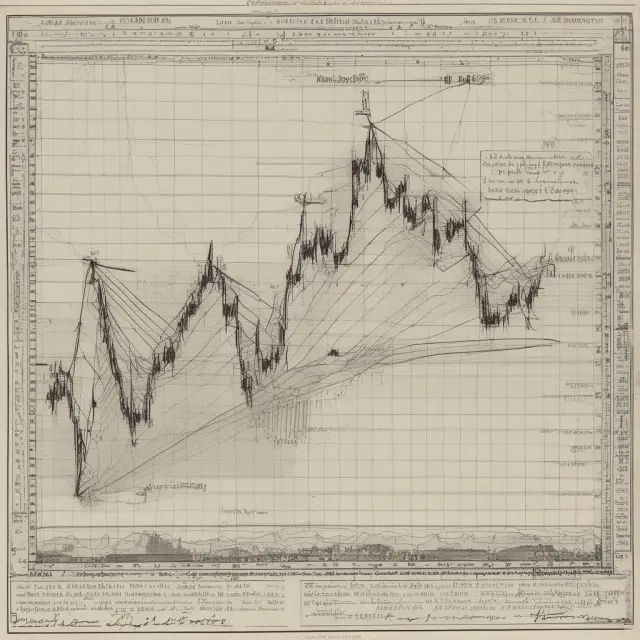
To calculate a Keltner Channel, traders need to utilize two essential components: an exponential moving average (EMA) and an average true range (ATR). Let’s walk through the process of calculating a Keltner Channel with these components.
Step 1: Exponential Moving Average (EMA)
The first step in calculating a Keltner Channel is determining the EMA, which acts as the middle line for the indicator. Traders generally opt for an EMA of 20 periods but can adjust this value depending on their preferences and market conditions. To calculate the EMA, apply the moving average formula to the asset’s price data:
EMA = [(Current Price * Periodic Time Frame) + (Previous EMA * (1 – Periodic Time Frame))] / New Time Frame
Replace “Periodic Time Frame” with a smaller value for shorter periods and a larger value for longer ones. For example, if you’re using a 20-period EMA, the periodic time frame would be 0.05 (20 divided by 100), and the new time frame is equal to 20.
Step 2: Average True Range (ATR)
The second component required for calculating a Keltner Channel is the ATR, which represents volatility. The most common length for calculating ATR is 14 periods. To calculate the ATR, apply the following formula to the asset’s price data:
ATR = [(True Range of Period N) + (True Range of Period N-1) + … + (True Range of Period N-13)] / Number of Periods
True Range is calculated as follows:
– For the current period, use the greatest value between the current high minus the current low and the current high or low minus the previous close.
– If there’s no price change from the previous day, use the difference between the previous high and previous low.
Step 3: Determining Upper and Lower Bands
Now that you have calculated both the EMA and ATR, it’s time to calculate the upper and lower bands. Multiply the ATR by a desired multiplier (typically 2) to determine the band width:
Upper Band = EMA + (Upper Band Width)
Lower Band = EMA – (Lower Band Width)
Replace “Upper Band Width” with twice the calculated value of the ATR and “Lower Band Width” with the same value, but in the opposite direction.
Step 4: Updating Keltner Channel Calculations
Repeat these calculations after each period closes to maintain an updated Keltner Channel for your asset.
By understanding how to calculate a Keltner Channel and its components, traders can gain valuable insights into market trends and price oscillations, potentially leading to informed investment decisions.

Keltner Channels vs. Bollinger Bands
Two widely used technical indicators in the realm of trading and finance are Keltner Channels and Bollinger Bands. While they share some similarities, there are significant differences between these two volatility-based indicators. Both provide valuable insights into market trends but cater to different approaches and interpretation styles.
Keltner Channels were introduced in the 1960s by Chester Keltner as an alternative to Donchian channels. In contrast, Bollinger Bands were developed by John Bollinger in the late 1980s. Both indicators aim to help traders and investors assess price movements, volatility, and potential trends.
The primary difference between Keltner Channels and Bollinger Bands lies within their calculation methods. Keltner Channels use the Exponential Moving Average (EMA) as a middle line, with upper and lower bands extending two times the Average True Range (ATR) above and below the EMA. The ATR measures volatility in terms of the average price range over a specified period.
Bollinger Bands, on the other hand, are based on the standard deviation of a moving average. The middle line is set as the simple moving average (SMA), while the upper and lower bands are calculated based on two standard deviations of the SMA. By measuring the standard deviation, Bollinger Bands capture the width of price fluctuations around the moving average.
The interpretation of both indicators shares some similarities. A break above or below the upper or lower bands may indicate potential trend reversals or continuations. However, due to their distinct calculation methods, they can provide different insights and trading signals.
When using Keltner Channels, a bullish signal may occur if the price reaches the upper band, indicating an uptrend, while a bearish signal may emerge when the price touches the lower band, signaling a downtrend. The angle of the channel can also provide information about the trend direction, as a rising channel indicates a strong uptrend, and a falling or horizontal one suggests no clear trend.
Bollinger Bands can exhibit similar trends, but their interpretation is slightly different. A price breakout above the upper band might signify overbought conditions and an opportunity for a potential reversal, whereas a break below the lower band could indicate oversold conditions and the possibility of a bullish move.
The choice between Keltner Channels and Bollinger Bands ultimately depends on personal preference and market conditions. Some traders may prefer the volatility-based approach of Keltner Channels, while others might favor the more traditional moving average concept of Bollinger Bands. It’s essential to understand that no single indicator can provide a definitive answer for all trading situations. Instead, it is recommended to combine multiple indicators with fundamental analysis and price action to build a well-rounded understanding of market conditions.
In conclusion, Keltner Channels and Bollinger Bands are powerful technical indicators offering valuable insights into market volatility and trends. While they share similarities in their purpose, they differ significantly in their calculation methods and interpretation. By understanding these differences and employing them alongside other indicators, traders and investors can enhance their decision-making process and potentially improve their overall trading performance.

Using Keltner Channels for Trend Analysis
Keltner Channels are an effective trend-following indicator that not only illustrates the direction of a trend but also serves as resistance and support levels. The Keltner Channel’s angle plays a significant role in identifying the current trend and predicting potential future trends.
The Angle of the Keltner Channel
The angle of the channel is one of its most important features, as it provides insights into the direction of the trend. In an uptrend, the channel will be angled upward, while a downtrend will exhibit a downward slope. A sideways trend will manifest as a flat or horizontal channel. The angle can also indicate the strength or weakness of a trend. A steeply rising angle signifies a strong uptrend, whereas a shallow angle may indicate a weaker trend or a potential reversal.
Price Oscillations in Keltner Channels
Aside from identifying trends, Keltner Channels can also help identify periods of price consolidation and oscillations between the upper and lower bands. These oscillations can act as resistance and support levels, offering insights into potential buy or sell opportunities based on historical price behavior. By analyzing these price movements, traders can anticipate when prices may break out of a trend and potentially enter or exit positions accordingly.
Additionally, Keltner Channels’ upper and lower bands can be used to identify key support and resistance levels during periods of strong trends. In an uptrend, the lower band may serve as support, while the upper band acts as resistance. Conversely, in a downtrend, the upper band becomes support, and the lower band is resistance.
Determining Channel Settings for Trend Analysis
The settings chosen for Keltner Channels can significantly impact their ability to identify trends and provide actionable insights for traders. Traders may adjust various parameters such as the exponential moving average (EMA) length or the average true range (ATR) multiplier based on personal preferences, market conditions, or specific trading strategies.
A longer EMA length will result in smoother channels that react more slowly to price movements. This setting is suitable for identifying long-term trends but may not be as effective for short-term analysis. Conversely, a shorter EMA will provide quicker responses to price fluctuations, making it ideal for traders focusing on intraday or short-term trends.
Likewise, the ATR multiplier can influence how closely the upper and lower bands adhere to the price action. A higher multiplier increases the distance between the bands, allowing for more pronounced trend signals but potentially reducing the number of trading opportunities. Conversely, a smaller multiplier results in narrower channels that may provide more frequent trading signals at the cost of reduced trend clarity.
In conclusion, Keltner Channels offer institutional investors an essential tool for analyzing trends and anticipating potential price movements. By understanding the angle and oscillations within these channels, traders can make informed decisions based on historical price behavior and current market conditions, ultimately optimizing their investment strategies.

Setting Up a Keltner Channel
Determining the optimal settings for a Keltner Channel can significantly influence its performance and applicability in identifying trends or trading opportunities. To set up a Keltner Channel, consider these key factors:
- Exponential moving average (EMA) length
- Averages true range (ATR) periods
- Multiplier for upper and lower bands
The most common settings for the Keltner Channel are an EMA of 20 periods and a multiplier of 2 ATRs for both the upper and lower bands. However, you can adjust these parameters based on your personal preferences or market conditions to achieve desired outcomes. Let’s examine each setting in detail.
1. Exponential moving average (EMA) length
The EMA is the middle line of a Keltner Channel. It helps determine trend direction and acts as a smoothing tool for price data. The most commonly used settings for the EMA are 9, 13, or 20 periods; however, you can choose any other number based on your trading strategy. A shorter EMA (e.g., 9) will respond quickly to price changes and provide timely signals but may generate false alarms. In contrast, a longer EMA (e.g., 50 or 200 periods) will lag behind price movements but offer more reliable trend indications.
2. Averages true range (ATR) periods
The ATR is used to calculate the volatility and size of price oscillations, which affects the width of the upper and lower bands. Typically, traders use an ATR period of 10 or 20; however, it’s possible to apply longer or shorter periods depending on your trading style and market conditions. A shorter ATR period results in narrower bands, while a longer one generates wider bands. Keep in mind that a higher multiplier for the upper and lower bands will also produce wider channels.
3. Multiplier for upper and lower bands
The default setting for the Keltner Channel multiplier is two times the ATR; however, you can modify it according to your risk tolerance and market environment. A larger multiplier will result in a more sensitive channel that responds quickly to price movements and trend changes. In contrast, a smaller multiplier generates a less reactive channel with narrower bands.
To sum up, setting up a Keltner Channel involves selecting the EMA length, ATR period, and multiplier for the upper and lower bands based on your personal preferences and trading strategy. By choosing appropriate settings, you can effectively use the Keltner Channel to identify trends, forecast price movements, and generate trading opportunities.
Limitations of Keltner Channels
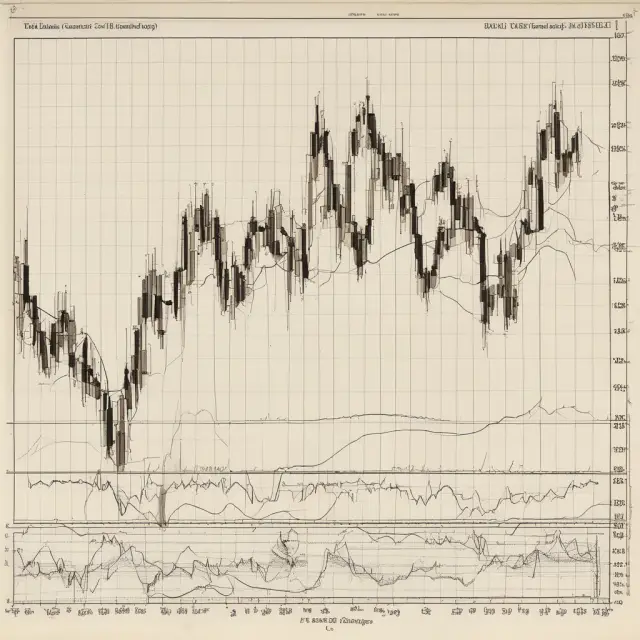
While Keltner Channels provide valuable insights into a security’s trend and volatility, they do have their limitations. One significant disadvantage is the potential for false signals, especially when the bands are too narrow or too far apart. Understanding these pitfalls will enable institutional investors to use this tool effectively in their investment strategies:
1. False Signals: The primary limitation of Keltner Channels is the potential for generating false signals, especially when the bands are set incorrectly. An overly wide band can result in numerous whipsaws and missed opportunities, while a narrow band might fail to capture significant price movements. To mitigate this risk, it’s essential to find an optimal setting that balances sensitivity and specificity.
2. Lack of Predictive Power: Keltner Channels do not have any predictive power in and of themselves. They can help identify trends and potential entry/exit points based on price oscillations within the channel, but they cannot forecast future market movements with certainty. Institutional investors should combine this indicator with other fundamental and technical analysis tools to make well-informed investment decisions.
3. Volatility Levels: The Keltner Channel is particularly sensitive to volatility levels. In low volatility markets, the bands might be too narrow and fail to capture price movements accurately. Conversely, in high volatility environments, the bands could be excessively wide and generate false signals. It’s crucial to consider the market conditions when setting up a Keltner Channel.
4. Limited Applicability: Although Keltner Channels are versatile and can be used across various assets and timeframes, they might not be suitable for all situations. In trendless markets or ranging conditions, this indicator may struggle to provide any actionable insights. In such cases, investors should consider using alternative technical indicators or a combination of indicators to make informed investment decisions.
5. Settings Adjustment: The effectiveness of Keltner Channels depends on the settings selected, such as the length of the EMA and the ATR multiplier. Institutional investors need to experiment with different parameters to find the optimal setting for their specific investment strategy. Regularly monitoring and updating these settings is essential to maintain its relevance and accuracy in changing market conditions.

Keltner Channel Strategies
The power of Keltner Channels lies in their ability to provide valuable insights for traders looking to capitalize on market trends. By utilizing the information provided by these bands, investors can develop effective trading strategies tailored to various market conditions. In this section, we will explore two popular techniques: trend following and mean reversion.
Trend Following Strategy:
A trend-following strategy involves identifying the primary direction of a market movement and taking positions that align with it. With Keltner Channels, this can be accomplished by closely monitoring price action as it relates to the upper and lower bands. When the price consistently trades above the upper band, an uptrend is likely underway, while a downtrend may be indicated when the price persistently falls below the lower band.
To implement this strategy:
- Set up your Keltner Channel with the desired EMA period and ATR multiplier.
- Identify the trend direction by observing which band (upper or lower) the price is consistently trading above or below.
- Enter long positions during an uptrend when the price breaks above the upper band, aiming for potential profit as the trend continues. Conversely, enter short positions during a downtrend when the price breaks below the lower band to benefit from a declining market.
- Utilize stop-loss orders to minimize risk and protect profits.
Mean Reversion Strategy:
Another way to use Keltner Channels is by identifying potential mean reversion opportunities. Mean reversion refers to the tendency of prices to return to their average over time, as the price oscillates between upper and lower bands. Traders can capitalize on this behavior by buying when the price nears the lower band during an uptrend or selling when it approaches the upper band in a downtrend.
To implement this strategy:
- Set up your Keltner Channel with the desired EMA period and ATR multiplier.
- Monitor price action as it oscillates between the upper and lower bands.
- Enter long positions when the price starts to rebound from the lower band during an uptrend, expecting it to return toward the middle line. Conversely, enter short positions when the price begins to pullback from the upper band in a downtrend, anticipating a potential reversal.
- Use stop-loss orders to secure profits and minimize risk.
By employing these strategies with Keltner Channels, traders can gain a competitive edge and capitalize on market trends while managing risk effectively. It’s important to remember that no strategy is foolproof, so always consider using multiple indicators and conducting thorough analysis before making investment decisions.

Advantages of Keltner Channels for Institutional Investors
Institutional investors, with their extensive capital and resources, require sophisticated tools to navigate complex financial markets. Among these tools is the Keltner Channel, a volatility-based indicator offering valuable insights into market trends.
The Keltner Channel’s adaptability is one of its primary advantages for institutional investors. By analyzing the price movements of various securities within their portfolios, institutional investors can utilize this technical indicator to identify trend direction and potential trading opportunities. Let us explore some ways that institutional investors benefit from using Keltner Channels.
1. Identifying Trends: The angle of the Keltner Channel provides crucial information regarding the overall trend direction for an asset. A rising channel indicates a bullish trend, while a falling or sideways channel suggests a bearish trend. Institutional investors can use this understanding to inform their investment decisions and reallocate capital accordingly.
2. Anticipating Price Movements: Institutional traders often employ large position sizes in their trades. By analyzing the Keltner Channel’s upper band, they can anticipate potential price increases as the trend progresses. Conversely, they may look for selling opportunities when the price approaches the lower band.
3. Risk Management: The Keltner Channel is an excellent tool for managing risk in large portfolios. Institutional investors can use the indicator to set stop-loss orders or take-profit targets for their trades based on the upper and lower bands. This helps reduce overall portfolio volatility and protect against potentially significant losses.
4. Technical Analysis: The Keltner Channel can be used in conjunction with other technical analysis tools to enhance institutional investors’ understanding of market conditions. For instance, a breakout from a sideways channel might indicate the beginning of a new trend or the reversal of an existing one. Institutional traders can use this information to adjust their investment strategies accordingly.
5. Market Sentiment: The Keltner Channel provides valuable insight into market sentiment and potential price action based on historical trends. By analyzing the channels in various securities, institutional investors can gauge how other market participants are positioning themselves and make informed decisions about their own investments.
In conclusion, Keltner Channels offer numerous benefits for institutional investors, providing insights into trend direction, price movements, risk management, technical analysis, and market sentiment. By incorporating this versatile indicator into their investment strategies, institutional traders can make more informed decisions and improve overall portfolio performance.

FAQ: Frequently Asked Questions about Keltner Channels
In this section, we’ll answer common queries regarding Keltner Channels and their application in finance and investment.
**1. What is a Keltner Channel?**
A Keltner Channel is a technical indicator that uses volatility-based bands to help determine the direction of an asset’s trend by analyzing price movements. This tool, introduced by Chester Keltner, consists of three components: an exponential moving average (EMA), an upper band, and a lower band.
**2. What is the difference between Keltner Channels and Bollinger Bands?**
Although they share similarities as volatility-based technical indicators, Keltner Channels and Bollinger Bands differ in their calculation methodology. Keltner Channels utilize the exponential moving average and average true range (ATR), while Bollinger Bands use a moving average and standard deviation.
**3. How to read Keltner Channels?**
Keltner Channels offer insights into trend direction by displaying the angle of the channel, as well as identifying potential resistance and support levels based on price oscillations between the upper and lower bands. A price break above or below the channel may indicate a continuation of the existing trend.
**4. What is a Keltner Channel strategy?**
A common strategy using Keltner Channels includes entering long positions when the price breaks above the upper band and exiting or initiating short positions upon price breaches below the lower band. However, personal preferences and market conditions can influence settings and application of this technique.
**5. What are the advantages of using Keltner Channels?**
Institutional investors find Keltner Channels useful for trend analysis due to their ability to provide clear visualizations of price movements and volatility patterns. This, in turn, helps inform investment strategies and risk management decisions.
**6. How can I calculate a Keltner Channel?**
To calculate a Keltner Channel, first determine the EMA (typically 20 periods), then set the upper band two times the ATR above the EMA and the lower band two times the ATR below the EMA. Repeat calculations after each period to ensure accurate representation of price movements.
**7. What is Chester Keltner?**
Chester Keltner was an influential market technician who first introduced the concept of Keltner Channels in his 1960 book, “How to Make Money in Commodities.” He passed away in 1998 at the age of 89.
 Next entry · No. 2,687Kenneth Arrow: Nobel Laureate Economist and His Impossibility Theorem
See also
-
 No. 3,157
05 Mar 2025
21 min
Mean Reversion in Finance: Understanding the Theory and Its Use Cases
Finance Policy
No. 3,157
05 Mar 2025
21 min
Mean Reversion in Finance: Understanding the Theory and Its Use Cases
Finance Policy -
 No. 5,084
10 Aug 2025
21 min
Understanding and Utilizing the Triple Exponential Moving Average (TEMA) in Finance and Investment
Financial Tools
No. 5,084
10 Aug 2025
21 min
Understanding and Utilizing the Triple Exponential Moving Average (TEMA) in Finance and Investment
Financial Tools -
 No. 4,716
11 Jul 2025
27 min
Understanding the Significance and Limitations of the Spinning Top Candlestick Pattern in Finance and Investment
Business Finance
No. 4,716
11 Jul 2025
27 min
Understanding the Significance and Limitations of the Spinning Top Candlestick Pattern in Finance and Investment
Business Finance -
 No. 1,992
01 Dec 2024
22 min
The Comprehensive Guide to Understanding and Utilizing the Guppy Multiple Moving Average (GMMA) in Finance and Investment
Business Finance
No. 1,992
01 Dec 2024
22 min
The Comprehensive Guide to Understanding and Utilizing the Guppy Multiple Moving Average (GMMA) in Finance and Investment
Business Finance -
 No. 5,719
02 Oct 2025
20 min
Understanding Wide-Ranging Days in Finance: Predicting Trend Reversals with Technical Indicators
Finance Policy
No. 5,719
02 Oct 2025
20 min
Understanding Wide-Ranging Days in Finance: Predicting Trend Reversals with Technical Indicators
Finance Policy -
 No. 4,672
07 Jul 2025
26 min
Understanding the Savings and Loan Crisis: Causes, Consequences, and Lessons for Professional Investors
Finance Policy
No. 4,672
07 Jul 2025
26 min
Understanding the Savings and Loan Crisis: Causes, Consequences, and Lessons for Professional Investors
Finance Policy