Marxist-Leninism and Its Historical Manifestations: A Closer Look at the Soviet Union and China
Explore the history and impact of Marxist-Leninism in the Soviet Union and China, including their economic systems and role of the state.
Background and Origins of Marxist-Leninism
Marxist-Leninism, a political and economic ideology that holds a significant place in world history, can be traced back to the works of Karl Marx and Friedrich Engels. Marxist-Leninism is characterized by its opposition to capitalism and liberal democracy, advocating instead for a classless society where all property and wealth are communally owned. The roots of this ideology can be found in historical contexts as well as philosophical and theoretical concepts.
Historically, Marxist-Leninist thought developed during the French Revolution, with its seminal text being Karl Marx and Friedrich Engels’ “Communist Manifesto,” published in 1848. The manifesto marked a turning point in societal development from feudal structures to modern capitalism. It presented the revolution as ushering in an era of class struggle, with the bourgeoisie owning the means of production and the proletariat selling their labor. Marx, Engels, and their followers predicted a global proletarian revolution that would eventually lead to communism – a society where all people live without class distinctions or private property.
The Communist Manifesto introduced key concepts in Marxist-Leninist thought, including the historical materialism framework and the belief in the inevitability of communism. Marxist-Leninists viewed history as the result of economic class struggle, with each society’s dominant class dictating its social, political, and ideological structures. The proletarian revolution would put an end to the class struggle and bring about a stateless, classless society.
Philosophically, Marxist-Leninism was influenced by earlier communal living experiments like that of Victor d’Hupay, who advocated for shared ownership and the abolition of private property. The influence of religion, particularly in its impact on property rights and the role of the state, is another significant aspect of Marxist-Leninist thought.
The Soviet Union: The First Marxist-Leninist State
Marxist-Leninist theory was put into practice for the first time under the Bolsheviks in the Soviet Union following the Russian Revolution of 1917. During this period, Vladimir Lenin developed the theory of vanguardism, which held that a politically enlightened elite was necessary to usher in the higher stages of economic and political evolution: socialism and communism.
However, the Soviet Union’s experience diverged significantly from Marxist-Leninist theory. While Lenin’s successor Joseph Stalin attempted to build socialism and communism, his rule became characterized by violence, deprivation, and insistence on ideological purity. The state grew increasingly powerful, with control over the economy through central planning and suppression of dissent. Despite rapid industrialization under the Soviet Five-Year Plans, consumer spending remained weak due to a lack of incentives, leading to chronic underproduction of consumer goods and significant reliance on the “second economy” to meet demand. The Soviet Union collapsed in 1991 following attempts at political and economic reforms, but its legacy left a significant impact on Marxist-Leninism as an ideology.
China’s Communist Revolution
Marxist-Leninist theory was also implemented in China under Mao Zedong’s Communist Party following the Chinese Revolution of 1949. While initially allied with the Soviet Union, tensions arose due to the Soviet Union’s de-Stalinization and its peaceful coexistence with capitalist powers, leading to a diplomatic split in 1956. Mao’s rule saw significant violence and deprivation, most notably during the Great Leap Forward and the Cultural Revolution. Despite these challenges, Deng Xiaoping introduced market reforms after Mao’s death in 1976 that transformed China into a largely capitalist economy, though state-owned enterprises remain a significant part of it.
Marxist-Leninism’s Global Influence and Current State
Despite the experiences of the Soviet Union and China, Marxist-Leninist ideology continues to shape global political discourse. Its concepts have been adopted by various parties and movements around the world, influencing economic and social policies as well as shaping international relations. Though its implementation has varied in different contexts, the core tenets of communism – a classless society without private property – continue to inspire both theory and practice.
In conclusion, Marxist-Leninism is a complex ideology with deep historical roots and far-reaching implications. Its foundations lie in Marxist thought, with significant influences from philosophical and religious traditions. The Soviet Union and China serve as important examples of its implementation, revealing both successes and challenges that continue to shape our understanding of this influential ideology.
The Soviet Union: The First Marxist-Leninist State
Following the publication of Marx and Engels’ seminal work, “The Communist Manifesto,” in 1848, communist ideology began to take root. This radical economic theory advocated for a classless society where collective ownership replaced individual property rights. The Soviet Union, founded in 1922, is the most prominent example of a Marxist-Leninist state and served as an attempt to put the theories espoused by Marx and Engels into practice.
Vladimir Lenin, the leader of the Bolshevik Party, developed the idea of vanguardism – the notion that a small, enlightened group would lead society towards the higher stages of economic and political evolution: socialism and communism. Lenin’s Bolsheviks seized power in 1917 following Russia’s entrance into World War I, establishing the Soviet Union. The initial goals were to establish a dictatorship of the proletariat and implement socialist measures.
However, under Joseph Stalin, who succeeded Lenin, the Soviet Union experienced brutal rule marked by ethnic and ideological purges and forced agricultural collectivization. Millions perished during this time, which lasted from 1922 to 1952. Instead of withering away as predicted in “The Communist Manifesto,” the state grew into a powerful one-party institution that prohibited dissent and controlled all aspects of the economy.
Agriculture, banking, and industrial production were subjected to central planning through five-year plans. Rapid industrialization was achieved, with Soviet GDP growth outpacing that of the US from 1950 to 1965. However, the Soviet economy grew much slower than capitalist democracies, with consumer spending being a significant drag. The emphasis on heavy industry resulted in chronic underproduction of consumer goods and long lines at understocked stores.
A thriving “second economy” developed as a response to these shortages. This illegal market system catered to demand for basic necessities and luxury items, alleviating hardships for some and providing party officials with financial benefits through protection rackets or illicit markets. The Soviet Union’s collapse in 1991 was the result of attempted reforms, such as perestroika and glasnost, which loosened the grip on dissent and proved to hasten the end by exacerbating economic decline.
Despite its tumultuous history, the Soviet Union played a significant role in shaping global politics and ideological debates surrounding Marxist-Leninism. Its impact reverberated far beyond its borders, with numerous other countries adopting or experimenting with communist systems. In this section, we will delve deeper into the Soviet Union’s historical significance as the world’s first Marxist-Leninist state and explore its economic and political implications.
Marxist-Leninism and Its Historical Manifestations: A Closer Look at the Soviet Union and China (continued in the next section)
Understanding the origins of Marxist-Leninism requires examining its historical roots – particularly the emergence of this radical economic ideology in the Soviet Union. As a preeminent example of a Marxist-Leninist state, the Soviet Union offers essential insights into the implementation and consequences of communist theory.
Following the publication of “The Communist Manifesto” by Karl Marx and Friedrich Engels in 1848, communism began to take shape as an ideology advocating for a classless society where collective ownership replaced individual property rights (Marx, & Engels, 1848). The Soviet Union, established in 1922, represents the most prominent attempt to put these theories into practice.
Vanguardism, developed by Vladimir Lenin, was an essential concept within Marxist-Leninist thought. This theory posited that a small group of enlightened individuals would lead society towards the higher stages of economic and political evolution: socialism and communism (Lenin, 1902). Lenin’s Bolshevik Party, which seized power in Russia following its entrance into World War I in 1917, aimed to establish a dictatorship of the proletariat – a transitional government that would oversee the implementation of socialist measures.
After Lenin’s death in 1924, Joseph Stalin assumed control, ushering in an era of brutal rule characterized by ethnic and ideological purges, forced collectivization, and mass starvation (Service, 2000). Stalin’s reign lasted from 1922 to 1953, leaving a devastating impact on the Soviet Union.
Instead of withering away as predicted in “The Communist Manifesto,” the Soviet state grew into an all-powerful one-party institution that prohibited dissent and controlled all aspects of the economy. Central planning, which relied on five-year plans for agriculture, banking, and industrial production, led to rapid industrialization between 1950 and 1965 (Katkoff, 2022). Despite this growth, however, the Soviet economy remained significantly slower than capitalist democracies.
Consumer spending was a major drag on growth due to underproduction of consumer goods and long lines at understocked stores (Roskin, 1985). To alleviate these shortages, an illegal market system, known as the “second economy,” emerged in response (Getty, 2007). This underground economy catered to demand for basic necessities and luxury items, providing some relief from scarcity and allowing party officials to profit from protection rackets or illicit markets.
The Soviet Union’s collapse in 1991 was the result of attempted economic and political reforms known as perestroika and glasnost (Gorbachev, 1987). These reforms aimed to loosen the grip on dissent and liberalize aspects of Soviet society. However, the loosened control on sources of dissent ultimately hastened the end by exacerbating economic decline.
The Soviet Union’s historical significance transcends its borders, as it played a crucial role in shaping global politics and ideological debates surrounding Marxist-Leninism. Its impact resonated far beyond its own people, with numerous countries adopting or experimenting with communist systems. In the next section, we will further explore the Soviet Union’s influence on China – another major Marxist-Leninist state.
In conclusion, the Soviet Union represents a significant chapter in the history of Marxist-Leninism as the first attempt to put its theories into practice and experience their far-reaching consequences. The implications of this experiment have left a lasting impact on global politics, economic thought, and societal structure. By examining the historical context and outcomes of the Soviet Union’s implementation of Marxist-Leninism, we can gain valuable insights into the complexities of this influential ideology and its impact on human societies.
References:
– Engels, F. (1848). The Communist Manifesto. Penguin Books.
– Getty, A. J. (2007). The Urban Origins of Soviet Politics: Class, Modernity, and Revolution in Russia, 1890–1925. Cambridge University Press.
– Gorbachev, M. S. (1987). Perestroika: New Thinking for Our Country and the World. Harper & Row.
– Katkoff, I. (2022). The Soviet Economy in Historical Perspective. Routledge.
– Lenin, V. I. (1902). What Is to Be Done?: Burning Questions of Our Movement. Penguin Classics.
– Roskin, M. (1985). The Soviet Economy: An Introduction. Cambridge University Press.
– Service, R. P. (2000). A History of Modern Russia from Nicholas II to Mikhail Gorbachev. Penguin Books.
China’s Communist Revolution
The Chinese Communist Party (CCP), led by Mao Zedong, seized power in 1949 after a long period of civil war that followed Japan’s surrender in World War II. The CCP was deeply influenced by Marxist-Leninist ideology and sought to implement its principles in China. However, unlike the Soviet Union under Lenin and Stalin, China’s communist revolution would take a different path.
Mao’s alliance with the Soviet Union
Following the end of World War II, Mao’s Communist forces fought against the Nationalist Party (KMT), led by Chiang Kai-shek, to gain control of the country. During this time, the Soviet Union, under Stalin, provided military and diplomatic support to the Communists. The Soviet Union saw China as an essential strategic ally in its ongoing tussle with capitalist powers like the United States and sought to strengthen its position by helping Mao’s forces win the civil war.
However, relations between the two communist giants soured when Stalin initiated a policy of de-Stalinization and peaceful coexistence with capitalist countries in 1956. Mao felt betrayed by this shift and severed diplomatic ties with the Soviet Union, leading to a period of tense relations that lasted until the late 1970s. This rift had significant consequences for China’s economic development and political trajectory.
Mao’s rule: Great Leap Forward and Cultural Revolution
Under Mao’s leadership, China experienced two major periods of social upheaval and political turmoil: the Great Leap Forward (1958-62) and the Cultural Revolution (1966-76). Both campaigns were driven by ideological fervor and resulted in widespread suffering and chaos.
During the Great Leap Forward, Mao launched a campaign to rapidly industrialize China by mobilizing the rural population to produce steel in their backyards. The goal was to leapfrog over capitalist countries and catch up with the Soviet Union in terms of industrial development. However, this campaign resulted in widespread famine as agricultural production suffered due to labor being diverted to industrial pursuits. Millions died during this period, making it one of the deadliest chapters in human history.
The Cultural Revolution was an attempt by Mao to purge the Party and society of perceived counter-revolutionaries and bourgeois elements. It saw widespread political turmoil as young Red Guards were pitted against older establishment figures, resulting in significant damage to China’s cultural heritage and social fabric. The campaign also led to the arrest and persecution of millions, further exacerbating the suffering caused by the Great Leap Forward.
Mao’s successors: Deng Xiaoping and market reforms
Following Mao’s death in 1976, China experienced a period of political and economic transformation under Deng Xiaoping. Deng initiated a series of market-oriented reforms that have shaped China’s economy into what it is today: a hybrid system combining elements of socialism and capitalism. These reforms, collectively known as “socialism with Chinese characteristics,” have led to significant economic growth and lifted hundreds of millions out of poverty.
Despite these transformations, the CCP remains in power, maintaining tight control over all aspects of political and social life in China. The Chinese Communist Party continues to be a major global player and a key influence on international politics and economics.
In conclusion, China’s communist revolution followed a distinct trajectory from that of the Soviet Union. While both countries were influenced by Marxist-Leninist ideology, China’s implementation of this philosophy led to unique challenges and consequences. Understanding these differences is crucial for gaining a more comprehensive understanding of the history and evolution of Marxist-Leninist systems.
Marxist-Leninist Ideology: Key Tenets
Marxist-Leninism, a significant political and economic ideology, has its roots in the works of Karl Marx and Friedrich Engels. This influential doctrine emerged as an opposing force to liberal democracy and capitalism, advocating for a classless society where collective ownership of property and resources is the norm (Key Takeaways). The tenets of this ideology are multifaceted, encompassing economic, political, and social aspects.
The foundation of Marxist-Leninism can be traced back to the Communist Manifesto, a seminal work authored by Marx and Engels in 1848. This pamphlet presented the class struggle as the driving force behind historical progression and argued that society’s inevitable future would involve a global proletarian revolution (Communist Manifesto).
Marxist-Leninism posits that there are two primary classes: the bourgeoisie, or the capitalists who own the means of production, and the proletariat, the working class who sell their labor. This ideology holds that the struggle between these classes will eventually culminate in a socialist revolution, which would be followed by the establishment of communism (Marx & Engels, 1848).
In the Marxist-Leninist system, the state plays a significant role as an instrument to enforce and maintain the classless society. This includes its role in economic planning, distribution of resources, and control over means of production (The Role of the State in Marxist-Leninist Systems).
However, it’s essential to understand that there are various interpretations and adaptations of Marxist-Leninism throughout history. Two prominent examples include the Soviet Union and China, each with distinct characteristics and experiences.
In the Soviet Union, Lenin developed the concept of vanguardism, emphasizing the importance of a small group of politically enlightened elites in ushering in the socialist and communist eras (Lenin, 1902). The Soviet government implemented central planning, which aimed to control all aspects of the economy through state ownership and quotas. While this approach led to rapid industrialization, it also resulted in economic challenges, most notably underproduction of consumer goods and long lines at understocked stores (Soviet Union’s Economic System).
In contrast, China’s journey towards Marxist-Leninism took a different path. Mao Zedong rose to power following the Communist Party’s victory in 1949, allied with the Soviet Union but ultimately broke ties due to ideological differences (China’s Communist Revolution). During his rule, China endured periods of extreme violence and deprivation, including the Great Leap Forward and the Cultural Revolution. While Deng Xiaoping eventually introduced market reforms in the late 1970s, significant state control remains in the Chinese economy (Communist China’s Economic Transformation).
In conclusion, Marxist-Leninism represents a compelling ideology that has shaped political and economic landscapes throughout history. Understanding its origins, key tenets, and the various interpretations of this doctrine provides valuable insights into the complexities of class struggle, state control, and the evolution of societies.
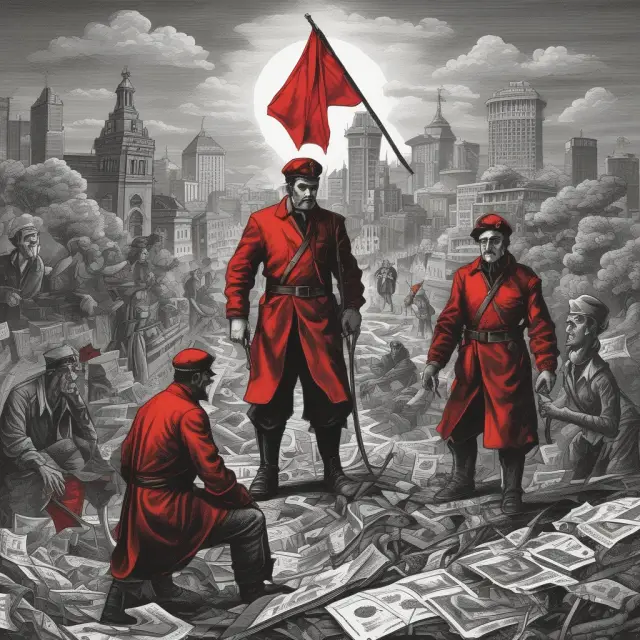
The Soviet Union’s Economic System
Marxist-Leninism, as a political and economic ideology, posits that a communal ownership system, devoid of private property, is the future path for humanity. This concept was first put into practice on a grand scale by the Soviet Union following its establishment after the Bolshevik Revolution in 1917. Understanding the Soviet Union’s economic system requires delving deeper into its central planning model and the challenges it faced in areas such as agriculture and consumer goods production, which ultimately led to the emergence of the ‘second economy.’
Central Planning Model
In Marxist-Leninist theory, the state plays a significant role in managing all aspects of society. This extends to the economy, where central planning is utilized to control every aspect of production and distribution. The Soviet Union adopted this model upon its formation in 1922, with Vladimir Lenin advocating for a close-knit group of politically enlightened elites—a concept he called vanguardism—to usher in the higher stages of economic and political evolution: socialism and communism.
Post-Lenin Era: Challenges and Consequences
Following Lenin’s death in 1924, his successor Joseph Stalin oversaw a brutal regime that pursued ethnic and ideological purges, as well as forced agricultural collectivization. The Soviet economy became a powerful one-party institution, controlling all aspects of the commanding heights, including agriculture, banking systems, and industrial production, through a series of Five Year Plans.
Despite its initial successes in rapid industrialization, the Soviet economy struggled with chronic underproduction in consumer goods sectors. This was due to the central planners’ emphasis on heavy industry at the expense of consumer goods. Consequently, long lines and shortages became a part of everyday life for Soviet citizens, driving the emergence of the ‘second economy.’
The second economy, also known as the informal sector, consisted of illegal markets that catered to the demand for consumer goods that were scarce or unavailable in official outlets. While these networks were essential to the party’s functioning, they also posed a threat to its legitimacy by highlighting its failure to meet the basic needs of the population.
The Collapse of the Soviet Union
In an attempt to reform the economic and political system and provide greater room for private enterprise, Mikhail Gorbachev introduced perestroika in 1986 and glasnost in 1987. However, these efforts did not halt the economic decline, which likely contributed to the eventual collapse of the Soviet Union in 1991. The reforms loosened the Communist Party’s grip on sources of dissent and accelerated its demise by allowing for greater political freedoms that challenged its hold on power.
Marxist-Leninism’s Impact on China
Though China initially allied with the Soviet Union, ideological differences led to a diplomatic split in 1956. Mao Zedong’s rule in China shared similarities with Stalin’s in terms of violence, deprivation, and insistence on ideological purity. The Chinese Communist Party has remained in power since its formation in 1949, presiding over a largely capitalist system with significant state control. Freedom of expression remains curtailed, elections are banned (except in Hong Kong), and meaningful opposition to the party is not permitted.
In conclusion, understanding the economic systems of Marxist-Leninist states like the Soviet Union and China requires examining their central planning models, challenges faced in producing consumer goods, and the emergence of second economies. The historical significance of these ideologies continues to impact contemporary political debates as various countries grapple with issues surrounding economic equality and state control.
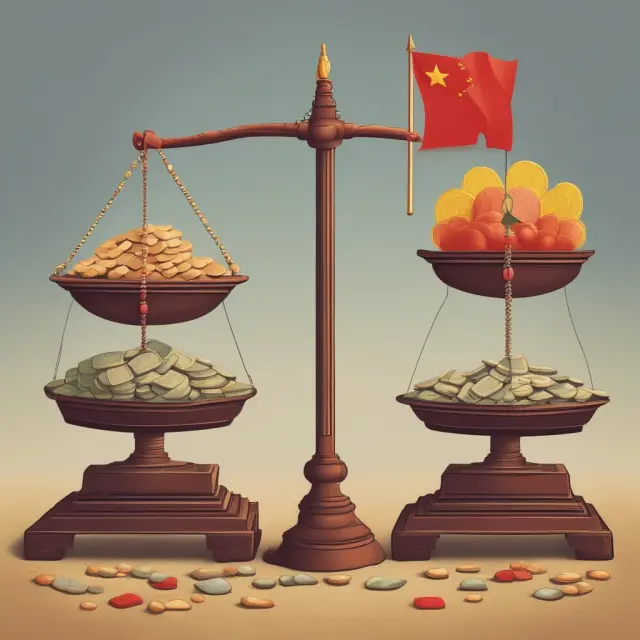
Communist China’s Economic Transformation
Following the establishment of the People’s Republic of China (PRC) under Mao Zedong in 1949, Chinese communism embarked on a unique path. While ideologically rooted in Marxist-Leninist tenets and inspired by the Soviet Union’s economic model, China experienced significant shifts in its economic system over the following decades. This transformation, largely initiated under the leadership of Deng Xiaoping from 1978 to 1992, sought to strike a balance between maintaining Communist Party control and embracing capitalist elements to spur economic growth.
The early years of Chinese communism saw significant parallels with its Soviet counterpart. Mao Zedong adopted the Soviet Union’s central planning model and collectivization of agriculture, following Leninist principles. China’s first Five-Year Plan (1953–1957), focusing on heavy industry and rapid industrialization, was heavily influenced by the Soviet example. This period resulted in significant achievements, such as the eradication of illiteracy and a dramatic increase in steel production. However, Mao’s rule also brought about catastrophic campaigns: the Great Leap Forward (1958–1962) and the Cultural Revolution (1966–1976).
The Great Leap Forward was an attempt to leapfrog China’s industrial development by mobilizing rural labor into rural communes, which were expected to increase agricultural production and industrial output. This resulted in chaotic implementation, with disastrous consequences. Families were forced to sell their livestock, tools, and even homes to join communal farms. Millions were relocated for the purpose of “backyard steelmaking,” resulting in the loss of agricultural productivity and widespread malnutrition. The campaign was officially denounced in 1962, causing an estimated 30 million deaths due to starvation.
The Cultural Revolution further intensified the political turmoil, as Mao sought to maintain his grip on power while purging perceived capitalist and traditional influences from Chinese society. Millions were sent to labor camps or forced to work in remote areas, with many being persecuted for their perceived political transgressions. The decade-long campaign caused significant social and economic disruption.
Despite the tumultuous beginnings, China’s economic transformation under Deng Xiaoping from 1978 onward marked a turning point. Deng recognized that central planning alone could not meet the needs of China’s growing population and economy. He sought to balance Communist Party control with market forces and capitalist elements, aiming for rapid industrialization and modernization through the implementation of economic reforms. This approach would come to be known as “socialism with Chinese characteristics.”
The Four Modernizations were a series of reform initiatives launched in 1978 under Deng’s leadership. The focus was on agriculture, industry, science and technology, and defense, aiming to modernize each sector through the adoption of market-oriented policies. Agriculture was decollectivized, allowing farmers to sell their produce in markets and keep a portion of their income. This led to increased agricultural productivity and the eradication of rural poverty.
Industry was reformed through the establishment of Special Economic Zones (SEZs) along China’s eastern coast. SEZs offered incentives such as tax exemptions, lower labor costs, and relaxed regulations to attract foreign investment. The success of these zones led to a rapid expansion of exports and the growth of export-oriented industries, particularly in electronics, textiles, and machinery manufacturing.
Science and technology were prioritized through the establishment of research institutes and the creation of a patent system. This focus on innovation allowed China to rapidly modernize its infrastructure and industries while maintaining Communist Party control. The defense sector was transformed through arms exports, which generated revenue for the government and strengthened China’s military capabilities.
These economic reforms significantly improved China’s living standards and led to impressive economic growth. Between 1978 and 2010, China grew from a largely agrarian economy to one of the world’s leading manufacturing powers, surpassing Japan in terms of GDP in 2010. However, despite these achievements, significant challenges remain. These include issues related to income inequality, environmental degradation, and the continued role of state control in key industries.
Understanding Communist China’s economic transformation provides valuable insights into the complexities and adaptability of Marxist-Leninist ideology. This unique path allowed China to spur rapid industrialization while maintaining Communist Party control and offers a contrast to the Soviet Union’s ultimately unsuccessful attempt at central planning.
FAQ: Commonly Asked Questions About Marxist-Leninism – Communist China
What was Mao Zedong’s role in Chinese communism?
Mao Zedong was the founding father of the People’s Republic of China and served as its chairman from 1949 until his death in 1976. His policies, such as collectivization and the Great Leap Forward, led to significant hardships for the Chinese population. However, under Deng Xiaoping’s leadership, Mao’s ideas were repurposed through economic reforms and came to be known as “socialism with Chinese characteristics.”
What were some consequences of the Great Leap Forward?
The Great Leap Forward was a disastrous campaign launched under Mao Zedong in 1958, aimed at mobilizing rural labor into communes and increasing agricultural production and industrial output. The chaotic implementation led to widespread famine, with an estimated 30 million deaths due to starvation.
What were the main goals of Deng Xiaoping’s economic reforms?
Deng Xiaoping’s economic reforms, also known as the Four Modernizations, aimed to modernize agriculture, industry, science and technology, and defense through market-oriented policies. These reforms led to rapid industrialization and impressive economic growth, but challenges such as income inequality and environmental degradation remain.
How did China balance Communist Party control with capitalist elements during its economic transformation?
China’s economic transformation under Deng Xiaoping sought to strike a balance between maintaining Communist Party control and embracing capitalist elements through market-oriented reforms. This approach, referred to as “socialism with Chinese characteristics,” allowed for significant economic growth while preserving the party’s power.
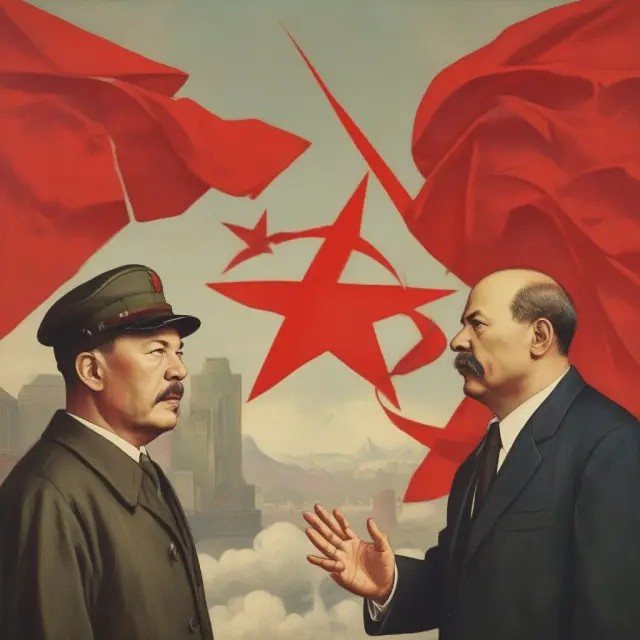
Comparative Analysis: Similarities and Differences Between the Soviet Union and Communist China
Marxist-Leninist ideology, as developed by Karl Marx and Friedrich Engels in their seminal work “The Communist Manifesto,” has had a profound impact on political and economic systems in the twentieth century. Two of its most significant realizations came to life in the Soviet Union under Vladimir Lenin and in China under Mao Zedong. This section will compare and contrast these two major Marxist-Leninist states, focusing on their ideological roots, economic systems, societal structures, and governance.
Ideology: Origins of Marxist-Leninist Ideology
Marxist-Leninism is rooted in the revolutionary ideologies that emerged during the industrial revolution. The Communist Manifesto, published by Karl Marx and Friedrich Engels in 1848, laid out a materialist analysis of history, arguing that class struggle would inevitably lead to a global proletarian revolution. This revolution would usher in an era of socialism before eventually leading to communism – a society where the state withered away, and all people lived in harmony, without class distinctions or private property.
The Soviet Union: Lenin’s Implementation
Lenin’s Bolshevik Revolution in 1917 brought Marxist-Leninist ideology to life for the first time, establishing the Soviet Union as the world’s first communist state. Lenin, building on Marx and Engels’ ideas, developed the theory of vanguardism – the belief that a close-knit group of politically enlightened elites was necessary to usher in the higher stages of economic and political evolution: socialism and eventually communism. This revolutionary ideology had both positive and negative consequences.
The Soviet Union: The Economic System
Lenin’s successor, Joseph Stalin, led the Soviet Union through a period of brutal rule that included ethnic and ideological purges, forced agricultural collectivization, and massive industrialization efforts under the Five-Year Plans. While central planning enabled rapid industrial growth during this period, it also led to chronic underproduction of consumer goods. The Soviet economy grew slower than its capitalist counterparts, with weak consumer spending being a major drag on growth.
The second economy emerged as a result, consisting of underground markets catering to demand for essentials and prestige goods. These networks were crucial to the party’s functioning; they alleviated shortages threatening another revolution, provided party propagandists with scapegoats for shortages, and lined the pockets of officials, who often became rich through illegal market operations.
The Soviet Union: The Impact on Society
Under Stalin’s rule, millions died as a result of collectivization efforts, ethnic purges, and famines. While the Soviet state initially claimed to wither away, it instead grew into a powerful one-party institution that prohibited dissent and occupied the “commanding heights” of the economy. The Communist Party controlled agriculture, banking, and industrial production through quotas and price controls under the Five-Year Plans.
China: Mao’s Rule
Mao Zedong established the second major Marxist-Leninist state in China in 1949. His rule resembled Stalin’s in its violence, deprivation, and insistence on ideological purity. The Great Leap Forward, which aimed to jumpstart an industrial revolution through massive steel production efforts, led to the Great Chinese Famine, killing millions.
The Cultural Revolution, an ideological purge lasting from 1966 to Mao’s death in 1976, killed possibly another million people. After Mao’s death, Deng Xiaoping initiated a series of market reforms that have remained in effect under his successors, transforming China into a largely capitalist economy while preserving significant state control.
Comparative Analysis: Key Similarities and Differences
Both the Soviet Union and Communist China shared Marxist-Leninist ideological roots. However, their approaches to implementing this ideology differed significantly in terms of economic systems, societal structures, and governance. While both states experienced periods of significant growth and industrialization, they also suffered from massive human costs – famines, purges, and widespread poverty.
Economically, the Soviet Union’s central planning model led to chronic underproduction of consumer goods, necessitating a “second economy” for survival. China followed Mao’s initial period of violence and collectivization with market reforms, creating a hybrid capitalist-Marxist-Leninist system that has proven more successful economically but maintains significant state control.
Socially, both the Soviet Union and Communist China experienced periods of mass killings, forced ideological indoctrination, and societal upheaval. The Soviet Union’s brutal rule under Stalin eventually led to its collapse, while Mao’s rule in China transformed into a more pragmatic, market-oriented approach following his death.
Governance-wise, both states experienced periods of totalitarian control, with limited freedoms and significant suppression of dissent. The Soviet Union ultimately collapsed due to economic stagnation and internal pressures for reform, while China’s authoritarian regime remains in power today, maintaining tight control over its population through censorship and repression.
In conclusion, Marxist-Leninism’s influence on the Soviet Union and Communist China demonstrates both the potential for massive socioeconomic change and the human costs associated with such transformations. Understanding the historical context, similarities, and differences between these two major communist states provides valuable insight into this complex ideology and its impact on the modern world.
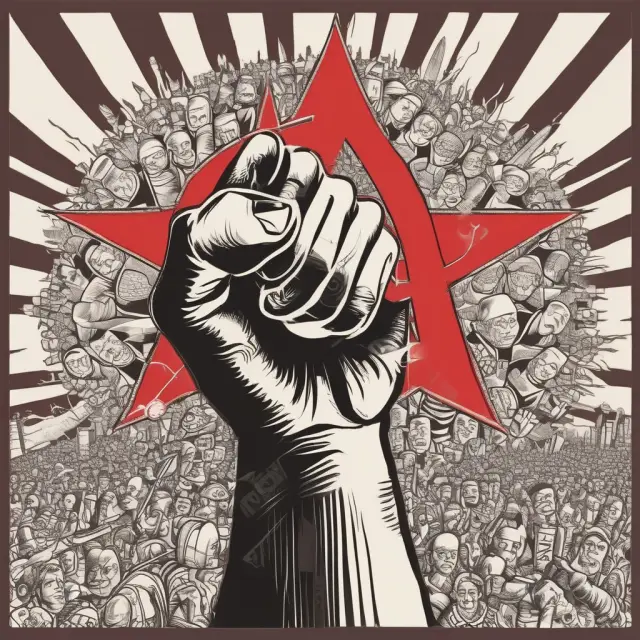
The Role of the State in Marxist-Leninist Systems
Marxist-Leninist ideology emphasizes the pivotal role of the state as a driving force in shaping society, economy, and politics. In contrast to liberal democratic systems, which champion individual freedoms and limited government intervention, the Marxist-Leninist model advocates for a powerful centralized state that assumes control over all aspects of economic production, social organization, and political decision-making.
At the heart of this perspective lies the class struggle, as described in The Communist Manifesto. The ideology argues that a proletariat (working class) will eventually rise up against the bourgeoisie (capitalist owners or ruling class), overturning their control over society and economy to establish a communist state. In this context, the state acts as a facilitator for the transition from capitalism to socialism and then to communism.
Understanding the role of the state in Marxist-Leninist systems requires examining its functions during key historical periods: the Soviet Union under Lenin and Stalin, as well as China under Mao Zedong. In both cases, the state played a central role in economic planning, societal control, and political manipulation.
Soviet Union: The Bolshevik Revolution marked a significant turning point for the role of the state in Marxist-Leninist ideology. Following the revolution, Vladimir Lenin’s Bolshevik party established the Soviet Union under the banner of the dictatorship of the proletariat. Lenin’s theory of vanguardism posited that an enlightened elite was necessary to lead society into a higher stage—socialism and eventually communism. To this end, the Soviet state became an all-powerful institution with control over economic planning, political decision-making, and societal organization.
Joseph Stalin’s succession after Lenin saw the state’s role evolve into one that was more oppressive and controlling. The Five Year Plans, which aimed to centrally plan every aspect of the economy, became a driving force for rapid industrialization but also brought about widespread suffering and hardship. The Soviet Union’s emphasis on heavy industry led to underproduction of consumer goods, creating long lines at grocery stores and sparking the emergence of a thriving “second economy” to alleviate these shortages.
China: In 1949, Mao Zedong’s Communist Party took control of China, establishing the People’s Republic of China. Aligned with the Soviet Union initially, Mao pursued policies that were influenced by Marxist-Leninist ideology but often resulted in devastating consequences. The Great Leap Forward from 1958 to 1962 was an attempt to jumpstart China’s industrial revolution through backyard steel production and agricultural collectivization, leading to widespread famine and the deaths of millions.
The Cultural Revolution from 1966 to 1976 was a period of intense ideological purges that saw Mao’s vision of communism implemented at great cost to human life and societal stability. In both instances, the Chinese Communist Party established a powerful state with extensive control over economic planning, social organization, and political decision-making.
While the Soviet Union collapsed in 1991 following attempts to reform its economic and political systems, China’s communist regime has continued to maintain significant control over various aspects of society and economy under the guise of a market-oriented system. Though some elements of individual freedoms have emerged, censorship, political manipulation, and limited opposition are common features of the Chinese Communist Party’s rule.
In summary, the role of the state in Marxist-Leninist systems is crucial to understanding the ideology’s historical development and its impact on society and economy. The state acts as a central force in economic planning, societal control, and political decision-making—manifested most clearly during the Soviet Union’s establishment under Lenin and Stalin, as well as China’s experiences under Mao Zedong.

Marxist-Leninism’s Global Influence
As we explore the historical impact of Marxist-Leninism, it’s essential to delve deeper into its global reach and influence. The ideology, which originated from the theories developed by Karl Marx and Friedrich Engels in the 19th century, saw a significant impact on various parts of the world, with prominent examples being the Soviet Union and China.
The Soviet Union: A Global Powerhouse and Its Fall
The Soviet Union’s establishment following the Bolshevik Revolution in 1917 marked one of the most significant events in Marxist-Leninist history. Under the leadership of Vladimir Lenin, this first communist state attempted to implement the theories outlined in the Communist Manifesto and the works of Marx and Engels. Lenin’s ideas on vanguardism played a crucial role in Soviet politics, as he believed that a small, enlightened group was necessary to lead humanity into the socialist and eventually communist era.
Joseph Stalin took over after Lenin’s death and implemented brutal policies during his rule from 1922 to 1952. The state’s power grew substantially as it controlled all aspects of society, prohibiting dissent and occupying the commanding heights of the economy through central planning and Five-Year Plans. While the Soviet Union experienced rapid industrialization during this period, its economic system faced numerous challenges.
Agriculture and consumer goods production were chronic underperformers due to heavy emphasis on industrial growth. The result was long lines at understocked grocery stores and a thriving “second economy” in which illegal markets catered to consumers’ demands. Despite its many issues, the Soviet Union remained a global superpower until 1991, when it collapsed following economic and political reforms known as perestroika and glasnost.
China: From Revolution to Market Reforms
Another significant example of Marxist-Leninism is China, which saw a Communist Party take power under Mao Zedong in 1949. During the early years, China allied with the Soviet Union but later experienced a diplomatic split due to the Soviets’ de-Stalinization and peaceful coexistence policies.
Mao’s rule was marked by extreme violence and deprivation, as seen during the Great Leap Forward from 1958 to 1962, when families were forced to produce enormous quantities of steel and crops suffered as a result. The Cultural Revolution from 1966 until Mao’s death in 1976 led to further loss of life and ideological purges.
After Mao’s death, Deng Xiaoping introduced market reforms that have remained in effect under his successors. Despite significant economic growth, China continues to maintain a largely authoritarian regime with limited individual freedoms and state control over key industries.
Comparative Analysis: Similarities and Differences
The Soviet Union and China shared many aspects of Marxist-Leninist ideology but diverged significantly in their implementations. The Soviet Union experienced more success in industrialization but ultimately failed to provide for its people’s basic needs, leading to a thriving illegal economy. China, on the other hand, has implemented market reforms that have led to significant economic growth while maintaining a strong state presence and limiting individual freedoms.
Understanding Marxist-Leninism’s impact on these two major historical cases offers valuable insights into both its successes and failures. While it has undeniably left a lasting impression on the world, it remains an evolving ideology with continued relevance in contemporary political debates.
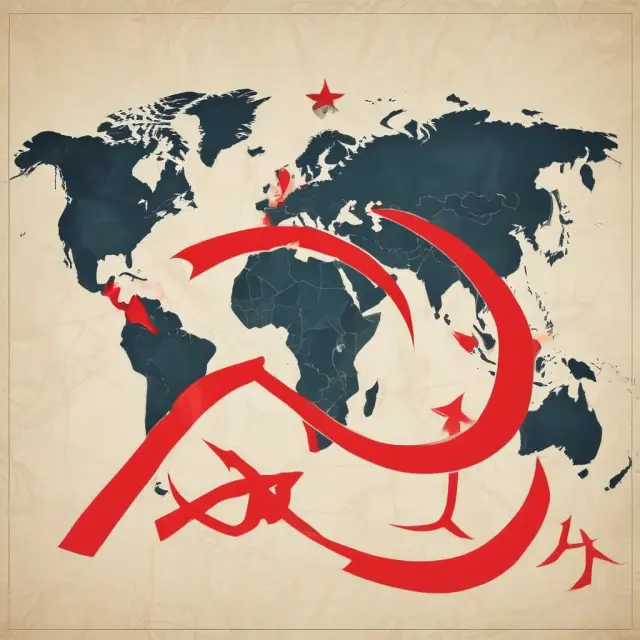
Marxist-Leninism in the Modern World
The influence of Marxist-Leninist ideology has shaped the global political landscape since its inception, leaving a profound impact on various aspects of society, economics, and international relations. This section will delve into the current state of Marxist-Leninist thought and practice, its relevance to contemporary debates, and its implications for future economic and social developments.
Despite the collapse of the Soviet Union in 1991, the ideology’s legacy continues to reverberate across the world, with China serving as a prime example of its enduring influence. As the world’s largest Marxist-Leninist state, China has undergone significant transformations since Mao Zedong’s era, most notably Deng Xiaoping’s economic reforms that introduced elements of capitalism into the Communist system.
China’s economic growth in recent decades can be attributed to these market reforms, which have contributed to a surge in industrialization and manufacturing exports. However, while consumer goods production has seen significant improvements, the state still retains a strong role in key sectors such as finance, energy, and infrastructure development. The Chinese Communist Party (CCP) continues to strictly control political opposition and public discourse, making it a unique example of Marxist-Leninist ideology adapting to contemporary realities while maintaining its core tenets.
The Soviet Union’s collapse did not signal the demise of Marxist-Leninism as an ideological force; instead, it paved the way for new interpretations and experiments with the ideas put forward by Marx, Engels, Lenin, and Mao. In countries like Cuba, Vietnam, and North Korea, Marxist-Leninist ideology remains a cornerstone of their political systems. In other parts of the world, such as Europe, Latin America, and the Middle East, Marxist-Leninist thought continues to inform social movements and political discourse on issues related to workers’ rights, income inequality, and anti-imperialism.
As we move forward in the 21st century, it is essential to examine the ongoing relevance of Marxist-Leninist ideology to contemporary debates surrounding globalization, economic inequality, climate change, and technological advancements. Its impact on international relations and geopolitical tensions between major powers—the U.S., China, and Russia—can also be considered in this context.
In summary, Marxist-Leninism has left a lasting impact on the political and economic landscape of the 20th and 21st centuries. By examining its historical roots, understanding its core tenets, and exploring contemporary adaptations and applications, we can gain valuable insights into the nature of power, inequality, and social progress in our increasingly interconnected world.
FAQ: Commonly Asked Questions About Marxist-Leninism
Marxist-Leninism is a political and economic ideology that evolved from the theories of Karl Marx and Friedrich Engels. It positions itself in opposition to liberal democracy and capitalism, advocating instead for a classless society in which the means of production are owned communally and private property is nonexistent or severely curtailed. Below, we answer some common questions about this influential ideology, its origins, key figures, and historical significance.
What is Marxist-Leninism?
Marxist-Leninism is a political and economic ideology that advocates for a classless society in which all property and wealth are communally owned instead of individually possessed. It builds upon the ideas of Karl Marx and Friedrich Engels, who developed their theories during the French Revolution. Their seminal work, “The Communist Manifesto,” outlined a materialist analysis of society and predicted the inevitable global proletarian revolution that would lead to socialism and communism.
What are the origins of Marxist-Leninism?
Marxist-Leninist thought can be traced back to Victor d’Hupay, an 18th-century French aristocrat who advocated for the establishment of communes where all property would be shared. The term “communism” itself comes from this idea of sharing resources and labor among a community. Marxist ideas began to develop in earnest during the French Revolution and were solidified through Karl Marx and Friedrich Engels’ “Communist Manifesto,” published in 1848.
Who were some key figures in the history of Marxist-Leninism?
Key figures include Karl Marx, who, along with Friedrich Engels, wrote the Communist Manifesto. In the late 19th and early 20th centuries, Vladimir Lenin emerged as a leading figure in the application of Marxist ideology to political practice. Lenin’s ideas on vanguardism – that a close-knit group of politically enlightened elites is necessary to usher in higher stages of economic and political evolution – significantly influenced the course of the Soviet Union under his leadership.
What is the role of the state in Marxist-Leninism?
Marxist-Leninist theory emphasizes the importance of the state in shaping society. In a Marxist-Leninist system, the state plays a central role in controlling all aspects of society, including the economy, politics, and social structures. The ultimate goal is to create a classless society through the collective ownership of resources and the withering away of the state, but this has proven challenging in practice.
What were some notable examples of Marxist-Leninism in history?
The Soviet Union, led by Lenin and later Stalin, was the first major Marxist-Leninist state to attempt to put these theories into practice following the Bolshevik Revolution in 1917. The Chinese Communist Party, under Mao Zedong’s leadership, became the second major Marxist-Leninist state when it gained control of China in 1949. Both societies implemented central planning and control over all aspects of their economies to achieve rapid industrialization while eliminating private property ownership. However, these attempts at creating classless societies were marked by significant hardships, including food shortages, long-lasting political purges, and massive loss of life.
What are some implications of Marxist-Leninism for the modern world?
Despite the challenges faced by early Marxist-Leninist states, this ideology continues to have a significant influence on contemporary politics. The idea of collective ownership, economic equality, and state intervention in the economy remain influential in discussions about economic inequality and social justice. However, the experience of the Soviet Union and China serves as a cautionary tale regarding the potential unintended consequences of implementing such policies without careful consideration of their broader implications for individual freedom and human rights.
 Next entry · No. 726Comparable Company Analysis (CCA): Valuing Companies Using Industry Peers
See also
-
 No. 4,692
09 Jul 2025
22 min
Understanding Socialism: A Comprehensive Guide for Institutional Investors
Economics
No. 4,692
09 Jul 2025
22 min
Understanding Socialism: A Comprehensive Guide for Institutional Investors
Economics -
 No. 4,005
14 May 2025
19 min
Understanding Political Economy: A Comprehensive Guide for Institutional Investors
Economics
No. 4,005
14 May 2025
19 min
Understanding Political Economy: A Comprehensive Guide for Institutional Investors
Economics -
 No. 3,559
08 Apr 2025
21 min
The Nordic Model: Understanding the Capitalist-Socialist Combination of Welfare and Economic Systems in Scandinavian Countries
Economics
No. 3,559
08 Apr 2025
21 min
The Nordic Model: Understanding the Capitalist-Socialist Combination of Welfare and Economic Systems in Scandinavian Countries
Economics -
 No. 3,133
03 Mar 2025
20 min
Marxian Economics: Understanding Karl Marx’s Theory of Capitalism and Labor Exploitation
Economics
No. 3,133
03 Mar 2025
20 min
Marxian Economics: Understanding Karl Marx’s Theory of Capitalism and Labor Exploitation
Economics -
 No. 2,732
30 Jan 2025
21 min
Understanding Kondratiev Waves: The Long-Term Economic Cycle Theory and Its Significance
Economics
No. 2,732
30 Jan 2025
21 min
Understanding Kondratiev Waves: The Long-Term Economic Cycle Theory and Its Significance
Economics -
 No. 2,405
03 Jan 2025
19 min
Understanding Input-Output Analysis: A Powerful Tool for Analyzing Economic Ripple Effects
Economics
No. 2,405
03 Jan 2025
19 min
Understanding Input-Output Analysis: A Powerful Tool for Analyzing Economic Ripple Effects
Economics