Marxism: Understanding the Economic and Political Philosophy Behind Class Conflict, Socialism, and Communism
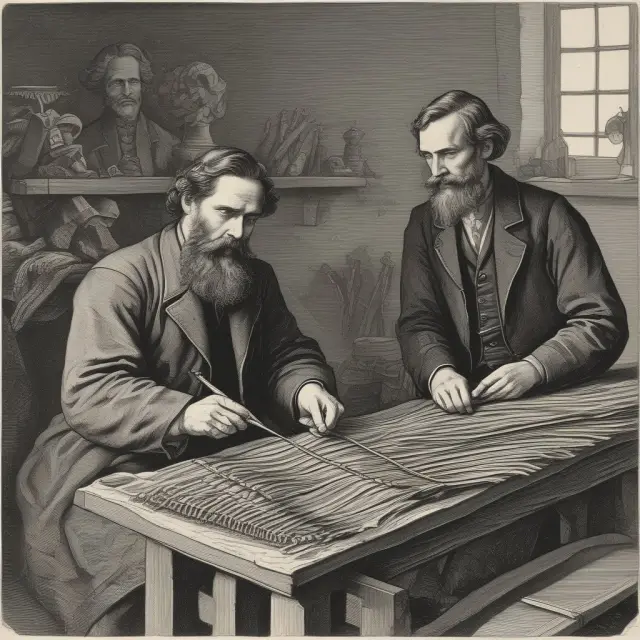
Explore Marxism's economic and political philosophy through class struggle, exploitation, capitalism's flaws, and its influences.
Introduction to Marxism: Background and Key Concepts
Marxism is an influential economic, political, and philosophical theory that emerged in the 19th century as a critique of capitalism and its inherent class struggle between the bourgeoisie (capitalist class) and the proletariat (working class). Developed by Karl Marx and Friedrich Engels, this revolutionary philosophy has shaped modern social and political thought. In this section, we will introduce the background of Marxism and explore its key concepts, such as historical materialism, exploitation, alienation, class struggle, and labor theory of value.
Background of Marxism
Marxism was born out of the social, economic, and political conditions of Europe in the mid-19th century. Marx’s work was influenced by the harsh living and working conditions faced by the working classes in industrialized countries. The exploitation, suffering, and social unrest fueled his desire to understand and change the root causes of their struggles.
In 1848, Marx and Engels published “The Communist Manifesto,” a seminal text that outlined their revolutionary vision for a society free from class conflict, private property, and economic exploitation. This pamphlet served as the foundation for further developments in Marxist thought and was instrumental in the rise of socialist movements worldwide.
Key Concepts
1. Historical Materialism: This theory proposes that historical change is primarily driven by changes in the forces of production, such as tools, technology, and labor processes. According to Marx, these material factors shape human consciousness, institutions, and societal structures.
2. Exploitation: In a capitalist economy, capitalists (bourgeoisie) profit from the labor of the working class by paying them wages lower than the economic value their work creates. This discrepancy between the value produced and the wages paid is exploitation, according to Marxist theory.
3. Alienation: Workers in a capitalist society experience alienation due to their lack of control over the production process and the commodification of labor itself. They are disconnected from their work, their fellow workers, and their humanity.
4. Class Struggle: The fundamental conflict between the bourgeoisie and the proletariat forms the basis for all social relations in a capitalist system. This struggle is inherent to the nature of capitalism and cannot be resolved through reforms but requires a revolutionary overhaul.
5. Labor Theory of Value: Marx believed that the value of a commodity could be determined objectively by the amount of socially necessary labor required to produce it. The labor theory of value reveals how workers’ labor creates all value in a capitalist economy, while the profits accrue to the owners of the means of production.
Understanding these key concepts is crucial to gaining a comprehensive understanding of Marxism and its relevance to contemporary society. In the following sections, we will delve deeper into Marxian economics, the role of classes in capitalist society, alienation, and Marx’s vision for revolution and communism.
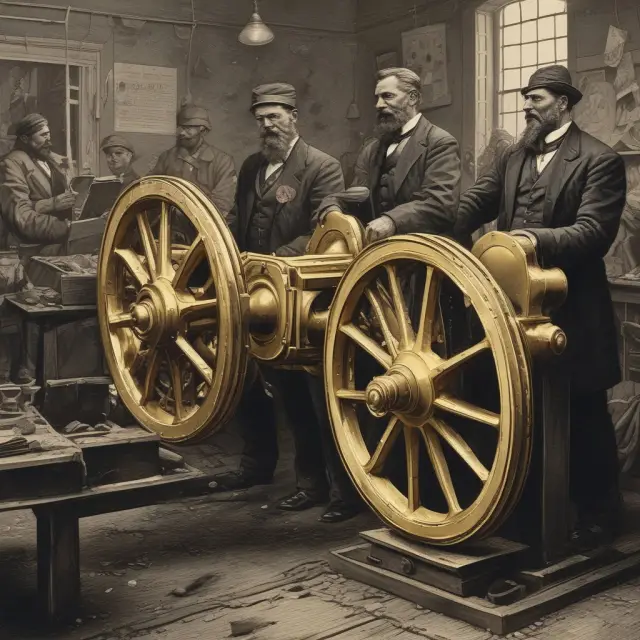
Marxian Economics: Labor Theory of Value and Exploitation
Marx’s labor theory of value is a central tenet of his economic thought. It asserts that the value of a commodity is determined by the socially necessary labor required to produce it, rather than its market price or any inherent properties. Marx believed that this labor theory of value could be used to expose the exploitation inherent in capitalist production, whereby workers are paid less than the value of their labor, resulting in surplus value for the capitalists.
Marx argued that under capitalism, the worker is paid only a fraction of the value they create with their labor, while the remaining value is appropriated by the capitalist as profit. This situation creates a fundamental contradiction, whereby workers are alienated from the product of their labor and must sell their labor to survive, while capitalists reap the benefits.
The labor theory of value forms the foundation for Marx’s concept of exploitation under capitalism. In his view, the wage system is not merely an agreement between a worker and a capitalist, but a means by which the capitalist class extracts surplus value from the working class. This surplus value is the source of profit in a capitalist economy, and it results in the perpetuation of unequal power relations between the two classes.
Marx’s labor theory of value also helps to explain why capitalism tends towards increasing productivity and efficiency. As workers become more productive, they create more value with the same amount of time or effort. This increased value, however, does not necessarily translate into higher wages for the worker. Instead, it contributes to an ever-growing pool of surplus value that can be appropriated by capitalists.
Marx’s critique of capitalism based on labor theory of value is a powerful indictment of the economic system and its inherent exploitative nature. It highlights the contradiction between the worker’s creation of value and their lack of control over it, as well as the role that surplus value plays in perpetuating class inequality. This analysis continues to shape discussions on economic justice, labor rights, and alternative economic systems today.
Despite its significance, Marx’s labor theory of value is not without criticisms. Some argue that it oversimplifies the complex nature of value creation, as it does not account for factors such as technological progress, resource availability, and consumer demand. Others point out that the concept of socially necessary labor abstracts away the historical context in which production occurs and ignores power relations between different social classes and actors within the economy.
In spite of these criticisms, Marx’s labor theory of value remains a valuable lens through which to analyze the economic relations and class struggles inherent in capitalism. It continues to inspire debates on the fair distribution of resources, the role of labor in production, and the potential for alternative economic systems that prioritize workers’ rights and collective ownership over profit-driven exploitation.
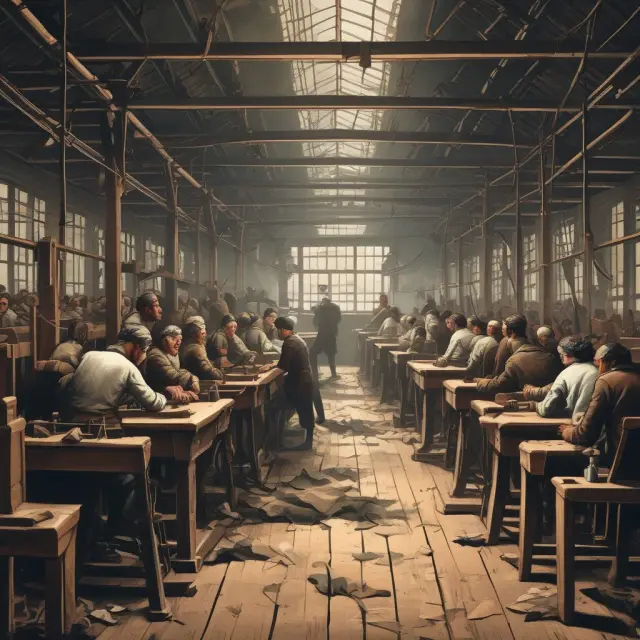
Capitalist Society: Bourgeoisie, Proletariat, and Class Conflict
Marx’s social theory revolves around the societal structure in a capitalist system, focusing on classes, their conflicts, and the role of institutions in maintaining power relations. To fully comprehend Marxism, it is essential to grasp these concepts: bourgeoisie, proletariat, class conflict, alienation, and exploitation.
The bourgeoisie, or capitalists, are the business owners who control all means of production – factories, machinery, raw materials, final products, and profits. In contrast, the proletariat represents laborers whose work transforms commodities into marketable goods without ownership of the means of production. This class division sets the stage for exploitation and alienation.
Capitalism’s chaotic nature and competition fuel exploitation by enabling capitalists to extract surplus labor from workers while paying wages lower than their labor value creates. This imbalance results in the inherent struggle between classes, as each side strives for greater power and control.
Marx argued that alienation arises when workers feel disconnected from their work and, by extension, human nature due to the absence of ownership and personal stake in production. The bourgeoisie wield various social institutions, like government, media, academia, religion, and banking systems, as tools for maintaining power and suppressing dissent.
Class conflict intensifies as workers become increasingly disenchanted with their devalued labor and lack of control over the means of production. The bourgeoisie responds by employing force to protect their interests, further fueling tensions between classes.
The struggle culminates in a revolutionary moment when the working class rebels against the bourgeoisie, seizing control of the means of production and abolishing capitalism. This revolution marks the beginning of socialism, where workers collectively own and manage the production process.
In the final stage of communist society, social classes and class struggle vanish altogether, leading to a harmonious society where individuals live in solidarity as a collective entity. With this understanding, we can appreciate Marx’s belief that the capitalist system is inherently flawed and will ultimately collapse under the weight of class conflict and exploitation.
This section provides an overview of the role of classes, their conflicts, and the function of institutions within capitalist society as described by Marx, setting a solid foundation for further exploration into his theories on labor theory of value, exploitation, and alienation.
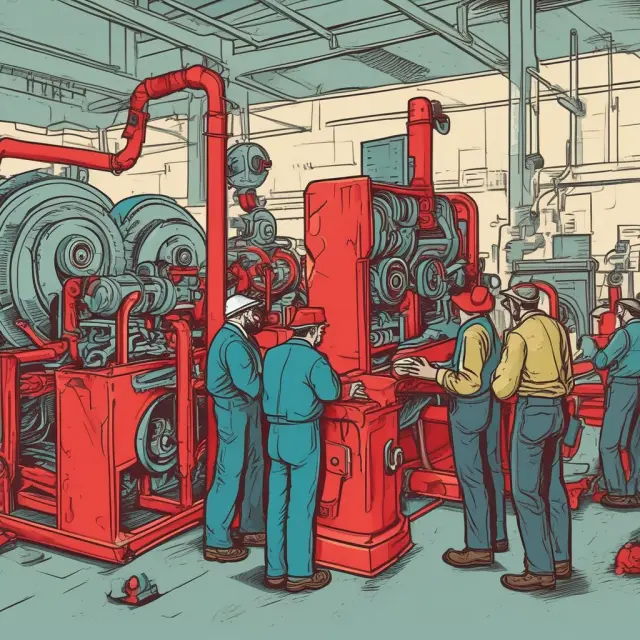
Alienation: Workers and Humanity
Marx’s theories revolve around labor exploitation, class struggle, and human degradation in a capitalist society. Among these themes, the concept of alienation is particularly relevant to understanding Marx’s critique of capitalism and its impact on workers’ humanity. This section will explore Marx’s concept of alienation, how it manifests under capitalism, and its implications for laborers and their motivation.
Marx believed that laborers were not merely working to produce goods or services but were also creating themselves through the act of labor. The worker, however, becomes estranged from this inherent human potential when capitalist production systems treat labor as a commodity and workers as mere cogs in an industrial machine. In other words, alienation is the disconnection between workers’ essential humanity and their roles within the economic system.
The two primary forms of alienation for Marx are material alienation and formal alienation. Material alienation refers to the separation of laborers from the tangible results of their work as well as the means of production, such as machinery or land. For example, a worker who does not have control over the process or outcome of their labor experiences a loss of connection with their product, resulting in feelings of detachment and meaninglessness.
Formal alienation, on the other hand, pertains to the relationship between workers and their roles within the capitalist production process. In this context, laborers are treated as mere extensions of the machinery they operate or the processes they follow, leading to a loss of autonomy and creativity. The employer holds all the power in this dynamic, exerting control over the means and outcome of production while workers are left with only their physical labor to contribute.
Marx argued that capitalist production systems perpetuate these forms of alienation through their reliance on surplus value extraction, where employers exploit laborers’ work beyond what is necessary for their sustenance. Workers, therefore, become mere commodities in the process and are treated as disposable resources, as seen in periods of high unemployment or underemployment.
Alienation also has profound psychological implications. As workers lose touch with the essence of their labor, they may experience feelings of helplessness, frustration, anxiety, and even depression. Their sense of self-worth is tied to their ability to produce value for their employers, leading to a diminished sense of individuality and personal identity.
Marx’s vision for a revolutionary transformation of society seeks to abolish class conflict, exploitation, and alienation by collectively owning the means of production and distributing resources equitably among all members. This communist system aims to reestablish the connection between labor, human beings, and their creations, ultimately allowing individuals to fulfill their potential and live more meaningful lives.
In conclusion, Marx’s theory of alienation highlights the disconnect between workers and the essence of their labor under capitalist production systems. By examining this concept, we can better understand how capitalism dehumanizes laborers, perpetuating feelings of estrangement and exploitation. The eventual goal of a revolutionary transformation, as envisioned by Marx, is to eliminate alienation and restore the connection between human beings and their creative potential through collective ownership and equitable resource distribution.

Marx’s Vision: The Revolution and Class Consciousness
Marx’s vision of societal change did not stop at analyzing capitalism’s inherent contradictions; he also predicted a revolutionary transformation leading to communism. In Marx’s perspective, this revolution would be driven by the increasing class conflict between the bourgeoisie, the capitalist ruling class, and the proletariat, the working class.
Marx believed that as capitalism progressed, an ever-growing number of workers would find themselves in a precarious situation: exploited, alienated from their labor, and excluded from political power. This worsening situation would eventually lead to a class revolution where the proletariat would overthrow the bourgeoisie, seizing control of the means of production, and establishing communist society.
A crucial component of Marx’s vision was the idea that this transformation could only be successfully accomplished by the emergence of enlightened leaders – the vanguard of the proletariat. These individuals would not only lead the revolution but also raise class consciousness among the working masses and unite them in their struggle against the bourgeoisie.
In Marx’s eyes, communist society would mark the final stage of human development where classes and class conflict no longer existed. This post-revolutionary period would be characterized by collective ownership of the means of production, which would provide equal access to resources for all individuals. The transformation from capitalism to communism would require a significant shift in social consciousness, as people learned to prioritize the collective good over individual self-interest.
While Marx’s vision of revolution and communist society is well-known, it’s essential to remember that he did not believe this transformation would occur overnight. Instead, he believed it was an inevitable historical process, unfolding through the struggles and contradictions inherent within capitalism itself. This perspective on historical change has been both a source of inspiration for revolutionary movements throughout history and a subject of intense debate among scholars.
Marx’s ideas about class struggle, revolution, and communism have left a lasting impact on our understanding of societal transformation and the role of social and political ideologies in shaping human history. Despite the challenges faced by those attempting to implement his vision, his theories continue to shape the way we think about economic systems, power relations, and the potential for meaningful social change.
Understanding Marx’s vision not only offers insight into the roots of revolutionary thought but also highlights the complexities and challenges involved in implementing any radical societal transformation. In the next sections, we will delve deeper into Marxist concepts such as labor theory of value and exploitation to gain a more comprehensive understanding of his ideas and their implications for contemporary society.

Marxist Critique: Capitalism’s Inherent Flaws
Marx’s critique of capitalism centers on its inherent contradictions and limitations. Marx argued that while capitalism is an efficient system for producing goods and services, it is also a deeply flawed one that creates fundamental problems for both workers and society as a whole. In this section, we will discuss the two major areas where Marx saw capitalist society as falling short: exploitation and alienation.
Exploitation is a central concept in Marx’s economic theories. According to him, capitalism relies on the exploitation of labor to generate profits for business owners and capitalists. The labor theory of value, as developed by Marx, asserts that the value of a commodity is determined by the amount of labor required to produce it. In the context of capitalism, however, workers are not paid based on their labor’s full value but rather a wage that is typically lower than the actual value they create. This difference between the value of labor and the wages paid to laborers forms the basis of capitalist profits and creates an inherent conflict between labor and capital.
Marx saw capitalism as prone to crisis due to its contradictory nature. In a competitive market, businesses continually seek to maximize their profits by reducing labor costs and increasing productivity. The drive for profits and the desire to cut corners often lead to exploitative working conditions and unfair wages. Moreover, the instability of capitalist production processes can result in economic downturns as overproduction and oversupply create gluts, driving down prices and increasing unemployment. Marx believed that capitalism’s inherent instability would eventually lead to its downfall and the emergence of a new system based on collective ownership of the means of production.
Alienation is another significant issue in Marxist critique. In capitalist society, workers are often alienated from their labor and the products they produce. They may not have control over the conditions under which they work or the final outcome of their efforts. This lack of connection to their labor can result in disengagement, low morale, and a sense of meaninglessness or purposelessness. The Marxist perspective argues that this alienation goes beyond the individual worker and extends to society as a whole. Capitalism is seen as creating a culture of commodification and consumption, where individuals are driven by desires for material possessions rather than fulfilling work or meaningful relationships. This detachment from both labor and purpose can result in feelings of emptiness and disconnection within a capitalist system.
In conclusion, Marx’s critique of capitalism emphasizes the inherent contradictions and limitations of the economic system. The issues of exploitation and alienation, as discussed above, underscore the challenges faced by workers and society under capitalism. These criticisms have continued to influence debates about labor rights, economic equality, and social justice in various contexts around the world. While Marx’s ideas are not without controversy or debate, they remain an essential contribution to understanding the historical development of economic thought and continue to shape discussions on economic systems and social progress.

Socialism vs. Communism: Key Differences and Similarities
The terms “socialism” and “communism” are often used interchangeably, but they represent distinct concepts in Marxist thought. Understanding the fundamental differences between these two ideologies is crucial for grasping their historical significance and contemporary relevance. This section will clarify the economic systems, goals, and historical contexts of both socialism and communism while highlighting their similarities.
Socialism: A Precursor to Communism
Marxist socialism is a transitional stage between capitalism and communism, as outlined in The Communist Manifesto by Karl Marx and Friedrich Engels. Socialism advocates for the collective ownership of the means of production, meaning that factories, machinery, and natural resources are collectively owned and controlled by the working class rather than private entities or capitalists. However, socialist economies still allow individuals to own personal property and maintain a degree of economic freedom.
Marxist socialism was born out of the need to address the exploitation of workers under capitalism. Capitalists, who own the means of production in a capitalist economy, earn their profits by selling goods and services at prices higher than the cost of producing them. This “surplus value” is the source of profit for capitalists but represents unjustly appropriated value from laborers. Socialism aims to eradicate this exploitation by collectivizing ownership and ensuring that the fruits of labor are shared among all members of society.
Socialism’s Goals: Equality, Justice, and Human Dignity
The primary goals of socialist ideology include creating a more equal society, achieving greater justice, and upholding human dignity. Socialists argue that the inherent inequality in capitalist societies results from the unequal distribution of wealth and power, which can only be addressed by reorganizing the economy to ensure that resources are allocated according to need rather than profit motives.
The principle of “from each according to ability, to each according to need” is a cornerstone of socialist theory. In essence, socialism aspires to create a society where individuals contribute based on their abilities and receive benefits commensurate with their needs, regardless of income or class background. This goal is meant to ensure that everyone’s basic necessities are met while promoting greater social cohesion.
Historical Context: Socialist Movements
The seeds of socialism were sown during the Industrial Revolution in Europe when workers began organizing themselves into labor unions and political parties to challenge the power of capitalists. The first modern socialist party, the German Social Democratic Party (SDP), was established in 1869. Over the following decades, socialist movements spread throughout Europe and beyond, eventually culminating in the Russian Revolution in 1917 that established the Soviet Union as the world’s first socialist state.
Communism: The Final Destination of Marxist Thought
Marxist communism represents the ultimate goal of Marxist thought – a classless society where all property and wealth are collectively owned, and there is no distinction between the private and public spheres. In a communist economy, production and distribution are centrally planned by the state to ensure that resources are allocated based on social needs rather than market demands or profit motives.
Communist societies abolish the concept of private property as it perpetuates class distinctions and creates inequalities. The goal is to create a society where there are no classes, no exploitation, and ultimately, no need for a state or coercive institutions.
Historical Context: Communist Regimes
The first communist regime was established in Russia in 1917 following the October Revolution. In the ensuing decades, various countries experimented with implementing different forms of communism, ranging from the Soviet Union’s centralized planned economy to the more decentralized Chinese model. Ultimately, most communist regimes have experienced significant challenges and criticisms, including widespread human rights abuses and economic instability.
Similarities: Socialism and Communism
Despite their differences, socialism and communism share some fundamental similarities. Both ideologies seek to address the issues of inequality and exploitation inherent in capitalist societies. They also emphasize the importance of collective ownership and solidarity among workers. Ultimately, both ideologies aim for a more just and equitable society where individuals’ basic needs are met and human dignity is upheld.
However, their approaches to achieving these goals differ significantly: socialism allows for individual property ownership while communism abolishes it entirely. Understanding this key distinction is crucial for comprehending the implications of both ideologies and their historical impact on economics, politics, and society.
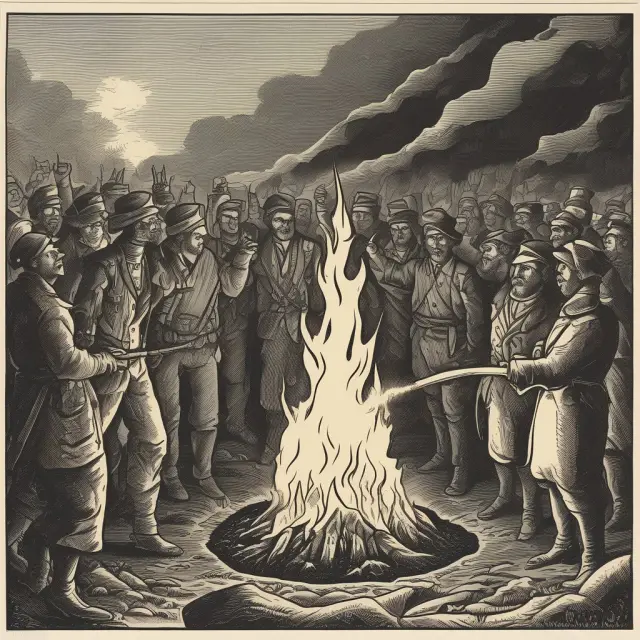
Marxist Influence: Theories and Movements
The influence of Marx’s ideas on social and political movements is significant, extending far beyond his initial intentions. Marxism has played a crucial role in shaping labor unions, feminism, and anti-colonialism, among other movements.
Labor Unions
Marxist principles were instrumental in the establishment of labor unions as a means to protect workers’ rights and advocate for fair wages. The Industrial Workers of the World (IWW), also known as the Wobblies, was founded in 1905 with Marxian inspiration. This union aimed to organize all forms of labor – not only industrial but agricultural and domestic as well – and advocated for revolutionary methods to improve workers’ lives.
Feminism:
Marxist feminists believe that gender inequality is not merely a question of patriarchy but also intertwined with class struggle and economic exploitation. They argue that women, historically relegated to domestic labor in the private sphere, have been denied access to the public sphere and its benefits, including wages and political power. Feminist thinkers like Clara Zetkin and Alexandra Kollontai drew upon Marx’s ideas to analyze gender roles within capitalism and the need for a revolutionary transformation of society to address women’s oppression.
Anti-Colonialism:
Marxist theories have also influenced anti-colonial movements that sought to challenge imperial powers in the late 19th and early 20th centuries. Theorists like Frantz Fanon, Aimé Césaire, and Albert Memmi drew on Marx’s analysis of exploitation under capitalism to criticize colonialism and its effects on colonized peoples. They argued that colonial powers not only extracted resources from the colonies but also imposed a dehumanizing system of racial hierarchy, which had to be dismantled through revolutionary struggle.
Marx’s theories have left an indelible mark on the history of social thought and political activism. By revealing the inherent contradictions and flaws in capitalism, Marx opened up new possibilities for rethinking power relations and envisioning alternative systems based on solidarity, equality, and collective ownership. The ongoing debates about Marxist ideas remind us that critical reflection and contestation are essential elements of any progressive politics.
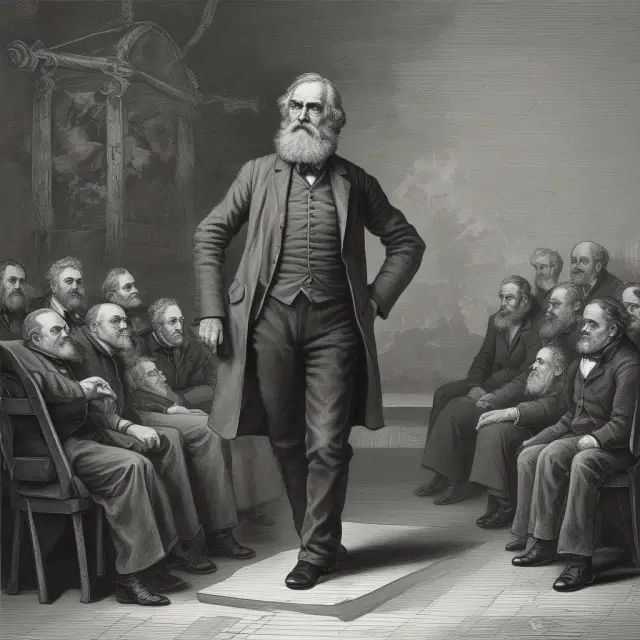
Critiques of Marxist Thought
Marx’s theories have been subjected to extensive debate since their inception, with numerous criticisms raised from various perspectives. This section aims to present some key critiques and responses to them, ensuring a balanced understanding of Marxism.
One common criticism against Marxist theories is the lack of empirical evidence for historical materialism, which posits that economic structures and social relations determine the course of history. Critics argue that there are numerous examples where non-economic factors have played a significant role in shaping history. For instance, some believe religion or ideologies have been more influential than economic conditions in certain historical periods. In response to this critique, Marxists argue that economic structures do indeed play an essential role in shaping society but acknowledge that other factors can also impact historical developments.
Another criticism of Marx’s theories centers on the labor theory of value. Some economists contend that it is misleading since goods and services have varying degrees of utility for different individuals, which makes it difficult to quantify their “true” value based solely on the labor required to produce them. In response, Marxists argue that labor value serves as a useful starting point in understanding the production process but acknowledge that it does not capture the full complexity of market interactions.
Critics also question the inevitability of a proletarian revolution predicted by Marx, pointing to numerous examples where the working class has failed to overthrow the bourgeoisie. Marxists argue that historical contexts vary greatly, and factors such as political organization, ideological consciousness, and external events can influence the outcome of revolutionary struggles.
Furthermore, critics argue that Marx’s theories are deterministic and overlook human agency, reducing individuals to mere pawns in the hands of economic structures. In response, Marxists contend that their theories do not negate human agency but rather acknowledge the structural constraints and incentives shaping individual behavior within a given society.
Finally, some argue that Marx’s predictions about the inevitable failure of capitalism have not materialized as he anticipated. However, Marxists point to various aspects of capitalist development that fit with his analysis, such as increasing income inequality, environmental degradation, and the crisis-prone nature of financial markets. They also note that Marx did not predict an exact timeline for these developments but rather identified long-term trends in capitalism.
In conclusion, critiques of Marxist theories have been numerous but are often subject to ongoing debate among scholars from various disciplines. It is crucial to approach these theories with a critical and nuanced understanding, acknowledging their strengths and limitations while recognizing the contextual nature of historical analyses.

FAQ: Common Questions About Marxism, Socialism, and Communism
Q: What is Marxism?
A: Marxism is a social, political, and economic philosophy that examines the historical effects of capitalism on labor, productivity, and economic development. It argues for a worker revolution to replace capitalism with a communist system, characterized by shared ownership and collective control of production and distribution of goods and services.
Q: Who was Karl Marx?
A: Karl Marx (1818-1883) was a German philosopher and economist best known for his theories on class conflict, exploitation, and the eventual collapse of capitalism, which influenced the development of socialism and communism.
Q: What are Marx’s key economic concepts?
A: Marxian economics focuses on the critique of capitalism. His labor theory of value argues that the value of a product can be measured objectively by the average number of hours of labor required to produce it, revealing exploitation inherent in capitalism. Historical materialism posits that society is organized around its means of production and will progress through different economic systems.
Q: What are Marx’s key political concepts?
A: Marx viewed society as divided into social classes, such as the bourgeoisie (business owners) and proletariat (workers). He believed that class conflict would lead to a revolution in which labor overthrows capitalism and eventually achieves collective ownership of production. Historical materialism posits that societies progress through different stages determined by their primary means of production.
Q: What is the difference between socialism and communism?
A: Socialism advocates for shared ownership and regulation of the means of production within a capitalist framework, while communism calls for collective ownership and control of all goods, services, and production without any private property or individual ownership. Both reject capitalism’s inherent class struggle and exploitation.
Q: What is historical materialism?
A: Historical materialism is the Marxist theory that society progresses through distinct stages determined by its primary means of production. Capitalism is just one stage in a historical sequence, marked by its unique economic arrangements.
Q: What are some criticisms of Marxist thought?
Critics argue that Marx’s theories do not account for human motivation beyond class conflict and exploitation, fail to address how technological advancements affect the labor market, and underestimate the role of individual freedom and innovation in capitalism. Additionally, critics question the practicality of a communist system and argue it creates new forms of power and inequality.
Q: What are some major works by Marx?
Marx’s most influential works include The Communist Manifesto (1848), which outlines his theories on class struggle and revolution, and Das Kapital (1867), in which he critiques capitalism through the lens of economics. Other significant texts include Economic and Philosophic Manuscripts of 1844 and The Grundrisse.
Q: Who are some notable Marxist thinkers?
Marx’s ideas have influenced various social movements, including labor unions, feminism, and anti-colonialism. Prominent Marxist theorists include Friedrich Engels, Lenin, Mao Zedong, Antonio Gramsci, and Noam Chomsky. Each contributed unique interpretations of Marx’s theories to address contemporary issues and challenges.
 Next entry · No. 3,135Understanding Mass Production: Techniques, Advantages, Disadvantages, and Examples
See also
-
 No. 4,692
09 Jul 2025
22 min
Understanding Socialism: A Comprehensive Guide for Institutional Investors
Economics
No. 4,692
09 Jul 2025
22 min
Understanding Socialism: A Comprehensive Guide for Institutional Investors
Economics -
 No. 4,005
14 May 2025
19 min
Understanding Political Economy: A Comprehensive Guide for Institutional Investors
Economics
No. 4,005
14 May 2025
19 min
Understanding Political Economy: A Comprehensive Guide for Institutional Investors
Economics -
 No. 2,676
26 Jan 2025
23 min
Marx’s Enduring Impact on Modern Capitalism: From Theory to Practice
Economics
No. 2,676
26 Jan 2025
23 min
Marx’s Enduring Impact on Modern Capitalism: From Theory to Practice
Economics -
 No. 1,685
22 Oct 2024
20 min
Friedrich Engels: Co-Author of The Communist Manifesto and Pioneer of Modern Communism
Finance History
No. 1,685
22 Oct 2024
20 min
Friedrich Engels: Co-Author of The Communist Manifesto and Pioneer of Modern Communism
Finance History -
 No. 5,379
03 Sep 2025
22 min
Maximizing Utility: Understanding Economic Theory and Measuring the Value of Goods and Services
Economics
No. 5,379
03 Sep 2025
22 min
Maximizing Utility: Understanding Economic Theory and Measuring the Value of Goods and Services
Economics -
 No. 5,179
17 Aug 2025
21 min
Understanding Underemployment Equilibrium: The Persistent State of Unemployment Above Full Employment
Economics
No. 5,179
17 Aug 2025
21 min
Understanding Underemployment Equilibrium: The Persistent State of Unemployment Above Full Employment
Economics