Friedrich Engels: Co-Author of The Communist Manifesto and Pioneer of Modern Communism
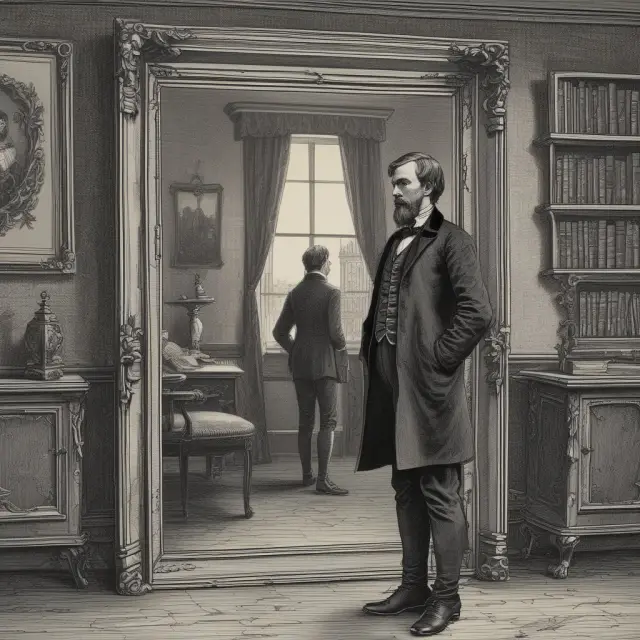
Explore the life and legacy of Friedrich Engels, co-author of The Communist Manifesto, from his formative years to his political partnership with Karl Marx.
Early Life and Education of Friedrich Engels
Friedrich Engels was born on November 20, 1820, in Barmen, Prussia, as the eldest son of a wealthy textile manufacturer named Friedrich Engel. His family background offered him a privileged upbringing; however, it was during his teenage years when he traveled to Manchester, England, for business apprenticeship that would shape his skeptical view on capitalism and contribute significantly to modern communist thought.
Born into a prosperous household, Engels enjoyed an education befitting his status. However, as part of the family’s business legacy, he was sent to Manchester at age 17 for a year-long apprenticeship in the Ermen & Engels cotton mill, which had branches across Prussia and England. His experiences during this period would leave an indelible impact on his life, setting him on the path to becoming one of the most influential figures in modern political thought.
Manchester’s industrialization was a stark contrast to the comfortable lifestyle Engels had grown accustomed to back home. The living and working conditions for laborers were deplorable, with long hours, meager wages, and dangerous work environments leading to poor health and early deaths. This introduction to Manchester’s urban landscape and its socio-economic realities marked a turning point in Engels’ perspective on capitalism and its consequences.
As he witnessed the detrimental effects of industrialization firsthand, his ideology began to evolve beyond the moderate political views instilled in him by his upbringing. The disparity between the working class (proletariat) and the bourgeoisie (business owners) fueled Engels’ skepticism toward capitalism and its ability to provide for the needs of all classes equitably.
After completing his apprenticeship, Friedrich Engels returned to Prussia, but he never forgot the lessons learned during his time in Manchester. The experiences would later serve as a basis for his involvement in journalism, politics, and social reform movements.
In the following sections, we will delve deeper into Engels’ life, including his double life as an anonymous journalist and leader of the revolutionary group Young Hegelians, his role in shaping Marxist thought with Karl Marx, and their co-authored publication, The Communist Manifesto.
Friedrich Engels’ Double Life: Journalism and Politics
The Bremen years marked a turning point for Friedrich Engels as he started his journalism career in the city under the pseudonym of Friedrich Oswald. Engels was a merchant’s clerk by day but lived a double life, that of an anonymous journalist, commentator, and intellectual by night. This period saw him become involved in social reform and the literary movement of young Germany.
During this time, Engels’ skeptical view of capitalism grew. He believed that urban planning, especially how city spaces were socially and economically constructed to support capitalism at the time, was an arena ripe for class conflict and revolution. Engels argued that capitalism created and maintained class struggles between the bourgeoisie, or business owners, and the proletariat, or working class. His support of socialism, where resources and means of production are commonly or publicly owned to create a more equal society, grew as he witnessed firsthand the uneven distribution of wealth gained during the Industrial Revolution in Manchester, England.
In 1841, Friedrich Engels enlisted as a volunteer for one year in an artillery regiment in Berlin to attend university lectures and gain entry into the Young Hegelian circle ‘The Free’. The Young or Left Hegelians were radical followers of Georg Wilhelm Friedrich Hegel. They believed in revolution and formed the basis for modern communist thought. Engels shared their views on capitalism, socialism, and class struggle with Karl Marx, who would become his lifelong collaborator and co-author of The Communist Manifesto.
Friedrich Engels believed that a series of class struggles would destroy capitalism and be replaced by socialism, followed by communism. This idea reverberated throughout history, with nearly half the world’s population living under Marxist governments by 1950. Despite this influence, Engels’ pseudonym ‘Friedrich Oswald’ was not revealed until after his death. Thirty literary works written under this pseudonym were found in Bremen and are preserved today.
Engels also believed that utopian socialism, where capitalists could be encouraged to surrender the means of production peacefully to the people through moral persuasion alone, was an unrealistic approach. The Communist Manifesto, published in 1848 with Karl Marx, argues for necessary revolution as a solution to the imbalances created by capitalism and forms the basis for modern communist thought.
Marx’s Influence on Engels: Socialism and Class Conflict
Friedrich Engels is best known for his collaboration with Karl Marx in creating The Communist Manifesto, but their ideas were rooted much deeper than a single document. While Friedrich Engels was born into a wealthy family and studied in Germany, it was the harsh realities of capitalism that shaped his political ideology and his belief in socialism as a solution to class conflict. Capitalism creates and maintains class struggles between bourgeoisie (business owners) and proletariat (working class), forming the foundation for Marx’s theory or Marxism.
Engels’ experiences during “The Bremen years” marked the beginning of his career in journalism, politics, and economics, where he wrote under the pseudonym of Friedrich Oswald. Living a double life, Engels was both a merchant’s clerk and an anonymous journalist, commentator, and intellectual. His skeptical view of capitalism grew, particularly when witnessing its impact on laborers in Manchester, England. In The Condition of the Working Class in England (1845), Engels documented the uneven distribution of wealth from the Industrial Revolution, noting that urban planning was an arena ripe for class conflict and revolution.
Influenced by Georg Wilhelm Friedrich Hegel’s ideas, a German idealist philosopher, Young Hegelians like Marx and Engels believed that capitalism created and maintained class struggles, with workers exploited and underpaid to fuel economic growth. They argued that a series of class struggles would eventually destroy capitalism and replace it with socialism, where resources and means of production are commonly or publicly owned for the creation of a more equal society.
Together, Marx’s theory and Engels’ experiences influenced The Communist Manifesto, published in 1848. It was written during a time of industrial and social change when cities expanded and laborers moved to urban areas to find employment, making economic growth dependent on this workforce often exploited by employers. The document encouraged revolution as the means to create a more equal society and has reverberated with increasing force into the 20th century, inspiring Marxist governments such as Soviet Union, Cuba, and China.
Engels’ collaboration with Marx solidified their ideas on communism, where people live in social equilibrium without class distinction, family structure, religion, or property. Engels believed that capitalism created and maintained class struggles, making socialism a necessary solution to replace it. After Karl Marx died in 1883, Engels completed two edits of Das Kapital, serving as the foremost authority on Marx’s theories for the remainder of his life.
Friedrich Engels’ works include The Communist Manifesto, The Condition of the Working Class in England, and Das Kapital, among others. His influence can still be felt today, with the ideologies of socialism and communism shaping various aspects of society.

The Communist Manifesto: The Converging Ideas of Friedrich Engels and Karl Marx
Published in 1848, The Communist Manifesto is one of the world’s most influential political documents. Its authors, German philosophers Friedrich Engels and Karl Marx, are renowned for their significant role in defining modern communism. Co-author Friedrich Engels was born on Nov. 20, 1820, in Barmen, Prussia (now Germany), as the eldest son of a wealthy textile manufacturer. At age 17, he traveled to Manchester, England, for his business apprenticeship, where his critical views on capitalism began to take shape.
Influenced by their experiences and ideologies during the Industrial Revolution, Marx and Engels believed that capitalism created class struggles between the bourgeoisie (the wealthy capitalists) and proletariat (working-class laborers). This social tension was an inevitable result of exploitation of the working class for profit and the ever-widening wealth gap.
Marx’s theory, or Marxism, acknowledged this imbalance and provided a framework to create a political and economic landscape without class conflict. The Communist Manifesto, published under their joint names, represents the culmination of these converging ideas and became the foundation for the modern communist movement.
When Marx presented his ideas in 1845, Engels saw them as a powerful catalyst for revolution. The Communist Manifesto called on the proletariat to destroy capitalism through revolutionary action, leading to a socialist society and ultimately to communism. This vision of classless society resonated with the working masses who suffered from poverty, poor living conditions, and long work hours.
The pamphlet’s impact reverberated throughout Europe and beyond, inspiring revolutions in Germany, France, Russia, Hungary, Poland, and China. By 1950, nearly half the world’s population lived under Marxist governments.
After Marx’s death in 1883, Engels continued to champion their ideas through his writings, correspondence, and leadership within the social democratic movement. With Engels’ financial support, Marx published the first volume of Das Kapital in 1867, which argues that capitalism is based on labor exploitation. The Communist Manifesto, along with their other influential works such as Capital: A Critique of Political Economy and The Holy Family, established the theoretical foundation for modern communism.
Friedrich Engels’ legacy lives on as a pioneer of communist thought and a champion of social change. His collaboration with Karl Marx shaped our understanding of class conflict and the role of revolution in creating a more equitable society.

Friedrich Engels’ Role in Marx’s Das Kapital
Friedrich Engels played a pivotal role in the publication of Karl Marx’s influential work, Das Kapital. Although best known for co-authoring The Communist Manifesto with Marx in 1848, Engels made substantial contributions to Das Kapital.
Financial Support
Engels provided the financial means necessary for Marx to begin writing Das Kapital, allowing him to dedicate his time solely to research and writing. In a letter from October 1867, Engels wrote: “I have already sent Marx a cheque of 3000 francs… so that he can start working on his new book.” This financial backing proved crucial as it allowed Marx to devote his full focus to the development of his theories.
Post-Marx’s Death Editing and Completion
After Marx’s death in 1883, Engels served as the foremost authority on Marxist theory and completed editing the second and third volumes of Das Kapital, which were published posthumously under Marx’s name. Engels also wrote the preface for each volume to clarify his role in the project:
Volume II Preface – 1885: “I have confined myself to correcting errors and misprints, and to a few explanatory additions.”
Volume III Preface – 1887: “Marx’s health was already so far undermined that he could no longer work on the final volume of his great work, which he had begun in 1864. I took upon myself the task of completing it from the notes and manuscripts left by him.”
Engels’ Role in Theories and Legacy
Marx and Engels shared a deep understanding of their theories, and their collaborative work influenced each other extensively. Marx drew inspiration from Engels’ experience as a factory owner’s son and his observations in Manchester, England, while Engels learned about the economic theories that formed the foundation of Marxism. Their joint efforts created an influential body of work that would inspire various socialist and communist movements throughout history.
The two also corresponded extensively with German social democrats, perpetuating the image of Marx and fostering a degree of conformity among followers of their philosophy. Engels’ role in financing, editing, and promoting Marx’s works solidified his position as an essential figure in the development of modern communism.

The Bremen Years: Friedrich Engels’ Anonymous Journalism
During his time in Bremen from 1838 to 1841, Friedrich Engels embarked on a double life that was crucial for the development of his journalistic career, political beliefs, and ideology. He began writing under the pseudonym ‘Friedrich Oswald’ and became deeply involved in social reform and the literary movement of Young Germany.
Bremen marked the beginning of Engels’ career in journalism, politics, and economics. While working as a merchant’s clerk during the day, he spent his evenings writing for various newspapers, publishing anonymously on topics that ranged from social issues to philosophy. Engels became known for his biting critiques and insightful commentary, which quickly gained him popularity among readers in Germany and beyond.
The Bremen years were also a time of significant personal growth for Engels. He developed a deep skepticism towards capitalism, religion, and other dominant institutions that he believed perpetuated inequality and exploitation. This period laid the groundwork for his later support of socialism and communism.
One of Engels’ most notable works from this era is ‘The Condition of the Working Class in England’, published anonymously in 1845. The book offered a vivid description of the living conditions and struggles faced by the working class during the Industrial Revolution. Engels’ firsthand experiences in Manchester, where he had previously worked as a business apprentice, fueled his passion for social reform and inspired him to advocate for better working conditions and fair wages.
As Engels continued to develop his ideas, he began to attract the attention of like-minded thinkers. In 1841, he enlisted in an artillery regiment in Berlin specifically to attend university lectures and meet other intellectuals, including Karl Marx. The two men formed a close friendship and went on to co-author The Communist Manifesto in 1848.
Despite Engels’ growing commitment to political activism, he continued to write under his pseudonym until 1850. Thirty of these works were discovered after his death and are now preserved in Bremen. While the identity behind ‘Friedrich Oswald’ remained a mystery for decades, recent scholarship has shed light on the importance of Engels’ work during this formative period in his life.
In conclusion, Friedrich Engels’ experiences in Bremen from 1838 to 1841 were pivotal in shaping his career as a writer, thinker, and political activist. His anonymous journalism under the pseudonym ‘Friedrich Oswald’ helped establish his reputation as an insightful commentator on social issues and set the stage for his later collaboration with Karl Marx on The Communist Manifesto and other influential works. The Bremen years continue to be a subject of fascination among scholars and students of Engels’ life and work.
Meeting Karl Marx: The Beginning of a Revolutionary Partnership
The life of Friedrich Engels took an unexpected turn when he enlisted as a volunteer in the Prussian army in 1841 to meet Karl Marx, whose ideas on communism had piqued his interest. At that time, Marx was part of the Young Hegelian club ‘The Free’, and Engels hoped to join this revolutionary group.
This encounter marked the beginning of a fruitful partnership between two men who would shape the political landscape for generations to come. After their meeting in Berlin, Marx and Engels became influential leaders within the Young Hegelians. They shared a strong skepticism towards the institution of religion and the capitalist system that was shaping the world around them.
Marx’s ideas on communism resonated deeply with Engels, who had already developed a critical view of capitalism from his experiences in Manchester, England. There, he observed the exploitation of laborers in the textile industry and saw firsthand how urban planning catered to capitalist interests. This further solidified Engels’ belief that revolutionary change was necessary to address these issues.
The convergence of their thoughts resulted in one of the most influential documents in political history: The Communist Manifesto, published in 1848. In this pamphlet, Marx and Engels argued that capitalism would inevitably lead to class conflict between the bourgeoisie (the ruling class) and the proletariat (the working class). They believed that only through revolution could these class struggles be resolved, leading to a society free of exploitation and inequality.
In this section, we will delve deeper into the relationship between Friedrich Engels and Karl Marx as they formed the basis for modern communism, starting with their first encounter in Berlin.
When Friedrich Engels enlisted in the Prussian army in 1841, he did so not just to learn military discipline but also to meet a man whose ideas had profoundly affected him: Karl Marx. At that time, Marx was a member of the Young Hegelian club ‘The Free’, which was known for its radical and revolutionary stance on religion, philosophy, and politics. Engels, with his skeptical view of capitalism, saw in this group an opportunity to explore like-minded ideas and potentially join their ranks.
Engels’ experience in Manchester, England, had already shaped his perspective on the capitalist system. During his time as a business apprentice at Ermen & Engels cotton plant, he witnessed the unequal distribution of wealth that resulted from industrialization. He saw workers being exploited, and cities expanding rapidly to accommodate an ever-growing workforce. These conditions were not only detrimental to the laborers but also had far-reaching implications for urban planning.
Engels’ skepticism towards capitalism deepened when he returned to Germany and started his journalistic career under the pseudonym ‘Friedrich Oswald’. Here, he wrote about social reform and politics, advocating for change that would address the inequalities within society.
One day, while attending a lecture at the university in Berlin, Engels’ life took an unexpected turn when he came face-to-face with Karl Marx. The two men shared a strong connection despite coming from different backgrounds; Marx was a philosopher and economist, while Engels had a practical understanding of the capitalist system through his experiences in Manchester.
After their first meeting, Marx and Engels formed a close bond and started collaborating on ideas that would eventually become foundational to modern communism. They believed that capitalism created class conflict between the bourgeoisie (the ruling class) and the proletariat (the working class). This belief was based on their observation of how industrialization had led to an ever-growing divide between those who owned the means of production and those who did not.
Their ideas were crystallized in The Communist Manifesto, published in 1848. In this influential document, Marx and Engels argued that capitalism would inevitably lead to a series of class struggles that would eventually result in its downfall. They believed that only through revolutionary action could the exploitation of laborers be ended and true equality be achieved. This perspective on communism would shape the political landscape for generations to come, inspiring revolutions and governments around the world.
In the following sections, we will explore Friedrich Engels’ life in more detail, shedding light on how his experiences and ideas influenced the development of modern communism alongside Karl Marx.
Friedrich Engels’ Views on Capitalism and Urban Planning
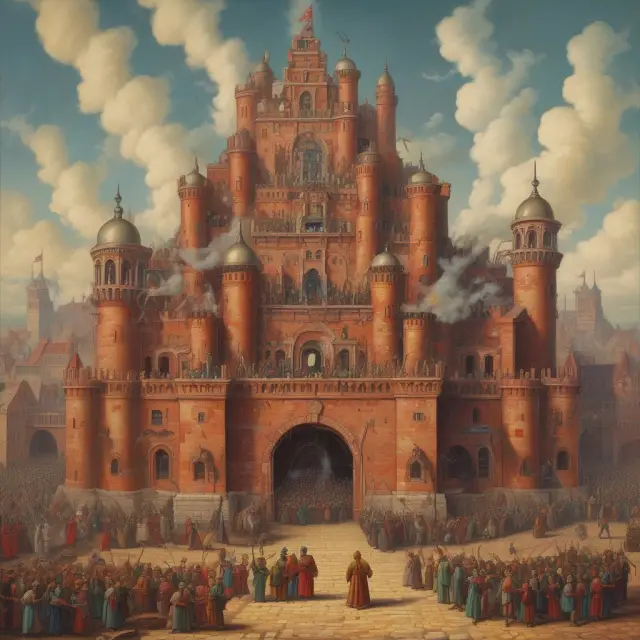
In his writings, Friedrich Engels expressed a critical view of capitalism and its impact on laborers and city planning. He saw urban growth, driven by the Industrial Revolution, as an opportunity for class conflict and revolution. The detrimental effects of capitalism on laborers in the rapidly expanding cities were evident to Engels.
While working for his family’s textile business in Manchester, England, Friedrich Engels witnessed firsthand the dehumanizing aspects of industrialization. He noted the exploitation of laborers, particularly children and women, who worked long hours under grueling conditions for minimal pay. Engels observed that cities were designed to facilitate capitalist growth at the expense of the working class. The environmental damage caused by unchecked industrial development further exacerbated their suffering.
Engels’ skepticism towards capitalism influenced his views on urban planning. He believed the built environment, and its role in enabling or impeding social change, was essential to understanding the dynamics of class conflict. In “The Condition of the Working Class in England,” Engels argued that the struggle between the bourgeoisie and proletariat would lead to a revolution, which would be followed by a society based on common ownership of resources and the means of production – socialism and ultimately, communism.
This ideology was further articulated in The Communist Manifesto, co-authored with Karl Marx in 1848. The document argues that capitalism creates and maintains class struggles between the bourgeoisie, who own the means of production, and the proletariat, who work for wages. Engels and Marx believed that these class conflicts would result in a series of revolutions, culminating in a society without class distinctions or private property – communism.
Engels’ ideas on capitalism and urban planning continue to influence modern-day political and economic thought. His writings have inspired revolutionary movements and governments around the world, including those in the Soviet Union, Cuba, and China. Despite the complexities of his ideas, Engels’ insights into the relationship between capitalist growth, class conflict, and urbanization remain an essential part of our understanding of modern history.
Legacy of Friedrich Engels: Marxist Governments and Influence
Friedrich Engels is a renowned figure in the history of political ideologies. His work, primarily with Karl Marx, laid the foundation for modern communism. The impact of his ideas can be seen in governments like the Soviet Union, Cuba, and China. This section will delve into the significant influence of Friedrich Engels on Marxist governments and discuss his co-authored influential books on socialism, communism, and class conflict.
After writing The Communist Manifesto with Karl Marx in 1848, Friedrich Engels continued to contribute significantly to the development of the Marxist movement. Marx’s theories, which Engels helped popularize, challenged the traditional socio-economic structures and paved the way for revolutionary ideas that would ultimately inspire governments around the world.
One of the most notable legacies of Friedrich Engels was his influence on Marxist governments. The Soviet Union, Cuba, and China are prime examples of this impact. These countries adopted many aspects of the Marxist philosophy, which called for a classless society where resources and means of production were collectively owned to create greater equality.
The ideas put forth in The Communist Manifesto reverberated through history, gaining momentum during periods of rapid industrialization and urban growth. As more people moved from rural areas to cities in search of employment, the need for a political and economic system that addressed the exploitation of labor became increasingly apparent. Marx’s theories provided a framework for understanding class conflict and the inevitable revolutionary struggles required to overthrow capitalism and replace it with socialism, followed by communism.
In addition to his role as a thought leader in Marxist theory, Friedrich Engels also co-authored several influential books with Karl Marx that have had a profound impact on political and economic thought. These works include:
- The Condition of the Working Class in England – A scathing critique of the living conditions faced by the working class during the Industrial Revolution, this book exposed the deplorable state of laborers’ lives and highlighted the need for social reform.
- The Communist Manifesto – This pamphlet outlines Engels and Marx’s vision for a society without class structure, where people live in social equilibrium.
- Das Kapital – Although primarily written by Karl Marx, Friedrich Engels played a crucial role in its publication, providing financial support and editing the second and third volumes after Marx’s death. Translated as Capital: A Critique of Political Economy, this book argues that capitalism is based on the exploitation of labor and proposes an alternative economic system that abolishes class distinctions.
- Socialism: Utopian and Scientific – Written in 1880, this book critiques utopian socialist theories, which called for the peaceful surrender of capitalists’ means of production to the people through moral persuasion alone. Engels argued that revolutionary change was necessary to overthrow capitalism and replace it with a more equitable system.
- The Origin of the Family, Private Property, and the State – Written in 1884, this book delves into Marx’s theories about the origins of the family, private property, and the state from an anthropological perspective. Engels, as co-author, helped bring these ideas to a wider audience.
- Ludwig Feuerbach and the Outcome of Classical German Philosophy – Written in 1888, this work explores the philosophies of Ludwig Feuerbach and their influence on Marxist thought. Engels provided valuable insights into Feuerbach’s impact on Marx’s ideas about class conflict and revolution.
In conclusion, Friedrich Engels left a lasting impression on the world with his contributions to Marxist theory and the establishment of Marxist governments like the Soviet Union, Cuba, and China. His influential co-authored works on socialism, communism, and class conflict continue to shape political and economic thought today.
Frequently Asked Questions about Friedrich Engels
Engels, born in Barmen, Prussia, is well known as a co-author of The Communist Manifesto along with Karl Marx. But who was this influential thinker, and what inspired his work? Here are some frequently asked questions to provide insight into the life of Friedrich Engels.
What Encouraged Engels to Write “The Condition of the Working Class in England”?
Engels’ experience working in Manchester, England, during his apprenticeship was a significant influence on him. He observed the deplorable living conditions and labor practices endured by factory workers. The book recounts the use of child labor, environmental damage, low wages, bad conditions, poor health, and high death rates among laborers. Engels’ writing served as a critique of capitalism and highlighted its negative impact on laborers, inspiring readers to seek change.
What is a Pseudonym?
Engels wrote thirty literary works under the pseudonym ‘Friedrich Oswald’. This alias allowed him to publish anonymously during his career as a journalist and commentator in Bremen from 1838 to 1841. The pseudonym was not revealed until after Engels’ passing.
What Is Utopian Socialism?
Contrary to Engels and Marx, utopian socialists believed that capitalists could be encouraged to surrender the means of production peacefully to the people through moral persuasion alone. These thinkers sought to create ideal societies in which everyone lived in harmony and equality without class distinctions or private property. However, Engels and Marx differed, believing that necessary revolution was required to dismantle capitalism and replace it with a more equitable system.
What Ideas Did Friedrich Engels Contribute to The Communist Manifesto?
Engels collaborated with Marx on The Communist Manifesto in 1848. Together, they argued that the capitalist system creates class struggles between the bourgeoisie (the business owners) and the proletariat (the working class). Engels believed that capitalism would ultimately lead to its own destruction through these conflicts and be replaced by a socialist society, followed by communism.
Who Was Karl Marx?
Karl Marx was a German philosopher, economist, historian, anthropologist, political theorist, sociologist, journalist, and revolutionary socialist. He is best known for his works on economics, politics, and philosophy, particularly in the context of Marxism. Along with Friedrich Engels, Marx’s ideas have had a profound impact on modern society and continue to be influential today.
Where Are Engels’ Published Works Written as Pseudonym ‘Friedrich Oswald’?
Engels published thirty literary works anonymously under the pseudonym ‘Friedrich Oswald’. These works were discovered in Bremen after Engels’ passing and are now preserved for historical research. The alias allowed Engels to write freely on political and social issues during his time as a journalist in Bremen from 1838 to 1841.
In conclusion, Friedrich Engels was an influential figure in the development of modern communism. His collaboration with Karl Marx resulted in significant works such as The Communist Manifesto, which continues to inspire and shape societal thought today. Understanding his background, ideas, and motivations provides valuable context for examining the roots of this philosophical and political movement.
 Next entry · No. 1,686Friedrich Hayek: A Defender of Free-Market Capitalism and Nobel Laureate
See also
-
 No. 3,134
03 Mar 2025
21 min
Marxism: Understanding the Economic and Political Philosophy Behind Class Conflict, Socialism, and Communism
Economics
No. 3,134
03 Mar 2025
21 min
Marxism: Understanding the Economic and Political Philosophy Behind Class Conflict, Socialism, and Communism
Economics -
 No. 4,692
09 Jul 2025
22 min
Understanding Socialism: A Comprehensive Guide for Institutional Investors
Economics
No. 4,692
09 Jul 2025
22 min
Understanding Socialism: A Comprehensive Guide for Institutional Investors
Economics -
 No. 4,005
14 May 2025
19 min
Understanding Political Economy: A Comprehensive Guide for Institutional Investors
Economics
No. 4,005
14 May 2025
19 min
Understanding Political Economy: A Comprehensive Guide for Institutional Investors
Economics -
 No. 3,133
03 Mar 2025
20 min
Marxian Economics: Understanding Karl Marx’s Theory of Capitalism and Labor Exploitation
Economics
No. 3,133
03 Mar 2025
20 min
Marxian Economics: Understanding Karl Marx’s Theory of Capitalism and Labor Exploitation
Economics -
 No. 741
31 May 2024
22 min
Understanding Conflict Theory: A Perspective on Social Inequality and Power Struggles
Business Strategy
No. 741
31 May 2024
22 min
Understanding Conflict Theory: A Perspective on Social Inequality and Power Struggles
Business Strategy -
 No. 4,268
05 Jun 2025
23 min
Understanding the Race to the Bottom: Competition Beyond Ethical Standards
Business Strategy
No. 4,268
05 Jun 2025
23 min
Understanding the Race to the Bottom: Competition Beyond Ethical Standards
Business Strategy