Understanding Conflict Theory: A Perspective on Social Inequality and Power Struggles

Understanding Conflict Theory: Explore the perspectives of Marx, Max Weber, and modern-day applications in society and financial systems.
Introduction to Conflict Theory
Conflict theory is an influential sociological perspective that aims to explain how society is shaped by power struggles between individuals and groups seeking resources, wealth, and control. Originally formulated by Karl Marx, conflict theory posits that competition among groups for limited resources leads to societal tension, conflict, and even revolution. In this section, we will delve into the roots of conflict theory, its foundational assumptions, and key applications in understanding modern society’s power dynamics.
Karl Marx: The Father of Conflict Theory
Marx is widely regarded as the father of conflict theory, having developed a comprehensive framework to explain societal conflicts rooted in economic class struggle. In his view, capitalist societies are characterized by the division between those who own the means of production (the bourgeoisie) and those who do not (the proletariat). This fundamental division creates inherent power imbalances, leading to conflict, as each side strives to maintain or gain control over resources.
Foundational Assumptions of Conflict Theory
Marxist conflict theory is grounded in several core assumptions that help us understand societal dynamics and the origins of conflicts:
- Competition: People compete for various resources, both material (money, property) and intangible (social status, dominance), which can lead to tension and strife between individuals and groups.
- Revolution: Changes in power dynamics between social classes don’t typically occur gradually but rather through revolutionary events, where the balance of power shifts dramatically.
- Structural Inequality: Human relationships and social structures inherently involve power imbalances that benefit some while disadvantaging others.
- War: War is a significant manifestation of conflict between individuals, groups, or entire societies, serving as an unifying force or even leading to the destruction of societal structures.
Marx’s Interpretation of Capitalism and Class Conflict
Marx viewed capitalism as a system characterized by the exploitation of labor and the inherent conflict between those who own capital (the bourgeoisie) and those who sell their labor (the proletariat). The widening power gap between these groups can lead to social unrest and, ultimately, revolutionary change.
Max Weber’s Adaptation of Conflict Theory
Later sociologists like Max Weber expanded upon Marx’s conflict theory by acknowledging that competition and conflicts occur not only between economic classes but also within them and among other groups based on status, religion, or ideology. Weber introduced the emotional component to his ideas about conflict, suggesting that people react differently to inequality depending on their connections, beliefs, and perceptions of legitimacy.
Conflict Theory: A Modern Perspective
Conflict theory continues to shape our understanding of modern power dynamics in various domains, from politics to economics, as well as our perception of social movements and societal change. It provides a valuable lens through which we can explore the complexities of societal structures and the role of power struggles in shaping individual and collective experiences.
In the following sections, we will delve deeper into each assumption of conflict theory, providing examples and discussing its implications for contemporary society. Stay tuned to learn more about this powerful sociological perspective that offers unique insights into our world’s power dynamics.

Marx’s Version of Conflict Theory
Conflict theory, as first introduced by Karl Marx, is a sociological perspective that posits society as being characterized by continuous strife and struggle between groups vying for limited resources. At its core lies the assumption that competition, rather than cooperation or consensus, dominates human relationships and interactions. This theory has influenced numerous fields, including sociology, economics, political science, and history, contributing to a more profound understanding of power dynamics and societal structures.
Marx’s version of conflict theory is most famously known for its focus on the ongoing struggle between the bourgeoisie (the ruling class) and the proletariat (the working class). In Marxist thought, conflict arises from the unequal distribution of resources, with the bourgeoisie holding most of the wealth and power while oppressing the proletariat. According to Marx’s theory, this tension ultimately leads to revolution, where societal conditions shift to favor the concerns of the subjugated class.
Marx’s conflict theory is rooted in his historical materialist approach, which asserts that human history unfolds through the development and transformation of different socio-economic formations. Capitalism, as a specific economic system, is characterized by its inherent contradictions, leading to recurring conflicts between various classes.
Marx viewed capitalism as an evolving historical process driven by the inherent contradiction between labor (the proletariat) and property (the bourgeoisie). He believed that conflict would escalate as the economic conditions of the working class worsened, leading to a collective consciousness among workers, culminating in social revolution.
It is important to note that Marx’s conflict theory does not imply an inherently negative view of conflict; instead, it sees conflict as both a driving force for change and as a necessary component of societal progression. This perspective allows us to reconsider the role and significance of various forms of power struggles within society and history.
In Marx’s understanding, social change is not an evolutionary process but rather a revolutionary one, characterized by abrupt and transformative shifts in power dynamics between classes. Conflict theory asserts that competition is the underlying driver of most human interactions and relationships, making it a powerful lens through which to examine various aspects of society and history.
Marx’s conflict theory has influenced numerous interpretations and developments within sociology, political science, economics, and other disciplines. Later theorists like Max Weber have expanded upon Marx’s ideas, incorporating emotions, status groups, and other dimensions into their understandings of conflict dynamics. Today, conflict theory remains a vital perspective in academic discourse, shedding light on power struggles within society and historical developments.
Conflict theory offers valuable insights into the origins, nature, and consequences of social conflicts. By focusing on the underlying dynamics that drive human interactions and relationships, it can help us understand why certain conflicts emerge and how they shape societies throughout history. The enduring relevance of conflict theory lies in its ability to elucidate both the causes and consequences of power struggles between groups and individuals within society.

Assumptions of Conflict Theory
Conflict theory, as first proposed by Karl Marx, maintains that social structures are built upon power struggles and inequality. Central to this theory are four primary assumptions: competition, revolution, structural inequality, and war.
Competition: A fundamental assumption within conflict theory is that individuals and groups compete for various resources – tangible ones like money and property as well as intangibles such as social status or leisure time. This inherent competition can fuel various societal conflicts throughout history.
Revolution: Conflict theorists believe that change in power dynamics often occurs through revolutionary events rather than gradual adaptation. As groups and individuals vie for control, dramatic shifts can transpire, altering the social landscape significantly.
Structural Inequality: Structural inequality is an inherent component of conflict theory as human relationships and societal structures inevitably result in power imbalances. Those benefiting from a particular structure are inclined to maintain it, safeguarding their positions of influence.
War: Conflict theorists view war as either unifying or cleansing societies. War results from escalating conflicts between individuals, groups, and even entire societies. In some instances, conflict may lead to societal cohesion, while in others, it can signify the demise of a society.
In Marx’s adaptation of conflict theory, he specifically focused on the antagonistic relationship between economic classes: the bourgeoisie (those with wealth and power) and the proletariat (the working class). He predicted that worsening conditions for the proletariat would foster a collective consciousness about inequality, potentially leading to a revolutionary overthrow of the current social order. However, Marxist conflict theory is not limited to economic classes; it acknowledges competition and conflict in various dimensions, including capitalistic factions and religious, social, and other groups.
Marx’s contemporary, Max Weber, built upon Marx’s ideas by exploring the emotional aspects of conflict and the importance of status groups within societies. While conflict theory is rooted in material concerns such as property ownership, it also extends to less tangible aspects like beliefs, emotions, and group affiliations.
Conflict theory has proven influential in various disciplines, including sociology, economics, history, political science, and anthropology. Its applications encompass numerous societal phenomena, from wars and revolutions to social inequality and discrimination. This enduring perspective on social dynamics continues to shape our understanding of the world around us.
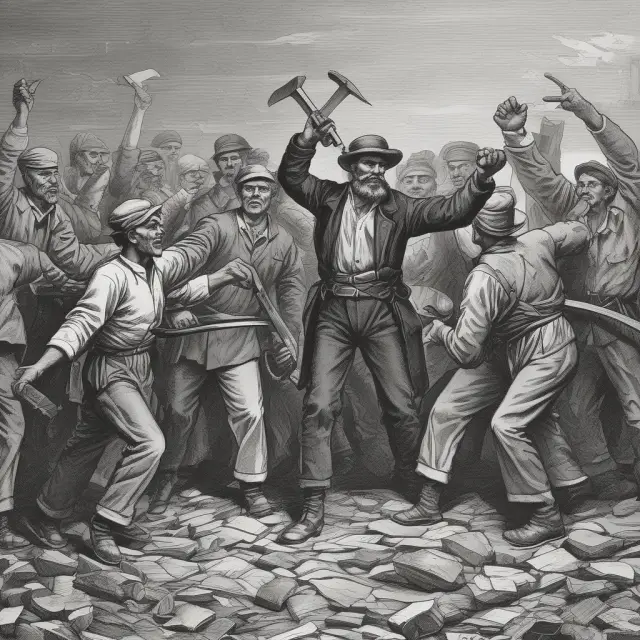
Marx’s Interpretation of Capitalism and Class Conflict
Conflict theory, first introduced by Karl Marx, holds that society is inherently characterized by competition for limited resources and power. The primary focus of his perspective is the perpetual struggle between two opposing classes: the bourgeoisie, or the ruling class, and the proletariat, or the working class.
Marx argued that capitalism, with its inherent economic disparity, fuels conflict between these groups due to the uneven distribution of resources. In a capitalistic society, power and wealth are concentrated in the hands of the bourgeoisie, while the proletariat, who provide the labor force, face harsh working conditions and economic insecurity. The ruling class exploits this imbalance by exerting their power to maintain their superior position, often through ideological coercion or the establishment of societal structures that further their interests.
Marx predicted that as conditions for the proletariat worsened, collective consciousness would rise, potentially leading to revolt against the bourgeoisie’s dominance. This conflict cycle may be repeated throughout history, with power dynamics shifting and the roles reversing as societal structures adjust to accommodate the concerns of the oppressed class.
The fundamental belief in conflict theory is that competition, rather than cooperation, drives most relationships and interactions among individuals and groups within society. Competition arises due to scarcity of resources, both material and intangible, such as wealth, power, and social status. Marx’s version of conflict theory can explain various forms of societal conflicts throughout history.
Marxist theory posits a pyramid arrangement in terms of how goods and services are distributed in society. Those at the top control a disproportionate amount of resources and power, while those at the bottom face significant disadvantages. The elite maintain their position by setting up systems of laws, traditions, and societal structures that reinforce their dominance.
Marxist conflict theory’s assumption is that the ruling class will work to preserve these unequal structures through various means, including force and coercion. The idea of revolution emerges from this perspective as a potential solution to address imbalances in power. Revolutions represent abrupt and significant shifts in power dynamics between groups and can lead to changes in societal arrangements.
Despite its criticisms and limitations, Marx’s interpretation of conflict theory remains influential in sociology, economics, politics, and other fields for understanding social inequality, power dynamics, and societal change.
Max Weber’s Adaptation of Conflict Theory
Max Weber, an influential German sociologist, philosopher, jurist, and political economist, contributed significantly to Marx’s conflict theory by refining and expanding its scope beyond the economic class conflict between laborers and capitalists. Weber emphasized emotions and status groups as key elements of social conflicts that exist simultaneously in every society.
While Marx focused primarily on the division between the bourgeoisie (capitalist owners) and the proletariat (working class), Weber saw conflict extending to various levels within societies, creating intricate webs of power struggles. He believed that individuals’ emotional reactions played a significant role in these conflicts.
Weber argued that status groups, defined as collectives sharing common values, beliefs, and social practices, undergo constant struggles for power and resources. These tensions can lead to various forms of conflict, including religious, political, or ideological ones. He asserted that the emotional component is crucial in understanding the dynamics of these conflicts.
Weber’s views on conflict theory diverged from Marx’s in two essential ways:
1. Emotions and Ideologies:
Weber believed that emotions and ideologies played a significant role in shaping individual and group behaviors within social structures. In contrast, Marx focused mainly on the material conditions that fueled class conflicts. Weber’s emphasis on emotions was reflected in his exploration of the power of religion and its alignment with the state. He noted that religious beliefs can generate solidarity among individuals and groups, creating a sense of unity and shared identity. This unity can, in turn, lead to intense conflicts when the interests of different groups clash.
2. Multiple Layers of Conflict:
Max Weber saw conflict as multidimensional, with various layers existing simultaneously within societies. He posited that individuals may face conflicting loyalties and allegiances, creating complex power struggles. These internal conflicts could stem from various sources, such as family relationships, religious beliefs, political ideologies, or economic interests. Weber’s approach to conflict theory offered a more nuanced understanding of the complexity and intricacy of social dynamics.
Weber’s adaptation of Marx’s conflict theory has influenced contemporary perspectives on power struggles in society, providing a framework for examining various forms of conflicts beyond the traditional economic class divide. His emphasis on emotions and ideologies highlights the role that individual beliefs, values, and emotions play in shaping social interactions and power dynamics within communities. By recognizing the multidimensional nature of conflict, Weber’s work expanded the scope of conflict theory, making it a valuable tool for understanding complex societal issues and modern social structures.
Conflict Theory: A Modern Perspective
In contemporary society, conflict theory continues to be relevant, providing insights into various forms of conflicts, from interpersonal relationships to international disputes. The theoretical framework offers a powerful lens through which we can analyze power struggles between individuals, groups, organizations, and even entire nations. By understanding the underlying dynamics of these conflicts, we can begin to address their root causes and develop strategies for resolving them effectively.
In modern finance and investment contexts, conflict theory has applications in various areas, such as analyzing power struggles within financial institutions, understanding the motivations behind corporate mergers and acquisitions, examining the dynamics of labor-management conflicts, and assessing international economic relations. Conflict theory can help us better understand the complex interplay between power, privilege, and conflict in the financial sector, ultimately providing valuable insights for investors and policymakers alike.
Max Weber’s adaptation of Marx’s conflict theory has enriched our understanding of social dynamics and power struggles in various contexts, including finance and investment. By recognizing the multidimensional nature of conflicts and emphasizing the role of emotions and ideologies, we can develop more nuanced perspectives on social interactions and power dynamics within modern societies. This approach allows us to gain a deeper understanding of the complexities of contemporary economic systems and to engage in informed debates about how best to address their underlying power struggles.
Conflict Theory and Institutional Investing
Institutional investors, such as pension funds, mutual funds, and sovereign wealth funds, play an increasingly significant role in global financial markets. These investors manage vast amounts of capital and wield considerable influence over corporate governance, making them key players in power struggles within the financial sector. Understanding the dynamics of these conflicts is essential for institutional investors to navigate complex power structures effectively and maximize their returns while contributing positively to society.
Conflict theory can offer valuable insights into the role that emotions, ideologies, and power struggles play in shaping the behavior of various stakeholders within financial institutions. By recognizing the multidimensional nature of these conflicts, institutional investors can develop more effective strategies for engaging with corporations, understanding the motivations behind their actions, and advocating for change when necessary.
In conclusion, Max Weber’s adaptation of Marx’s conflict theory has expanded our understanding of power struggles in various contexts, including finance and investment. By recognizing the multidimensional nature of conflicts and emphasizing the role of emotions and ideologies, we can develop more nuanced perspectives on social interactions and power dynamics within modern societies. In the realm of institutional investing, conflict theory can help investors navigate complex power structures effectively while contributing positively to society.
FAQs about Conflict Theory
What is conflict theory?
Conflict theory is a sociological perspective that focuses on competition, power struggles, and conflict between individuals, groups, or classes within society. It highlights the role of social structure in shaping human interactions and emphasizes the importance of understanding the underlying dynamics of conflicts.
How does conflict theory explain social order?
Conflict theory proposes that social order is maintained through domination and power rather than consensus and conformity. The elite manipulates societal structures to maintain their dominance while suppressing those with less power.
What are the four primary assumptions of conflict theory?
The four primary assumptions of conflict theory are competition, revolution, structural inequality, and war. Competition refers to constant struggles over resources and power; revolution signifies abrupt changes in power dynamics between groups; structural inequality implies inherent power imbalances within society; and war represents the ultimate expression of social conflicts.
What is the difference between Marx’s conflict theory and Max Weber’s adaptation?
Marx focused on economic class conflict between laborers and capitalists, while Weber saw conflict as multidimensional and extending to various levels within societies, emphasizing emotions and ideologies. Weber also believed that individuals’ emotional reactions play a significant role in shaping conflicts.
How is conflict theory relevant to modern society?
Conflict theory remains relevant in modern society by providing valuable insights into power struggles between individuals, groups, organizations, and even entire nations. It offers a framework for analyzing complex social dynamics and power structures, allowing us to better understand the root causes of conflicts and develop effective strategies for resolving them.
How can conflict theory be applied in finance and investment?
Conflict theory can be applied in finance and investment by examining power struggles within financial institutions, understanding the motivations behind corporate mergers and acquisitions, assessing labor-management conflicts, and evaluating international economic relations. It offers valuable insights for investors and policymakers alike.

Conflict Theory’s Influence on Society and Human Interactions
The profound impact of conflict theory extends beyond its original Marxist interpretation, as it has significantly shaped our understanding of societal structures, inequalities, and human interactions. Conflict theorists argue that competition is inherent in various relationships and interactions, stemming from the scarcity of resources or power. This competition is not limited to material possessions but can also encompass intangible resources such as dominance or social status.
One critical assumption of conflict theory is the notion of revolution. Change in power dynamics between groups does not typically result gradually; instead, it arises from the cumulative effect of ongoing conflicts between individuals and groups. These shifts in power may lead to significant transformations within societies, potentially creating new ideologies or political structures.
Moreover, conflict theory highlights structural inequality as a pervasive aspect of human relationships and social structures. Individuals and groups inevitably possess varying degrees of power, leading them to work towards maintaining the status quo. This is especially evident in capitalist systems, where the distribution of resources and opportunities creates inherent disparities between those who control wealth and resources and those who are marginalized or oppressed.
Conflict theory also sheds light on the role of war as a unifying or cleansing force within societies. Wars can bring about unity among different groups in a society, but conflict persists at both the societal and interpersonal levels. Conflict theory acknowledges that power struggles are not confined to economic classes; they can also manifest in various forms across religious, ideological, national, and ethnic lines.
Max Weber’s adaptation of Marxist conflict theory expanded upon the concept of competition by emphasizing emotions, status groups, and legitimacy in shaping social interactions and power dynamics. While Marx framed conflict as a struggle between economic classes, Weber believed that there were multiple layers of conflict existing at any given moment within every society.
Conflict theory continues to be a significant influence on contemporary sociological thought. It offers valuable insights into understanding various forms of inequality and how these inequalities perpetuate power dynamics and fuel conflicts. By examining the historical and contemporary implications of conflict theory, we can better understand societal structures, human interactions, and the complex nature of power relationships.
Conflict theory is essential for investigating a wide range of social phenomena, including wars, revolutions, poverty, discrimination, and domestic violence. It offers a unique perspective on how individuals, groups, and entire societies navigate the ongoing conflicts that shape our world. By recognizing the inherent conflict within human relationships and societal structures, we can work towards creating more equitable societies and fostering positive social change.
Conflict Theory: A Modern Perspective
Marx’s conflict theory laid the groundwork for understanding societal strife and power struggles through the lens of economic class conflict between the ruling bourgeoisie and the oppressed proletariat. However, conflict theory’s relevance extends far beyond these initial assumptions, as it helps us navigate modern-day issues rooted in power dynamics, privilege, and conflict within and among various social, religious, ethnic, and other groups.
The core tenets of conflict theory, such as competition, revolution, structural inequality, and war, remain applicable in numerous contexts. In today’s society, we continue to witness competition for resources, opportunities, and social status, which often leads to conflict between individuals, organizations, or even entire nations. The revolutionary spirit can manifest in various forms of resistance, from civil rights movements to digital activism, as people fight for change and challenge the status quo.
Structural inequality persists, with some groups holding significant power while others face marginalization and exclusion. Power dynamics continue to shape societal structures and institutions, as those in positions of privilege work to maintain their dominance and prevent others from rising up. The ongoing struggle for power is also apparent within the realm of finance and investment, where institutional investors navigate complex power relationships and compete for resources and influence in the financial system.
Conflict theory’s modern applications go beyond Marxist ideology, as scholars have extended its insights to explore the role of emotions, status groups, and other forms of social stratification. For example, conflict between religious communities has fueled numerous conflicts throughout history and continues to shape contemporary societies. Ethnic tensions, gender disparities, and socioeconomic divides also contribute to ongoing struggles for power and resources.
Conflict theory’s relevance is further underlined by its potential to explain various aspects of social and political life. It sheds light on the root causes of domestic violence, poverty, discrimination, wars, and revolutions. Understanding conflict theory can help us better comprehend the complex nature of power dynamics in our society, as well as the role of ideology, culture, and other factors that influence social change.
Conflict theory’s modern perspective is also essential for understanding current issues within the realm of finance and investment. Institutional investors play a crucial role in shaping financial markets, yet they face inherent power struggles with regulators, governments, and other market participants. By applying conflict theory to these contexts, we can gain valuable insights into how institutional investors navigate complex power dynamics and assert their influence in the financial system.
Conflict theory’s relevance extends beyond its initial focus on economic class struggle and offers a powerful framework for understanding the ongoing struggles for power, resources, and social change in modern society. It is a vital tool for scholars, policymakers, and anyone seeking to make sense of our complex, ever-changing world.

Limitations of Conflict Theory
Despite its profound influence on sociology and social sciences as a whole, conflict theory does come with certain limitations and criticisms. It’s essential to consider these to gain a comprehensive understanding of the theoretical framework.
1. Oversimplification of Social Reality: Critics argue that conflict theory oversimplifies social reality by focusing too much on economic class struggles at the expense of other factors, such as gender, race, or cultural differences. Conflict theorists may not fully capture the complex nature of societal relationships and structures.
2. Lack of Agency for Individuals: Some critics point out that conflict theory’s emphasis on systemic forces tends to dismiss individual agency, assuming that people are passive pawns in the power struggles between social classes. This criticism fails to recognize that individuals can actively shape their own lives, even within a larger societal context.
3. The Problem of Historical Specificity: Conflict theory’s universal applicability may limit its explanatory power for specific historical contexts. Critics argue that conflict theory does not account for the unique factors and complexities shaping individual societies over time.
4. Limited Focus on Cooperation and Consensus: By primarily emphasizing competition and conflict, conflict theory neglects the importance of cooperation and consensus in social structures. This perspective might be a one-sided view that fails to capture the full complexity of human interactions.
5. Inadequate Explanation of Social Change: Conflict theorists argue that change occurs through revolution, but they fail to explain how and why these revolutions come about. Additionally, they overlook various forms of social change that do not involve dramatic conflict or upheaval.
Despite its limitations, conflict theory remains an influential perspective on understanding power dynamics and societal structures, offering valuable insights into the nature of human relationships and the complex interplay between individuals and groups.
Conflict theory’s ability to shed light on issues like class struggles, power imbalances, and systemic inequality continues to contribute significantly to our understanding of society. By acknowledging its limitations, we can better appreciate its strengths and engage in more nuanced discussions about the complex nature of social structures and interactions.

Conflict Theory and Institutional Investing
Conflict theory is a socioeconomic perspective that highlights the underlying power struggles and inequalities within societies, emphasizing competition for resources and social change through revolution. This theory, originating with Karl Marx, has significant implications for understanding institutional investing in today’s complex financial landscape.
Institutional investors manage large pools of capital from various sources such as pension funds, insurance companies, endowments, mutual funds, and hedge funds. They play a crucial role in the global economy by allocating resources towards stocks, bonds, and other investments, often with the goal of maximizing returns for their clients. However, conflict theory provides valuable insights into the power dynamics that can arise within this arena.
One essential assumption of conflict theory is competition. Institutional investors, like any other group or individual, are inherently driven to compete for returns, market share, and influence. This competition can manifest in various ways: between different types of institutions (e.g., pension funds vs mutual funds), between managers within an institution, or even between the institution itself and its stakeholders.
Another significant aspect of conflict theory is structural inequality. Institutional investors benefit from their position as powerful actors within the financial system, which gives them advantages over smaller investors and those without access to large capital pools. This power differential can lead to conflicts of interest and ethical dilemmas. For example, an institutional investor may prioritize its own financial gains over the long-term interests of its clients or societal values.
The potential for conflict between different stakeholders becomes even more pronounced during times of economic instability or crisis. Institutional investors might face pressure to sell off their holdings due to liquidity concerns or perceived risks, leading to market volatility and exacerbating the impacts on vulnerable communities. This can be seen in situations like the 2008 financial crisis, where institutional actions contributed to a widespread economic downturn.
Conflict theory’s assumption of revolution suggests that institutional investors may face challenges or disruptive forces that force them to adapt and evolve their strategies to maintain their competitive advantage. For instance, regulatory changes, technological innovations, or changing investor expectations can significantly impact the way institutions operate, necessitating new approaches to risk management, asset allocation, and stakeholder engagement.
One of the most influential figures in conflict theory beyond Marx was Max Weber, who expanded upon the idea of conflict over property ownership and added an emotional component. This perspective is essential for understanding how emotions and social dynamics can impact the behavior of institutional investors. For example, investors’ responses to perceived threats or injustices could lead to collective action, potentially disrupting markets and leading to societal change.
Conflict theory offers a unique perspective on the complex interplay between power, privilege, and conflict within institutional investing. By considering the assumptions of competition, revolution, structural inequality, and war, we can gain a deeper understanding of the challenges that institutional investors face in managing capital and navigating the financial system’s inherent conflicts.
As the financial landscape continues to evolve, it is essential for institutions to acknowledge the power dynamics at play and adapt their strategies accordingly. By incorporating conflict theory principles into their decision-making processes, institutional investors can better manage risks, engage with stakeholders, and contribute to a more equitable and sustainable financial system.
FAQs about Conflict Theory
What is conflict theory and where did it originate?
Conflict theory is a sociological perspective that focuses on the competition among groups within society over limited resources. It was initially developed by Karl Marx, who believed social order is maintained through power and domination rather than consensus.
What are some key assumptions of conflict theory?
Conflict theory assumes that: (a) competition is a constant factor in human relationships, (b) revolution is an outcome of class conflicts, (c) structural inequality exists in every society, and (d) war can act as a unifier or cleansing force.
Who are the primary classes within conflict theory?
Marx’s version of conflict theory focuses on two primary classes: the bourgeoisie (the ruling class) and the proletariat (working class). Each class consists of individuals bound by mutual interests and a certain degree of property ownership.
How does Marx view capitalism and conflict?
Marx believed that capitalism would create an imbalance between business owners and laborers, eventually leading to social conflicts that could be resolved through a revolution.
Who adapted conflict theory from Marx and how did they refine it?
Max Weber adopted many aspects of conflict theory but added an emotional component, suggesting some forms of social interaction generate beliefs and solidarity among individuals and groups within a society.
How has conflict theory influenced modern societies?
Conflict theory continues to be influential in understanding societal structures, power dynamics, and various forms of social interactions in contemporary contexts. It offers insights into the role of power, privilege, and conflict within financial systems like institutional investing.
What are some criticisms of conflict theory?
Some critics argue that conflict theory oversimplifies complex issues, focusing too much on power struggles and not enough on cooperation or other factors. Others suggest it neglects the role of individual choices and agency in societal developments.
 Next entry · No. 742Understanding Conglomerates: Structure, Formation, Advantages, Disadvantages, and Famous Examples
See also
-
 No. 1,685
22 Oct 2024
20 min
Friedrich Engels: Co-Author of The Communist Manifesto and Pioneer of Modern Communism
Finance History
No. 1,685
22 Oct 2024
20 min
Friedrich Engels: Co-Author of The Communist Manifesto and Pioneer of Modern Communism
Finance History -
 No. 1,342
01 Sep 2024
17 min
Estimated Ultimate Recovery (EUR): A Key Metric for Oil and Gas Investors
Business Finance
No. 1,342
01 Sep 2024
17 min
Estimated Ultimate Recovery (EUR): A Key Metric for Oil and Gas Investors
Business Finance -
 No. 1,246
18 Aug 2024
22 min
Egalitarianism in Finance and Investment: Understanding the Philosophy of Equal Opportunity
Business Finance
No. 1,246
18 Aug 2024
22 min
Egalitarianism in Finance and Investment: Understanding the Philosophy of Equal Opportunity
Business Finance -
 No. 4,381
14 Jun 2025
22 min
Understanding Rent Seeking: A Guide for Institutional Investors
Business Strategy
No. 4,381
14 Jun 2025
22 min
Understanding Rent Seeking: A Guide for Institutional Investors
Business Strategy -
 No. 1,433
14 Sep 2024
25 min
External Economies of Scale: Unlocking Industry-wide Cost Savings and Growth Opportunities
Business Strategy
No. 1,433
14 Sep 2024
25 min
External Economies of Scale: Unlocking Industry-wide Cost Savings and Growth Opportunities
Business Strategy -
 No. 1,230
15 Aug 2024
18 min
Expert Insights: Understanding the Role and Impact of Economists in Finance and Investment
Business Strategy
No. 1,230
15 Aug 2024
18 min
Expert Insights: Understanding the Role and Impact of Economists in Finance and Investment
Business Strategy