Maximizing Value: Understanding and Utilizing Government-Wide Acquisition Contracts (GWAC)

Maximizing value in IT procurement: Understand the benefits, usage & popular GWACs like Stars II, Vets 2, Alliant 2, SEWP & NITAAC.
Overview of Government-Wide Acquisition Contracts (GWAC)
A government-wide acquisition contract (GWAC) is a powerful procurement tool in the U.S. federal market that allows multiple agencies to join forces and pool their requirements, resulting in reduced costs and increased efficiency for taxpayers. GWACs are most commonly used to acquire information technology (IT) solutions. They enable the government to purchase a wide range of innovative IT systems from approved vendors at more attractive prices than with single-agency contracts. This section provides an overview of what government-wide acquisition contracts are, their growth in popularity, and how they differ from single-agency contracts.
The primary goal of GWACs is to help federal agencies save on the cost of purchasing IT solutions by allowing them to combine their needs and procure a contract as a group rather than individually. By consolidating purchases through a single contract, governments can negotiate favorable terms with vendors, reduce administrative overheads, and improve vendor relationships. These contracts are typically managed by government entities like the U.S. General Services Administration (GSA), NASA, or the National Institute of Health (NIH).
The adoption of government-wide acquisition contracts has seen a significant increase in recent years, with GWACs now representing around 20% of total federal IT spend compared to just 12% in 2015. This trend is expected to continue as GWACs offer numerous benefits such as lower costs, reduced administrative burden, and streamlined procurement processes.
In contrast to single-agency contracts where individual agencies undertake their own contracting process for the same IT solutions, a government-wide acquisition contract streamlines the process by having one agency evaluate vendors and offer services to multiple agencies. This approach not only saves time and resources but also ensures that agencies avoid redundant procurement efforts and vendor assessments.
When it comes to IT solutions, GWACs provide access to cutting-edge technologies for various government applications. These contracts can be obtained from several entities like the U.S. General Services Administration (GSA), NASA, or the National Institute of Health (NIH). Each entity offers a unique set of GWAC programs catering to diverse IT needs and agency requirements.
The U.S. General Services Administration (GSA) manages popular contracts such as Stars II, Vets 2, and Alliant 2. These contracts offer extensive solutions for the federal government, including systems design, software engineering, information assurance, and enterprise architecture services. Stars II has a $22 billion program ceiling, while Vets 2 is exclusive to Service-Disabled Veteran-Owned Small Businesses (SDVOSB), with a contract program ceiling of $5 billion. Alliant 2 offers IT solutions as a total package, covering hardware, software, and services, with an overall contract program ceiling of $70 billion.
NASA’s GWACs, known as SEWPs (Solutions for Enterprise-Wide Procurement), provide the government with various tablets, desktops, servers, IT peripherals, network equipment, storage systems, security tools, software products, and cloud-based services. The National Institute of Health’s Information Technology Acquisition and Assessment Center (NITAAC) offers three separate programs: CIO-SP3, CIO-SP3 Small Businesses, and CIO-CS. These contracts provide IT commodities for federal agencies through the Department of Health and Human Services (HHS).
In conclusion, a government-wide acquisition contract (GWAC) is an essential tool for federal agencies in the procurement of IT solutions. By consolidating purchases, negotiating favorable terms with vendors, and reducing administrative overheads, GWACs help ensure that taxpayer dollars are being spent efficiently and effectively. The future of GWACs looks promising as their popularity continues to grow, providing federal agencies with increased purchasing power and the ability to acquire innovative IT systems at lower costs.

The Importance and Role of Government-Wide Acquisition Contracts in IT Procurement
Government-wide acquisition contracts (GWACs) have emerged as a popular solution for federal agencies looking to procure information technology systems at reduced costs. GWACs represent an effective approach that consolidates the buying power of multiple government entities, enabling them to negotiate favorable terms with vendors. This, in turn, leads to economies of scale and cost savings for taxpayers.
In essence, a GWAC is a contract vehicle through which various government agencies can collaboratively acquire goods or services from a single vendor, rather than individually entering into separate contracts. As a result, GWACs offer the following advantages:
- Lower costs: By aggregating the demand for technology solutions, GWACs enable government entities to negotiate better prices, thus reducing the overall cost per unit and optimizing budget allocation.
- Improved efficiency: With a single contract, federal agencies can streamline their procurement processes by avoiding lengthy evaluations and negotiations with various vendors, ultimately saving time and resources.
- Consistent vendor relationships: By partnering together on a GWAC, government entities create a long-term commitment to a single vendor, fostering better communication, collaboration, and understanding between the parties involved.
- Access to innovation: Government-wide acquisition contracts offer access to cutting-edge technology solutions that may not be available through other contracting methods. This keeps agencies at the forefront of technological advancements and positions them to effectively address complex challenges.
Government-wide acquisition contracts have gained significant traction in recent years, particularly within the realm of information technology solutions. These contracts are primarily managed by entities such as the U.S. General Services Administration (GSA), NASA, and the National Institute of Health (NIH). By choosing to procure through a GWAC, federal agencies can gain access to an extensive range of IT offerings, including systems design, software engineering, information assurance, and enterprise architecture solutions.
For instance, GSA offers contracts like STARS II, Vets 2, and Alliant 2, which cater to various needs and requirements. NASA’s offerings are collectively known as SEWP (Solutions for Enterprise-Wide Procurement), while the NIH’s IT acquisitions are managed through the Information Technology Acquisition and Assessment Center (NITAAC).
These entities enable federal agencies to procure a diverse array of technology solutions, such as tablets, desktops, servers, IT peripherals, network equipment, storage systems, security tools, software products, cloud-based services, and more. Moreover, GWACs also provide the flexibility to purchase hardware, software, and services in packages that best suit individual agency needs.
The popularity of government-wide acquisition contracts has surged in recent times, with a 2019 report stating that they accounted for 20% of overall IT spend when compared to single-agency contracts. This upward trend is expected to continue due to the cost savings and convenience provided by GWACs. As technology evolves and new challenges arise, federal agencies must be agile and adaptive in their procurement strategies, making government-wide acquisition contracts an essential tool for optimizing IT investments.

Popular Government-Wide Acquisition Contracts: Stars II, Vets 2, Alliant 2, SEWP, and NITAAC
Government-wide acquisition contracts (GWACs) have gained significant traction in recent years as a cost-effective approach to federal IT procurement. GWACs allow multiple government agencies to collaborate and purchase technology solutions collectively, thus reducing individual procurement costs and improving efficiency. This section will explore five prominent GWAC programs: Stars II, Vets 2, Alliant 2, SEWP, and NITAAC.
1) The Stars II contract offered through the U.S. General Services Administration (GSA) provides access to highly qualified small disadvantaged businesses. With a program ceiling of $22 billion, this GWAC ensures that participating vendors cater to diverse IT requirements, ultimately providing federal agencies with cost savings and reliable solutions.
2) The VETS 2 contract is specifically designed for the exclusive use of Service-Disabled, Veteran-Owned Small Businesses (SDVOSBs). With a program ceiling of $5 billion, this GWAC focuses on acquiring IT systems and services, including emerging technologies, making it an appealing option for federal agencies seeking to support small businesses while reducing costs.
3) The Alliant 2 contract offered through the GSA provides a total IT solution package consisting of hardware, software, and services. With an extensive program ceiling of $50 billion, Alliant 2 attracts vendors that can cater to various government IT needs, enabling agencies to make informed decisions while optimizing their procurement budgets.
4) NASA’s SEWP GWACs, referred to as Solutions for Enterprise-Wide Procurement (SEWP), are a popular choice for procuring tablets, desktops, servers, IT peripherals, network equipment, storage systems, security tools, software products, cloud-based services, and more. This GWAC program offers numerous advantages for federal agencies, with a variety of vendors providing innovative technology solutions and expertise.
5) The NIH Information Technology Acquisition and Assessment Center (NITAAC) operates under the Department of Health and Human Services (HHS) and the National Institute of Health (NIH). This agency offers three separate GWAC programs: CIO-SP3, CIO-SP3 Small Businesses, and CIO-CS. Each program is tailored to specific IT needs, allowing federal agencies to capitalize on cost savings while ensuring a diverse pool of vendors and solutions to choose from.
Understanding the benefits and offerings provided by these popular GWACs enables federal agencies to make informed decisions when it comes to IT procurement strategies. By collaborating with one another through these contracts, they can streamline their processes, save costs, and maintain a consistent approach to technology investments.
Advantages of Government-Wide Acquisition Contracts for Federal Agencies
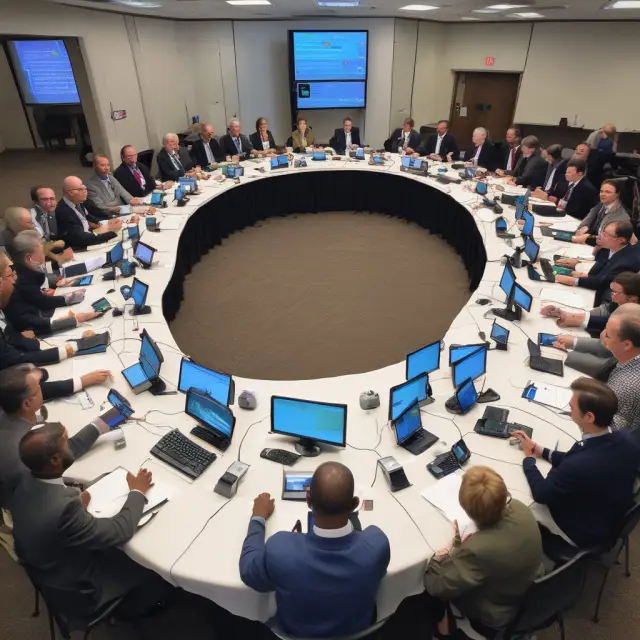
The benefits of government-wide acquisition contracts (GWAC) cannot be overstated, particularly when it comes to the significant advantages they offer federal agencies. GWACs provide multiple government entities with cost savings, increased efficiency, and improved vendor relationships by allowing them to combine their purchasing power. In the realm of information technology solutions, these contracts prove instrumental in gaining access to cutting-edge technologies at reduced costs.
First and foremost, GWACs offer federal agencies substantial cost advantages as a result of economies of scale. By consolidating purchases under a single contract vehicle, government entities can negotiate lower prices per unit compared to the expenses associated with individual contracts. This not only results in financial savings for the taxpayer but also enables agencies to allocate resources towards mission-critical priorities instead of focusing on procurement negotiations.
Moreover, GWACs streamline and improve the overall efficiency of IT procurement processes within federal agencies. With a single contract vehicle, agencies can easily access a range of technology solutions from approved vendors without having to go through a separate, time-consuming vetting process for each requirement. This expedites acquisition cycles and speeds up project implementations.
Additionally, GWACs facilitate improved vendor relationships by allowing multiple government entities to engage with the same contractor under a single agreement. This consistency in interactions leads to better collaboration, stronger partnerships, and increased transparency between agencies and their technology providers.
Furthermore, GWACs offer federal agencies the ability to purchase innovative, emerging technologies from a wide range of approved vendors. This variety not only ensures competitive pricing but also fosters innovation within the government sector by exposing agencies to new and potentially game-changing solutions. The diversity of technology options is further enhanced as multiple government entities contribute to shaping the contract vehicle’s scope over time.
Another significant advantage of GWACs lies in their flexibility. Federal agencies can leverage these contracts to purchase a complete IT solution, consisting of hardware, software, and services, or opt for individual components as needed. This adaptability caters to the dynamic nature of technology requirements within federal organizations while still allowing them to take advantage of the cost savings and efficiency benefits associated with GWACs.
Furthermore, government-wide acquisition contracts also come with a wealth of resources designed to aid agencies in making informed purchasing decisions. The GSA, NASA, and NIH all offer GWAC pricing tools, which provide valuable insights on past performance and spending trends. This information enables federal entities to compare prices, conduct negotiations effectively, and make data-driven procurement choices.
In conclusion, the adoption of government-wide acquisition contracts by federal agencies offers numerous advantages, including cost savings, increased efficiency, improved vendor relationships, access to emerging technologies, flexibility, and valuable resources for informed decision-making. As GWACs continue to grow in popularity, they will undoubtedly play a pivotal role in shaping the future of government IT procurement.

How to Use a Government-Wide Acquisition Contract: A Step-by-Step Guide for Federal Agencies
A government-wide acquisition contract (GWAC) is a powerful procurement tool that offers federal agencies the ability to pool their resources and purchase goods and services at significantly lower prices. In this section, we will walk you through the process of using a GWAC step by step.
Step 1: Attend Training
Before initiating a purchase under a GWAC, federal employees must first attend training provided by the contract holder or contracting officer. This training typically covers the following topics:
– The purpose and benefits of GWACs
– The types of offerings covered by the specific GWAC
– How to use the contract’s pricing structure
– The steps involved in issuing a task order
– The process for conducting vendor evaluations
Step 2: Request Procurement Authority
The second step is to request procurement authority from your agency’s senior procurement executive. This authorization grants you the ability to issue a task order under the GWAC.
Step 3: Issue the Task Order
Once you have procurement authority, you can now issue a task order against the desired GWAC. This process includes:
– Identifying your requirements and drafting a statement of work (SOW)
– Creating a solicitation package that complies with Federal Acquisition Regulation (FAR) guidelines
– Posting your solicitation on the Federal Business Opportunities (FBO) website for at least five days
Step 4: Request an Optional Scope Review
If desired, you may request a scope review from the contract holder or contracting officer before issuing your task order. This is an optional step that can help ensure your requirements are aligned with the capabilities offered by the GWAC.
Step 5: Request an Optional Capabilities Statement Report (CSR)
Another optional step is requesting a vendor’s CSR, which includes information about their past performance, experience, and capabilities. This can be helpful in evaluating potential vendors for your task order.
Step 6: Contract Actions
The final stage of using a GWAC involves contract actions. These include:
– Ordering goods or services from the vendor under the task order
– Requesting invoices and making payments
– Conducting periodic evaluations of the vendor’s performance
By following these steps, federal agencies can effectively use government-wide acquisition contracts (GWACs) to acquire IT solutions at a lower cost for taxpayers.

Government-Wide Acquisition Contracts (GWAC) vs. Single-Agency Contracts
When it comes to procurement methods for the federal government, understanding the differences between Government-Wide Acquisition Contracts (GWACs) and single-agency contracts is crucial for making informed decisions about acquiring information technology solutions. Both types of contracts have unique advantages, but they differ in various aspects such as pricing, flexibility, and administration.
Procurement Methods: In a GWAC, multiple federal agencies come together to purchase goods or services, allowing them to leverage their combined buying power to secure lower prices. This approach contrasts with single-agency contracts, where an individual agency makes a procurement decision on its own. With a GWAC, the contracting process is streamlined as only one evaluation is required for multiple agencies instead of multiple independent evaluations for each individual agency.
Cost Savings: The primary advantage of GWACs over single-agency contracts lies in their potential cost savings due to economies of scale. By combining the purchasing power of various federal agencies, a GWAC can result in substantial price reductions compared to individual procurements. This is especially evident when it comes to information technology solutions, where prices for hardware, software, and services can vary greatly from one vendor to another.
Contract Administration: The administration of a single-agency contract is the sole responsibility of that specific agency. However, in a GWAC, multiple agencies share the responsibilities of contract administration. This shared approach to contract management reduces the burden on individual agencies and ensures consistent application of terms, conditions, and clauses across all participating agencies.
Flexibility: Single-agency contracts are typically rigid and inflexible due to their one-size-fits-all nature. In contrast, GWACs offer greater flexibility for federal agencies as they allow multiple agencies to access a wide range of goods or services from the same contract vehicle. This flexibility can be particularly valuable when dealing with emerging technology, as it enables agencies to quickly respond to new requirements and innovations in their respective fields.
Popularity and Growth: Given their numerous advantages, GWACs have become increasingly popular among federal agencies in recent years. According to the U.S. General Services Administration (GSA), government-wide acquisition contracts accounted for 20% of IT spend in 2019, up from 12% in 2015. This growth can be attributed to factors such as cost savings, convenience, and flexibility, making GWACs a preferred choice for acquiring IT solutions in the federal sector.
In conclusion, both Government-Wide Acquisition Contracts (GWACs) and single-agency contracts serve essential roles in the procurement of information technology solutions for the federal government. Understanding their differences can help agencies make informed decisions regarding which contracting method is best suited to meet their specific needs and budget constraints. By leveraging the collective buying power, cost savings, flexibility, and shared responsibility offered by GWACs, federal agencies can maximize the value of their IT investments.

Success Stories: Examples of Government Agencies That Have Effectively Utilized GWACs
Government-wide acquisition contracts (GWACs) have proven to be a valuable resource for federal agencies seeking to optimize their IT procurement processes while reducing costs. Numerous agencies have successfully employed these contracts, resulting in substantial benefits for their organizations and taxpayers alike. Below are some real-life examples of government agencies that have effectively utilized GWACs.
1. National Aeronautics and Space Administration (NASA): NASA’s acquisition team at the Goddard Space Flight Center implemented a NASA Solutions for Enterprise-Wide Procurement (SEWP) contract, which resulted in significant savings and improvements to their IT procurement process. By using SEWP, NASA was able to reduce the time spent on individual contracts by up to 50%. In addition, they achieved an overall cost reduction of approximately 16% when compared to other procurement methods.
2. Department of Defense (DoD): The Defense Logistics Agency’s (DLA) Enterprise Software Initiative (ESI) implemented a government-wide acquisition contract with a single vendor for enterprise resource planning (ERP) software. This GWAC resulted in cost savings, simplified procurement processes, and improved system interoperability between different branches of the DoD.
3. U.S. Department of Agriculture (USDA): The USDA’s Food Safety and Inspection Service (FSIS) utilized the NASA Solutions for Enterprise-Wide Procurement (SEWP) contract to procure a Virtual Private Server environment, which resulted in a 25% cost reduction compared to their previous solution. This also provided increased security and scalability for their IT infrastructure.
4. Department of Energy (DOE): The DOE’s Office of Science used the General Services Administration’s (GSA) Alliant 2 GWAC to acquire a cloud-based email system, which resulted in a cost savings of over $2 million compared to a previous contract with a different vendor. This change also led to increased security features and improved overall efficiency for their organization.
These success stories highlight the benefits that federal agencies can reap from utilizing government-wide acquisition contracts (GWACs) to meet their IT procurement needs. These include cost savings, streamlined procurement processes, and improved vendor relations. By sharing their experiences, other agencies can learn from their colleagues’ achievements and determine if a GWAC could be the solution for their organization as well.

The Future of Government-Wide Acquisition Contracts: Trends and Predictions
Government-wide acquisition contracts (GWACs) have emerged as a powerful tool for the federal government, enabling multiple agencies to pool their purchasing power together to acquire IT solutions at lower costs. As the popularity of GWACs continues to grow, it’s essential to understand the trends and predictions that are shaping their future in the realm of federal procurement.
Firstly, the role of technology will remain a significant factor in the evolution of government-wide acquisition contracts. With advancements in cloud computing, artificial intelligence (AI), machine learning, and cybersecurity, GWACs may increasingly cater to these cutting-edge technologies as they become more integral to federal agencies’ IT needs. This trend is already evident in various existing GWACs that support the acquisition of cloud services and emerging technology solutions.
Secondly, the increasing focus on innovation is expected to drive the growth of GWACs in the future. As federal agencies strive to modernize their IT infrastructure, they will increasingly look for GWACs that offer access to cutting-edge solutions, particularly those that leverage emerging technologies and help streamline operations.
Additionally, there are predictions that the use of GWACs could extend beyond IT procurement and into areas like professional services, engineering, and construction. By enabling multiple agencies to share resources and expertise through collaborative contracts, GWACs may enable significant cost savings and operational efficiencies in these sectors as well.
Another trend that is likely to impact the future of government-wide acquisition contracts is increased competition. With a growing number of contract holders competing for business under a single contract vehicle, federal agencies are expected to benefit from improved pricing and better service offerings. This competitive dynamic will also incentivize contractors to innovate and differentiate their offerings in order to win new business opportunities.
Lastly, the potential for increased collaboration between government and industry could play a significant role in the future of GWACs. As federal agencies continue to explore Public-Private Partnerships (PPPs) and other forms of collaborative procurement, government-wide acquisition contracts could provide a valuable framework for engaging industry partners in the development and implementation of innovative solutions.
In conclusion, the future of government-wide acquisition contracts is bright. As technology continues to evolve and federal agencies demand more efficient and cost-effective ways to meet their IT needs, GWACs will likely remain an essential tool in the procurement process. By embracing trends like innovation, competition, and collaboration, GWACs have the potential to deliver significant value to the federal government and its stakeholders.

FAQs on Government-Wide Acquisition Contracts (GWAC)
What is a Government-Wide Acquisition Contract (GWAC)?
A government-wide acquisition contract (GWAC) is an agreement between the federal government and one or more vendors to provide goods, products, or services for multiple agencies, consolidating purchases instead of each agency entering into individual contracts. GWACs are especially popular in the realm of IT procurement due to their potential for reduced costs and increased efficiency by allowing a single vendor to support various agencies’ needs.
Which entities offer government-wide acquisition contracts?
Government-wide acquisition contracts (GWACs) can be obtained from various organizations, including but not limited to: the U.S. General Services Administration (GSA), NASA, and the National Institute of Health (NIH). These entities provide a wide range of IT offerings for federal agencies.
What are some benefits of using government-wide acquisition contracts instead of single-agency contracts?
The primary advantages of GWACs over single-agency contracts include: reduced costs, increased convenience, and the elimination of duplicate vetting processes for vendors. Additionally, as more federal agencies join a GWAC, it can result in significant cost savings through economies of scale and improved vendor relationships.
How have government-wide acquisition contracts (GWACs) grown in popularity?
The utilization of government-wide acquisition contracts has increased significantly over the past few years, with a 12% share of spend in 2015 growing to 20% in 2019. This trend is expected to continue due to the numerous benefits they offer, including cost savings and convenience.
What types of IT solutions can federal agencies obtain through a government-wide acquisition contract?
Government-wide acquisition contracts provide access to various IT solutions such as systems design, software engineering, information assurance, enterprise architecture, tablets, desktops, servers, network equipment, and cloud-based services. The offerings depend on the specific GWAC program and the entity managing it.
How can federal agencies effectively use government-wide acquisition contracts?
The process of using a government-wide acquisition contract for an agency’s IT needs involves several steps: attending training sessions, requesting procurement authority, issuing a task order, reviewing past performance, and carrying out the contract actions accordingly. By following this procedure, federal agencies can successfully harness the benefits provided by GWACs.
How does a government-wide acquisition contract differ from a single-agency contract?
The primary difference between a government-wide acquisition contract (GWAC) and a single-agency contract lies in their scope and applicability. A single-agency contract is designed for the specific needs of a single agency, whereas a GWAC covers the procurement needs of multiple agencies under one contract. This can lead to cost savings through economies of scale and a more streamlined procurement process.

Additional Resources: Useful Tools for Federal Agencies Utilizing Government-Wide Acquisition Contracts (GWAC)
Government agencies can effectively utilize government-wide acquisition contracts (GWAC) with the help of several valuable resources. These tools, available online and through various government organizations, make it easier for federal employees to navigate the process and fully understand the benefits of using GWACs.
1. Government-Wide Acquisition Contracts Prices Paid Tool
The U.S. General Services Administration (GSA) provides the Prices Paid Tool, which is a valuable resource for federal agencies interested in making informed decisions when it comes to purchasing IT solutions under GWACs. This tool offers detailed information on how government IT dollars are spent on GSA GWACs, including contract prices and vendor performance data. With this data, agencies can conduct realistic price analysis, negotiate effectively, and benchmark competitive prices.
2. Federal Acquisition Institute (FAI)
The Federal Acquisition Institute is a non-profit organization dedicated to enhancing the knowledge and skills of federal acquisition professionals. They offer training courses designed to help individuals understand GWACs, their benefits, and best practices for implementing them in their agencies. The FAI provides comprehensive resources on the various aspects of GWACs, including the process of acquiring IT solutions through these contracts and maintaining effective vendor relationships.
3. Federal Business Opportunities (FedBizOpps)
The Federal Business Opportunities website offers a comprehensive database of federal procurement opportunities, which can help agencies find potential vendors for their GWAC requirements. By using this resource, federal employees can search for contracts based on specific keywords or industries and connect with companies that have experience in delivering the desired IT solutions. This platform also provides information on contract solicitations, awards, and past performance data, making it easier for buyers to make informed decisions.
4. GSA eLibrary
The U.S. General Services Administration (GSA) maintains a comprehensive electronic library of resources related to their IT Schedule contracts, including the Family of Government-Wide Acquisition Contracts (GWACs). The GSA eLibrary provides federal agencies with access to information on contract requirements, pricing structures, and best practices for utilizing these contracts effectively. Additionally, it offers valuable resources for vendors interested in pursuing contracts through the GSA.
5. Center for Government Contracting at George Mason University
The Center for Government Contracting (CGC) at George Mason University provides a wide range of resources focused on government contracting, including GWACs and other IT procurement strategies. Their publications, research reports, webinars, and workshops offer practical insights into the latest trends, best practices, and challenges in this field. By utilizing these resources, federal employees can gain the knowledge and skills necessary to successfully implement GWACs within their agencies and maximize their benefits.
6. Office of Federal Procurement Policy (OFPP)
The Office of Federal Procurement Policy is responsible for implementing procurement policies that help ensure efficient and effective acquisition of goods, services, and construction in the federal government. Their website offers a wealth of resources related to GWACs, including guidance on the use of these contracts, policy updates, and best practices. By staying informed about the latest developments in federal procurement and the implementation of GWACs, agencies can make more informed decisions and optimize their IT acquisitions.
7. National Institute for Government Procurement (NIGP)
The National Institute for Government Procurement is a non-profit organization focused on enhancing the skills and knowledge of procurement professionals across various industries, including government. They offer training courses, publications, and resources related to IT procurement, GWACs, and other acquisition strategies. By staying updated with the latest best practices and trends in this field, federal agencies can effectively implement GWACs and optimize their IT acquisitions to meet their unique requirements.
 Next entry · No. 1,874Understanding Government Purchases: A Key Factor in Economics
See also
-
 No. 4,098
22 May 2025
21 min
A Comprehensive Guide to Business Procurement: Understanding the Process, Types and Strategies
Business Finance
No. 4,098
22 May 2025
21 min
A Comprehensive Guide to Business Procurement: Understanding the Process, Types and Strategies
Business Finance -
 No. 2,770
02 Feb 2025
20 min
Navigating the Last Mile: Understanding the Challenges of Last Mile Logistics in Finance, Investment and Beyond
Business Strategy
No. 2,770
02 Feb 2025
20 min
Navigating the Last Mile: Understanding the Challenges of Last Mile Logistics in Finance, Investment and Beyond
Business Strategy -
 No. 2,415
04 Jan 2025
20 min
Understanding the Role and Impact of the Institute for Supply Management (ISM) in Finance and Investment
Business Strategy
No. 2,415
04 Jan 2025
20 min
Understanding the Role and Impact of the Institute for Supply Management (ISM) in Finance and Investment
Business Strategy -
 No. 2,965
18 Feb 2025
18 min
The Powerful Influence of Lobbies in Politics: Understanding Direct and Grassroots Lobbying
Government
No. 2,965
18 Feb 2025
18 min
The Powerful Influence of Lobbies in Politics: Understanding Direct and Grassroots Lobbying
Government -
 No. 2,601
20 Jan 2025
19 min
Understanding the Jobseeker’s Allowance (JSA): Eligibility, Calculator, and Special Considerations
Government
No. 2,601
20 Jan 2025
19 min
Understanding the Jobseeker’s Allowance (JSA): Eligibility, Calculator, and Special Considerations
Government -
 No. 2,313
27 Dec 2024
22 min
Understanding Impeachment: A Comprehensive Guide for Institutional Investors
Government
No. 2,313
27 Dec 2024
22 min
Understanding Impeachment: A Comprehensive Guide for Institutional Investors
Government