Understanding Government Purchases: A Key Factor in Economics

Understanding the economic impact of government purchases, from their role in calculating GDP to Keynesian theory.
Introduction to Government Purchases and Their Role in Economics
Government purchases play an essential role in understanding a nation’s Gross Domestic Product (GDP) as they represent spending on goods and services by federal, state, and local governments. Excluding transfer payments and interest on the national debt, government purchases serve as a significant component of a country’s overall economic output.
To calculate GDP, one method involves aggregating total expenditures across four main sectors: Personal consumption, Business investment, Government purchases, and Net exports. The BEA, which manages data collection for the U.S. government regarding national income and product accounts, identifies specific sub-categories within each sector for further analysis.
In terms of government purchases, these can be divided into federal, state, and local spending as well as defense-related federal expenditures. Defense spending represents a sizable portion of total government purchases, significantly impacting the economy when it fluctuates.
Keynesian Economic Theory advocates for an active role for government purchases in regulating business cycles by boosting overall demand within the economy. This theory posits that direct government spending not only creates employment opportunities but also generates subsequent spending from workers and their suppliers, leading to a multiplier effect.
The Keynesian perspective holds that government purchases can positively influence an underperforming economy, providing crucial support during downturns or slow growth periods. However, opponents argue that excessive government spending may result in distortions of interest rates, subsidizing noncompetitive firms, and increased taxes to finance such expenditures.
Government purchases encompass a wide range of goods and services, from infrastructure projects and employee wages to software and office equipment maintenance. Excluded from this category are transfer payments like Social Security, which do not involve a purchase but rather a monetary exchange between the government and its citizens.
During times of economic uncertainty or crisis, government purchases often receive increased attention due to their potential to stimulate overall demand and support various industries. In fact, federal, state, and local governments have been significant buyers of goods and services throughout history. For example, in 2020, the U.S. Bureau of Economic Analysis reported an increase in federal government purchases as a response to processing Paycheck Protection Program loan applications.
While some experts emphasize the importance of government purchases in maintaining economic stability, others caution against the potential negative consequences of excessive spending and the financial burdens of funding such initiatives. Understanding this complex relationship between government purchases and economies provides valuable context for evaluating policy decisions and their impact on overall economic health.

Calculating Gross Domestic Product (GDP)
Gross Domestic Product (GDP) is a vital measure of an economy’s overall output, calculated as the market value of all final goods and services produced within a country during a specific time period. One technique for determining GDP involves adding up spending across four primary categories: personal consumption, business investment, government purchases, and net exports.
Government Purchases in GDP Calculation
Government purchases are crucial components of a nation’s GDP calculation. They include expenditures made by federal, state, and local governments on goods and services, excluding transfer payments and interest on the national debt. This spending is essential as it represents the resources dedicated to public projects, infrastructure development, and payroll for civil servants and public employees.
Government purchases can significantly impact overall economic activity through the Keynesian theory’s multiplier effect. As the government engages in direct procurement, it sets off a chain reaction of spending within the economy. The initial purchase injects money into the system, which is then spent on intermediate goods and services by the suppliers, creating further demand. This process continues until the final sale reaches the consumer level, amplifying the initial expenditure and boosting overall demand in the economy.
Federal, State, and Local Government Purchases
The United States Bureau of Economic Analysis (BEA) divides government purchases into federal, state, and local categories to further understand its economic significance. Federal spending includes defense-related outlays, as well as other expenditures not classified elsewhere in the national accounts. State and local spending encompasses items like education, transportation, public health, and administration.
Trends in Government Purchases
Historically, government purchases have seen fluctuating trends. In recent decades, nominal government purchases have risen, but their share of overall GDP has declined. The reasons behind this trend are multifaceted, including changes in the composition of public spending and improvements in productivity across various industries.
The Role of Government Purchases in Economies
Government purchases serve a crucial role in managing economic downturns. During recessions or periods of weakened economic growth, governments may increase their expenditures to boost demand and stimulate recovery. For instance, the U.S. government responded to the 2008 financial crisis by implementing the American Recovery and Reinvestment Act – a package that included significant increases in both federal and local government purchases to jumpstart economic growth.
In conclusion, understanding government purchases’ role in GDP calculation is crucial for gaining insights into a nation’s overall economic health. By examining the various subcategories and their impact on the economy, we can develop a more comprehensive understanding of the interplay between government spending, the multiplier effect, and economic growth.

Understanding the Sub-Categories of Government Purchases
Government purchases encompass expenditures by federal, state, and local authorities on a variety of goods and services. These purchases exclude transfer payments (such as Social Security) and interest on the debt. As a part of Gross Domestic Product (GDP), government purchases represent an essential component in tracking a nation’s economic health.
Government Purchases: A Closer Look
To calculate GDP, spending is broken down into four primary categories: Personal consumption, Business investment, Government purchases, and Net exports. The U.S. Bureau of Economic Analysis (BEA) further classifies government purchases into three sub-categories: federal, state, and local. Federal government expenditures include defense and non-defense spending.
In recent decades, real terms total government purchases have increased significantly as a percentage of overall nominal GDP. Despite this trend, the proportion of nominal government purchases within GDP has been declining. This can be attributed to several factors, including the growth in other sectors and inflation adjustments.
Economic Theories on Government Purchases
From an economic standpoint, the Keynesian theory emphasizes the role of government purchases as a tool for managing business cycles and stimulating overall spending during an economic downturn. By purchasing goods and services, governments directly boost demand in two ways: (1) by acquiring the needed resources to complete projects, such as building a bridge, and (2) by putting money into the hands of workers and suppliers who then spend it on additional goods and services – known as the multiplier effect.
Various Economists’ Views on Government Purchases
However, not all economists support large government spending. Critics argue that such actions can distort interest rates, prop up non-competitive firms, lead to higher taxes, and disrupt market forces.
Types of Government Purchases
Government purchases come in various forms, ranging from infrastructure projects to hiring civil servants or procuring office software and equipment for public buildings. Transfer payments, which do not involve the acquisition of goods or services, are excluded from this category. The BEA reported a notable rise in federal government spending in 2020 due primarily to increased purchases of intermediate services required to process and administer Paycheck Protection Program loan applications. In 2020, overall real GDP—which saw significant declines during the year due to crises and damaging lockdown measures—was estimated to have fallen by 3.5%.
Key Insights on Federal, State, and Local Spending
In 2020, federal government spending rose while state and local government spending experienced a decline. Despite this difference, government purchases as a whole remain an essential component of a nation’s GDP and are viewed by some economists as a valuable tool for stabilizing business cycles.

The Multiplier Effect of Government Spending
Government purchases play an essential role in driving economic growth through the multiplier effect. In essence, government spending on goods and services sets off a chain reaction that significantly increases overall demand and stimulates further production within an economy. This multiplier effect can be explained by analyzing how direct government spending is followed by subsequent expenditures from workers, suppliers, and businesses.
To begin with, let’s consider the initial round of spending. When a government agency purchases goods or services, it injects demand into the market. Suppliers receive the funds to produce these goods or deliver these services, who in turn spend their earnings on other products or pay taxes, creating additional rounds of spending. The total output generated by these subsequent expenditures is considerably greater than the initial purchase due to the multiplier effect.
Now let’s dive deeper into the mechanics of this concept: Assume a government agency spends $10,000 on new software for its employees. Of this amount, let’s assume 30% goes towards paying taxes, leaving $7,000 available for wages or operating expenses for suppliers. When the supplier receives this money, they use some portion to pay their workers and the remainder for their own operating expenses. In turn, the worker spends a fraction of their earnings on goods and services, with the rest going towards taxes. The multiplier effect can be calculated as follows:
- Government spending ($10,000)
- Suppliers’ operating expenses or wages ($3,000)
- Workers’ consumption ($1,500)
- Taxes paid by the worker ($750)
- Final consumption expenditure after taxes ($8,550)
By understanding this multiplier effect, economists and policymakers can analyze the potential impact of various government spending programs on economic growth, employment, and overall demand within an economy. In theory, the greater the initial round of spending, the more significant the subsequent rounds, leading to a larger overall impact on the economy.
In conclusion, the multiplier effect is a powerful tool for understanding how government purchases can stimulate demand and boost production in an economy. By directly injecting spending into the market, governments can trigger a chain reaction that amplifies the initial expenditure, ultimately increasing overall economic activity. The concept of the multiplier effect has been crucial to the Keynesian theory of economics, which asserts that government purchases are an effective tool for managing business cycles and stabilizing overall demand within an economy.
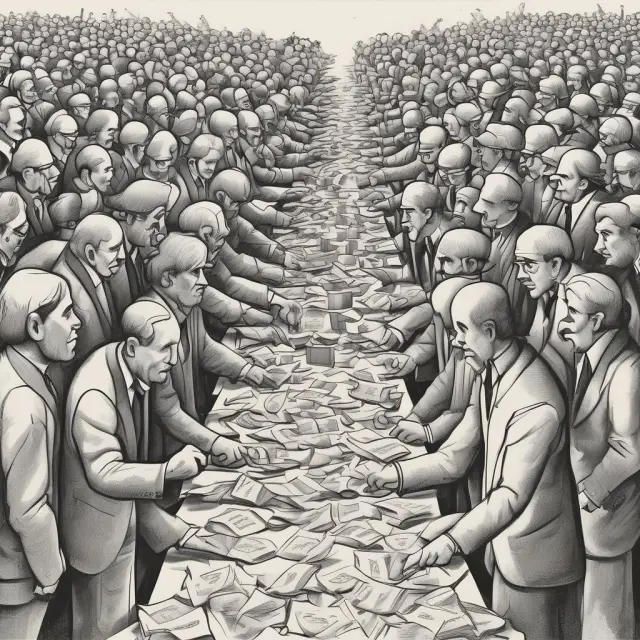
Keynesian Economic Theory: Using Government Purchases to Regulate Business Cycles
In the realm of economics, government purchases are more than just a line item in a budget report. These expenditures on goods and services, undertaken by federal, state, and local governments, play a significant role in shaping economic fluctuations. The importance of government purchases stems from their inclusion as a component in determining a nation’s Gross Domestic Product (GDP). However, the significance of this spending extends far beyond mere accounting; it is a crucial tool utilized within the Keynesian theory to stabilize and manage business cycles.
Calculating GDP involves totaling all spending on final goods and services within an economy during a specific time period. The four major categories of spending in this calculation are: Personal Consumption, Business Investment, Government Purchases, and Net Exports. In the context of understanding government purchases, it is important to note that transfer payments, which include Social Security payments and farm subsidies, are not considered part of this category. Instead, they are treated as a separate component of GDP.
Government purchases encompass any spending made by federal, state, or local agencies, excluding debt and transfer payments. Examples of government purchases include infrastructure projects, civil service salaries, and office software and equipment procurement. In the United States, for instance, an increase in federal government spending in 2020 was primarily due to an increase in purchases of intermediate services related to processing and administering Paycheck Protection Program (PPP) loan applications.
The role of government purchases within Keynesian economic theory is based on their impact on overall demand within an economy. According to this theory, increased or decreased government spending serves as a vital tool for regulating business cycles through two main channels: the direct effect and the multiplier effect. The direct effect occurs when the government purchases goods and services directly from businesses, thus increasing demand in these industries. This boosts production, employment, and wages within those sectors.
The multiplier effect comes into play as the workers and suppliers benefiting from the initial spending go on to spend their income on consumer goods and services. The ripple effect of this increased spending continues through various industries, ultimately leading to overall economic growth.
Despite their potential benefits during economic downturns or weak business cycles, not everyone agrees with the widespread use of government purchases as a tool for managing business fluctuations. Critics argue that such expenditures can lead to distortions in interest rates, prop up non-competitive firms, and result in higher taxes. Moreover, there are debates regarding whether increased spending would be most effective through direct transfers to individuals or businesses rather than government purchases.
Nonetheless, the role of government purchases as a tool within Keynesian economic theory remains a topic of significant importance in both academia and policy-making circles. The ability of government spending to influence overall demand and stabilize economies during challenging times serves as a testament to its enduring significance.
Types of Government Purchases and Their Importance in the Economy
Government purchases constitute an essential part of any economy. The expenditures made by federal, state, and local governments on goods and services significantly contribute to a nation’s Gross Domestic Product (GDP). To calculate GDP, economists add up all spending across four primary categories: personal consumption, business investment, government purchases, and net exports.
Understanding the Role of Government Purchases in Economic Calculation
Government purchases are defined as expenditures on goods and services by federal, state, and local governments excluding transfer payments (such as Social Security and farm subsidies) and interest on government debt. These purchases hold immense significance in determining a nation’s overall economic output. Government spending is categorized into various sub-categories, with the U.S. Bureau of Economic Analysis (BEA) being an essential source for this information.
Keynesian Theory: A Key Perspective on Government Purchases
According to John Maynard Keynes’ theory of economics, government purchases play a significant role in managing business cycles by influencing overall spending within the economy. In times of economic downturns, increasing government purchases can help stimulate demand and boost production. This effect is achieved through two primary channels:
- Directly increasing spending on goods and services that generate income for workers and businesses
- Creating a ripple effect through the subsequent spending by these workers and businesses
Diverse Forms of Government Purchases
Government purchases encompass a wide range of activities. Some examples include:
– Infrastructure projects, such as building and repairing roads, bridges, schools, and public buildings
– Procurement of software and equipment for government agencies
– Payrolls for civil service and public service employees
– Defense spending
– Administration and processing of various programs like Paycheck Protection Program (PPP) loans during crises
Trends in Government Purchases Over Time
Over the years, government purchases have seen changes in their share of overall nominal GDP. While total real government purchases have been on the rise, their nominal percentage has been declining. For instance, federal government spending increased from 7.3% of nominal GDP in 1960 to a peak of 23.4% in 2009, before falling back to 16.8% in 2019 (BEA).
In the same period, state and local government purchases declined from 5.4% to 3.1%, with real per capita spending decreasing by more than 50%. A major reason for this shift is the increasing use of private contractors for public services.
Despite the declining nominal share, real government purchases still play a crucial role in overall economic growth. As the economy grows, the importance of government expenditures as a percentage of total output decreases because absolute spending increases alongside other components of GDP like personal consumption and business investment.
Implications for Economic Performance
Government purchases have significant implications for an economy’s performance, including:
– Stimulating demand during economic downturns
– Creating jobs and generating income for workers
– Investing in infrastructure and long-term projects that benefit future generations
– Impacting interest rates and inflation through changes in the money supply
– Encouraging innovation by providing funding for research and development.
Criticisms of Government Purchases
Despite their importance, some criticize government purchases as they can potentially lead to higher taxes, distort markets, and subsidize noncompetitive firms. Additionally, government purchases can sometimes result in inefficient outcomes due to bureaucratic inefficiencies. Nevertheless, proponents argue that the benefits far outweigh the drawbacks when properly managed.
In conclusion, understanding the various types of government purchases and their role in the economy is essential for anyone interested in economics, finance or public policy. This knowledge not only provides insights into economic concepts but also empowers individuals to engage in informed discussions about the significance of government spending as a tool for managing business cycles and maintaining overall economic stability.

Recent Trends in Government Purchases: A Look at Federal, State, and Local Spending
Government purchases, as a proportion of overall Gross Domestic Product (GDP), have been declining in recent decades. Despite this trend, the total dollar value of government purchases has continued to grow due to inflation and population growth. In this section, we’ll delve into the specifics of federal, state, and local government spending and discuss trends in each category.
First, let us examine federal government purchases. The U.S. Bureau of Economic Analysis (BEA) reports that federal government spending on goods and services increased from $462 billion in 1990 to $745 billion in 2020. The primary drivers behind this increase include defense-related spending, social insurance benefits, and purchases of professional and business services. Defense spending, which accounts for a significant portion of federal spending, has seen fluctuations over the years, with notable spikes during times of war or heightened international tensions. For example, defense spending skyrocketed after 9/11, reaching $532 billion in 2008 before dropping to $467 billion by 2010 as military operations in Iraq and Afghanistan began to wind down.
Now let’s discuss state and local government purchases. Over the same period, state and local government spending on goods and services grew from $359 billion to $734 billion. Like federal spending, this increase is due in part to inflation and population growth. However, unlike federal spending, state and local expenditures are more influenced by economic conditions. For instance, during a recession, states may need to spend more on unemployment benefits or infrastructure projects to stimulate economic activity. In recent years, the BEA has revealed that state and local government spending has been falling. This trend is largely due to budget shortfalls caused by declining tax revenues as well as increased pressure to reduce expenses in response to shrinking resources.
To better understand the significance of these trends, it’s essential to recognize that government purchases are a crucial part of the economy. According to the Keynesian economic theory, government spending plays a vital role in managing business cycles. During a recession, an increase in government purchases can help stimulate demand and boost economic growth by putting money in the hands of workers and suppliers, who then spend it on goods and services. Conversely, during times of economic expansion, increased government spending can help prevent an overheating economy by absorbing excess capacity and keeping inflation in check.
In conclusion, recent trends suggest that total government purchases continue to grow while their share of GDP declines. The largest contributors to this growth are federal defense spending and social insurance benefits. State and local government purchases, on the other hand, have been falling due to budget shortfalls caused by economic downturns and pressure to reduce expenses. Understanding these trends is essential for anyone interested in economics, as they provide insights into how the economy operates and how policymakers can address economic challenges.
Criticisms of Government Purchases and Their Impact on Economies
Government purchases are often met with varying perspectives, including criticisms about their role in the economy and potential implications. Some economists argue that government spending distorts interest rates by competing with private borrowers for limited capital resources. Others believe it props up non-competitive firms while leading to higher taxes, inflation, or even debt crises.
Let’s examine some criticisms of government purchases:
1) Distortion of Interest Rates
When the government engages in large-scale spending projects, it competes with private borrowers for limited capital resources. This can lead to an increase in interest rates as demand for borrowing money heightens. Such rate hikes may deter businesses from investing and potentially slow down economic growth.
2) Propping Up Non-Competitive Firms
Some argue that government purchases tend to favor large, non-competitive firms over smaller companies due to their ability to fulfill larger contracts. This can stifle competition in the marketplace and prevent small businesses from growing.
3) Higher Taxes and Debt Levels
Government purchases require funding, which often comes from tax revenue or borrowing. Critics argue that large-scale government spending may lead to higher taxes or increased debt levels. The burden of these increased costs can impact consumers and businesses alike.
4) Inflationary Pressure
The increased demand generated by government purchases could potentially lead to inflation, as firms increase prices in response to the heightened demand for goods and services. This can reduce purchasing power for consumers, erode real wages, and create economic instability.
5) Debt Crises
Government purchases funded through borrowing may result in unsustainable levels of debt if not managed properly. The accumulation of excessive debt could ultimately lead to a crisis, potentially damaging the economy and undermining public trust.
It is essential to recognize that these criticisms do not necessarily negate the role of government purchases as a tool for managing business cycles, especially during economic downturns. A balanced approach, taking into account both the potential benefits and drawbacks, is crucial for ensuring long-term economic stability.

Government Purchases During Economic Downturns: A Case Study
During periods of economic downturns, governments take on an increasingly important role as a stabilizing force within their economies. In such situations, government purchases act as a significant stimulus to overall demand and can help prevent the economy from slipping into deeper recession or depression.
One seminal example of this intervention is evident in the response to the 2008 Financial Crisis. As a result of the crisis, the US economy experienced a sharp contraction in economic activity and a rise in unemployment. In an attempt to combat these issues, the U.S. government passed the American Recovery and Reinvestment Act (ARRA), also known as the stimulus package.
A significant component of this $787 billion measure was dedicated to increasing government purchases. The act called for funding to be allocated towards a range of projects including infrastructure improvements, education, health care, and energy efficiency. This injection of spending provided an immediate boost to economic activity, with many contractors and construction workers receiving contracts to begin working on various projects.
The ARRA also contained provisions aimed at providing support to state and local governments, which had seen their budgets severely impacted by the economic downturn. Direct grants were provided for a range of initiatives, such as education and transportation, with the aim of preventing widespread layoffs and reducing the severity of the fiscal crisis.
The multiplier effect associated with government purchases was further amplified due to the presence of tax incentives within the ARRA. These incentives encouraged businesses to invest in new projects, leading to additional economic activity as suppliers responded to the increased demand for their goods and services. As a result, the overall impact on GDP was substantial: According to the Congressional Budget Office, the stimulus package resulted in an estimated increase of between 1.3% and 3.9% to real Gross Domestic Product (GDP) by the end of 2010.
The success of government purchases as a tool for managing economic downturns is evidenced not only during the Great Recession but also in other historical contexts. In the aftermath of World War II, the United States employed similar strategies through initiatives like the New Deal and the Marshall Plan to help rebuild economies devastated by conflict. These programs were instrumental in restoring economic growth and creating a foundation for long-term prosperity.
Despite the well-documented benefits of government purchases during economic downturns, there remains debate surrounding their potential drawbacks. Critics argue that such spending can distort interest rates, disproportionately benefit non-competitive firms, and result in higher taxes to fund the increased expenditures. However, advocates counter that these criticisms are often overstated and that the benefits of maintaining overall demand during a downturn far outweigh any potential drawbacks.
In conclusion, government purchases represent an essential component of economic policy during periods of economic instability. By acting as a catalyst for increased spending, governments can help stabilize economies during downturns and prevent more severe consequences. The history of successful interventions in the aftermath of the 2008 Financial Crisis, as well as previous instances like the New Deal and the Marshall Plan, underscores the importance of this tool in managing economic fluctuations.

Frequently Asked Questions about Government Purchases
What constitutes government purchases?
Government purchases refer to expenditures made on goods and services by federal, state, and local governments. The total of these transactions, excluding interest on the debt and transfer payments such as Social Security, is a significant factor in determining a nation’s gross domestic product (GDP). Transfer payments are excluded because they do not involve a purchase.
Why are government purchases essential to the economy according to Keynesian theory?
Keynesian economists believe that government purchases play a critical role in regulating business cycles, acting as a tool to increase overall spending during weak economic periods. This boost occurs in two ways: directly, as the government acquires goods and services, and indirectly when money is put into circulation and spent by both employees and suppliers involved with the purchasing process.
What categories does the U.S. Bureau of Economic Analysis (BEA) use to classify government purchases?
The BEA categorizes government purchases as federal, state, and local spending. Federal spending includes defense-related expenditures and all other outlays, while state and local spending are further broken down into various subcategories. Government purchases also exclude transfer payments, such as Social Security and farm subsidies.
What is the role of government purchases in a nation’s GDP calculation?
Government purchases play a key role in calculating a country’s gross domestic product (GDP). They represent one component within four major categories: personal consumption, business investment, government purchases, and net exports. The total value of all goods and services produced in a specified period within a nation’s borders is calculated by summing up spending from these four categories.
How has the significance of government purchases changed over time?
In real terms, government purchases have risen significantly as a share of overall nominal GDP; however, their proportion in relation to the total has been declining in recent decades. This decrease is often attributed to factors such as globalization, advances in technology, and changing demographics.
What are some common criticisms of government purchases?
Some economists argue that government purchases can lead to distortions in interest rates, create an unfair advantage for non-competitive firms, and result in higher taxes. Others believe that such spending can crowd out private investment and reduce incentives for innovation and efficiency. Nevertheless, proponents argue that well-targeted government investments can yield long-term benefits in terms of economic growth and overall societal welfare.
What types of goods and services are included under government purchases?
Government purchases encompass a wide range of items, from infrastructure projects and public employee salaries to software and office equipment. The U.S. Bureau of Economic Analysis (BEA) differentiates between intermediate and final purchases, with intermediate transactions supporting the production of other goods or services and final purchases being the end-use for consumers or businesses. Infrastructure investments and civilian research and development are examples of intermediate government purchases.
 Next entry · No. 1,875Understanding Government Securities: A Comprehensive Guide for Institutional Investors
See also
-
 No. 1,414
12 Sep 2024
20 min
Understanding the Expenditure Method for Calculating Gross Domestic Product: A Comprehensive Guide
Economics
No. 1,414
12 Sep 2024
20 min
Understanding the Expenditure Method for Calculating Gross Domestic Product: A Comprehensive Guide
Economics -
 No. 1,224
15 Aug 2024
19 min
Understanding Economics: An Overview of the Science of Resource Allocation
Economics
No. 1,224
15 Aug 2024
19 min
Understanding Economics: An Overview of the Science of Resource Allocation
Economics -
 No. 944
05 Jul 2024
17 min
Understanding Deficit Spending: Keynesian Economic Stimulus and the Multiplier Effect
Economics
No. 944
05 Jul 2024
17 min
Understanding Deficit Spending: Keynesian Economic Stimulus and the Multiplier Effect
Economics -
 No. 281
07 Apr 2024
19 min
Understanding Autonomous Expenditure in the World of Finance: Essential Insights for Investors
Economics
No. 281
07 Apr 2024
19 min
Understanding Autonomous Expenditure in the World of Finance: Essential Insights for Investors
Economics -
 No. 279
07 Apr 2024
19 min
Understanding Automatic Stabilizers: Types, Mechanisms, and Real-World Examples
Economics
No. 279
07 Apr 2024
19 min
Understanding Automatic Stabilizers: Types, Mechanisms, and Real-World Examples
Economics -
 No. 5,179
17 Aug 2025
21 min
Understanding Underemployment Equilibrium: The Persistent State of Unemployment Above Full Employment
Economics
No. 5,179
17 Aug 2025
21 min
Understanding Underemployment Equilibrium: The Persistent State of Unemployment Above Full Employment
Economics