The Central Limit Theorem (CLT): Understanding Its Key Components, Usefulness in Finance, and Formula

Explore The Central Limit Theorem (CLT) in probability theory, learn how it impacts finance, and discover its significance through key components and…
What Is the Central Limit Theorem (CLT)
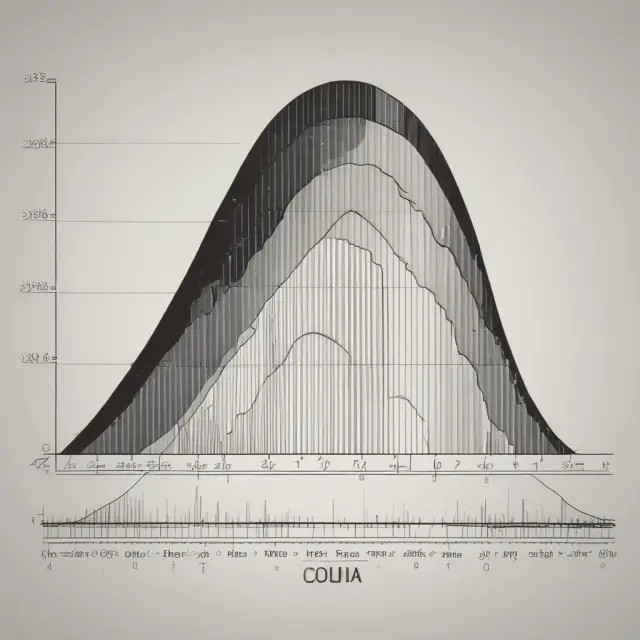
In probability theory, the central limit theorem (CLT) represents a significant principle that demonstrates how the distribution of sample means approximates a normal distribution as the sample size grows larger, regardless of the underlying population’s actual distribution. Introduced by Abraham de Moivre in 1733 and formalized by George Pólya in 1930, the central limit theorem has become a fundamental pillar in statistics, offering valuable insights into various fields such as finance and risk management.
The central limit theorem is rooted in several key characteristics:
- Sampling: The process of randomly selecting data points from a larger population.
- Randomness: Each sample must be selected independently and at random.
- Independence: Individual samples should not influence future selections.
- Limited size: Sample sizes are not excessive, typically not exceeding 10% of the total population.
- Increasing size: The central limit theorem becomes more relevant as more samples are collected.
In finance and investment, the central limit theorem plays a crucial role when analyzing large-scale data sets from various securities to estimate portfolio characteristics such as returns, risk, and correlation. For instance, an investor examining the performance of a stock index consisting of 1,000 stocks could analyze a representative sample of around 30-50 randomly selected stocks to gain a more accurate understanding of the overall index’s return distribution.
The central limit theorem offers several advantages when working with large data sets:
- Assumption of normality: By assuming that sample mean distributions are normally distributed, statistical analysis becomes more straightforward and efficient.
- Predictive capabilities: The central limit theorem helps predict the characteristics of populations by analyzing their sample means and standard deviations.
- Usefulness in risk management: In finance, the central limit theorem is utilized extensively to assess risk, such as calculating value at risk (VaR) or expected shortfall measures.
Around 30-50 samples are often considered sufficient for the central limit theorem to hold, making this sample size a common choice in practice. As the sample size increases, the confidence interval in population data sets broadens and becomes more representative of the overall population. Ultimately, understanding the central limit theorem’s fundamental principles and its applications can empower analysts to gain insights from large-scale data sets and make informed decisions in various industries, including finance.

Key Components of the Central Limit Theorem
The central limit theorem (CLT) is an essential concept in probability theory that reveals the importance of larger sample sizes when it comes to accurate representation of a population’s characteristics, particularly in finance. Sampling plays a pivotal role in understanding CLT, as it involves selecting units from a larger population while maintaining certain conditions to ensure valid results.
Sampling: A crucial aspect of the central limit theorem is the process of sampling. This includes the successive nature (some sample units may be common with previous ones), randomness, independence, and limiting the size to avoid bias. The primary goal is to make sure that all samples are representative of the population under study.
Randomness: For CLT to hold, it’s essential that all samples are chosen randomly. This means every unit in the population has an equal chance of being selected for each sample. In a statistical sense, random sampling ensures that the results aren’t influenced by external factors and can be generalized to the entire population.
Independence: The central limit theorem assumes independence between samples, meaning the selection or result of one sample doesn’t impact future samples or their outcomes. This is important to ensure accurate representation and prevent any potential bias in the analysis.
Limited Sample Sizes: The CLT becomes more powerful with larger sample sizes, which is why it is often used when dealing with large datasets in finance. However, it can also be applied to smaller sample sizes, although the results may not be as accurate. A common rule of thumb is that for the central limit theorem to hold, sample sizes should be equal to or greater than 30.
Increasing Sample Sizes: The importance of increasing sample size becomes evident when considering how CLT’s validity and accuracy improve with larger samples. This is because as the sample size grows, it comes closer to resembling the population distribution, providing more reliable insights into the underlying data. In finance, a larger sample size allows for better estimation and risk management in investment strategies, portfolio optimization, and asset allocation.
The central limit theorem’s significance in finance stems from its ability to approximate the normal distribution of sample means with increasing sample sizes, which is critical when dealing with large datasets in financial analysis. The theory not only helps investors analyze stock returns but also enables them to construct well-diversified portfolios and manage risk more effectively by providing a solid framework for understanding the distribution of returns and their volatility.

The Usefulness of Central Limit Theorem in Finance
In finance, the central limit theorem (CLT) plays a significant role in analyzing large sets of financial data by providing valuable insights into portfolio characteristics such as returns, risks, and correlations. By approximating the distribution of sample means to be normal with an increasing sample size, investors can effectively forecast population trends, make informed decisions, and manage risk more efficiently.
Investors rely on central limit theorem when working with large collections of securities to estimate portfolio distributions and characteristics. For instance, suppose an investor is interested in analyzing the overall return of a stock index consisting of 1,000 equities. Instead of examining each security individually, they can randomly sample approximately 30-50 stocks across various sectors for their analysis (replacing previously used samples). This practice eliminates bias and ensures the central limit theorem’s applicability.
The significance of a sufficiently large sample size in finance is emphasized as it increases confidence intervals and makes population data more representative, enabling investors to make sound decisions based on accurate assumptions. In this context, the central limit theorem allows for easier statistical analysis and inference by assuming that sampling distributions of means will be normally distributed in most cases.
One practical application of the CLT in finance is understanding portfolio risk through standard deviation analysis. By calculating the standard deviations of multiple samples from a large population, investors can estimate the level of volatility within their portfolios and better assess their overall exposure to potential risks. Additionally, the central limit theorem’s use in analyzing stock returns enables investors to make informed decisions regarding market entry or exit points based on historical trends and expected future performance.
Furthermore, the CLT also plays a crucial role when constructing well-diversified investment portfolios. By assuming that portfolio returns are distributed normally, investors can optimize their portfolio’s risk/return tradeoff using techniques such as mean-variance optimization to maximize their expected return while minimizing their overall portfolio volatility.
In conclusion, the central limit theorem is a fundamental concept in probability theory and statistics, with far-reaching implications for finance. By understanding its key components, investors can effectively analyze large financial datasets, manage risk, and make informed decisions regarding investments based on accurate assumptions. The application of CLT to portfolio analysis provides insights into various aspects such as returns, risks, and correlations, ultimately enabling investors to create optimally diversified portfolios that cater to their unique financial objectives.

Minimizing Sample Size for Central Limit Theorem
The central limit theorem (CLT) assumes that the population has an infinite number of data points, but in real-world applications, we often deal with smaller sample sizes due to practical and logistical considerations. However, it’s crucial to understand when a sample size is large enough for the CLT to hold accurately. A frequently discussed rule of thumb states that a sample size of 30 or more is generally sufficient for approximating a normal distribution based on the central limit theorem. This guideline comes from historical research and empirical evidence, but the actual minimum required sample size depends on the specific population and distribution.
The importance of minimizing the sample size for the central limit theorem lies in its connection to increasing confidence intervals, which is an essential aspect of statistical analysis and decision-making. A larger sample size leads to a wider confidence interval, meaning that we can be more certain about the accuracy of our results. In contrast, smaller sample sizes result in narrower confidence intervals, but this also means we have less faith in their representativeness.
To better understand why a sample size of 30 is commonly used, let’s consider the concept of representative samples. A representative sample must capture the essential characteristics and variability of the population under investigation. In most cases, larger sample sizes are more likely to be representative because they cover a broader range of potential data points and minimize the risk of selection bias. However, it is not always possible or practical to collect data from an infinite number of samples.
In these situations, we need a balance between ensuring statistical significance and maintaining feasibility. A sample size of 30 has been historically accepted as a good compromise because it provides a reasonable level of confidence in the results while remaining manageable for most investigations. This guideline also considers that larger population sizes generally require larger sample sizes for accurate representation. For instance, if you were analyzing a population with millions of data points, you would need a correspondingly large sample size to capture its diversity and variability effectively.
In conclusion, the minimization of sample size in central limit theorem applications is essential for practical reasons and enhances our ability to make informed decisions based on statistical analysis. By recognizing the significance of a sample size of 30 as a rule of thumb, we can balance accuracy, confidence, and feasibility, ultimately contributing to robust insights and better understanding of various phenomena across various industries.

Central Limit Theorem vs. Law of Large Numbers
The central limit theorem (CLT) and law of large numbers share some striking similarities but have distinct differences in statistical analysis and inference. Both theories stem from probability theory, with the former focusing on the distribution of sample means while the latter centers around the convergence of sample proportions towards population probabilities. Let’s dive deeper into understanding these concepts and their implications for finance.
Comparing Central Limit Theorem and Law of Large Numbers
The central limit theorem asserts that the distribution of sample means approximates a normal distribution as the sample size grows, regardless of the underlying population distribution. Conversely, the law of large numbers states that the average of independent and identically distributed samples converges to the expected value in probability, given an infinite number of trials or observations. In simpler terms, CLT deals with the distribution of the sum of random variables, while the Law of Large Numbers focuses on their averages.
Implications for Finance
Both theories play crucial roles in finance, particularly when analyzing large collections of securities or stocks to estimate portfolio distributions and traits for returns, risk, and correlation. By understanding these concepts, investors can make more informed decisions and manage risk effectively. For instance, CLT is used to analyze stock returns and construct portfolios based on a large sample size, while the Law of Large Numbers helps in determining the long-term behavior of certain investments or averages.
Examples in Real Life
A portfolio manager might use central limit theorem when analyzing a diverse range of stocks to estimate the distribution of returns over time. In contrast, the law of large numbers can be applied to determine whether the average performance of mutual funds is close to their expected return over long periods. Both theories complement each other in providing valuable insights for financial decision making and risk management.
Historical Background
Central limit theorem was initially developed by Abraham de Moivre, a renowned French mathematician who made significant contributions to probability theory during the 18th century. Later, it gained more recognition after being formalized by Paul Levy in 1930. The law of large numbers, on the other hand, has its roots in the works of Bernoulli family members, particularly Jakob and Daniel Bernoulli, who published their findings in the late 17th and early 18th centuries.
In conclusion, understanding both central limit theorem and law of large numbers is crucial for anyone working in finance or statistics, as they provide essential insights into probability distributions and statistical analysis. By recognizing the differences between these concepts and their applications, investors can make better-informed decisions and manage risk more effectively.

Historical Background of Central Limit Theorem
The Central Limit Theorem (CLT) has been a fundamental concept in probability theory since its inception over three centuries ago. Its roots can be traced back to Abraham de Moivre, an 18th-century French mathematician, who first discovered the theorem’s intuition in 1733 while studying the normal distribution of errors in observing binomial probabilities. However, it wasn’t until a century later that the theorem was formally stated and proved by renowned mathematicians such as Laplace, Poisson, and Liapounov. The theorem gained significant attention and importance during the 19th and early 20th centuries due to its far-reaching implications in probability theory and statistics.
The central limit theorem holds a unique position in statistical analysis because of its ability to bridge the gap between discrete and continuous distributions, providing a powerful tool for understanding various aspects of randomness and sampling distributions. The importance of CLT lies in its versatility and wide applicability to diverse fields such as physics, engineering, economics, finance, and social sciences.
The central limit theorem has proven its value in finance through its applications in stock markets, risk management, portfolio analysis, and hypothesis testing. By allowing analysts to make accurate assumptions about large data sets, it enables them to draw meaningful conclusions and insights from historical and real-time market data. For example, the theorem helps investors estimate the probability distributions of stock returns and volatility, construct portfolios based on diversification strategies, assess the risk and potential rewards of various investment instruments, and evaluate the performance of financial models.
In essence, the central limit theorem provides a framework for understanding the underlying assumptions and limitations of statistical inference and hypothesis testing, enabling investors to make informed decisions in an increasingly complex and dynamic financial landscape. As markets continue to evolve, the need for robust statistical tools and techniques becomes more crucial than ever, making the central limit theorem a cornerstone of modern finance and investment analysis.

Central Limit Theorem in Real-World Applications
The central limit theorem (CLT) has a profound impact on various industries, with its significance extending beyond mathematical concepts and theories. In particular, CLT plays a crucial role in finance, healthcare, marketing, and several other fields by helping experts make more informed decisions based on data analysis and statistical inference.
Finance: Central Limit Theorem in Finance
In finance, the central limit theorem is employed extensively to assess stock market performance, understand investment risks, and create efficient portfolios. By analyzing historical price movements or returns of individual stocks and broader indices, investors can leverage the power of CLT to derive insights into market trends and forecast future outcomes. For instance, when an investor wants to evaluate the overall performance of a stock index consisting of thousands of securities, they can analyze a representative sample of stocks to infer information about the entire population distribution for security returns over time. By ensuring that this sample adheres to the conditions specified in CLT (randomness, independence, and sufficient sample size), investors can make reliable assumptions about the underlying population distribution based on the sample results.
Healthcare: Central Limit Theorem in Healthcare
The healthcare industry also benefits significantly from the central limit theorem. For instance, researchers may conduct studies to determine the effectiveness of a new medication or therapy by analyzing data from a randomized controlled trial. The central limit theorem enables them to infer meaningful information about the entire population distribution based on a carefully selected sample of study participants. This understanding can be applied to assess the efficacy and safety of treatments, estimate the likelihood of side effects, and facilitate better clinical decision-making.
Marketing: Central Limit Theorem in Marketing
Central limit theorem plays a pivotal role in marketing research as well. Marketers often use data from surveys or experiments to analyze customer preferences, behavior, or demographics. The central limit theorem helps them make accurate assumptions about the population based on a sample of data points. For example, understanding the distribution of consumer preferences for a particular product can be vital for developing effective marketing strategies and optimizing resource allocation.
Other Industries: Central Limit Theorem in Other Industries
The applications of central limit theorem extend far beyond finance, healthcare, and marketing. In fact, many industries rely on this powerful statistical concept to make informed decisions based on data analysis. For example, economists can use CLT to analyze economic trends, while meteorologists employ it to study weather patterns. Additionally, the theorem is useful in quality control processes for manufacturing industries to improve product consistency and minimize defects.
Hypothesis Testing and Statistical Inference: Central Limit Theorem in Hypothesis Testing and Statistical Inference
The central limit theorem plays a critical role in hypothesis testing and statistical inference by enabling researchers to assess the significance of data against various hypotheses. By assuming that the population distribution is normally distributed (or approximately so), they can calculate probabilities and test hypotheses using techniques like t-tests or z-tests, which are based on the central limit theorem.
In conclusion, the central limit theorem is a powerful statistical concept that has a profound impact on various industries, from finance to healthcare, marketing, and beyond. By understanding its significance and applications, experts can make informed decisions, assess risks, and generate insights from data analysis, thereby driving better outcomes for individuals, businesses, and society as a whole.
Assumptions and Limitations of Central Limit Theorem
The Central Limit Theorem (CLT) is an essential concept in probability theory with significant implications for financial analysis. However, it’s crucial to understand its assumptions and limitations to effectively apply CLT in various scenarios.
Central Limit Theorem Assumptions
- Finite Variance: The population variance must be finite, meaning that the variability of data is limited. In a practical context, this assumption implies that the population has well-defined mean and standard deviation.
- Independence: Each observation in the sample should be independent, which means the outcome of one trial doesn’t influence the result of another trial. The independence assumption facilitates precise probability analysis and modeling.
- Large Sample Size: Central Limit Theorem becomes increasingly accurate as the sample size grows larger, enabling us to better approximate the population distribution with the normal distribution.
Central Limit Theorem Limitations
- Non-Normal Distributions: Although the CLT states that the sampling distribution of a large random sample from any population approximates a normal distribution, there are certain cases where this may not hold true. For instance, if the underlying data follows a skewed or heavy-tailed distribution, the approximation to normality might be poor, and the accuracy of CLT can be affected.
- Small Sample Sizes: Central Limit Theorem’s assumptions begin to fail for small sample sizes. As mentioned earlier, while CLT can still provide reasonable approximations for smaller samples, its applicability becomes increasingly limited. Therefore, larger sample sizes are recommended for more accurate results.
- Non-Random Sampling: In non-random sampling, the sample is not chosen at random from the population of interest. In this case, the central limit theorem might not hold because there’s an inherent bias that could impact the sample distribution and deviate from normality. Proper understanding of sampling methods and their implications on CLT applicability is crucial when dealing with non-random samples.
- Non-Stationary Processes: If a sequence of random variables is non-stationary, it means its statistical properties change over time. In such cases, the central limit theorem might not yield accurate results due to changing mean and variance values. This makes analyzing non-stationary processes more complex and calls for alternative approaches like autoregressive integrated moving average (ARIMA) or other time series models.
In conclusion, understanding the assumptions and limitations of the Central Limit Theorem is essential when applying it to various real-life scenarios, especially in finance. By being aware of these constraints, we can make informed decisions about sample sizes, data sources, and modeling approaches to ensure accurate and reliable results.

Proving the Central Limit Theorem
The central limit theorem (CLT) is a fundamental result in probability theory that describes the behavior of sample distributions as the sample size increases. While it is not possible to provide an exact formula for proving CLT, various methods can be employed to understand and prove this significant mathematical concept. In this section, we will discuss three popular methods: characteristic functions, moment generating functions, and other techniques.
1. Characteristic Functions
A characteristic function, denoted as φ(t), is a fundamental tool in probability theory used for analyzing random variables. For a discrete random variable X, the characteristic function can be defined as the expected value of e^(itX), where i² = -1 and t is a real number. For continuous random variables, the definition changes slightly to include the Fourier transform of the probability density function instead. Characteristic functions provide essential insights into the distribution properties, such as moments and symmetry.
The central limit theorem can be proved using characteristic functions by showing that the limiting distribution of the sample mean’s characteristic function is a standard normal distribution as the sample size grows infinitely large. This proof reveals that the sample mean’s distribution converges to the normal distribution as the sample size increases, given the conditions of randomness, independence, and finite variance.
2. Moment Generating Functions (MGF)
A moment generating function is another useful mathematical tool for analyzing probability distributions. It is defined as the expected value of e^(tX), where X is a random variable and t is a real number. Moment generating functions provide valuable information about the moments, or expectation values, of random variables. In particular, the first moment gives the mean, the second moment provides the variance, and higher-order moments reveal other characteristics of the distribution.
To prove the central limit theorem using moment generating functions, one can show that the limiting moment generating function of a sample mean converges to the moment generating function of a standard normal distribution as the sample size grows infinitely large. This result implies that the distribution of the sample means approaches a normal distribution under certain conditions, such as randomness, independence, and finite variance.
3. Other Techniques
While characteristic functions and moment generating functions are common methods for proving the central limit theorem, other techniques exist. These include method of moments, Stieltjes transforms, and Laplace transforms, among others. Each method has its advantages and disadvantages, and some may be more suitable for specific applications or levels of mathematical rigor.
For instance, the method of moments is a simple, intuitive approach that relies on matching the first few moments between the sample distribution and the standard normal distribution to demonstrate convergence. Stieltjes transforms can be employed when dealing with non-identically distributed samples and provide valuable insights into distribution properties using analytic continuation. Laplace transforms are another useful tool for proving the central limit theorem in discrete cases, especially when dealing with sums of independent random variables.
Regardless of which method is used to prove the central limit theorem, a rigorous understanding of this fundamental concept is crucial for developing a strong foundation in probability theory and statistical analysis. It offers valuable insights into the behavior of sample distributions as they approach normality, providing a critical framework for making informed decisions based on data.

Conclusion: Central Limit Theorem’s Lasting Impact on Probability Theory and Statistical Inference
The central limit theorem (CLT) has made significant strides as a cornerstone in probability theory and statistical analysis. The theorem’s implications are far-reaching, impacting various industries such as finance, healthcare, marketing, and more. By stating that the distribution of sample means approximates a normal distribution as the sample size grows, regardless of the population’s actual distribution shape, the central limit theorem offers valuable insights into statistical analysis.
Central Limit Theorem: A Fundamental Cornerstone
The importance of the central limit theorem lies in its ability to predict and estimate the characteristics of populations based on their mean and variance through a large enough sample size. This principle has proven particularly useful for financial analysts seeking to understand stock returns, construct portfolios, and manage risk. By analyzing a representative sample of data, investors can derive conclusions that accurately reflect the larger population they are studying, with a high degree of confidence.
Implications on Finance: Understanding Stock Returns, Portfolio Construction, and Managing Risk
In finance, the central limit theorem plays an essential role in helping analysts make informed decisions regarding stock returns, portfolio construction, and risk management. By taking a large enough sample size from a diverse range of securities, investors can estimate the distribution of returns for their portfolio, enabling them to assess potential risks and optimize their investment strategies accordingly.
Historical Background: Origins and Development
Tracing its origins back to Abraham de Moivre’s work in the 1700s, the central limit theorem has undergone significant developments over the centuries. While de Moivre first introduced the concept of normal approximations, it wasn’t until George Pólya formally named and proved the theorem in the early 1930s. Since then, the central limit theorem has been refined and extended to encompass a wide array of applications, cementing its status as a fundamental cornerstone in probability theory and statistical analysis.
Conclusion: A Foundation for Statistical Inference
The central limit theorem represents an essential foundation for statistical inference, providing a framework for understanding how sample statistics relate to population parameters. Its ability to approximate the distribution of sample means with a normal distribution, as the sample size grows larger, makes it an indispensable tool for researchers and analysts seeking to extract meaningful insights from large datasets. As such, the central limit theorem continues to shape our understanding of probability distributions, enabling us to make well-informed decisions in various industries and applications.

FAQ: Central Limit Theorem Frequently Asked Questions
What exactly is the Central Limit Theorem (CLT)?
The Central Limit Theorem (CLT) is a statistical concept that, given a sufficiently large sample size from a population with finite variance and independence among observations, the distribution of the sample means will be approximately normal. This theorem is applicable to various population distributions, including skewed or heavy-tailed ones.
What are the main components required for CLT to hold?
- Finite variance: The population must have a finite variance.
- Independence: Observations in the sample should be independent of one another.
- Large Sample Size: The larger the sample size, the more closely the sample means will approximate a normal distribution.
What is the significance of the Central Limit Theorem in finance?
CLT plays an essential role in finance as it allows analysts and investors to estimate portfolio characteristics using large data sets. By taking a representative sample from a population, they can analyze statistical properties such as returns, risk, and correlation. For instance, the central limit theorem helps to model stock market behavior and assess the performance of investment strategies.
Why is 30 considered an adequate sample size for CLT?
A sample size of around 30-50 observations is often sufficient for the CLT to hold, as the distribution of sample means becomes more normally distributed as the sample size increases. However, it’s important to note that the central limit theorem applies even if the sample size is smaller than 30, but the results will be less reliable.
What happens when Central Limit Theorem assumptions are violated?
Central Limit Theorem may not hold under certain conditions, such as non-normal distributions or infinite variance populations. In these cases, alternative probability distributions must be used instead of a normal distribution for analyzing the data.
How is the Central Limit Theorem related to Law of Large Numbers?
Both CLT and LLN (Law of Large Numbers) are related as they share common assumptions like independence and large sample size. While LLN focuses on the convergence of sample means, CLT emphasizes their distribution approximation to a normal one, providing more detailed insights.
How can the Central Limit Theorem be proved mathematically?
The central limit theorem can be proven using various mathematical techniques such as characteristic functions, moment generating functions, and stochastic processes. A rigorous proof involves showing that the distribution of sample means converges to a normal distribution as the sample size increases.
 Next entry · No. 655The Multifaceted Role of a Chief Executive Officer (CEO): A Comprehensive Guide
See also
-
 No. 784
08 Jun 2024
21 min
Understanding Correlation: Measuring the Dependence Between Two Variables in Finance and Investing
Financial Tools
No. 784
08 Jun 2024
21 min
Understanding Correlation: Measuring the Dependence Between Two Variables in Finance and Investing
Financial Tools -
 No. 893
27 Jun 2024
21 min
Understanding Debentures: Features, Types, Risks, and Advantages for Institutional Investors
Corporate Finance
No. 893
27 Jun 2024
21 min
Understanding Debentures: Features, Types, Risks, and Advantages for Institutional Investors
Corporate Finance -
 No. 878
24 Jun 2024
20 min
Day Orders: Limit Orders with One-Day Expiry in Stock Trading
Markets
No. 878
24 Jun 2024
20 min
Day Orders: Limit Orders with One-Day Expiry in Stock Trading
Markets -
 No. 698
23 May 2024
21 min
Understanding the Coefficient of Determination: R-Squared Value and its Significance for Investors
Investments
No. 698
23 May 2024
21 min
Understanding the Coefficient of Determination: R-Squared Value and its Significance for Investors
Investments -
 No. 656
15 May 2024
21 min
Understanding the Certainty Equivalent in Finance and Investment
Investments
No. 656
15 May 2024
21 min
Understanding the Certainty Equivalent in Finance and Investment
Investments -
 No. 648
14 May 2024
21 min
Understanding the Catalog of Federal Domestic Assistance (CFDA): A Comprehensive Guide for Institutional and Professional Investors
Business Strategy
No. 648
14 May 2024
21 min
Understanding the Catalog of Federal Domestic Assistance (CFDA): A Comprehensive Guide for Institutional and Professional Investors
Business Strategy