The Coase Theorem: A Legal and Economic Perspective on Property Rights

An in-depth exploration of The Coase Theorem, a legal and economic framework for understanding property rights and efficient negotiations.
Introduction to the Coase Theorem
The Coase Theorem, introduced by Nobel Prize-winning economist Ronald Coase, is a legal and economic theory that demonstrates how property rights lead to efficient solutions when conflicting interests arise between two parties. This theory is particularly relevant in understanding the importance of negotiation and bargaining in resolving disputes over property rights.
Originating from Ronald Coase’s 1960 paper “The Problem of Social Cost,” this theorem has been widely applied to various fields, including law, economics, and public policy. It challenges the traditional notion that government intervention is necessary for the resolution of conflicts between parties with conflicting property rights. Instead, it suggests that voluntary negotiation and bargaining between these parties can lead to mutually beneficial solutions under certain conditions.
The Coase Theorem’s key principles revolve around the efficient allocation of resources when conflicting interests arise and the potential for negotiation to result in an optimal solution. The theorem posits that, given a conflict between parties over property rights, they will be able to negotiate terms that reflect the full costs and underlying values of those rights. This is only possible under specific assumptions regarding efficient markets, zero transaction costs, and the absence of market power.
Understanding Property Rights in Context of the Coase Theorem
The application of the Coase Theorem comes into play when property rights are at stake. It asserts that under ideal economic conditions, parties to a dispute can negotiate an economically optimal solution, irrespective of the initial distribution of property rights. In order for this to occur, it is essential that the market be characterized by efficient competition and zero transaction costs.
The Coase Theorem’s significance lies in its potential to resolve conflicts between businesses or other economic uses of limited resources. It demonstrates how involved parties do not focus on the distribution of property rights but rather on current and future income and rent, making negotiations centered around non-economic factors like personal sentiment or social equity irrelevant.
Assumptions Behind the Coase Theorem
For the Coase Theorem to hold true, several assumptions must be met. These include:
- Efficient markets
- Market competition
- Free information
- Zero transaction costs
Bargaining and Negotiating under the Coase Theorem
The essence of the Coase Theorem lies in the assumption that bargaining is costless, allowing parties to negotiate terms that reflect the full underlying values of property rights. This negotiation process results in mutually beneficial solutions when both parties are equal in bargaining power. The theorem assumes that neither party possesses market power over the other; instead, their bargaining power is balanced enough that it does not sway the outcome of the settlement.
The Coase Theorem’s applicability extends to situations where economic activities inflict costs or damages on others. In such cases, funds may be exchanged, allowing one party to compensate the other for their actions or vice versa. This outcome leads to an optimal resolution and the most efficient use of resources.
Real-World Applications of the Coase Theorem
While the Coase Theorem’s ideal conditions rarely exist in real life, it provides valuable insights into the workings of markets and the potential for voluntary negotiations to yield optimal solutions when property rights are at stake. Its applications range from environmental issues to intellectual property disputes and have influenced legal theory and policy making significantly.
Implications of the Coase Theorem
The Coase Theorem has far-reaching implications in various fields, including law, economics, and public policy. It challenges traditional notions that government intervention is necessary for resolving conflicts and highlights the potential benefits of voluntary negotiation and bargaining between parties with conflicting interests. This theory’s insights have contributed significantly to the development of law and economics as a field and its influence on legal theory and policy making continues to grow.
Criticisms of the Coase Theorem
Despite its significance, the Coase Theorem has faced criticisms, particularly regarding its assumptions and applicability to real-world disputes. Its ideal conditions are often unrealistic, as markets are rarely characterized by perfect competition, free information, or zero transaction costs. Furthermore, market power is prevalent in various industries, which can influence outcomes. However, the Coase Theorem’s relevance goes beyond being a prescription for dispute resolution and serves as an explanation for why inefficiencies exist in economic disputes in the real world.
The Role of Market Power in the Coase Theorem
Market power significantly impacts the application of the Coase Theorem. When one party holds significant market power, negotiations may not result in the most efficient outcome, as the other party is unable to effectively bargain for their interests. In such cases, the theorem’s assumptions regarding balanced bargaining power are no longer valid, potentially leading to suboptimal outcomes.
Efficient Markets and the Coase Theorem
The interaction between efficient markets and the Coase Theorem is a complex one. While efficient markets facilitate the application of the theorem by ensuring that market prices accurately reflect underlying values, they also create challenges in terms of transaction costs and market power. Understanding these dynamics helps provide insights into how the theorem operates under real-world conditions.
Conclusion: The Significance and Future Implications of the Coase Theorem
In conclusion, the Coase Theorem is a powerful legal and economic theory that challenges traditional notions about resolving conflicts over property rights. Its emphasis on negotiations and efficient markets has had significant implications for law, economics, and policy making. Understanding its assumptions, criticisms, and real-world applications offers valuable insights into the workings of markets, dispute resolution, and efficient resource allocation.
As we move forward, further research in this area may reveal new avenues for applying the Coase Theorem to complex issues and expanding our understanding of market dynamics and the role of negotiation in resolving conflicts. This theory’s enduring relevance and its potential contributions to the fields of law, economics, and public policy continue to make it a vital area of study.
FAQ: Frequently Asked Questions about the Coase Theorem
What is the Coase Theorem?
The Coase Theorem is an economic theory developed by Ronald Coase that states where there are complete competitive markets with no transaction costs and an efficient set of inputs and outputs, an optimal decision will be selected when it comes to disputes over property rights.
Who originated the Coase Theorem?
Ronald Coase, a Nobel Prize-winning economist, introduced the Coase Theorem in 1960 in his paper “The Problem of Social Cost.”
What is the significance of the Coase Theorem?
The Coase Theorem demonstrates how voluntary negotiations between parties with conflicting property rights can lead to optimal and efficient outcomes under certain conditions. It challenges the need for government intervention to resolve disputes.
What are the assumptions required for the Coase Theorem to apply?
For the Coase Theorem to fully apply, it requires the presence of efficient markets, market competition, free information, no transaction costs, and zero market power differences between parties.
How does the Coase Theorem impact dispute resolution?
The Coase Theorem provides insights into the potential for voluntary negotiations to yield mutually beneficial solutions when dealing with disputes over property rights. It emphasizes that bargaining can lead to efficient outcomes if certain assumptions are met.
What are some criticisms of the Coase Theorem?
Criticisms of the Coase Theorem include its unrealistic assumptions, such as the absence of transaction costs and market power, which rarely exist in the real world. Some argue that it may be better suited to explaining why inefficiencies exist rather than a way to resolve disputes.
Can the Coase Theorem be applied in the real world?
The Coase Theorem can serve as an explanation for why inefficient outcomes to economic disputes occur in the real world, even if it may not always be a prescription for how disputes ought to be resolved. Its relevance goes beyond dispute resolution and provides insights into market dynamics and efficient resource allocation.

Understanding Property Rights in Context of the Coase Theorem
The Coase Theorem is an influential economic and legal theory that centers on property rights and their efficient allocation through negotiation between conflicting parties. Developed by Nobel Prize-winning economist Ronald Coase, this theory argues that when there are conflicting property rights, the most efficient outcome can be achieved through costless bargaining. This section will dive deeper into how the Coase Theorem applies to disputes over property rights and discuss its implications for negotiation and efficient outcomes.
The Coase Theorem asserts that under ideal economic conditions, parties involved in a dispute over property rights have an incentive to negotiate terms that reflect the full costs and underlying values of their respective property rights. For this outcome to occur, four assumptions need to be met: perfect competition, free information, zero transaction costs, and efficient markets. Let us discuss each assumption briefly:
- Perfect Competition: This assumes that there are numerous buyers and sellers in a market without significant market power. Both parties should have equal bargaining power for the Coase Theorem to apply.
- Free Information: All parties involved must possess perfect, symmetrical information for fair negotiations. Without this assumption, one party may have an advantage due to better knowledge about their costs or value of property rights.
- Zero Transaction Costs: The absence of any costs associated with the bargaining process is crucial. Any transaction costs could skew the negotiation and outcome.
- Efficient Markets: This assumption states that all markets for goods and production factors are perfectly competitive, meaning that prices accurately reflect their true market value.
Now that we have a grasp of the assumptions let us discuss bargaining in this context. The Coase Theorem suggests that the involved parties care only about current and future income and rent without regard to personal sentiment, social equity, or other non-economic factors. Parties will focus on the economic aspects of the dispute and negotiate an efficient outcome where both sides benefit.
It is essential to recognize that in real-world scenarios, perfect economic conditions are rarely met, making the Coase Theorem more applicable to explaining why inefficiencies exist rather than a solution to disputes. Nevertheless, its insights offer valuable perspectives on property rights and negotiations, as we will explore in subsequent sections.
Next, we will delve into how the Coase Theorem has been criticized, its role in market power, efficient markets, and real-world applications. These discussions will further enrich our understanding of this fascinating theory and its importance within economics and law.

Assumptions Behind the Coase Theorem
The Coase Theorem, a legal and economic theory proposed by Nobel laureate Ronald Coase in 1960, suggests that where there are conflicting property rights in competitive markets with no transaction costs, parties involved will negotiate an economically optimal solution. However, for this theorem to apply fully, several assumptions must be met:
1. Complete Markets
The existence of complete markets implies that all goods and services required for resolving disputes can be bought and sold freely without restrictions. This assumption allows for a wide range of available options during negotiations between the parties involved, increasing the likelihood of an efficient outcome.
2. Perfect Competition
Perfect competition is a state where there are numerous buyers and sellers in the market with no single dominant player, ensuring equal bargaining power among all parties. The absence of market power is essential for the Coase Theorem to hold as unequal power can significantly impact negotiations, potentially leading to outcomes that don’t maximize total surplus.
3. Free Information
For the Coase Theorem to provide an accurate prediction, perfect and symmetrical information must be available to both parties involved in the dispute. This assumption enables all parties to make informed decisions during negotiations, ensuring a mutually beneficial outcome.
4. Zero Transaction Costs
Transaction costs refer to any expenses associated with bargaining, such as time spent negotiating, meeting costs, and enforcement costs. The absence of transaction costs is critical for the Coase Theorem, as even minor costs can significantly impact the efficiency of negotiations, altering the potential optimal outcome.
5. Efficient Markets
In the context of the Coase Theorem, efficient markets mean that there are no price distortions or externalities affecting the market and all transactions occur at their true social cost. This assumption ensures that negotiations between parties take place under realistic conditions, allowing for a more accurate prediction of optimal outcomes.
It is essential to acknowledge that these assumptions are not always met in real-world scenarios. As such, while the Coase Theorem provides valuable insights into property rights and dispute resolution, it may not always yield practical solutions when applied to real-life conflicts. Instead, its main strength lies in explaining why inefficiencies often exist and providing a framework for understanding the underlying dynamics of conflicting property rights.

Bargaining and Negotiating under the Coase Theorem
The Coase Theorem is a remarkable theory that holds immense value for understanding the complexities of property rights, particularly in situations where conflicting interests arise. The theorem asserts that under ideal market conditions, parties to a dispute over property rights can effectively negotiate an economically optimal solution. Let us dive deeper into this concept by exploring how bargaining and negotiations occur within the framework of the Coase Theorem.
The fundamental premise behind the Coase Theorem is that when conflicting property rights exist, involved parties can negotiate terms that accurately reflect the full costs and underlying values associated with those rights. For optimal outcomes to emerge, Ronald Coase’s assumptions of efficient, competitive markets and the absence of transaction costs must be met. This implies that information must be free, perfect, and symmetrical for effective negotiations to occur.
To illustrate how bargaining functions under this theorem, let us consider an example. Suppose a factory emits noise that adversely affects neighboring households. If both parties negotiate freely and without any significant transaction costs, they can reach a mutually beneficial agreement. The factory might pay the neighbors a compensation for their loss of quiet enjoyment or the neighbors could compensate the factory to allow the noisy operations to continue. This bargaining process results in an efficient outcome where each party gains from the exchange.
The Coase Theorem has significant implications for legal theory and policy-making, as it emphasizes the importance of privately negotiated settlements rather than legislative or regulatory intervention. Ronald Coase originally formulated the theorem with radio frequencies in mind, asserting that stations with the most to gain by broadcasting on a particular frequency have an incentive to pay other broadcasters not to interfere.
The key tenet of this theorem is that bargaining should be costless for both parties. However, transaction costs can manifest as significant barriers in negotiations. These costs could include time spent on meetings, legal fees, and enforcement expenses. When such costs are present, they may alter the outcome of the settlement. The presence of market power also poses a challenge to the Coase Theorem, as bargaining power between parties can significantly influence the negotiation process and the eventual agreement reached.
It is essential to acknowledge that perfect economic conditions seldom exist in reality. While the Coase Theorem offers valuable insights into why inefficiencies may persist in real-world disputes over property rights, it does not provide a definitive solution. Instead, it serves as an explanation for the complexities and challenges inherent in resolving such disputes.
In conclusion, the Coase Theorem is a crucial concept in understanding how parties to a dispute over property rights can negotiate and bargain their way to economically optimal outcomes. By appreciating the principles behind this theorem and acknowledging its limitations, we can gain a deeper understanding of the intricacies involved in resolving conflicts related to property rights.

Real-World Applications of the Coase Theorem
The Coase Theorem, established by Ronald Coase in 1960, offers a unique perspective on property rights and their efficient allocation. The theorem posits that when conflicting property rights exist under ideal economic conditions—perfect competition, no transaction costs, complete information, and equal bargaining power between parties—the involved individuals or groups will negotiate an optimal solution. In the real world, however, such perfect conditions rarely emerge; thus, it is essential to understand how the Coase Theorem can be applied in less-than-ideal circumstances and its limitations.
Real-life examples of conflicting property rights can help illustrate the Coase Theorem’s applicability. A classic example involves two factories producing noise that impacts each other. According to the theorem, when conditions are met, the parties will negotiate an efficient solution: one factory paying the other for the right to continue its noisy operations or agreeing to cease them, depending on which outcome generates more value.
In this real-world context, the Coase Theorem can be used as a benchmark against which actual dispute resolution outcomes can be compared and evaluated for efficiency. While perfect conditions may not exist in every case, the theorem offers insights into how bargaining should ideally unfold and the factors that can influence the negotiation process’s success or failure.
Some researchers argue that the Coase Theorem is more valuable as a tool to explain why disputes over property rights often result in inefficient outcomes rather than as a blueprint for resolving them (Weimer & Zeng, 2004). However, its potential applications extend beyond dispute resolution and offer a framework for understanding complex economic issues, such as the role of institutions and contract design, public goods provision, and environmental regulation.
For instance, the Coase Theorem can be employed to explore the influence of market power on the negotiation process’s outcome. When one party has significant bargaining power due to its size or market dominance, negotiations may not result in an efficient solution if the other party cannot effectively counterbalance this power. This dynamic is evident in various industries where companies often hold more influence over their competitors and consumers, such as telecommunications and energy sectors.
Moreover, the Coase Theorem can be utilized to analyze how institutions, like courts or regulatory bodies, impact conflict resolution. In cases where the bargaining process fails or is impractical due to information asymmetry, transaction costs, or other factors, legal interventions may lead to more efficient outcomes by providing a neutral third-party adjudicator.
In conclusion, the Coase Theorem’s real-world applicability lies in its capacity to offer insights into both efficient and inefficient dispute resolution processes. By understanding the conditions under which optimal negotiations occur and acknowledging the limitations of the theorem, policymakers, economists, and legal practitioners can use it as a valuable tool for addressing complex property rights issues and creating more equitable economic systems.
References:
Coase, R. H. (1960). The Problem of Social Cost. Journal of Law & Economics, 3(1), 1-44.
Weimer, D. A., & Zeng, C. (2004). A Survey of the Coase Theorem and Its Application to Environmental Problems. Energy Policy, 32(16), 1597-1608.
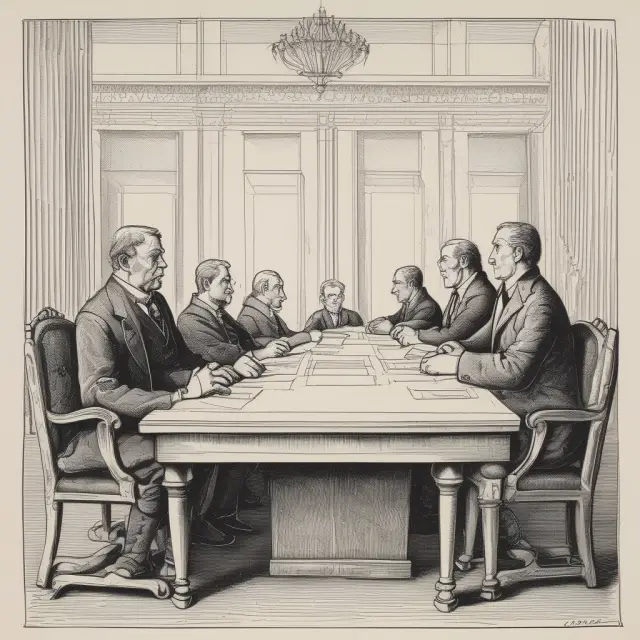
Implications of the Coase Theorem for Law and Economics
The Coase Theorem has significant implications on legal theory and policy making. It presents a unique perspective on the resolution of conflicts between parties, showing that given the right conditions, bargaining between individuals or groups over conflicting property rights can lead to an economically optimal solution. By understanding these implications, we can gain valuable insights into how law shapes economic behavior and influences policy decisions.
First and foremost, the Coase Theorem challenges the traditional role of government intervention in disputes involving property rights. It suggests that a more efficient outcome can be reached through private negotiations as opposed to legal rulings or regulatory interventions, emphasizing the importance of creating an environment where such negotiation can occur freely.
Second, the Coase Theorem highlights the significance of transaction costs and how they impact the resolution of disputes. It reveals that in situations with low transaction costs, negotiations are likely to be successful and result in efficient outcomes, whereas high transaction costs make it difficult for parties to reach a mutually agreeable settlement. This insight is crucial for policymakers, who can design laws and institutions that minimize transaction costs to encourage efficient negotiations between conflicting parties.
Third, the Coase Theorem sheds light on the importance of property rights in economic analysis. By focusing on the underlying values of property rights, it allows us to better understand how individuals and groups interact in markets and make decisions related to resource allocation and distribution. This understanding is essential for designing effective policies that promote market efficiency and minimize potential disputes.
Moreover, the Coase Theorem provides a framework for understanding the role of information in economic analysis and decision-making. It emphasizes the importance of free and accurate information in facilitating efficient negotiations between parties. Policymakers can leverage this insight to design institutions that promote transparency and provide incentives for information sharing, making bargaining processes more effective and fruitful.
Additionally, the Coase Theorem’s implications extend beyond property rights disputes and have been applied to various fields such as environmental economics, labor markets, and intellectual property law. In each of these areas, the Coase Theorem highlights the importance of considering the underlying economic incentives that drive behavior and influence outcomes, allowing us to design policies that promote efficiency and reduce inefficiencies.
In conclusion, the Coase Theorem offers valuable insights into the role of bargaining, property rights, transaction costs, and information in economic analysis and policy making. By recognizing its implications, we can develop a deeper understanding of market processes and create institutions that enable efficient negotiations between conflicting parties. In turn, this knowledge can inform more effective policies aimed at enhancing economic efficiency and reducing disputes.

Criticisms of the Coase Theorem
The Coase Theorem has been met with criticisms over its assumptions and limitations when applied to real-world disputes and conflicts. While the theorem is a powerful tool for understanding how parties can negotiate property rights and reach efficient outcomes under ideal economic conditions, it faces challenges in several areas that are important for law and economics.
First, the Coase Theorem assumes zero transaction costs. Transaction costs refer to the expenses incurred during negotiations, including meeting times, travel expenses, drafting contracts, and enforcing agreements. However, these costs can be significant in real-world disputes. In many cases, the costs of negotiating a settlement are higher than the potential benefits, making it an inefficient outcome. For example, consider two firms that must negotiate over the use of shared resources or property rights. If the transaction costs of bargaining are high due to the complexity of the issue, unequal bargaining power, or other factors, they may choose to pursue legal action instead. This can lead to a suboptimal outcome since the costs of litigation and the uncertainty surrounding the outcome can exceed the potential benefits that could have been obtained through negotiation.
Second, the Coase Theorem assumes perfect information and free, symmetrical information between parties. In real life, however, parties may face information asymmetries or be unaware of essential details, making negotiations more complicated. For example, consider a dispute over intellectual property rights where one party has superior knowledge about the value and potential applications of the IP. The other party might not be aware of this and could thus be at a disadvantage during negotiations. This can lead to inefficient outcomes, as the parties might fail to reach an agreement or accept a less optimal settlement due to their lack of information.
Third, the Coase Theorem assumes the absence of market power. However, large firms may possess substantial market power that could influence negotiations and outcomes. For example, if a dominant firm has a significant impact on another firm’s operations through its market power, it can potentially impose costs or demand concessions that are not economically efficient. This could lead to inefficient negotiations and suboptimal outcomes, as the smaller party might be forced to accept unfavorable terms due to its lack of bargaining power.
Lastly, the Coase Theorem is better suited to explaining why inefficiencies exist than providing a prescriptive approach for dispute resolution. While it offers valuable insights into how parties can negotiate and reach efficient outcomes under ideal conditions, it does not provide clear guidance on how to do so when transaction costs, information asymmetries, market power, or other complications arise. In practice, real-world disputes often involve complex issues that cannot be resolved solely through negotiation, requiring the involvement of third parties such as regulators or courts.
In conclusion, while the Coase Theorem is a powerful and influential economic theory for understanding property rights and efficient outcomes in idealized scenarios, its limitations become apparent when applied to real-world disputes. Its assumptions of zero transaction costs, perfect information, and the absence of market power are often not met in practice, making it essential to recognize its strengths and weaknesses when considering its implications for law and economics.

The Role of Market Power in the Coase Theorem
When considering the applicability and implications of the Coase Theorem, it is essential to examine its relationship with market power. The Coase Theorem asserts that under perfect economic conditions, involving parties to a dispute over property rights will be able to negotiate an economically optimal solution. However, in reality, few markets perfectly adhere to these assumptions. Market power can significantly impact the bargaining process and shape the outcome of disputes, which is crucial to understanding the limitations and implications of the Coase Theorem.
Market Power: An Overview
Market power refers to a firm or individual’s ability to influence prices and market conditions. This may come from various sources, including control over significant market share, exclusive resources, or proprietary technology. In the context of the Coase Theorem, market power can give one party an edge in negotiations and potentially skew the outcome, leading to suboptimal solutions if not accounted for.
Unequal Bargaining Power
For the Coase Theorem to provide optimal outcomes, equal bargaining power is a prerequisite. Unequal bargaining power may arise due to market power, which can lead to inefficient outcomes. In such situations, the party with more significant market power can manipulate negotiations and extract concessions from the other party. This imbalance results in a distribution of property rights that might not reflect true underlying costs and values.
Real-World Applications and Implications
Understanding how market power influences the Coase Theorem’s application is essential for assessing its implications for real-world disputes. In cases where one party has considerable market power, bargaining may not yield an optimal outcome. This reality calls for alternative dispute resolution mechanisms, such as regulatory intervention or arbitration, to ensure fairness and efficiency in resolving property rights conflicts.
Regulatory Intervention
Given the realities of unequal bargaining power and its impact on the Coase Theorem’s applicability, regulatory intervention may be necessary. Regulation can provide a framework for addressing disputes when market conditions do not meet the requirements for efficient markets or where market power exists. By establishing clear property rights rules and enforcing them uniformly, regulatory bodies aim to promote efficiency and reduce potential inefficiencies arising from unequal bargaining power.
Arbitration and Alternative Dispute Resolution (ADR)
Another alternative approach to address disputes where market power complicates the Coase Theorem’s application is through ADR mechanisms, such as arbitration or mediation. These methods provide a neutral third party to help resolve disputes, ensuring fairness and a more level playing field for parties with unequal bargaining power. By avoiding lengthy court battles, ADR processes are also more cost-effective and efficient than litigation.
Conclusion
The Coase Theorem’s role in property rights disputes is an essential concept in understanding the dynamics of negotiations between conflicting parties. However, recognizing the impact of market power on the bargaining process and the Coase Theorem’s applicability is crucial for assessing its implications. While the theorem offers valuable insights into efficient solutions to property rights conflicts under ideal economic conditions, it falls short when addressing real-world disputes with unequal bargaining power or significant market power disparities. Regulatory intervention and alternative dispute resolution methods can help address these challenges and provide a more effective means of resolving disputes.

Efficient Markets and the Coase Theorem
The Coase Theorem is a powerful legal and economic theory that offers significant insights into property rights and their efficient allocation in a market setting. Its key premise assumes that markets are efficient, with no transaction costs and perfect information available to all parties involved. However, as we delve deeper into the applications of this theorem, it’s crucial to understand the role of efficient markets in its implementation and effectiveness.
In an efficient market, prices reflect all available information, ensuring that assets are bought and sold at fair values based on their inherent worth. This idea plays a crucial role in the Coase Theorem’s argument that parties involved in disputes over property rights can negotiate and reach an economically optimal solution when transaction costs are zero. In other words, efficient markets enable the bargaining process to occur more effectively by providing accurate price signals.
Let us consider an example to further illustrate this relationship between the Coase Theorem and efficient markets: suppose there is a conflict over the use of a shared natural resource, such as fishing waters. If both parties have access to perfect information about the potential benefits they can derive from using the resource, they are more likely to reach a mutually beneficial agreement through negotiations. The availability of accurate price signals within an efficient market setting allows each party to understand the economic value at stake and better assess their bargaining positions.
However, it’s important to remember that real-world markets often do not meet the stringent assumptions required for the Coase Theorem to apply optimally. Imperfect information and transaction costs can distort price signals, making negotiations more complicated. In such cases, the application of the Coase Theorem may result in suboptimal outcomes or necessitate additional regulatory intervention to rectify market inefficiencies.
Moreover, when markets are not efficient, parties might rely on the legal system and courts to resolve property rights disputes. The role of the judicial process in this context is an essential aspect of understanding how the Coase Theorem interacts with real-world economic scenarios. In these instances, the court serves as a mechanism for distributing property rights in a manner that balances competing interests while attempting to minimize transaction costs and maximize efficiency.
In conclusion, the Coase Theorem offers a valuable perspective on property rights and their efficient allocation in a market setting, emphasizing the significance of bargaining between parties involved in disputes. The role of efficient markets is essential in enabling this bargaining process to occur effectively by providing accurate price signals, making it easier for parties to assess their bargaining positions and reach mutually beneficial agreements. However, real-world conditions often differ from those assumed in the Coase Theorem, necessitating a more nuanced approach that takes into account market imperfections, transaction costs, and regulatory intervention when required.

Conclusion: The Significance and Future Implications of the Coase Theorem
The Coase Theorem is a groundbreaking legal and economic theory that has transformed our understanding of property rights, negotiations, and market structures. Developed by economist Ronald Coase in 1960, this influential theory posits that under ideal market conditions, individuals or groups involved in disputes over conflicting property rights can negotiate an optimal and efficient solution. The significance of the Coase Theorem lies not only in its potential to offer a framework for understanding real-world economic conflicts but also in its implications for legal theory and policy making.
At the heart of the Coase Theorem is the notion that parties, under specific conditions, have incentives to reach an efficient resolution to their disputes regarding property rights. By focusing on current and future income rather than issues like personal sentiment or social equity, these individuals can bargain for optimal outcomes. The importance of this theory extends beyond its application in economic disputes as it challenges traditional views of legal intervention and regulation.
However, for the Coase Theorem to fully apply, several conditions must be met: efficient markets, complete competition, zero transaction costs, perfect information, and no market power imbalances. While these assumptions seem idealized, they offer valuable insights into the potential causes of inefficiencies when not all conditions are met. In the real world, transaction costs often hinder negotiations, and asymmetric information can lead to suboptimal outcomes. Market power discrepancies also influence bargaining power and potentially skew settlements.
Despite these challenges, the Coase Theorem remains relevant in various contexts. For instance, it has been applied to intellectual property disputes, environmental concerns, and labor issues. In each of these cases, understanding the economic incentives at play is crucial for developing effective policies and regulations. The Coase Theorem also sheds light on the limitations of traditional legal frameworks and highlights the importance of negotiations in resolving disputes.
Future research in law and economics will likely continue to build upon the foundation laid by the Coase Theorem. This includes exploring its applications in different industries, developing new methods for overcoming market imperfections, and refining our understanding of transaction costs and information asymmetries. By continuing to expand upon this influential theory, scholars can contribute to a more nuanced and effective approach to resolving property rights disputes and improving economic efficiency.

FAQ: Frequently Asked Questions about the Coase Theorem
The Coase Theorem, a legal and economic theory developed by Nobel Prize-winning economist Ronald Coase, offers an intriguing perspective on property rights, disputes, and efficient outcomes. To help clarify any common misconceptions or questions regarding this important concept, we’ve compiled some frequently asked questions about the Coase Theorem below:
Q: What is the essence of the Coase Theorem, and how does it apply to conflicting property rights?
A: The Coase Theorem asserts that when there are conflicting property rights under the ideal conditions of complete competitive markets and zero transaction costs, the involved parties can negotiate a mutually beneficial outcome that maximizes overall economic efficiency.
Q: What is the significance of market power in the context of the Coase Theorem?
A: The Coase Theorem assumes equal bargaining power between parties, making it crucial to consider potential imbalances of market power when applying this theory in real-world disputes.
Q: How does the Coase Theorem apply to situations with transaction costs?
A: While the Coase Theorem requires zero transaction costs for optimal outcomes, it can still provide valuable insights into why inefficient outcomes occur due to non-zero transaction costs.
Q: What is an example of the Coase Theorem in action?
An example of the Coase Theorem’s application lies in noise disputes between a business and neighboring households. The theorem suggests that the parties can negotiate a mutually beneficial settlement based on the full costs and underlying values of their property rights, resulting in an economically efficient outcome.
Q: Can the Coase Theorem be applied to real-world disputes over property rights?
A: Although the ideal conditions for the Coase Theorem’s application rarely exist in reality, it can still offer valuable insights into why inefficient outcomes occur and how parties might negotiate more effective settlements in real-world disputes.
Q: What is Ronald Coase’s main argument regarding the regulation of radio frequencies?
Ronald Coase developed the Coase Theorem while studying the regulation of radio frequencies, positing that efficient negotiations between stations with conflicting interests could lead to optimal outcomes without the need for government intervention.
By addressing these frequently asked questions about the Coase Theorem and providing examples, we hope to provide a clearer understanding of this important concept in economics and law.
 Next entry · No. 696Understanding COBRA: What It Is and How It Works for Professional and Institutional Investors
See also
-
 No. 612
07 May 2024
24 min
Capitalism: An Economic System Built on Private Property Rights and the Profit Motive
Economics
No. 612
07 May 2024
24 min
Capitalism: An Economic System Built on Private Property Rights and the Profit Motive
Economics -
 No. 5,039
06 Aug 2025
20 min
The Tragedy of the Commons: An Economic Problem of Over-Consumption and Depletion
Economics
No. 5,039
06 Aug 2025
20 min
The Tragedy of the Commons: An Economic Problem of Over-Consumption and Depletion
Economics -
 No. 2,379
01 Jan 2025
19 min
Understanding Industrial Organization: Analyzing Competition, Market Power and Industries
Economics
No. 2,379
01 Jan 2025
19 min
Understanding Industrial Organization: Analyzing Competition, Market Power and Industries
Economics -
 No. 2,338
29 Dec 2024
22 min
Understanding the Income Effect: Changes in Consumer Purchasing Power and its Impact on Goods Demand
Economics
No. 2,338
29 Dec 2024
22 min
Understanding the Income Effect: Changes in Consumer Purchasing Power and its Impact on Goods Demand
Economics -
 No. 2,335
28 Dec 2024
22 min
Understanding Per Capita Income: Definition, Uses, Limitations, and More
Economics
No. 2,335
28 Dec 2024
22 min
Understanding Per Capita Income: Definition, Uses, Limitations, and More
Economics -
 No. 2,278
24 Dec 2024
33 min
Understanding Hysteresis in Economics: Persistent Economic Effects and Unemployment Rates
Economics
No. 2,278
24 Dec 2024
33 min
Understanding Hysteresis in Economics: Persistent Economic Effects and Unemployment Rates
Economics