The Euro: History, Function, and Impact on European Economy

Understand the origins, benefits, and controversies surrounding the Euro as the European Union's official currency. Explore its impact on politics, trade…
Introduction to the Euro: What It Is and Its Importance
The euro is the official currency of the European Union (EU), adopted by 19 of its 27 member states, with a total population of over 340 million people. As the world’s second most widely held and traded currency after the U.S. dollar, the euro plays a vital role in European trade and economics.
The euro was first introduced as an accounting currency within the EU’s Economic and Monetary Union (EMU) in 1999. Although it initially existed only electronically, physical euro notes and coins were later introduced in 2002. This common currency has since become a significant symbol of European unity and integration.
The eurozone, consisting of the EU member states using the euro as their currency, currently counts Austria, Belgium, Cyprus, Estonia, Finland, France, Germany, Greece, Ireland, Italy, Latvia, Lithuania, Luxembourg, Malta, the Netherlands, Portugal, Slovakia, Slovenia, and Spain among its members. Four non-EU countries – Andorra, Monaco, San Marino, and Vatican City – also use the euro as their currency.
The European Central Bank (ECB) is responsible for managing the euro. Its primary mandate is maintaining price stability within the eurozone. The ECB’s role has resulted in several benefits, including reducing foreign exchange risk for businesses and financial institutions conducting cross-border transactions. Moreover, it has encouraged deeper political integration among EU member states.
However, the absence of a fiscal union to accompany monetary integration created challenges during the European sovereign debt crisis. The crisis highlighted the need for greater economic cooperation between eurozone members as countries with vastly different economies and budgets came together under one currency without the ability for cross-border fiscal transfers.
Despite these challenges, the popularity of the euro remains strong among its users due to its role in facilitating European trade, travel, and political unity. The euro’s position as a reliable store of value adds to its appeal and significance in the global economy.

Origins and Launch of the Euro in 1999
The euro, as we know it today, emerged from the European Union’s (EU) Economic and Monetary Union (EMU), established on November 1, 1993. The EMU was designed to promote closer economic cooperation between EU member states and pave the way for a single currency in Europe. The euro came into existence as a purely electronic currency on January 1, 1999. Initially, it existed alongside national currencies until paper notes and coins were introduced on January 1, 2002.
The European Central Bank (ECB) played a pivotal role in the creation of the euro. As the EU’s central banking institution responsible for maintaining price stability within the eurozone, it became the issuer and guardian of the new currency. The ECB operates as part of the European System of Central Banks (ESCB), which includes national central banks from all EU member states – whether they use the euro or not.
The introduction of a single European currency aimed to eliminate foreign exchange risk for businesses and financial institutions operating across national borders within the increasingly integrated EU economy. The prospect of adopting the euro also encouraged deeper political integration among EU member states. However, it came with significant challenges as well. The lack of a fiscal union and cross-border fiscal transfers made it difficult to address economic disparities between EU countries during the European sovereign debt crisis in 2010.
By January 1999, 11 EU countries had met the conditions required to adopt the euro: Austria, Belgium, Finland, France, Germany, Ireland, Italy, Luxembourg, the Netherlands, Portugal, and Spain. These founding members of the eurozone formed a single currency area with a population of more than 290 million people. Additionally, four non-EU countries – Andorra, Monaco, San Marino, and Vatican City – have opted to use the euro as their official currency.
The decision to adopt a common currency without a fiscal union proved to be challenging, particularly during the European sovereign debt crisis when several EU member states faced significant economic turmoil. The crisis prompted the EU to establish new measures like ECB guarantees for debt issued by member states and budget rules set at the EU level to ensure that monetary policy actions would remain consistent across all eurozone countries.
Despite these challenges, the popularity of the euro has remained strong among European citizens. The single currency not only makes trade and travel easier within Europe but also contributes to political unity by encouraging closer ties between EU member states.

Adopting the Euro: Advantages and Consequences
The European Union (EU) introduced the euro in 1999 as part of its Economic and Monetary Union (EMU) with the aim of streamlining foreign exchange transactions, promoting political integration, and facilitating trade within the union. The euro is the common currency of 19 EU countries, collectively known as the eurozone, and it is the world’s second most popular reserve currency after the U.S. dollar.
Advantages of Adopting the Euro:
One primary advantage of adopting a single currency within the EU was eliminating foreign exchange risk for European businesses and financial institutions with cross-border operations. By reducing the need to convert currencies, transactions became more straightforward and efficient. Furthermore, having a common currency fostered stronger political unity among member states, further enhancing economic integration within the union.
Disadvantages of Adopting the Euro:
Despite these benefits, the euro also presented some challenges for its adopters. One major disadvantage was the lack of fiscal transfers between countries, which became apparent during the European sovereign debt crisis in 2010. Since each country retains control over its own budget, the eurozone did not provide a mechanism to assist countries experiencing economic turmoil through financial aid or bailout packages. To address this issue, the EU introduced measures like ECB guarantees for member states’ debts and tighter fiscal rules.
Flexibility and Adjusting to Economic Conditions:
The eurozone also imposed constraints on national governments and central banks in terms of responding to economic conditions within their borders. With no ability to devalue their currencies, countries must rely solely on monetary policy and budget rules set by the EU to address economic slowdowns or crises. This dependence can limit a country’s response to economic challenges and force it to seek external aid or assistance when needed.
Popularity and Success:
Despite the challenges, the euro has remained an overwhelmingly popular currency among its users. The ease of conducting transactions within the EU, combined with the political integration fostered by the common currency, have made the euro a success story for many member states. However, ongoing debates persist regarding the need for further economic and political integration to ensure the long-term stability and sustainability of the eurozone.
Eurozone Members: Who Uses the Euro as Their Currency?
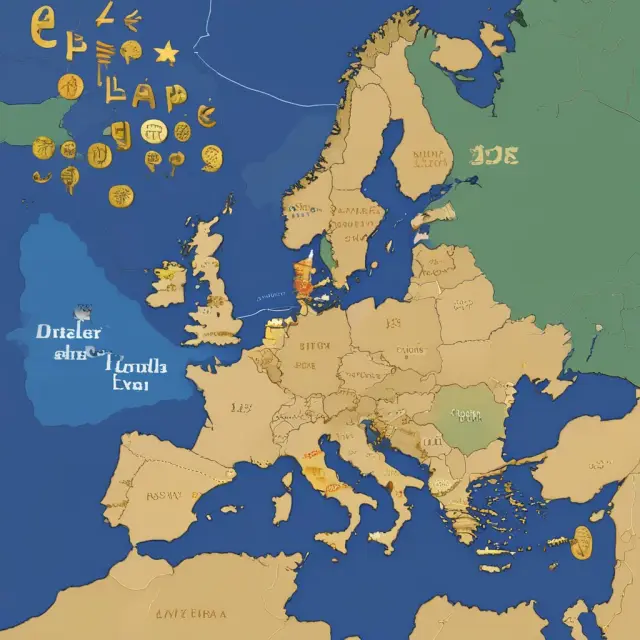
The euro is officially used as legal tender in 19 European Union (EU) member states, forming what is known as the eurozone. The euro is the common currency for these countries and is also adopted by several non-EU nations. In this section, we’ll discuss the EU member states that have embraced the euro as their currency and shed light on why they chose to do so.
19 EU Countries Using the Euro (Eurozone):
The following European Union countries have officially adopted the euro: Austria, Belgium, Cyprus, Estonia, Finland, France, Germany, Greece, Ireland, Italy, Latvia, Lithuania, Luxembourg, Malta, the Netherlands, Portugal, Slovakia, Slovenia, and Spain.
EU Member States Adopting the Euro: Reasons Behind the Choice
The EU member states that have adopted the euro have done so for several reasons. Some of these are:
– Eliminating foreign exchange risk for businesses and financial institutions with cross-border operations within the increasingly integrated EU economy.
– Encouraging deeper political integration among the member states.
– Facilitating easier trade and travel across Europe.
– Gaining access to a larger market, as the euro is the second most widely held and traded currency after the U.S. dollar.
Non-EU Countries Using the Euro: An Explanation
Several countries outside the EU have also adopted the euro as their official currency, including Andorra, Vatican City, Monaco, and San Marino. These nations chose to adopt the euro for various reasons, such as the ease of trade with European countries and the stability it offers compared to their own currencies.
In conclusion, the euro is used by a total of 23 territories, including 19 EU member states and four non-EU nations. The popularity and widespread adoption of the euro are significant factors in its role as a stable and reliable currency for conducting business, promoting economic integration, and fostering political unity within Europe.
European Central Bank: The Institution in Charge
The European Central Bank (ECB) plays a significant role as the guardian of price stability within the Eurozone, the region comprising 19 EU member states using the euro as their official currency. Founded on June 1, 1998, and officially launched on January 1, 1999, the ECB’s primary responsibility is to preserve the value of the euro, ensuring that it remains a stable currency for Eurozone member states.
Initially serving as an electronic currency in 1999, physical euro banknotes and coins were introduced on January 1, 2002, paving the way for a more tangible presence within daily life. The ECB is headquartered in Frankfurt am Main, Germany, and operates independently from other political institutions or national governments to focus solely on its core objective: maintaining price stability.
The European Central Bank is an integral part of the European System of Central Banks (ESCB), a network that includes all EU central banks—those within the Eurozone as well as those outside it. As the primary institution responsible for monetary policy in the Eurozone, the ECB’s influence extends beyond its borders, impacting various aspects of the global economy.
One major consequence of adopting a single currency is the elimination of exchange risk among European businesses and financial institutions. This factor has fostered a more integrated economic environment within the EU. However, it also necessitated deeper political cooperation to manage fiscal matters and navigate economic challenges.
The European Central Bank’s role in ensuring price stability extends beyond its influence on monetary policy. In response to the European sovereign debt crisis—a significant challenge for many Eurozone member states between 2010 and 2015—the ECB introduced various measures, such as providing guarantees for debt issued by these countries and implementing a bond-buying program called Outright Monetary Transactions (OMT). These actions helped stabilize the euro and preserve market confidence in its future.
Despite the challenges that come with maintaining a common currency among economically diverse states, the popularity of the euro continues to grow both within and outside the EU. As the second most widely held and traded currency globally, it serves as an essential component of international trade, underpinning a more interconnected global economy.
However, the ECB’s focus on maintaining price stability comes with limitations. National governments and central banks are subject to the monetary policy set by the ECB and budget rules established by the EU. For instance, a country experiencing an economic slowdown can no longer devalue its currency against major trading partners within the Eurozone to boost exports. Instead, the European Central Bank’s decisions must guide these economies through periods of economic uncertainty.
In conclusion, the European Central Bank is a cornerstone institution that plays an essential role in maintaining price stability and fostering a more integrated EU economy by serving as the guardian of the euro—the second most widely held and traded currency globally. Its influence extends beyond its borders, shaping international trade and global economic dynamics.

The Euro Crisis and Its Economic Impact
One of the most significant challenges faced by the euro since its inception was the European sovereign debt crisis, which began in 2010. The crisis was characterized by a series of government debt crises, primarily in the peripheral EU countries (Greece, Ireland, Portugal, and Spain), that threatened to undermine the stability of the euro as a common currency.
At the heart of the issue was the lack of fiscal transfers between EU member states, which made it difficult for economically challenged nations to address their financial difficulties without assistance from wealthier countries or institutions like the European Central Bank (ECB). Adopting a common currency but not sharing the economic risks and rewards among member states proved to be a major challenge.
The eurozone countries with budget surpluses, led by Germany, argued that fiscal discipline and strict budget rules were necessary for euro membership. This stance intensified when the global financial crisis hit in 2008, leading to widespread concerns about the ability of smaller nations to meet their debt obligations.
As a response to this situation, several measures were taken to address the crisis:
- The European Financial Stability Facility (EFSF) was established as a temporary mechanism to provide financial aid to EU member states facing severe financing difficulties.
- The European Stability Mechanism (ESM) was created in 2012 as a permanent institution to offer financial assistance and help stabilize the eurozone.
- Member states were required to implement austerity measures, such as spending cuts and tax increases, to regain control of their finances.
- The ECB introduced an Outright Monetary Transactions (OMT) program to buy government bonds in the secondary market and provide liquidity to struggling countries, thereby reducing yields on those bonds.
- The EU created a banking union with common supervision of banks and a single resolution mechanism to manage failing financial institutions.
These measures helped restore confidence in the euro as a currency and stabilized the situation, but they also deepened the economic and political integration of the EU. National governments and central banks are now more reliant on each other for fiscal and monetary policy, making collective decision-making a crucial part of the European project.
While these actions addressed the immediate crisis, some long-term implications remain:
- The EU has been forced to deepen its economic and political integration by increasing cooperation in areas like banking and fiscal policies.
- The eurozone’s lack of fiscal transfers between member states continues to pose a challenge for countries that face economic difficulties.
- The ECB’s role as the primary lender of last resort has made it an increasingly influential player in EU economic policy.
- National governments and central banks are more interconnected than ever, which can complicate decision-making processes and lead to potential conflicts of interest.
- The crisis highlighted the importance of sound fiscal policies for countries adopting a common currency and the need for mechanisms like the ESM to help address sovereign debt issues in the future.
Overall, the euro crisis underscored both the strengths and weaknesses of the euro as a common currency within the European Union. While the crisis presented significant challenges, it also provided opportunities for deeper EU integration and greater cooperation between member states.

The Euro as a Reserve Currency: Popularity and Significance
As one of the world’s major international currencies, the euro plays an essential role in global trade and finance. The second most widely held and traded currency after the U.S. dollar, the euro is used by 19 EU member countries as their official currency and by several non-EU entities like Andorra and Vatican City.
The Euro’s Popularity: A Foundation for European Integration
Adopting a common currency has been a significant factor in promoting political unity within the EU. For businesses and individuals, the euro eases trade and travel within Europe by eliminating foreign exchange risk and simplifying transactions between countries.
However, the adoption of the euro without a fiscal union to support it proved problematic when the European sovereign debt crisis hit in 2010. The lack of cross-border fiscal transfers led to market turmoil that required the EU to deepen its economic and political integration through measures like ECB guarantees for member states’ debt.
The Euro as a Reserve Currency: Economic Impact
Central banks and financial institutions hold euros as reserves to maintain liquidity in their balance sheets. The demand for the euro is driven by factors such as confidence in the currency, the stability of the economies using it, and the EU’s role in international trade.
The Euro: An Essential Currency in Global Trade
International trade transactions between European countries and other continents are frequently conducted using the euro. A significant share of global trade is invoiced in euros to simplify transactions, particularly for commodities like oil and natural gas. In 2019, euro accounted for around 46% of international commercial services transactions, making it a critical component of the world’s economic landscape.
The Euro as a Reliable Store of Value
Unlike national currencies, which can be devalued in response to economic conditions within a country, the euro cannot be devalued due to its status as a shared currency among European Union members. This stability makes the euro a reliable store of value for central banks and investors seeking a stable currency for long-term investments.
In summary, the popularity and significance of the euro in the global economy derive from its role in promoting political integration within Europe, facilitating international trade transactions, and offering a dependable store of value for central banks and investors alike.

The Euro’s Influence on Political Integration
Adopting a common currency is an essential step towards deeper political integration, as seen in the European Union (EU) with the euro as their official currency. Introduced in 1999 as part of the EU’s Economic and Monetary Union (EMU), the euro has significantly influenced the EU’s political unity by promoting economic cooperation and closer ties between member states.
When the euro was launched, it was an electronic currency until the physical euro notes and coins appeared in 2002. Currently, the euro is used as the sole legal tender in 19 EU countries known as the eurozone—including Austria, Belgium, Cyprus, Estonia, Finland, France, Germany, Greece, Ireland, Italy, Latvia, Lithuania, Luxembourg, Malta, the Netherlands, Portugal, Slovakia, Slovenia, and Spain. Additionally, four small non-EU nations (Andorra, Vatican City, San Marino, and Monaco) use the euro as their currency.
The introduction of a common currency within the EU led to considerable benefits such as:
- Eliminating foreign exchange risk for European businesses and financial institutions with cross-border operations.
- Fostering increased economic cooperation among member states, promoting greater political unity.
- Encouraging deeper integration by making it necessary for countries to meet certain fiscal and monetary requirements.
However, adopting the euro without a fiscal union has also presented challenges. For example, during the European sovereign debt crisis in 2010, national governments and central banks were unable to respond to economic conditions within their country using traditional methods such as devaluing their currency or cutting interest rates to stimulate exports. Instead, they had to rely on the European Central Bank’s monetary policy and budget rules set by the EU.
The eurozone brought together economies with disparate characteristics and national budgets without a mechanism for cross-border fiscal transfers. In response, the EU introduced measures like ECB guarantees for member states’ debt issuance to alleviate market turmoil caused by the crisis. Nevertheless, national governments and central banks remain constrained in their ability to respond to economic conditions in their country due to their dependence on the ECB’s monetary policy and budget rules.
Despite these challenges, the euro continues to be overwhelmingly popular among residents of the countries using it. The common currency has made trade between European nations more efficient while reducing transaction costs and simplifying travel within Europe. This increased economic integration and closer ties have laid the groundwork for further political unification in the EU.
In conclusion, the euro’s influence on political integration cannot be overstated, with its role as a common currency facilitating deeper cooperation and unity among European nations despite the challenges presented by adopting a monetary union without a fiscal one.

Benefits and Drawbacks for Business and Economy
Adopting the euro as a single currency in Europe has had both significant advantages and challenges for businesses and economies within the European Union (EU). The benefits include reducing exchange risk, simplifying cross-border trade, and promoting political integration. However, the lack of fiscal flexibility for countries using the euro can lead to economic disparities and crises.
First, the elimination of foreign exchange risk for businesses and financial institutions has made trading within the European Single Market more efficient. Companies with cross-border operations in different EU countries no longer have to worry about fluctuations in exchange rates between their respective currencies. This reduction in exchange rate uncertainty makes long-term planning easier and more accurate, allowing firms to focus on growing their businesses instead of managing currency risk.
Second, the euro has made European trade simpler and more seamless by removing the need for conversion between multiple currencies. The single currency zone allows EU citizens to travel, shop, and conduct business transactions across borders without encountering exchange rate fees or dealing with unfamiliar currencies. This increased ease of cross-border activities can lead to more robust economic interactions between nations, potentially increasing trade and overall economic growth within the European Union.
Third, the adoption of a common currency has contributed to deeper political integration among EU member states. The use of a single currency symbolizes a shared economic identity and fosters a sense of unity across borders. The establishment of the Eurogroup—a forum for eurozone finance ministers—and the European Monetary Union have further strengthened this cooperation between EU nations.
However, there are also potential drawbacks to the euro’s impact on business and economies within Europe. One significant issue is the lack of fiscal flexibility for countries using the euro. With no ability to adjust their currencies through devaluation or revaluation, member states must rely solely on their own fiscal policies to manage economic conditions in their country. This can create challenges when faced with an economic downturn, as a country cannot implement monetary tools like interest rate cuts to stimulate growth and exports. Instead, countries must work together through the European Union and its institutions, such as the European Central Bank (ECB), to coordinate responses to address economic issues within the eurozone.
The European sovereign debt crisis serves as a clear example of this challenge. The lack of fiscal transfers between nations in the EU made it difficult for countries experiencing financial difficulties to receive the necessary aid to stabilize their economies. This led to the creation of the European Stability Mechanism and the European Fiscal Compact, which set stricter budgetary rules and provided a framework for financial assistance to member states facing economic instability. While these measures have helped address the crisis in the short term, they also limit the ability of individual countries to manage their own fiscal policies in the future.
In conclusion, the euro offers significant advantages for business and economies within Europe, such as reducing exchange risk and simplifying cross-border trade. However, the lack of fiscal flexibility for countries using the euro can create challenges, particularly during economic downturns or crises. This tension between the benefits and drawbacks highlights the importance of continued collaboration and coordination between EU member states to ensure a stable economic environment in which businesses can thrive and grow.
The Euro: A Success Story or a Work in Progress?
Since its launch in 1999, the euro has established itself as a vital global currency, both in terms of trade and as a reserve currency. The single currency was introduced to eliminate foreign exchange risk for European businesses, reduce transaction costs, and foster political integration within the EU. Yet, the adoption of the euro has not been without challenges, most notably the European sovereign debt crisis that tested its resilience.
Adoption of a common currency, such as the euro, is a significant step towards economic unification. By eliminating exchange rate risk and providing a stable monetary environment, businesses can focus on expanding trade and investment opportunities across member states. The eurozone has been instrumental in fostering political unity and deepening economic ties between EU countries since its inception.
However, the benefits of having a single currency have come with their fair share of challenges. One major drawback is the absence of fiscal transfers between member states within the eurozone. This was highlighted during the European sovereign debt crisis when the lack of flexibility to adjust national budgets and respond to economic conditions through devaluation led to market turmoil and uncertainty. In response, the EU has introduced measures such as ECB guarantees for member state bonds and stricter fiscal rules to address these challenges.
As the euro continues to evolve, it faces ongoing questions about its long-term success and implications. The common currency has proven resilient through several economic downturns, but the European economy’s uneven recovery and the rise of other global currencies like the Chinese yuan present challenges. Additionally, as political tensions and nationalistic sentiments persist within the EU, the future of the euro and its role in promoting regional integration remains uncertain.
Despite these concerns, the euro’s popularity continues to grow, with more countries considering adopting it or pegging their currencies to it. The European Central Bank (ECB) has a mandate to maintain price stability within the eurozone, and its influence extends beyond the EU as a significant player in the global economy.
The euro’s success story is far from complete. As the world economy evolves, the euro will need to adapt and innovate to remain relevant and competitive. The future of the euro holds both opportunities and challenges, making it an intriguing subject for investors, economists, and anyone interested in international finance and global economic trends.
In conclusion, the euro represents a significant advancement in the EU’s efforts towards political and economic integration. Its successes include fostering trade, reducing transaction costs, and maintaining price stability within the eurozone. However, it faces ongoing challenges like the need for greater fiscal coordination, adapting to changing global economic trends, and addressing political tensions within the EU. The future of the euro remains uncertain, but one thing is clear: its influence on the European economy and the global financial landscape will continue to be profound.
FAQs about the Euro: Commonly Asked Questions
What is the euro?
Answer: The euro is the official currency of the European Union (EU) used by 19 EU member states and several non-EU countries. It is the world’s second most widely held and traded currency after the US dollar.
When was the euro introduced?
Answer: The euro was launched as an electronic currency in 1999 and paper notes and coins were issued in 2002.
Which countries use the euro?
Answer: Austria, Belgium, Cyprus, Estonia, Finland, France, Germany, Greece, Ireland, Italy, Latvia, Lithuania, Luxembourg, Malta, the Netherlands, Portugal, Slovakia, Slovenia, Spain, and four non-EU countries (Andorra, Vatican City, San Marino, and Monaco).
What is the European Central Bank (ECB)?
Answer: The European Central Bank is an EU institution responsible for maintaining price stability within the eurozone by preserving the value of the euro.
Why was the euro created?
Answer: The euro was created as part of the European Economic and Monetary Union (EMU) to reduce foreign exchange risk, encourage deeper political integration, and promote a more stable economic environment for businesses in Europe.

FAQs: Commonly Asked Questions about the Euro
1. What is the euro? The euro, represented by the symbol €, is the official currency of the European Union (EU), used by 19 EU member states and some non-EU countries as their legal tender. It is also the second most widely held and traded currency globally after the U.S. dollar.
2. Why was the euro introduced? The euro was created in 1999 to facilitate easier European trade, travel, and promote political unity among EU member states through a common currency.
3. Where is the euro used? It serves as legal tender in countries like Austria, Belgium, Cyprus, Estonia, Finland, France, Germany, Greece, Ireland, Italy, Latvia, Lithuania, Luxembourg, Malta, the Netherlands, Portugal, Slovakia, Slovenia, and Spain. Additionally, non-EU countries such as Andorra, Vatican City, San Marino, and Monaco use it.
4. How did the euro come into existence? The European Economic and Monetary Union (EMU) introduced the euro in 1999 as a digital currency; however, physical notes and coins were released in 2002.
5. What is the role of the European Central Bank (ECB)? The ECB is responsible for maintaining price stability within the eurozone by setting interest rates and managing monetary policy for the EU’s member states using the euro as their currency.
6. What was the impact of adopting the euro on European countries? Adopting the euro led to benefits such as reduced foreign exchange risk for businesses and financial institutions, but also posed challenges like limited fiscal flexibility for individual nations during economic downturns.
7. How did the European sovereign debt crisis affect the eurozone? The crisis, starting in 2010, forced countries to implement austerity measures and seek assistance from the EU and ECB to prevent defaults and maintain market confidence.
8. What is the significance of the euro as a reserve currency? Its popularity among central banks around the world has increased due to its status as a reliable store of value in an increasingly interconnected global economy.
9. How does the euro’s introduction contribute to political integration within the EU? The common currency has brought member states closer together, encouraging cooperation and deepening their economic ties.
10. What are some advantages and disadvantages of using the euro for businesses and economies? Benefits include reduced foreign exchange risk, improved trade, and easier cross-border transactions. However, constraints on fiscal flexibility can limit individual countries’ ability to respond to economic conditions.
 Next entry · No. 1,351Understanding Eurobonds: A Flexible and Popular Debt Instrument for Global Capital Raising
See also
-
 No. 1,360
04 Sep 2024
20 min
Understanding the Role, Functions and Mandate of the European Central Bank (ECB)
Finance Policy
No. 1,360
04 Sep 2024
20 min
Understanding the Role, Functions and Mandate of the European Central Bank (ECB)
Finance Policy -
 No. 1,277
22 Aug 2024
20 min
Understanding the European Monetary System (EMS): Origins, History, and Criticisms
Finance Policy
No. 1,277
22 Aug 2024
20 min
Understanding the European Monetary System (EMS): Origins, History, and Criticisms
Finance Policy -
 No. 3,033
23 Feb 2025
22 min
The Maastricht Treaty: Creating the European Union and Its Single Currency
Business Finance
No. 3,033
23 Feb 2025
22 min
The Maastricht Treaty: Creating the European Union and Its Single Currency
Business Finance -
 No. 1,210
12 Aug 2024
19 min
Understanding Economic Integration: Benefits, Costs, and Real-World Examples
International Trade
No. 1,210
12 Aug 2024
19 min
Understanding Economic Integration: Benefits, Costs, and Real-World Examples
International Trade -
 No. 4,443
19 Jun 2025
19 min
Understanding Currency Revaluation: Effects, Causes, and Implications
Finance Policy
No. 4,443
19 Jun 2025
19 min
Understanding Currency Revaluation: Effects, Causes, and Implications
Finance Policy -
 No. 4,403
16 Jun 2025
22 min
The Reserve Currency: A Global Economy Pillar and Its Impact on the U.S. Dollar
Finance Policy
No. 4,403
16 Jun 2025
22 min
The Reserve Currency: A Global Economy Pillar and Its Impact on the U.S. Dollar
Finance Policy