The Farmers Home Administration: Its Role, Problems, and Termination

Exploring the origins, challenges, and termination of the Farmers Home Administration (FmHA), including its impact on USDA Rural Development.
Background of the Farmers Home Administration (FmHA)
The Farmers Home Administration (FmHA), an essential part of U.S. agricultural history, was established by Congress in 1946 to provide crucial financial assistance for rural families and farmers in the aftermath of the Great Depression. With a mandate to facilitate housing, utility, business, and community development programs, FmHA aimed to help re-establish self-sufficient farming efforts and promote economic growth.
This federal agency evolved over time, with Congress authorizing it in 1961 to finance general water projects and housing for non-farmers living in rural municipalities. Since the FmHA’s inception, it played a vital role in addressing the financial needs of farmers and rural communities across America.
The Farmers Home Administration (FmHA) reached its peak in 2021 with an impressive $234.4 billion portfolio for its loan programs. However, as time passed, various challenges emerged that led to its eventual termination.
Historical Problems With FmHA and the Road to Its Termination
By the late 1980s and early 1990s, concerns over the Farmers Home Administration’s (FmHA) financial management practices arose as high levels of delinquent loans and defaults became increasingly common. Congress ordered the U.S. Government Accountability Office (GAO) to conduct an investigation in 1992, which uncovered major weaknesses within FmHA’s lending practices.
The GAO report revealed that approximately $14 billion—or 70%—of FmHA’s loan portfolio was at risk of default due to borrowers with delinquent debts or those whose loans had been rescheduled in response to payment difficulties. The potential losses were estimated to reach an alarming $1.2 billion. Moreover, the report highlighted the failure of many field lending officials to comply with FmHA’s loan-making and loan-servicing standards, which jeopardized federal financial interests.
As a result, the U.S. Congress directed the termination of the Farmers Home Administration (FmHA) under the Agriculture Reorganization Act of 1994. Its functions were subsequently transferred to the Farm Service Agency at the USDA. In later years, these responsibilities eventually made their way to the current USDA Rural Development agency, as it is known today.
The impact of FmHA’s termination on USDA Rural Development and its continued role in financing rural communities will be explored in an upcoming section. Here, we delve deeper into the historical problems faced by the Farmers Home Administration (FmHA) that ultimately led to its demise.

Expansion of FmHA Programs
As part of its mission to help rural families recover from the devastating effects of the Great Depression, the FmHA expanded beyond its initial mandate to provide loans solely for agricultural purposes. In 1961, Congress passed the Rural Housing Act, which allowed the FmHA to finance general water projects and housing for non-farmers in rural communities. This expansion of services enabled the FmHA to contribute significantly to improving living conditions in rural areas, as well as supporting economic growth and development.
The water projects provided by the FmHA focused on essential infrastructure improvements, such as constructing dams, reservoirs, irrigation systems, and other water conservation and distribution facilities. These initiatives helped ensure a consistent water supply for agriculture, industry, and domestic use in rural communities. By investing in these vital infrastructure developments, the FmHA played a crucial role in addressing the challenges faced by rural residents, including access to clean water and reliable water sources.
Moreover, the Housing Act of 1965 further expanded the FmHA’s scope by adding housing programs for low- and moderate-income families living in rural areas. This initiative provided affordable mortgage loans through the Single Family Housing Direct Home Loans program, ensuring that residents could afford decent, safe, and sanitary homes. By focusing on improving housing conditions for rural families, the FmHA contributed to overall economic stability and growth within these communities.
The success of these expanded programs can be seen in their continuation through various name changes over the years. Today, the functions once performed by the FmHA are carried out under USDA Rural Development’s umbrella of programs. With a budget of $34 billion and an active portfolio of over $234 billion, USDA Rural Development continues to make a substantial impact on rural areas by providing affordable housing opportunities, financing essential community infrastructure projects, and supporting business development in rural communities.
In conclusion, the expansion of FmHA programs beyond agricultural loans proved vital in improving living conditions, promoting economic growth, and addressing challenges faced by rural communities following the Great Depression. Today, these efforts continue through USDA Rural Development, which builds upon the foundation laid down by the Farmers Home Administration over seven decades ago.
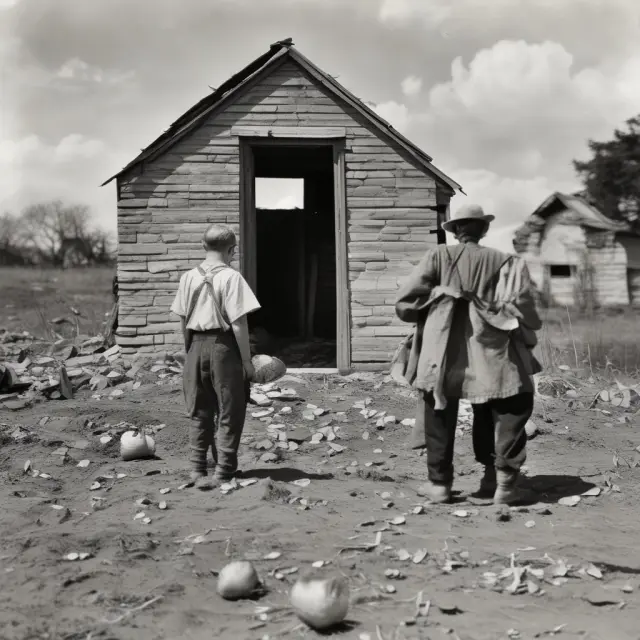
FmHA Loans: Helping Farming Families Succeed After the Great Depression
Following the Great Depression, rural families and farmers faced numerous challenges in re-establishing their livelihoods. To help address these issues, Congress authorized the creation of the Farmers Home Administration (FmHA) in 1946. The primary mission of this USDA agency was to provide financing tools such as loans and grants aimed at helping families rebuild their farming operations and restore self-sufficiency in rural areas.
Originally, FmHA loan programs focused on providing credit assistance for farmers, but by 1961, the agency’s mandate expanded to finance general water projects and housing for non-farmers in rural municipalities. This expansion was critical as it helped create a more comprehensive approach to improving the livelihoods of people living in rural communities.
The impact of FmHA loans can be seen through various statistics: In 2021, USDA Rural Development (the successor agency to FmHA) had a portfolio of $234.4 billion for its loan programs. These figures illustrate the significant role that FmHA and its successor played in shaping rural communities during times of economic hardship.
However, despite these achievements, FmHA faced numerous challenges by the late 1980s and early 1990s. A U.S. Government Accountability Office (GAO) report revealed that weak lending practices had resulted in a high number of defaults on FmHA loans and substantial losses for the agency. Nearly 70% of its direct loan portfolio was at risk, with borrowers delinquent or having rescheduled their debts due to repayment difficulties. The GAO also discovered that many field lending officials did not follow established loan-making and loan-servicing standards, compromising federal financial interests.
By September 1991, the FmHA had acquired over 3,000 farms from delinquent borrowers. These findings led to growing concerns among members of Congress, who directed the GAO to investigate FmHA’s management weaknesses. The report concluded that inferior information systems and weak financial controls were significant contributors to these problems.
As a result of the GAO investigation, the FmHA was terminated in 1994 under the Agriculture Reorganization Act and its functions were transferred to the Farm Service Agency at USDA. Eventually, they were moved to USDA Rural Development, which continues to provide credit assistance for rural communities today.
In conclusion, the Farmers Home Administration (FmHA) was a crucial agency that provided loans and grants to help rural families and farmers rebuild their livelihoods following the Great Depression. While it faced various challenges in later years, its impact on rural communities remains evident through the continuation of similar programs and initiatives under USDA Rural Development.
Challenges with FmHA Loans in the Late 1980s and Early 1990s
Despite the success stories associated with the Farmers Home Administration’s (FmHA) role in providing credit and technical assistance to rural families and farmers during the aftermath of the Great Depression, the organization began facing significant challenges by the late 1980s and early 1990s. This period marked a turning point for the FmHA as concerns about its lending practices grew, ultimately leading to substantial losses and eventual termination.
In the late 1990s, the FmHA was incurring significant losses due to high levels of delinquent loans and defaults. As of 1992, it was estimated that nearly $14 billion, or about 70% of the FmHA’s direct loan portfolio, was at risk of default because the loans were held by delinquent borrowers or individuals whose debts had been rescheduled due to repayment difficulties. In this year alone, the FmHA projected potential losses totaling $1.2 billion, representing approximately 28% of its guaranteed loan program.
An investigation carried out by the U.S. Government Accountability Office (GAO) in 1992 uncovered numerous problems with the FmHA’s lending practices. One of the most concerning findings was that many field lending officials failed to adhere to established loan-making and loan-servicing standards, which were put in place to safeguard federal financial interests. The GAO also reported that by September 30, 1991, the FmHA had acquired around 3,100 farms from borrowers who had not repaid their loans.
These issues led some members of Congress to question the effectiveness and sustainability of the FmHA’s operations. The GAO concluded that management weaknesses within the organization contributed significantly to the long-standing loan management problems. Some of the main issues identified by the GAO included inferior information systems, weak financial controls, and inadequate supervision of field offices.
As a result of these findings, the Agriculture Reorganization Act of 1994 abolished the FmHA on October 1, 1995. Its functions were transferred to the Farm Service Agency at the USDA, which was later transferred to USDA Rural Development as it is known today.
The termination of the FmHA marked the end of an era for rural development programs. However, it paved the way for the evolution and modernization of these initiatives under USDA Rural Development, allowing them to continue addressing the unique challenges faced by rural families and farmers.

GAO Investigation and Findings: Weak Lending Practices
By the late 1980s and early 1990s, concerns regarding the Farmers Home Administration’s (FmHA) lending practices began to mount significantly. In response, Congress directed the Government Accountability Office (GAO) to conduct a comprehensive investigation into FmHA loan management issues in 1992. The findings of this study were nothing short of alarming.
The GAO report revealed that nearly 70% or $14 billion of the FmHA direct loan portfolio was at risk due to delinquent borrowers and those whose debts had been rescheduled amid repayment difficulties. This amounted to an estimated potential loss of $1.2 billion, representing about 28% of its guaranteed loan program.
Moreover, the investigation uncovered that many field lending officials at the FmHA failed to adhere to established loan-making and loan-servicing standards, posing a significant risk to federal financial interests. These issues were further compounded by inferior information systems and weak financial controls within the FmHA.
In total, the GAO discovered that by September 1991, FmHA had acquired approximately 3,100 farms from borrowers who had not repaid their loans. This represented a clear indication of the extent of loan management problems that existed within the organization.
The GAO concluded that these issues were rooted in FmHA’s management weaknesses, which left it unable to effectively manage its loan portfolio and mitigate risks associated with non-performing loans. Consequently, the farm community, taxpayers, and the agricultural sector as a whole suffered from the consequences of weak lending practices and poor financial management within the FmHA.
These discoveries ultimately led Congress to pass the Agriculture Reorganization Act of 1994, which abolished the Farmers Home Administration (FmHA) and transferred its functions to the USDA’s Farm Service Agency in October 1995. In later years, these functions were eventually moved to USDA Rural Development as it is known today.
In conclusion, the GAO investigation served as a turning point for the FmHA, shedding light on major weaknesses within its lending practices and management processes. The findings ultimately led to the agency’s termination and the transfer of its functions to other parts of the USDA.
Termination of FmHA: Reasons, Transition to USDA Rural Development
The Farmers Home Administration (FmHA), a key part of the U.S. Department of Agriculture (USDA) established in 1946, played a vital role in providing loans and financial assistance to farmers and rural communities during the aftermath of the Great Depression. Over time, however, significant challenges surfaced within the FmHA, eventually leading to its termination in 1994.
By the late 1980s and early 1990s, serious issues began to emerge with the Farmers Home Administration’s loan programs. Members of Congress grew increasingly concerned as they witnessed large numbers of defaults on FmHA loans, which in turn led to substantial losses for the federal government. The situation was further complicated by weak lending practices and poor management within the organization.
In 1992, Congress asked the U.S. Government Accountability Office (GAO) to investigate these issues. The resulting report highlighted several major problems. Nearly 70% of FmHA’s direct loan portfolio was at risk due to delinquent borrowers or rescheduled debts, with potential losses estimated at approximately $1.2 billion. Moreover, the GAO found that many field lending officials had failed to adhere to established loan-making and loan-servicing standards. The report concluded that management weaknesses within the FmHA significantly contributed to these longstanding loan management problems, including deficient information systems and weak financial controls (GAO, 1992).
The GAO’s findings put additional pressure on the FmHA, ultimately contributing to its demise. In October 1994, the Farmers Home Administration was abolished under the Agriculture Reorganization Act of 1994. Its functions were transferred to the Farm Service Agency at the USDA.
However, as part of subsequent reorganizations, these functions eventually landed with USDA Rural Development. Today, this agency continues to provide various loan and grant programs for rural development, housing, business, and community initiatives. The legacy of the FmHA lives on through its successor.
In conclusion, the Farmers Home Administration (FmHA) played a crucial role in financing and insuring loans for rural families and farmers following the Great Depression. However, as the 1980s and 1990s progressed, a series of challenges emerged within the organization leading to its termination. Today, many of its functions have been integrated into USDA Rural Development, ensuring that rural communities continue to receive essential financial support.

Impact on USDA Rural Development: Continuity or Change?
The termination of the Farmers Home Administration (FmHA) in 1994 led to significant changes within the USDA’s rural development initiatives, as its functions were integrated into other parts of the department. While the basic mission of providing affordable housing, community facilities, and business opportunities for rural populations remained consistent, several alterations occurred following FmHA’s discontinuation.
Before the termination, FmHA operated under various loan programs for housing, utilities, community development, and businesses. Post-termination, these functions were transferred to USDA Rural Development. To understand the extent of continuity or change brought by this transformation, it is crucial to examine how specific FmHA initiatives evolved within USDA Rural Development.
Firstly, the housing programs that were previously administered under the Farmers Home Administration became part of the Single Family Housing Direct and Guaranteed loan programs at USDA Rural Development. These programs provide affordable financing options for individuals to purchase, repair, renovate, or refinance homes in eligible rural areas.
Secondly, utility loan and grant programs that were previously under the purview of FmHA were incorporated into USDA Rural Development’s Electric Program, Water and Waste Disposal Program, and Community Facilities Direct Loan & Grant program. These programs continue to provide funding for the development and improvement of essential utilities and community facilities in rural communities.
Moreover, business programs such as the Business & Industry Guaranteed loan program (also known as the Business Program) were transferred from FmHA to USDA Rural Development. This program continues to support businesses in rural areas by providing loans for expansion or purchase of equipment and real estate.
Community development initiatives previously managed by the Farmers Home Administration, such as the Community Facilities Direct Loan & Grant program and the Public Works program, have remained largely unchanged within USDA Rural Development. These programs provide funding to develop essential community facilities, including schools, hospitals, community centers, and public buildings.
Furthermore, USDA Rural Development expanded its scope by incorporating new initiatives and programs into its repertoire following the FmHA’s termination. For instance, in 1996, the Community Economic Development Assistance Program was established to provide comprehensive assistance to rural communities in developing long-term strategies for growth through technical and financial assistance.
Despite some differences in organization structure, the primary goal of providing essential services to rural populations has remained a constant mission for both FmHA and USDA Rural Development. With the transfer of functions from the Farmers Home Administration to USDA Rural Development, the continuity of rural development initiatives has been maintained while undergoing necessary changes to accommodate evolving needs in rural communities.
The FmHA’s termination in 1994 marked a significant moment in the history of rural development within the USDA, as it paved the way for new initiatives and programs to address the changing needs of rural populations. With the integration of former FmHA functions into USDA Rural Development, these essential services have continued to provide vital support to individuals and communities in rural areas.
FAQs:
What is USDA Rural Development?
USDA Rural Development is a government agency responsible for providing loans, grants, technical assistance, and other programs to help improve the economic stability and self-sufficiency of rural communities. It offers housing, utility, business, and community development programs.
What was the purpose of the Farmers Home Administration?
The Farmers Home Administration (FmHA) was a government agency that provided loans for rural families and farmers to help them re-establish self-sufficient farming efforts following the Great Depression. Its functions were transferred to USDA Rural Development in 1994.
Why did Congress direct the GAO to investigate the FmHA?
Congress directed the U.S. Government Accountability Office (GAO) to conduct a study due to concerns about the large number of defaults on FmHA loans and substantial losses the agency was accruing as a result of weak lending practices.
What became of the FmHA after its termination?
The Agriculture Reorganization Act of 1994 abolished the Farmers Home Administration (FmHA), and its functions were transferred to the Farm Service Agency at the USDA, which later transitioned to USDA Rural Development.

FmHA vs. USDA Rural Development: Key Differences
The Farmers Home Administration (FmHA) and USDA Rural Development are two closely related entities within the United States Department of Agriculture (USDA). Both organizations have significant roles in financing and providing assistance for rural communities and farmers, but they differ in their historical contexts and specific areas of focus.
Background: The Farmers Home Administration (FmHA) was founded as a part of the USDA in 1946 to provide loans and grants to farmers and rural families following the Great Depression. It expanded its scope to finance water projects, housing for non-farmers, and other initiatives by 1961. In contrast, the Rural Development mission became part of the USDA as an independent agency in 2001, combining functions from several previous programs.
Role: The FmHA’s primary function was to help families establish self-sufficient farming efforts and rebuild rural communities after the Great Depression. Today, USDA Rural Development offers a broader range of programs aimed at improving the economic conditions of rural areas by providing loans, grants, technical assistance, and partnerships with local organizations.
Loans: FmHA provided credit to farmers and rural families through its loan programs, including those for housing, utilities, business, and community development. USDA Rural Development maintains a diverse portfolio of loan programs in various sectors, such as energy, telecommunications, water and wastewater infrastructure, business and industry, multi-family housing, and community facilities.
Functions: The FmHA’s functions have been transferred to the Farm Service Agency (FSA) at the USDA and later to USDA Rural Development. Today, USDA Rural Development administers programs designed to increase economic opportunities and create jobs in rural areas by investing in essential infrastructure, business development, housing, community facilities, and environmental sustainability projects.
Comparative Portfolios: In 2021, the portfolio for USDA Rural Development’s loan programs amounted to $234.4 billion. This investment highlights the agency’s role in providing significant financial support to rural communities and farmers. While historical data on FmHA’s portfolio is unavailable, it is clear that USDA Rural Development has a larger financial impact compared to its predecessor.
In conclusion, while the Farmers Home Administration (FmHA) and USDA Rural Development share similar objectives in financing and providing support for rural families and farmers, they differ significantly in their historical contexts and areas of focus. The FmHA was established in response to the Great Depression, while USDA Rural Development is a broader agency that has evolved to address the diverse needs of rural communities in the modern era. Understanding these differences highlights the ongoing commitment of the USDA to help improve economic conditions for rural America and support farmers in their efforts to succeed.

The Future of USDA Rural Development: A Look into Current Programs and Initiatives
Since the abolition of the Farmers Home Administration (FmHA) in 1994, its functions have been carried on by the U.S. Department of Agriculture’s (USDA) Rural Development division. USDA Rural Development continues to provide financing tools for rural families and farmers through various loan programs and initiatives.
Currently, there are multiple loan program areas in which USDA Rural Development specializes. The Single Family Housing Direct Home Loans program offers affordable mortgages for low-income applicants without adequate housing. This initiative provides the opportunity to buy, construct, repair, or improve homes and to purchase land on which to build a home.
Another crucial area is business and industry loans through the Business & Industry (B&I) loan program. This program provides financing for small businesses in rural areas to develop or expand their operations. The B&I loan program has a maximum loan limit of $5 million per project, which can be used for various purposes such as working capital, land acquisition, machinery and equipment purchases, and construction projects.
Additionally, USDA Rural Development’s Community Facilities Direct Loan & Grant program provides funding to develop essential community facilities such as schools, fire departments, hospitals, and libraries in rural areas. This program can help meet the unique needs of small, economically-challenged communities by providing loans with lower interest rates, longer repayment terms, or grants.
One more noteworthy initiative is the Rural Energy for America Program (REAP). Through REAP, USDA Rural Development offers financial assistance to agricultural producers and rural small business owners for renewable energy systems and energy efficiency improvements. This program aligns with the department’s commitment to addressing climate change by providing incentives for sustainable, eco-friendly projects.
These are just a few examples of the various loan programs offered by USDA Rural Development. The FmHA’s legacy lives on through these initiatives, which continue to provide essential services and financing for rural families, farmers, and businesses.
In conclusion, since its termination in 1994, the USDA Rural Development division has taken up the mantle of the former Farmers Home Administration (FmHA), offering a wide range of programs and initiatives to help rural communities thrive. From affordable housing options for low-income families to business financing, community infrastructure development, and renewable energy support, these initiatives have demonstrated the ongoing commitment to meeting the unique needs of rural America.

FAQ: Frequently Asked Questions About the Farmers Home Administration (FmHA)
What Was the Purpose of the Farmers Home Administration (FmHA)?
The Farmers Home Administration (FmHA), initially established in 1946, was created as a division within the U.S. Department of Agriculture (USDA). Its primary role was to provide rural families and farmers with financial assistance through various loan programs that aimed at helping them establish self-sufficient farming operations. Over time, FmHA expanded its initiatives, offering financing for water projects and housing for non-farmers in rural areas.
When Was the Farmers Home Administration (FmHA) Established?
The FmHA was established in 1946 following the Great Depression to address the financial needs of rural families and farmers.
What Is Now Known as USDA Rural Development, Originated from the Farmers Home Administration (FmHA)?
Yes, that’s correct. The Farmers Home Administration (FmHA), which provided housing, utility, business, and community development programs to rural communities, has been renamed several times since its establishment in 1946. Today, it is known as USDA Rural Development, continuing the legacy of providing financial assistance for rural families and businesses.
Why Was the Farmers Home Administration (FmHA) Terminated?
By the late 1980s and early 1990s, the Farmers Home Administration (FmHA) faced significant challenges due to high levels of loan delinquencies and defaults. This resulted in substantial losses for the U.S. Government. In response, Congress ordered a U.S. Government Accountability Office investigation which uncovered major weaknesses within FmHA lending practices. Ultimately, under the Agriculture Reorganization Act of 1994, the Farmers Home Administration was abolished and its functions were transferred to various parts of the USDA, eventually landing with USDA Rural Development.
What Were Some Key Problems with the Farmers Home Administration (FmHA) Before Its Termination?
The U.S. Government Accountability Office report in 1992 revealed several issues that contributed to the FmHA’s downfall. The report highlighted that nearly three-quarters of its loan portfolio was at risk due to delinquent borrowers or those struggling to repay their loans. Furthermore, many field lending officials failed to comply with loan-making and loan-servicing standards, leading to major management weaknesses within the organization.
What Are Some Modern-Day Programs Offered by USDA Rural Development (Formerly FmHA)?
USDA Rural Development currently offers a wide range of programs aimed at promoting economic development in rural communities. These initiatives focus on housing, community facilities, business development, and infrastructure projects to help create jobs, support local businesses, and improve the quality of life for rural residents. Some popular programs include the Community Facilities Direct Loan & Grant Program, Single Family Housing Repair Loans & Grants, and Business & Industry Guaranteed Loans.
 Next entry · No. 1,459Fast Fashion: Understanding the Impact of Affordable Trendy Clothing on Consumers and Industry
See also
-
 No. 3,510
03 Apr 2025
19 min
Understanding Non-Recourse Finance: Repayment from Project Profits Only
Business Finance
No. 3,510
03 Apr 2025
19 min
Understanding Non-Recourse Finance: Repayment from Project Profits Only
Business Finance -
 No. 3,321
19 Mar 2025
22 min
A Comprehensive Guide to the National Association of Insurance and Financial Advisors (NAIFA) – An Overview, Benefits, and More
Business Finance
No. 3,321
19 Mar 2025
22 min
A Comprehensive Guide to the National Association of Insurance and Financial Advisors (NAIFA) – An Overview, Benefits, and More
Business Finance -
 No. 3,291
16 Mar 2025
19 min
Understanding Metropolitan Statistical Areas (MSA): Definition, Size, Differences & Largest Metro Area
Business Finance
No. 3,291
16 Mar 2025
19 min
Understanding Metropolitan Statistical Areas (MSA): Definition, Size, Differences & Largest Metro Area
Business Finance -
 No. 1,792
07 Nov 2024
19 min
Gharar in Islamic Finance: Understanding Uncertainty and Deception
Business Finance
No. 1,792
07 Nov 2024
19 min
Gharar in Islamic Finance: Understanding Uncertainty and Deception
Business Finance -
 No. 5,363
02 Sep 2025
19 min
Understanding Use and Occupancy Agreements in Real Estate: Advantages, Disadvantages and Regulations
Real Estate
No. 5,363
02 Sep 2025
19 min
Understanding Use and Occupancy Agreements in Real Estate: Advantages, Disadvantages and Regulations
Real Estate -
 No. 5,361
02 Sep 2025
19 min
The Role and Impact of the U.S. Department of Agriculture (USDA) on American Farming, Rural Development, and Food Safety
Government
No. 5,361
02 Sep 2025
19 min
The Role and Impact of the U.S. Department of Agriculture (USDA) on American Farming, Rural Development, and Food Safety
Government