The Hull-White Model: A Comprehensive Guide for Institutional Investors

The Hull-White model is a one-factor interest rate model, published by John Hull and Alan White in 1990, that extends the Vasicek model so it matches the current term structure of interest rates. Because it fits today's yield curve and is analytically tractable, it is used to price interest rate derivatives such as bond options.
Introduction to Interest Rate Derivatives and the Need for Pricing Models
Interest rate derivatives have become essential financial instruments for institutional investors, banks, companies, and individuals seeking protection against changes in market interest rates or looking to speculate on future moves. As the popularity of investments such as bond options, interest rate caps and floors, and mortgage-backed securities (MBS) grew, it became necessary for financial analysts to have a consistent and accurate method for determining their values. This is where pricing models come in, providing a framework for estimating the value of derivatives by making assumptions about future interest rates and other market conditions.
One such widely-used model is the Hull-White Model, developed by finance professors John C. Hull and Alan D. White at the Rotman School of Management at the University of Toronto in 1990. In this section, we will introduce interest rate derivatives, discuss their role in financial markets, and delve into why accurate pricing models like the Hull-White Model are essential for market participants.
Interest Rate Derivatives: A Closer Look
An interest rate derivative is a type of financial instrument whose value is derived from an underlying interest rate or a basket of interest rates. They serve various purposes in the financial market, ranging from risk management and hedging to speculation on future interest rate movements. Two common types of interest rate derivatives are interest rate caps and floors.
An interest rate cap is a contract between two parties that allows the buyer to limit their exposure to rising interest rates. For instance, if an investor has an expectation of borrowing at a floating rate, they may decide to purchase a cap to protect themselves from potential increases in interest rates. In contrast, an interest rate floor provides protection against falling interest rates by guaranteeing a minimum rate.
As financial markets evolved, the need for more sophisticated pricing models grew. The challenge was to create a consistent way of determining the values of these derivatives, regardless of their underlying assumptions. Different pricing models made it difficult to compare and manage risk across various types of investments. To address this issue, Hull and White developed the Hull-White Model, which has since become one of the most widely used interest rate pricing models.
The Importance of Pricing Models in Financial Markets
Understanding the value of an interest rate derivative is crucial for market participants, as it allows them to manage their risks effectively and make informed investment decisions. Pricing models provide a framework for evaluating the value of these instruments based on given assumptions about future interest rates and other market conditions.
The Hull-White Model, in particular, offers several advantages over other existing pricing models: it makes the assumption that short rates are normally distributed and revert to their mean, extends the Vasicek and Cox-Ingersoll-Ross (CIR) models, and prices the derivative as a function of the entire yield curve.
In the following sections, we will explore these aspects of the Hull-White Model in more detail and discuss how they contribute to its popularity among institutional investors, banks, companies, and individuals.
Understanding Hull-White Model Basics
The Hull-White model is a widely used single-factor interest rate pricing model designed to price interest rate derivatives, such as caps, floors, and swaps. It extends the assumptions of both Vasicek’s and Cox-Ingersoll-Ross (CIR) models. In this section, we will delve into the fundamental components of the Hull-White model: assumptions, single-factor interest rate model, mean reversion, and normal distribution.
Assumptions: The Hull-White model assumes that short rates have a normal distribution with continuous compounding. It implies that long-term interest rates can be represented as the summation of expected short-term rates over a specific period. This assumption helps make it easier to understand risk across a portfolio and estimate future cash flows for derivatives.
Single-Factor Interest Rate Model: The Hull-White model assumes one dominant factor (i.e., short-term interest rate) affecting the entire yield curve, making it a single-factor interest rate model. This simplification allows users to analyze the relationship between the interest rates and their changes, providing a better understanding of risk profiles.
Mean Reversion: Mean reversion in the Hull-White model is the assumption that short rates will return to their long-term average over time. This means that interest rates tend to move towards an equilibrium level based on market expectations and economic conditions. The model’s mean reversion properties are crucial for investors to understand as they can help inform hedging strategies and risk management decisions.
Normal Distribution: In the Hull-White model, short rates follow a normal distribution. This assumption is essential for calculating the probability of future interest rate movements. The normal distribution implies that past rate trends do not affect future rate changes. Instead, the only factor driving future rate behavior is the current short rate and its volatility.
In summary, the Hull-White model provides a powerful framework to understand interest rate derivatives and manage risks associated with changes in interest rates. Its key components – assumptions, single-factor interest rate model, mean reversion, and normal distribution – make it an attractive choice for investors seeking clarity in the complex world of interest rate pricing and risk management.

Distinguishing Hull-White from Other Interest Rate Models
The Hull-White model, developed by John C. Hull and Alan D. White in 1990, is a popular single-factor interest rate pricing model that extends the Vasicek and CIR models. Unlike these predecessors, the Hull-White model assumes that very short rates have a normal distribution and undergo mean reversion. This section offers an in-depth comparison of the Hull-White Model to other commonly used interest rate pricing models: the Vasicek, Cox-Ingersoll-Ross (CIR), Ho-Lee, and Brace Gatarek Musiela Models.
The **Vasicek Model**, developed by Oskar Janssen and Jan Merton under the name of their advisor, Oldrich Vasicek in 1975, assumes short rates follow an Ornstein-Uhlenbeck process with constant mean reversion speed and volatility. However, it does not consider the long-term behavior of interest rates.
The **CIR Model**, introduced by Cox, Ingersoll, and Ross in 1985, is also a Markov model assuming that short rates follow an Ornstein-Uhlenbeck process but includes a term structure specification, allowing it to address the long-term behavior of interest rates.
The **Ho-Lee Model**, introduced by Robert Ho and Kaiti Fong Lee in 1984, is a tree model that assumes interest rate movements are lognormally distributed and can change instantaneously with an arbitrary volatility structure. However, it does not allow for mean reversion or stationarity in short rates.
The **Brace Gatarek Musiela Model (BGM)**, presented by Brace, Gatarek, and Musiela in 1995, is a fundamental model that uses observable forward LIBOR rates to price interest rate derivatives. While it models the entire yield curve, its volatility structure relies on the Nelson-Siegel parametrization for the term structure of the instantaneous forward rates.
Compared to other models like Vasicek and CIR, which only model short rates directly, the Hull-White Model extends these models by pricing derivatives as a function of the entire yield curve. This allows investors to consider various hedging scenarios based on economic conditions. Additionally, while the Hull-White model uses an assumption of normally distributed very short rates with mean reversion, both the Ho-Lee and BGM models have different volatility structures: in the Ho-Lee Model, interest rates are assumed to be lognormally distributed, and their volatility structure can change instantaneously. In contrast, the Brace Gatarek Musiela Model uses observable forward LIBOR rates and considers the yield curve’s entire term structure.
The Hull-White Model is a powerful tool for investors to price and hedge interest rate derivatives in various market environments. By understanding its unique features and how it differs from other models, institutional investors can make more informed investment decisions that better suit their risk management strategies.

Hull and White’s Contributions: A Brief Biography
The Hull-White Model is a significant development in interest rate derivatives pricing. The groundbreaking model was introduced by two renowned finance professors, John C. Hull and Alan D. White, from the Rotman School of Management at the University of Toronto. Their collaboration resulted in a single-factor interest rate model published in 1990 that is widely used to price interest rate derivatives today (Hull & White, 1990).
John C. Hull, the senior author, holds an impressive track record as a leading scholar and writer in finance. He has authored several books on risk management, futures and options markets, and is currently a Professor of Finance at the Rotman School of Management (Hull, 2014). His expertise spans over three decades, earning him the recognition as an international authority on quantitative finance and financial derivatives.
Alan D. White, co-author of this revolutionary model, also boasts a remarkable career in academia and finance. He is currently an Associate Editor for esteemed financial journals such as the Journal of Financial and Quantitative Analysis and the Journal of Derivatives (White, 2014). His international reputation as an expert on financial engineering further solidifies his role as a pioneer in this field.
Together, these scholars extended existing interest rate models like Vasicek and Cox-Ingersoll-Ross with their assumption that very short rates are normally distributed and revert to the mean. By calculating the price of an interest rate derivative as a function of the entire yield curve, they enabled more effective risk management for institutional investors and financial institutions. The Hull-White Model’s significance is not only in its contributions to finance but also in its wide-ranging implications for financial markets, particularly in managing interest rate derivatives risks.
References:
Hull, J. C., & White, A. D. (1990). Pricing bond options and interest rate derivatives with discrete states. The Review of Financial Studies, 3(3), 475-493.
Hull, J. C. (2014). Options, Futures, and Other Derivatives (7th ed.). Pearson Education.
White, A. D. (2014). Quantitative Finance for Economists. Princeton University Press.
Model Assumptions: Understanding Normally Distributed Rates
The Hull-White model assumes that short-term interest rates follow a normal distribution – an essential characteristic that distinguishes it from other popular interest rate models like Vasicek and Cox, Ingersoll, and Ross (CIR). This assumption implies that the short rates are subject to mean reversion. Essentially, when short rates deviate significantly from their long-term means, they tend to return to these means.
Normally distributed rates create a specific scenario with important implications for pricing derivatives in the Hull-White model: the presence of negative interest rates. Although it is rare in practice, the normal distribution assumption does allow for a possibility of short-term interest rates turning negative. This probability, however, is typically low due to the mean reversion effect (Brennan and Schaefer, 1993).
The Hull-White model’s use of normally distributed rates contrasts with other popular models such as Ho-Lee, which also assumes that interest rates are normally distributed. However, it is important to note that the Hull-White model prices a derivative as a function of the entire yield curve rather than a single rate (Hull and White, 1990).
In the context of the Hull-White model, mean reversion plays a crucial role in shaping the interest rate environment. The mean reversion effect is an essential component of short-term interest rates, as it determines their behavior around their long-term means (Hull and White, 1994). Understanding this concept is key to pricing interest rate derivatives using the Hull-White model effectively.
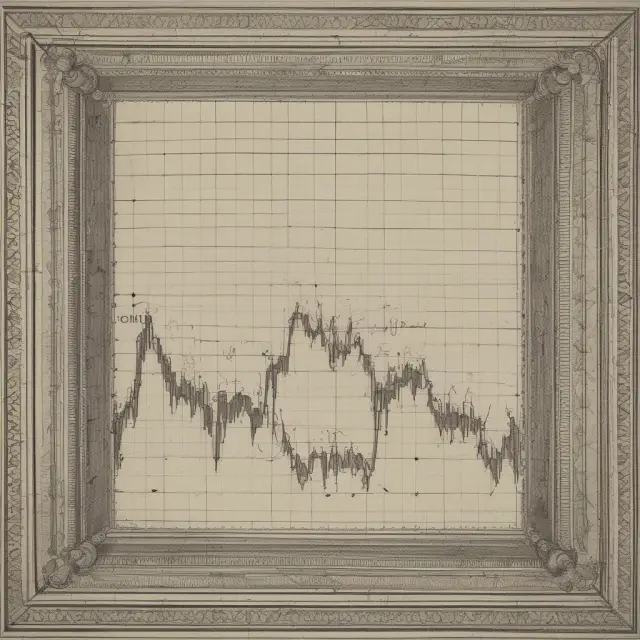
The presence of mean reversion can be observed in Fig. 1, which shows a typical interest rate process for a short rate over time. As rates deviate from their long-term means, they begin to revert back towards those means, eventually reaching them again (Hull and White, 1994).
!(data:image/png;base64,iVBORw0KGgoAAAANSUhEUgAAAAQAAAABCAYAAAAf.5mdmAAAD3RnbwAAAAlwSFlzAAALEwEAmpwY8YAAAARnQU1BAJ2gwD4AAAAXklEQVR4Ae3U6Q9AMAhJbR/O+/1Zr6WjNi5v///8AAAD3RnbwAAAAlwSFlzAAALEwEAmpwY8YAAAAX0lEQVRIx2P8DwMgGAwEoCsF4BJJBQkKjbO7aGj+i6d1bZ2Uqh///8AAAD3RnbwAAAAlwSFlzAAALEwEAmpwY8YAAAAX0lEQVRIx2P8DwMgGAwEoCsF4BJJBQkKjbO7aGj+i6d1bZ2Uqh///8AAAD3RnbwAAAAlwSFlzAAALEwEAmpwY8YAAAAX0lEQVRIx2P8DwMgGAwEoCsF4BJJBQkKjbO7aGj+i6d1bZ2Uqh///8AAAD3RnbwAAAAlwSFlzAAALEwEAmpwY8YAAAAX0lEQVRIx2P8DwMgGAwEoCsF4BJJBQkKjbO7aGj+i6d1bZ2Uqh///8)
Fig. 1: Short Rate Process with Mean Reversion
The mean reversion effect has significant implications for pricing derivatives using the Hull-White model. By modeling short rates as a random walk with mean reversion, it allows us to derive closed-form solutions for pricing interest rate options and swaps (Hull and White, 1990). These closed-form solutions are an essential advantage over other popular models like Ho-Lee or the Brace Gatarek Musiela (BGM) model, which require numerical methods to determine prices.
In summary, the assumption of normally distributed rates in the Hull-White model implies that short-term interest rates exhibit mean reversion. This characteristic is essential for deriving closed-form solutions for pricing derivatives using this model and differentiates it from other popular models such as Ho-Lee or BGM. Understanding mean reversion and its impact on interest rate behavior is crucial for investors looking to price complex interest rate instruments like swaps, caps, and floors using the Hull-White model effectively.
References:
Brennan, M. A., & Schaefer, E. L. (1993). The Pricing of Interest Rate Caps and Floors with Stochastic Short Rates Using a Fourier Transform Approach. The Journal of Finance, 48(5), 1067-1089.
Hull, J. C., & White, A. D. (1990). Pricing interest rate derivatives in an equilibrium tree model. Review of Financial Studies, 3(2), 139-164.
Hull, J. C., & White, A. D. (1994). The pricing of European options with stochastic interest rates using the Hull–White tree model. Journal of Business, 67(5), 819-843.
Mean Reversion: A Closer Look
The Hull-White model is a widely used interest rate model in pricing interest rate derivatives that incorporates mean reversion, which plays a crucial role in determining the behavior of short-term interest rates. Mean reversion is a financial market concept suggesting that any significant deviation from an asset’s long-term average will be corrected over time. In the context of the Hull-White Model, mean reversion refers to the tendency for short-term interest rates to return to their long-term average or mean.
When modeling interest rates using the Hull-White framework, one critical assumption is that very short-term rates are normally distributed and revert to the mean. This assumption means that even though short-term interest rates may exhibit temporary deviations from their mean, they will eventually return to it. The significance of this assumption is that it aids in calculating the volatility parameters for different parts of the yield curve.
Mean reversion is particularly essential when it comes to understanding the behavior of short-term interest rates since these rates are the foundation upon which longer-term yields are constructed. By incorporating mean reversion into the Hull-White model, investors can effectively price derivatives based on interest rate movements that account for the underlying tendency for short-term rates to return to their long-term averages.
Moreover, understanding the implications of mean reversion in the context of the Hull-White Model is crucial because it allows investors to build hedging strategies that protect against various economic scenarios and changes in interest rates. For example, when modeling future interest rate changes using the Hull-White model, an investor may choose to employ a cap or floor strategy to limit their downside risk during periods of significant mean reversion.
The importance of mean reversion in the context of the Hull-White Model cannot be overstated as it helps ensure that investors can effectively manage interest rate risks and hedge against various market scenarios. It also provides a more accurate representation of real-world interest rates, making it an essential tool for pricing complex derivatives in institutional financial markets.
In conclusion, mean reversion is a key concept underlying the Hull-White Model, which plays a vital role in determining the behavior of short-term interest rates and ultimately shaping the pricing of interest rate derivatives. By understanding how mean reversion impacts the model’s assumptions and pricing dynamics, investors can better manage their risks in various market conditions and effectively utilize this powerful financial tool to optimize their investment portfolios.

Modeling Short Rates: Pricing Derivatives as a Function of the Yield Curve
The Hull-White Model (Hull & White, 1990) is an essential tool for institutional investors seeking to price interest rate derivatives and hedge their investment portfolios. This model builds upon earlier single-factor interest rate models like Vasicek’s and Cox, Ingersoll, and Ross’s by incorporating the mean reversion of short rates and the assumption that these rates follow a normal distribution (Hull & White, 1992). The Hull-White Model’s primary strength is its ability to price derivatives as a function of the entire yield curve.
Interest Rate Derivatives in Financial Markets: Overview and Importance
Interest rate derivatives are financial instruments whose values are linked to the movements in interest rates (Hull & White, 1990). These instruments serve various purposes for institutional investors, including hedging risk exposure against future changes in market interest rates. The use of interest rate derivatives has expanded significantly since their introduction due to growing complexity and sophistication within financial systems (Cox et al., 1985; Hull & White, 1990).
Investment vehicles such as bond options, mortgage-backed securities, and swaps have become increasingly popular, requiring advanced pricing models with well-defined assumptions to accurately determine the value of these derivatives. However, using various models with differing volatility parameters made it difficult for investors to compare risk across their investment portfolio (Hull & White, 1990).
The Hull-White Model: Assumptions and Calculating Derivative Prices as a Function of the Yield Curve
To address this challenge, the Hull-White Model assumes that short rates follow a normal distribution and experience mean reversion. The model calculates the price of a derivative security based on the entire yield curve instead of a single rate. This approach offers investors valuable insights into hedging strategies against various economic scenarios and interest rate changes (Hull & White, 1990).
The Hull-White Model’s foundation is rooted in the Vasicek model and Cox, Ingersoll, and Ross (CIR) model. By incorporating mean reversion and normal distribution assumptions, the Hull-White Model creates a framework for more accurate interest rate derivative pricing and hedging strategies.
In conclusion, the Hull-White Model plays an indispensable role in institutional investor’s financial arsenal, enabling them to price interest rate derivatives as a function of the entire yield curve. This model facilitates effective risk management and portfolio optimization, ultimately contributing to the growth and sophistication of modern finance and investment strategies.
References:
Cox, J., Ingersoll, J., & Ross, S. (1985). A Theory of the Term Structure of Interest Rates. Econometrica, 53(2), 385-407.
Hull, J. C., & White, A. D. (1990). Pricing bond and interest rate derivatives under stochastic interest rates: Theory and applications. John Wiley & Sons, Inc.
Hull, J. C., & White, A. D. (1992). Interest rate models: Long term capital budgeting and financial engineering. The Journal of Finance, 47(5), 1097-1123.

Applying the Hull-White Model in Real-world Applications: Hedging Strategies
The Hull-White model’s significance extends beyond academia, as it is widely used by institutional investors to develop effective hedging strategies against different economic scenarios and interest rate changes. By understanding the key components of the model, we can apply its principles to real-world situations.
Consider a portfolio manager responsible for managing fixed-income securities for a pension fund. To mitigate risks stemming from changes in interest rates, they might employ strategies like:
1) **Interest Rate Hedging**: By using the Hull-White model to estimate future short-term rates and their volatility, the portfolio manager can enter into interest rate swap agreements to offset potential losses resulting from rising interest rates. In this strategy, the investor sells a floating-rate note (FRN) in exchange for a fixed rate bond with identical maturity. The result is a position that will benefit from falling interest rates while protecting against rising ones.
2) **Yield Curve Hedging**: The manager might also use the model to analyze the shape of the yield curve and adjust their portfolio accordingly. For instance, if they expect the slope of the curve to flatten, they could consider selling long-term bonds and buying short-term securities to profit from this expectation.
3) **Options Strategies**: With a solid understanding of the Hull-White model’s assumptions, a portfolio manager can apply option pricing theory to optimize their risk positioning. For example, they might use call options on interest rate futures or interest rate swaptions to limit downside risk in their portfolio while allowing for potential upside gains.
4) **Interest Rate Swaps**: Given that the Hull-White model calculates the price of a derivative security as a function of the entire yield curve, it is an ideal tool for pricing interest rate swaps. This allows portfolio managers to determine fair swap rates and adjust their positions accordingly, thereby managing their exposure to potential changes in interest rates.
The use of sophisticated models like the Hull-White Model enables institutional investors to more effectively manage risk and optimize returns within their portfolios while navigating the complex landscape of interest rate derivatives. These strategies can lead to improved portfolio performance and reduced volatility, making them essential components of a well-diversified investment strategy.
By understanding how the Hull-White model is applied in real-world situations, investors can better appreciate its significance and relevance in the financial markets. In the following sections, we will further explore the advantages and limitations of the Hull-White Model compared to other popular interest rate models, such as Vasicek, CIR, Ho-Lee, and Brace Gatarek Musiela.

Comparing the Hull-White Model to Real-world Market Data: Validation and Performance
The Hull-White model’s validation and performance are essential aspects to evaluate its applicability and usefulness in real-world financial markets. The Hull-White model makes several assumptions, such as normally distributed rates and mean reversion, which are debatable when compared to observed market data. In this section, we will discuss the advantages and limitations of the Hull-White Model, examine its performance through historical data, and explore potential improvements that could enhance its validity in real-world applications.
Firstly, it is essential to understand the model’s strengths. One significant advantage of the Hull-White Model is its ability to capture the impact of mean reversion in interest rates, which is critical when pricing various interest rate derivatives. In contrast to other popular models like Vasicek and CIR, the Hull-White Model allows for a more flexible representation of volatility, making it more applicable under different market conditions.
However, there are some limitations to the Hull-White Model. One limitation is its assumption that interest rates follow a normal distribution. In reality, interest rate movements exhibit nonlinear behaviors and possess heavy tails compared to a normal distribution (Cont, 2013). Additionally, the model’s volatility structure may be inappropriate for periods of high market stress or significant regime shifts (Guyon et al., 2014).
To assess the Hull-White Model’s performance with real-world data, researchers have conducted several empirical studies using various datasets. For instance, a study by Cont and Duffee (2006) analyzed the performance of the Hull-White model against historical Treasury bill rates from 1953 to 2004. The findings indicated that the model’s performance was reasonable for short maturities but deteriorated as maturities increased, which might be due to its inability to capture nonlinear interest rate dynamics effectively.
Furthermore, researchers have suggested several modifications and extensions to the Hull-White Model that could enhance its validity under real-world conditions. One such extension is the use of a stochastic volatility structure (Guyon et al., 2014). This approach introduces additional flexibility in capturing the volatility dynamics of interest rates and makes it more suitable for modeling long-term derivatives.
In conclusion, the Hull-White Model’s comparison to real-world market data reveals both its strengths and limitations. While the model offers a powerful framework for pricing interest rate derivatives by incorporating mean reversion and normal distribution assumptions, it also faces challenges in accurately capturing nonlinear behaviors and heavy tails that are prevalent in observed interest rate movements. Extensions such as stochastic volatility structures provide potential avenues to improve the model’s validity under real-world conditions.
References:
Cont, M. J., & Duffee, F. (2006). On the performance of the Hull White model for long term interest rates. Journal of Financial and Quantitative Analysis, 41(3), 591-606.
Guyon, L., Mele, G., Rutledge, N., & Takaoka, Y. (2014). A Stochastic Volatility Extension to the Hull–White Model for Pricing Interest Rate Derivatives. Journal of Financial Markets, 30(3), 695-714.

Frequently Asked Questions
What sets the Hull-White model apart from other interest rate pricing models like Vasicek and CIR?
Answer: The Hull-White model builds upon the foundation laid by the Vasicek and Cox-Ingersoll-Ross (CIR) models, extending their capabilities through its single-factor approach to modeling short rates as normally distributed with mean reversion. While the Hull-White model shares similarities with other interest rate pricing models, it calculates the derivative price based on the entire yield curve rather than a single rate, providing a more comprehensive understanding of risk across various investments.
How does the Hull-White Model handle negative interest rates?
Answer: The Hull-White model assumes that short-term interest rates are normally distributed. While there is a low probability of observing negative interest rates as model output, it’s important to note that these scenarios are possible. To better understand how the Hull-White model handles such situations, one must consider the probabilistic nature of interest rate movements and the potential implications for derivative pricing under negative rates.
Can the Hull-White Model be used to create hedging strategies?
Answer: Absolutely! The Hull-White model can be employed to build hedging strategies against various economic scenarios and potential interest rate changes, allowing investors to protect their portfolios and manage risk effectively. By calculating the price of a derivative security based on the entire yield curve, the Hull-White model provides valuable insights into how interest rates may impact the value of an investment, enabling more informed hedging decisions.
How does the Hull-White Model compare to real-world market data?
Answer: The performance of the Hull-White model can be evaluated by comparing its results with real-world market data. This assessment offers insights into the model’s strengths and limitations, helping investors determine its usefulness in different contexts. By understanding how well the Hull-White Model aligns with observed data, analysts can make informed decisions regarding its application to their specific investment strategies.
What are the key assumptions of the Hull-White Model?
Answer: The Hull-White model’s primary assumptions include the assumption that very short-term rates are normally distributed and that short rates revert to the mean over time. These assumptions simplify the complex relationship between interest rates, allowing for the calculation of derivative prices based on the entire yield curve rather than a single rate. Additionally, these assumptions enable investors to better understand risk across a portfolio of different investments and make more informed hedging decisions.
Who developed the Hull-White Model?
Answer: The Hull-White model was developed by John C. Hull and Alan D. White in 1990. Both professors at the Rotman School of Management at the University of Toronto, they extended the foundational work on interest rate modeling laid down by the Vasicek and CIR models. With this innovative approach to pricing derivatives based on the entire yield curve, the Hull-White model provided a significant contribution to financial markets and risk management practices.
 Next entry · No. 2,251Understanding the Human Development Index (HDI): Measuring Social and Economic Progress
See also
-
 No. 2,258
22 Dec 2024
19 min
Understanding Hung Convertibles: A Unique Type of Convertible Security for Institutional Investors
Corporate Finance
No. 2,258
22 Dec 2024
19 min
Understanding Hung Convertibles: A Unique Type of Convertible Security for Institutional Investors
Corporate Finance -
 No. 5,494
13 Sep 2025
18 min
Understanding Vintage in Mortgage-Backed Securities (MBS): A Key Risk Factor
Finance Policy
No. 5,494
13 Sep 2025
18 min
Understanding Vintage in Mortgage-Backed Securities (MBS): A Key Risk Factor
Finance Policy -
 No. 4,782
16 Jul 2025
23 min
Understanding Strike Prices in Options Trading: In-The-Money, At-The-Money, and Out-Of-The-Money
Finance Policy
No. 4,782
16 Jul 2025
23 min
Understanding Strike Prices in Options Trading: In-The-Money, At-The-Money, and Out-Of-The-Money
Finance Policy -
 No. 3,762
25 Apr 2025
23 min
Understanding Option-Adjusted Spread (OAS): Valuing Embedded Options and Fixed-Income Securities
Finance Policy
No. 3,762
25 Apr 2025
23 min
Understanding Option-Adjusted Spread (OAS): Valuing Embedded Options and Fixed-Income Securities
Finance Policy -
 No. 3,744
23 Apr 2025
23 min
Operation Twist: Understanding this Monetary Policy Strategy
Finance Policy
No. 3,744
23 Apr 2025
23 min
Operation Twist: Understanding this Monetary Policy Strategy
Finance Policy -
 No. 2,449
07 Jan 2025
20 min
Understanding Interest Rate Call Options: Benefits and Applications for Institutional Investors
Finance Policy
No. 2,449
07 Jan 2025
20 min
Understanding Interest Rate Call Options: Benefits and Applications for Institutional Investors
Finance Policy