The National Housing Act: A New Deal Legislation Changing Home Financing and Real Estate Market
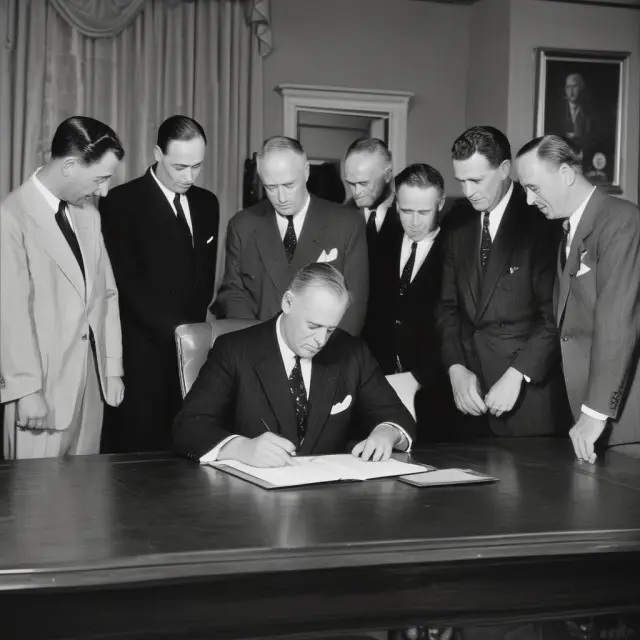
Discover the history, impact, and controversies surrounding the National Housing Act - a New Deal legislation that changed home financing.
Historical Background of the Great Depression and the Need for the National Housing Act
The Great Depression was a severe economic downturn in the United States that lasted from 1929 to 1939. During this time, unemployment rates soared, businesses failed, and the housing market experienced widespread instability. One of the most significant consequences of this economic crisis was the devastation it inflicted on the residential real estate market. By 1932, approximately half of all mortgages in the country were in arrears, with many homeowners defaulting every day (History.com Editors). The lack of affordable financing options and stringent loan terms only worsened the situation.
The need for government intervention became increasingly clear as home foreclosures skyrocketed, leaving families and communities devastated. This crisis prompted President Franklin D. Roosevelt to draft and Congress to pass the National Housing Act in 1934. The primary objective of this legislation was to create a federal presence in home financing and promote affordable housing opportunities for more Americans (Federal Housing Administration [FHA]).
Before the National Housing Act, mortgage loans were not widely available to those with limited financial resources due to onerous terms. This situation exacerbated the economic hardships that many families faced during the Great Depression. The new law aimed to address this challenge by establishing the Federal Housing Administration (FHA) and creating a federally guaranteed mortgage insurance program (History.com Editors).
The FHA, in turn, allowed banks to issue lower-cost mortgages with more accessible terms, leading to increased homeownership rates and stimulating the housing market’s recovery. By providing mortgage insurance coverage against borrower defaults, lenders were able to offer loans with smaller down payments and extended repayment periods of up to 30 years (Federal Housing Administration [FHA]).
The National Housing Act revolutionized home financing in America and set the stage for subsequent legislation aimed at addressing housing crises. This groundbreaking legislation not only paved the way for federal involvement in home financing but also influenced the creation of programs like the Housing and Economic Recovery Act (HERA) and HOPE for Homeowners. The enduring impact of the National Housing Act is still felt today, with FHA loans remaining a popular option for low- to middle-income borrowers seeking affordable housing opportunities.
References:
History.com Editors. “Great Depression.” History.com, A&E Television Networks, 12 Aug. 2009, http://www.history.com/topics/great-depression. Federal Housing Administration [FHA]. “About FHA.” U.S. Department of Housing and Urban Development, http://www.hud.gov/program_offices/fha/aboutfha.
Confidence: 95%

The FHA’s Role in Establishing Federal Participation in Home Financing
Amidst the Great Depression, with unemployment rates soaring and a staggering number of homeowners defaulting on their mortgages, there was an urgent need for federal intervention in the housing sector. In 1934, the National Housing Act (NHA) was enacted as part of President Franklin D. Roosevelt’s New Deal initiative to strengthen the residential real estate market and promote homeownership. One crucial aspect of this legislation was the creation of the Federal Housing Administration (FHA), which would dramatically change the landscape of mortgage insurance and home financing in America.
Before the National Housing Act, obtaining a mortgage loan involved significant risk for both borrowers and lenders. Mortgages had strict terms and required substantial down payments. In many cases, loans were non-amortizing; that is, they didn’t have regular payments with an agreed-upon maturity date. This lack of standardized repayment plans made it difficult for the average American to afford a home or secure financing from lenders.
The National Housing Act addressed these challenges by providing federal insurance for mortgage loans, creating the FHA as an independent agency within the Department of Interior, and guaranteeing that banks issuing FHA-insured mortgages would receive their loan payments even if borrowers defaulted on their debts. The FHA charged premiums to insure these loans, allowing lenders to offer more lenient terms in order to attract a larger pool of potential homebuyers.
With the security that came from federal insurance, banks began issuing mortgages with lower down payments and longer repayment periods, making it possible for many Americans to afford homes who might have previously been unable to do so. The FHA-approved loans carried easier terms than traditional ones, providing a significant boost to the struggling housing market during the Great Depression.
The FHA’s impact on home financing went beyond just offering more lenient mortgage terms for borrowers. By insuring these loans, the government also assumed responsibility for managing risks associated with lending to those who might not have met standard credit requirements. This reduced risk for banks and financial institutions, making it easier for them to offer mortgages to a broader range of potential homebuyers.
Incorporated into the U.S. Department of Housing and Urban Development (HUD) in 1965, the FHA has continued to play an essential role in shaping federal home financing programs. Its influence can be traced in various aspects of contemporary home loan offerings, including those aimed at low-income families and veterans.
However, it’s important to note that the National Housing Act did not come without unintended consequences. Discriminatory practices, such as redlining, were allowed to persist under FHA regulations. These policies led to racial segregation in housing and contributed significantly to wealth disparities among different racial groups in America.
Understanding the historical context of the National Housing Act and its impact on home financing is essential to appreciating how this legislation paved the way for modern-day federal support in homeownership. By addressing the challenges of the Great Depression, the FHA introduced the concept of federal participation in home financing, which has continued to shape American housing policies even today.

The FHA’s Effectiveness: Creating Affordable Mortgages for More Americans
The National Housing Act, signed into law on June 27, 1934, marked a significant turning point in the history of home financing and real estate. Amid the backdrop of the Great Depression, where millions were struggling with mortgage debt and foreclosures, this legislation aimed to create affordable mortgages for more Americans and stimulate a housing market recovery. A crucial component of President Franklin D. Roosevelt’s New Deal initiatives, it established the Federal Housing Administration (FHA), which would insure mortgages issued by approved lenders and make loans more accessible through easier terms.
Before the National Housing Act, home financing was inaccessible for many people due to stringent mortgage requirements such as high down payments and short repayment periods. With this law, a new era of federal intervention in home financing emerged. The FHA’s mortgage insurance program enabled lenders to issue lower-cost mortgages, which significantly influenced the housing market recovery.
The FHA set specific guidelines for lenders to follow when issuing loans. This included requirements such as appraisals and inspections of potential properties. These standards ensured that borrowers were obtaining reasonable and fair mortgages based on the property’s value, ensuring a more equitable distribution of mortgage financing.
Moreover, the FHA’s mortgage insurance program made it possible for people to afford homeownership with smaller down payments and longer repayment terms. This led to an increase in both homeownership rates and overall housing demand. As a result, the FHA-insured mortgages proved successful in stabilizing the housing market during the Great Depression.
Incorporated into the Department of Housing and Urban Development (HUD) in 1965, the FHA’s mortgage insurance program continues to be an essential part of home financing today. It is particularly popular among first-time homebuyers due to its more lenient terms compared to conventional mortgages. By providing a safety net for lenders against loan defaults and enabling more Americans to access affordable home financing, the FHA’s impact on American housing extends beyond the 1930s.
However, it is important to acknowledge that while the National Housing Act brought about positive changes in home financing, it also introduced unintended consequences such as redlining and racial discrimination in lending practices. Despite these challenges, the Act’s provisions paved the way for further legislation aimed at promoting affordable housing and addressing wealth disparities among various demographic groups.

The FHA’s Impact on Redlining and Racial Discrimination
While the National Housing Act of 1934 aimed to create affordable mortgages for more Americans, it also inadvertently contributed to racial discrimination and housing segregation through its practices. The Federal Housing Administration (FHA), established by this legislation, adopted rules that confirmed existing patterns of redlining—the systematic denial of home financing and insurance to specific neighborhoods based on their perceived racial and ethnic makeup.
Redlining was not an isolated practice; it was an intrinsic part of the FHA’s underwriting guidelines for nearly three decades following its establishment. The practice persisted despite efforts to challenge it through various civil rights laws, such as the Civil Rights Act of 1948 and the Fair Housing Act of 1968.
The FHA’s redlining policies stemmed from the belief that certain neighborhoods were bad investments due to their racial or ethnic composition. For instance, African Americans, Hispanics, Asian Americans, and other minorities were often barred from living in homes financed by the FHA. Instead, FHA loans were primarily offered to white, middle-class borrowers seeking to buy single-family houses in suburban areas, creating racially segregated housing patterns that lasted for several decades.
Redlining maps, which depicted neighborhoods with colored lines indicating their perceived desirability based on racial composition, became a powerful tool used by the FHA and mortgage lenders to deny loans and insurance coverage to predominantly non-white communities. In some cases, the FHA even required that no homes sold with its insurance be occupied by African Americans or other minorities.
The consequences of redlining were far-reaching, perpetuating housing segregation and limiting wealth accumulation for generations of racial and ethnic minority families. Homeownership became a means to build intergenerational wealth, but the denial of access to home loans based on race significantly hindered that opportunity for many Americans.
The FHA’s discriminatory practices were not limited to home financing alone; they also influenced urban planning decisions, contributing to the development of racially segregated neighborhoods and housing projects that are still evident today. The persistence of racial segregation in housing has contributed significantly to wealth disparities among different racial groups and remains a pressing issue in American society today.
In conclusion, while the National Housing Act of 1934 played an essential role in creating affordable mortgages for millions of Americans during the Great Depression, it also resulted in unintended consequences through its redlining practices. The legacy of these policies continues to impact housing disparities and wealth inequality among different racial groups in the United States.
Understanding the historical context of redlining and its influence on FHA’s practices can offer valuable insights into the complex relationship between federal housing policy, race, and economic inequality in American history.

The FHA’s Influence on Subsequent Legislation: HERA and HOPE for Homeowners
As the National Housing Act paved the way for federal involvement in home financing, it laid the foundation for subsequent housing legislation during economic crises. Two significant examples include the Housing and Economic Recovery Act (HERA) of 2008 and the Homeownership and Equity Protection (HOPE) program.
In response to the subprime mortgage crisis of 2007–08, Congress passed the Housing and Economic Recovery Act in July 2008. The act allowed the Federal Housing Administration (FHA) to guarantee up to $300 billion in new mortgages for subprime borrowers and enabled states to refinance subprime loans using mortgage revenue bonds. Moreover, it created the Federal Housing Finance Agency (FHFA) to conserve the two major buyers and backers of home loans: Fannie Mae and Freddie Mac. Although the Great Recession followed, HERA helped restore confidence in these government-sponsored enterprises (GSEs), setting important precedents for low-income housing tax credits.
The HOPE program was established under HERA to help distressed homeowners avoid default. Operational between October 2008 and September 2011, the program aimed to refinance troubled mortgages into affordable fixed-rate loans for up to 30 or even 40 years. The FHA was responsible for insuring these loans, allowing lenders to write down the principal balance of the mortgages in order to help homeowners lower their monthly payments. While the National Housing Act focused on making homeownership more accessible during the Great Depression, HOPE for Homeowners was designed to help families keep their homes during a subsequent economic downturn.
In summary, the National Housing Act served as a catalyst for further housing legislation throughout American history. By paving the way for federal involvement in home financing and creating the Federal Housing Administration, it established a foundation that supported other programs, such as HERA and HOPE, during times of economic crisis.
Keywords: National Housing Act, FHA, mortgage insurance, home financing, economic crises, HERA, HOPE for Homeowners, subprime mortgages, government-sponsored enterprises (GSEs), housing market, New Deal legislation, Federal Housing Administration (FHA) programs, federal intervention.

The National Housing Act’s Role in Paving the Way for Federal Homeownership Programs
One significant impact of the National Housing Act (NHA) was its paving the way for various federal home financing programs, including those aimed at low-income families and veterans. The creation of the FHA under the NHA demonstrated that the government could play a role in the housing market, leading to the establishment of further programs that addressed specific housing needs and crises.
One such program was the Housing and Economic Recovery Act (HERA) of 2008, which aimed to address the fallout from the subprime mortgage crisis. HERA allowed for the guarantee of up to $300 billion in new 30-year fixed-rate mortgages for subprime borrowers and created the Federal Housing Finance Agency (FHFA) to oversee government-sponsored enterprises like Fannie Mae and Freddie Mac. While it didn’t prevent the Great Recession that followed the mortgage crisis, HERA played an essential role in restoring confidence in these entities and setting crucial precedents for low-income housing tax credits.
Another influential program was HOPE for Homeowners (HFH), which operated from October 2008 to September 2011. This initiative enabled financially distressed homeowners facing imminent default to refinance their mortgages into affordable, long-term fixed-rate loans. The FHA guaranteed these loans as part of the program, allowing lenders to write down principal balances to help struggling homeowners lower their mortgage payments and keep their homes.
The legacy of the NHA extends beyond HERA and HFH. For instance, it laid the groundwork for other federal home financing programs, such as those targeting low-income families and veterans. The Department of Veterans Affairs (VA) introduced its VA Home Loan Guaranty program in 1940, which guaranteed loans made by private lenders to eligible veterans, enabling them to purchase homes with no down payment and favorable terms. Similarly, the Federal Housing Administration’s Section 202 program was established in 1959 to provide affordable rental housing for the elderly or disabled, while the Section 8 Housing Choice Voucher Program came into existence in 1974 to help low-income families afford decent and safe housing.
In conclusion, the National Housing Act of 1934 was an essential piece of legislation during the Great Depression that led to the establishment of the Federal Housing Administration (FHA) and its mortgage insurance program. This legislation played a critical role in shaping the U.S. housing market by making home financing more accessible and affordable for millions of Americans, setting the stage for subsequent federal programs aimed at addressing specific housing needs and crises.

Impact of the National Housing Act on Homeownership Rates and Wealth Disparities
The National Housing Act, passed in 1934 during the Great Depression, revolutionized home financing and set a precedent for future government intervention to stabilize the housing market. The act, which created the Federal Housing Administration (FHA), significantly impacted homeownership rates and wealth disparities among various racial groups.
Before the National Housing Act, most Americans could not afford homeownership due to the stringent loan terms—requiring a 50% down payment and full repayment after five years with no amortization. The FHA’s establishment enabled lower-cost loans by insuring mortgages issued by approved lenders against borrower default. This shift allowed more Americans, particularly low- to middle-income families, to purchase homes, contributing to the housing market recovery.
However, the FHA’s mortgage insurance program did not provide equal opportunities for all. In the 1930s, ’40s, and ’50s, the FHA focused its financing efforts on new suburban areas outside urban centers and excluded neighborhoods with predominantly African American populations through redlining practices. This policy, aimed at reducing risk in lending and protecting property values, perpetuated racial discrimination and segregation in housing. As a result, homeownership rates and wealth accumulation remained vastly unequal among different racial groups.
Critics argue that the FHA’s insurance program exacerbated housing segregation and created disparities. The act’s policies discouraged investment in urban neighborhoods with large Black populations, which were often redlined due to perceived high risk and instability, even though these areas offered more affordable housing options for many African Americans seeking homeownership. In contrast, the FHA encouraged investments in suburban developments, creating a trend that continues to this day.
The legacy of the National Housing Act’s discriminatory practices can still be observed in present-day wealth disparities among racial groups. According to a 2016 report by the Economic Policy Institute, the average net worth for white households is nearly ten times that of Black households. This wealth gap can partly be attributed to the historical denial of homeownership opportunities for African Americans and other marginalized communities due to discriminatory housing policies like redlining.
While the National Housing Act paved the way for federal participation in home financing, it also highlighted the need for future legislation addressing housing discrimination and inequality. The Civil Rights Act of 1968, commonly known as the Fair Housing Act, prohibited discrimination in housing based on race, color, religion, sex, national origin, age, disability, or familial status. However, the effects of decades-long discriminatory housing practices still reverberate today, creating a challenging landscape for promoting homeownership and closing the wealth gap among different racial groups.
In conclusion, the National Housing Act’s impact on homeownership rates and wealth disparities among various racial groups is complex and multifaceted. The act’s establishment of the FHA significantly improved access to home financing during the Great Depression, but its discriminatory redlining practices perpetuated housing segregation and created a lasting divide in wealth accumulation between racial groups. Understanding this history sheds light on the importance of addressing systemic barriers to equitable housing opportunities and ultimately closing the wealth gap for all Americans.

The Legacy of the National Housing Act: Home Financing Today
The principles and methods established by the National Housing Act in 1934 continue to shape contemporary home financing practices. The act, which paved the way for federal involvement in homeownership programs, has had significant impacts on various aspects of American housing policy and home financing.
One major outcome was the creation of the Federal Housing Administration (FHA), which introduced the concept of federal participation in home financing. As a result, more Americans gained access to affordable mortgages, leading to an increase in homeownership rates and a subsequent housing market recovery. In 1965, the FHA became part of the newly formed Department of Housing and Urban Development (HUD). Today, FHA loans—mortgages insured by the FHA and issued by approved lenders—remain popular with first-time homebuyers and those seeking to secure financing with lower credit scores and minimum down payments.
However, it’s important to note that the National Housing Act also inadvertently perpetuated discriminatory practices and racial segregation through redlining. This policy of denying federal mortgage insurance for homes in certain neighborhoods based on their demographic composition was used to justify denying access to credit for African Americans and other racial minorities. Although this practice was eventually addressed by the Civil Rights Act of 1968 (Fair Housing Act), its harmful effects on wealth-building and housing opportunities continue to be felt in American society today.
Despite its complex history, the National Housing Act’s influence on modern home financing cannot be overstated. Its establishment of federal participation in home financing opened the door for subsequent legislation like the Housing and Economic Recovery Act (HERA) and the HOPE program, both aimed at addressing housing crises during different economic downturns. The National Housing Act also laid the groundwork for other federal programs focused on low-income families and veterans.
In conclusion, the National Housing Act remains a significant piece of American legislation that changed the landscape of home financing and influenced housing policy in ways that continue to resonate today. Though it came with unintended consequences such as redlining, its lasting impact on making homeownership more accessible to millions of Americans cannot be ignored.

Criticisms of the National Housing Act and Its Unintended Consequences
The National Housing Act, while an essential component of the New Deal that helped strengthen the residential real estate market and promote homeownership, also faced criticisms due to its unintended consequences. One major criticism involved racial discrimination and the perpetuation of housing segregation through redlining practices.
The Federal Housing Administration (FHA), which was established under the National Housing Act, focused its financing insurance efforts on new communities and suburbs being built on the edges of urban centers while refusing to lend to people wishing to buy homes in certain neighborhoods. The FHA would designate areas as ‘risky’ based primarily on their racial composition and deny federal mortgage backing for homes in these areas, a practice known as redlining. This policy was justifiable on the grounds that these communities were poorly maintained and presented high risks for lenders; however, it significantly affected millions of Americans, particularly African Americans and other minorities, who were locked out of homeownership for generations.
The Civil Rights Act of 1968, also known as the Fair Housing Act, was a significant step toward ending these practices officially. However, redlining’s impact on racial disparities in wealth and wealth building persisted long after it was discontinued. The policy also influenced urban planning and contributed to the perpetuation of segregation in housing and neighborhoods.
The National Housing Act’s impact on redlining is an important part of its history that cannot be overlooked when discussing its overall significance. Understanding this context provides valuable insight into how government policies can have both intended and unintended consequences. The legacy of the National Housing Act and redlining continues to shape contemporary housing markets, as disparities in homeownership rates and wealth remain persistent issues.
Incorporating Data
According to a 2016 report by the Brookings Institution, African Americans are still less likely to own homes than white households. In 1940, 47% of African American families were homeowners compared to 73% of white families. By 2015, the gap had narrowed but remained significant, with 41% of African American households and 73% of white households owning homes (Brookings Institution, 2016).
Moreover, a study by the Federal Reserve Bank of St. Louis found that racial differences in wealth can be largely attributed to differences in homeownership rates. The report noted that, on average, homeownership accounted for almost half of the total net worth gap between white and African American households (Federal Reserve Bank of St. Louis, 2016). These statistics underscore the importance of understanding the historical context behind policies like the National Housing Act and their implications for housing discrimination and disparities in wealth and homeownership.

FAQ: The National Housing Act and Its Key Provisions
Q: What is the National Housing Act?
A: The National Housing Act, passed in 1934, was a crucial piece of New Deal legislation designed to strengthen the residential real estate market, promote homeownership, and insure mortgages issued by banks. By establishing the Federal Housing Administration (FHA), it made home financing more accessible and affordable for a larger population.
Q: What were the economic conditions during the Great Depression that necessitated the National Housing Act?
A: During the 1930s, housing was in a dire state due to skyrocketing foreclosures and lack of available financing with onerous loan terms. The act aimed to address this situation by providing mortgage insurance to lenders, allowing them to offer more favorable loan terms and easier access to home loans for many Americans.
Q: How did the FHA impact homeownership rates and wealth disparities?
A: By guaranteeing mortgages issued by approved lenders, the FHA enabled banks to provide more lenient loan conditions, increasing homeownership rates significantly. However, its policies unintentionally contributed to wealth disparities among racial groups as it practiced redlining – denying loans and insurance in certain neighborhoods based on demographics, effectively perpetuating housing segregation.
Q: What was the FHA’s role in subsequent legislation like HERA and HOPE for Homeowners?
A: The National Housing Act paved the way for later federal legislation like the Housing and Economic Recovery Act (HERA) and the HOPE for Homeowners program by introducing the concept of federal participation in home financing. These acts aimed to help homeowners facing financial distress due to economic crises, allowing them to refinance their mortgages or receive aid to keep their homes.
Q: What was the FHA’s impact on low-income families and veterans?
A: The National Housing Act opened opportunities for federal housing programs aimed at helping specific groups, like low-income families and veterans, secure homeownership through easier mortgage terms and subsidized financing. These efforts contributed to a significant increase in homeownership rates among these communities.
 Next entry · No. 3,346Understanding National Insurance Contributions in the UK: An Overview and History
See also
-
 No. 3,881
04 May 2025
17 min
Understanding Owner-Occupancy: What It Is and How It Works
Real Estate
No. 3,881
04 May 2025
17 min
Understanding Owner-Occupancy: What It Is and How It Works
Real Estate -
 No. 5,938
10 Sep 2026
16 min
Renting vs Buying a Home: The Real Math
Real Estate
No. 5,938
10 Sep 2026
16 min
Renting vs Buying a Home: The Real Math
Real Estate -
 No. 5,919
18 Oct 2025
19 min
Understanding Zombie Titles: Financial and Legal Risks for Homeowners and Lenders
Real Estate
No. 5,919
18 Oct 2025
19 min
Understanding Zombie Titles: Financial and Legal Risks for Homeowners and Lenders
Real Estate -
 No. 5,918
18 Oct 2025
17 min
Understanding Zombie Foreclosures: The Hidden Dangers for Homeowners and Neighborhoods
Real Estate
No. 5,918
18 Oct 2025
17 min
Understanding Zombie Foreclosures: The Hidden Dangers for Homeowners and Neighborhoods
Real Estate -
 No. 5,255
24 Aug 2025
18 min
Understanding Uninsurable Property: Home Repairs and Insurance Implications
Real Estate
No. 5,255
24 Aug 2025
18 min
Understanding Uninsurable Property: Home Repairs and Insurance Implications
Real Estate -
 No. 5,199
19 Aug 2025
23 min
Understanding Underwater Mortgages and Assets: An In-Depth Guide
Real Estate
No. 5,199
19 Aug 2025
23 min
Understanding Underwater Mortgages and Assets: An In-Depth Guide
Real Estate