The Opening Bell: History, Significance, and Ceremonial Traditions

Learn about the history, significance, and traditions of the opening bell in stock market trading. Understand its importance to various exchanges and media.
Understanding the Concept of the Opening Bell
The term ‘opening bell’ refers to the commencement of a trading session on a securities exchange. While it is most commonly associated with the New York Stock Exchange (NYSE), this concept applies to other exchanges as well, such as Nasdaq or foreign markets. The opening bell signifies the start of business transactions for the day and holds both symbolic and practical significance.
Symbolically, the opening bell represents the official launch of trading activities, granting occasion for exchanges to showcase companies during an initial public offering (IPO). In this regard, celebrities or visiting dignitaries are often invited to ring the opening bell as a ceremonial gesture for traders in the stock market. This practice attracts media attention and keeps investors engaged with daily trading activities.
Historically, the opening bell initially took form as a gong on the NYSE floor. It was used to notify brokers and dealers that trading could begin, marking the start of the auctioning process for prices. Later, in 1903, the gong was replaced by an electronically operated brass bell accompanied by a gavel – a relic of the 19th century stock calls.
While physical trading floors have diminished significantly over time due to electronic trading, the opening bell continues to hold symbolic importance as a tradition that marks the beginning of the trading day. It serves as a reminder that despite advancements in technology, the financial markets remain influenced by both the virtual and the tangible world.
In terms of practical significance, the opening bell sets the stage for market securities to trade on a fair and orderly basis during regular trading hours. Additionally, the opening bell allows traders and investors to capitalize on opportunities created by news releases or significant economic events before the stock exchange officially opens for business. This pre-market activity is essential for those seeking to maximize their profits and stay informed in an ever-changing financial landscape.
History of the Opening Bell: From Gong to Brass Bell
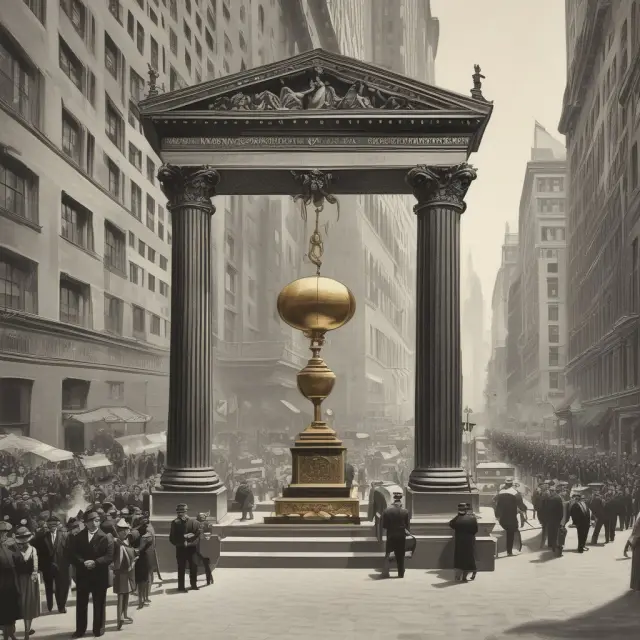
The opening bell has become an iconic symbol in Wall Street culture, representing the start of a new trading session on various stock markets. Initially, this significant event was marked by the ringing of a gong that officially notified brokers and dealers to begin the work of auctioning prices. However, as markets evolved, so did their opening bell traditions.
The earliest recorded use of a physical gong dates back to 1602 when the Amsterdam Stock Exchange employed a ‘Bourseklok’ or bells to signal various market activities. The New York Stock Exchange (NYSE) adopted this practice in 1835, but it wasn’t until 1903 that their opening bell evolved from a gong to a brass bell.
The original NYSE gong was a large Chinese gong used for the official notification. With advancements in technology, the gong was replaced by an electronically operated brass bell. To this day, the opening bell, along with the gavel, serves as a symbolic recognition of 19th-century stock calls.
The NYSE’s opening and closing bell can be viewed each day on their website, while the exchange opens at 9:30 AM Eastern Time and closes at 4:00 PM Eastern Time. However, different exchanges around the world open at varying times, such as futures markets which have morning and afternoon sessions or the options markets that vary depending on the exchange.
Pre-market trading, which occurs before the official opening bell, offers an opportunity for traders and investors to place trades. While this period has its advantages, it also poses unique risks. Pre-market trading tends to have less liquidity than regular hours, leading to wider bid-ask spreads and more volatile price action. Institutional investors, such as mutual funds and hedge funds, often participate in pre-market trading, making it a challenging environment for retail investors.
In summary, the opening bell is a significant symbol of the start of a new trading session on various stock markets. From its origins as a large gong to a brass bell, this tradition has evolved over time, maintaining its importance in today’s automated markets.

The Role of the Opening Bell in Trading Sessions
The opening bell signifies the start of a regular trading session on a securities exchange. The most famous and widely recognized opening bell is that of the New York Stock Exchange (NYSE). While the concept remains largely symbolic due to the dominance of electronic trading, it holds significance for various reasons.
Historically, the opening bell was used to formally notify brokers and dealers that they could commence their auctioning process of setting prices in a physical trading session. The original bell at the NYSE was a large Chinese gong, which was replaced by an electronically operated brass bell in 1903. This tradition has been retained as a ceremonial ritual for dignitaries and companies marking their Initial Public Offerings (IPOs).
The opening bell is crucial because it gives exchanges the opportunity to make news about securities during IPOs, making it an event of interest for investors. Media coverage, especially from financial news organizations, plays a significant role in the opening bell ceremony, allowing them to report on trading activities and maintain investor interest.
Although most trades are executed electronically through automated systems, the physical ringing of the bell adds a sense of tradition, excitement, and community to the stock market experience. It also provides an occasion for companies and individuals to be recognized for their achievements.
The opening bell ceremony is not exclusive to the NYSE; other exchanges, such as Nasdaq, also have similar traditions, although they may differ in execution due to the lack of a physical trading floor. For instance, during pre-market hours, when the majority of trading is automated, certain markets offer opportunities for traders to participate in limited sessions where prices are set based on limit orders only. These periods can be less efficient compared to regular trading hours as there is a lower volume of participants and wider bid-ask spreads.
In summary, the opening bell marks the start of a daily trading session and holds symbolic importance due to its historical significance, association with news events, and the ceremonial ritual it represents. This tradition continues to captivate investors and traders alike, despite the advancement towards automated markets.
Who Rings the Opening Bell and Why?
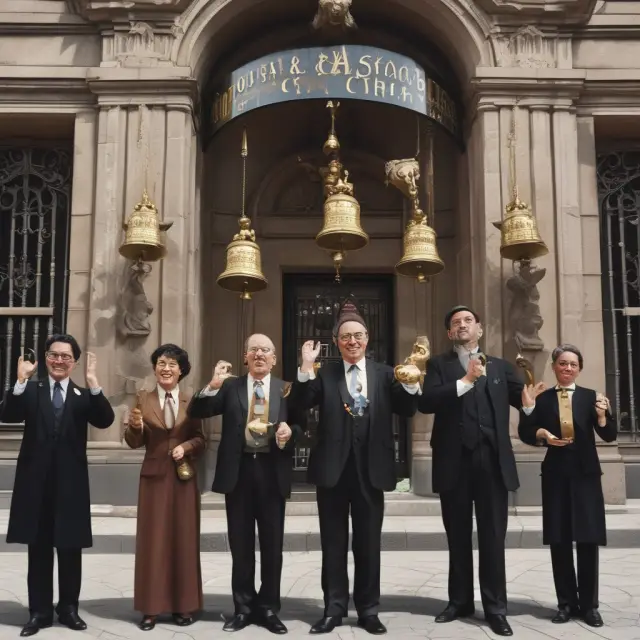
The opening bell ceremony is a long-standing tradition in the world of Wall Street. It marks the beginning of a regular trading session at an exchange, symbolizing the start of a new day for traders and investors alike. This section will explore the history behind this time-honored ritual, as well as the significance of having famous personalities ring the opening bell.
Historically, the opening bell signifies the official notification to brokers and dealers that trading can commence. Originally, a large gong was used at the New York Stock Exchange (NYSE) to make this announcement. However, in 1903, the gong was replaced by an electronic brass bell. Today, both the NYSE and Nasdaq exchanges use symbolic opening bells as a ceremonial gesture to kickstart their daily trading sessions.
One of the most notable aspects of the opening bell ceremony is the opportunity it provides for celebrities or visiting dignitaries to be part of the experience. These individuals are invited to ring the bell as a symbolic representation of their involvement in the stock market or their influence within the business world. The New York Stock Exchange’s bell calendar lists all the people scheduled to ring the opening bell, adding another layer of excitement and anticipation for investors and traders.
The significance of having famous personalities involved goes beyond the ceremonial aspect; it often draws media attention and generates buzz around the exchange or specific companies involved in the event. Media companies such as CNBC, Fox, and Cheddar, which cover financial news extensively, maintain a physical presence at the NYSE to report on the opening bell ceremony and other trading activities throughout the day.
The invitation to ring the opening bell not only carries symbolic importance for the individual but also provides an excellent marketing opportunity. Many businesspeople and organizations view this as a chance to showcase their brands, build recognition, or highlight their companies within the financial community. For some, it might even be considered a milestone in their professional journey.
In conclusion, the opening bell ceremony is a deeply rooted tradition that holds immense significance for both the stock market and those involved in it. It serves as a symbolic gesture to mark the beginning of a new trading day, while offering celebrities and visiting dignitaries an opportunity to be part of this historic event. The media coverage and attention generated by the opening bell ceremony further amplify its importance and make it an integral aspect of Wall Street culture.
The Significance of the Opening Bell to Various Exchanges
When it comes to the opening bell, each exchange carries out its unique traditions and practices. Understanding how these exchanges approach this ceremonial event sheds light on the importance placed upon it by various market entities. Let us delve deeper into how the New York Stock Exchange (NYSE) and Nasdaq handle their opening bell ceremonies.
The NYSE’s Opening Bell Ceremony:
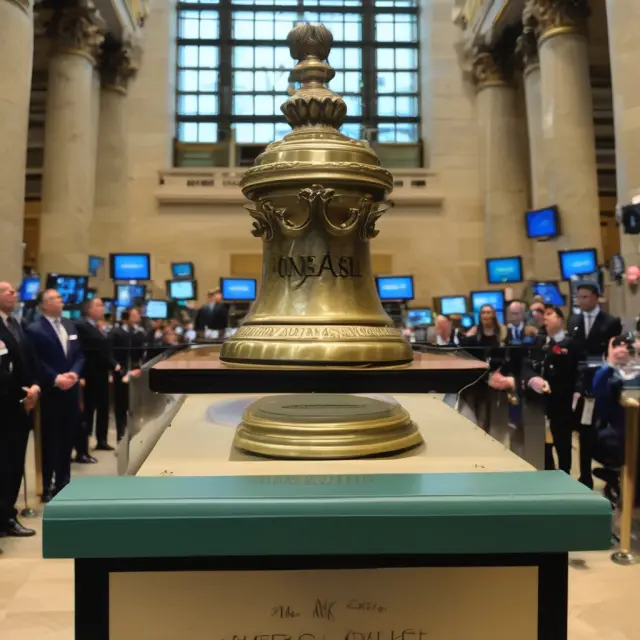
At the New York Stock Exchange, the opening bell ceremony has a rich history dating back to 1863, with various alterations over time. In the early days, trading was initiated with a gavel instead of a bell, and later replaced by an electrically operated brass bell in 1903. The NYSE’s bell calendar lists all those scheduled to ring the opening bell for a given day. Dignitaries, celebrities, or companies holding Initial Public Offerings (IPOs) are usually the ones selected to perform this symbolic act.
Nasdaq’s Opening Bell Ceremony:
The Nasdaq exchange, which is entirely electronic with no physical trading floor, has adopted a more modern approach to the opening bell ceremony. Since there is no physical bell on display at the Nasdaq MarketSite in Times Square, NYC, the event is purely symbolic in nature. The honor of ringing the virtual opening bell is extended to notable individuals or companies that are making headlines within their respective industries. Media coverage plays a crucial role in these ceremonies as they help increase exposure and generate interest among investors.
The Impact on Traders:
The opening bell marks the commencement of regular trading hours for exchanges, allowing traders to participate in real-time market activities. While pre-market trading is available before the opening bell, it is essential to note that the volume and liquidity may be significantly lower compared to post-bell hours. Pre-market trading sessions have their advantages but also present higher risk factors, such as wider bid-ask spreads and increased volatility. Institutional investors dominate pre-market trading activities and often have better resources to execute orders efficiently. As a result, individual retail traders may face stiff competition in such environments.
In conclusion, the opening bell is more than just a symbolic act for exchanges; it holds immense significance as a marker for the start of regular trading hours. The NYSE and Nasdaq each have their unique approaches to the opening bell ceremony, making it an intriguing aspect of financial markets. As investors and traders continue to navigate these markets, being aware of opening hours and traditions can help them make informed decisions in various trading scenarios.

Trading Before and After the Opening Bell
While the opening bell is a significant marker for the official start of trading, there’s also considerable activity happening both before and after it. Pre-market trading, which begins before the opening bell, offers traders and investors an opportunity to place trades even before the market officially opens. This period, though optional, holds importance due to its impact on stock prices, particularly when companies release earnings reports. On the other hand, after-hours trading occurs after the closing bell and provides continued opportunities for trading in the securities market. In this section, we delve deeper into these two periods and explore their advantages, risks, and implications for traders and investors.
Pre-Market Trading: The Early Bird Gets the Worm?
The pre-market session can be an advantageous period for traders and investors as they get access to a more controlled trading environment before the opening bell. During this time, orders are matched manually with other traders who have also placed their orders. This is because no market specialists or market makers are present during these hours; thus, trades must be exact matches in terms of size and offer times. Although there might not be as many participants during pre-market trading, the volume tends to increase significantly when companies announce their quarterly earnings reports before the opening bell.
However, there are risks associated with pre-market trading. Since it is a less liquid market, bid-ask spreads can be wider and price action may be more volatile than regular trading hours. Additionally, retail investors face fierce competition from professional traders such as mutual funds and hedge funds. Pre-market trading is not mandatory for investors, and they can choose to wait until the official trading session begins if they believe that the risk outweighs the potential benefits.
A notable exception to the less liquid market conditions during pre-market hours is in forex and cryptocurrency markets. In these markets, where there’s no opening bell, trading occurs around the clock, allowing for continuous opportunities to execute trades based on price movements.
After-Hours Trading: Catching Up on Missed Opportunities?
Post-closing bell trading, also known as extended hours trading, is a continuation of the regular market session and allows traders to place orders after the official closing time. During this period, prices may change significantly due to various factors such as earnings announcements or company news events that occurred during the day. The extended hours trading sessions offer investors a chance to react to these price movements and potentially capitalize on new opportunities.
However, after-hours trading comes with its own set of risks. Market liquidity tends to be lower compared to regular trading hours, which may lead to increased volatility in pricing. Additionally, there’s a higher risk for price discrepancies between the regular and extended hours markets, making it essential for traders to closely monitor the market conditions and execute their trades carefully.
In conclusion, while the opening bell is an essential part of the stock market’s daily ritual, trading opportunities exist both before and after this marker. Understanding the advantages, risks, and nuances of pre-market and after-hours trading can help traders and investors make informed decisions regarding their investment strategies, allowing them to navigate the ever-changing financial markets with confidence.

Opening Bell Ceremonies: Media Coverage and Participation
The opening bell ceremony at various stock markets is an event that garners significant attention from the media, investors, traders, and the general public. This ceremonial tradition has been a part of trading culture for over a century. In today’s digital age, where most trading is conducted electronically, the role of media coverage in these events has become increasingly important.
The opening bell represents the formal start of trading activities on an exchange. It signifies the opening of the trading floor or the commencement of electronic trading sessions for various markets around the world. Although a significant portion of modern-day trading is automated, the ringing of the opening bell remains a symbolic tradition that marks the beginning of business transactions.
Historically, the opening bell was used to signal traders and brokers to begin the work of auctioning prices on the NYSE. Over time, it evolved into a ceremonial event where dignitaries, celebrities, and company representatives are invited to ring the bell as a symbolic gesture for traders and investors. The presence of media companies in these events has become essential, providing extensive coverage and bringing attention to the day’s trading activities.
Media companies such as CNBC, Fox Business, and other financial news outlets have on-location fixtures at various stock markets to report live from the scene. These media outlets provide valuable insights, analysis, and real-time commentary to their audiences. Their presence in the opening bell ceremony also helps maintain investor interest and keeps the public informed about the market’s movements and economic developments.
In summary, the media plays a crucial role in the opening bell ceremonies of various stock markets. Their presence not only provides extensive coverage and analysis but also helps maintain the symbolic importance of this long-standing tradition. The combination of live reporting, expert insights, and an intriguing ceremony attracts a wide audience and keeps them engaged throughout the trading day.

Understanding Different Stock Market Opening Hours
The concept of the opening bell, while most commonly associated with the New York Stock Exchange (NYSE), is not confined to this particular exchange alone. The significance of the opening bell extends to various stock markets around the world, each having its unique opening hours and customs. In this section, we’ll dive deeper into understanding different stock market opening hours and their importance in global trading activities.
The New York Stock Exchange (NYSE) and Nasdaq Exchange open at 9:30 a.m. Eastern Time daily, but the opening hours vary significantly for other markets around the world. For instance, many futures markets operate with morning and afternoon sessions, and options markets have diverse opening bells depending on their respective exchanges. Additionally, some markets like the foreign exchange (forex) market remain open 24 hours a day, six days per week.
Understanding these differences is crucial for traders as it helps them adapt to the varying trading conditions and maximize their opportunities. For instance, the absence of an opening bell in the forex market signifies the continuous nature of its trading activities and calls for round-the-clock vigilance. Conversely, markets with distinct sessions allow traders to strategically plan their trades based on specific opening hours.
Traders should also be aware that some exchanges offer pre-market trading sessions before the opening bell. In these extended hours, fewer traders participate due to less liquidity and wider bid-ask spreads. However, they can offer opportunities for traders to capitalize on earnings announcements or significant news releases. Conversely, the after-hours trading following the closing bell can provide ample opportunities for price discovery and volatility.
In conclusion, understanding different stock market opening hours is vital for traders seeking to stay informed about global trading activities and adapt their strategies accordingly. By being aware of these variations, they can optimize their trades, mitigate risks, and capitalize on the unique features of each market.
The Symbolic Importance of the Opening Bell to Wall Street Culture
Beyond marking the beginning of a trading day, the opening bell holds a significant symbolic meaning in the culture of Wall Street. The act of ringing the bell is often seen as an opportunity for companies to make news and generate buzz during their initial public offering (IPO). The tradition also provides a unique platform for dignitaries and celebrities to be involved in the stock market, attracting media attention to the trading floor.
Originally, the opening bell was a large gong used on the New York Stock Exchange (NYSE) to formally signal traders that they could begin their daily work of auctioning prices. In 1903, the gong was replaced by an electronically operated brass bell, which remains a ceremonial tradition today. The opening and closing bell ceremony is a crucial event for media companies such as CNBC, Fox, and Cheddar, who have on-location fixtures to cover the trading sessions.
The opening bell symbolizes the start of a new day in the financial market. Trading floors may not be physically operational anymore due to electronic trading, but the ceremony adds importance to the daily financial events. It is an opportunity for companies to showcase their achievements and make announcements to investors, often generating significant media coverage.
Moreover, inviting celebrities or influential figures to ring the bell is a way to maintain interest in the stock market and generate excitement. These individuals bring their fan base and media attention, making the event more accessible to a wider audience. The NYSE’s Bell Calendar lists all the people scheduled to ring the opening bell each day, adding an element of anticipation for investors and traders.
The opening bell ceremony has become an integral part of Wall Street culture. It highlights the importance of transparency and accessibility in financial markets, showcasing companies and individuals that are making news and shaping the market landscape. While electronic trading dominates, the symbolism behind ringing the bell continues to attract attention and significance for traders, investors, and media alike.

FAQ: Misconceptions and Myths Surrounding the Opening Bell
The opening bell is an essential component of the stock market, symbolizing the official start to daily trading sessions on various securities exchanges, like the New York Stock Exchange (NYSE) and Nasdaq. However, numerous misconceptions surround this practice, including its significance, origin, and who actually rings it. This FAQ section aims to clarify common myths surrounding the opening bell.
What is the actual meaning of the opening bell?
The opening bell signifies the start of a regular trading session on an exchange but has become more symbolic with the decline of physical trading floors and the rise of electronic trading. It serves as a formal marker for exchanges to make news and better market securities during initial public offerings (IPOs) and attract media attention, increasing investor interest.
What is the origin of the opening bell?
The origins of the opening bell can be traced back to 1903 when the NYSE replaced its gong with an electronically operated brass bell. However, it’s important to note that prior to this, physical trading floors had a gong for brokers and dealers to be notified that they could begin auctioning prices.
Who rings the opening bell?
The tradition of inviting celebrities, dignitaries, or company representatives to ring the bell dates back to 1965 when the NYSE welcomed then-President Lyndon B. Johnson as the first official bell ringer. This ceremonial ritual serves as an opportunity for these individuals to draw attention to their businesses and create a buzz around the trading day ahead.
What is the role of media in the opening bell ceremony?
Media companies, such as CNBC, Fox Business, and Cheddar, have on-location fixtures at the NYSE due to its significance in attracting investor attention through live reporting during the event. This is a crucial factor for exchanges, as they rely on media coverage to maintain public interest and justify the continued operation of physical trading floors given their high operational costs.
What happens before and after the opening bell?
Trading before and after the opening bell, also known as pre-market and after-hours trading, respectively, allows investors and traders to participate in securities transactions outside regular market hours. While this can offer some advantages, it carries risks related to decreased liquidity, wider bid-ask spreads, and increased volatility.
In conclusion, the opening bell holds significant historical, symbolic, and cultural importance for the stock market community. While the practice may seem outdated given the rise of electronic trading and 24/7 financial news coverage, it continues to serve its purpose as a formal marker for daily trading sessions, attract media attention, and create opportunities for investor engagement.
 Next entry · No. 3,721Understanding the Impact and Strategies Based on Opening Prices in Trading
See also
-
 No. 4,434
18 Jun 2025
18 min
Retracements vs. Reversals: Understanding Short-Term Price Movements in the Stock Market
Markets
No. 4,434
18 Jun 2025
18 min
Retracements vs. Reversals: Understanding Short-Term Price Movements in the Stock Market
Markets -
 No. 3,714
21 Apr 2025
22 min
Open: Understanding Open in Financial Markets and Its Significance
Markets
No. 3,714
21 Apr 2025
22 min
Open: Understanding Open in Financial Markets and Its Significance
Markets -
 No. 3,117
02 Mar 2025
23 min
Understanding Market Orders: The Basics, Advantages, Disadvantages, and Strategies
Markets
No. 3,117
02 Mar 2025
23 min
Understanding Market Orders: The Basics, Advantages, Disadvantages, and Strategies
Markets -
 No. 2,125
12 Dec 2024
20 min
Understanding the Hikkake Pattern: Identifying Short-Term Market Moves
Markets
No. 2,125
12 Dec 2024
20 min
Understanding the Hikkake Pattern: Identifying Short-Term Market Moves
Markets -
 No. 4,911
27 Jul 2025
20 min
A Comprehensive Guide to Technical Analysis: Understanding Chart Patterns, Indicators, and Strategies
Finance Policy
No. 4,911
27 Jul 2025
20 min
A Comprehensive Guide to Technical Analysis: Understanding Chart Patterns, Indicators, and Strategies
Finance Policy -
 No. 4,763
14 Jul 2025
22 min
Understanding the Stock Market: Functions, Regulation, Significance, and Trading
Business Finance
No. 4,763
14 Jul 2025
22 min
Understanding the Stock Market: Functions, Regulation, Significance, and Trading
Business Finance