The World Economic Outlook (WEO): Understanding the Semiannual Report of Global Macroeconomic Conditions and Prospects
Gain insights into the World Economic Outlook (WEO) report's role in global macroeconomic analysis, including regional economic prospects, methodology, and…
Introduction to the WEO Report
The World Economic Outlook (WEO) report is a renowned semiannual publication of the International Monetary Fund (IMF). This comprehensive document provides global economic assessments and forecasts for member countries, focusing on output growth, inflation, employment, fiscal balances, and debt. Key aspects include real gross domestic product (GDP) growth, consumer prices, current account balances, and unemployment.
Published twice a year in April and October, the WEO report offers valuable insights into the world economy’s current state and most recent developments. The data for these forecasts comes from IMF consultations with member countries, making it an essential resource for financial markets analysts. Moreover, the report includes several chapters on pressing economic issues.
The April 2022 WEO, titled “War Sets Back the Global Recovery,” lowered global growth predictions for 2022 and 2023 due to the economic implications of the Russia-Ukraine conflict. The IMF revised its annual growth forecasts from an estimated 6.1% in 2021 to 3.6% for both 2022 and 2023, as a result of rising energy and commodity prices caused by geopolitical tensions. The April WEO also featured chapters on topics such as private sector debt, greener labor markets, and global trade during the pandemic.
In addition to the semiannual reports, the IMF publishes two less comprehensive World Economic Outlook updates each year, typically three months apart from the main publications. These updates offer a more succinct analysis of the latest economic conditions and developments.
The WEO report’s global perspective and accurate forecasts make it an essential tool for governments, financial institutions, and investors seeking to understand macroeconomic trends. Its role as a leading financial organization heavily involved in macroeconomic analysis ensures its data are widely cited. Despite occasional controversy surrounding the consequences of IMF structural adjustment programs, the WEO report has generally been well-received for its insightful assessments and expert analysis.
In the following sections, we will delve deeper into the methodology behind the WEO reports, regional economic prospects, the impact of crises and geopolitical events on the global economy, and sustainability considerations.
The Role of IMF in Global Economy
As a preeminent financial institution, the International Monetary Fund (IMF) plays a crucial role in global economic analysis and policy implementation. The organization is best known for its lending programs to member countries facing economic difficulties. However, it also generates essential insights into the macroeconomic conditions of its 190 members through the World Economic Outlook (WEO) report.
The World Economic Outlook is a semi-annual publication where the IMF provides estimates and forecasts for key economic indicators like output growth, inflation, unemployment, fiscal balances, and external balances for all member countries, grouped by region and development status. The WEO is recognized for its global growth projections and offers valuable perspectives on the state of the world economy and recent developments.
The IMF’s data for the WEO reports comes primarily from consultations with member countries through their respective representatives, providing a comprehensive and accurate view of economic conditions worldwide. The organization publishes two full-scale WEO reports per year – in April and October – and two less comprehensive updates – in July and January. This frequency ensures that readers have access to timely and updated information on the global economy.
The IMF’s expertise in macroeconomic analysis, given its role as a leading financial organization, makes its data highly valuable for financial markets analysts, policymakers, and researchers alike. The WEO reports are widely cited due to their comprehensive nature and unparalleled scope.
Although the IMF has faced criticisms regarding its structural adjustment programs, the World Economic Outlook report itself has generally been less controversial. It is prepared by professional staff at the organization, with input from the Fund’s executive directors prior to publication. This meticulous process ensures the reports maintain a high level of credibility and accuracy.
For instance, the April 2022 WEO report titled “War Sets Back the Global Recovery” showcased the impact of the war in Ukraine on global economic growth forecasts. The IMF lowered its annual global growth forecast to 3.6% for both 2022 and 2023 due to the invasion’s repercussions, which included rising energy and commodity prices. This significant adjustment highlights the importance of the World Economic Outlook report in providing valuable insights into economic developments and trends.
Global Economic Prospects and Developments
The World Economic Outlook report, published twice a year by the International Monetary Fund (IMF), is an essential tool for understanding the current state of the global economy and prospects for growth. This section explores key trends, challenges, and developments, all based on data from the IMF’s extensive global economic analysis.
As the world’s premier financial organization involved in macroeconomic analysis, the IMF plays a crucial role in providing insights into various aspects of the global economy. The IMF obtains data for its World Economic Outlook report through consultations with member countries and their governments. This information forms the backbone of the WEO’s semiannual forecasts, making them highly influential among financial markets analysts.
The April 2022 World Economic Outlook report, titled “War Sets Back the Global Recovery,” showcases the importance of the IMF’s analysis in understanding significant global economic shifts. The report lowered the IMF’s growth forecasts for 2022 and 2023 due to Russia’s invasion of Ukraine and its repercussions on energy and commodity prices. The WEO now projects a global economic expansion of just 3.6% in both 2022 and 2023, significantly below the previously forecasted 4.4% and 3.8% growth rates, respectively.
The April 2022 report includes several chapters addressing pressing economic issues, such as private sector debt, green labor markets, and global trade value chains during the pandemic. The first chapter highlights the impact of the Russian invasion on global prospects and policies, while also providing a detailed analysis of grain prices and European banks’ exposure to Russia.
While the IMF has faced criticism regarding some of its structural adjustment programs and their consequences for the poor in debtor countries, the World Economic Outlook itself has been less controversial. The WEO serves as a valuable resource for understanding current economic conditions and prospects on a global scale.
Stay tuned for the next sections covering methodology, regional analysis, and other aspects of the World Economic Outlook report.

Methodology and Assumptions
The World Economic Outlook (WEO) report is an integral part of the International Monetary Fund’s (IMF) efforts to maintain a comprehensive understanding of the global economy. Compiled twice a year, in April and October, the WEO relies on data from consultations with member countries’ governments and incorporates IMF staff analyses of economic conditions and prospects.
The report’s primary focus is to offer projections for key macroeconomic indicators such as output growth, inflation, unemployment, fiscal balances, and debt levels across the 190 IMF member nations, grouped by region and development status. These estimates are crucial for informing economic decision-making at both national and global levels.
The World Economic Outlook employs a standard international macroeconomic model, which is regularly updated to incorporate the latest developments in economics theory and empirical evidence. The model is used to generate projections for individual countries’ economies based on their unique circumstances, with regional and global economic trends factored into the analysis.
Assumptions are an inherent part of any economic forecasting exercise. For WEO reports, these assumptions include exchange rate movements, oil prices, commodity prices, demographic changes, and policy measures. The IMF publishes a detailed explanation of its assumptions in each WEO report to ensure transparency and to facilitate debate among stakeholders.
Implications of these assumptions are significant as they can influence investor sentiment and market expectations, potentially affecting asset pricing and overall economic conditions. Additionally, the methodology used in generating WEO estimates is subject to scrutiny and debate within the academic community, which contributes to ongoing discussions on best practices for global economic forecasting.
It’s essential to remember that the World Economic Outlook report does not have a perfect track record of accuracy; however, its projections provide valuable insights into current trends, challenges, and opportunities in the global economy. By examining the methodology behind these forecasts and understanding the assumptions made, we can more effectively assess their relevance and implications for our investment strategies and economic policies.
Regional Analysis
The World Economic Outlook (WEO) report, published twice a year by the International Monetary Fund (IMF), offers comprehensive economic data and analysis for each region of the world, providing valuable insights into regional growth prospects and trends. In this section, we will delve into the regional components of the WEO report, including advanced economies, emerging markets, and low-income developing countries.
Advanced Economies: The advanced economy section of the WEO report focuses on the economic conditions and prospects for member countries such as the United States, Europe, Japan, and Canada. The analysis covers various indicators like real Gross Domestic Product (GDP), inflation, current account balances, unemployment, and consumer prices. In recent years, advanced economies have faced challenges such as an aging population and low productivity growth, which has put pressure on their fiscal structures. For instance, the European Union (EU) countries have been grappling with issues related to economic convergence and structural reforms, while Japan continues to battle deflationary pressures.
Emerging Markets: The emerging market section of the WEO report offers an in-depth examination of the economic conditions and prospects for economies such as China, India, Brazil, Mexico, and Russia. These countries are characterized by rapidly expanding populations, growing economies, and increasing integration into the global economy. However, they also face unique challenges such as managing capital flows, volatility, and exchange rate risks. For example, China’s transition to a more consumer-driven economy, India’s continued growth despite structural weaknesses, and Brazil’s challenges with political instability all warrant close attention in the WEO report.
Low-Income Developing Countries: The low-income developing countries section of the WEO report focuses on the economic conditions and prospects for the world’s poorest nations. This group includes Sub-Saharan Africa, South Asia, and the Middle East and North Africa. While many of these countries face significant challenges such as poverty, weak institutions, and political instability, they also present opportunities for growth through targeted investments in areas like infrastructure, education, and healthcare. For instance, Rwanda’s transformation from a post-genocide country to an emerging economy, Ethiopia’s ambitious development plans, and Bangladesh’s progress in reducing poverty are all topics of interest in the WEO report.
Through its regional analysis, the World Economic Outlook report offers valuable insights into economic conditions and prospects for different regions around the world. By monitoring trends and challenges faced by advanced economies, emerging markets, and low-income developing countries, the WEO report enables policymakers, investors, and analysts to make informed decisions that can help promote sustainable growth and development in a global economy that is increasingly interconnected and complex.
In conclusion, the World Economic Outlook report is an essential tool for understanding the global economic landscape and staying informed about key trends and developments. Its comprehensive analysis of regional conditions and prospects offers valuable insights for policymakers, investors, and analysts alike, helping to foster informed decision-making in a rapidly changing world economy.
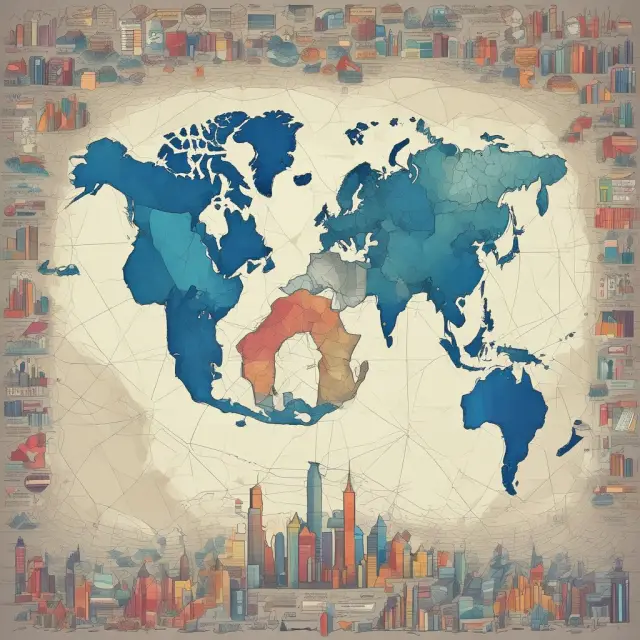
The Impact of Crises and Geopolitical Events on Global Economy
Crises and geopolitical events can significantly influence the world economy, with their impacts often materializing in the World Economic Outlook (WEO) reports published by the International Monetary Fund (IMF). These reports serve as a barometer of global economic health, providing insight into key trends and challenges.
One instance of this is the impact of the COVID-19 pandemic on global growth estimates. In its April 2022 report titled “War Sets Back the Global Recovery,” the IMF lowered its annual global growth forecasts for 2022 and 2023 from an estimated 6.1% gain in 2021 due to the repercussions of the pandemic, which had caused a downturn, as well as the war in Ukraine and the subsequent increase in energy and commodity prices. The WEO forecasts for 2022 were revised downward to 3.6%, while those for 2023 were adjusted to 3.8% from the previously projected 4.4%.
Another example is the IMF’s analysis of private sector debt and its role in the global recovery. This topic was explored in depth during the COVID-19 pandemic, as governments took unprecedented actions to mitigate the economic impact of lockdowns and other restrictions. In its April 2022 report, the IMF included a chapter on “Private Sector Debt and the Global Recovery,” which emphasized the importance of addressing the risks posed by growing debt burdens in several emerging economies. This issue was further highlighted in the WEO update published three months earlier.
Geopolitical events can also significantly impact the global economy as evidenced in the April 2022 World Economic Outlook report, which discussed the surge in grain prices and the exposure of European banks to Russia as a percentage of total assets by country. The war in Ukraine led to a disruption in grain exports from the region and caused a sharp increase in food prices. The IMF’s analysis of this situation underscores the importance of understanding how geopolitical events can affect economic conditions and prospects both domestically and globally.
In conclusion, the World Economic Outlook reports published by the International Monetary Fund serve as valuable tools for analyzing the state of the global economy and identifying trends, challenges, and opportunities. Crises and geopolitical events are among the many factors that influence economic conditions and prospects, and their impact can be seen in the WEO’s semiannual forecasts. By providing comprehensive analysis and insights into these events and their implications, the IMF helps investors, governments, and policymakers make informed decisions in an increasingly complex global economy.
The Importance of Sustainability in WEO Reports
As the global economy becomes increasingly interconnected and complex, the importance of sustainability in economic analysis has grown significantly. The World Economic Outlook (WEO) reports published by the International Monetary Fund (IMF) reflect this trend by providing a comprehensive assessment of not only current economic conditions but also future prospects related to environmental, social, and governance (ESG) factors. Incorporating sustainability considerations in its forecasts is crucial for the IMF to address the long-term challenges facing the global economy and provide valuable insights to its member countries and financial markets.
One of the main reasons for the emphasis on sustainability in WEO reports comes from the increasing recognition that traditional macroeconomic indicators alone do not fully capture the economic impact of sustainable development. For example, Gross Domestic Product (GDP), the most widely used measure of economic output, fails to account for negative externalities, such as pollution and resource depletion. Furthermore, it does not consider the social and environmental costs associated with certain economic activities, which can lead to significant long-term consequences for future generations.
In response to this challenge, the IMF has started integrating sustainability factors into its economic analysis through various initiatives and methodologies. For instance, the WEO report now includes an “Environmental Adjustment” module that assesses the impact of climate change on the global economy. This module offers a projection of potential GDP losses due to climate change for major economies in different regions under various carbon pricing scenarios. Additionally, it analyzes the policy implications of these projections and provides recommendations for strengthening the resilience of countries against climate risks.
Another important aspect of sustainability that has gained prominence in WEO reports is social considerations. The IMF acknowledges that economic growth alone cannot ensure long-term prosperity and well-being if it comes at the expense of social cohesion and inclusion. As a result, the organization has started examining the relationship between inequality, poverty, and growth dynamics in its member countries. For example, recent WEO reports have assessed the distributional effects of fiscal policies and structural reforms on different income groups. They also explore potential policy solutions to address the underlying causes of income disparities and promote social stability.
Lastly, governance factors are increasingly important for maintaining long-term economic sustainability due to their influence on both economic stability and sustainable development. WEO reports have addressed issues related to anti-corruption measures, transparency, and the rule of law as they relate to economic growth and development. Furthermore, the IMF’s assessment of governance factors can help investors evaluate risks and potential opportunities in different countries.
In conclusion, sustainability considerations play a crucial role in the World Economic Outlook reports published by the International Monetary Fund. By integrating environmental, social, and governance factors into its economic analysis, the IMF is able to provide a more comprehensive understanding of the global economy and help member countries make informed policy decisions that promote long-term growth while addressing the challenges posed by sustainability concerns.
Criticism and Controversy Surrounding WEO Reports
The World Economic Outlook (WEO) reports have not been without controversy since their inception. The most frequent criticisms target the IMF’s structural adjustment programs and data accuracy.
Structural Adjustment Programs: Structural adjustment programs, an integral component of IMF financial assistance packages during the 1980s and 1990s, have long been a subject of controversy. These programs, aimed at fostering economic growth through fiscal discipline, trade liberalization, and market-oriented reforms, were often perceived as imposing undue burdens on the poorer segments of society in debtor countries. Critics argued that these programs worsened poverty levels, resulted in social unrest, and hindered sustainable economic development. Although the IMF has modified its approach to structural adjustment since the 1990s, with greater emphasis on a more balanced macroeconomic framework and inclusive growth strategies, the memory of past criticisms lingers.
Data Accuracy: Another controversy surrounding WEO reports revolves around concerns over data accuracy and potential bias. The IMF collects data primarily from its member countries through consultations between IMF staff and country officials. However, critics argue that this method may result in inconsistencies or inaccuracies due to various factors such as political motivations, lack of resources for adequate statistical analysis in developing countries, or differing interpretations of economic concepts. Moreover, the reliance on official statistics raises concerns regarding underreported data, which could influence macroeconomic assessments and forecasts. While the IMF has taken steps to improve its data quality, such as enhancing transparency and collaborating with external organizations for verification, the controversy remains a challenge.
In conclusion, while the World Economic Outlook reports are widely respected for their comprehensive analysis of global economic conditions, they have not been immune to controversy. Criticisms surrounding structural adjustment programs and data accuracy have shaped the ongoing debate on the role and effectiveness of the IMF in addressing the world’s economic challenges. The organization continues to adapt its strategies in response to these criticisms and strives for greater transparency, collaboration, and inclusiveness in its work.

Future of the World Economic Outlook Report
The World Economic Outlook report (WEO) is an essential tool for understanding the current state of the global economy and forecasting future economic trends. Given its significance, it’s natural to explore what lies ahead for this seminal publication of the International Monetary Fund (IMF).
One potential evolution could be more frequent updates. Currently, WEO reports are published twice a year. Amid rapidly changing economic landscapes and geopolitical uncertainties, more frequent updates might provide greater value to investors, economists, and policymakers alike.
Another possibility is expanding the scope of the report. The WEO has historically focused on macroeconomic conditions and prospects for 190 member countries, but there’s potential to broaden its coverage. For instance, it could delve deeper into specific industries, technological advancements, or environmental factors influencing economic growth.
The increasing importance of sustainability in the global economy also merits further consideration for WEO reports. As governments and businesses commit to reducing carbon emissions and transitioning to renewable energy sources, understanding their implications for economic growth is crucial. The IMF could include a dedicated section or chapter on these topics in future WEOs.
Finally, collaborating with other international organizations and think tanks could strengthen the WEO’s impact. By incorporating data, analyses, and forecasts from partner institutions, the IMF could provide a more holistic view of the global economy, making their reports even more valuable to readers.
In conclusion, the World Economic Outlook report continues to be an indispensable resource for tracking economic trends worldwide. With potential enhancements such as more frequent updates, expanded scope, and collaborations with other organizations, the WEO is poised to remain a go-to source of insightful analysis for investors, economists, and policymakers alike.
FAQ: Common Questions About the World Economic Outlook Report
What is the World Economic Outlook report?
Answer: The World Economic Outlook (WEO) is a twice-yearly publication by the International Monetary Fund (IMF) that provides global economic forecasts and analyzes current trends in member countries.
Where can I access past WEO reports?
Answer: Past WEO reports, updates, and other publications by the IMF are available on their website at http://www.imf.org/en/Publications/WEO.
How often is the World Economic Outlook report published?
Answer: The World Economic Outlook report is usually published twice a year – in April and October, with less comprehensive updates in July and January.
Which organizations contribute data to the WEO reports?
Answer: Data for World Economic Outlook reports comes from consultations between IMF representatives and member countries’ governments.

FAQ: Common Questions About the World Economic Outlook Report
The World Economic Outlook (WEO) report, published twice a year by the International Monetary Fund (IMF), is widely regarded for its global economic forecasts and analysis. Below, we answer some common questions about this essential financial document.
What is the purpose of the World Economic Outlook report?
The primary goal of the WEO report is to provide the latest information on the current state and future prospects of the world economy, including estimates and forecasts for global output growth, inflation, exchange rates, and key economic indicators.
What data does the IMF use in preparing the World Economic Outlook report?
The IMF relies primarily on data obtained from its consultations with member countries’ governments and central banks. This information is then incorporated into the WEO database for analysis.
How often is the World Economic Outlook report published, and when can I access it?
The World Economic Outlook report is typically published twice a year – in April and October. Less comprehensive updates are provided in July and January. The full reports can be accessed on the IMF website, while partial updates can be found in the IMF’s World Economic Outlook database.
Who prepares the World Economic Outlook report, and how is it compiled?
The WEO report is prepared by the IMF’s professional staff. It draws upon data from the organization’s consultations with member countries and an analysis of global economic and financial developments. The report is then reviewed and approved by the IMF’s executive directors before publication.
How can I access older World Economic Outlook reports?
Older WEO reports dating back to 1980 are available on the IMF website, accessible through the Historical Archive section of the World Economic Outlook database.
What is unique about the World Economic Outlook report compared to other economic forecasts and analyses?
The World Economic Outlook report stands out due to its comprehensive scope covering all member countries of the IMF, and its focus on macroeconomic conditions and prospects. Additionally, the report’s data is widely trusted given the IMF’s role as a leading global financial organization involved in macroeconomic analysis through its lending programs.
How does the World Economic Outlook impact financial markets?
The WEO report’s global growth forecasts and analysis are closely followed by financial markets analysts, as they can significantly influence investor sentiment and asset prices. In turn, changes to the IMF’s economic projections may impact central bank policy decisions or alter investors’ risk assessments.
How can I stay updated on the latest World Economic Outlook developments?
To keep up with the latest WEO developments, you can follow the IMF’s press releases and media briefings, which often provide updates on new reports and upcoming data releases. Additionally, the IMF website offers a variety of resources such as infographics, videos, and research papers for further analysis and discussion of global economic trends.
 Next entry · No. 5,800Understanding World Insurance: A Comprehensive Guide for Global Businesses
See also
-
 No. 3,549
07 Apr 2025
25 min
Understanding Nonrenewable Resources: Their Significance and Impact on Climate Change
Energy Finance
No. 3,549
07 Apr 2025
25 min
Understanding Nonrenewable Resources: Their Significance and Impact on Climate Change
Energy Finance -
 No. 4,575
29 Jun 2025
20 min
Understanding Special Drawing Rights (SDRs): An International Reserve Currency Instrument
Global Finance
No. 4,575
29 Jun 2025
20 min
Understanding Special Drawing Rights (SDRs): An International Reserve Currency Instrument
Global Finance -
 No. 2,463
08 Jan 2025
20 min
Understanding International Finance: Key Concepts, Institutions, and Challenges
Global Finance
No. 2,463
08 Jan 2025
20 min
Understanding International Finance: Key Concepts, Institutions, and Challenges
Global Finance -
 No. 2,303
26 Dec 2024
21 min
Understanding the International Monetary Fund (IMF): Mission, History, and Activities
Global Finance
No. 2,303
26 Dec 2024
21 min
Understanding the International Monetary Fund (IMF): Mission, History, and Activities
Global Finance -
 No. 1,791
06 Nov 2024
16 min
Understanding the Global Financial Stability Report (GFSR): A Semiannual Assessment of Global Financial Markets and Emerging-Market Financing by the IMF
Global Finance
No. 1,791
06 Nov 2024
16 min
Understanding the Global Financial Stability Report (GFSR): A Semiannual Assessment of Global Financial Markets and Emerging-Market Financing by the IMF
Global Finance -
 No. 1,763
03 Nov 2024
22 min
Understanding the General Agreements to Borrow (GAB): An Historical Look into a Terminated IMF Facility
Global Finance
No. 1,763
03 Nov 2024
22 min
Understanding the General Agreements to Borrow (GAB): An Historical Look into a Terminated IMF Facility
Global Finance