Total Cost of Ownership: A Holistic Approach to Understanding the Long-Term Value of Assets and Investments

Learn the holistic approach of Total Cost of Ownership (TCO), understanding its significance for corporations and personal investments. Break down TCO…
Introduction to Total Cost of Ownership (TCO)
Total Cost of Ownership (TCO), also known as Total Cost of Acquisition (TCA) or Total Cost of Risk (TCR), is a financial concept widely used in business and personal finance. TCO represents the total expenses involved in acquiring, operating, maintaining, and disposing of an asset over its entire life cycle. In essence, it’s a comprehensive evaluation that goes beyond the purchase price of an asset to consider all associated costs. This approach is essential for understanding the long-term financial implications of making a particular investment or purchasing decision.
TCO is increasingly becoming popular in today’s business landscape as more companies adopt strategic sourcing and cost reduction initiatives. It helps organizations compare different options, make informed decisions, and optimize their resources to maximize returns while minimizing risks.
In this article, we will delve deeper into the concept of TCO, its significance, and how it can be applied to various aspects of finance and investment. We’ll explore both corporate and personal perspectives, providing examples and real-life use cases to help clarify the importance and benefits of considering TCO when making financial decisions.
Understanding Total Cost of Ownership (TCO) for Corporations
Total cost of ownership plays a critical role in corporate finance, particularly when it comes to analyzing business deals and making capital investments. Companies often use TCO as a framework for assessing the long-term value of potential purchases or projects, taking a more holistic approach that encompasses both the initial purchase price and all subsequent costs.
When evaluating TCO for a corporation, it’s essential to consider various components:
- Initial acquisition cost (purchase price)
- Operating costs (utilities, insurance, maintenance, etc.)
- Training and employee time required for implementation
- Depreciation or amortization
- Disposal costs (selling, donating, or recycling the asset)
Corporations often use TCO in conjunction with other financial metrics like Net Present Value (NPV), Internal Rate of Return (IRR), and Return on Investment (ROI). By comparing these different indicators, businesses can make well-informed decisions that maximize their long-term benefits while minimizing risks.
Total Cost of Ownership for Personal Investments
While TCO may be more commonly associated with corporate finance, individuals can also benefit from this concept when making purchasing decisions. For instance, when comparing two similar products or services, calculating and evaluating the total cost of ownership can help determine which option is more cost-effective in the long run.
When considering personal investments, TCO might include costs such as:
- Upfront purchase price
- Operating expenses (utilities, maintenance, etc.)
- Insurance premiums
- Depreciation or amortization
- Replacement cost
A practical example of applying TCO to personal investments is when purchasing a car. The total cost of ownership for two cars – one new and one used – may differ significantly, even if their upfront prices are comparable. To accurately compare the two options, one must factor in ongoing costs such as maintenance, insurance premiums, fuel consumption, and potential replacement costs over the vehicle’s entire life cycle.
Calculating Total Cost of Ownership (TCO)
Determining TCO involves evaluating all costs associated with acquiring, operating, maintaining, and disposing of an asset throughout its useful life. While it may be time-consuming to calculate TCO for complex systems or products, the process can ultimately provide valuable insights and help decision-makers make more informed choices.
To calculate TCO, consider these steps:
- Identify all costs related to acquiring the asset (purchase price, transportation, installation, etc.)
- Estimate ongoing operating costs (utilities, maintenance, insurance, employee time, etc.)
- Determine disposal costs (selling, donating, or recycling the asset)
- Factor in any additional indirect costs (training, regulatory compliance, etc.)
- Analyze potential savings or opportunities for cost reduction
- Evaluate the TCO across the entire life cycle of the asset
By following these steps, decision-makers can effectively compare the total cost of ownership for various options and make well-informed decisions that prioritize long-term value over short-term savings.
Stay tuned for the next sections, where we’ll dive deeper into the importance and applications of TCO in specific industries and provide real-life examples to illustrate its impact on business strategy and planning.

How Does TCO Work for Corporations?
Total Cost of Ownership (TCO) is an essential concept in business and finance, particularly when corporations are making significant purchases or investing in capital projects. Instead of focusing solely on the initial purchase price, a company should consider TCO as a more comprehensive approach to evaluating the long-term value of an investment. By calculating the total cost over the asset’s entire lifespan, businesses can make informed decisions based on both short-term and long-term expenses.
In corporate decision-making, TCO plays a crucial role in analyzing business deals. Companies carefully consider both capital expenditures (the purchase price) and operating expenditures when assessing the total cost of ownership. While these costs are usually itemized separately on financial statements, a comprehensive evaluation of TCO examines all potential direct and indirect expenses.
For instance, let’s examine the example of a corporation considering an investment in a new computer system. The initial purchase price is just one component; additional costs include software, installation, transition costs, employee training, security costs, disaster recovery planning, ongoing support, and future upgrades. By analyzing these costs, the company can assess the advantages and disadvantages of purchasing the computer system and determine its overall long-term value to the organization.
On a smaller scale, individuals also employ TCO analysis when making purchasing decisions. When comparing, for example, a used car to a new car, the total cost of ownership may be crucial in preventing unnecessary future losses. The lower upfront cost of the used car might initially seem more attractive, but if it requires numerous repairs and has high maintenance costs, its total cost over time could be higher than that of a new car with an extended warranty covering repair charges.
In industries like automotive, resources such as Kelley Blue Book offer valuable insights into TCO analysis for potential buyers. By providing details on various expenses, including fuel, insurance, repairs, and depreciation, these industry analyses help guide consumers in making informed decisions about their purchases. Ultimately, considering the total cost of ownership is essential before making any significant investment or purchase, as it offers a more holistic perspective that can lead to better decision-making and long-term value.

What Are the Key Components of TCO?
Total Cost of Ownership (TCO) is an essential concept used by businesses and individuals when making purchasing decisions. It extends beyond a product’s initial price tag and includes all costs incurred throughout its lifetime. Let’s delve into the crucial components that make up TCO.
Initially, there is the purchase price – the cost of acquiring an asset or good. However, this is only a small fraction of the total cost. The true cost comes from the ongoing expenses associated with owning and maintaining the asset.
Direct costs are easy to identify and include expenses like utilities, maintenance contracts, and consumables that can be directly attributed to the asset. Indirect costs, on the other hand, may not always be immediately apparent but can significantly impact the TCO. Examples of indirect costs include insurance premiums, employee training, taxes, and depreciation or amortization charges.
Another crucial factor to consider is disposal costs – the cost of removing an asset from service and disposing of it at the end of its useful life. This includes fees for recycling, disposal services, or resale value if applicable.
When analyzing the TCO for a business decision, it’s important to look beyond the initial purchase price and account for all costs incurred throughout the asset’s lifetime. By evaluating TCO, companies can make informed decisions that minimize their long-term financial exposure while maximizing value and efficiency.
Similarly, individuals can also apply the concept of TCO when deciding between two similar options or assessing a potential investment. For instance, purchasing a new versus used car is an excellent example where considering TCO can help you make a more informed decision. While the upfront cost may be lower for the used vehicle, its potential maintenance and repair costs could outweigh the benefits of the initial savings.
In conclusion, understanding the key components of TCO is essential to making well-informed decisions when investing in assets or goods. By accounting for both direct and indirect costs, along with disposal expenses, you can determine the true value of an investment over its entire lifespan.
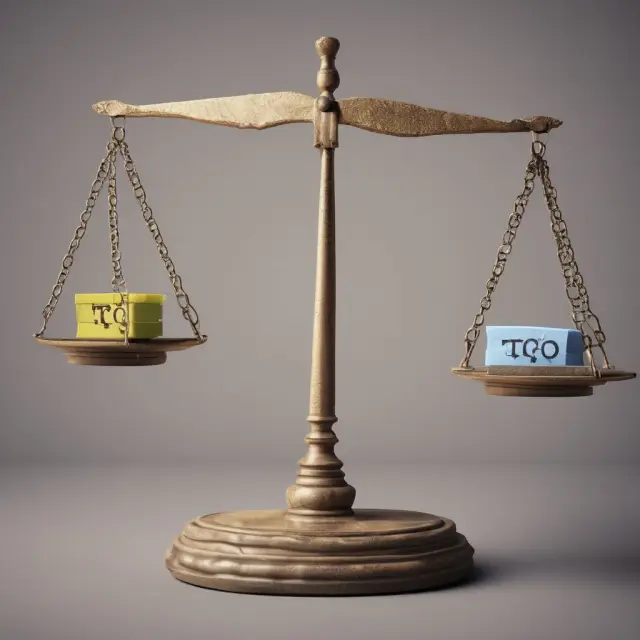
Comparative Analysis: Used vs. New Assets
Total cost of ownership (TCO) plays a crucial role when comparing new and used assets. While some people may view a used asset as a more affordable option due to its lower upfront price, it’s essential to consider the long-term costs and expenses associated with that asset throughout its useful life. In this section, we will delve deeper into how TCO analysis is crucial in making informed purchasing decisions between used and new assets.
Let’s begin by understanding the primary components of TCO: the initial purchase price, ongoing operational costs, and disposal costs (if applicable). For instance, when considering buying a car, the total cost of ownership goes beyond the sticker price. Other factors, such as fuel consumption, insurance premiums, maintenance, repairs, and depreciation, significantly impact the overall cost of owning the vehicle throughout its useful life.
Now let’s compare used and new assets using this TCO framework. When purchasing a used car, for instance, buyers might save on the initial investment but could face higher ongoing costs due to potential maintenance issues or repairs. On the other hand, a new car comes with a warranty, which can help offset these costs during the coverage period.
In the business world, TCO analysis is particularly crucial when evaluating capital expenditures like technology investments or major equipment purchases. For instance, an outdated server might be less expensive upfront than its newer counterpart. However, it may have higher operating costs due to increased energy consumption, maintenance requirements, and potential compatibility issues with new software or applications. Conversely, the newer server might require a larger initial investment but could offer lower long-term costs due to enhanced energy efficiency, easier integration with modern technology, and reduced maintenance needs.
It is important to note that TCO analysis isn’t limited to major purchases. For example, when comparing cloud computing services or software packages, the total cost of ownership should consider not only the licensing fee but also ongoing usage costs, support fees, upgrades, and potential training expenses for users.
To effectively conduct a TCO analysis, it is crucial to gather accurate data about the asset’s costs throughout its entire life cycle. Several resources can help in this process. For personal assets like cars or homes, consumer reports and databases (e.g., Kelley Blue Book) offer valuable insights into long-term expenses associated with various items. For business purchases, organizations may use specialized tools to estimate TCO based on historical data and industry benchmarks.
In conclusion, a thorough Total Cost of Ownership analysis is essential for making informed purchasing decisions between used and new assets. By considering all the direct and indirect costs involved, including the initial purchase price, operating costs, maintenance, training, and disposal costs (if applicable), buyers can make more informed choices that help them minimize their overall investment risk and ensure they maximize value in the long term.

How to Use TCO for Personal Investments?
Total cost of ownership (TCO) plays an essential role in business decision-making by providing a holistic perspective on the long-term value of an asset. However, it is also crucial for individuals when assessing personal investments, such as cars or real estate. In this section, we discuss how TCO can guide informed decisions and provide a clearer understanding of the financial implications of various investment options.
Understanding Personal Investments’ TCO: More Than Just Upfront Costs
When considering purchasing an asset for personal use, individuals often focus on the initial upfront cost. However, it is vital to recognize that an investment’s value extends beyond the purchase price. The total cost of ownership (TCO) represents this long-term perspective by incorporating not only the initial investment but also ongoing expenses and eventual disposal costs.
Applying TCO to Personal Investment Decisions: Cars as an Example
A popular example of using TCO in personal investment decisions is when purchasing a car. While the sticker price plays a significant role, it is merely the start of the total cost equation. Factors like fuel consumption, insurance premiums, maintenance costs, and potential resale value all contribute to the overall expense of owning and operating a vehicle.
Comparing Used vs. New Cars: A Case in Point
A comparative analysis of TCO can significantly impact your decision-making process when considering used cars against new models. Although a used car might appear to be a more affordable upfront investment, it could result in higher total costs if it requires substantial repairs or maintenance that the new model would not. In this scenario, a new car with an extended warranty could potentially save you money over the long term.
Additional Personal Investment Categories and TCO Analysis
Although cars are a common application of TCO analysis for personal investments, real estate is another investment category that benefits from this approach. By evaluating the total cost of ownership, including mortgage payments, property taxes, maintenance costs, and potential resale value, individuals can make more informed decisions when buying, selling, or refinancing real estate.
Finding Resources to Determine TCO: Empowering Informed Decisions
To help you in calculating the total cost of ownership for various personal investments, resources like Consumer Reports and Kelley Blue Book offer valuable information on fuel consumption, maintenance costs, insurance premiums, and other related factors. These tools can save you time and money by providing a clear picture of the long-term expenses associated with your potential investment options.
In conclusion, applying TCO analysis to personal investments is an essential step in making informed decisions that result in both financial savings and peace of mind. By examining not only upfront costs but also ongoing expenses and disposal costs, individuals can reap the benefits of a comprehensive and holistic approach to their investment strategies.

What Are Some Resources for Determining TCO?
Assessing Total Cost of Ownership (TCO) is crucial when making decisions about investments and asset purchases. For an accurate evaluation, it’s essential to consider all costs associated with owning an asset over its entire life cycle. While the initial purchase price may seem attractive, understanding the ongoing expenses can help you make informed decisions and avoid potential losses.
For businesses and individuals alike, reliable resources can significantly simplify the TCO calculation process. Here are some valuable tools and organizations that provide insights into Total Cost of Ownership:
- Kelley Blue Book: This well-known automotive resource offers detailed analysis on the total cost of ownership for various vehicles. It takes into account factors like depreciation, financing, fuel costs, insurance, maintenance, and repairs.
- Consumer Reports: Consumer Reports is an independent organization providing unbiased information on products and services, including cars, appliances, electronics, and more. They offer comprehensive TCO assessments for numerous items, helping consumers compare the long-term value of various options.
- Edmunds: Another trusted automotive resource, Edmunds offers extensive data and insights to help users make informed decisions regarding car purchases. Their TCO analysis covers costs like depreciation, fuel, insurance, maintenance, and repairs for a given period.
- Gartner IT: For businesses looking at technology investments, Gartner IT provides research, advice, and consulting services on Total Cost of Ownership. They evaluate the financial impact of hardware, software, and services throughout their entire lifecycle.
- National Association of Home Builders: If you’re considering a home purchase or improvement project, the NAHB offers resources on determining TCO for homes. Their research covers factors like maintenance costs, property taxes, utilities, insurance, and more.
- Government Websites: Many government agencies provide information on the total cost of ownership for various consumer products, such as appliances, electronics, and vehicles. For instance, the U.S. Department of Energy offers TCO data for home heating and cooling systems.
- Industry Associations: Trade associations in specific industries often publish studies and reports on total cost of ownership. For example, the Solar Energy Industries Association provides TCO analyses for solar energy systems.
- Manufacturers: Many manufacturers offer Total Cost of Ownership calculators for their products. These tools help potential buyers estimate ongoing costs like maintenance, repairs, and replacement parts.
By leveraging these resources, you’ll have a solid understanding of the total cost of ownership for various investments and asset purchases, allowing you to make informed decisions that maximize long-term value.

The Impact of TCO on Business Strategy and Planning
Total cost of ownership (TCO) plays an essential role in business strategy and planning by providing a comprehensive perspective on the financial implications of acquiring and maintaining assets or making investments. Instead of solely focusing on the initial purchase price, companies can use TCO to assess the long-term value and costs of these investments. In this section, we will discuss how TCO influences business decisions in terms of capital budgeting and long-term planning.
Total Cost of Ownership for Capital Budgeting
Capital budgeting is a process used by businesses to allocate resources for long-term investments. By considering TCO, companies can make more informed decisions about which projects to invest in. A project with a lower TCO may provide better value and return on investment (ROI) over the long term, even if its initial price tag is higher than that of another project. When evaluating capital projects, businesses take into account both the direct costs, like labor and materials, as well as indirect costs, such as taxes, insurance, and depreciation.
Total Cost of Ownership for Long-Term Planning
Long-term planning is a critical aspect of business strategy, as it helps organizations prepare for future growth and potential challenges. By using TCO analysis, businesses can anticipate the long-term financial implications of their decisions. For example, when deciding between leasing or purchasing equipment, companies consider not only the upfront costs but also the ongoing costs of maintenance, repairs, and disposal. This holistic approach to planning enables organizations to make decisions that not only align with their current objectives but also contribute to long-term success.
A Case Study: Total Cost of Ownership in the Automotive Industry
The automotive industry provides a great example of how TCO analysis influences business strategy and decision-making. When comparing new vehicles versus used ones, companies consider not just the initial purchase price but also the total costs over the life cycle of the vehicle. This approach helps businesses save money by reducing repair and replacement expenses while ensuring that they maintain an efficient and reliable fleet.
In conclusion, TCO plays a vital role in business strategy and planning by offering a more complete understanding of the financial implications of investments and capital projects. By considering both direct and indirect costs, companies can make informed decisions that provide long-term value to their organizations.

Case Study: Total Cost of Ownership in the Automotive Industry
Total cost of ownership (TCO) is a crucial concept when it comes to making informed decisions about asset purchases and investments. Let’s dive deeper into understanding its importance with an illustrative example from the automotive industry.
The automobile market offers a wealth of options for consumers: new or used, lease or buy, expensive or budget-friendly models. But how do you choose the one that makes the most financial sense in the long run? This is where total cost of ownership (TCO) comes into play.
Total cost of ownership goes beyond the initial purchase price and encompasses all expenses related to owning an automobile during its entire life cycle. These costs include the following:
- Depreciation: The decrease in value over time as the car ages and wears out
- Financing: Interest paid on loans or leases
- Insurance premiums
- Fuel
- Maintenance and repairs
- Registration, taxes, and other fees
- Tires
- Opportunity cost: The value of the money that could have been earned by investing it elsewhere instead of purchasing and owning the car
Let’s explore how TCO plays a role in comparing two seemingly similar options – a new car and a used one. Consider the following example:
Car A: New Car with a $25,000 purchase price
Car B: Used Car with a $15,000 purchase price
At first glance, it may seem that Car B is the more affordable choice; however, what lies beneath the surface might change your mind. By calculating the total cost of ownership, we’ll be able to make a better comparison between these two cars:
Car A (New)
– $25,000 purchase price
– $4,800 annual insurance premiums for five years
– $1,500 yearly maintenance and repairs for five years ($7,500 total)
– $3,000 in tires over the car’s life span
– $2,500 in registration, taxes, and other fees over five years
– Total: $40,800 (purchase price + insurance + maintenance + repairs + tires + fees)
Car B (Used)
– $15,000 purchase price
– $3,600 annual insurance premiums for three years
– $2,500 yearly maintenance and repairs ($7,500 total) for four years
– $2,000 in tires over the car’s life span
– $1,500 in registration, taxes, and other fees over three years
– Unexpected repair costs: $3,000 (due to the used car’s age and condition)
– Total: $26,100 (purchase price + insurance + maintenance + repairs + tires + fees)
In this instance, the total cost of ownership for Car A comes out to be higher ($40,800) than that of Car B ($26,100). However, it is important to note that the actual costs will vary based on factors like driving conditions and personal circumstances.
This example serves as a reminder that focusing solely on the purchase price can lead to misleading conclusions. By taking into account all costs throughout an asset’s life cycle, we make better-informed decisions and ultimately save money. So, next time you’re considering a major purchase or investment, don’t forget to calculate its total cost of ownership.

Total Cost of Ownership vs. Net Present Value (NPV)
When it comes to investment decision-making, two key concepts often come into play – Total Cost of Ownership (TCO) and Net Present Value (NPV). Both TCO and NPV are crucial for evaluating the long-term financial implications of an investment. However, their primary focus differs.
Total Cost of Ownership (TCO): A Holistic Approach to Understanding Long-Term Financial Commitments
Total Cost of Ownership (TCO) is a comprehensive analysis that takes into account all costs associated with an asset or investment over its entire lifecycle. TCO includes not only the initial purchase price but also ongoing operating expenses, maintenance, depreciation, and disposal costs. The ultimate goal of TCO analysis is to provide investors with a clear understanding of the total financial commitment they are making.
Net Present Value (NPV): A Time-Value of Money Calculation for Investment Decisions
Net Present Value (NPV) is a calculation that determines the present value of cash inflows and outflows from an investment, taking into account the time value of money. NPV analysis enables investors to assess whether the expected future returns from an investment are worth the initial investment required, adjusting for the effects of compound interest.
Comparing TCO and NPV: Similarities and Differences
Both TCO and NPV offer valuable insights into potential investments, but they serve different purposes. While TCO focuses on the entire cost of owning an asset from acquisition to disposal, NPV assesses whether a project or investment generates positive cash flows over its lifecycle.
Similarities:
- Both concepts consider long-term financial implications.
- They help investors make informed decisions based on accurate and complete data.
- Both TCO and NPV take into account future cash inflows and outflows.
Differences:
- TCO looks at the total cost of an investment, while NPV evaluates the project’s cash flows and profitability over time.
- The primary focus of TCO is the lifecycle of a single asset or investment, whereas NPV applies to multiple projects or investments.
- TCO incorporates all expenses, including indirect costs, while NPV focuses on quantifiable cash flows.
Understanding When to Use TCO vs. NPV
While both TCO and NPV can provide valuable insights into potential investments, it is important to recognize their differences and determine which approach best suits your investment analysis needs. For instance:
- Total Cost of Ownership (TCO) is typically used when assessing a single asset or investment over its entire lifecycle, where all costs and expenses need to be considered for accurate financial planning.
- Net Present Value (NPV) is most appropriate when evaluating multiple projects or investments with varying cash flows, allowing investors to determine which project will yield the highest return on their investment.
In conclusion, both Total Cost of Ownership (TCO) and Net Present Value (NPV) are essential concepts in finance and investment decision-making. TCO offers a holistic approach to understanding an asset’s or investment’s long-term financial commitment, whereas NPV evaluates the profitability of projects or investments over time using the time value of money. By applying these concepts effectively, investors can make well-informed decisions that maximize their returns and minimize risks.

FAQs on Total Cost of Ownership
What is the Total Cost of Ownership (TCO)?
Total Cost of Ownership refers to the complete cost incurred by an individual or organization over the entire period they own a particular asset. It includes the initial purchase price, ongoing costs like maintenance and insurance, as well as end-of-life disposal expenses.
Why is Total Cost of Ownership important?
Understanding TCO allows for a more holistic view when making purchasing decisions, enabling individuals and organizations to compare the long-term value of different options. By considering both the initial cost and the ongoing costs, one can make an informed decision based on the total investment required.
How does Total Cost of Ownership apply to corporations?
Total Cost of Ownership is crucial for businesses when evaluating major capital investments or purchasing assets. It helps in assessing the long-term financial implications of a purchase and allows for better budgeting, planning, and strategic decision making.
What are some common components of Total Cost of Ownership?
Some key components include the initial purchase price, financing costs, maintenance and operating costs, repairs and replacements, insurance, taxes, depreciation or amortization, training costs, disposal costs, and indirect costs like opportunity cost.
How does TCO differ from Net Present Value (NPV)?
Both Total Cost of Ownership and Net Present Value are used in financial decision-making, but they serve distinct purposes. NPV focuses on the time value of money to calculate the present worth of future cash flows, while TCO looks at the total costs and benefits throughout an asset’s entire life cycle.
What is the significance of Total Cost of Ownership for personal investments?
For individuals, evaluating the total cost of ownership can be particularly important when making significant purchases like cars, homes, or electronics. By considering all the costs involved over the lifetime of an item, one can make informed decisions and avoid unexpected expenses down the line.
How to determine Total Cost of Ownership?
Determining TCO involves calculating the initial cost of acquisition along with the estimated costs for maintenance, repairs, insurance, taxes, depreciation or amortization, disposal, and any other relevant ongoing costs throughout the asset’s life cycle. It is important to consider all factors specific to the asset being evaluated.
Where can I find resources to help determine Total Cost of Ownership?
Various resources are available for determining TCO, including industry reports from organizations like Consumer Reports or Kelley Blue Book for consumer goods and financial institutions for business assets. These resources provide valuable insights into costs associated with different types of investments.
 Next entry · No. 5,007Total Debt Service (TDS) Ratio: Understanding Lenders’ Assessment of Your Capacity to Pay Back Loans
See also
-
 No. 3,025
22 Feb 2025
19 min
Understanding Last Twelve Months (LTM) in Finance and Investments: A Comprehensive Guide
Business Finance
No. 3,025
22 Feb 2025
19 min
Understanding Last Twelve Months (LTM) in Finance and Investments: A Comprehensive Guide
Business Finance -
 No. 2,011
02 Dec 2024
19 min
Understanding the Hanging Man Candlestick Pattern in Finance and Investment
Business Finance
No. 2,011
02 Dec 2024
19 min
Understanding the Hanging Man Candlestick Pattern in Finance and Investment
Business Finance -
 No. 788
08 Jun 2024
20 min
Cost-Benefit Analysis: A Systematic Approach for Making Informed Business Decisions
Business Strategy
No. 788
08 Jun 2024
20 min
Cost-Benefit Analysis: A Systematic Approach for Making Informed Business Decisions
Business Strategy -
 No. 5,845
12 Oct 2025
18 min
Understanding and Utilizing Year-Over-Year (YOY) Analysis in Finance and Investment
Business Finance
No. 5,845
12 Oct 2025
18 min
Understanding and Utilizing Year-Over-Year (YOY) Analysis in Finance and Investment
Business Finance -
 No. 5,805
09 Oct 2025
17 min
Understanding Worldwide Income: Measuring and Managing Tax Liabilities for U.S. Citizens and Corporations
Business Finance
No. 5,805
09 Oct 2025
17 min
Understanding Worldwide Income: Measuring and Managing Tax Liabilities for U.S. Citizens and Corporations
Business Finance -
 No. 5,713
01 Oct 2025
19 min
Understanding Wholesale Banking: Services, Benefits, and Examples
Business Finance
No. 5,713
01 Oct 2025
19 min
Understanding Wholesale Banking: Services, Benefits, and Examples
Business Finance