Two-Bin Inventory Control: An Effective Method for Managing Production Inventory

Learn how Two-Bin Inventory Control can streamline your production process, optimize stock levels and minimize holding excessive inventory in manufacturing.
Understanding Two-Bin Inventory Control
Two-bin inventory control is an efficient and effective method for managing production inventory that enables companies to minimize inventory risks while ensuring they always have sufficient stock to meet customer demand. This technique, also known as kanban, is closely associated with the Just-In-Time (JIT) manufacturing method. The two-bin inventory system keeps track of raw materials or finished goods by dividing them into two bins: the working bin and the reserve bin. In this section, we will discuss how the two-bin inventory control system functions, its benefits, industries that commonly use it, and how to set it up within a business environment.
The Two-Bin System’s Working Principle
Two-bin inventory control is designed to help businesses maintain optimal levels of stock by monitoring and managing their usage patterns. The two bins serve as a buffer against stockouts while ensuring that the organization only keeps an appropriate amount of inventory on hand. When items from the first bin (working bin) have been depleted, an order for more is placed, and in the interim, items from the second bin (reserve bin) are utilized. The two-bin system ensures that businesses reduce the risks associated with holding excess or insufficient stock levels while maintaining a responsive supply chain that can quickly adapt to changing demand patterns.
Benefits of Using Two-Bin Inventory Control
Implementing a two-bin inventory control system offers numerous advantages for organizations, such as:
- Reduced inventory carrying costs – By only holding the required amount of stock in the working bin and maintaining a smaller reserve bin, companies can save on storage space and associated costs.
- Improved production efficiency – The two-bin system enables businesses to maintain consistent production levels by ensuring that they always have access to the necessary raw materials or finished goods.
- Lowered inventory risks – By keeping only enough stock in the working bin and monitoring usage patterns closely, organizations can minimize the chances of excess or obsolete inventory.
- Improved customer service – With a steady flow of products moving through their production process, companies utilizing two-bin inventory control are better positioned to meet changing demand patterns and accommodate customer requests more effectively.
Industries That Use Two-Bin Inventory Control
The two-bin inventory system is commonly employed by industries that rely on a large quantity of low-value items in their manufacturing processes, such as automotive, electronics, or pharmaceuticals. It can also be useful for managing stock levels in warehouses and distribution centers, ensuring that essential supplies are always available when needed.
Setting Up a Two-Bin Inventory Control System
To set up a two-bin inventory control system, businesses need to:
- Identify the items to be managed using this method.
- Calculate the appropriate stock levels for each bin based on historical usage and lead time data.
- Determine reorder points for each bin by monitoring usage patterns closely and setting up a reorder process.
- Label the bins clearly with bin numbers, item descriptions, and reorder point labels.
- Implement regular reviews of stock levels to ensure that inventory is being managed effectively.
In the next section, we’ll discuss how two-bin inventory control compares with other inventory management methods like perpetual inventory and explore some best practices for effectively managing a two-bin system. Stay tuned!
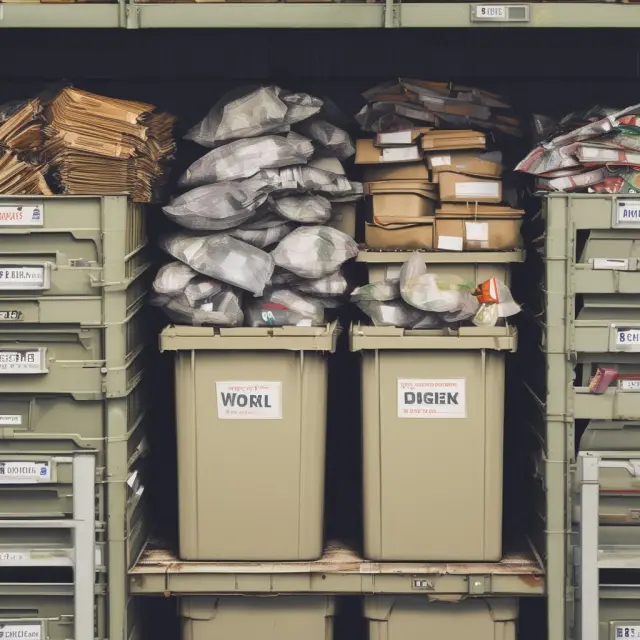
Working Principle of Two-Bin Inventory System
Two-bin inventory control is a vital inventory management technique that ensures companies maintain the right level of stock to meet production requirements without overstocking or understocked situations. This approach, often used in conjunction with the Just-In-Time (JIT) manufacturing method, consists of two bins for managing inventory: one for working stock and another as a reserve.
The first bin is designed to hold the minimum quantity of items required for production or immediate consumption. Once this bin reaches its depletion point, an order is placed to replenish it with new stock. Meanwhile, production continues using items from the second bin, which serves as a backup or reserve stock. This system allows manufacturers to reduce inventory risks and ensure a smooth flow of materials while maintaining control over their inventory levels.
Key elements of two-bin inventory control include:
- The first bin is placed on top of the second bin, with a reorder card at the bottom of both bins.
- Stock is taken from the first bin when needed.
- Once the first bin is empty, it’s replaced with the second bin and a new order for the first bin is placed.
- The working stock in the first bin follows the first-in, first-out (FIFO) principle, ensuring that older items are used before newer ones.
- The two-bin inventory control method can be employed across industries to manage low-value and easily storable items like nuts, bolts, or small components.
It is important to note that the amount of stock kept in the reserve bin is based on the daily usage rate and lead time. For instance, if a company uses 160 pieces of an item per day and has a three-day lead time, then their reserve bin should contain at least 480 pieces (160 x 3 + safety stock). By calculating the appropriate amount of inventory for each bin, companies can effectively manage their inventory levels and ensure a consistent supply of materials for production processes.
Benefits of Using Two-Bin Inventory Control
The two-bin inventory control system is an effective solution for managing production inventory by ensuring that companies maintain just enough stock to meet demand without holding excessive inventory or experiencing stockouts. This method is especially beneficial in industries with high turnover rates and frequent, small replenishment requirements. Let’s explore the advantages of implementing a two-bin inventory control system:
1. Efficient use of warehouse space: By dividing inventory into two bins, companies can effectively manage their warehouse space and optimize storage utilization. The smaller bin with working stock is placed in front or on top for easy access, while the larger reserve bin stores additional materials at the back or bottom. This setup allows businesses to maintain an optimal inventory level without wasting valuable warehouse space on excessive inventory.
2. Reduced holding and carrying costs: By carefully managing inventory levels between both bins, companies can significantly decrease their holding and carrying costs associated with maintaining large inventories. With the two-bin system, businesses only carry a smaller amount of stock in the first bin while the second bin holds a larger reserve. This approach results in lower storage and insurance costs compared to traditional perpetual inventory methods.
3. Improved demand forecasting: The use of reorder points for each bin helps companies better predict their inventory requirements and manage replenishments efficiently. By analyzing usage patterns and trends, businesses can adjust the inventory levels accordingly and improve overall demand forecasting accuracy. This allows them to avoid holding excess inventory or experiencing stockouts, ultimately increasing production efficiency.
4. Enhanced customer satisfaction: With a well-managed two-bin inventory control system, companies are able to meet customer demands more effectively. By keeping the right amount of stock on hand and addressing replenishment needs promptly, businesses can maintain steady production schedules and consistently deliver quality products to their customers. This results in higher levels of customer satisfaction and retention.
5. Lower risk of obsolete inventory: With frequent small-scale replenishments, companies using the two-bin system have a lower risk of holding obsolete or slow-moving items compared to businesses relying on perpetual inventory methods. By only carrying enough stock in the first bin for immediate use and maintaining a reserve for unexpected demand fluctuations, businesses can avoid investing in inventory that may become surplus or outdated.
In conclusion, the two-bin inventory control system offers numerous benefits for companies seeking to manage their production inventory effectively while minimizing costs, reducing risks, and increasing customer satisfaction. By implementing this method, businesses can optimize their warehouse space, improve demand forecasting, lower holding and carrying costs, enhance customer satisfaction, and maintain a lean and responsive supply chain.
Industries That Use the Two-Bin Inventory System
Two-bin inventory control is a widely adopted inventory management technique that enables organizations to efficiently manage their stock levels and effectively meet their production demands without carrying excessive inventory. This system is particularly beneficial for industries involving manufacturing operations, including automotive, electronics, and pharmaceuticals, among others. By using the two-bin inventory approach, businesses can reduce risks related to understocking or overstocking, optimize their inventory management processes, and ultimately improve their bottom line.
The two-bin system is designed specifically for managing low-value items that can be easily purchased and stored in bulk. This method allows companies to maintain an active working stock (Bin 1) while also keeping a safety reserve stock (Bin 2). When the first bin runs out of inventory, a reorder signal triggers replenishment of the first bin from the second one, ensuring a smooth production flow with minimal disruption.
The pharmaceutical industry is an excellent example of a sector where two-bin inventory control plays a crucial role. In this industry, maintaining accurate and up-to-date stock levels can have significant implications for patient care and overall business operations. By implementing the two-bin system, pharmaceutical companies can ensure that they always have an adequate supply of essential medications on hand while minimizing storage costs and potential waste.
Automobile manufacturing is another industry that has adopted this inventory management technique to streamline its production processes. In this sector, just-in-time (JIT) manufacturing has become increasingly prevalent due to the importance of maintaining a consistent supply chain and reducing lead times. Two-bin inventory control plays a significant role in enabling JIT systems by ensuring that suppliers have enough inventory on hand to fulfill demand without excess stockpiling or understocking.
In addition, industries like electronics and semiconductor manufacturing rely heavily on precise inventory management due to their fast-paced production cycles and high demand for raw materials. By utilizing the two-bin system, these organizations can effectively manage their inventory levels, optimize their supply chain, and adapt quickly to changing market conditions.
It is essential to note that industries that utilize expensive or high-value items might find it more appropriate to use perpetual inventory methods. However, for businesses dealing with low-value items, the two-bin inventory control system offers a simple, cost-effective solution for managing production inventory and ensuring smooth operations.
How to Set Up a Two-Bin Inventory Control System
Setting up and implementing a two-bin inventory control system can be an effective way for businesses to manage their stock levels and reduce inventory risks while optimizing their production processes. This method, which is often used in conjunction with the Just-In-Time (JIT) manufacturing concept, involves creating two bins for each type of inventory or material used in production. Here’s a step-by-step guide on how to set up and utilize this system:
Step 1: Identify the Suitable Items
The first step is to identify the items that are best suited for the two-bin inventory control method. These typically include low-value items, small parts, or components where order lead times are short and can be stored efficiently in limited space. Items with a stable demand rate and minimal variation are also ideal candidates.
Step 2: Designate Two Bins
Label each bin clearly to distinguish between the working stock (Bin 1) and reserve stock (Bin 2). The working stock is used for day-to-day production, while the reserve stock serves as a backup in case of unexpected demand or delays.
Step 3: Set Up Reorder Points
Determine reorder points for both bins based on your daily usage rate and lead time. For example, if you use 100 units per day and your supplier’s lead time is five days, a good starting point would be maintaining a working stock of 450 units (7 days’ worth) and a reserve stock of around 350 units (5 days’ worth).
Step 4: Implement FIFO Inventory System
Maintain the first-in, first-out (FIFO) inventory system for both bins to ensure that older inventory is used before newer inventory. This approach helps prevent spoilage or obsolescence and ensures that the most stable stock is utilized first.
Step 5: Monitor Stock Levels Regularly
Maintain a record of stock levels in each bin using inventory management software, spreadsheets, or traditional paper-based methods like bin cards or store ledger cards. This information will help you monitor your stock levels closely and place orders in a timely manner to avoid stockouts.
Step 6: Set Up Automated Reordering
Implement automated reordering processes based on predetermined inventory thresholds. This ensures that replenishment orders are placed before the working stock runs out, minimizing the risk of stockouts and downtime.
By following these steps, you’ll be well on your way to effectively implementing a two-bin inventory control system within your organization, helping you optimize your production processes, reduce inventory risks, and meet demand more efficiently.
Comparing Two-Bin Inventory Control with other Methods (e.g., Perpetual Inventory)
Two-bin inventory control stands out as a powerful alternative to traditional perpetual inventory methods for managing stock levels in a business environment. Understanding the differences between these two systems can help organizations make informed decisions regarding which method best suits their unique operations and objectives. Let’s delve deeper into each system, discussing their advantages, disadvantages, and ideal applications.
Two-Bin Inventory Control System
Two-bin inventory control is a simple but effective system used to manage the level of stock for small or low-value items in production. The method works by maintaining two separate bins for these items: one active bin (bin 1) with sufficient stock to meet current demand, and another reserve bin (bin 2) that holds backup inventory in case of unexpected demand fluctuations or longer lead times.
Key Features of Two-Bin Inventory Control System
- Reduces inventory risk by ensuring a continuous supply of items in production while minimizing the need for excessive stockpiling.
- Ideal for managing low-value, fast-moving items that can be easily purchased and stored in bulk.
- Effectively used to manage inventory in various industries such as manufacturing, healthcare, and retail.
- Typically employs a first-in, first-out (FIFO) inventory approach to maintain stock freshness and accuracy.
Perpetual Inventory System
Perpetual inventory is a more complex system designed for managing high-value items or stock with varying demand patterns. With perpetual inventory, companies keep track of their stock levels in real-time using continuous recording and updates as transactions occur (i.e., sales, receiving, transfers, and adjustments).
Key Features of Perpetual Inventory System
- Suitable for managing high-value items that require more stringent inventory control due to the potential risks associated with higher costs and the need for more accurate stock levels.
- Allows businesses to maintain real-time visibility over their stock levels, enabling efficient inventory planning and reordering processes.
- Typically requires the use of advanced software tools such as enterprise resource planning (ERP) systems or specialized warehouse management systems (WMS).
Advantages of Two-Bin Inventory Control System
- Simplifies inventory control for low-value items, reducing administrative efforts and costs associated with maintaining detailed records.
- Helps minimize the risk of stockouts while avoiding excessive inventory buildup by having a constant supply from the reserve bin.
- Allows for easier implementation compared to perpetual inventory systems that require specialized software and training.
Advantages of Perpetual Inventory System
- Provides accurate real-time information on stock levels, making it easier for companies to make informed purchasing decisions based on current demand trends.
- Suitable for managing high-value items or stock with varying demand patterns, ensuring a more efficient inventory management system.
- Enables businesses to track and optimize their inventory levels across multiple locations, improving overall inventory accuracy.
Disadvantages of Two-Bin Inventory Control System
- Does not provide real-time information on stock levels, making it difficult for companies to react quickly to sudden changes in demand or lead times.
- Requires a more manual approach, increasing the potential for human errors during bin replenishment and inventory tracking.
Disadvantages of Perpetual Inventory System
- High implementation costs due to the need for specialized software, hardware, and training.
- Greater administrative burden in maintaining detailed stock records, requiring more resources for data entry, reporting, and analysis.
Ultimately, both two-bin inventory control and perpetual inventory systems have their strengths and weaknesses, making it crucial for organizations to evaluate their unique needs and requirements before choosing the right inventory management method for their business. Two-bin inventory control can be an effective solution for managing low-value, fast-moving items while minimizing inventory risks, while perpetual inventory offers real-time stock visibility and more comprehensive inventory control over high-value or complex items.

Calculating Stock Requirements for Two-Bin Inventory Control
The two-bin inventory control method’s primary objective is to ensure companies maintain optimal inventory levels by effectively managing their working and reserve stocks. To calculate the stock requirements for each bin, it’s essential to consider the daily usage rate and lead time.
Daily Usage Rate
Determine your company’s daily usage rate by calculating how many units you consume per day on average. For example, if a company uses 200 units of a particular raw material each day, its daily usage rate for that material would be 200 units.
Lead Time
Lead time is the period between when you order stock and when it arrives. Calculate your lead time by determining how long it typically takes for an order to be processed and delivered from the supplier. For instance, if it usually takes three days for a new order to arrive, your lead time for that particular supplier is three days.
Stock Requirements for First Bin (Working Stock)
To determine the minimum stock level required in the first bin, simply multiply the daily usage rate by the number of days in the lead time: Daily Usage Rate * Lead Time
Using our example above, a company that uses 160 fasteners per day and has a three-day lead time would need a minimum of 480 fasteners (160 units/day * 3 days) in its working stock bin.
Safety Stock for Second Bin (Reserve Stock)
To calculate the safety stock requirement, consider fluctuations in usage levels and unexpected demand spikes. Add an appropriate amount to your lead-time calculation, usually around 15%. For our example company, the required reserve stock level would be: (Daily Usage Rate * Lead Time) + Safety Stock = 480 fasteners + 72 fasteners = 552 fasteners
By following these calculations, your business can ensure it has enough working and reserve stock to meet demand while minimizing inventory risks.

Best Practices for Effective Two-Bin Inventory Management
The two-bin inventory control system has proven to be an effective method for managing production inventory. By implementing this approach, businesses can reduce inventory risks and maintain optimal stock levels to meet customer demand. Here are some best practices for effectively managing a two-bin inventory control system:
1. Use accurate reorder point calculations: To ensure the second bin is only used when necessary, it’s essential to calculate precise reorder points for each item in both bins. Calculate reorder points based on lead time and daily usage rate as shown below: (Daily usage rate * lead time) + safety stock
2. Set up clear communication channels: Regularly communicate with suppliers regarding order statuses, delivery schedules, and any potential delays. Clear communication will help minimize the risk of stockouts and ensure a smooth transition from one bin to another when necessary.
3. Continuously monitor inventory levels: Inventory should be monitored regularly to maintain accurate records and prevent overstocking or understocking situations. This can include utilizing tools like inventory management software, bin cards, or store ledger cards.
4. Adjust stock levels based on demand fluctuations: Since the two-bin inventory system assumes a constant daily usage rate, adjustments should be made as needed when demand fluctuates. By tracking actual usage and comparing it to historical data, businesses can make informed decisions about adjusting order quantities or safety stocks.
5. Maintain proper bin organization: Ensure that bins are organized in a logical manner, with items placed according to their frequency of use and replenishment requirements. This will help maintain efficient accessibility for production teams and prevent unnecessary delays when transitioning between bins.
6. Consider implementing a visual management system: Visual tools like kanban boards or charts can be used to display stock levels and provide real-time information on inventory statuses, helping to keep everyone informed and aligned with stock levels.
By adhering to these best practices, businesses can effectively manage their two-bin inventory control systems, ensuring a consistent flow of raw materials or finished goods while minimizing risk and maintaining optimal inventory levels.
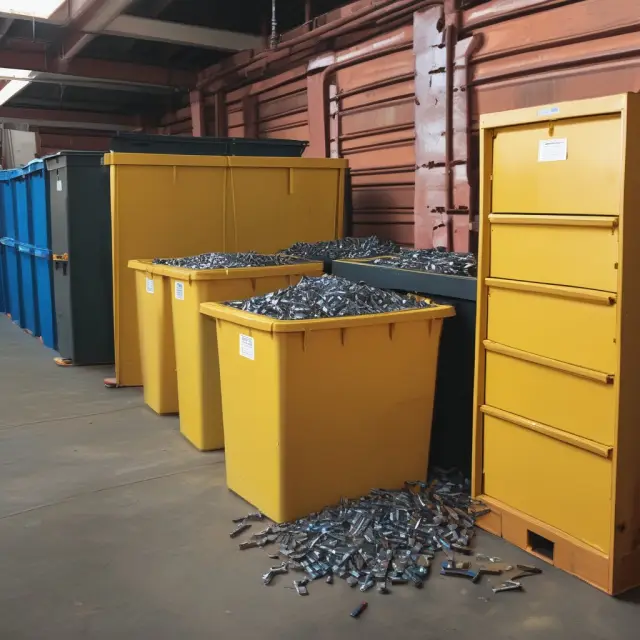
Case Studies of Companies Using Two-Bin Inventory Control System
Two-bin inventory control has been adopted by various industries for managing their production inventory and optimizing stock levels effectively. Let’s explore two real-life examples of companies that successfully implemented this system, revealing the benefits they gained and the lessons learned from their experience.
Example 1: Caterpillar Inc.
Caterpillar Inc., a renowned heavy equipment manufacturer, uses the two-bin inventory control method in managing its production stock levels. They apply this technique to small components such as washers and bolts that can be purchased in bulk and used interchangeably from one piece of machinery to another. By implementing the two-bin system, Caterpillar has been able to reduce inventory costs, minimize waste, and optimize its just-in-time (JIT) production processes.
Example 2: Toyota Motor Corporation
Another well-known case study is Toyota Motor Corporation, which was one of the pioneers in adopting the two-bin inventory control method for its manufacturing operations back in the late 1950s. The automotive giant used this system to manage its production stock levels and support its lean manufacturing philosophy based on the JIT concept. By using a two-bin inventory system, Toyota was able to minimize excess inventory while ensuring a consistent flow of materials to its assembly lines, leading to better efficiency, lower costs, and higher customer satisfaction.
Lessons Learned
The case studies above highlight the success that companies can experience when implementing a two-bin inventory control system for managing their production stock levels. Some common lessons learned from these examples include:
- Effective collaboration between suppliers and manufacturers: Companies like Caterpillar and Toyota have established strong relationships with their suppliers, ensuring smooth communication and a responsive supply chain to prevent stockouts and maintain optimal inventory levels.
- Continuous improvement and adjustments: As demand patterns change or production rates fluctuate, companies must be prepared to make necessary modifications to their inventory control systems to ensure they stay efficient and cost-effective.
- Adoption of technology and automation: Modern technologies such as automated reorder systems and real-time inventory tracking can significantly enhance the efficiency and accuracy of the two-bin inventory system.
- Flexible inventory management strategies: By combining the two-bin inventory control method with other inventory management techniques, companies can achieve a more comprehensive approach to managing their production inventory, reducing risk and optimizing costs.
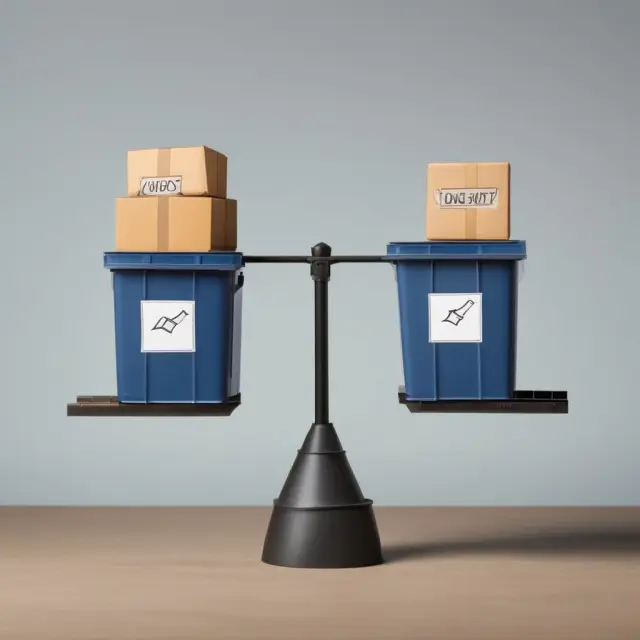
Potential Challenges with Two-Bin Inventory Control Systems
The two-bin inventory system is an effective method for managing production inventory and reducing inventory risks. However, implementing and maintaining this inventory management strategy comes with certain challenges. By understanding these challenges and having appropriate mitigation strategies in place, companies can ensure that their two-bin inventory control system runs smoothly and efficiently.
1. Demand fluctuations: One of the most significant challenges in using a two-bin inventory system is managing demand fluctuations. A sudden increase in demand may result in both bins being depleted before the new order arrives, causing production delays. To mitigate this issue, companies should closely monitor their demand patterns and maintain accurate forecasts to ensure that they have sufficient stock in both bins.
2. Order lead times: Longer lead times between placing an order and receiving the inventory can result in running out of stock in both bins. This situation may cause production delays or force companies to look for alternative suppliers, potentially impacting product quality and increasing costs. To mitigate this challenge, companies must maintain strong relationships with their suppliers and continually review lead times to identify opportunities for reduction.
3. Inaccurate inventory tracking: Keeping accurate records of inventory levels in both bins is essential for maintaining an efficient two-bin inventory control system. Incorrect or outdated inventory data can result in overstocking, understocking, or incorrect ordering, potentially leading to production delays and increased costs. Regular audits and continuous monitoring of inventory levels are crucial to maintain accurate records and ensure the system’s success.
4. Lack of flexibility: The two-bin inventory control system is most effective for small, low-value items that can be easily purchased in bulk. However, managing larger or higher-value items using a two-bin approach may not be as efficient or feasible due to storage and handling requirements. In such cases, companies may consider alternative inventory management strategies, such as the perpetual inventory system or a hybrid solution that combines elements of both methods.
5. Ineffective reorder points: Setting inappropriate reorder points for each bin can result in stockouts or overstocking. Underestimating the reorder point may cause companies to run out of stock when demand exceeds expectations, whereas overestimating the reorder point could result in unnecessary inventory buildup and increased carrying costs. To mitigate this challenge, companies should analyze their historical usage data and lead times to determine optimal reorder points for both bins.
In conclusion, while the two-bin inventory control system offers numerous benefits, it is essential to be aware of its challenges and implement appropriate mitigation strategies to ensure a successful implementation. By closely monitoring demand patterns, maintaining accurate inventory records, and communicating effectively with suppliers, companies can overcome these challenges and optimize their inventory levels while minimizing risks.
FAQs about Two-Bin Inventory Control
What is two-bin inventory control?
Two-bin inventory control is a method for managing inventory levels, where materials or items used in production are divided into two separate bins. When items from the first bin have been exhausted, an order is placed for replacement stock. Meanwhile, the second bin serves as reserve stock until the new order arrives.
How does two-bin inventory control differ from perpetual inventory systems?
The primary difference lies in how stock levels are managed and monitored. Perpetual inventory systems track inventory in real-time using electronic systems or manual methods like bin cards. In contrast, two-bin inventory control relies on maintaining separate bins for working and reserve stocks.
Is the two-bin inventory system always used for low-value items?
Not necessarily; it can also be applied to high-value items depending on the industry and specific business requirements. However, smaller or low-value items are more commonly managed using this method due to their ease of purchase and storage.
What industries use the two-bin inventory control system?
It is widely used in manufacturing sectors such as automotive, electronics, pharmaceuticals, food production, etc., where raw materials or components are frequently used and must be replenished on a regular basis.
How can I calculate stock requirements for the two-bin inventory control system?
To determine stock levels for each bin, you need to know your daily usage rate and lead time. The calculation involves multiplying the daily usage rate by the lead time, then adding safety stock if needed: (Daily usage rate * lead time) + safety stock.
What is the impact of using a two-bin inventory control system?
Two-bin inventory control offers several benefits for businesses, including reduced inventory risks, improved demand forecasting, and increased operational efficiency by allowing companies to meet production demands without holding large excess inventory levels.
 Next entry · No. 5,115A Comprehensive Guide to Understanding Two-Tailed Tests in Finance and Investment
See also
-
 No. 5,924
19 Oct 2025
19 min
Understanding the Zone of Possible Agreement (ZOPA) in Negotiations: Bridging the Gap Between Parties
Business Strategy
No. 5,924
19 Oct 2025
19 min
Understanding the Zone of Possible Agreement (ZOPA) in Negotiations: Bridging the Gap Between Parties
Business Strategy -
 No. 5,853
13 Oct 2025
21 min
Understanding Yellow Knights: From Hostile Takeover Attempts to Mergers of Equals
Business Strategy
No. 5,853
13 Oct 2025
21 min
Understanding Yellow Knights: From Hostile Takeover Attempts to Mergers of Equals
Business Strategy -
 No. 5,720
02 Oct 2025
18 min
Understanding Wide Variety in Retail: Impressive Assortments that Compete with Big Box Stores
Business Strategy
No. 5,720
02 Oct 2025
18 min
Understanding Wide Variety in Retail: Impressive Assortments that Compete with Big Box Stores
Business Strategy -
 No. 5,613
23 Sep 2025
19 min
Maximizing Opportunities: A Strategic Approach to Warm Calling in Finance and Investment
Business Strategy
No. 5,613
23 Sep 2025
19 min
Maximizing Opportunities: A Strategic Approach to Warm Calling in Finance and Investment
Business Strategy -
 No. 5,474
12 Sep 2025
20 min
Understanding Versioning: How Companies Create Value through Different Product Versions
Business Strategy
No. 5,474
12 Sep 2025
20 min
Understanding Versioning: How Companies Create Value through Different Product Versions
Business Strategy -
 No. 4,756
14 Jul 2025
19 min
Stock Keeping Units (SKUs): Understanding How They Work for Inventory Management
Business Strategy
No. 4,756
14 Jul 2025
19 min
Stock Keeping Units (SKUs): Understanding How They Work for Inventory Management
Business Strategy