Understanding Bicameralism: How the Two-Chamber System Impacts Finance and Investment

Understanding the significance of the two-chamber system: Learn how bicameralism impacts finance & investment through this comprehensive guide.
What is Bicameralism?
Bicameralism refers to a legislative system featuring two distinct houses, or chambers, within a government’s legislative branch. This system, prevalent in many parliamentary democracies and federal systems, has its origins dating back to medieval Europe. In the United States, bicameralism is embodied by the U.S. Congress, which comprises the House of Representatives and the Senate.
The term “bicameral” stems from Latin roots—bi meaning ‘two’ and camera meaning ‘chamber.’ A bicameral system contrasts with unicameral systems, in which a single chamber makes up the entire legislative branch.
The historical significance of bicameralism lies in its ability to promote checks and balances within government, ensuring that no single group or interest holds an excessive amount of power. In the context of the U.S., this balance is critical for maintaining a fair representation of various interests between the legislative, executive, and judicial branches.
Bicameralism in the United States traces its roots to the U.S. Constitution’s establishment of the bicameral Congress. The Constitution divides power among the legislative, executive, and judicial branches, with each branch possessing distinct roles and responsibilities. In the legislative branch, the House of Representatives and Senate are tasked with creating laws and representing the interests of different demographics and regions within the country.
The origins of bicameralism in the United States stemmed from a disagreement among the founding fathers regarding how states should be represented in Congress. This compromise, known as the Great Compromise, formed the foundation of the U.S. system of government, which continues to rely on a bicameral legislature.
In the next sections, we will delve deeper into the historical development of bicameral systems and their evolution in the United States. We will also explore the characteristics of bicameralism and its significance in creating checks and balances within government while understanding its advantages and disadvantages. Additionally, we’ll examine how bicameralism impacts finance and investment decisions within countries with a two-chamber legislative system.

The Evolution of Bicameral Systems
A bicameral system, which is characterized by having two legislative chambers within the same government, has been an integral part of the political landscape in various countries throughout history. This section will explore the origins and development of bicameral systems, specifically focusing on the influential examples from England and the United States.
The concept of a bicameral system can be traced back to medieval Europe when sharp class distinctions between the nobility, clergy, and commoners led to separate groups of representatives advising the monarch on matters related to their respective spheres. This structure evolved over time into the two chambers known as the House of Lords and the House of Commons in England.
In America’s political system, the bicameral legislative branch is composed of the House of Representatives and the Senate, collectively referred to as the United States Congress. The bicameral structure was a result of a compromise reached during the Constitutional Convention, which took place in 1787, to address disagreements over how state representation should be allocated. This arrangement is enshrined in Article I, Section 1 of the United States Constitution.
The House of Representatives and Senate serve distinct roles within the legislative branch. The House is tasked with representing the interests of the people and ensuring their concerns are addressed by having representatives directly elected through a system called proportional representation. On the other hand, the Senate represents the interests of the states through its equal representation of each state’s two Senators, regardless of population size.
In the U.S., Senators were originally appointed by their respective state legislatures before the 17th Amendment was ratified in 1913, which allowed for direct elections. This difference between the terms and requirements for membership in each house creates checks and balances within the legislative branch.
It is interesting to note that most international governments today operate under a unicameral system, with only about 40% of countries employing a bicameral system. The benefits and disadvantages of both structures continue to be a topic of ongoing debate among political scientists and scholars. In the following sections, we will discuss the role of bicameralism in finance and investment, as well as its impact on various aspects of government and society.
As our discussion unfolds, it is crucial to remember that understanding the historical context and development of bicameral systems is essential to gaining a deeper appreciation for their significance in modern-day politics and governance. By exploring the evolution of these influential legislative structures, we can better understand how they shape our political landscape and impact financial decision-making at both national and international levels.

Characteristics of a Bicameral System
A bicameral legislative system refers to a government’s two-house legislative branch, such as the U.S. Congress, which consists of the House of Representatives and the Senate. This political structure, rooted in Latin with “bi” meaning two and “camera” meaning chamber, offers several unique features compared to unicameral systems.
Originated from historical European parliaments, bicameral legislatures have been instrumental in representing different social classes or interests within a society. The British Parliament, for instance, has functioned as the model for many parliamentary systems worldwide. In contrast, most countries adopt unicameral legislative systems where all members deliberate and vote on legislation together (approximately 59% of governments).
Within the U.S. political system, bicameralism plays a significant role in ensuring checks and balances between the branches, as each house represents different powers and functions. The U.S. bicameral legislature is established by Article I, Section 1 of the U.S. Constitution.
A practical reason for having a bicameral system lies in its function as part of the larger system of checks and balances, preventing any one branch from having too much power. By dividing power within the legislative branch, it provides intrabranch checks that help maintain a balance between various branches or societal groups.
Historically, bicameralism evolved to address sharp class distinctions in medieval Europe, where different social classes were represented by separate groups. The House of Lords and the House of Commons emerged from this background, with the former representing the nobility, clergy, and elites, while the latter represented commoners.
In the U.S., the two houses of Congress—the Senate and the House of Representatives—were designed to represent different interests within the federal government. The Senate was meant to represent the states, with Senators originally appointed by state legislatures. In contrast, the House of Representatives represented the people at large. Each house has unique powers and responsibilities that ensure a balanced representation within the system.
The U.S. Constitution delegates various powers between the two houses based on their role in representing different societal interests or functions. For instance, only the House of Representatives can criminally indict (impeach) the President or other federal officials; however, the Senate is responsible for reviewing the case. The House decides presidential elections if no candidate wins a majority of electoral college votes and originates any bill that increases taxes. Meanwhile, the Senate has the power to confirm presidential appointments, including executive officers, and ratify treaties with a two-thirds vote.
Bicameral legislative systems differ from unicameral systems in their structure, rules, membership selection methods, and designated powers regarding other branches of government. Both systems have their advantages and disadvantages, which we will discuss in the following sections. Understanding these differences is essential to appreciating the significance of bicameralism within finance, investment, and broader political contexts.

The Role of a Bicameral System in Checks and Balances
One significant aspect of the bicameral system is its contribution to checks and balances within government. In a political structure that aims for balance, having two separate legislative bodies can provide essential intrabranch checks and help prevent one part from becoming overly powerful. This balanced representation is particularly crucial when it comes to issues related to finance and investment.
By dividing the power of legislation among two houses, bicameralism creates an avenue for more thorough deliberation on financial matters. Differences in ideology and priorities between the two houses can lead to compromises that better reflect the will of the people and ensure their interests are represented fairly. For example, the House of Representatives, which is closer to the electorate due to its shorter term and more frequent elections, may be more inclined towards progressive taxation or increasing public spending on social programs. In contrast, the Senate, with its longer terms and state-based representation, might lean towards fiscal conservatism and reducing government intervention in the economy. This dynamic tension between the two houses can result in legislative outcomes that better balance the competing interests of various stakeholders while maintaining a semblance of political stability.
Moreover, bicameralism offers the opportunity for increased oversight and accountability within the legislative branch itself. In the U.S., for instance, each house plays a unique role in providing checks on the other branches of government. The House has the power to impeach federal officials, while the Senate is tasked with the responsibility of conducting impeachment trials. This division of responsibilities ensures that no single branch can manipulate the system to its advantage and further reinforces the importance of maintaining a balance between various aspects of government.
In the realm of finance and investment, bicameralism can serve as an essential tool for accountability in lawmaking, especially when it comes to budgets, taxation, and financial regulations. In a unicameral system, one house could potentially dominate the legislative process, leading to decisions that may not be well-received by other stakeholders or that have far-reaching implications on various sectors of the economy without proper debate or consideration. The presence of a second chamber can help mitigate this risk and lead to more thoughtful, informed, and balanced legislation in the long run.
In conclusion, bicameralism is an essential aspect of many governments around the world, contributing significantly to the checks and balances that are vital for maintaining political stability and ensuring accountability within the legislative branch. In finance and investment, a bicameral system can result in more comprehensive, balanced legislation that better represents the interests of various stakeholders while offering increased oversight and accountability within the government. By allowing for the representation of different perspectives and priorities, this system can lead to more effective policymaking and help foster economic growth over time.

Bicameralism and the U.S. Constitution
Bicameralism is a fundamental aspect of the U.S. political system as outlined by the Constitution. This legislative structure, consisting of two distinct houses in each state legislature and the federal government (the House of Representatives and the Senate), plays a crucial role in maintaining checks and balances, ensuring fair representation, and facilitating effective governance.
The U.S. bicameral system was established during the Constitutional Convention in 1787 as part of the larger compromise to address the disagreement between smaller states and larger states regarding power allocation at the federal level. The Constitution’s Article I, Section 1, establishes that Congress shall be composed of two houses—the House of Representatives and the Senate.
Historically, bicameralism in the U.S. can be traced back to England, where this legislative system was modeled after medieval Europe’s sharp class distinctions between nobility, clergy, and commoners, which necessitated separate groups of representatives to advise the king on matters specific to their social spheres. In the United States, this structure was designed to balance power within the legislative branch and represent various stakeholders effectively.
The U.S. bicameral system has evolved to serve different purposes over time. Initially intended to function as part of a larger checks-and-balances system that ensures no single branch wields too much power, it now plays an essential role in ensuring fair representation and effective legislative processes.
One of the primary advantages of bicameralism is its ability to facilitate more deliberate consideration and reflection on legislation before it reaches the floor for a vote. This process helps minimize hasty decisions and encourages thoughtful debate, ultimately resulting in better-crafted laws that serve the interests of various stakeholders within society.
Another advantage of bicameralism is the unique perspectives each house brings to the legislative process. The House of Representatives, with its larger membership, represents a more diverse range of voices and interests due to its proportional representation system based on population size. Conversely, the Senate provides a more deliberative, advisory role through equal state representation, ensuring that smaller states have equal influence in federal decision-making processes.
Furthermore, bicameralism facilitates efficient communication between the different branches of government. By having separate houses with distinct functions and powers, bicameralism streamlines legislative procedures and reduces friction between the legislative and executive branches. This alignment ultimately results in more effective governance and a stronger democracy.
The U.S. Senate has its roots in the British House of Lords, an elite body historically composed of nobility and clergy. However, the U.S. Constitution stipulates that Senators are elected directly by voters in each state and serve six-year terms (with exceptions for vacancies or resignations). This arrangement allows for a more stable, long-term perspective within the legislative process. In contrast, the House of Representatives is designed to reflect the will of the people through its members’ frequent elections on two-year terms.
The bicameral structure has evolved significantly over time, from its origins in medieval Europe to its modern application in the U.S. and other countries around the world. Despite the challenges posed by the complexities of this legislative system, its advantages far outweigh the disadvantages, making it an essential element in building a strong democratic framework that fosters representation, checks and balances, and effective governance.

Advantages and Disadvantages of a Bicameral System
A bicameral legislative system, which involves two separate houses within the legislative branch of government, offers several benefits and drawbacks that are crucial to understand. This political structure is designed to balance power between various groups or classes in society, serve as an intrabranch check, and ensure thorough deliberation on legislation.
One significant advantage of a bicameral system lies in its capacity for balancing power within the legislative branch and providing checks and balances. By dividing power between two houses, a bicameral system helps prevent excessive accumulation of power within any one body or group. This balance can also extend to social classes, with each house representing different interests. For instance, in the U.S., the Senate traditionally represents the states while the House of Representatives reflects the interests of the people at large.
In historical contexts, bicameralism has arisen from the need to address deep class distinctions, such as those between nobility, clergy, and commoners in medieval Europe. This two-tier legislative structure allowed for representation of diverse interests and facilitated deliberation on legislation that considered various perspectives.
A bicameral system also allows for thorough examination and debate of proposed laws by providing multiple opportunities for consideration and reconsideration. In the U.S., bills must pass both the Senate and the House before they can be sent to the President for approval, ensuring a more thoughtful legislative process.
However, this political structure comes with its share of disadvantages. One significant challenge is the potential for duplication of effort and resources. Having multiple houses to consider legislation means more time, money, and energy spent on the legislative process. Moreover, differing requirements for membership between the two houses can result in unequal representation or influence.
Another potential drawback of a bicameral system is the possibility of gridlock and deadlock as each chamber may have differing opinions, priorities, or agendas. This was evident during the U.S. government shutdowns that occurred due to disagreements between the House and Senate on budget issues.
Despite these challenges, a bicameral system remains an essential aspect of many political structures around the world, including the United States, India, Germany, Canada, Australia, and the United Kingdom. Understanding its benefits and drawbacks is crucial for navigating this complex legislative landscape and fostering effective governance.

The Impact of Bicameralism on Finance and Investment
Bicameralism, as a system of government, has significant implications for finance and investment decisions due to the balance of power it creates within the legislative branch. With two distinct houses representing different interests and perspectives, a bicameral legislature plays an essential role in ensuring checks and balances while allowing for more comprehensive decision-making.
In the context of finance and investments, these checks and balances can manifest in several ways:
- More thorough legislative scrutiny: With each house having its unique powers and functions, legislation must pass through both houses before becoming law. This process allows for a more comprehensive review of bills related to financial regulations or economic policies.
- Improved accountability: By separating the legislative branch into two bodies, bicameralism makes it easier to hold members responsible for their actions. This increased accountability can contribute to more stable and predictable economic environments.
- Diverse representation: The different membership compositions of each chamber in a bicameral system enable better representation of various interests within the population. In terms of finance and investment, this diversity can result in policies that cater to a broader range of demographics and socioeconomic backgrounds.
The U.S. Congress, as an example of a successful bicameral legislature, highlights these advantages. The Senate and House of Representatives have different yet complementary roles that contribute significantly to the U.S. economy’s stability:
- Taxation: The power of the purse primarily rests with the House of Representatives, making it responsible for determining fiscal policy and deciding on tax legislation. This arrangement ensures that the revenue side of the federal budget is under the watchful eyes of representatives who are directly accountable to their constituents.
- Regulation: The Senate plays a critical role in regulating various industries, including finance, through its authority to confirm appointments to regulatory agencies and its power to amend bills. This oversight function helps ensure that financial regulations are implemented effectively while addressing the concerns of different stakeholders.
- Debt Ceiling: The bicameral system also comes into play when it comes to the debt ceiling, a limit on the amount of debt the federal government can issue. By requiring both houses’ approval for raising the debt ceiling, Congress can prevent fiscal crises by ensuring that the necessary consensus is reached among its members.
- Appropriations: The House of Representatives also controls the power of the purse through the appropriations process, where it decides how federal funds are allocated. This function allows the House to respond to the specific needs and priorities of various communities, ensuring a more balanced budget.
- Oversight: Both houses engage in oversight activities that help keep the executive branch accountable for its actions related to financial matters. Through committees and subcommittees, members can scrutinize federal programs, investigate potential mismanagement or fraud, and hold hearings to address concerns.
- Bipartisanship: The bicameral structure of Congress encourages compromise and negotiation between Democrats and Republicans in order to pass legislation. This dynamic is essential for effective financial policymaking and maintaining a stable economic environment.
- Filibuster: In the Senate, the filibuster rule allows individual senators or groups to delay or block the passage of bills through extended debate, requiring 60 votes for cloture. While this procedure can lead to political gridlock, it also ensures that substantial legislative changes are supported by a broad coalition of senators and the American public.
In conclusion, the bicameral system plays an essential role in finance and investment decisions by providing checks and balances, fostering diverse representation, and encouraging thorough legislative scrutiny. This structure is particularly evident in the U.S. Congress, which effectively manages the complex financial and regulatory landscape while remaining accountable to its constituents.

Bicameral Systems in Other Countries
A bicameral legislative system is not unique to the United States and Great Britain; it’s a common political structure adopted by numerous countries worldwide. In contrast to unicameral systems, which only consist of one chamber or house for legislative representation, bicameral systems maintain two chambers. These distinct chambers are designed to cater to varying constituents, interests, and regions within the country.
Many parliamentary systems follow the bicameral model, including Australia, Brazil, Canada, Germany, India, the Netherlands, Russia, Spain, and the Czech Republic. In these countries, each house typically holds different powers and functions. For instance, the upper houses often serve an advisory role, whereas lower houses have more executive power.
One significant example of a bicameral legislature is the German parliament, known as the Bundestag (Federal Diet) and Bundesrat (Federal Council). The Bundestag represents the entire population and is elected through direct universal suffrage. In contrast, the Bundesrat comprises representatives from each state government, who deliberate on legislation that directly affects their respective regions.
Understanding bicameral systems in other countries can provide valuable context for investors and financial analysts who work internationally or have interests across multiple jurisdictions. Knowing how different legislative structures function can help navigate complex political environments, identify potential risks, and capitalize on opportunities.
For example, understanding the dynamics of the Bundesrat can impact the approval process for legislation that affects various industries in Germany. Furthermore, having an awareness of the Senate’s role in the Indian parliament can influence how investors approach companies based in India or those doing business there.
In some cases, countries have transitioned from bicameral to unicameral systems. Greece, New Zealand, and Peru are a few examples of countries that have adopted unicameral legislatures in recent history. This change can significantly impact how legislation is proposed, debated, and approved within these jurisdictions.
In conclusion, the presence or absence of bicameralism can have profound implications for finance and investment strategies. A deep understanding of these intricacies can help provide valuable insights and perspectives that differentiate your content from generic online materials.
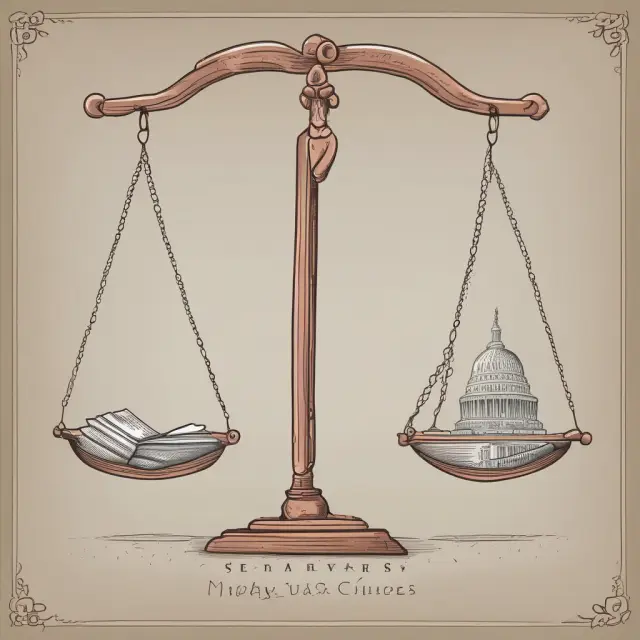
Bicameralism in Practice: U.S. Senate vs. House of Representatives
The two chambers within the U.S. legislative branch, the Senate and the House of Representatives, serve distinct roles and have unique characteristics. Although they are both part of the bicameral system, their powers, functions, and membership differ significantly.
One of the most apparent distinctions between the two chambers is their terms of service. U.S. Senators serve six-year terms compared to the two-year terms for Members of the House of Representatives. Longer Senate tenures enable Senators to have a more stable presence in Congress, allowing them to focus on long-term policy goals and extensive deliberations that may be difficult for Representatives to accomplish within their shorter timeframes.
Moreover, the qualifications to become a Senator are different from those required to serve in the House of Representatives. A U.S. Senator must be at least 30 years old, have been a U.S. citizen for nine years, and reside in the state they represent. In contrast, Members of the House of Representatives need only be 25 years or older, have lived in their respective state for seven years, and be citizens at the time of election.
Another significant difference between the two chambers is the size of each one. There are currently 100 Senators representing their respective states, while there are 435 Members of the House of Representatives. The larger number of representatives in the House enables a more proportional representation of the population and allows for a more diverse range of perspectives to be considered.
As part of the bicameral system’s checks and balances, each chamber holds different powers when it comes to legislative proposals. For instance, only members of the House of Representatives can introduce bills that propose tax increases, making them the “power of the purse.” Additionally, the Senate plays an essential role in confirming presidential appointments and ratifying treaties with a two-thirds vote.
Despite their differences, both chambers work together to ensure effective governance within the U.S. political system. Understanding these distinctions between the U.S. Senate and House of Representatives can help investors and financiers navigate the complexities of government decision-making in various policy areas.

FAQs about Bicameral Systems
Bicameral systems, as the name suggests, refer to legislative bodies that consist of two separate chambers. The U.S. Congress, comprised of the House of Representatives and the Senate, is a prime example of this system in action. In this FAQ section, we will delve into some common queries surrounding bicameral systems, their evolution, and how they impact finance and investment.
1) What are the origins of the term “bicameral?”
The term “bicameral” comes from the Latin words “bi,” meaning two, and “camera,” meaning chamber. It is used to describe a legislative body with two separate chambers.
What is the historical development of bicameral systems?
Bicameralism originated in medieval Europe as a means to represent different social classes within a society. The British Parliament served as the most influential example, and its influence can be traced through the U.S. Constitution.
How does a bicameral system function as part of checks and balances?
Bicameralism helps prevent the legislative branch from having too much power by dividing power within the legislative branch. This creates an intrabranch check, ensuring that each house represents distinct interests and maintains accountability within government.
What are some advantages of a bicamber system?
Some advantages include: representing diverse interests within society, providing a more deliberate approach to legislation, promoting compromise between legislative bodies, and allowing for greater representation based on population size.
What is the impact of bicameralism on finance and investment?
Bicameral systems can influence financial decisions and investments by shaping policy debates, ensuring that different stakeholder interests are addressed, and promoting a more thoughtful approach to legislation. For instance, the U.S. Congress’s bicameral structure plays a significant role in determining taxation policies and overseeing regulatory measures affecting various industries.
What are some disadvantages of a bicameral system?
Some potential drawbacks include: longer decision-making processes due to the need for consensus between both chambers, increased complexity and cost, and potential for political gridlock when parties cannot agree on legislation.
How does the U.S. Senate compare to the House of Representatives?
The Senate has a more deliberative role in the legislative process and is comprised of members representing each state with equal representation. The House of Representatives, on the other hand, focuses on taxation policies and represents the people directly according to population size. Understanding these differences helps investors and financial experts gauge the potential impact of bicameralism on specific pieces of legislation.
 Next entry · No. 408Understanding Bid and Ask Prices: What They Mean and How They Are Determined
See also
-
 No. 673
18 May 2024
23 min
Understanding Checks and Balances: A Critical Mechanism for Preventing Centralization of Power
Government
No. 673
18 May 2024
23 min
Understanding Checks and Balances: A Critical Mechanism for Preventing Centralization of Power
Government -
 No. 549
29 Apr 2024
22 min
Understanding Bureaucracy: What it is, How it Functions and its Implications for Finance and Investment
Business Strategy
No. 549
29 Apr 2024
22 min
Understanding Bureaucracy: What it is, How it Functions and its Implications for Finance and Investment
Business Strategy -
 No. 434
23 Apr 2024
20 min
Understanding Black Friday: A Retail Tradition and Stock Market Term
Business Strategy
No. 434
23 Apr 2024
20 min
Understanding Black Friday: A Retail Tradition and Stock Market Term
Business Strategy -
 No. 5,172
17 Aug 2025
27 min
Understanding Uncovered Interest Rate Parity (UIP): A Comprehensive Guide
Finance Policy
No. 5,172
17 Aug 2025
27 min
Understanding Uncovered Interest Rate Parity (UIP): A Comprehensive Guide
Finance Policy -
 No. 4,704
10 Jul 2025
19 min
Understanding Sovereign Wealth Funds: A Comprehensive Guide for Institutional Investors
Finance Policy
No. 4,704
10 Jul 2025
19 min
Understanding Sovereign Wealth Funds: A Comprehensive Guide for Institutional Investors
Finance Policy -
 No. 4,403
16 Jun 2025
22 min
The Reserve Currency: A Global Economy Pillar and Its Impact on the U.S. Dollar
Finance Policy
No. 4,403
16 Jun 2025
22 min
The Reserve Currency: A Global Economy Pillar and Its Impact on the U.S. Dollar
Finance Policy