Understanding Unicameral Systems: A Single-House Legislative System

Explore the ins and outs of unicameral systems, a unique legislative structure with one house or chamber, through real-life examples and historical context.
What is a Unicameral System?
A unicameral system, derived from the Latin word ‘unicameralis,’ meaning single-chambered, refers to a political system in which a country’s legislative branch consists of just one chamber or house. The concept of a unicameral legislature has become increasingly popular among smaller countries with long-standing democracies.
Some notable examples of countries that employ a unicameral system include Armenia, Bulgaria, Denmark, Hungary, Monaco, Ukraine, Serbia, Turkey, and Sweden. This one-chambered legislative arrangement was more prevalent during the 20th century, with several countries transitioning from bicameral to unicameral systems.
The key advantages of a unicameral system are its efficiency and cost-effectiveness compared to a bicameral system, where two chambers or houses exist. However, some drawbacks include the potential for groupthink and the lack of checks and balances inherent in having only one legislative body.
The parliamentary system of Sweden, which has 349 seats in its Parliament, exemplifies a well-functioning unicameral legislature. In this system, all political parties that receive at least 4% of the votes during elections are granted seats proportionate to their share of the vote. This parliamentary setup allows for efficient lawmaking, as bills are approved through a simple majority vote. The prime minister and Members of Parliament (MPs) serve without term limits.
One major advantage of a unicameral system is the speed at which laws can be passed. However, this efficiency comes with its own challenges. For example, a legislature that relies on a single chamber might not adequately represent all viewpoints or protect against potential abuses of power. Furthermore, special interest groups may exert more influence over a unicameral legislative body compared to a bicameral one.
In the United States, the Articles of Confederation in 1781 established a unicameral legislature, but it was ultimately replaced by the Constitution’s bicameral system due to concerns surrounding representation and power distribution among states. Similarly, some American states such as Georgia, Pennsylvania, and Vermont experimented with unicameral systems, only to abandon them in favor of bicameral ones.
The legislative system of Queensland, Australia, is the sole example of a unicamberal system among Australian states. This shift from a bicameral to a unicameral system can be attributed to Republican George Norris’ successful campaign for change in Nebraska, United States, in 1937. Norris believed that a unicameral legislature could maintain checks and balances through the power of citizens, while also being more efficient and less expensive than a bicameral system.
In conclusion, understanding a unicameral system is essential to grasping the intricacies of various political structures worldwide. Its advantages include speed and cost-effectiveness, but it can also come with drawbacks like the potential for groupthink or lack of checks and balances. By examining countries like Sweden, Australia, and the United States, we can gain a deeper appreciation for this unique legislative system.

How Does a Unicameral System Work?
A unicameral system is a governmental structure characterized by one legislative chamber, as opposed to the bicameral system featuring two chambers. Sweden, a parliamentary democracy, provides an illuminating example of this single-house legislative model. In Sweden’s parliamentary system, the monarch holds a nominal role as the head of state, while the prime minister wields executive power. The Riksdag (Parliament) is composed of 349 seats, and any political party that captures at least 4% of the votes cast in national elections secures its representation. Seats are allocated to parties based on their vote percentage and a proportional representation system. In the 2020 elections, for instance, the Social Democrats won 100 seats or 28.7%, while the Moderates garnered 70 seats or approximately 20.1%. The Green Party and Independents obtained 4.6% and 0.6% of the seats, respectively.
Parliament deliberates on legislative bills proposed by Members of Parliament (MPs) or executive bodies. Bills are approved through a simple majority vote except for the budget and constitutional amendments. The Swedish Parliament convenes once a year with elections held every four years, and there is no term limit for either MPs or the prime minister.
Unicameral systems offer several advantages over bicameral ones. Efficiency in passing legislation is one such advantage, as unicameral legislatures can streamline the process. However, they may also lack sufficient checks and balances, allowing potentially contentious laws to be passed with a simple majority vote. Special interest groups might also have easier access to a unicameral legislature compared to a bicameral one, potentially leading to groupthink. Despite these potential downsides, unicameral systems may require fewer resources due to their smaller size and shorter legislative sessions.
Sweden’s parliamentary system embodies the unicameral system’s core features. The efficiency of this structure is evident in the fact that Sweden has maintained a high level of political stability since it adopted the Riksdag in 1866. However, the unicameral model does face criticisms, such as the risk of groupthink and lack of checks and balances. Despite these challenges, many countries, including Armenia, Bulgaria, Denmark, Hungary, Monaco, Ukraine, Serbia, Turkey, and others, have opted for this legislative structure due to its advantages in efficiency and cost savings.
The unicameral system’s origins can be traced back to the Articles of Confederation, America’s first constitution, which established a single-house legislature. However, this model was not successful as it failed to provide sufficient checks and balances or adequate representation for smaller states. Despite this, some U.S. cities, counties, and school districts still employ a unicameral system. In contrast, all 50 states in the United States and the federal government utilize a bicameral system consisting of the House of Representatives and the Senate. The British parliamentary system also employs a bicameral structure with the House of Commons and House of Lords. However, the United Kingdom’s unicameral devolved governments in Scotland, Wales, and Northern Ireland differ from their Westminster Parliament, as they operate on a unicameral basis.

Advantages and Disadvantages of a Unicameral System
A unicameral system is an intriguing legislative design, characterized by a single legislative chamber in contrast to a bicameral system’s two chambers. The term “unicameral” originates from the Latin word “unicameralis,” which means “one-chambered.” Some countries have embraced this form of government due to its distinct advantages and potential disadvantages. Let us delve deeper into understanding these pros and cons.
Advantages:
- Efficiency: Unicameral systems can lead to more efficient legislative processes as there is a single chamber responsible for debating, passing or rejecting bills. This simplifies the process, allowing for quicker enactment of laws.
- Lower Costs: Given that unicameral systems require fewer legislators than bicameral systems, they are generally less costly to operate. In countries with limited resources, this can be an attractive proposition.
- Unified Representation: Having one legislative house ensures a unified representation of the people’s will, as all voices have equal influence in shaping policy decisions.
- Agility: Unicameral systems may allow for greater agility in addressing pressing issues, given that there is no need to coordinate between two chambers and obtain consensus.
- Flexibility: These systems can be more adaptable to the changing political landscape, as they do not face the same procedural complexities that bicameral systems encounter.
Disadvantages:
- Lack of Checks and Balances: One potential disadvantage of a unicameral system is the absence of an upper chamber to serve as a check on the lower house’s actions. This can lead to greater potential for unchecked power and abuses.
- Groupthink: The lack of a separate chamber may result in groupthink, where the majority view dominates without proper consideration of alternative perspectives or minority opinions.
- Vulnerability to Interest Groups: The absence of a second chamber might make it easier for interest groups to influence the legislative process, potentially leading to laws that benefit specific interests over the greater good.
These advantages and disadvantages are not exhaustive but offer insight into the rationale behind selecting a unicameral system or its alternatives. It is essential to note that each country’s unique political landscape, history, and cultural context contribute to the decision to adopt one legislative design over another.

History of Unicameral Systems
The term “unicameral” is derived from the Latin word meaning ‘one chamber.’ A unicameral system refers to a legislative body or government consisting of a single legislative chamber or house. Several countries, such as Armenia, Bulgaria, Denmark, Hungary, Monaco, Ukraine, Serbia, and Turkey, among others, have adopted this type of government. Unicameralism gained popularity during the 20th century, with some countries transitioning from a bicameral to a unicameral system. For instance, Greece, New Zealand, and Peru are examples of countries that switched systems.
Historically, smaller countries with long-established democracies tend to embrace unicameral systems due to their efficiency and cost-effectiveness. The advantages of this system include streamlined legislative processes and the ability to pass laws more quickly than in a bicameral system. However, it also comes with potential disadvantages such as the possibility of groupthink, lack of checks and balances, and a heightened susceptibility to influence from special interest groups.
One of the most well-known examples of a unicameral system is Sweden’s parliamentary government. Sweden has a king as the formal head of state and a prime minister who serves as the executive power. The Riksdag, or Swedish Parliament, consists of 349 seats. Any political party that gains at least 4% of the votes during national elections is granted seats in Parliament based on proportional representation by electoral district. In Sweden, nine parties held seats in the Parliament following the 2020 election, with the Social Democrats leading with 100 seats (28.7%) and the Moderates close behind with 70 seats (about 20.1%).
The parliamentary legislative process involves a simple majority vote for most bills except for the budget and constitutional changes. Parliament also approves the prime minister, who does not have term limits. The Parliament meets annually and holds elections every four years.
Sweden’s unicameral system traces its roots back to the Articles of Confederation in 1781, which established a unicameral legislative body for the United States. However, due to disagreements between the states regarding representation, the Constitutional Convention in 1787 opted to create a bicameral system consisting of the Senate and the House of Representatives. This compromise led to the formation of the U.S. federal government as we know it today.
In the early days of America’s history, Georgia, Pennsylvania, and Vermont each experimented with unicameral legislatures, based on the notion that a true democracy should not have an upper class and common class distinction within its legislative bodies. Each state eventually abandoned this model in favor of bicameral systems by the late 1800s: Georgia in 1789, Pennsylvania in 1790, and Vermont in 1836.
Although most countries employ a bicameral system like that of the United States, some have adopted unicameral legislatures. For example, Queensland, Australia, is the only Australian state that maintains a unicameral parliament. Nebraska in the U.S. was the first and remains the only state with a unicameral government within the United States. George Norris, a Republican, campaigned for this change in 1937 based on the belief that bicameralism was outdated, inefficient, and unnecessary. He proposed that a single legislative chamber could maintain checks and balances through the power of citizens to vote and petition, as well as by relying on the Supreme Court and the governor for additional opinions.
In conclusion, the history of unicameral systems encompasses various countries and historical periods. From its implementation in ancient Rome to its adoption by modern democracies such as Sweden, Nebraska, and Queensland, this system has proven both effective and controversial depending on the political climate. Despite criticisms regarding potential disadvantages like groupthink and lack of checks and balances, unicameral systems continue to thrive in various parts of the world due to their efficiency and cost-effectiveness.

The Articles of Confederation
America’s First Unicameral Legislature
Following the end of the Revolutionary War, the newly formed United States required a constitution to govern its newfound nation. The first attempt was the Articles of Confederation, adopted on November 15, 1782. This document established the U.S.’s first unicameral legislature, known as the Congress of the Confederation or the First Congress (1781-1789).
Under this system, Congress was granted limited powers to declare war and regulate commerce with foreign nations while each state maintained control over its domestic affairs. In contrast to the modern U.S. bicameral legislature, the Articles of Confederation created a single legislative body, making it a unicameral system.
However, this unicameral legislature quickly proved ineffective due to several factors:
- A weak central government: With no power to levy taxes or regulate commerce between states, Congress struggled to fund its own operations and enforce laws across the country.
- Lack of representation balance: Each state had one vote regardless of population size, leading to underrepresentation for larger states with greater populations.
- Inability to address interstate conflicts: The lack of a strong central government and a judicial system meant that settling disputes between states was difficult.
- Inefficient legislative processes: With no provisions for committees or an effective method for passing legislation, Congress often struggled to make progress on pressing issues.
Despite these challenges, the Articles of Confederation served as a starting point for the U.S. government. When delegates met in Philadelphia for the Constitutional Convention in 1787 to address the weaknesses of the Articles, they decided to create a new government structure that included a bicameral legislature and a stronger executive branch – the basis for our current system. The failure of the Articles of Confederation as a unicameral system illustrates both the strengths and limitations of such a legislative arrangement and serves as a reminder of the importance of finding the right balance between an effective government structure and democratic representation.
Key Takeaways
The U.S.’s first constitution, the Articles of Confederation, established a unicameral legislature (1782-1789). Despite its best intentions, this system proved ineffective due to a weak central government, lack of representation balance, and inefficient legislative processes. The failure of the Articles of Confederation as a unicameral system paved the way for the creation of a stronger central government through the U.S. Constitution (1789) with its bicameral legislature and executive branch.

Georgia, Pennsylvania, and Vermont
While some countries have long-standing unicameral legislative systems, others have experimented with this form of government before transitioning back to a bicameral system. Georgia, Pennsylvania, and Vermont all had unicameral legislatures at some point in their histories but eventually adopted a bicameral approach.
Georgia was the first American state to adopt a constitution in 1777, which established a unicameral legislature known as the Provincial Congress. Georgia’s unicameral system mirrored the revolutionary sentiment of the time, emphasizing democracy and equality for all. In 1789, however, the U.S. Constitution was ratified, and Georgia adopted a bicameral legislative system modeled after the federal government.
Similarly, Pennsylvania had a unicameral legislature known as the Assembly from 1682 until 1790 when it transitioned to a bicameral system. The change was due in part to growing population and geographical expansion. Pennsylvania’s new bicameral legislative branch consisted of a House of Representatives and a Senate, reflecting the national trend towards two-house legislatures.
Vermont, the last state to join the United States, experimented with both unicameral and bicameral systems before eventually settling on a bicameral approach in 1836. Vermonters initially embraced a unicameral system due to its simplicity and egalitarian nature but later decided that having two houses would better represent the diverse interests of their population.
Though these historical examples demonstrate the flexibility of legislative systems, they also highlight the complex interplay between political, social, and economic factors shaping legislative structures. Understanding how different countries and states have adopted and abandoned various legislative models sheds light on the evolving nature of governance and the enduring importance of representative institutions in modern democracies.
In conclusion, unicameral systems have distinct advantages and disadvantages when compared to their bicameral counterparts. While some countries, like Sweden, have thrived with a single-house legislative system, others have opted for two houses to provide checks and balances and better represent diverse interests. The historical examples of Georgia, Pennsylvania, and Vermont illustrate the dynamic nature of legislative systems and their adaptation to changing political, social, and economic circumstances. Ultimately, unicameral systems may not be suitable for every country or state, but they continue to offer unique advantages that make them an intriguing alternative to more traditional bicameral structures.

Nebraska’s Unicameral System
Nebraska is the only state within the United States that operates under a unicameral legislative system, also known as a single-house legislature. Nebraskans adopted this unique political structure in 1937, abandoning their previous bicameral (two-chambered) system. George Norris, a Republican Senator and former Governor of Nebraska, served as the driving force behind this transformation.
The roots of Nebraska’s unicameral legislature can be traced back to the state’s early history when it was established in 1867. Like many other American states during that era, the Nebraska Territory initially operated under a bicameral system, which consisted of an upper house called the Legislative Council and a lower house named the House of Representatives. This structure mirrored the United States Congress, where each state was granted two senators and representatives based on population.
However, as Nebraska grew and developed, its citizens began to question whether a bicameral legislature was truly representative or effective for their needs. In the early 20th century, political unrest and growing discontent with the existing system led Governor Norris to advocate for change. He argued that the two-house legislative branch was expensive, inefficient, and an unnecessary relic of the past.
As a result, a constitutional amendment was proposed and passed in 1934, allowing Nebraska voters to decide whether they wanted to adopt a unicameral system. The new legislature would feature one chamber with 49 senators (later increased to 49 in 2005), elected by district on a nonpartisan basis, and serving for two-year terms.
Norris championed this single-house legislative concept based on several principles:
- A unicameral system would enable citizens to have greater influence over their representatives as opposed to the bifurcated nature of the old system, which could lead to partisan gridlock and inefficiency.
- The new structure would help streamline government procedures and save taxpayer dollars by reducing overhead costs associated with maintaining a second legislative chamber.
- In essence, the unicameral legislature would be more responsive to Nebraskans’ needs as it would represent their collective will in its entirety rather than being divided along party or class lines.
Nebraska’s voters overwhelmingly approved the amendment in 1936, making it the first and only state in America to adopt a unicameral legislative system. To ensure the new legislature’s checks and balances, Nebraskans also kept their existing court structure, executive branch, and political parties intact.
The legislative processes in Nebraska have several unique features. For instance, bills can only cover one subject matter; they must be publicly heard before being voted on and undergo separate votes three times during each legislative session. These rules are designed to promote transparency, accountability, and fairness within the state legislature.
Moreover, Nebraska’s unicameral system allows for a more direct representation of its citizens’ needs as there is no upper house or Senate filibuster that can obstruct the passage of legislation. This system also encourages collaboration among political parties to create bipartisan bills and maintain a functioning government.
As Nebraska celebrates its nearly 90-year history with a unicameral legislative branch, it continues to serve as an intriguing example of how a single-house legislature can effectively function within the larger context of America’s federal system. While some may argue that this model is not ideal for all states or nations, Nebraska’s experience demonstrates that a unicameral system can indeed deliver on its promise to provide more efficient and effective governance.

Countries with Unicameral Systems
A unicameral system is a government with one legislative chamber, as distinct from bicameral systems which have two houses. Several countries around the world employ this system. These include Armenia, Bulgaria, Denmark, Hungary, Monaco, Ukraine, Serbia, Turkey, and Sweden. Unicameralism gained popularity in the 20th century, with some countries transitioning from bicameral systems like Greece, New Zealand, and Peru. Although unicameral systems are common among smaller nations with well-established democracies, larger states may opt for either a unicameral or bicameral system.
To understand how a unicameral legislature functions, let us examine the Swedish parliamentary system as an example. Sweden boasts a king as its formal head and a prime minister who wields executive power. The Swedish Parliament consists of 349 seats, with any political party securing at least 4% of the votes granted representation in the legislature. Seat distribution is based on proportional representation from both national votes and electoral districts. In Sweden’s 2020 parliamentary elections, the Social Democrats secured the most seats (100) or approximately 28.7%, while the Moderates followed closely behind with 70 seats and a 20.1% share of the vote. The Green Party and Independents claimed the smallest shares at 4.6% and 0.6% of the total seats, respectively.
The Swedish Parliament holds legislative power, approving bills that may be proposed by Members of Parliament or the government. All bills except for the budget and constitutional changes require a simple majority vote to pass. Parliament also appoints the prime minister, whose tenure is not subject to term limits. The parliament convenes annually, with elections taking place every four years.
While a unicameral system offers advantages such as increased efficiency in passing legislation and potential cost savings, it may also foster groupthink and create easier opportunities for special interest groups to influence the legislative process. This can result in a lack of checks and balances, making it essential to strike an optimal balance between these factors.
A brief comparison with bicameral systems highlights some differences. A primary advantage of the bicameral system is the presence of checks and balances that can prevent potential abuses of power and ensure legislation represents a balanced viewpoint. However, this system may lead to legislative gridlock and make it more challenging to pass laws effectively.
The unicameral system has its roots in ancient Rome, with several early American states briefly experimenting with it before ultimately adopting bicameral systems. The U.S. federal government and nearly all its states (except for Nebraska) employ a bicameral legislature. However, various countries around the world have successfully implemented unicameral systems to varying degrees.
One prominent example is Sweden, which has maintained this system since 1866. Other countries that have embraced a unicameral system include Armenia, Bulgaria, Denmark, Hungary, Monaco, Ukraine, Serbia, and Turkey. In some cases, bicameral systems have been merged or abolished in favor of unicameral ones. For instance, New Zealand abolished its upper house in the early 1950s following a shift in political power from Labour to the Opposition party.
As we explore the intricacies of unicameral systems further, it is essential to consider both their advantages and disadvantages. This will help readers gain a deeper understanding of the unique features of this legislative arrangement and its implications for governance in various countries around the world.
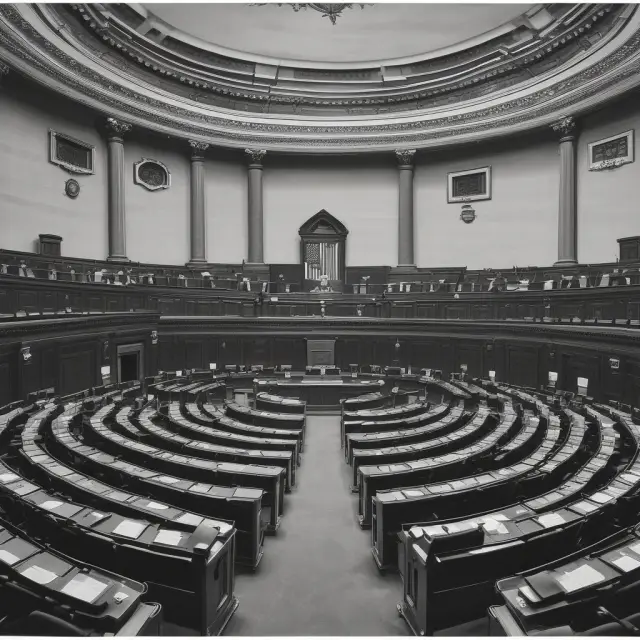
Criticisms of a Unicameral System
Although unicameral systems have several advantages, such as potential cost savings, efficient legislative processes, and ease of passing legislation, critics argue that there are inherent disadvantages to this form of government. Two major criticisms include the risk of groupthink and the absence of a formal system of checks and balances.
One concern is the potential for groupthink within a unicameral legislature, which may lead to a lack of diversity in ideas and perspectives, ultimately resulting in legislation that may not accurately reflect the needs or will of the citizens. The absence of an upper house to provide another perspective can exacerbate this issue. In contrast, bicameral systems offer the benefit of having two houses, representing different interests and perspectives, which can help prevent hasty decisions and promote a more thoughtful legislative process.
Another criticism is the lack of formal checks and balances within a unicameral system. While some argue that citizens’ voices and the power to petition for change provide a form of check against potential abuses of power, critics contend that this may not be enough to prevent significant issues. A unicameral legislature does not have an external branch, like a judiciary or executive, that can act as a counterbalance and offer another perspective in cases where the interests of various groups may conflict. As a result, a unicameral system may lack the ability to effectively address these complex issues and ensure that the needs of all citizens are considered in legislation.
Additionally, critics argue that a unicameral legislature may be more susceptible to influence from special interest groups and lobbying efforts, as there is only one chamber to target for advocacy. In contrast, bicameral systems provide an additional layer of protection against this issue by offering two chambers, each with the potential to resist pressure from certain groups that may attempt to sway policy decisions.
Despite these criticisms, it’s important to note that unicameral systems have been successful in various countries and offer advantages that make them appealing to some governments. However, it’s crucial for citizens and policymakers to be aware of the potential risks associated with this form of government and consider ways to mitigate those concerns while maximizing the benefits.

FAQ
Question: What is a unicameral system?
Answer: A unicameral system refers to a legislative branch of government consisting of one chamber or house, derived from the Latin word ‘unicameral,’ meaning ‘one-chambered.’ Some countries with unicameral systems include Armenia, Bulgaria, Denmark, Hungary, Monaco, Ukraine, Serbia, Turkey, and Sweden. The advantages of this system include more efficient legislative processes due to fewer representatives, potentially lower costs, and the ability for laws to pass more easily compared to a bicameral system.
Question: How does a unicameral system work?
Answer: A clear example of how a unicameral system functions can be observed in Sweden’s parliamentary government. There are 349 seats in the Swedish Parliament, with political parties receiving legislative representation based on their share of votes during national elections using proportional representation. The number of seats each party receives depends on their percentage of votes. For instance, the Social Democrats held 100 seats in 2020, while the Moderates had 70 seats. Parliament is responsible for approving legislative bills, passing them with a simple majority vote, and determining the prime minister.
Question: What are some advantages of a unicameral system compared to a bicameral system?
Answer: Unicameral systems offer several benefits over bicameral systems. These include more efficient legislative processes since laws may be passed more quickly due to fewer representatives and potentially lower costs. However, there is also the risk of groupthink and the potential for special interest groups to exert undue influence on legislation.
Question: What are some examples of unicameral systems throughout history?
Answer: Some countries like Sweden have long-standing unicameral systems while others, such as Greece, New Zealand, and Peru, have transitioned from bicameral to unicameral legislatures. The Articles of Confederation established the U.S.’s first constitution with a unicameral legislature in 1781, but it was later replaced by the bicameral system in 1787. Initially, Georgia, Pennsylvania, and Vermont adopted unicameral systems as an expression of true democracy representing all people without class distinctions, although each eventually switched to a bicameral system during the late 18th and early 19th centuries. The only U.S. state with a unicameral legislature today is Nebraska, which was transformed from a bicameral system in 1937 by Republican George Norris who believed the bicameral system to be outdated and unnecessary.
Question: What are some criticisms of unicameral systems?
Answer: Critics argue that unicameral systems may result in groupthink, where a legislature lacks diversity of perspectives and potential checks on power. Additionally, special interest groups might have more influence over the legislative process since there is only one chamber to consider their interests. These concerns led many countries to adopt bicameral systems with separate houses representing different interests and providing checks and balances.
 Next entry · No. 5,238Understanding the Rare World of Unicorns: How Private Startups Become Billion-Dollar Companies
See also
-
 No. 673
18 May 2024
23 min
Understanding Checks and Balances: A Critical Mechanism for Preventing Centralization of Power
Government
No. 673
18 May 2024
23 min
Understanding Checks and Balances: A Critical Mechanism for Preventing Centralization of Power
Government -
 No. 5,695
30 Sep 2025
21 min
White Collar: Understanding the Higher Echelon of Non-Manual Labor
Business Finance
No. 5,695
30 Sep 2025
21 min
White Collar: Understanding the Higher Echelon of Non-Manual Labor
Business Finance -
 No. 4,905
26 Jul 2025
23 min
Taxation Without Representation: A Historical Overview and Modern Implications for Institutional Investors
Taxation
No. 4,905
26 Jul 2025
23 min
Taxation Without Representation: A Historical Overview and Modern Implications for Institutional Investors
Taxation -
 No. 4,697
09 Jul 2025
25 min
Understanding Software as a Service (SaaS) – Advantages, Disadvantages, History and Characteristics
Business Strategy
No. 4,697
09 Jul 2025
25 min
Understanding Software as a Service (SaaS) – Advantages, Disadvantages, History and Characteristics
Business Strategy -
 No. 4,542
27 Jun 2025
22 min
The Rule of 72: A Simplified Formula for Estimating Investment Doubling Time
Investments
No. 4,542
27 Jun 2025
22 min
The Rule of 72: A Simplified Formula for Estimating Investment Doubling Time
Investments -
 No. 2,814
06 Feb 2025
22 min
Understanding Legal Monopolies: History, Examples, and Implications for Finance and Investment
Business Finance
No. 2,814
06 Feb 2025
22 min
Understanding Legal Monopolies: History, Examples, and Implications for Finance and Investment
Business Finance