Understanding Corporate Hierarchy: The Power Structure in Business

Explore the power dynamics of business structures, understanding roles, responsibilities, and impacts of organizational hierarchy.
What is Corporate Hierarchy?
Corporate hierarchy, also known as organizational hierarchy or corporate structure, refers to the arrangement of people within a corporation according to their level of authority and responsibilities. It outlines the relationships between various roles, departments, and individuals within a company. This intricate system plays a crucial role in defining the flow of information and communication throughout an organization, as well as the decision-making process.
Understanding Corporate Hierarchy: Definitions and Significance
In essence, corporate hierarchy is a way for businesses to delegate tasks, allocate resources, establish accountability, and maintain order within their operations. The structure reflects a power dynamic in which the most senior executives possess greater decision-making authority, while lower-level employees have more limited responsibilities. This arrangement may appear as a pyramid where those with higher status and power are situated at the summit, whereas individuals with less power or influence reside towards the base of the hierarchy.
In various contexts such as governments and religious organizations, this hierarchical arrangement also exists; however, the focus here is on understanding its role within corporations. In a business setting, the corporate hierarchy serves to ensure clear lines of communication and authority while delineating various roles and responsibilities.
Small businesses often have simpler organizational structures compared to large corporations. With fewer employees and resources at their disposal, these enterprises can adopt more streamlined hierarchies that allow for quick decision-making processes. However, as companies expand, the complexity of their corporate hierarchies increases alongside their growth. In a larger corporation, numerous departments, functions, and subunits emerge to manage diverse operational areas and maintain effective coordination between them.
The Role of the Board of Directors
At the pinnacle of a typical corporate hierarchy sits the board of directors, an influential group elected or appointed by shareholders to oversee the company’s strategic direction and long-term interests. Their primary responsibilities include hiring and terminating executive officers, setting executive compensation, establishing dividends, and other administrative policies that guide the corporation. The chairperson leads this group and often holds a seat at the very top of the hierarchy.
Understanding Executive Roles in Corporate Hierarchies
Below the board of directors, a company’s executive officers take up the next tier in the corporate hierarchy. The chief executive officer (CEO) serves as the highest-ranking executive and oversees significant decision-making processes and overall operations of the corporation. Executive roles such as the chief financial officer (CFO), chief operating officer (COO), and chief information officer (CIO) are crucial to a company’s functioning, requiring extensive executive experience.
The Impact of Corporate Hierarchy on Company Culture
The configuration of a corporate hierarchy can significantly influence the culture within an organization. As individuals advance in their positions, they often gain access to premium office spaces, amenities, and perks—an arrangement that may create hierarchical distinctions between staff members. Additionally, the physical layout of a company’s workspace can reflect its organizational hierarchy, with executives typically occupying more spacious or central offices.
The Evolution of Corporate Hierarchy
As companies mature, their corporate hierarchies evolve to accommodate new employees, departments, and responsibilities. The founding team may initially occupy executive positions in a company’s formative stage, with loose structures that enable quick decision-making. However, as more stakeholders join the endeavor, new layers emerge to provide clarity and order within the organization.
In some organizations, nontraditional corporate hierarchies challenge conventional power dynamics and encourage shared responsibility among all employees and leaders. Such arrangements can foster unique corporate cultures and alternative workspaces that reflect these values.

Organizational Structure and Corporate Hierarchy in Small Businesses
Small businesses usually have a simple organizational structure compared to larger corporations. This simplicity is especially noticeable when it comes to their corporate hierarchy. In the context of business, a corporate hierarchy refers to an arrangement that outlines power and responsibility within an organization. In a small business or startup setting, this can manifest as a clear chain of command from the founding team at the top to employees.
The corporate hierarchy in small businesses follows a simple pyramid structure where key decision-makers and owners are situated near the top, while entry-level employees typically hold positions at the bottom. This arrangement is designed to facilitate efficient communication and streamlined operations as every employee knows their role within this structure.
Although the corporate hierarchy of a small business may not be as complex as those of large corporations, it still plays a pivotal role in defining the organizational flow, distributing responsibilities, and ultimately shaping the company culture. Understanding the importance and function of corporate hierarchies, even at the smaller scale, can help entrepreneurs navigate their own business structures effectively.
The corporate hierarchy in small businesses generally starts with the founding team or owners. They hold the top positions, setting the strategic direction for the organization and making major decisions. This group is usually followed by a small executive team, typically consisting of key individuals overseeing operations, finance, marketing, sales, and human resources. These executives work closely with the founders to ensure successful implementation of business strategies.
Below these levels, managers oversee specific departments, while employees perform day-to-day tasks that keep the business running efficiently. The corporate hierarchy continues to evolve as the company grows, introducing new layers and roles as necessary. This progression ensures a clear understanding of each employee’s role within the organization, enabling effective communication and efficient operations.
As small businesses expand and take on more complex projects, the need for additional levels in their corporate hierarchy may arise. In these instances, it is vital for entrepreneurs to strike a balance between maintaining the simplicity of their organizational structure while ensuring that the company continues to function optimally. Effective communication and delegation become essential components in this process, allowing small businesses to retain their agility while scaling up.
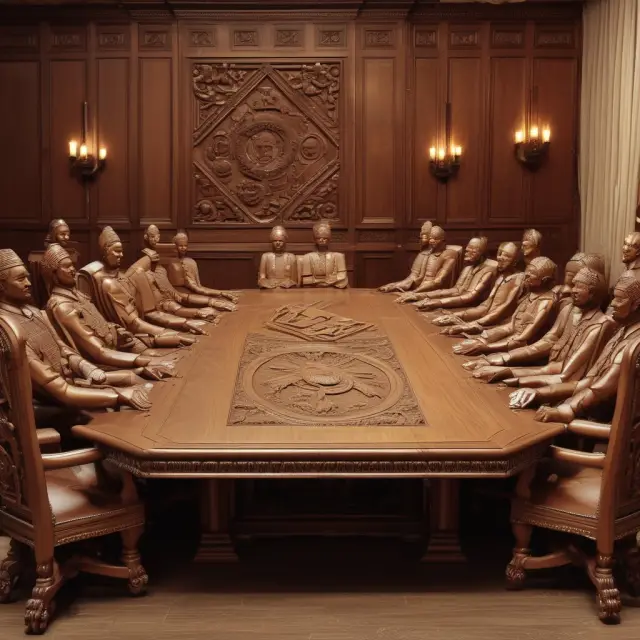
Corporate Hierarchy: The Role of the Board of Directors
In a corporate hierarchy, one essential governing body holds significant power over the overall direction of a company—the board of directors. This group is responsible for representing shareholder interests and providing strategic guidance to the CEO and executive team. Understanding their role, duties, and position within the corporate hierarchy is crucial to understanding how this vital organizational structure functions.
The Board of Directors: Who Are They?
The board of directors is an essential component of a corporation’s governance framework. Generally speaking, it is a group of individuals appointed or elected to protect shareholders’ interests and provide strategic guidance for the company’s future growth. This body ultimately ensures that corporate actions align with their fiduciary duty—acting in the best interest of the corporation and its shareholders.
The Composition of a Board: Roles and Responsibilities
Boards vary in size, typically ranging from five to twenty members, depending on the company’s industry and size. The chairperson heads the board, leading their meetings and setting the agenda. They may also serve as a spokesperson for the organization in various situations. Another critical member of the board is the lead director, who acts as an intermediary between the CEO and the rest of the board to ensure a clear line of communication.
Key Duties of the Board: Setting Strategy and Making Executive Decisions
The board’s primary role in a corporate hierarchy is to provide strategic guidance and oversight. They engage with senior management, evaluate executive performance, and approve major business decisions such as mergers and acquisitions, significant investments, and dividend policies. The board is also responsible for setting the compensation packages for executives based on industry standards and performance benchmarks.
The Board’s Role in Corporate Compliance: Fiduciary Duty and Transparency
Adhering to a corporation’s fiduciary duty requires that directors act in good faith, with loyalty and care towards their shareholders and the company. Transparency is another crucial aspect of board operations, as they must ensure public disclosure of essential financial information. Regular reporting to shareholders through annual reports and other communications is also required for maintaining investor trust and confidence.
The Relationship Between the Board and the CEO
While the board sets strategic direction, the CEO implements those strategies day-to-day. A strong relationship between the two is vital for a company’s success. The board provides guidance, feedback, and support to the CEO, while the CEO executes the board’s plans and updates them on progress regularly. Effective communication between these parties is essential to maintaining a healthy corporate culture and ensuring shareholder satisfaction.
In conclusion, understanding the role of the board of directors within a corporate hierarchy is essential for grasping the inner workings of a company’s governance structure. Their duties, responsibilities, and relationship with the CEO play crucial roles in setting strategy, making executive decisions, and upholding fiduciary duties to ensure that shareholders’ interests are well-represented and that their investments remain protected.

The CEO’s Role in the Corporate Hierarchy
In a corporate hierarchy, the CEO plays a pivotal role as the highest-ranking executive within the organization. As such, understanding their responsibilities and decision-making power within this hierarchical structure is essential for grasping how corporations operate efficiently. The chief executive officer (CEO) is appointed to lead the company’s overall operations, setting the strategic direction and implementing key business decisions.
The CEO’s responsibilities are multifaceted:
- Strategic Vision: Developing long-term goals that align with the company’s mission, vision, and values.
- Leadership: Guiding and motivating employees to achieve the organizational objectives while maintaining a strong corporate culture.
- Decision Making: Making critical business decisions, which can impact various aspects of the company including finance, marketing, and research and development.
- Stakeholder Management: Engaging with key stakeholders such as board members, investors, customers, and government regulators.
- Financial Management: Ensuring the financial health of the organization and making informed investments to maximize shareholder value.
The CEO’s position in the corporate hierarchy influences their decision-making power significantly. They have the authority to make decisions that can impact every aspect of a corporation, from its overall strategic direction to daily operations. As a result, the CEO plays an essential role in setting the tone for the rest of the organization, fostering a strong company culture, and driving innovation and growth.
The influence of a CEO on the corporate hierarchy doesn’t stop at their direct employees and department heads; it permeates through various levels within the organization. The way they lead can set the stage for how lower-level executives and regular employees approach their work, making the CEO an important figure in shaping a company’s culture and overall success.
Moreover, the relationship between the CEO and board of directors is crucial to understanding their role in the corporate hierarchy. The board acts as an advisory body, offering guidance, oversight, and strategic direction. Ultimately, their primary role is to protect shareholder interests. In this capacity, they appoint the CEO and can remove them if necessary, ensuring that the company remains aligned with its mission and objectives.
The CEO’s role in a corporate hierarchy is multifaceted, complex, and crucial for any business looking to thrive. By understanding their responsibilities, decision-making power, and influence on the corporate structure, one can better appreciate how an organization runs efficiently while achieving its goals.

Understanding Other Executive Roles within Corporate Hierarchies
Beyond the Chief Executive Officer (CEO), other executive roles play critical parts in a corporation’s hierarchy and overall performance. Three significant executive positions are the Chief Financial Officer (CFO), the Chief Operating Officer (COO), and the Chief Information Officer (CIO). These executives are pivotal to the organization, ensuring smooth operations, financial management, and information technology support.
The CFO: A Powerful Partner
A company’s financial health is crucial for growth and sustainability, making the role of the Chief Financial Officer essential. The CFO collaborates closely with the CEO to manage a corporation’s financial resources, implement strategic plans, and maintain investor relationships. They oversee financial reporting, forecasting, and budgeting processes. Additionally, they manage interactions with banks, investors, and other stakeholders regarding finances.
The COO: A Crucial Catalyst
An effective Chief Operating Officer assumes responsibility for managing day-to-day operations within a corporation. By ensuring that the company’s departments are functioning optimally and working collaboratively, they help the CEO focus on strategic growth initiatives. The COO oversees human resources, manufacturing processes, logistics, and other operational areas. They often work closely with department heads to improve efficiency, productivity, and profitability.
The CIO: A Necessary Navigator
Technology is integral to most businesses today, making the role of the Chief Information Officer vital. The CIO leads the company’s technology strategy, ensuring that it aligns with the overall business strategy and supports operational efficiency. They manage the organization’s information systems, infrastructure, and data management. Moreover, they work to identify and implement new technologies to help the corporation stay competitive and innovative in its industry.
The hierarchy of these executives within a corporation is often determined by their level of involvement with overall company strategy and decision-making power. While all three positions are essential, the CFO tends to focus more on financial aspects, while the COO focuses on operational matters, and the CIO deals mainly with technology infrastructure. However, in smaller businesses or startups, these roles might overlap, and one person may assume responsibilities from multiple executive positions. As a company grows, it may eventually bring on additional executives to address specific functional areas or expand its operations further. The evolving nature of corporate hierarchies reflects the continuous development that businesses undergo as they adapt to new challenges and opportunities.

The Impact of Corporate Hierarchy on Company Culture
A corporate hierarchy can significantly influence a company’s culture. The organizational structure, power dynamics, and communication flow shaped by the hierarchy can lead to distinct cultural attributes. In many ways, the hierarchical arrangement defines how information travels throughout an organization, how employees engage with one another, and the opportunities for career growth within the corporation.
The traditional pyramid-style corporate hierarchy resembles a cascading power structure that places the most powerful individuals at its apex and regular employees at the base. This arrangement may lead to several cultural consequences:
1. Information Flow: The hierarchical structure determines how information travels within an organization. Those at the top of the pyramid have more control over the dissemination of information, often leading to a filtered flow that can impact transparency and decision-making agility.
2. Communication: In a hierarchically structured environment, communication may be formalized and follow an established chain of command. This can result in a culture where employees are reluctant to share ideas or concerns with those above them due to fear of criticism, retribution, or being perceived as insubordinate.
3. Career Growth: The hierarchy also influences opportunities for career advancement within the organization. Employees at lower levels may struggle to gain access to higher-level positions, especially when these roles are filled through promotions from within rather than external hires.
4. Collaboration and Innovation: A rigid corporate hierarchy can stifle collaboration and innovation. As individuals are confined to their designated roles and departments, the opportunity for cross-functional interaction and knowledge sharing may be limited. This can lead to a culture that values adherence to established procedures over experimentation or change.
However, not all organizations strictly follow traditional hierarchies. Some companies embrace flatter organizational structures that minimize levels within their hierarchy, allowing for more horizontal communication channels and shared decision-making authority. This can result in a culture that values transparency, flexibility, and collaboration, leading to greater employee engagement and innovation.
Ultimately, the impact of corporate hierarchy on company culture depends on the specific configuration and cultural values of the organization. By understanding how the hierarchy influences communication flow, information dissemination, career opportunities, and collaboration dynamics, companies can proactively work towards fostering a positive and productive organizational culture that supports growth and innovation.

Vertical vs Horizontal Corporate Hierarchies
Corporate hierarchies are often depicted as a vertical structure, with each level of the organization having distinct authority and responsibilities. However, there’s another type of corporate hierarchy that challenges this traditional setup: horizontal hierarchy or flat organizational structure. In this section, we delve into the differences between these two types of corporate hierarchies.
Traditional Corporate Hierarchy (Vertical)
In a vertically structured corporate hierarchy, power and control are distributed in a hierarchical manner. This means that there is a clear chain of command from the top to bottom, where each level depends on the one above it for direction and guidance. The CEO sits at the top, followed by other executive officers like CFO, COO, and CIO, then vice presidents and directors, and finally managers and employees.
One of the main advantages of a vertical hierarchy is the clear division of labor and authority. Employees know their roles, responsibilities, and reporting lines. Additionally, it provides a defined path for career growth. As employees progress up the hierarchy, they acquire more expertise and experience, eventually reaching executive positions.
However, this type of hierarchy can lead to slow decision-making processes due to the multiple layers involved. Communication between departments and teams can also be inefficient, as information often needs to pass through several levels before reaching its intended recipient.
Horizontal Corporate Hierarchy (Flat)
In contrast, horizontal hierarchies, or flat organizational structures, eliminate the traditional hierarchy’s many layers by having all employees share similar status and responsibilities. In a flat organization, there are fewer reporting lines and no clear distinction between managers and team members. Instead, teams collaborate and communicate more freely with one another to solve problems and make decisions.
The advantages of a horizontal hierarchy include faster decision-making processes since there is less bureaucracy involved. Communication within the organization is also improved because everyone is accessible and able to share ideas and insights readily. Additionally, employees are often more engaged and motivated since they have greater autonomy and responsibility for their work.
However, one disadvantage of a horizontal hierarchy is that it may lack a clear chain of command, making it challenging for employees to understand their roles and responsibilities. Also, decision-making can be less centralized, which might lead to inconsistencies and conflicts between teams.
In summary, both vertical and horizontal hierarchies have their advantages and disadvantages. The choice between the two ultimately depends on the nature of the business, its size, and its desired culture. Vertical hierarchies are better suited for larger organizations that require a clear division of labor and a defined chain of command. Horizontal hierarchies, on the other hand, are more suitable for smaller businesses with a focus on collaboration, innovation, and employee engagement.
Understanding these differences can help organizations make informed decisions about their corporate hierarchy structure, ultimately impacting their ability to grow, compete, and succeed in their respective industries.

Advancing in the Corporate Hierarchy: A Career Perspective
Understanding the corporate hierarchy can help individuals navigate their career paths within a business organization. While some people aim to climb the ladder and reach senior leadership positions, others prefer to remain in their roles, content with their current job functions and responsibilities. In this section, we will discuss opportunities for professional growth in the context of various roles and levels within a corporate hierarchy.
Career Advancement: The Role of Corporate Hierarchy in Career Progression
The corporate hierarchy plays an essential role in career advancement. Employees are often given specific job functions and responsibilities within their departments or divisions. As they gain experience, demonstrate expertise, and display leadership qualities, they may be considered for promotions. Advancing through the ranks within a company can offer numerous benefits such as:
- Increased earning potential
- Greater responsibility and decision-making power
- Opportunities to lead teams and mentor colleagues
- New challenges and learning experiences
- Enhanced recognition and respect within the organization
However, reaching more senior positions requires dedication, hard work, and a strategic approach. Understanding the hierarchy in your company and identifying potential career paths can help you plan and set goals to advance.
Career Advancement Opportunities by Role and Level
Certain roles and levels within a corporate hierarchy may offer more opportunities for career growth. For instance:
- Executives: Executive positions, such as the CEO, CFO, COO, or CIO, typically come with significant responsibility and power. They often require extensive experience, education, and industry knowledge. Advancing to these roles requires strong leadership skills, strategic planning abilities, and a deep understanding of business operations.
- Middle Management: Middle management positions offer opportunities for growth towards more senior executive roles. These managers are responsible for overseeing specific departments or divisions within a company. As they gain experience, they may be considered for promotions to higher-level roles. To advance, middle managers should focus on improving their leadership skills and demonstrating their ability to handle larger projects and teams.
- Administrative and Support Staff: Employees in administrative and support roles can also progress within the corporate hierarchy. They may start in entry-level positions but can gain valuable experience and knowledge. Over time, they can develop essential skills such as communication, organization, and attention to detail that can lead to promotions or transitions into other departments.
- Technicians and Specialists: Technicians and specialists, such as engineers, designers, or IT professionals, may focus on specific areas within a company but also have opportunities for career advancement. They can develop expertise in their respective fields and gain recognition for their contributions. With experience and advanced education, they can move into leadership roles or consultancy positions within their industry.
Strategies for Career Advancement Within a Corporate Hierarchy
To increase your chances of advancing within a corporate hierarchy, consider the following strategies:
- Demonstrate expertise in your current role
- Network and build professional relationships within your organization
- Seek mentorship from senior executives or colleagues
- Volunteer for challenging projects and take on additional responsibilities
- Continuously update your skills and knowledge through education, training, and industry events.
In conclusion, understanding the corporate hierarchy is crucial for individuals looking to advance within a company. By familiarizing yourself with the structure and roles within your organization, you can set achievable career goals and plan for growth. Whether you are starting out in an entry-level role or aiming for a senior executive position, there are opportunities for progression within a corporate hierarchy.
Next, we will discuss vertical vs horizontal corporate hierarchies and their implications on career advancement. Stay tuned!

The Evolution of Corporate Hierarchy
The corporate hierarchy in a business is not a static structure; it evolves as the company grows and changes. Understanding how this complex system adapts is crucial for both executives and employees alike, as it can impact career opportunities and company culture.
When a company begins, its organizational structure may be quite simple. Founding team members might occupy various roles with overlapping responsibilities. However, as the business matures, new layers are introduced to establish clear operational flows and define job duties for each member. This process is natural in the growth of any organization.
The founding team often makes up the executive leadership initially, holding loose structures while the company takes off. As more managers, employees, and investors join, new hierarchical levels emerge to bring order and efficiency to the organization. In some instances, organizations adopt non-traditional corporate hierarchies to share responsibilities across all employees and leaders. Such arrangements can influence corporate culture, from office layouts to perks.
Let’s explore how the corporate hierarchy evolves as a company grows, examining the roles of key executives and their impact on the structure:
1. Board of Directors
Initially, the board may consist of the founding team members or a few close advisers who provide strategic guidance and financial oversight. Over time, as the company expands and takes on outside investment, the board grows to include industry experts and additional investors. This shift reflects the organization’s increasing complexity and need for diverse perspectives and expertise at the highest levels.
2. Chief Executive Officer (CEO)
The CEO is the driving force behind a company’s strategic direction and overall operations. As the business scales, the CEO’s responsibilities expand beyond the initial core functions of product development and sales. They may delegate some executive duties to other members of the C-suite and focus on broader issues such as mergers and acquisitions, public relations, and organizational structure.
3. Chief Financial Officer (CFO), Chief Operating Officer (COO), and Chief Information Officer (CIO)
As the company grows, it becomes essential to have specialized roles leading critical functions such as finance, operations, and information technology. The CFO, COO, and CIO are key executive positions that emerge in larger organizations to manage these areas effectively. Their addition to the corporate hierarchy reinforces the importance of centralized control and efficient communication channels between departments.
4. Middle Management and Below
As a company grows, more employees join the team, and middle management roles emerge to oversee various departments and teams. These layers ensure clear lines of reporting and communication, allowing for better coordination and decision-making across functions. The hierarchical structure also offers opportunities for career advancement for employees, as they can progress from entry-level positions to managerial roles.
In conclusion, the corporate hierarchy evolves as a company grows, adapting to changing needs and demands. By understanding this dynamic process and the role of key executives within it, organizations can effectively manage their growth while fostering a positive company culture that benefits all members.

FAQs on Corporate Hierarchy
A corporate hierarchy can be a complex structure that plays a significant role in how a business operates, so it’s natural to have some questions about this organizational concept. In the following sections, we’ll answer some common queries related to corporate hierarchies.
What is Corporate Hierarchy?
A: Corporate hierarchy refers to an organization’s power structure, outlining roles and responsibilities based on status and authority. It can be likened to a pyramid with the most powerful individuals at the top and subordinates at the bottom. In larger corporations, this hierarchy involves various levels of executives and managers, each overseeing different departments or teams.
What is the role of a board of directors in a corporate hierarchy?
A: The board of directors acts as the ultimate governing body for a corporation. They are elected or appointed by shareholders to represent their interests. Their duties include hiring and firing executives, setting executive compensation, establishing dividends, and other administrative policies.
What is the role of the CEO in a corporate hierarchy?
A: The CEO (Chief Executive Officer) holds the highest position within the corporate hierarchy. They are responsible for making major corporate decisions and managing overall operations. Other executives like CFOs, COOs, and CIOs hold positions below the CEO but play crucial roles in the organization.
What is a horizontal corporate hierarchy?
A: In contrast to a traditional hierarchical structure, horizontal corporate hierarchies distribute power and responsibility more evenly among employees. This structure can lead to a flatter organizational design with fewer layers, allowing for increased communication and collaboration between teams.
How does the corporate hierarchy impact career advancement?
A: The corporate hierarchy can significantly influence career growth within a company. Those in higher positions have more opportunities for promotions and salary increases. However, some organizations are experimenting with nontraditional hierarchies to promote shared responsibility and employee empowerment.
How does the configuration of a corporate hierarchy change as a company grows?
A: As a company matures, its hierarchy evolves to accommodate new layers, giving clarity to operational flow and the duties of each member. The founding team may make up the executive leadership in the early stages, while managers and employees join later, leading to the introduction of additional tiers within the organization.
What is the relationship between corporate hierarchy and company culture?
A: Corporate hierarchy can influence a company’s culture by affecting aspects like office layout and access to perks. For example, executives often have premium offices and privileges, while regular employees may not enjoy such benefits. However, some organizations are experimenting with flat hierarchies and shared space to promote collaboration and reduce the perceived divide between staff levels.
 Next entry · No. 777Understanding Corporate Bonds: Risks, Ratings, Sales, and Differences with Stocks
See also
-
 No. 3,794
27 Apr 2025
20 min
Understanding Organizational Charts: Depicting a Company’s Hierarchical Structure
Business Strategy
No. 3,794
27 Apr 2025
20 min
Understanding Organizational Charts: Depicting a Company’s Hierarchical Structure
Business Strategy -
 No. 2,608
20 Jan 2025
19 min
John Elkann: The Agnelli Heir and the Force Behind Fiat, Ferrari, and Stellantis
Business Strategy
No. 2,608
20 Jan 2025
19 min
John Elkann: The Agnelli Heir and the Force Behind Fiat, Ferrari, and Stellantis
Business Strategy -
 No. 2,571
17 Jan 2025
18 min
Jack Welch: The Manager of the Century and the Transformation of General Electric
Business Strategy
No. 2,571
17 Jan 2025
18 min
Jack Welch: The Manager of the Century and the Transformation of General Electric
Business Strategy -
 No. 2,245
21 Dec 2024
26 min
Hubris: A Double-Edged Sword in Finance and Investment
Business Strategy
No. 2,245
21 Dec 2024
26 min
Hubris: A Double-Edged Sword in Finance and Investment
Business Strategy -
 No. 971
09 Jul 2024
19 min
Understanding Corporations: Structure, Creation, Operations, and Liquidation
Business Strategy
No. 971
09 Jul 2024
19 min
Understanding Corporations: Structure, Creation, Operations, and Liquidation
Business Strategy -
 No. 888
26 Jun 2024
19 min
The Role of Dealers in the Financial Markets: An Overview for Institutional Investors
Business Strategy
No. 888
26 Jun 2024
19 min
The Role of Dealers in the Financial Markets: An Overview for Institutional Investors
Business Strategy