Understanding Demand: Definition, Factors, Laws, and Its Importance in Economics

Explore the concept of demand in economics, key determinants, the law of demand, and market equilibrium with practical examples.
Introduction to Demand: Definition and Importance
Demand is an integral economic concept that reflects consumers’ desire and willingness to purchase a particular product or service at various prices. The relationship between price and demand is inverse; as the price of a good or service increases, the quantity demanded tends to decrease. Conversely, when the price falls, the quantity demanded often rises (Figure 1). Understanding demand is essential for businesses, consumers, and the overall economy, as it impacts profitability, consumer behavior, and market equilibrium.
Businesses rely on demand analysis to assess how many units of a product or service they can sell at different price points, ensuring effective pricing strategies to generate revenue while meeting consumer demands. An accurate understanding of demand helps businesses avoid overestimating or underestimating demand, which could lead to lost sales or leftover inventory respectively (Baumol & Ben-Porath, 1995).
The concept of demand is closely related to supply; while consumers aim to pay the lowest prices possible for goods and services, suppliers seek to maximize profits. The balance between these two concepts determines the actual prices and quantities transacted in a market.
Furthermore, demand is influenced by various factors, including product/service price, buyer’s income, prices of substitute goods, consumer preferences, and consumer expectations for price changes. Understanding how each factor affects demand can help businesses anticipate shifts in demand and adjust accordingly.
The law of demand states that when the price of a good or service rises, the quantity demanded decreases, while a decrease in price leads to an increase in quantity demanded (Figure 2). This inverse relationship between price and demand is demonstrated visually through the demand curve, which slopes downward as prices increase from left to right.
In summary, understanding demand is crucial for businesses to price their products effectively and generate profits, consumers to make informed purchasing decisions, and the economy to maintain equilibrium. The following sections will delve deeper into the determinants of demand: product/service price, buyer’s income, prices of substitute goods, consumer preferences, and consumer expectations for price changes.
References:
Baumol, W. J., & Ben-Porath, S. (1995). Economics: Principles & Policy, 3rd edition. McGraw-Hill.

Determinants of Demand: Product/Service Price
The price of a good or service significantly impacts the quantity demanded by consumers. A decrease in price often results in increased demand, while an increase in price leads to decreased demand for that product or service. This inverse relationship between price and demand is fundamental to understanding consumer behavior in the marketplace. Businesses rely on this knowledge to set prices effectively and generate profits.
For example, imagine a grocery store selling fresh strawberries. If the store lowers the price of strawberries, consumers are likely to buy more due to their perceived value being increased. Conversely, if the price of strawberries increases, shoppers might choose to purchase other fruits, leading to a decrease in demand for strawberries. The impact of price on demand is essential for businesses as it can influence stocking strategies and profitability.
The relationship between price and demand is also referred to as the law of demand. This economic principle suggests that an increase in price will result in a decrease in demand, while a reduction in price leads to increased demand. The law of demand holds true regardless of other factors affecting consumer preferences or available income. However, these factors can impact the elasticity and responsiveness of demand to price changes.
Demand elasticity refers to the degree of responsiveness of demand to price fluctuations. For instance, if a significant price change leads to a large shift in demand, demand elasticity is considered high. This concept helps businesses understand consumer reactions and adapt their pricing strategies accordingly. Additionally, understanding demand elasticity can help determine the optimal pricing strategy for a particular product or service.
The demand curve is an essential tool used to illustrate the relationship between price and demand visually. It displays how the quantity demanded changes as prices vary. The downward slope of a demand curve indicates that lower prices lead to higher quantities demanded, while higher prices result in fewer demands for a product or service. The shape of the demand curve can give businesses valuable insights into consumer behavior and pricing strategies.
In conclusion, understanding the relationship between price and demand is crucial for both consumers and businesses in today’s marketplace. By examining how price influences consumer purchasing decisions, businesses can effectively set prices to meet demand, optimize inventory levels, and generate profits. This knowledge also allows consumers to make informed choices about their spending habits and expectations regarding price fluctuations.

Determinants of Demand: Buyer’s Income
Buyer’s income is one of the essential determinants of demand because it affects a consumer’s purchasing power directly. The connection between consumer income and their purchasing power is crucial for businesses, as they need to understand how much consumers can afford and are willing to pay for their products or services. The following discussion explores this relationship in detail.
Consumer income refers to the financial resources available to individuals or households at any given time. The more disposable income an individual has, the more purchasing power they possess. This increased purchasing power translates into higher demand for goods and services. Conversely, when consumers have lower incomes or are experiencing a decrease in their disposable income, their demand decreases as well.
Businesses rely on understanding consumer income to price their products effectively and ensure that they can sell the desired quantity to meet their profit objectives. By estimating consumer purchasing power accurately, businesses can determine how many goods and services they can sell at various price points. This knowledge is especially essential for industries where income levels significantly influence demand, such as luxury brands or commodities.
Factors affecting income include wage growth, employment opportunities, and government benefits like social security or unemployment compensation. For instance, an increase in the minimum wage could lead to higher income for a portion of the population, resulting in increased demand for goods and services that were previously unaffordable to them. Conversely, job loss due to economic downturns or business closures reduces consumer income and decreases overall demand.
Understanding the relationship between buyer’s income and demand is particularly important in an economy with varying income levels. As economies grow, income distribution can change significantly. For example, if a growing economy experiences rising inequality, there may be large segments of the population that do not enjoy the same purchasing power as others, even though overall aggregate demand has increased. In such cases, it becomes essential for businesses to target specific income groups and tailor their offerings accordingly to capture a larger share of the market.
Demand elasticity, a measure of how sensitive demand for a good or service is to a change in its price, can also be influenced by changes in consumer income. When consumers’ income levels change significantly, they may react differently to price changes compared to when their income remains constant. This adjustment could result from the fact that some goods and services are considered necessities, while others are luxury items. Income elasticity of demand refers to how responsive demand is to changes in consumer income for a particular good or service. If the price change induces a significant shift in demand due to its importance to consumers’ daily life or the fact that it’s a necessity (e.g., food, housing), then income elasticity of demand can be considered high. Conversely, goods with low income elasticity of demand are those for which consumers do not significantly change their consumption patterns even if their income changes, like luxury items (e.g., jewelry, cars).
In conclusion, buyer’s income is a crucial determinant of demand as it plays a significant role in shaping consumer purchasing power and subsequent demand levels. By understanding the relationship between consumer income and demand, businesses can make informed decisions about their pricing strategies and target specific market segments to meet their objectives.

Determinants of Demand: Prices of Substitute Goods
The price of substitute goods is another crucial factor that impacts demand for a specific good or service. When the price of a substitute good drops, consumers might choose it instead of the primary good, thereby reducing the demand for the latter. Conversely, an increase in the price of a substitute good can lead to more demand for the primary good as consumers opt for it over the more expensive substitute.
Let’s consider some common examples of substitute goods and their impact on demand:
- Gasoline vs. Electric vehicles (EVs): The prices of these two alternatives significantly affect each other. A decrease in gasoline prices could lead to a reduction in EV sales as consumers opt for cheaper fuel options. However, an increase in the price of gasoline could result in increased demand for EVs due to their cost-effectiveness over time.
- Soda vs. Water: While soda can be seen as a treat or indulgence, water is essential for everyday life. When the price of soda rises, consumers might turn to water as an affordable alternative, decreasing the demand for soda and increasing it for water. Conversely, when the price of bottled water goes up, some consumers may switch back to purchasing soda instead.
- Movies at home vs. Going to the Cinema: The cost of home entertainment systems, such as streaming services or DVDs, has significantly impacted demand for going to the cinema. Lower prices for these alternatives can lead to reduced demand for movies in theaters as consumers opt for more convenient and budget-friendly options.
- Public transportation vs. Private cars: A decrease in public transportation fares could potentially reduce the demand for private vehicles as consumers prefer using the cheaper alternative. However, an increase in public transportation prices or a reduction in service quality can lead to increased demand for private cars due to their convenience and reliability.
Understanding how the price of substitute goods influences demand is crucial for businesses as it helps them anticipate consumer behavior and adjust strategies accordingly. It’s important for them to consider not just the prices of their primary offerings but also those of substitutes when making decisions about production, pricing, and marketing efforts.

Determinants of Demand: Consumer Preferences
Understanding the concept of consumer preferences is essential in analyzing demand for goods or services. Preferences are the wants, needs, and desires that individuals have towards various alternatives, including commodities or experiences. They can significantly impact the quantity demanded as they influence a consumer’s decision-making process. This section will discuss how consumer preferences shape demand for specific products or services.
Consumers’ preferences can stem from various factors. One influential factor is taste and flavor. For instance, some individuals might prefer coffee over tea due to their unique tastes or personal experiences associated with the beverage. Another crucial factor is the utility derived from goods or services. Utilitarian value plays a significant role in determining consumer preferences. An example would be a person’s preference for a high-speed internet connection, as they derive greater satisfaction and productivity from its usage compared to slower alternatives.
Advertising and marketing efforts also impact consumer preferences by shaping perceptions and influencing decision-making. For example, the way a product is marketed or presented can create positive associations, leading consumers to prefer it over competitors. Alternatively, negative advertising can discourage potential customers, affecting demand negatively.
Consumer preferences can change due to various factors such as lifestyle changes, personal experiences, and social influences. A person might have a preference for a particular brand of clothing or electronics based on their upbringing or peer group. However, as they grow older or encounter new experiences, their preferences may evolve. This dynamic aspect of consumer preferences makes demand an interesting and complex concept to study.
Consumer preferences can be analyzed through the lens of elasticity, which measures how responsive the quantity demanded is to a change in price. Highly elastic goods have significant changes in quantity demanded for small changes in price. For instance, luxury goods are often considered inelastic as consumers might not be deterred from purchasing them despite an increase in their cost. In contrast, everyday essentials like food or housing tend to exhibit high price elasticity because even small price changes can significantly impact consumption levels.
Understanding consumer preferences is crucial for businesses that aim to meet demand effectively while generating profits. By identifying and catering to consumer preferences, companies can differentiate themselves from competitors and attract customers. However, it’s essential to note that preferences are not fixed but rather dynamic, as they evolve with societal changes, personal experiences, and marketing efforts.
In conclusion, consumer preferences play a vital role in shaping demand for goods or services. By understanding the various factors influencing consumer preferences, businesses can develop strategies to meet demand effectively and generate profits while consumers can make informed decisions regarding their consumption patterns.

Determinants of Demand: Consumer Expectations for Price Changes
Understanding consumer expectations plays a significant role in market behavior and demand. The way consumers perceive price changes influences their purchasing decisions, making it a critical determinant of demand. By examining the impact of consumers’ expectations on demand, we can better comprehend its importance and how it affects businesses, consumers, and the economy as a whole.
In simple terms, consumer expectations for price changes refer to individuals’ beliefs about future price trends for goods or services. For example, if shoppers expect that the prices for electronics will be lower in a few months, they may delay their purchases until then. Conversely, consumers might rush to buy an item if they anticipate a price increase. These expectations can shift demand significantly and influence businesses’ pricing strategies and profitability.
The relationship between consumer expectations and demand elasticity is essential for businesses. Elasticity refers to the responsiveness of demand to changes in prices. For instance, if consumers react strongly to small price fluctuations and change their buying behavior accordingly, demand elasticity is high. On the other hand, if consumers are less responsive, demand elasticity is considered low. Understanding the degree of demand elasticity helps businesses plan pricing strategies, manage inventory levels, and allocate resources efficiently.
Consumer expectations can also impact demand indirectly through their effect on other determinants of demand. For example, if shoppers expect a price rise for a good or service, they might shift their spending to cheaper alternatives (substitute goods). This change in demand could lead to further adjustments by businesses that offer substitute products. The resulting ripple effect can influence the entire industry and even the economy as a whole.
Market participants such as investors and traders also pay close attention to consumer expectations when making decisions regarding stocks, bonds, and commodities. Economic indicators like inflation rate forecasts, employment data, and interest rates can all impact consumer expectations, ultimately shaping market demand.
In conclusion, consumer expectations for price changes significantly influence the way consumers behave in various markets. Understanding the determinants of demand, including consumer expectations, is crucial for businesses to make informed decisions and remain competitive in their industries. By analyzing trends and factors that shape consumer expectations, businesses can develop pricing strategies designed to meet consumer demand while generating profits. Moreover, being aware of consumer expectations allows consumers to make better-informed purchasing decisions, ensuring they receive the best value for their money.
Nowadays, companies use various methods to monitor and analyze consumer behavior and expectations, including surveys, data analysis tools, social media listening, and other forms of market research. These insights can inform businesses’ marketing campaigns, product development initiatives, and pricing strategies, ultimately helping them stay ahead of competitors and meet the evolving demands of their customers.
As we delve deeper into understanding demand and its determinants, we will explore more factors such as product/service price, buyer’s income, prices of substitute goods, and consumer preferences in subsequent sections. By examining these factors through various perspectives, we can gain a holistic view of the intricacies that underpin market dynamics and the role demand plays in the economy.

The Law of Demand: When Prices Rise, Demand Falls
Understanding the concept of demand is vital to both businesses and consumers as it explains their changing desire to purchase goods and services at given prices. This section will focus on the law of demand, which states that when prices rise, demand for a product decreases, all things being equal.
The Law of Demand
At the core of demand is the consumer’s willingness to pay a specific price for a good or service. A higher price can decrease the quantity demanded due to reduced purchasing power or a shift in consumer preferences towards alternatives. For instance, if a consumer initially demands 10 units of a product at $2 per unit but then faces a new price of $3 per unit, they may choose to demand only 7 units instead. The inverse relationship between price and demand is the Law of Demand.
Understanding this relationship is crucial for businesses. For example, if a company sets an unrealistically high price for its product, it risks having insufficient demand and losing potential profits. Conversely, pricing the product too low could result in lost opportunities due to excess demand that cannot be met with current production capacity.
Demand Curve: A Visual Representation of the Law of Demand
A demand curve is an essential tool for visualizing the relationship between price and the quantity demanded. The curve slopes downward from left to right, indicating that as prices decrease, consumers will increase their purchases (Figure 1). This inverse relationship is the result of the law of demand.
The intersection of the demand curve and a particular price represents the market equilibrium price. At this point, both consumers and businesses can maximize their benefits. The demand curve helps businesses understand consumer behavior, enabling them to set prices that cater to different segments while ensuring profitability.
Stay tuned for the upcoming sections on the determinants of demand, including product/service price, buyer’s income, prices of substitute goods, and consumer preferences, as well as an investigation into how consumer expectations impact purchasing decisions. Understanding these factors is essential for businesses to effectively manage their marketing strategies and adapt to market changes.
Figure 1: Demand Curve
Demand Curve: A Graphical Representation of the Law of Demand
The demand curve is a graphical representation of the law of demand, which states that as the price for a product or service increases, the quantity demanded decreases and vice versa. The relationship between the price and quantity demanded can be visualized using a demand curve to understand consumers’ behaviors more effectively.
Demand Curve Construction
A demand curve is created by plotting various quantities of a good or service on the horizontal axis and their corresponding prices on the vertical axis. As prices decrease, the quantity demanded increases, causing a downward slope in the demand curve. The curve starts with a high price and low quantity demanded on its left side and gradually shifts to a lower price and higher quantity demanded as it progresses towards the right.
Understanding Consumer Behavior
The demand curve reveals essential insights into consumers’ purchasing behavior in response to changing prices. When the price for a product increases, consumers may reduce their purchases or switch to substitutes with relatively lower prices, leading to a decrease in quantity demanded. Conversely, a decrease in price might encourage buyers to purchase more of the good or service.
Business Implications
For businesses, the demand curve provides valuable information for making informed decisions regarding pricing and production strategies. It helps determine the optimal price point at which they can maximize profits by balancing supply and demand. A company can use this information to adjust prices to match consumer preferences, ensuring that their offerings meet the target market’s needs while generating healthy revenues.
Market Equilibrium
The intersection of the demand and supply curves represents market equilibrium, where the price reflects consumers’ willingness to pay and suppliers’ minimum acceptable price. This point ensures a balance between the quantity demanded and quantity supplied, preventing any surplus or deficit in the market.
Economic Policy
Governments and central banks also use demand curves when implementing fiscal and monetary policies to manage aggregate demand in the economy. By understanding how consumers respond to price changes, policymakers can effectively adjust interest rates, taxes, and other economic tools to maintain a stable macroeconomic environment and address various challenges, such as inflation or recession.
In conclusion, the demand curve is an essential concept in economics that helps businesses and policymakers understand consumer behavior and make informed decisions about pricing, production, and economic policy. By examining the relationship between price and quantity demanded, we can better navigate the complexities of the market economy and create more effective strategies for generating value and improving overall well-being.
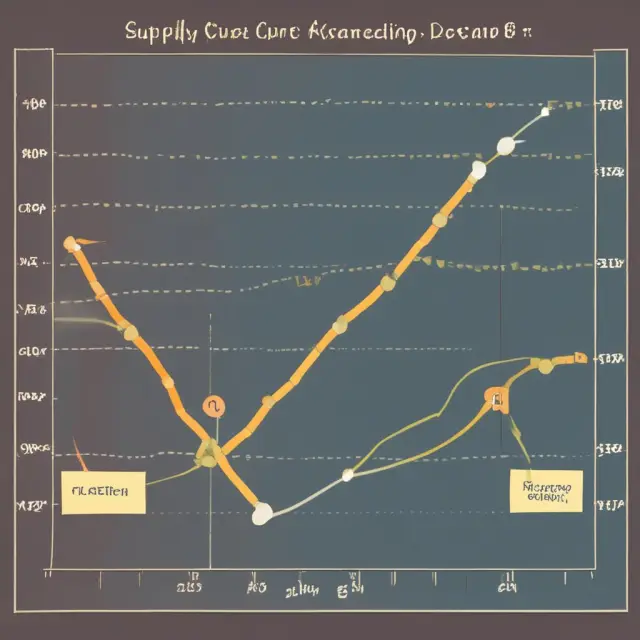
Market Equilibrium: Price Determined by the Intersection of Supply and Demand
The market equilibrium price is determined by the intricate interplay between supply and demand curves in a free market economy. Both curves represent vital aspects of an economic system, with demand focusing on the consumers’ perspective and supply highlighting the producers’ stance. Understanding how these forces interact leads to an equilibrium price that balances both buyer and seller interests.
The Law of Demand asserts that when prices rise, consumer demand for a specific good or service decreases, whereas a decrease in the price increases demand. The inverse relationship between price and demand is essential, forming the basis of the demand curve, which visually illustrates this principle.
Graphically, a demand curve represents a downward slope from left to right on a chart. This visualization signifies that as prices fall, the quantity demanded by consumers increases. Conversely, when the price goes up, the quantity demanded drops. The demand schedule, which lists the quantity of a product that consumers are willing to purchase at various price points, is used to create the demand curve.
At market equilibrium, the point where both the supply and demand curves intersect, the price represents the market clearing or market equilibrium price. This price ensures consumers and sellers reach an agreement for the exchange of goods and services. It’s important to note that factors like income levels, consumer preferences, and prices of substitute goods influence the positioning and movement of the demand curve.
In a free, competitive market, price movements towards the equilibrium are driven by supply and demand forces, ensuring that prices adjust accordingly to reflect the balance between what consumers are willing to pay and producers’ costs. When demand shifts due to changes in any determinant (product/service price, buyer’s income, prices of substitute goods, consumer preferences, or consumer expectations for price changes), the equilibrium price adjusts to restore balance.
Understanding market equilibrium is crucial for both consumers and businesses alike. Consumers benefit by acquiring products and services at the most suitable price point, whereas businesses optimize inventory levels and pricing strategies based on this equilibrium price.

FAQs: Common Questions About Understanding Demand
Demand is an essential economic concept that represents the consumer’s desire and willingness to purchase goods or services at specific prices. In this section, we will address some common questions about demand and its importance.
What is the definition of demand in economics?
Answer: The concept of demand refers to a consumer’s desire to buy a product or service at given prices. When the price for a product increases, demand tends to decrease, while a lower price leads to an increase in demand.
How does demand impact businesses and consumers?
Answer: Understanding demand helps businesses set prices that meet consumer needs and generate profits. Demand also affects the economy by driving profits and fueling growth.
What are the determinants of demand?
Answer: The five primary factors that influence demand include product/service price, buyer’s income, prices of substitute goods, consumer preferences, and consumer expectations for a change in price.
What is the law of demand?
Answer: The law of demand states that when prices rise, demand falls, and vice versa. It is an inverse relationship between price and demand.
What is the difference between market demand and aggregate demand?
Answer: Market demand refers to the total quantity demanded for a specific good by all consumers in a market. Aggregate demand represents the total demand for all goods and services in an economy. While market demand can be influenced by competition, substitute goods, and consumer preferences, aggregate demand is not affected by these factors.
How does understanding demand help businesses?
Answer: Understanding demand helps businesses price their products and services competitively, manage inventory levels, and make informed decisions about production capacity to meet consumer needs while maximizing profits.
What is the relationship between supply and demand in economics?
Answer: The interaction between supply and demand determines the actual prices of goods and services and the volume that changes hands in a market. While consumers try to pay the lowest possible price for goods and services, suppliers aim to maximize profits. Equilibrium occurs when supply and demand curves intersect, indicating that the quantity supplied equals the quantity demanded at an agreed-upon price.
What are some common misconceptions about demand?
Answer: Some misconceptions include assuming that demand always increases as income rises (Law of Demand), or that demand and supply always reach an equilibrium price in competitive markets. In reality, there can be exceptions to these assumptions, such as when market structures differ from perfect competition or when external factors influence consumer preferences and behaviors.
 Next entry · No. 984Understanding Demand Deposit Accounts: Accessible Funds with Minimal Interest
See also
-
 No. 207
07 Apr 2024
21 min
Understanding Arc Elasticity: Measuring the Change in Quantity Demanded with Respect to Price
Economics
No. 207
07 Apr 2024
21 min
Understanding Arc Elasticity: Measuring the Change in Quantity Demanded with Respect to Price
Economics -
 No. 988
12 Jul 2024
19 min
Demand Theory: Understanding the Inverse Relationship Between Price and Consumer Demand
Business Finance
No. 988
12 Jul 2024
19 min
Demand Theory: Understanding the Inverse Relationship Between Price and Consumer Demand
Business Finance -
 No. 3,560
08 Apr 2025
23 min
Understanding Normal Goods: Definition, Characteristics, and Income Elasticity of Demand
Economics
No. 3,560
08 Apr 2025
23 min
Understanding Normal Goods: Definition, Characteristics, and Income Elasticity of Demand
Economics -
 No. 3,077
27 Feb 2025
20 min
Understanding Marginal Utility: The Key Concept in Economics
Economics
No. 3,077
27 Feb 2025
20 min
Understanding Marginal Utility: The Key Concept in Economics
Economics -
 No. 2,338
29 Dec 2024
22 min
Understanding the Income Effect: Changes in Consumer Purchasing Power and its Impact on Goods Demand
Economics
No. 2,338
29 Dec 2024
22 min
Understanding the Income Effect: Changes in Consumer Purchasing Power and its Impact on Goods Demand
Economics -
 No. 986
12 Jul 2024
22 min
Understanding Demand Shocks: Causes, Effects and Examples
Economics
No. 986
12 Jul 2024
22 min
Understanding Demand Shocks: Causes, Effects and Examples
Economics