Understanding Quantity Demanded: Definition, Inverse Relationship with Price, Elasticity and Examples

Explore the intricacies of Quantity Demanded: definition, price relationship, elasticity, & examples in this comprehensive article.
Introduction to Quantity Demanded
Quantity demanded is a crucial concept in microeconomics that describes the amount of goods or services consumers wish to purchase at various prices during a given time frame. It’s an essential aspect of the demand side of the market and plays a significant role in understanding consumer behavior, market dynamics, and the formation of supply and demand curves.
Understanding Quantity Demanded: Definition
Quantity demanded is defined as the amount of a product or service that consumers desire to buy at a specific price level during a particular time frame. In essence, it signifies the total number of units customers are willing and able to purchase, given their preferences and income.
The inverse relationship between Price and Quantity Demanded
Price plays a pivotal role in determining the quantity demanded for goods or services. Based on the law of demand, when all other factors remain constant, an increase in price will result in a decrease in quantity demanded, while a reduction in price leads to a rise in the quantity demanded. This inverse relationship is vital for understanding consumer behavior and market dynamics as it forms the basis for constructing demand curves.
Determinants of Quantity Demanded: Price Changes
Price is the most influential factor affecting the quantity demanded, with elasticity being another essential determinant. Elastic goods are those where consumers’ response to price changes is significant; in contrast, inelastic goods exhibit minimal reaction to changes in price. This section will focus on understanding how price changes influence the quantity demanded and introduce the concept of price elasticity.
Elasticity of Demand
Price elasticity of demand measures the responsiveness or sensitivity of consumers’ quantity demanded to changes in price. It indicates whether a good is considered elastic or inelastic, based on its degree of response to price fluctuations. Understanding this concept provides valuable insights into how markets respond to price shifts and helps businesses optimize pricing strategies.
In our next sections, we will delve deeper into these topics, explore real-world examples, and discuss the implications for both consumers and businesses. Stay tuned!

Understanding Quantity Demanded: Definition
The term “quantity demanded” in economics refers to the total amount of a good or service that consumers want and are willing to buy at a specific price level within a given period. Quantity demanded is determined by various factors, primarily consumer preferences, income levels, and prices. The relationship between the price of a product and the quantity demanded follows the law of demand, which states that there is an inverse relationship between price and the quantity demanded.
As per this principle, when the price of a good or service increases, the quantity demanded decreases, and vice versa. Quantity demanded can be visualized as the point on the demand curve corresponding to a given price level. This inverse relationship enables us to measure the responsiveness of consumers to price changes using elasticity concepts like price elasticity of demand.
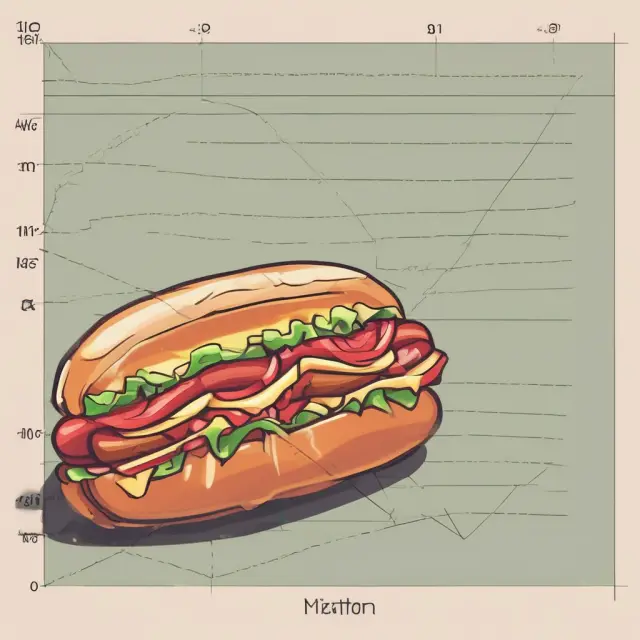
For instance, imagine consumers purchasing hot dogs at $5 each, with a quantity demanded of 2 units per day. If the price rises to $6, the quantity demanded reduces to 1 unit per day. Conversely, if the price drops to $4, the quantity demanded increases to 3 units per day. By plotting these combinations of price and quantity demanded, we can generate a downward-sloping demand curve.
A change in price results in a shift of the point along this demand curve, while changes in consumer preferences or other factors lead to a shift of the entire demand curve. Inelastic goods, such as insulin, exhibit limited response to price changes; consumers continue to demand the same quantity regardless of the price point. On the other hand, elastic goods, like luxury goods, display a high sensitivity to price fluctuations, with significant changes in the quantity demanded when prices change.
Quantity demanded can be contrasted with the broader concept of “demand,” which represents the overall willingness and ability to buy a good or service at any price. The difference lies in the level of specificity, as demand is a theoretical construct, while quantity demanded pertains to the actual quantity consumed at a particular price.
The Inverse Relationship between Price and Quantity Demanded
Quantity demanded is an essential concept in economics that describes how much of a good or service consumers are willing to buy at given prices. The inverse relationship between price and the quantity demanded is a fundamental economic principle, as stated by the law of demand: when the price for a product increases, the quantity demanded decreases, and vice versa.
Price Changes and Quantity Demanded: An Inverse Relationship
When discussing price changes and their impact on consumer behavior, it’s important to understand that there is an inverse relationship between price and quantity demanded. As prices rise, consumers tend to buy fewer goods or services. Conversely, lower prices result in increased demand. This inverse relationship exists because as the cost of a product increases, buyers might decide to reduce their consumption or allocate their budget differently.
An Illustrative Example: Hot Dogs and the Law of Demand
To better understand this concept, let’s take a look at an example using hot dogs. Suppose the price of hot dogs is $5 per unit, and consumers purchase two hot dogs daily. The quantity demanded in this situation is two. Now, imagine that vendors decide to raise the price to $6 per hot dog. With a higher price, some buyers might reduce their consumption to one hot dog daily. Accordingly, the quantity demanded falls from two to one as the price increases from $5 to $6.
If, instead, vendors lower the hot dog price to $4, consumers may be enticed to buy more and increase their consumption to three hot dogs daily. As a result, the quantity demanded rises from two to three when the price falls from $5 to $4.
Graphically speaking, the inverse relationship between price and quantity demanded can be depicted through a downward sloping demand curve connecting these points. With our example, we have a demand curve with the price of hot dogs on the vertical y-axis and the quantity demanded on the horizontal x-axis. This indicates that when the price decreases, the quantity demanded increases.
Price Elasticity of Demand: A Measure of the Relationship
The extent to which the quantity demanded reacts to a change in price is referred to as price elasticity of demand. Price elastic goods and services display significant changes in quantity demanded when prices change, while inelastic goods show little or no difference in response to price adjustments. This concept plays a crucial role in understanding consumer behavior and market dynamics.
In conclusion, the inverse relationship between price and quantity demanded is an essential aspect of demand theory. As prices rise, consumers tend to buy fewer goods or services, while lower prices lead to increased demand. This principle can be observed through examples like our hot dogs scenario and provides valuable insights into consumer behavior.

Determinants of Quantity Demanded: Price Changes
The relationship between price and quantity demanded lies at the heart of understanding consumer behavior in the marketplace. In essence, the price of a good or service significantly influences how much consumers are willing to purchase over a given interval. As stated by the law of demand, there is an inverse relationship between price and quantity demanded: higher prices result in lower quantities demanded, while lower prices lead to increased demand.
To better grasp this concept, consider the example of ice cream consumption. Assuming all other factors remain constant, if the price of a pint of ice cream increases from $3 to $4 per container, consumers may decide that they want only one pint each week instead of two. Alternatively, if the price drops to $2 per pint, consumers might purchase three pints weekly.
These changes in quantity demanded are illustrated along a demand curve – a graphical representation of the relationship between prices and quantities demanded for a particular good or service. The slope of this curve indicates how responsive demand is to changes in price and is referred to as price elasticity of demand.
Two types of goods can be classified based on their price elasticity: elastic goods and inelastic goods. Elastic goods are those for which the quantity demanded responds significantly to changes in prices, while inelastic goods show less sensitivity to price fluctuations. A classic example of an elastic good is gasoline. Consumers will quickly adjust their usage as gas prices rise or fall. On the other hand, essential items like insulin for diabetics exhibit inelastic demand: regardless of price changes, the quantity demanded remains relatively constant.
In conclusion, price plays a crucial role in shaping quantity demanded. Understanding how elasticity and demand curves apply to various goods can provide valuable insights into consumer behavior and market dynamics.

The Concept of Elasticity of Demand
Understanding elasticity of demand is crucial for investors and businesses looking to analyze market trends and customer behavior. In economics, the term “elasticity of demand” represents the responsiveness of quantity demanded to price changes. Essentially, it indicates how much the quantity demanded for a good or service fluctuates when its price changes. A higher elasticity signifies that consumers are sensitive to price changes, while a lower elasticity implies less sensitivity.
Calculating Elasticity of Demand
Elasticity of demand is often expressed as a ratio: percentage change in quantity demanded divided by percentage change in price. Mathematically:
(ΔQd / Qd) = (ΔP / P)
where ΔQd represents the change in quantity demanded, and ΔP stands for the change in price. The elasticity of demand is then given as a positive or negative number depending on the direction of the percentage change. A positive elasticity value indicates that the quantity demanded increases when prices rise (elastic goods), while a negative elasticity value suggests that the quantity demanded remains relatively constant despite changing prices (inelastic goods).
Real-World Significance of Elasticity of Demand
Understanding elasticity of demand helps businesses and investors make strategic decisions by providing insight into consumer responses to price changes. In general, elastic goods – where consumers are highly sensitive to price changes – can impact businesses significantly when prices shift. For instance, a decrease in the price of a commodity like crude oil could lead to increased consumption as buyers react to lower costs. Conversely, an increase in the price of an inelastic good, such as essential medications or utilities, may not have a substantial effect on consumers’ purchasing decisions because they remain necessary regardless of price changes.
Investing in stocks and industries that cater to elastic goods can be more volatile due to their sensitivity to price movements. However, it is important to remember that the elasticity of demand varies based on external factors such as consumer income levels and preferences. Therefore, investors should always consider multiple aspects of a market before making investment decisions.
Examples of Elastic and Inelastic Goods
Some common examples of elastic goods include luxury items (e.g., jewelry, electronics), discretionary spending items (e.g., movies, vacations), and everyday necessities that have suitable substitutes (e.g., sugar or coffee). On the other hand, inelastic goods consist of essentials with few or no close substitutes (e.g., prescription medication, rent, electricity) and non-discretionary spending items like education and healthcare.
By understanding how elasticity of demand works and applying it to various industries and markets, investors can make more informed decisions and gain a competitive edge in their investment strategies.
Quantity Demanded for Services versus Goods
The concept of quantity demanded applies to both goods and services. However, it’s essential to understand that there are inherent differences between the two when considering how consumers react to changes in price. In this section, we will delve deeper into understanding quantity demanded for services versus goods.
Let us first establish that when discussing quantity demanded, we refer to the total amount of a good or service that consumers wish to buy over a specific period, given their preferences and budgetary constraints. This definition holds true for both goods and services. However, some factors unique to each can affect how consumers respond to changes in price, ultimately impacting the shape of demand curves and elasticity properties.
Consider an example with a restaurant offering two menu items: Pizza (a good) and Personalized Chef Services (a service). A pizza is a tangible product with well-defined characteristics, such as size, ingredients, price, and consumer preferences. On the other hand, personalized chef services are intangible products tailored to individual needs, desires, and budgets.
When it comes to changes in price for goods like pizza, consumers tend to show more price sensitivity because they have the option to switch brands or even prepare the meal themselves. In contrast, when considering personalized services such as chef services, consumers generally demonstrate less price sensitivity due to the perceived uniqueness and customization of the experience.
Let’s look at an example of how this translates to quantity demanded. If we increase the price of pizza by $1, we might observe a significant decrease in the number of pizzas sold as customers seek cheaper alternatives or prepare their meals at home. However, if the personalized chef services price increases by the same amount, fewer customers might be deterred due to the perceived added value of customization and tailored experiences.
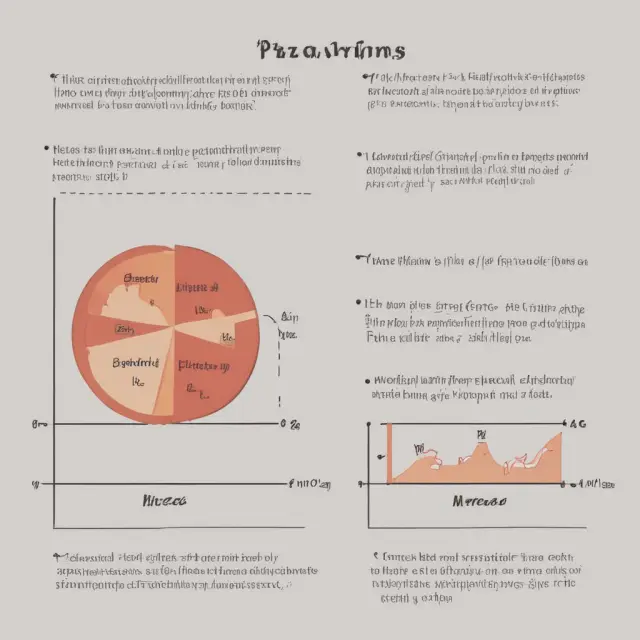
To visualize this difference, we can compare demand curves for pizza and personalized chef services. A typical demand curve for a good like pizza would slope downward more steeply than that of a service like personalized chef services, indicating higher price elasticity for the former. This is due to consumers’ ability to switch between brands or prepare meals themselves in response to price changes.
In summary, understanding quantity demanded for goods versus services involves recognizing how consumers respond differently to price changes and the factors driving their decisions. While both are influenced by price, consumer behavior and market dynamics can lead to varying elasticity properties and demand curve shapes.
Differences between Demand and Quantity Demanded
The terms demand and quantity demanded are closely related but distinct concepts in economics. While both deal with consumer behavior and market dynamics, they differ in their level of specificity and focus. In essence, demand refers to the overall willingness or desire of consumers to purchase a good or service at various price points. In contrast, quantity demanded indicates the exact amount of a product that buyers intend to acquire when offered a certain price.
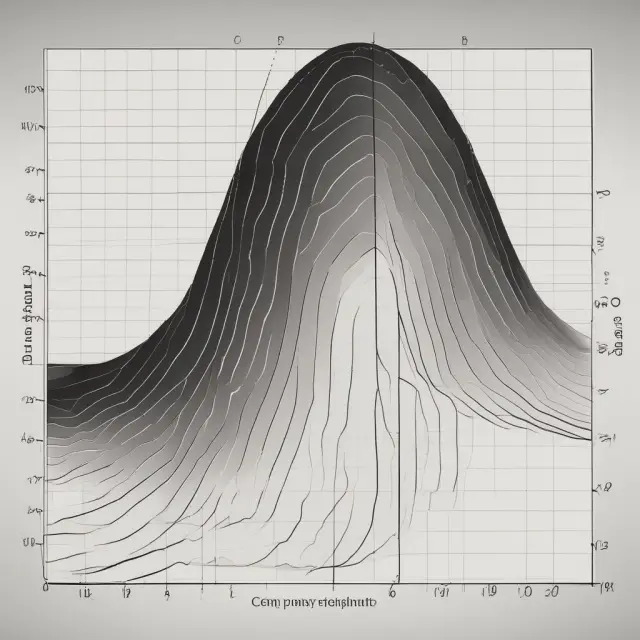
Demand is often referred to as a curve in economics, representing the relationship between the price and quantity demanded for a given product. The demand curve shows all possible combinations of prices and quantities where consumers are willing to buy, with the understanding that market conditions might not allow those exact prices or quantities to occur. As prices change, so does the amount of goods or services demanded.
Quantity demanded, on the other hand, is a specific point along the demand curve. It represents the quantity buyers will purchase given a particular price, assuming that all other factors remain constant. The inverse relationship between price and quantity demanded still applies – as prices rise, the quantity demanded falls, and vice versa. However, while the entire demand curve shows how the demand changes for various prices, the concept of quantity demanded pinpoints the exact amount of the product buyers intend to purchase at a given price.
One essential implication of this difference is that price elasticity of demand is calculated based on the concept of quantity demanded rather than overall demand. This measure determines the responsiveness of consumers to changes in price by calculating the percentage change in quantity demanded compared to the percentage change in price. By focusing on specific quantities demanded at various prices, price elasticity provides a more detailed understanding of consumer behavior and how it influences market dynamics.
To illustrate this, let’s consider an example. Imagine that the demand curve for apples shows that consumers will buy 100 units when the price is $2 per unit, and they will buy 80 units when the price rises to $3 per unit. In this case, we can calculate the price elasticity of demand by determining how much the quantity demanded changes in percentage terms for the given price change (a decrease of 1 unit).
Understanding the differences between demand and quantity demanded is crucial as it helps to provide a more nuanced perspective on consumer behavior and market dynamics. While both concepts are intertwined, recognizing their subtle distinctions can lead to better insights and predictions for businesses and economists alike.

Factors Affecting Quantity Demanded: Beyond Price
Beyond the straightforward relationship between price and quantity demanded, various external factors play essential roles in determining the amount consumers will demand for goods or services over time. In this section, we’ll explore three primary factors: consumer income, preferences, and taxes.
Firstly, changes in consumer income significantly impact the quantity demanded of a good or service. Generally speaking, as disposable income increases, consumers are likely to spend more on certain goods and services; conversely, a decrease in income will lead them to prioritize their spending more carefully, resulting in lower quantity demanded for non-essential items. For instance, if the average household’s income grows by 10%, an increase in demand for luxury cars might be expected since consumers can afford to buy better vehicles. Inversely, during economic downturns, consumers may cut back on discretionary spending, causing quantity demanded for certain goods and services to decrease.
Secondly, consumer preferences influence the amount of a particular product that is demanded. Preferences can change due to various reasons such as fashion trends, new technologies, or even societal shifts. For example, if consumers become more health-conscious, they may demand more organic produce and less processed food. Conversely, if preferences shift towards non-traditional energy sources like solar panels, the quantity demanded for fossil fuels could decrease. In the case of Apple’s iPhone launch, consumer preferences for a sleek and innovative design led to a massive surge in quantity demanded.
Lastly, taxes can significantly alter the quantity demanded for goods or services by increasing their cost through indirect pricing mechanisms. For instance, governments impose taxes on cigarettes to discourage smoking and reduce public health issues. These higher prices can lead to decreased demand for tobacco products over time. Similarly, tax incentives and subsidies can stimulate demand for specific goods or services, such as renewable energy technologies.
In conclusion, while price is a primary determinant of quantity demanded, external factors like consumer income, preferences, and taxes play crucial roles in shaping the overall market dynamics. Understanding these relationships enables us to make informed predictions regarding how consumer behavior may change under different circumstances.

Case Studies in Quantity Demanded
The relationship between price and the quantity demanded can be better understood through real-world examples and case studies. These examples help illustrate how price changes impact the amount of goods or services that consumers demand. Let’s take a look at some well-known case studies to examine the inverse relationship between price and quantity demanded.
1) Hot Dog Stand: A popular example in economics textbooks is the hot dog stand scenario, which demonstrates the relationship between price and quantity demanded for a simple commodity like hot dogs. In this instance, as the price of hot dogs increases, consumers buy fewer hot dogs; when the price decreases, they purchase more. For example, if at $5 per hot dog, consumers buy two hot dogs daily, but when vendors increase the price to $6, customers only demand one hot dog a day. Conversely, if prices decrease to $4, consumers are now willing to purchase three hot dogs daily. The downward slope of the demand curve shows this inverse relationship between price and quantity demanded.
2) Netflix: In 1997, Netflix started as a DVD rental service that charged customers a monthly fee to rent a specific number of DVDs at any given time. However, in 2007, they shifted their business model to an on-demand streaming service for $7.99 per month. This price change led to a massive increase in quantity demanded as consumers could now watch their favorite movies and TV shows whenever they wanted instead of having to return DVDs by mail. Additionally, the price change expanded Netflix’s customer base beyond just DVD renters, attracting those who did not previously use the service.
3) Air Travel: In the airline industry, seat availability is a significant factor that influences quantity demanded. For example, when there are fewer seats available at a given price, the quantity demanded decreases; conversely, if more seats become available, the quantity demanded increases. Airlines can manipulate this relationship by adjusting prices based on demand. When flights are in high demand and the number of seats is limited, prices increase to capitalize on the increased demand. Conversely, when there’s excess capacity, airlines may lower prices to stimulate demand for their underutilized planes.
These examples provide insight into how price changes impact quantity demanded, helping us better understand the inverse relationship between these two economic concepts. By analyzing real-world situations, we can see how consumers respond to price fluctuations and the resulting effects on quantity demanded.

FAQ: Frequently Asked Questions about Quantity Demanded
What is the definition of quantity demanded in economics?
Quantity demanded refers to the total amount of a good or service that consumers desire and are willing to purchase at a specific price during a given time period.
How does quantity demanded change with price?
Price and quantity demanded have an inverse relationship, meaning that as the price for a product increases, the quantity demanded decreases, while a lower price leads to a higher quantity demanded.
What is the elasticity of demand in relation to quantity demanded?
The elasticity of demand indicates how responsive the quantity demanded for a good or service is to changes in its price. If consumers react strongly to price fluctuations, the demand is considered elastic; conversely, if they do not change their purchasing behavior significantly despite price changes, the demand is classified as inelastic.
How does quantity demanded differ from demand?
Demand refers to the total amount of a good or service consumers are willing to buy at any given price level, whereas quantity demanded represents the specific quantity that consumers wish to purchase at a particular price point. Quantity demanded can be regarded as a subset of demand.
Does the concept of quantity demanded apply only to physical goods?
No, the principle of quantity demanded extends to services as well. For instance, if a photographer lowers their portrait session fees, they should expect more bookings; conversely, higher prices may lead to fewer sessions being requested.
What are some examples of elastic and inelastic goods when it comes to quantity demanded?
Elastic goods display price sensitivity among consumers, meaning that a change in price will result in significant changes in the quantity demanded. Examples include common consumer items like clothing or food. In contrast, inelastic goods show minimal response from consumers regarding pricing changes and their purchasing behavior. Insulin is an example of an inelastic good because individuals with diabetes must continue using it regardless of its cost.
What factors influence the quantity demanded besides price?
Besides price, factors such as consumer preferences, income levels, taxes, and external influences (such as cultural norms) can affect the quantity demanded for a particular product or service.
 Next entry · No. 4,231Understanding Quantity Supplied: Factors Influencing the Amount Producers Offer for Sale
See also
-
 No. 4,952
30 Jul 2025
22 min
Understanding the Theory of Price in Finance and Investment: Balancing Supply and Demand
Business Strategy
No. 4,952
30 Jul 2025
22 min
Understanding the Theory of Price in Finance and Investment: Balancing Supply and Demand
Business Strategy -
 No. 4,066
19 May 2025
19 min
Price Skimming: Understanding This Product Pricing Strategy and Its Limits
Business Strategy
No. 4,066
19 May 2025
19 min
Price Skimming: Understanding This Product Pricing Strategy and Its Limits
Business Strategy -
 No. 3,078
27 Feb 2025
19 min
Understanding the Marginal Rate of Substitution (MRS): A Key Concept in Consumer Behavior
Business Strategy
No. 3,078
27 Feb 2025
19 min
Understanding the Marginal Rate of Substitution (MRS): A Key Concept in Consumer Behavior
Business Strategy -
 No. 1,249
19 Aug 2024
18 min
Understanding Elasticity: An Economic Measure of Consumer Response to Price Changes
Business Strategy
No. 1,249
19 Aug 2024
18 min
Understanding Elasticity: An Economic Measure of Consumer Response to Price Changes
Business Strategy -
 No. 5,379
03 Sep 2025
22 min
Maximizing Utility: Understanding Economic Theory and Measuring the Value of Goods and Services
Economics
No. 5,379
03 Sep 2025
22 min
Maximizing Utility: Understanding Economic Theory and Measuring the Value of Goods and Services
Economics -
 No. 4,805
18 Jul 2025
22 min
Understanding the Supply Curve: Key Concepts and Factors Affecting This Economic Indicator
Economics
No. 4,805
18 Jul 2025
22 min
Understanding the Supply Curve: Key Concepts and Factors Affecting This Economic Indicator
Economics