Understanding Disguised Unemployment: Types and Consequences for Professional Investors
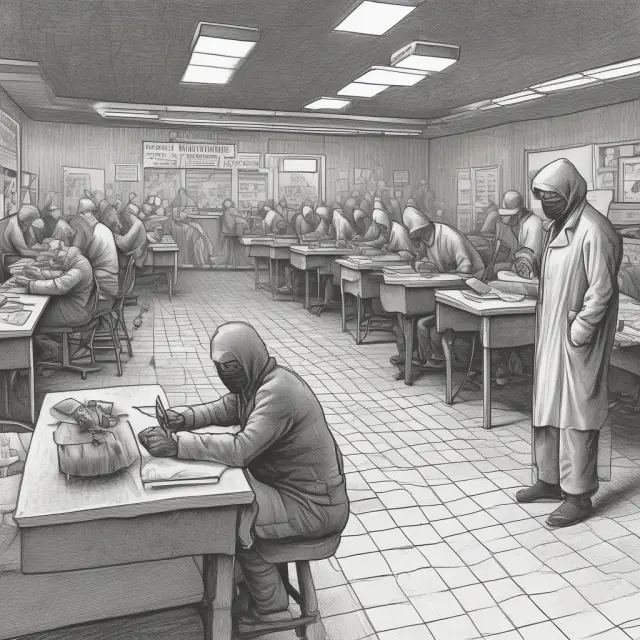
Understanding the phenomenon of disguised unemployment in the economy, its prevalence, forms, consequences, causes, and investment implications.
Overview of Disguised Unemployment
Disguised unemployment is a term used in economics that refers to a situation where part of the labor force is either not employed or underemployed, yet it does not affect aggregate economic output. This occurs when productivity is low, and an excessive number of workers are filling too few jobs. Disguised unemployment can manifest itself differently, from people working below their skillset to those who have left the workforce entirely but could contribute value if given the opportunity.
The significance of disguised unemployment lies in its prevalence in economies, particularly in developing countries with large labor forces. This form of unemployment is often observed in informal and agricultural labor markets where productivity remains low, and workers struggle to find employment that matches their skills or capabilities. Disguised unemployment may be further classified into several subcategories, including underemployment and illness-related unemployment.
Underemployment, also known as hidden unemployment, refers to individuals who are working below their potential or in jobs that don’t utilize their full range of skills and abilities. It is often characterized by part-time employment, working beneath one’s skillset, or accepting positions outside of one’s field of expertise due to limited opportunities.
Illness-related disguised unemployment includes individuals who are unable to work due to health issues but could contribute productively if healthy. This form is temporary for those receiving disability assistance and not yet recovered. However, it becomes a more permanent issue when individuals stop looking for work due to long-term health conditions or demoralization from their prolonged search for employment.
Understanding disguised unemployment is crucial in identifying its economic implications and potential investment opportunities. The next sections will explore the prevalence of disguised unemployment, how to characterize it, its consequences on both the economy and individual workers, and causes behind it. Additionally, we will discuss examples, policies, and investment implications related to this phenomenon.
Prevalence of Disguised Unemployment
Disguised unemployment, also known as hidden unemployment or underemployment, is a phenomenon where people are either not employed or working in an inefficient manner, leading to productivity losses and economic distortion. This situation is most common in developing countries that face significant labor force surpluses (World Bank, 2019). The International Labour Organization (ILO) (n.d.) states that approximately one in every six workers globally experience some form of disguised unemployment, highlighting its substantial impact on the global workforce.
Disguised employment is most prominently observed in informal labor markets and agricultural sectors, where a large proportion of the labor force works in low-productivity jobs (World Bank, 2019). In these industries, workers may accept employment opportunities that do not fully utilize their skills or talents. They might work fewer hours than desired or earn wages below their potential value, making it challenging to differentiate between disguised unemployment and underemployment.
Understanding the Prevalence of Disguised Employment in Developing Countries
The prevalence of disguised employment is most common in developing countries with large labor force surpluses. The World Bank (2019) reported that as many as 70% of jobs in sub-Saharan Africa and South Asia are considered informal or in low productivity sectors. In these contexts, workers may accept employment opportunities below their skill levels, work reduced hours, or be unable to find suitable work due to market inefficiencies, which contributes to disguised unemployment.
The phenomenon is not restricted to the agricultural sector alone; it also affects other industries like services and manufacturing. The ILO (n.d.) asserts that 63% of the world’s informal employment exists outside agriculture, highlighting the pervasiveness of this problem across various industries.
Causes of Disguised Employment in Developing Countries
The prevalence of disguised employment can be attributed to several factors:
- Market inefficiencies: In many developing countries, labor markets are not perfectly competitive, with numerous frictions and imperfections. These markets often fail to efficiently match workers’ skills to available jobs or provide adequate incentives for productivity growth.
- Limited education and skill development: A lack of access to quality education and training programs hampers the ability of individuals to acquire necessary skills that can help them find suitable employment opportunities. In turn, this leads to a significant portion of the labor force remaining in low-productivity jobs or accepting underemployment.
- Institutional factors: Weak labor regulations, limited social safety nets, and lack of effective enforcement mechanisms create an environment where workers accept unfavorable job conditions or remain out of the labor force altogether.
By understanding these causes, policymakers can develop targeted interventions to address disguised employment in developing countries, which could include education and skills development programs, labor market reforms, and social safety nets that encourage participation and productivity growth.
In the next section, we will delve deeper into the consequences of disguised unemployment for both the economy and individual workers. Stay tuned!

Characterizing Disguised Unemployment
Disguised unemployment, also referred to as hidden or under-reported unemployment, is a prevalent economic phenomenon that occurs when labor productivity is low and the workforce is not fully utilized. This condition exists even though aggregate output remains constant. Understanding disguised unemployment requires examining its various types: underemployment and unemployment due to illness or disability.
Underemployment
Underemployment represents a situation where individuals are employed but not working at their full potential or capability. They may be engaged in part-time work when they desire to work full time or holding jobs that do not correspond with their skills or education level. For example, an individual with a Master’s degree accepting a cashier position could be considered underemployed since they are utilizing only a fraction of their acquired knowledge and skills.
Underemployment is not limited to those holding part-time jobs; it can also pertain to individuals who, despite possessing the required qualifications for full-time positions, remain stuck in low productivity roles. Underemployment remains a significant concern as it contributes to labor market inefficiencies and lowers overall economic productivity.
Illness and Disability
Another category of disguised unemployment involves those individuals who are unable to work due to illness or disability but still have the potential to contribute to the economy. While officially considered outside the labor force, these individuals can be reclassified as disguised unemployed if they could potentially participate in economic activities if accommodations were made for their health conditions. The World Bank estimates that around 1 billion people worldwide are living with disabilities and are therefore at risk of experiencing disguised unemployment due to societal barriers, lack of accommodations, or discrimination.
The presence of disguised unemployment has far-reaching implications on the economy and labor markets. In the next section, we will delve deeper into the consequences that arise from this phenomenon for both the economy and individual workers.

Consequences for the Economy and Workers
The presence of disguised unemployment comes with several negative consequences that impact both individual workers and the economy as a whole. First, the labor force remains inefficiently allocated, leading to an overall reduction in productivity and economic growth. When many workers are working in roles beneath their skillset or not at full capacity, they contribute less than what they could potentially produce. Consequently, businesses may miss out on opportunities for increased efficiency, innovation, and higher profits.
Additionally, disguised unemployment can have detrimental effects on individual workers. Workers who are underemployed or working in jobs that do not utilize their full skillset risk decreased job satisfaction, which can lead to lower motivation and productivity levels. Moreover, when a significant portion of the labor force remains underutilized, wages may be kept artificially low as employers have access to an oversupply of labor, further reducing the income of workers.
Furthermore, disguised unemployment can increase income inequality, as skilled workers are often forced into unskilled or low-productivity jobs while highly skilled positions remain vacant. This not only results in lower wages for underemployed workers but also hinders their ability to climb the socioeconomic ladder.
Furthermore, disguised unemployment can hinder economic development and perpetuate a cycle of poverty. When large sections of the labor force remain unemployed or underemployed, they may lack the resources required to invest in education, skills training, and other essential services that could improve their productivity and employability. Instead, they may be forced to rely on informal employment opportunities, which can perpetuate low wages, inefficient allocation of resources, and limited economic opportunities.
In conclusion, disguised unemployment significantly impacts both individual workers and the economy as a whole by reducing labor force efficiency, impacting productivity levels, perpetuating income inequality, and hindering economic development. It is crucial for governments, policymakers, and businesses to recognize its existence and take steps to address this issue through education, skill training, labor market reforms, and other targeted interventions. This not only benefits the affected workers but also results in a more efficient and productive economy that can capitalize on its full potential.

Causes of Disguised Unemployment
Disguised unemployment arises from various causes, primarily market inefficiencies and structural issues within labor markets. In developing countries with large labor forces, this phenomenon is prevalent due to the surplus of available workers. One significant cause is the existence of informal labor markets, which can absorb substantial quantities of labor but often result in low productivity. Another major factor contributing to disguised unemployment is the agricultural sector, where a substantial portion of the population works without adequate compensation or job security.
Underemployment, a type of disguised unemployment, occurs when workers are either part-time or employed in jobs below their skill set. These situations result in a significant loss of potential productivity and economic output. In some instances, underemployed individuals may be working but not earning enough to support themselves or their families, leading them to seek additional work.
Another prevalent cause of disguised unemployment is the presence of illness or disability among the labor force. While these individuals cannot actively participate in the labor market, they possess valuable skills and human capital that can contribute to economic growth if properly harnessed. In some cases, those who are ill or disabled may receive disability assistance, but this does not always guarantee their inclusion within official unemployment statistics.
Finally, demotivated job seekers who have given up on their search for employment due to frustration and discouragement contribute significantly to disguised unemployment. These individuals, though not actively employed, can re-enter the labor market if offered appropriate training or incentives, potentially increasing their productivity and contributing to economic growth.
Understanding the root causes of disguised unemployment is crucial for policymakers, investors, and economists in designing strategies to address this issue and unlock the potential hidden within the labor force. In the following sections, we will delve deeper into the implications of disguised unemployment on the economy, workers, and investment opportunities.
Economic Impact on GDP
Disguised unemployment significantly impacts a country’s economic output, measured by its Gross Domestic Product (GDP). By leaving human resources underutilized and unproductive, disguised unemployment hampers the economy’s growth potential. The underutilization of labor leads to lower productivity levels, as fewer workers are engaged in value-added activities.
In an economy with disguised unemployment, the workforce is larger than what is accounted for in official statistics due to the unrecorded portion of unemployed or underemployed individuals. This discrepancy between the recorded and actual labor force can result in an overestimation of economic output per worker. Subsequently, it may lead to a skewed representation of a country’s overall productivity and competitiveness in global markets.
The GDP measure does not capture the entire economy as it is based on the production of goods and services at current market prices. However, labor remains a crucial input in generating economic output, and underemployment or disguised unemployment can substantially affect the value of this input.
In terms of the monetary consequences for a country, the presence of disguised unemployment can result in an inefficient allocation of resources. With underutilized labor, businesses may not be fully capitalizing on their workforce’s potential, ultimately hindering economic growth and competitiveness. Additionally, the unproductive utilization of labor can negatively impact wages, as low productivity often translates to lower earnings for workers.
Moreover, disguised unemployment can also influence savings and investment behaviors within a country. Workers who are underemployed or experiencing disguised unemployment may have less disposable income, leading to lower levels of consumer spending. This reduced consumption could potentially impact businesses that rely on consumer demand for their sales.
In conclusion, disguised unemployment is a crucial economic issue with significant implications for a country’s overall productivity and competitiveness. Understanding its impact on GDP can help investors make more informed decisions about potential investment opportunities in countries where this phenomenon persists. By recognizing the importance of addressing disguised unemployment, governments and international organizations can work towards implementing policies that promote labor market efficiency and create opportunities for the underutilized workforce to contribute effectively to their economies.

Examples and Case Studies
Disguised unemployment is not an abstract concept, but a tangible reality that impacts many communities around the world. This section provides real-world examples and case studies of disguised unemployment to help illustrate this economic phenomenon more clearly.
One notable example can be found in agriculture, which continues to employ a significant portion of the labor force in developing countries such as India, despite its limited contribution to Gross Domensional Product (GDP). In some cases, agricultural workers may work only part-time due to insufficient water supply or unreliable markets. This results in their labor being underutilized and, ultimately, disguised unemployment.
In the manufacturing sector of China, disguised unemployment is prevalent among migrant workers who accept low-paying jobs in industries that offer little skill utilization. These workers often have a higher level of education or specialized skills compared to the positions they are assigned. This underemployment not only leads to lost productivity but also limits their future career opportunities and economic mobility.
Another example comes from the service sector in Latin America, where numerous informal businesses employ large numbers of workers with little to no formal training, leading to low productivity and disguised unemployment. In these cases, workers may not have access to the resources and support they need to transition into more productive roles or industries.
Additionally, within developed countries, disguised unemployment can be observed among individuals with disabilities. While many are capable of contributing their skills and talents to society, they face significant barriers in accessing employment opportunities that match their abilities. This leads to underemployment, as they often end up working in jobs where their productivity is limited or hidden.
In some instances, disguised unemployment can even be seen among students and recent graduates, who may work part-time jobs instead of pursuing career paths that match their education and skill sets. This situation can result in significant economic loss for the individual as well as the broader economy, due to the underutilization of human capital.
In conclusion, disguised unemployment is a complex economic issue with numerous real-world implications. By understanding its various forms and consequences, investors can make more informed decisions about potential investment opportunities within industries and economies where disguised unemployment is prevalent. Furthermore, recognizing the human impact of this phenomenon encourages ongoing efforts to develop effective policies aimed at addressing the root causes and reducing the incidence of disguised unemployment worldwide.

Policies to Address Disguised Unemployment
Disguised unemployment is a significant issue in many economies, especially in developing countries where the labor force can be substantial. To address this concern, several strategies have been proposed, including education, skill training, and labor market reforms. Let’s dive deeper into each of these potential solutions.
1. Education: A key way to tackle disguised unemployment is by improving access to quality education for workers. This not only helps individuals acquire skills that will make them more employable but also raises overall human capital in a nation, which can lead to increased productivity and economic growth. By investing in education, policymakers aim to create a workforce better equipped to meet the demands of the labor market.
2. Skill Training: Skill training programs are another means to address disguised unemployment by helping workers acquire specific skills that are in demand within their industries or regions. Such initiatives can also improve productivity and wages, making jobs more attractive for individuals. In addition, targeted skill development can help reduce mismatches between job seekers and available positions, ensuring a better match and a more efficient labor market.
3. Labor Market Reforms: Implementing reforms to the labor market itself is another strategy that can potentially address disguised unemployment. This includes removing barriers to labor mobility, such as regulations on job relocation or labor market segmentation. By making it easier for workers to move between industries and regions, policymakers create a more efficient labor market where employment opportunities are better matched with the skills of available workers. Additionally, implementing minimum wage laws that reflect local conditions can encourage businesses to hire more workers rather than relying on disguised unemployment or informal labor arrangements.
By addressing disguised unemployment through these measures, economies and individual workers can benefit significantly. A more efficient labor market not only boosts productivity but also leads to higher wages for workers. Furthermore, a reduction in disguised unemployment results in a more accurate reflection of the unemployment rate, which is crucial for policymakers making informed decisions regarding economic policy.
To illustrate these concepts, let’s look at a few examples of countries that have implemented successful policies to address disguised unemployment. In India, the government has launched several initiatives like the Mahatma Gandhi National Rural Employment Guarantee Scheme (MGNREGS), which provides employment opportunities for rural workers in labor-intensive projects. Similarly, China has focused on education and skill training as major drivers of economic growth, reducing disguised unemployment in its labor force.
In conclusion, addressing disguised unemployment is crucial for both individual workers and the overall economy. By implementing strategies like education, skill training, and labor market reforms, policymakers can create a more efficient labor market where productivity is higher, wages are better, and employment opportunities are more equitably distributed.

Investment Implications for Institutional Investors
Disguised unemployment’s impact on businesses and potential investment opportunities is an essential consideration for institutional investors. This economic phenomenon can have profound effects on industries, companies, and overall economic performance. Understanding the implications of disguised unemployment on various sectors and specific businesses allows investors to identify attractive investment opportunities and make informed decisions.
When many workers are underemployed or working inefficiently, it can lead to increased competition among firms in labor-intensive industries. Lower productivity levels might cause prices for goods and services to remain stagnant, making it challenging for companies that rely on efficiency and innovation to compete. Moreover, businesses may face higher operational costs due to a large and less skilled workforce, which might result in lower profitability or decreased stock valuations.
On the other hand, disguised unemployment could also create attractive investment opportunities by providing potential avenues for productivity growth through labor market reforms or targeted interventions. For example, investing in education, vocational training, and skills development programs can help reduce underemployment and improve workforce efficiency. Furthermore, companies that focus on hiring and retaining skilled labor while offering fair wages could potentially reap the benefits of a more productive labor force, making their stocks more attractive investments for institutional investors.
Institutional investors should also consider the long-term economic implications of disguised unemployment when evaluating potential investments in emerging markets where it is prevalent. In developing countries, disguised unemployment can be particularly widespread due to large labor surpluses and inefficient labor markets. By investing in initiatives that address the root causes of disguised unemployment—such as market inefficiencies, lack of education, or inadequate infrastructure—institutional investors could potentially contribute to long-term economic growth and positive social outcomes.
Understanding the complex relationship between disguised unemployment and investment opportunities requires a nuanced perspective on various macroeconomic factors and their impact on individual businesses. By closely monitoring labor markets, productivity levels, and government policies, institutional investors can position themselves to take advantage of the opportunities created by disguised unemployment while mitigating potential risks.
FAQ: Frequently Asked Questions about Disguised Unemployment and Investments
Q: What is disguised unemployment?
A: Disguised unemployment refers to unemployment that does not affect aggregate output. It occurs when productivity is low, and too many workers are filling too few jobs. It can take various forms, including underemployment or unutilized labor resources.
Q: How does disguised unemployment impact institutional investors?
A: Disguised unemployment has significant implications for institutional investors as it can lead to increased competition among firms, higher operational costs, and decreased profitability in labor-intensive industries. However, it also presents opportunities for productivity growth through labor market reforms or targeted interventions.
Q: What are the potential investment opportunities related to disguised unemployment?
A: Investing in education, vocational training, skills development programs, and companies that focus on hiring and retaining skilled labor can help address the root causes of disguised unemployment and potentially contribute to long-term economic growth. Additionally, investments in emerging markets with large labor surpluses can offer opportunities for positive social outcomes while contributing to a more productive workforce.
Q: How does disguised unemployment affect stock valuations?
A: Disguised unemployment can negatively impact stock valuations if companies face increased competition due to higher operational costs and lower productivity levels associated with a less skilled labor force. However, firms that prioritize efficiency and innovation or invest in targeted interventions to improve workforce productivity may be more attractive investments for institutional investors.

FAQ: Frequently Asked Questions about Disguised Unemployment
Question 1: What exactly is disguised unemployment?
Answer: Disguised unemployment refers to labor force members who are either not working or underutilizing their abilities, resulting in no impact on a nation’s overall economic output. This occurs when too many workers fill too few jobs, often due to market inefficiencies and informal labor markets.
Question 2: Why does disguised unemployment matter?
Answer: Disguised unemployment is significant because it can lead to low productivity, wasted resources, and a larger portion of the population remaining outside the workforce. These conditions can have far-reaching consequences for the overall economy and individual workers.
Question 3: Which countries are most affected by disguised unemployment?
Answer: Disguised unemployment is commonly found in developing countries with large labor forces, particularly those that feature informal labor markets, agricultural labor markets, or low productivity.
Question 4: What forms does disguised unemployment take?
Answer: Disguised unemployment comes in various forms including underemployment (people working jobs beneath their skill sets), illness-related (people unable to work but still able to produce value), and job seekers who have given up hope of finding employment.
Question 5: How does disguised unemployment impact GDP?
Answer: Disguised unemployment lowers a country’s overall economic output by having too many workers filling too few jobs, causing unproductive labor and decreased efficiency.
Question 6: Are all unemployed people considered to be part of the disguised unemployment population?
Answer: No. Those who are actively seeking employment but cannot find work are not considered disguised unemployed. However, those who have given up looking for work due to demoralization or a belief that there is no suitable opportunity for them are categorized as disguised unemployed.
Question 7: How can disguised unemployment be addressed?
Answer: Policymakers can employ strategies such as education, skill training, and labor market reforms to help alleviate the issue of disguised unemployment by preparing workers for the jobs that exist in their economy or creating new employment opportunities.
 Next entry · No. 1,061Understanding Disinflation: Causes, Impacts and Differences from Deflation
See also
-
 No. 5,180
18 Aug 2025
17 min
Understanding Underemployment: Causes and Consequences
Economics
No. 5,180
18 Aug 2025
17 min
Understanding Underemployment: Causes and Consequences
Economics -
 No. 5,179
17 Aug 2025
21 min
Understanding Underemployment Equilibrium: The Persistent State of Unemployment Above Full Employment
Economics
No. 5,179
17 Aug 2025
21 min
Understanding Underemployment Equilibrium: The Persistent State of Unemployment Above Full Employment
Economics -
 No. 5,122
13 Aug 2025
22 min
Understanding the U-6 (Unemployment) Rate: A Deeper Dive into American Employment
Economics
No. 5,122
13 Aug 2025
22 min
Understanding the U-6 (Unemployment) Rate: A Deeper Dive into American Employment
Economics -
 No. 4,023
15 May 2025
18 min
Understanding Positive Economics: The Foundation for Informed Investment Decisions
Economics
No. 4,023
15 May 2025
18 min
Understanding Positive Economics: The Foundation for Informed Investment Decisions
Economics -
 No. 1,902
23 Nov 2024
22 min
The Great Depression: Causes, Impact and Recovery
Economics
No. 1,902
23 Nov 2024
22 min
The Great Depression: Causes, Impact and Recovery
Economics -
 No. 1,267
21 Aug 2024
22 min
Emigration: Understanding the Economic Impact on Sending and Receiving Countries
Economics
No. 1,267
21 Aug 2024
22 min
Emigration: Understanding the Economic Impact on Sending and Receiving Countries
Economics