Understanding Free Enterprise: Definition, Principles, Advantages and Disadvantages

Free enterprise is an economic system in which individuals and businesses own resources and are free to produce, sell and compete for profit with a minimum of government interference. Government's main role is to enforce property rights and supply goods and services that private markets would have difficulty producing.
Definition of Free Enterprise
Free enterprise, also known as the free market or laissez-faire system, is an economic model characterized by private ownership and control of businesses and services without significant government intervention. It’s based on the idea that competition in the marketplace leads to better products, lower prices, and increased efficiency. Unlike a command economy where the government owns the means of production, free enterprise emphasizes individual freedom, innovation, and entrepreneurship.
The origins of free enterprise can be traced back to ancient civilizations like Greece and Rome, but it gained significant popularity during the Industrial Revolution in Europe and America. The term itself was first used by economist Friedrich von Hayek in the 1930s to distinguish between the ideal economic conditions that favor competition (free enterprise) versus those where the state plays a more active role (planned economy).
Free enterprise is often associated with capitalism, as both systems prioritize private ownership and market forces. However, it’s essential to understand that free enterprise is not the same as capitalism. Capitalism refers to an economic system based on private property and free markets, but it doesn’t necessarily mean a lack of government intervention or regulation. Free enterprise goes further by advocating for minimal interference from the government in commercial activities.
The principles guiding free enterprise include:
- Private ownership: Individuals or entities have complete control over their business operations and assets.
- Voluntary exchange: Transactions between businesses and consumers are based on mutual consent.
- Competition: Multiple firms compete to provide goods and services, ensuring the best value for consumers and driving innovation.
- Limited government intervention: The role of the government is limited to protecting property rights, enforcing contracts, and providing essential public services like infrastructure.
- Individual freedom: Businesses and individuals are free to make decisions without interference from the state, leading to greater autonomy and entrepreneurship.
While free enterprise offers numerous advantages, such as increased efficiency, innovation, and economic growth opportunities, it also comes with challenges. Critics argue that a lack of government regulation can lead to unequal distribution of wealth, market monopolies, and exploitation. We will explore these issues further in the following sections.
Understanding Free Enterprise: Definition, Principles, Advantages, and Disadvantages (Continued in next section)
Section Title: Advantages and Disadvantages of Free Enterprise
Description: Detailing the benefits and drawbacks of free enterprise, with real-life examples and data.
In the next section, we will dive deeper into the advantages and disadvantages of free enterprise systems, examining both their potential for fostering economic growth and innovation as well as the challenges they pose in terms of inequality and market instability. Armed with a solid understanding of the fundamental principles and history of free enterprise, we can now evaluate its implications on modern economies and society as a whole.
Stay tuned!

Principles of Free Enterprise
Free enterprise, a key characteristic of capitalist economies, refers to an economic system where businesses operate in competitive markets free from direct government intervention. This section will delve into the five fundamental principles that define this market-oriented approach.
1. Economic Freedom and Entrepreneurship:
In a free enterprise economy, individuals are granted the freedom to start their own businesses, enter contracts, and choose how to allocate their resources. Entrepreneurs play a crucial role in this system by identifying opportunities, taking risks, and creating new ventures that cater to consumer demands. This principle fosters innovation, competition, and economic growth.
2. Private Property Rights:
Private property rights are essential for free enterprise as they establish clear ownership of resources and assets. These rights provide individuals with the security and incentive to invest in their businesses, knowing that they will be able to reap the rewards of their labor and investments.
3. Profit Motive:
The profit motive drives businesses to efficiently allocate resources, produce goods and services, and meet consumer demands. In a free enterprise economy, companies compete for consumers’ dollars, ensuring that the most efficient and effective firms thrive while less competitive ones are forced to adapt or face extinction.
4. Competition:
Competition is the cornerstone of free enterprise. It encourages innovation, keeps prices in check, and ensures that businesses remain responsive to consumer needs. In a free market, there are no barriers to entry or exit for entrepreneurs, allowing new firms to enter and established ones to leave as conditions dictate.
5. Consumer Sovereignty:
Consumer sovereignty is another essential principle of free enterprise. It holds that consumer preferences ultimately determine the allocation of resources and production in an economy. By catering to consumers’ demands, businesses create products and services that satisfy their needs and generate profits. This principle empowers consumers while fostering a responsive business environment.
By upholding these principles, free enterprise economies promote economic efficiency, growth, and innovation, providing opportunities for individuals to thrive in competitive markets. However, as with any economic system, it also comes with challenges, such as income inequality and potential lack of regulation, which will be addressed in the subsequent section on disadvantages.
Understanding these principles is crucial for investors and stakeholders seeking to navigate the intricacies of free enterprise and capitalize on its unique benefits.

Advantages of Free Enterprise
Free enterprise systems offer numerous benefits to individuals and society as a whole. One of the most significant advantages is increased efficiency. In a free enterprise, resources are allocated based on consumer demand and market prices, rather than through central planning or government intervention. This leads to fewer inefficiencies and waste, as businesses compete for consumers’ dollars by offering better products at lower prices (Baumol & Benham, 1967).
Another advantage is the freedom it provides. In a free enterprise system, individuals are free to make their own choices about what goods or services to produce, sell, and consume. This economic freedom allows entrepreneurs to start businesses, innovate, and create jobs, driving economic growth and prosperity (Hayek, 1944).
Furthermore, free enterprise fosters a dynamic business environment that encourages competition. With multiple firms competing for market share, consumers benefit from lower prices, higher quality products, and greater choice. This competitive landscape also motivates businesses to continuously improve their offerings to meet consumer preferences and stay ahead of competitors (Schumpeter, 1942).
Moreover, free enterprise can lead to significant economic opportunities for individuals. By allowing anyone with a good idea or the drive to start a business, this system creates a level playing field where success is based on merit rather than political connections or favors. This meritocracy fosters a culture of innovation and entrepreneurship, which drives long-term economic growth and wealth creation (Smith, 1776).
However, while free enterprise offers several advantages, it does come with some drawbacks. Critics argue that without government intervention to address issues such as income inequality or environmental concerns, a free enterprise system could lead to negative consequences for society’s most vulnerable members or the environment (Marx, 1867; Malthus, 1798).
Despite these concerns, many economists believe that the benefits of free enterprise far outweigh its disadvantages. By enabling individuals to make their own decisions in a competitive marketplace, free enterprise promotes economic growth, innovation, and personal freedom, ultimately improving people’s lives and creating a stronger economy overall.
References:
Baumol, W. J., & Benham, J. R. (1967). Suicide and the old age problem: An economic and actuarial analysis. Aldine Transaction Publishers.
Hayek, F. A. (1944). The road to serfdom. University of Chicago Press.
Marx, K. (1867). Capital: A critique of political economy. Penguin Books.
Malthus, T. R. (1798). An essay on the principle of population. Oxford University Press.
Schumpeter, J. A. (1942). Capitalism, socialism and democracy. Harper & Brothers Publishers.
Smith, A. (1776). The wealth of nations. Oxford University Press.

Disadvantages of Free Enterprise
Despite its numerous advantages, free enterprise also faces criticisms for issues such as income inequality and lack of regulation. One significant concern is the potential for excessive wealth accumulation among the wealthy few, leaving the rest of the population behind. For instance, unfettered competition may lead to wage suppression and a widening gap between the rich and the poor. The absence of government intervention in key sectors can also result in negative externalities such as pollution or a lack of public goods. Moreover, some argue that free enterprise might not address social issues such as health care or education effectively.
The free enterprise system is based on self-regulation and competition among businesses to ensure market efficiency. However, critics contend that this can lead to the neglect of long-term societal needs in favor of short-term profits. For example, industries may not invest enough resources into research and development or social responsibility when they are solely focused on their bottom line. In addition, monopolies or oligopolies may form, limiting competition and stifling innovation.
Income inequality is another issue that arises due to the free enterprise system’s focus on individual freedoms and incentives. While some individuals thrive in this environment, others may face challenges in accessing education, healthcare, and employment opportunities. For instance, low-income families might not have sufficient resources to invest in their children’s education or secure good jobs. This can lead to a cycle of poverty that is difficult to break.
Furthermore, the free enterprise system lacks mechanisms to address externalities, such as environmental pollution and negative health impacts caused by industries. These costs are often not reflected in market prices, resulting in underestimation of their true cost and potential harm to society. For example, businesses may not consider the long-term impact of their actions on the environment or public health when making decisions solely based on profits.
However, it’s important to note that many of these concerns are not unique to free enterprise. They can also be present in other economic systems. Additionally, there are ways to mitigate these issues through public policies and regulations tailored to address specific challenges. For instance, progressive taxation, social safety nets, and education initiatives can help reduce income inequality. Regulations on industries can ensure that externalities are considered, and markets work efficiently while protecting the public’s welfare. Ultimately, a well-designed economic system should strike a balance between individual freedom and societal needs.
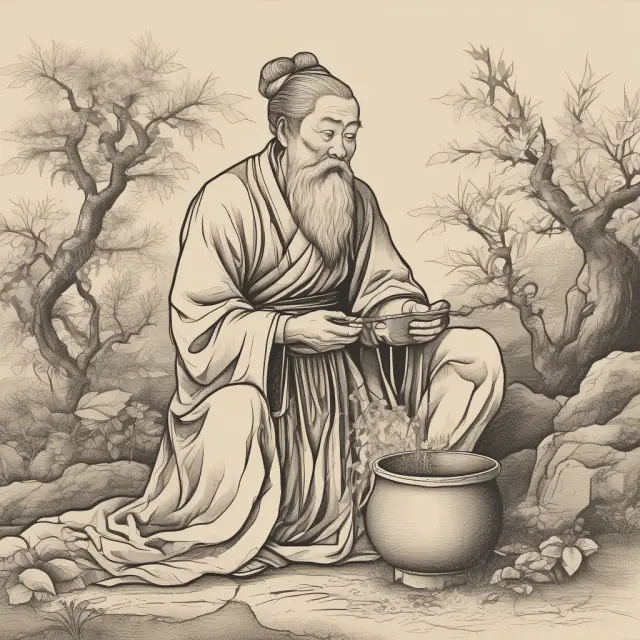
Origins of Free Enterprise
Free enterprise has its roots traced back to ancient China where Laozi argued against government interference in individuals’ lives and growth. The first written intellectual reference to free enterprise systems can be attributed to Laozi, a philosopher who lived around the 4th or 5th century B.C., when he advocated that governments should not hinder individual freedom. Legal codes similar to modern-day free enterprise systems didn’t surface until much later in history.
Free enterprise as a distinct economic system emerged prominently in England between the 16th and 18th centuries, coinciding with the first industrial revolution and the birth of modern capitalism. During this time, the English legal code was entirely free from international trade barriers, tariffs, and restrictions on private business contracts. The United States also adopted a largely free-market approach during the 18th and 19th centuries.
However, both the U.S. and the U.K. today are classified as mixed economies since they feature elements of government intervention in their respective economic systems. Countries like Singapore, Hong Kong, and Switzerland exemplify more reflective free enterprise systems.
Free Enterprise: A Historical Perspective
The concept of free enterprise has evolved over centuries, shaped by various philosophical, political, and economic ideologies. Its origins can be traced back to the ancient Chinese philosopher Laozi, who believed that governments should not interfere with individuals and their pursuit of happiness. This perspective was later echoed in European thought during the Enlightenment period, culminating in the writings of Adam Smith and other classical economists.
Smith’s famous work, “The Wealth of Nations,” published in 1776, argued that the ‘invisible hand’ of the market could allocate resources more efficiently than government intervention. This idea became a cornerstone of the free enterprise system, which emphasizes voluntary exchange and minimal government intervention.
Throughout history, there have been debates around the role of government in economic affairs. Some argue that free markets lead to greater efficiency, innovation, and individual freedom while others contend that they can result in income inequality, market failures, and environmental degradation. Understanding the origins, principles, advantages, and disadvantages of free enterprise can help us better appreciate its role in shaping our modern economic systems.
Section Conclusion
The historical roots of free enterprise date back to ancient China, with philosophical and economic concepts evolving over centuries. Its earliest recorded mention can be attributed to the philosopher Laozi, who advocated for minimal government interference in individuals’ lives and growth. Free enterprise as an economic system emerged prominently in England during the 16th to 18th centuries and has since influenced contemporary capitalism. Understanding its historical context provides valuable insight into its principles, advantages, and disadvantages. In the following sections, we will delve deeper into these aspects of free enterprise to better comprehend its impact on modern economic systems.

How Free Enterprise Economies Work
Understanding how a free enterprise economy operates can be confusing for those new to the concept. Free enterprise, also known as the “free market” or a “market economy,” refers to an economic system where businesses and services are not directly controlled by the government but instead function based on supply and demand in the marketplace. In practice, this means that businesses operate under a set of legal rules designed to protect property rights, enforce contracts, and promote competition.
The fundamental principles of free enterprise economies include:
- Economic freedom: Consumers and producers have the right to make economic decisions without interference from the government. This includes choosing which goods or services to buy, sell, or produce.
- Private property rights: Individuals and businesses own the resources they acquire through legal means and can use them as they see fit, as long as they do not infringe on others’ rights.
- Competitive markets: Buyers and sellers compete for business in an open marketplace, leading to better prices and improved quality.
- Profit motive: Businesses aim to make a profit by satisfying consumer demands and preferences.
- Voluntary exchange: Transactions between buyers and sellers are voluntary, meaning both parties must agree on the terms of the exchange for it to occur.
These principles lead to several advantages in free enterprise economies, such as increased efficiency, greater economic opportunities, and enhanced consumer rights. For instance, competition drives businesses to innovate and improve their offerings to stay competitive, ultimately benefiting consumers. Furthermore, profit motive encourages entrepreneurs to invest time and resources into ventures that meet market needs, leading to new products and services.
However, free enterprise systems also have their disadvantages. The absence of government intervention may lead to income inequality and lack of regulation in certain industries. This can result in unintended consequences, such as negative externalities or monopolies. To mitigate these risks, some governments implement regulations or welfare programs to protect consumers and maintain a balance between free enterprise and social welfare.
The historical roots of free enterprise systems can be traced back to ancient China and the United States during the 18th and 19th centuries. Today, countries such as Singapore, Hong Kong, and Switzerland are prime examples of free enterprise economies. By understanding how free enterprise operates, investors and individuals can make informed decisions about their investments and participation in this dynamic economic system.

Comparing Free Enterprise to Other Economic Systems
Free enterprise economies contrast significantly from command economies and mixed economies in various aspects. Understanding these differences is crucial for investors and businesses, as well as those interested in economic systems. Let’s explore each alternative economic system and compare them to free enterprise.
Command Economy
A command economy is an economic model where the government controls all production and distribution of goods and services. In other words, the government decides what to produce, how much to produce, and who will receive it. This type of economic system heavily relies on central planning and is typically characterized by a lack of private property rights or individual freedom. The primary examples of command economies include the Soviet Union and North Korea.
When comparing free enterprise and command economies, there are several fundamental differences:
- Freedom: Free enterprise systems focus on maximizing individual and entrepreneurial freedoms, while command economies restrict economic activities to meet the government’s objectives. The lack of freedom in a command economy can lead to misallocation of resources and reduced productivity.
- Efficiency: In free enterprise economies, market forces determine resource allocation based on consumer preferences, leading to efficient production and distribution. Command economies, however, rely on central planning that may not account for individual preferences, creating potential inefficiencies and waste.
- Incentives: Free enterprise economies reward businesses and individuals based on their performance and merit. Command economies, on the other hand, offer no such incentives since the government manages the economy, making it challenging to motivate people to perform at their best.
Mixed Economy
A mixed economy combines elements of both free enterprise and command economies. This economic model allows for private ownership and free market forces but also permits some degree of government intervention. The United States and the United Kingdom are examples of countries with mixed economies, as they allow markets to determine prices and production but also implement regulations and social welfare programs.
Compared to free enterprise economies, mixed economies offer some advantages:
- Social Welfare: Mixed economies enable governments to provide essential services like healthcare, education, and income support for those in need.
- Stability: Governments can introduce policies to address market failures, such as monopolies or externalities, ensuring that markets remain fair and efficient.
- Redistribution: Mixed economies allow for a degree of redistribution of resources through taxes and social welfare programs, reducing income inequality.
However, there are also some disadvantages to mixed economies:
- Complexity: Mixed economies involve both private enterprises and government intervention, making them more complicated than free enterprise systems.
- Potential for Government Interference: While the intention might be to regulate markets, governments may overstep their bounds, leading to inefficiencies or misallocation of resources.
- Bureaucracy: The existence of multiple layers of economic decision-making, including both private and public entities, can create bureaucratic inefficiencies that reduce productivity and growth.
In conclusion, understanding the differences between free enterprise, command economies, and mixed economies is essential for investors and anyone interested in economics. While each system has its advantages and disadvantages, knowing their unique characteristics can help inform decision-making and provide a foundation for navigating the complexities of modern economic systems.

Free Enterprise in Modern Economies
The concept of free enterprise has played a significant role in modern economic systems, with the United States and the United Kingdom being notable examples. Free enterprise economies are characterized by the absence of government control over business activities and economic processes. Instead, businesses operate within a framework of laws that protect property rights, contracts, and competition.
In the US, free enterprise has been an integral part of its economic system since its early days. The country’s legal system was based on English common law, which emphasized individual freedom, private property rights, and the rule of law. This allowed businesses to thrive and compete in an open market, leading to significant economic growth and industrialization.
Similarly, the UK has a long history of free enterprise, with its legal system evolving from the Magna Carta, which established the principle of the rule of law, to the Common Law, which enshrined individual freedoms and property rights. This legal framework enabled the country to become a major global trading power and one of the world’s leading industrial nations.
However, it is important to note that both the US and UK are more accurately described as mixed economies, where government intervention exists alongside free enterprise principles. Free enterprise coexists with various forms of government regulation and social welfare programs, ensuring a balance between market forces and social needs.
Despite the benefits of free enterprise in modern economies, such as increased efficiency, innovation, and economic growth, it is not without its challenges. Critics argue that free enterprise can lead to income inequality, lack of access to basic necessities for certain populations, and environmental degradation, among other issues. These concerns have led to ongoing debates about the role of government in regulating markets and ensuring social welfare.
One example of this balance between free enterprise and government intervention is seen in the healthcare sector. In countries like the United States, a free market approach dominates, while in others, such as Canada and the UK, governments play a more significant role in providing healthcare to their populations. Each system has its advantages and disadvantages, leading to ongoing discussions about the optimal balance between free enterprise and government intervention in this essential sector.
In conclusion, free enterprise plays a crucial role in modern economic systems, particularly in countries like the United States and the United Kingdom. It enables businesses to thrive in a competitive marketplace, leads to increased efficiency and innovation, and encourages economic growth. However, it also presents challenges that require ongoing debates about the appropriate balance between free enterprise and government intervention. Through careful consideration of these issues, policymakers can create economic systems that harness the benefits of free enterprise while addressing its challenges, ensuring long-term stability and prosperity for their populations.

The Future of Free Enterprise
As we stand at the precipice of a new era in economic thought and practice, it is crucial to evaluate the future prospects of the free enterprise system. While some argue for its continued relevance, others believe that the global economy requires more stringent regulation and intervention. In this section, we delve into current debates surrounding free enterprise and discuss emerging trends in the field of economics.
One prominent topic of discussion is the role of government in a free enterprise economy. Critics argue that unchecked capitalism can lead to significant social issues like income inequality and environmental degradation. The counterargument posits that government intervention can stifle innovation, hinder economic growth, and create moral hazards. Recent events, such as the 2008 financial crisis and the ongoing COVID-19 pandemic, have intensified this debate.
Another topic of great interest is the intersection of free enterprise with technology. The rapid advancement in artificial intelligence, blockchain, and other technologies raises questions about their impact on employment, privacy, and the very nature of business itself. Some experts argue that these innovations will create new opportunities for entrepreneurs, while others warn of potential negative consequences.
Moreover, the global landscape of free enterprise is changing as emerging markets like China and India continue to assert their economic influence. These nations have adopted a more interventionist approach to capitalism, leading to debates about whether this model can coexist with traditional free enterprise principles. Some argue that this hybrid approach may offer a viable alternative for countries seeking rapid economic development while ensuring social welfare.
Despite these challenges, many believe that the future of free enterprise remains bright. Advocates argue that the system’s ability to adapt and evolve in response to changing circumstances is one of its greatest strengths. They point to examples like the rise of Silicon Valley, which has transformed industries and disrupted traditional business models, as evidence of free enterprise’s enduring relevance.
Ultimately, the future of free enterprise will depend on how society balances the benefits and challenges of this economic system. As technology continues to reshape our world, policymakers, businesses, and individuals must work together to ensure that free enterprise remains a force for good, driving innovation, growth, and opportunity.
By acknowledging the ongoing debates and trends in the realm of free enterprise, we can better understand its past, present, and future, allowing us to make informed decisions as investors, consumers, and citizens.

FAQs on Free Enterprise
What Is Free Enterprise?
Free enterprise refers to an economic system characterized by private ownership and operation of businesses, with minimal government intervention or control. It is a market-based system where the prices, production, and distribution of goods and services are determined by supply and demand rather than by government decree. The term “free enterprise” can also be used interchangeably with “capitalism,” but free enterprise emphasizes the legal framework that supports private property rights, contracts, and competitive bidding.
What’s the Difference Between Free Enterprise and Capitalism?
Though closely related, there is a subtle distinction between free enterprise and capitalism. Free enterprise refers to an economic system with specific legal rules regarding commercial interaction, while capitalism is a method for producing and distributing goods and services. Free enterprise encompasses other economic systems like socialism or agrarianism, depending on the degree of government intervention.
How Does Free Enterprise Impact Consumers?
Free enterprise empowers consumers with the freedom to make informed choices about which businesses and products they wish to support. With competition driving prices down and quality up, consumers can benefit from a wide array of offerings catering to their unique preferences and needs. In addition, consumer feedback plays a crucial role in shaping business practices, ensuring that companies stay responsive and adaptive to changing markets.
What Are the Five Principles of Free Enterprise?
The five fundamental principles of free enterprise include: economic choice for individuals, the right to private property, profits as an incentive, competition, and consumer sovereignty. These principles foster a dynamic marketplace where consumers have the freedom to choose businesses, products, and prices. Entrepreneurs are driven by the profit motive to innovate and provide goods and services that cater to consumer demands. Competition ensures that companies remain responsive to these demands, resulting in continuous improvement and growth opportunities for all involved.
What’s an Example of Free Enterprise in Action?
A prime example of free enterprise can be seen in the tech industry. Companies like Apple, Google, Microsoft, and Amazon compete to create innovative products and services that meet consumer needs while providing excellent user experiences. With consumers having the freedom to choose which company they prefer based on their unique preferences, the market rewards those that succeed in delivering value and drives out those that fail to adapt or innovate. This competition ultimately leads to improved products and lower prices for consumers, with the profit motive inspiring entrepreneurs to continue pushing the boundaries of what’s possible.
In summary, free enterprise is a legal framework that supports private business ownership, contracts, competitive bidding, and property rights. It allows markets to self-regulate based on supply and demand, leading to increased competition, consumer choice, efficiency, and growth opportunities. While it has its advantages, such as flexibility and innovation, there are also challenges like income inequality and the absence of regulation that must be considered. Understanding the principles, advantages, and disadvantages of free enterprise is crucial for investors, entrepreneurs, and individuals interested in creating a prosperous, growing economy.
 Next entry · No. 1,681The Free Rider Problem: Understanding the Inefficient Distribution of Shared Resources in Finance and Investment
See also
-
 No. 3,501
03 Apr 2025
17 min
Non-Member Banks: Understanding the Role and Significance
Business Finance
No. 3,501
03 Apr 2025
17 min
Non-Member Banks: Understanding the Role and Significance
Business Finance -
 No. 3,645
15 Apr 2025
17 min
Understanding Offline Debit Cards: Functioning, Transactions, and Risks
Banking
No. 3,645
15 Apr 2025
17 min
Understanding Offline Debit Cards: Functioning, Transactions, and Risks
Banking -
 No. 616
08 May 2024
20 min
Capitalized Costs: Understanding the Accounting Principle and Its Implications
Accounting
No. 616
08 May 2024
20 min
Capitalized Costs: Understanding the Accounting Principle and Its Implications
Accounting -
 No. 612
07 May 2024
24 min
Capitalism: An Economic System Built on Private Property Rights and the Profit Motive
Economics
No. 612
07 May 2024
24 min
Capitalism: An Economic System Built on Private Property Rights and the Profit Motive
Economics -
 No. 5,882
15 Oct 2025
19 min
Zero-Based Budgeting: Understanding the Advantages, Disadvantages, and Process
Business Finance
No. 5,882
15 Oct 2025
19 min
Zero-Based Budgeting: Understanding the Advantages, Disadvantages, and Process
Business Finance -
 No. 5,841
12 Oct 2025
17 min
Understanding Yankee Bonds: Advantages, Disadvantages, and Everything In Between
Business Finance
No. 5,841
12 Oct 2025
17 min
Understanding Yankee Bonds: Advantages, Disadvantages, and Everything In Between
Business Finance