Understanding Gross Domestic Product: Components, Types, and Importance

Understand the significance, components, and calculations of Gross Domestic Product (GDP), an essential economic indicator.
What is Gross Domestic Product (GDP)?
Gross Domestic Product (GDP) represents the total value of all finished goods and services produced within a specific country’s borders during a given period. This economic indicator offers an overall snapshot of a nation’s economic health, production capacity, and growth potential. GDP is calculated using three approaches: expenditures, production, or incomes. It can be expressed in two forms: nominal (current market prices) and real (constant dollar values, adjusting for inflation).
The primary components of a country’s Gross Domestic Product include private and public consumption, government outlays, investments, additions to private inventories, paid-in construction costs, and the foreign balance of trade. The importance of understanding GDP lies in its role as a fundamental tool for policymakers, investors, and businesses to evaluate economic performance, set targets, and make decisions.
The calculation of nominal GDP includes the total value of all final goods and services produced within a country’s borders during a specific time period, irrespective of inflation. Real GDP, on the other hand, adjusts nominal GDP for price changes by measuring economic production using constant dollars to compare different years or periods.
Real GDP is preferred when comparing long-term performance, as it provides insight into actual changes in an economy’s output and separates the impact of inflation from the underlying trend in productivity growth. Gross Domestic Product per capita, another crucial metric, represents the average economic production value for each individual in a country. It can be used to compare living standards, productivity levels, and economic development between nations.
GDP is essential for various reasons: it acts as a comprehensive measure of a nation’s overall economic activity; it offers guidance for policymakers to create strategies addressing economic challenges; it influences stock market performance through its impact on investor sentiment; it helps businesses and investors assess their profitability and growth potential; and it enables international comparisons to gauge competitiveness among countries.
The accuracy, limitations, and interpretation of GDP data can be a complex endeavor requiring an understanding of various factors influencing economic production, such as demographic changes, technological advancements, or global trade dynamics. Nonetheless, with proper consideration and analysis, Gross Domestic Product serves as a vital resource for those seeking to grasp the underlying realities of modern economies.
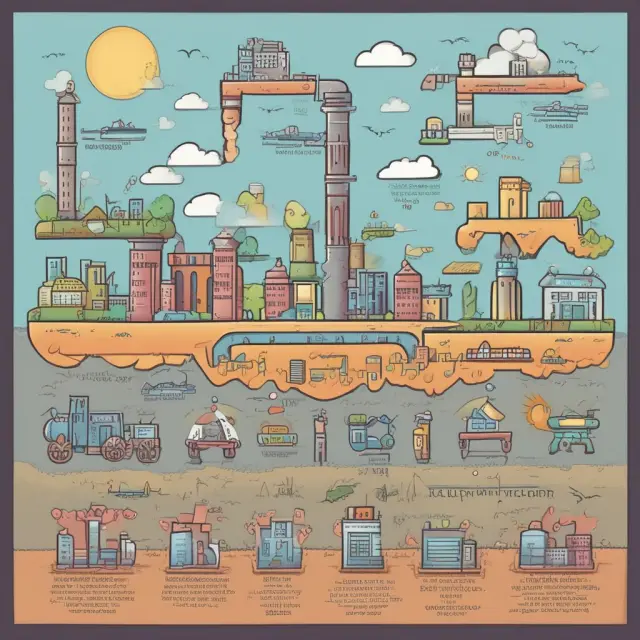
Components of Gross Domestic Product (GDP)
Understanding the components that make up a nation’s Gross Domestic Product (GDP) is vital as it offers valuable insights into the economy’s structure and growth dynamics. Comprising six key areas, these elements reveal important information about a country’s economic landscape. Below we discuss each component in detail:
1. Private and Public Consumption:
Private consumption represents the goods and services purchased by households for their personal use, while public consumption refers to those consumed by governments and other institutions like schools, hospitals, or military bases. Both private and public consumption make up a significant portion of GDP since they reflect the standard of living within an economy.
2. Government Outlays:
Government outlays encompass all spending by the government to provide various services and goods, including education, healthcare, defense, and infrastructure projects. These investments can significantly impact an economy’s growth rate and overall economic stability. In most developed economies, government expenditures account for a considerable percentage of GDP.
3. Investments:
Capital expenditures, or investments, refer to money allocated towards creating long-term assets that yield future benefits. This includes spending on structures like factories, machines, and equipment, as well as research and development (R&D) projects. Investment plays a crucial role in an economy’s growth since it contributes to increased productivity and capacity.
4. Additions to Private Inventories:
Inventory refers to the stock of finished or semi-manufactured goods held by businesses, awaiting sale. A change in inventory levels impacts GDP calculation, as additions are counted when they are first produced. Conversely, decreases are subtracted when they are sold. Inventory changes can be a significant driver of GDP growth due to their linkage with production and sales activities.
5. Paid-in Construction Costs:
Construction costs represent the value of structures that have been newly constructed or substantially renovated. These projects contribute significantly to an economy’s growth since they create jobs, boost productivity, and generate additional demand for materials and labor.
6. Foreign Balance of Trade:
The foreign balance of trade is crucial as it indicates how a country’s total exports compare to its imports. When a nation exports more than it imports (a trade surplus), the difference contributes positively to GDP. Conversely, if a country imports more than it exports (a trade deficit), the negative gap detracts from overall GDP growth.
In conclusion, understanding the various components of a country’s Gross Domestic Product (GDP) is vital for gaining insights into the health and dynamics of an economy. By analyzing these elements, investors, policymakers, and businesses can make informed decisions that contribute to long-term economic stability and growth.
Calculating Gross Domestic Product (GDP)
When delving into the realm of economic indicators, few measure the overall economic health and performance of a country as comprehensively as its Gross Domestic Product (GDP). At its core, GDP is the monetary value of all finished goods and services produced within a country’s borders during a specific time frame.
To better understand this crucial metric, it is essential to grasp two vital aspects: nominal and real GDP. Nominal GDP signifies economic production evaluated using current prices, whereas real GDP accounts for inflation adjustments, giving insight into the actual volume of goods and services produced.
Let’s begin by examining how GDP is calculated. This can be done through three primary methods: expenditures (C + I + G + X), production (T + C + I), or incomes (W + R + P). These methods all lead to the same total, allowing for multiple perspectives on a country’s economic output.
The first method, known as the expenditure approach, calculates GDP by summing consumption (C), investment (I), government spending (G), and net exports (X). Consumption includes both private and public spending on goods and services. Investment encompasses purchases of new plant, equipment, or structures. Government spending refers to outlays for public goods and services. Net exports represent the difference between a country’s exports and imports.
The second method, called the production approach, calculates GDP by summing total intermediate inputs (T), compensation of employees (W), and proprietor’s income (R) plus indirect business taxes (P). Intermediate inputs include raw materials, electricity, and wages paid to workers that are used in the production process. Compensation of employees represents wages and salaries paid to laborers. Proprietor’s income includes earnings from self-employment or small businesses. Indirect business taxes are levied on intermediate goods and services.
The third method, known as the income approach, calculates GDP by summing total wages, rent, interest, proprietors’ income, and net profits (or losses) in the form of corporate profits, rental income, and interest paid to foreigners. This method is often used when dealing with data on individual industries or sectors.
Nominal GDP refers to the monetary value of economic production at current prices, whereas real GDP adjusts for inflation by expressing goods and services in terms of their purchasing power in a base year. In other words, nominal GDP represents the quantity of output at the current price level, while real GDP shows the same output adjusted for inflation.
To compute nominal GDP, you would sum all final sales of goods and services within an economy during a specific period. For instance, if a country produces $10 billion worth of goods and services in a year, its nominal GDP would be $10 billion. However, to calculate real GDP, you would first need to know the inflation rate between the base year and the current year. Adjusting the nominal GDP for this inflation rate will yield the real GDP figure.
For example, if a country’s nominal GDP is $10 billion in a given year, but the inflation rate during that time was 3%, the real GDP would be calculated as follows: Real GDP = Nominal GDP / (1 + Inflation Rate)²
Real GDP = $10 billion / (1 + 0.03)²
Real GDP = $9.71 billion (rounded to two decimal places)
Understanding both nominal and real GDP is crucial because they offer different insights into a country’s economic performance. Nominal GDP is more relevant for short-term analysis, whereas real GDP sheds light on long-term trends. Additionally, comparing the difference between nominal and real GDP can reveal information about a country’s inflation or deflation situation.
In conclusion, Gross Domestic Product (GDP) is an essential economic indicator that measures the total value of finished goods and services produced within a country during a specific time frame. Calculating this figure using various approaches (expenditures, production, or incomes) reveals valuable information about a nation’s economic health and performance. By understanding both nominal and real GDP, we can gain insights into both current market value and long-term trends.
Interpreting Gross Domestic Product (GDP)
Understanding the nuances of interpreting GDP is essential to making informed decisions based on economic data. The interpretation of GDP hinges on several factors, including trade balance, nominal vs. real GDP, and per-capita GDP and its growth rate.
Trade Balance: A country’s trade balance can significantly impact its Gross Domestic Product (GDP). When a country has a trade surplus, meaning the total value of exports exceeds imports, it results in an increase in the GDP. Conversely, when a country experiences a trade deficit, where the value of imported goods and services outweighs exports, its GDP decreases. A persistent trade deficit could potentially indicate structural economic issues that impact long-term growth prospects.
Nominal vs. Real GDP: Nominal Gross Domestic Product (GDP) is calculated without adjusting for inflation, while real GDP takes into account the effects of price changes on production and consumption levels. Comparing nominal and real GDP can provide valuable insights. For example, during periods of high inflation, a country’s nominal GDP may show substantial growth, but real GDP might reveal stagnant economic conditions or even decline. Understanding the difference between these two measures is crucial for evaluating long-term trends in an economy and assessing the effectiveness of monetary policy actions.
Per-Capita GDP and Its Growth Rate: Per-capita Gross Domestic Product (GDP) represents the economic output per individual within a country, providing a measure of living standards and productivity levels. Analyzing the growth rate of per-capita GDP can shed light on overall economic progress and help compare countries’ prosperity levels. A steady increase in per-capita GDP signifies improvements in a nation’s standard of living and potential for long-term sustained growth. Conversely, a declining or stagnant per-capita GDP could indicate a struggling economy with limited opportunities for its population to thrive.
In conclusion, interpreting the nuances of gross domestic product (GDP) data requires an understanding of various factors such as trade balance, nominal vs. real GDP, and per-capita GDP and its growth rate. By considering these factors, policymakers, investors, and businesses can make informed decisions to optimize economic performance and adapt to ever-changing market conditions.
Limitations of Gross Domestic Product (GDP)
Despite being an essential economic indicator, Gross Domestic Product (GDP) has its limitations. The primary criticisms revolve around its inclusivity and accuracy as a measure of a nation’s overall prosperity. In response to these criticisms, alternative measures like Gross National Product (GNP), Net National Income (NNI), and Purchasing Power Parity (PPP) have emerged.
One limitation of GDP is that it fails to account for the distribution of income or wealth within a country. For instance, a country with a high level of overall production but unequal income distribution may not accurately reflect the well-being of its population. This issue is further complicated by the fact that some economic activities, like domestic work and volunteer labor, are often not included in GDP calculations.
GDP also does not consider environmental degradation or natural resource depletion. For example, a country that extracts and exports nonrenewable resources quickly may report high levels of GDP growth but neglect the long-term consequences of these actions. Similarly, countries heavily reliant on agriculture might have a lower GDP than their urban counterparts due to the lower monetary value placed on agricultural production.
Moreover, GDP doesn’t account for intangible assets or services like education, research and development (R&D), or public health. These factors are crucial in driving long-term growth and productivity but are not directly measured within traditional GDP calculations. Consequently, a country that invests heavily in R&D may not see an immediate increase in its reported GDP.
Additionally, some argue that GDP does not accurately reflect a nation’s overall prosperity because it fails to consider the impact of income distribution or social welfare programs. For instance, a country with a large income gap between rich and poor might have high levels of GDP due to production and consumption among the wealthy population but still struggle with widespread poverty and inequality.
Alternative measures like Net National Income (NNI) and Purchasing Power Parity (PPP) have gained popularity as they attempt to address some of these limitations. For example, NNI adjusts GDP by subtracting depreciation and taxes while adding net interest earnings and income from abroad. It aims to provide a clearer picture of a country’s economic productivity and the available resources for consumption or investment.
Similarly, PPP adjusts for price differences between countries to measure the total value of goods and services produced in each country at a common set of prices. This provides a more accurate representation of the standard of living across different countries than relying on GDP alone.
In conclusion, while Gross Domestic Product (GDP) remains an essential economic indicator, it is important to recognize its limitations. By understanding alternative measures like Net National Income (NNI) and Purchasing Power Parity (PPP), we can gain a more comprehensive perspective on a country’s overall prosperity and well-being.

History of Gross Domestic Product (GDP)
Gross domestic product (GDP) has been an essential tool for policymakers, investors, and businesses since its origins during World War II. The concept of measuring a country’s economic output was first introduced to the United States in 1934 by the National Income Office under the direction of Harold Smith. This early GDP calculation, which became known as the “National Income Account,” provided an essential understanding of how U.S. resources were allocated between sectors and the interrelationships among consumption, investment, government spending, and net exports.
As World War II progressed, the U.S. government required a more comprehensive economic measure to assess the war effort’s impact on the economy. This necessity led to the establishment of the National Bureau of Economic Research (NBER), which took over the responsibility for calculating GDP from the National Income Office in 1942. The NBER developed a comprehensive system for measuring U.S. economic output and its subsequent growth, ensuring that GDP would remain a vital tool for understanding the domestic economy’s overall health and performance.
The use of GDP spread beyond the United States following World War II. In the 1940s and 1950s, many Western European countries adopted the system, with international organizations like the International Monetary Fund (IMF) and the World Bank contributing to its widespread adoption worldwide. This allowed for comparisons of economic output between countries and a more comprehensive understanding of the global economy.
Today, GDP remains a crucial indicator for policymakers, businesses, and investors alike. It provides insights into macroeconomic conditions, including overall economic growth, inflation, and employment levels. By tracking GDP trends, governments can develop targeted fiscal and monetary policies to address potential issues before they escalate into significant problems. For businesses and investors, GDP data can inform strategic decision-making, helping them assess the economic environment, forecast market trends, and gauge competition.
In summary, the history of Gross Domestic Product (GDP) dates back to World War II in the United States, where it was initially created as a means to assess resource allocation within an economy. Since then, it has become a widely adopted and essential economic indicator used by policymakers, businesses, and investors to measure the overall health and performance of economies both domestically and internationally.
Why is Gross Domestic Product (GDP) important?
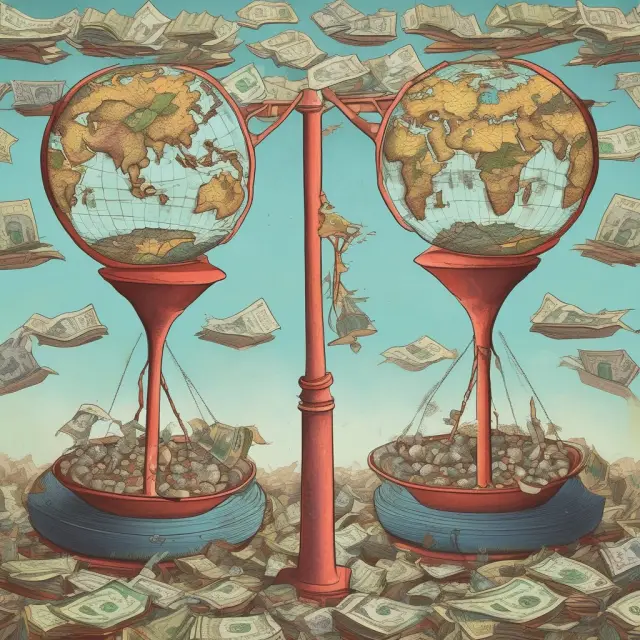
Gross Domestic Product (GDP) plays a pivotal role as an economic indicator, providing significant insights into the overall health and performance of economies. GDP is not just a single figure but rather a comprehensive measure of a country’s economic production in goods and services. It serves as a vital tool for policymakers, investors, and businesses to make informed decisions based on accurate assessments of economic conditions and trends.
First and foremost, GDP acts as an essential gauge for policymakers as they strive to create sound fiscal and monetary policies that promote growth and address potential issues within their economies. GDP provides a clear understanding of the current economic state, enabling governments to identify areas requiring attention, such as sectors experiencing contraction or those requiring stimulation. By following trends in GDP data, policymakers can develop strategies that align with economic conditions and contribute to long-term economic sustainability.
For investors, GDP represents an essential piece of information when evaluating the investment landscape of various countries and industries. Understanding a country’s GDP growth rate allows investors to assess potential market opportunities and risks based on current and projected economic conditions. Additionally, by studying GDP data from different sectors, investors can make informed decisions regarding asset allocation and portfolio diversification.
Businesses also heavily rely on GDP data to plan their operations and strategize for future growth. By tracking the GDP of key markets, businesses can anticipate demand patterns, identify new opportunities, and adapt to changing market conditions. This information aids in informed decision-making regarding production capacity, pricing strategies, and marketing efforts.
Moreover, GDP is crucial when comparing economies between countries. The comparison of GDP figures enables governments, investors, and businesses to assess relative economic strengths and weaknesses among nations. A country with a higher GDP may attract more investment due to its perceived potential for growth and larger market size. Furthermore, international organizations like the World Bank and International Monetary Fund use GDP as a primary measure of national income and living standards when determining aid allocations and development assistance programs.
In summary, Gross Domestic Product (GDP) is an indispensable economic indicator that offers invaluable insights into the overall health and performance of economies. By understanding the components, calculations, and interpretations of GDP, policymakers, investors, and businesses can make well-informed decisions based on accurate assessments of current and future economic conditions.
Real vs. Nominal Gross Domestic Product (GDP)
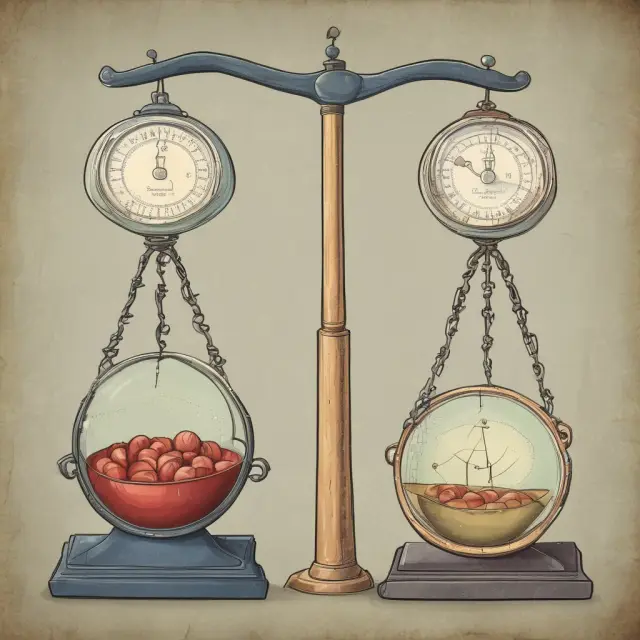
Understanding the distinction between real and nominal Gross Domestic Product (GDP) is crucial when examining economic performance, as these two concepts provide different insights into a country’s economy. While nominal GDP calculates the total value of goods and services produced within a given time period using current prices, real GDP adjusts for inflation by using constant prices to determine the actual volume of production.
Nominal Gross Domestic Product (GDP)
Nominal GDP is an assessment of economic output in an economy with no consideration for price changes or inflation. It represents the total market value of all goods and services produced within a country’s borders during a specific period. As it does not account for inflation, nominal GDP can sometimes provide a misleading representation of a nation’s economic health when comparing different periods.
Real Gross Domestic Product (GDP)
Real GDP is an adjusted measure that reflects the actual production volume in real terms. It calculates a country’s economic output by using constant prices, allowing for a more accurate comparison between different time frames. Real GDP adjusts for inflation and eliminates its impact on economic growth, providing insights into underlying economic trends without the distortion caused by changes in consumer price indices.
Implications of Real vs. Nominal GDP
The distinction between real and nominal GDP holds significant importance when analyzing a country’s economic health and comparing different time periods or economies. By using real GDP, analysts can separate inflationary factors from economic growth, ensuring that changes in output are not misinterpreted due to price fluctuations. Additionally, it is essential for policymakers, investors, and businesses to consider both nominal and real GDP figures when making strategic decisions since they each provide unique insights into the economy’s current status and future potential.
When interpreting economic data, it is important to understand that nominal and real GDP serve distinct purposes, and both are valuable for understanding a country’s economic health and performance. While nominal GDP measures the total value of goods and services produced in an economy using current prices, real GDP calculates the actual quantity of goods and services produced using constant prices. By combining these two perspectives, analysts can obtain a more comprehensive view of the economy’s current state and long-term trends.
In conclusion, understanding the difference between nominal and real Gross Domestic Product (GDP) is crucial for analyzing economic health and performance accurately. Nominal GDP measures the total value of goods and services produced in an economy using current prices while real GDP calculates the actual quantity of goods and services produced using constant prices. Real GDP adjusts for inflation, providing insights into underlying economic trends without distortion caused by price fluctuations. By considering both nominal and real GDP figures, analysts can obtain a more comprehensive view of the economy’s current state and long-term trends.

Gross Domestic Product (GDP) in Modern Economy
The role and impact of Gross Domestic Product (GDP) on modern economies are vast, reaching far beyond the simple measure of economic production. In policy circles, the financial markets, and the business community, GDP is a cornerstone for understanding macroeconomic trends, assessing economic health, and making critical decisions. Let’s explore how GDP influences macroeconomic policy, stock markets, and investor sentiment.
Macroeconomic Policy:
GDP serves as a primary indicator for policymakers when implementing fiscal and monetary policies. It provides essential information about the overall performance of an economy, helping governments to set targets and make adjustments accordingly. For instance, a declining GDP may indicate that the economy is in recession, prompting governments to adopt expansionary fiscal or monetary policies. Conversely, rising GDP may suggest strong economic growth, leading policymakers to tighten fiscal and monetary policy stances to prevent overheating.
Stock Markets:
The financial markets closely follow the quarterly releases of a country’s GDP data to gain insights into its overall economic health. Investors and traders use this information to make informed decisions regarding stock investments, as well as for tracking broader market trends. A strong GDP growth rate can lead to optimistic sentiments towards the economy, causing stocks to perform better in the short term. Conversely, weak or negative GDP growth may signal potential economic downturns and negatively impact investor sentiment, leading to stock price declines.
Investor Sentiment:
Investor sentiment plays a crucial role in the financial markets’ response to quarterly GDP data releases. The overall tone of investor sentiment can have significant impacts on market trends. For example, when investors are optimistic about an economy’s future prospects, they tend to buy stocks, pushing stock prices upwards. However, if investor sentiment turns bearish due to weak or negative GDP growth, selling pressure may ensue, leading to declining stock prices.
In conclusion, the gross domestic product (GDP) is a vital economic indicator that plays an essential role in modern economies. It guides policymakers, investors, and businesses in strategic decision-making by providing insights into overall economic health, productivity, and growth. As a comprehensive measure of economic production within a country’s borders, GDP offers valuable information to understand the complexities of macroeconomic policy, stock market trends, and investor sentiment.

FAQs: Frequently Asked Questions about Gross Domestic Product (GDP)
What is the difference between nominal and real GDP?
Nominal GDP represents the total value of goods and services produced in current prices, without adjusting for inflation. Real GDP, on the other hand, represents the total value of goods and services adjusted for changes in prices (inflation), reflecting the real output of an economy over time. In summary, nominal GDP measures economic activity at current market prices while real GDP measures the same activity adjusted for inflation.
How does the calculation of GDP impact economic policy?
GDP is a crucial tool for policymakers as it provides insights into the overall health and performance of an economy. It helps governments gauge the effectiveness of their fiscal and monetary policies, informing them about potential adjustments that may need to be made. For instance, high inflation rates can be addressed with tighter monetary policies, while low growth rates might necessitate expansionary fiscal measures.
Why is GDP per capita a useful metric?
GDP per capita, also known as average income per person, offers valuable insights into the standard of living and productivity levels within a country. By comparing per-capita figures between nations, one can evaluate their economic well-being and identify areas for improvement. It is important to remember that a high GDP per capita does not always equate to a high quality of life, as other factors such as income distribution, access to healthcare, education, and employment opportunities also play significant roles in determining overall well-being.
In conclusion, understanding Gross Domestic Product (GDP) is essential for anyone seeking to gain insight into the economic health and performance of countries worldwide. By grasping key concepts related to components, calculation methods, interpretations, limitations, and historical backgrounds, you will be well-equipped to use this critical economic indicator for personal and professional growth. Remember that GDP offers a comprehensive snapshot of an economy, helping policymakers, investors, and businesses make informed decisions.
 Next entry · No. 1,755Understanding the Concept of a GDP Gap: Its Implications for Investors
See also
-
 No. 4,303
07 Jun 2025
20 min
Understanding Real vs Nominal Gross Domestic Product (GDP): Measuring Economic Output with Accuracy
Economics
No. 4,303
07 Jun 2025
20 min
Understanding Real vs Nominal Gross Domestic Product (GDP): Measuring Economic Output with Accuracy
Economics -
 No. 2,215
19 Dec 2024
19 min
The Attractive Server Economic Index: A Dubious Indicator of Recession
Business Finance
No. 2,215
19 Dec 2024
19 min
The Attractive Server Economic Index: A Dubious Indicator of Recession
Business Finance -
 No. 1,740
30 Oct 2024
20 min
Understanding Gapping: Types, Causes and Trading Strategies in Finance
Business Finance
No. 1,740
30 Oct 2024
20 min
Understanding Gapping: Types, Causes and Trading Strategies in Finance
Business Finance -
 No. 3,859
02 May 2025
22 min
Signs, Causes, and Impact of an Overheated Economy on Professional Investors
Finance Policy
No. 3,859
02 May 2025
22 min
Signs, Causes, and Impact of an Overheated Economy on Professional Investors
Finance Policy -
 No. 2,124
12 Dec 2024
17 min
High-Yield Bonds vs Investment-Grade Bonds: Understanding the Differences in Yield and Risk
Finance Policy
No. 2,124
12 Dec 2024
17 min
High-Yield Bonds vs Investment-Grade Bonds: Understanding the Differences in Yield and Risk
Finance Policy -
 No. 1,781
05 Nov 2024
18 min
Generic Brands: Understanding the World of Substitute Consumer Products
Finance Policy
No. 1,781
05 Nov 2024
18 min
Generic Brands: Understanding the World of Substitute Consumer Products
Finance Policy