Understanding High Street Banks: Services, Specialties, and Competition

Exploring the significance, characteristics, and leading players of High Street Banks in the UK, including Barclays, RBS, Lloyds, and HSBC.
Introduction to High Street Banks
High street banks, a term originating in the United Kingdom, define a significant sector of banking services offered by major retail banks. These institutions are primarily located in urban areas along main commercial districts or thoroughfares, serving as the cornerstone of everyday financial needs for individuals and small-to mid-sized businesses. By providing essential services such as deposit accounts, credit facilities, consumer investments, and lending options (including overdraft protection, loans, lines of credit, mortgages, etc.), high street banks cater to a wide demographic.
The term “high street” refers to the main thoroughfare where primary business activities occur in cities and towns, making it an apt British equivalent for North America’s Main Street. With their extensive branch networks, high street banks stand apart from investment banks and other financial institutions. In this section, we will explore the characteristics of popular high street banks in the UK, including Barclays, Royal Bank of Scotland Group (RBS), Lloyds Bank, and HSBC.
Barclays:
With a history dating back to 1896, Barclays is a prominent British multinational investment bank and financial services company. It operates in three primary business areas: personal banking, corporate banking, and investment banking. With over 24 million customers and clients worldwide, the institution offers its services across personal, wealth, and business units in over 40 countries. A secondary listing on the New York Stock Exchange (NYSE) complements its primary listing on the London Stock Exchange (LSE).
Royal Bank of Scotland Group (RBS):
The Royal Bank of Scotland was founded as Bank of Scotland in 1727 and is headquartered in Edinburgh, Scotland. This major high street bank provides a diverse range of services to customers and clients, such as savings, currency, fixed term and notice accounts, cash management loans, home improvement loans, mortgages, import and export financing, structured and asset finance, and invoice financing.
Lloyds Bank:
Originating in Birmingham in 1765, Lloyds Bank has a rich history that includes numerous acquisitions of smaller financial institutions throughout the nineteenth and twentieth centuries. Merging with the Trustee Savings Bank in 1995, the bank began to trade as Lloyds TSB Bank between 1999 and 2013 before simplifying its name to Lloyds. The institution serves both retail and commercial banking needs within England and Wales, making it one of the Big Four clearing banks in the country.
HSBC:
Ranked among the largest international financial institutions globally, HSBC was founded in Hong Kong in 1865. Boasting over 7,500 offices in more than 80 countries and territories around the world, this high street bank holds a significant portion of deposits and maintains a relatively lower risk profile due to its loan-to-deposit ratio. HSBC’s global presence grants it a substantial client base and market reach across various industries.
As we delve deeper into each of these high street banks, we will examine their unique services and specialized areas of focus. Additionally, we’ll explore the impact of niche and challenger banks on the competitive landscape within the UK financial sector.
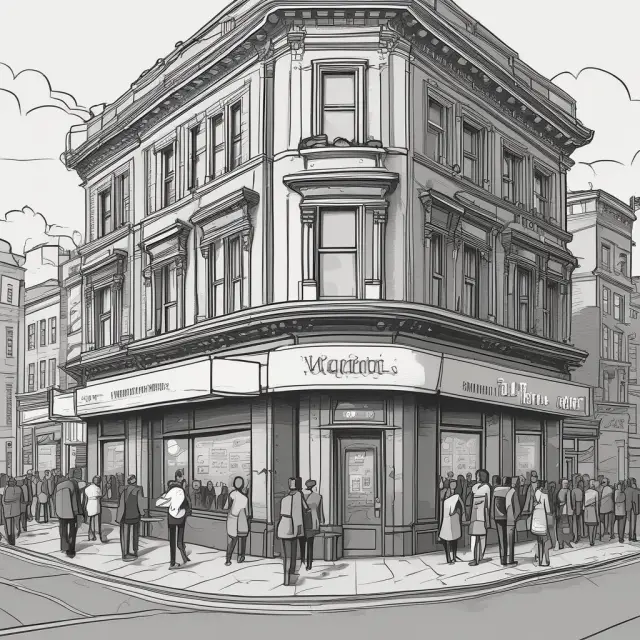
Characteristics of High Street Banks
The term “high street bank” refers to a large retail banking institution that has numerous branches across cities, towns, and suburban areas. These banks distinguish themselves from investment banks or other financial institutions by catering primarily to everyday banking needs for individuals and small-to-mid-sized businesses. The name “high street” originated in the United Kingdom, representing the main commercial arteries where significant business activity occurs. High street banks in the UK include prominent institutions such as Barclays, Royal Bank of Scotland Group (RBS), Lloyds Bank, and HSBC.
High Street Banks vs Other Financial Institutions
The role of a high street bank extends beyond mere deposit-taking and lending services; they offer various financial products and services tailored to the everyday needs of their customers. In contrast, investment banks focus on financial services for larger corporations, governments, and wealthy individuals. High street banks provide consumer investment vehicles and savings accounts while offering loans, overdraft protection, mortgages, and lines of credit. Some high-street banks also have separate arms that offer specialized services such as wealth management and investment management in addition to their retail banking services.
Understanding the Differences
Barclays is an illustrative example, with its presence spanning more than 40 countries through its primary listing on the London Stock Exchange (LSE) and secondary listing on the New York Stock Exchange (NYSE). Barclays offers a wide range of services to over 24 million customers and clients across personal, wealth, and business units. Other high-street banks like RBS, Lloyds, and HSBC follow a similar model by providing financial solutions for savings, loans, mortgages, and investment products.
In summary, high street banks differentiate themselves from other financial institutions through their focus on everyday banking services for individuals and small to mid-sized businesses. They cater to a broader demographic and offer a more diverse range of financial products to meet the needs of their customers.

Popular High Street Banks in the UK: Barclays
Background:
Barclays, a British multinational banking and financial services company, is among the largest high street banks in the United Kingdom. Its rich history dates back to 1896 when it was founded in London as a general merchant bank. Since then, it has undergone significant transformations and expansions, becoming one of the leading universal banks today. Barclays’ primary listing is on the London Stock Exchange (LSE), with a secondary listing on the New York Stock Exchange (NYSE).
Services:
As a high street bank, Barclays offers an extensive range of retail banking services to individuals and small-to-midsize businesses. These include deposit accounts, loans, credit facilities, mortgages, and various investment vehicles. In addition to its retail business, Barclays also engages in investment banking, wealth management, and investment management. The bank serves over 24 million customers and clients across personal, wealth, and business units in more than 40 countries.
Unique Aspects
Barclays stands out among high street banks due to its global presence and diversified offerings. With a vast network of branches and ATMs, Barclays provides convenience and accessibility for customers worldwide. The bank’s strong commitment to innovation is reflected in its digital transformation efforts. By investing in cutting-edge technology, Barclays has managed to streamline processes and deliver better customer experiences. One such initiative includes the launch of its mobile banking app, which offers a wide range of functionalities, enabling users to manage their finances on the go. Furthermore, Barclays’ presence extends beyond traditional financial services. The bank also offers various insurance products through its Barclaycard division and is engaged in renewable energy projects through its subsidiary, Barclays Renewables.
In conclusion, Barclays is a leading high street bank that offers an extensive range of retail banking services to individuals and small-to-midsize businesses. Its global presence, diversified offerings, and commitment to innovation make it a significant player in the UK financial sector. By catering to a diverse customer base and adapting to the evolving financial landscape, Barclays continues to thrive and stay competitive.

Popular High Street Banks in the UK: Royal Bank of Scotland Group (RBS)
Background
The Royal Bank of Scotland Group (RBS), commonly known simply as RBS, is one of Scotland’s oldest financial institutions. It was founded as Bank of Scotland in 1727 by an Act of the Scottish Parliament. The bank is headquartered in Edinburgh and is a constituent of the FTSE 100 Index, the benchmark for the London Stock Exchange. RBS offers a range of services to its customers through three main divisions: Personal Banking, Commercial & Private Banking, and Global Markets.
Services
RBS provides a vast array of financial products and services to cater to both individual consumers and businesses. In personal banking, RBS supports cash management with savings, currency, fixed term and notice accounts. They also offer loans for various purposes, including personal, auto, debt consolidation, home improvement, and small business loans. Their mortgage options include both fixed and variable rate mortgages.
RBS’s agricultural services cater to farmers by providing import and export, structured and asset finance, and invoice finance. Additionally, they offer corporate banking services for businesses of all sizes, from startups to multinational corporations. Their commercial banking division provides working capital, trade finance, and cash management solutions designed to help companies manage their day-to-day financial needs effectively.
Unique Aspects
RBS is one of Scotland’s oldest banks with a rich history dating back to 1727. They were the first in the world to issue banknotes and have played a crucial role in Scotland’s economic development since then. In recent years, RBS has undergone significant changes following the global financial crisis in 2008. The bank was bailed out by the UK government, leading to the sale of various subsidiaries such as ABN AMRO and Ulster Bank. Despite these changes, RBS remains a major player in the UK high street banking landscape, serving over 16 million personal and business customers worldwide.
In conclusion, Royal Bank of Scotland Group (RBS) is a leading high street bank in the United Kingdom that has stood the test of time since its founding in 1727. With its extensive range of services catering to individuals and businesses, RBS continues to play an essential role in Scotland’s economy while maintaining a significant presence in the global financial sector.

Popular High Street Banks in the UK: Lloyds Bank
Lloyds Bank is a prominent retail and commercial bank based in England and Wales, which serves as one of the Big Four clearing banks within the country. With a rich history dating back to 1765 when it was founded in Birmingham, Lloyds has grown significantly over the centuries by acquiring numerous smaller financial institutions. The merger with the Trustee Savings Bank in 1995 marked an essential turning point, leading to the formation of Lloyds TSB Bank between 1999 and 2013. Now, simply known as Lloyds, this high street bank boasts a vast network of branches and provides a diverse range of services catering to various customer needs.
Lloyds’ extensive offerings include savings, currency, fixed term and notice accounts, cash management loans, mortgages, and an array of agricultural services such as import and export, structured and asset finance, and invoice finance. Lloyds customers benefit from the bank’s commitment to flexibility, with loan options tailored for personal, auto, debt consolidation, home improvement, small business, fixed rate mortgage, and variable rate mortgage needs. Additionally, its agricultural offerings extend to support businesses in industries like farming and agriculture.
Lloyds Bank has maintained a considerable presence in the UK market by providing both brick-and-mortar and online banking services. With over 350 years of expertise in financial services, Lloyds continues to adapt to the evolving landscape as it competes with niche and challenger banks. Despite growing competition from these alternative financial institutions, Lloyds remains a significant player within the high street banking sector.
In the following sections, we will further explore the characteristics that set high street banks apart and delve into other popular high street banks in the UK, namely Barclays, Royal Bank of Scotland Group (RBS), and HSBC. Additionally, we’ll discuss how these high street banks differentiate themselves from niche and challenger banks and introduce specialized services they offer to their customers.

Popular High Street Banks in the UK: HSBC
HSBC, one of the world’s largest banking and financial services organizations, is a high street bank with significant presence and influence in the United Kingdom. Established in Hong Kong in 1865, HSBC’s history spans over 150 years, having expanded its reach through numerous mergers and acquisitions. The bank serves approximately 37 million customers worldwide, offering a wide range of financial products and services tailored to the needs of individuals, businesses, and institutions.
HSBC’s extensive product offerings include personal banking services such as savings accounts, current accounts, loans, mortgages, credit cards, and insurance. The bank also caters to business clients through its commercial banking division, providing corporate lending, cash management, trade finance, and other financial solutions. HSBC’s wealth management segment focuses on serving high net worth individuals by offering personalized investment strategies and portfolio management services.
HSBC’s success can be attributed to its global reach, which includes having operations in 80 countries and territories and employing over 235,000 people. Its primary listing is on the London Stock Exchange (LSE), while it also holds secondary listings on several other stock exchanges worldwide. Despite its massive size, HSBC maintains a strong commitment to risk management, as evidenced by its balanced asset and liability structure which holds more deposits than loans. This strategy has enabled the bank to weather financial crises and maintain a steady share price.
HSBC’s UK presence is significant, with over 350 branches throughout England, Wales, Scotland, and Northern Ireland. The bank’s local offerings include the HSBC Advance and Premier accounts, which provide customers with exclusive benefits such as waived fees, priority services, and preferential savings rates. HSBC is also known for its strong customer service, having been recognized with various awards from organizations like Moneyfacts and Defaqto.
In summary, HSBC’s extensive product offerings, global reach, and long-standing reputation make it a significant player in the high street banking landscape of the United Kingdom. With an unwavering commitment to risk management and customer service, the bank remains well positioned to meet the ever-evolving needs of its diverse clientele.

Competition from Niche and Challenger Banks
In today’s rapidly evolving financial landscape, high street banks face growing competition from niche and challenger banks. Traditional high street banks, such as Barclays, Royal Bank of Scotland Group (RBS), Lloyds Bank, and HSBC, have long dominated the retail banking sector by offering a wide range of services tailored to everyday consumers and small- to mid-sized businesses. However, with the emergence of specialized financial institutions and digital-only competitors, these giants face significant challenges that could reshape their business models and strategies.
Niche banks are financial institutions specifically designed for serving customers in particular markets or niches. For instance, some niche banks cater to expatriates, immigrants, or individuals from specific countries. Zenith Bank is an excellent example of a Nigerian-based institution that provides customers with access to the African financial markets while operating in the U.K. In contrast, challenger banks are digital-only financial services that aim to compete with traditional high street institutions by offering innovative online solutions and competitive pricing structures.
One of the significant advantages niche and challenger banks have is their ability to cater to specific customer segments or preferences that may be overlooked by larger, mainstream banks. For example, Monzo and Starling Bank are two well-known challenger banks that provide customers with a range of personalized services, including budget tracking features, automatic categorization of transactions, and real-time notifications. These digital offerings enable these banks to differentiate themselves from the more traditional high street institutions.
Moreover, niche and challenger banks can also operate on lower costs due to their absence of physical branches and other overheads associated with maintaining a widespread network of bank branches. This cost advantage allows them to offer customers higher rates on savings products or pay lower interest on loans compared to their more established counterparts. Atom Bank is an app-based service that offers both savings and mortgage products, demonstrating the potential for niche and challenger banks to disrupt the market with innovative solutions.
Despite these challenges, high street banks remain formidable competitors in the financial sector. They possess extensive resources, brand recognition, and a large customer base. In response, they have begun implementing various strategies to maintain their market position. For instance, some high street banks are investing heavily in digital transformation initiatives to expand their online offerings and improve the overall customer experience. Others are partnering with fintech firms to access innovative technologies and build new solutions.
However, the competition from niche and challenger banks is not limited to the U.K. market alone. As financial regulations evolve, we may see a growing number of international players entering the British banking sector. This trend is expected to intensify as Brexit negotiations unfold, potentially increasing competition within the industry and compelling high street banks to adapt to this changing landscape.
In conclusion, the arrival of niche and challenger banks signifies both an opportunity and a challenge for high street banks. While these new entrants offer innovative solutions that cater to specific customer segments and preferences, traditional high street institutions possess vast resources, brand recognition, and extensive experience in providing retail banking services. To stay competitive, high street banks must focus on digital transformation initiatives, collaborate with fintech partners, and remain attuned to the needs of their customers as they navigate this evolving landscape.

Specialized Services Offered by High Street Banks
High street banks offer more than just traditional banking services to cater to an increasingly diverse customer base. Many high street banks have specialized departments that cater to unique financial needs, such as business banking, investment management, and international banking.
Barclays, for example, provides a comprehensive range of investment solutions through its Barclays Wealth division. With offices across Europe, the Middle East, Africa, and Asia-Pacific, Barclays Wealth offers its clients personalized investment strategies and advice to help grow their wealth. Additionally, Barclays has a Global Investor business, which caters to high net worth individuals by providing tailored investment solutions, including access to a range of investment products, exclusive research, and dedicated account management.
RBS has several specialized divisions under its umbrella that cater to various market segments. Business customers can benefit from the services offered by RBS’s commercial banking division, which provides financing options for businesses, invoice finance, cash flow management tools, and more. Meanwhile, RBS’s International Private Banking division offers wealth management services tailored to high net worth individuals and families.
Lloyds Bank also has a dedicated business banking division that offers various business banking solutions to small, medium, and large businesses, including financing options, cash flow management tools, and merchant services. Lloyds also provides investment management services through its St. James’s Place unit, which offers investment products and wealth management advice.
HSBC offers a range of specialized services, including investment management, private banking, and commercial banking. HSBC Global Asset Management manages over $500 billion in assets on behalf of individual and institutional investors worldwide. HSBC Private Banking provides personalized wealth management services to high net worth individuals and families, with offices in Europe, the Americas, Asia-Pacific, and the Middle East. HSBC’s commercial banking division offers a range of products and services tailored to businesses, including cash flow management tools, financing options, and trade finance solutions.
In conclusion, high street banks have evolved beyond traditional retail banking services to offer specialized services catering to diverse market segments. By offering investment management, business banking, private banking, and international banking services, high street banks aim to retain their customers while attracting new ones. The competition from niche and challenger banks has forced high street banks to diversify their offerings and adapt to meet the changing needs of consumers.

Global Presence and Expansion of High Street Banks
High street banks have expanded their reach far beyond their home countries, establishing a significant global presence through various means. One such way is by acquiring other financial institutions in different markets. Let us examine how some popular high street banks in the UK – Barclays, Royal Bank of Scotland (RBS), Lloyds Bank, and HSBC – have expanded their footprint internationally.
Barclays:
Since its early beginnings as a small goldsmithing business, Barclays has transformed into an international financial services group that offers various products and services to both retail and institutional customers in over 40 countries. Apart from its strong presence in the UK, Barclays holds primary listings on the London Stock Exchange (LSE) and secondary listings on the New York Stock Exchange (NYSE). Barclays’ global expansion can be attributed to strategic acquisitions like the acquisition of Lehman Brothers Europe, Woolwich Building Society, and Eagle Star.
Royal Bank of Scotland Group (RBS)
RBS, founded in 1727 as Bank of Scotland, has come a long way from its Scottish origins. With operations in Europe, Asia, the Middle East, Africa, and North America, RBS serves over 14 million customers worldwide. The bank’s global presence can be linked to notable acquisitions like NatWest Group (previously National Westminster Bank) and ABN AMRO’s European retail, commercial, and private banking businesses.
Lloyds Bank
With a history that dates back to 1765 in Birmingham, England, Lloyds has evolved from a local bank into an international financial group with branches in England and Wales. Its global presence is further strengthened by its strategic merger with the Trustee Savings Bank in 1995. Although primarily focusing on the UK market, Lloyds Banking Group also serves customers in the United States through its subsidiary, Charter Savings Bank.
HSBC:
Ranked among the largest international financial institutions worldwide, HSBC has an extensive global network of 7,500 offices across over 80 countries and territories. Its diverse product range includes retail banking, wealth management, and investment services. HSBC’s expansion can be attributed to various acquisitions such as Marine Midland Bank in the United States, Marine Bank International in the Caribbean, and Grindlays Bank in India.
The global presence of high street banks is not only a testament to their success but also serves as a critical factor in maintaining their competitive edge in the ever-changing financial landscape. As they continue to expand, these institutions broaden their offerings and adapt to new market conditions while catering to diverse customer needs around the world.

Conclusion: The Future of High Street Banking
The role of technology in shaping the future of high street banking cannot be overstated. With the emergence of digital banks, also known as neobanks or challenger banks, the traditional brick-and-mortar model is evolving rapidly. High street banks, however, are not standing still. They are leveraging technology to enhance their services and meet changing customer demands.
Digital transformation is at the core of many high street bank strategies. Banks like Barclays have launched digital ventures such as Barclaycard US and Barclays Corporate Bank. These initiatives aim to provide a seamless banking experience for customers through improved online platforms, mobile apps, and contactless payments. The goal is to bring the branch experience to the customer’s fingertips while maintaining their physical presence.
RBS has also embraced digital innovation with its acquisition of Digital Reasoning. This investment in advanced analytics enables RBS to offer personalized financial advice and improve fraud detection. By utilizing artificial intelligence, machine learning, and natural language processing, RBS can tailor services based on individual customer needs.
Lloyds Bank has teamed up with tech giants like Apple and Google. Partnerships with these organizations allow Lloyds customers to access their banking services through the Apple Wallet app or Google Pay. This strategic move is aimed at providing a more convenient and accessible banking experience for an increasingly digital customer base.
HSBC’s investment in Fintech, particularly in regulated fintech firms, is another example of how high street banks are embracing technology. The bank has invested in firms like Currencies Direct, Moven, and Digital Currency Group. These partnerships offer HSBC opportunities to provide innovative solutions while mitigating risks associated with regulatory compliance and cybersecurity threats.
In summary, high street banks’ future lies in striking a balance between technology and the human touch. While digital banking is a growing trend, there remains an unwavering need for face-to-face interaction and personalized service. High street banks are investing in technology to enhance their offerings while maintaining their traditional strengths. The fusion of human expertise and technology provides customers with a unique blend of convenience and personalized service, setting the stage for a successful future in the ever-evolving banking landscape.
FAQs
What is a high street bank?
A high street bank is a large retail bank that has many branch locations and offers everyday banking services to individuals and small businesses. The term “high street” originated in the United Kingdom, referring to the main commercial area of towns and cities.
Who are the major high street banks in the UK?
Barclays, Royal Bank of Scotland Group (RBS), Lloyds Bank, and HSBC are popular high street banks in the U.K. They provide services such as deposit accounts, credit facilities, consumer investment, and lending options.
What is a digital bank or neobank?
A digital bank or neobank is a financial institution that operates primarily online, with minimal to no brick-and-mortar presence. Digital banks offer various banking services including savings, checking accounts, loans, and credit cards, often through mobile apps or websites.
What sets high street banks apart from investment banks?
High street banks focus on everyday retail banking services for individuals and small businesses, such as deposit accounts and lending facilities. Investment banks, on the other hand, specialize in financial services related to securities, capital markets, and corporate finance.
Why are traditional high street banks facing competition from niche and challenger banks?
Niche and challenger banks offer specialized services or focus on specific markets, which can cater to a wider range of customer needs. They may also have lower costs due to their online-only presence, allowing them to offer higher savings rates or lower borrowing costs compared to traditional high street banks.

FAQs
What is a high street bank?
A high street bank is a large retail bank that has numerous branch locations, often situated on main commercial thoroughfares in cities and towns. The term originated in the United Kingdom and refers to these banks’ widespread nature and ability to serve a diverse clientele with everyday banking services such as deposit accounts, credit facilities, consumer investments, and various lending options, including overdraft protection, loans, lines of credit, mortgages, and more.
What sets high street banks apart from investment banks and other financial institutions?
High street banks differ from investment banks in terms of their services and client base. While high street banks offer retail banking services to individuals and small-to-mid-sized businesses, investment banks provide services primarily for corporations, governments, and wealthy clients. The services offered by investment banks include underwriting securities, trading financial instruments, managing mergers and acquisitions, and providing advisory services.
Which high street banks are popular in the UK?
Some of the most popular high street banks in the UK include Barclays, Royal Bank of Scotland Group (RBS), Lloyds Bank, and HSBC. These large institutions offer both branch-based and online banking options, and provide a wide range of services catering to various customer segments.
What impact does competition from niche and challenger banks have on the high street banking landscape?
The emergence of niche and challenger banks has intensified the competition in the high street banking sector. Niche banks specialize in targeting specific markets or demographics, while challenger banks offer online-only services that can help them undercut costs and provide more competitive savings rates and lower interest on debt for consumers. This competition puts pressure on traditional high street banks to adapt to evolving customer demands and expectations, as well as technological advancements, in order to remain competitive.
What specialized services do high street banks offer?
High street banks often offer specialized services beyond their core retail banking offerings. For instance, some institutions may provide wealth management or investment management solutions for affluent clients, or engage in broader activities like investment banking and asset management. These services allow high street banks to cater to a wider client base and generate additional revenue streams.
How do high street banks expand globally?
High street banks expand internationally through various means such as acquiring other financial institutions, creating subsidiaries, or opening new branches in foreign markets. This enables them to tap into new customer bases, diversify their operations, and minimize the risks associated with relying too heavily on a single market.
 Next entry · No. 2,116Understanding High-Yield Bond Spreads: Definition, Significance and Implications
See also
-
 No. 2,137
13 Dec 2024
20 min
Understanding Historical Volatility: Measuring Market Risk for Institutional Investors
Finance Policy
No. 2,137
13 Dec 2024
20 min
Understanding Historical Volatility: Measuring Market Risk for Institutional Investors
Finance Policy -
 No. 2,124
12 Dec 2024
17 min
High-Yield Bonds vs Investment-Grade Bonds: Understanding the Differences in Yield and Risk
Finance Policy
No. 2,124
12 Dec 2024
17 min
High-Yield Bonds vs Investment-Grade Bonds: Understanding the Differences in Yield and Risk
Finance Policy -
 No. 2,117
11 Dec 2024
20 min
Understanding High-Yield Investment Programs (HYIPs): Identifying the Red Flags of This Fraudulent Investment Scheme
Finance Policy
No. 2,117
11 Dec 2024
20 min
Understanding High-Yield Investment Programs (HYIPs): Identifying the Red Flags of This Fraudulent Investment Scheme
Finance Policy -
No. 2,116
11 Dec 2024
18 min
Understanding High-Yield Bond Spreads: Definition, Significance and Implications
Finance Policy
-
 No. 2,111
10 Dec 2024
18 min
High-Frequency Trading (HFT): Understanding the Controversial Practice in Finance and Investment
Finance Policy
No. 2,111
10 Dec 2024
18 min
High-Frequency Trading (HFT): Understanding the Controversial Practice in Finance and Investment
Finance Policy -
 No. 2,105
10 Dec 2024
22 min
Understanding Hidden Taxes: An In-depth Analysis of the Economic Impacts and Ethical Considerations
Finance Policy
No. 2,105
10 Dec 2024
22 min
Understanding Hidden Taxes: An In-depth Analysis of the Economic Impacts and Ethical Considerations
Finance Policy