Understanding Holding Costs: Strategies for Minimizing Inventory Spending in Finance and Investment

Understand holding costs in finance and investment through our comprehensive guide, including components, minimization strategies, and real-life case studies.
Introduction to Holding Costs
Holding costs, which are also called carrying costs, represent expenses incurred while storing inventory that hasn’t been sold yet. These costs are an essential part of total inventory costs, alongside ordering and shortage costs. Inventory management plays a crucial role in reducing holding costs, ensuring the company keeps its cash flow optimized and sales strong.
The main components of holding costs include:
- Storage space: Leasing or purchasing warehouse space, along with utilities and insurance, make up significant holding cost components.
- Labor: Hiring staff to move inventory in and out of the warehouse and manage stock levels adds to holding costs.
- Damaged or spoiled goods: Perishable items can go bad if stored for too long, leading to additional expenses.
- Insurance: Protection against potential loss or damage of inventory through insurance policies is another holding cost factor.
Why Minimizing Holding Costs Matters?
Maintaining a well-managed inventory system helps businesses reduce the need for large cash outlays tied up in unsold inventory, ensuring they have sufficient funds available for daily operations. By focusing on strategies to minimize holding costs, companies can boost their sales and ultimately increase profitability.
Case Study: Holding Costs Management at ABC Manufacturing
ABC Manufacturing, a furniture producer, faces significant holding costs as they manage their inventory of raw materials and finished products within warehouses. In this case study, we explore how ABC minimizes these costs by utilizing efficient strategies to streamline the production process and optimize inventory levels.
Strategies for Minimizing Holding Costs
- Quick Payment Collection: Companies can collect payment from their customers as soon as possible to ensure a steady cash flow. By reducing the average days sales outstanding, businesses can lower holding costs by requiring less working capital.
- Accurate Reorder Points: Calculating an accurate reorder point is essential for effective inventory management. An accurate reorder point ensures that stock levels remain optimal, minimizing excess inventory and associated holding costs.
- Economic Order Quantity (EOQ): By determining the EOQ, companies can purchase inventory in quantities that minimize ordering and holding costs while ensuring customer demands are met. Calculating this quantity with the help of inventory management software or specialized consultants can lead to significant cost savings.
Understanding Inventory Turnover Ratio and Holding Costs
Measuring inventory turnover ratio is a crucial aspect of managing holding costs effectively. The ratio reflects how frequently inventory is sold during a given period, enabling businesses to evaluate their stock levels efficiently. A higher inventory turnover ratio implies that more inventory is being sold, reducing the need for substantial holding costs.

Components of Holding Costs
Holding costs, often overlooked in inventory management, represent expenses related to storing and maintaining unsold inventory. These costs are integral in total inventory costs, which also include ordering and shortage costs. To better comprehend the significance of holding costs, let us delve deeper into their four main components: storage space, labor, insurance, and damaged or spoiled goods.
Storage Space
Allocating resources for storing inventory is a crucial element in managing holding costs. Renting or purchasing warehouse space, utilities, and insurance for the facility are examples of storage-related expenses. Properly planning your inventory levels can reduce these costs by optimizing usage of available storage capacity.
Labor:
The labor required to manage and maintain your inventory also contributes to holding costs. This includes the wages paid to employees responsible for receiving, inspecting, organizing, picking, packing, and loading stock. By streamlining these processes or investing in automated systems, companies can lower their labor expenses.
Insurance:
The cost of insuring the inventory against damages, theft, and other potential risks is another component of holding costs. Insurance premiums increase with larger inventories, making it essential to minimize the amount of inventory you hold at any given time. Proper risk assessments and effective inventory management strategies can help keep insurance costs manageable.
Damaged or Spoiled Goods
Unfortunately, inventory can be damaged or spoiled due to various reasons like improper handling, environmental conditions, or simply time. These losses can significantly impact holding costs. For perishable items like food and pharmaceuticals, spoilage is an inevitable reality that requires proper planning and mitigation strategies to minimize the financial implications.
In summary, holding costs encompass storage space, labor, insurance, and damaged or spoiled goods. Understanding these components and implementing effective inventory management practices can help a company lower its holding costs and improve overall profitability. By optimizing your inventory levels, focusing on quick payment collection, utilizing economic order quantities, and closely monitoring your inventory turnover ratio, you can effectively minimize holding costs and streamline your supply chain operations.

Significance of Minimizing Holding Costs
Minimizing holding costs is essential in optimizing your inventory spending, cash flow, and sales performance. Inventory represents a significant investment for businesses; the more stock you hold, the greater the amount tied up in unsold items that require storage, insurance, labor, and other related expenses. This cash could otherwise be utilized elsewhere within your organization.
Holding costs are often overlooked when focusing on total inventory costs; however, they can significantly impact your bottom line if not managed efficiently. These costs include the price of damaged or spoiled goods, as well as storage space, labor, and insurance expenses associated with unsold merchandise.
To maintain a healthy cash flow and maximize sales opportunities, minimizing holding costs is crucial for businesses. The following strategies can help you effectively manage your inventory spending while reducing holding costs:
1. Quick payment collection
Collecting payments from customers as soon as possible enables faster cash turnover, helping to minimize holding costs. Utilizing an efficient invoicing system and offering various payment methods like credit cards or online payments can significantly improve the process.
2. Accurate reorder points
Calculating accurate reorder points is essential for optimizing inventory levels and reducing holding costs. An accurate reorder point signals when it’s time to order more inventory from your supplier, ensuring sufficient stock to meet demand while minimizing excess inventory. A well-planned reorder point strategy considers factors like supplier lead times and sales velocity.
3. Economic order quantity (EOQ)
Using the economic order quantity (EOQ) formula helps determine the ideal amount of inventory to order from a supplier, reducing holding costs by preventing overstocking or stockouts. EOQ is calculated based on factors such as ordering and holding costs per unit. Implementing this strategy enables you to optimize inventory levels while minimizing overall spending.
Understanding and implementing these strategies can have significant implications for your organization’s cash flow, sales performance, and overall financial health. By effectively managing holding costs, businesses are better positioned to allocate resources towards growth initiatives and other strategic priorities.
Example: Holding Costs in Manufacturing
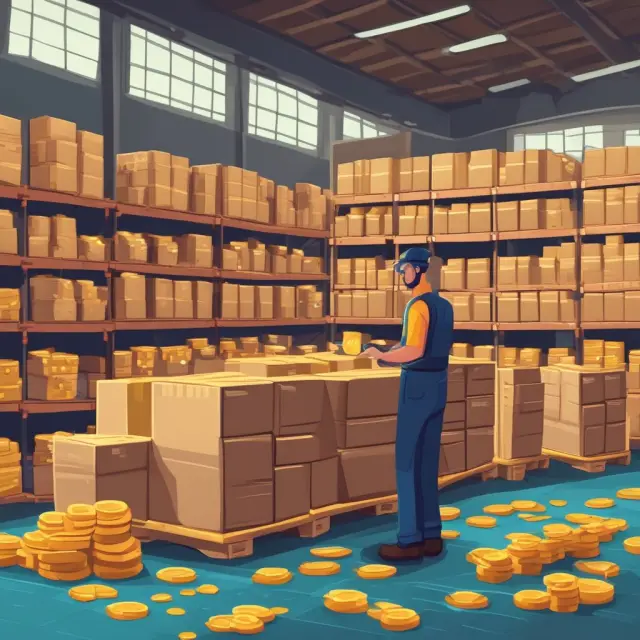
Holding costs significantly impact a company’s bottom line, particularly for businesses that deal with perishable or bulky goods, like ABC Manufacturing, which specializes in producing and storing furniture for retailers. These holding costs encompass various expenses including warehousing fees, labor, insurance, spoilage, and damages due to handling during storage and transportation.
Let’s take a closer look at the different components of holding costs that ABC Manufacturing faces:
1. Storage Space: ABC Manufacturing must pay for renting warehouse space and utilities to maintain its inventory. The larger the inventory size, the higher the overall storage cost.
2. Labor: The labor cost entails the wages paid to workers responsible for moving and loading inventory into warehouses and ensuring that sold merchandise is packed for shipping. This expense grows with the increase in inventory volume.
3. Insurance: As the value of a company’s inventory rises, so does its insurance premium. Proper insurance coverage protects against potential losses from theft or damage.
4. Damaged or Spoiled Goods: When furniture sits for extended periods without being sold, it risks deterioration due to environmental factors like dust, humidity, and sunlight, leading to extra costs for replacement or repairs.
Now that we’ve explored the essential elements of holding costs let us discuss their importance and how minimizing these costs is crucial for companies like ABC Manufacturing.
First, managing inventory spending effectively allows businesses to allocate more cash towards other areas, such as research & development and marketing efforts to gain a competitive advantage. Moreover, understanding and minimizing holding costs can help manage cash flow more efficiently by reducing the amount of capital tied up in inventory.
For instance, ABC Manufacturing aims to sell its furniture quickly and collect payments promptly to lower carrying costs, allowing it to focus on generating sales and maintaining a positive cash flow. By monitoring inventory levels closely and identifying accurate reorder points, the company ensures that they order goods just in time for production and meet customer demands without stocking excessive inventory.
Let’s analyze how this strategy works by diving deeper into two critical holding cost reduction techniques: quick payment collection and calculating accurate reorder points.

Strategies for Holding Cost Reduction
Minimizing holding costs is a crucial aspect of effective inventory management in finance and investment. These costs, which include storage space, labor, insurance, damaged or spoiled goods, and opportunity cost, can significantly impact a company’s cash flow and sales. In this section, we discuss various strategies businesses employ to minimize holding costs.
One approach is collecting payments from customers as quickly as possible. The faster cash comes in, the less capital tied up in inventory, resulting in reduced holding costs. Businesses measure the effectiveness of their collections process using the inventory turnover ratio. This crucial metric represents how many times a company sells and replaces its stock within a given period, typically expressed as the cost of goods sold (COGS) divided by average inventory. A higher inventory turnover ratio signifies better cash flow management and lower holding costs.
Another effective strategy for managing holding costs is calculating accurate reorder points. Reorder points are the minimum inventory levels at which businesses place orders to maintain a steady supply chain, ensuring they don’t face stockouts or overstock situations. These points help companies optimize their inventory levels and minimize carrying costs while reducing potential shortage costs.
To determine the appropriate reorder point, consider factors such as the average weekly or monthly sales volume, the lead time of suppliers (the duration between placing an order and receiving it), and safety stock levels (additional inventory for emergencies). By accurately determining these values, businesses can efficiently manage their inventories while minimizing holding costs.
Lastly, Economic Order Quantity (EOQ) is a popular strategy for optimizing the amount of inventory ordered from suppliers to reduce overall holding costs. EOQ aims to minimize the total cost of inventory by balancing order frequency against order cost savings. The formula for calculating EOQ involves factors such as ordering and holding costs, annual demand, and the cost per unit of inventory. By employing EOQ strategies, companies can minimize their inventory spending while ensuring they have sufficient stock to meet customer demands.
In conclusion, understanding and implementing strategies like quick payment collection, accurate reorder points, and Economic Order Quantity (EOQ) are essential for managing holding costs in finance and investment. These methods contribute significantly to effective inventory management, cash flow optimization, and sales growth. Companies that can successfully minimize their holding costs have a competitive advantage in their respective industries.

Impact of Inventory Turnover Ratio on Holding Costs
Inventory turnover ratio is an essential metric for businesses to measure their efficiency in managing inventory and minimizing holding costs. It is calculated by dividing cost of goods sold (COGS) by the average inventory level over a given period. A higher inventory turnover ratio implies that a company sells its stock faster, thereby reducing the amount of capital tied up in inventory, lowering holding costs. Conversely, a low inventory turnover ratio may indicate excessive inventory holding costs due to extended storage periods.
Understanding the Importance of Inventory Turnover Ratio
Inventory is a significant investment for businesses, requiring substantial cash outlay. The opportunity cost of tying up working capital in inventory rather than deploying it towards other revenue-generating activities should not be overlooked. Minimizing holding costs and maximizing profitability is a primary objective in effective supply chain management. By increasing sales velocity, reducing inventory levels and lowering the carrying costs, businesses can effectively manage their cash flow and improve overall efficiency.
Calculation of Inventory Turnover Ratio
The formula for calculating the inventory turnover ratio is straightforward: Cost of Goods Sold (COGS) divided by Average Inventory Level. This metric reflects the number of times that a company sells its entire stock during a given period. For instance, if COGS amounted to $10 million and average inventory stood at $2 million, then the inventory turnover ratio would be five (5).
Benefits of A High Inventory Turnover Ratio
A high inventory turnover ratio is an indicator of effective inventory management and improved cash flow. It signifies that a company is efficiently selling its stock and reducing holding costs. Businesses can benefit from the following advantages with a higher inventory turnover ratio:
- Improved liquidity – Lower carrying costs and increased cash on hand allow businesses to respond effectively to changing market conditions, invest in growth opportunities or pay off debt more quickly.
- Enhanced customer satisfaction – A well-stocked inventory enables businesses to meet the demands of their customers and maintain a consistent product offering.
- Reduced risk – Lower inventory levels minimize the chances of holding obsolete stock, thereby reducing the potential for inventory write-offs or markdowns.
- Increased profitability – By focusing on high-velocity inventory items and eliminating slow-moving stock, businesses can optimize their product offerings, improve gross margins, and maximize profitability.
In conclusion, understanding and managing the inventory turnover ratio is crucial for businesses seeking to minimize holding costs and enhance overall efficiency. By calculating accurate reorder points and economic order quantities (EOQ), businesses can maintain optimal inventory levels while minimizing their investment in carrying costs. The impact of a high inventory turnover ratio on cash flow, customer satisfaction, risk reduction, and profitability makes it a vital metric to focus on in your finance and investment strategies.

Understanding Reorder Points and Economic Order Quantity (EOQ)
Reorder points and Economic Order Quantity (EOQ) are essential strategies in managing inventory costs, focusing on minimizing holding costs. Holding costs encompass expenses related to storing unsold merchandise, including rent for storage space, insurance, labor for handling the stock, as well as potential losses due to spoilage or damage. Minimizing these expenses is crucial for companies aiming to maximize their cash flow and sales opportunities.
The Reorder Point: A Trigger for Ordering More Inventory
The reorder point is a vital inventory management tool that helps organizations determine the optimal level of stock when it’s time to place an order with suppliers. By setting a clear reorder point, businesses can avoid both stockouts and overstock situations while minimizing their holding costs. The reorder point calculation takes into account factors such as:
– Lead time (the duration between ordering inventory from the supplier and receiving it)
– Sales velocity (weekly or monthly sales volume)
To calculate the reorder point for a given product, subtract the lead time demand (average daily sales multiplied by the number of days’ lead time) from the current stock level. For instance:
Current Stock Level = 100
Lead Time Demand = 50 units/day x 7 days = 350 units
Reorder Point = Current Stock Level – Lead Time Demand = 100 – 350 = -250
This calculation suggests a reorder point of 650 units, as the next order should be placed when the inventory drops to 400 units.
Economic Order Quantity: Determining the Ideal Amount to Order
The Economic Order Quantity (EOQ) is another crucial strategy for managing inventory costs. It represents the optimal amount of stock that a business should order from its suppliers to minimize both ordering and holding costs. EOQ is calculated by considering various factors, such as:
– Ordering cost per order
– Holding cost per unit per year
The following formula can help determine the ideal EOQ:
EOQ = √[2DS / H] where D represents annual demand, S represents ordering cost per order, and H represents holding cost per unit per year.
For example, consider a business with an annual demand of 10,000 units, an ordering cost of $50 per order, and holding costs of $5 per unit per year:
EOQ = √[2 x 10,000 x 50 / 5] = 316.23
Rounding up to the nearest whole number (since orders can’t be split), this company should aim for an economic order quantity of 317 units. By ordering in larger quantities, the organization reduces its overall ordering costs while keeping holding costs at a minimum.

Case Study: Reducing Holding Costs with Reorder Point and EOQ
When managing inventory, minimizing holding costs is an essential strategy for companies aiming to optimize their supply chain management. Let’s consider ABC Manufacturing, a furniture producer, as an example. The company stores its unsold products in a warehouse and faces various holding costs: storage space, labor, insurance, and the potential loss of damaged or spoiled goods.
To effectively manage inventory spending, ABC must understand how to minimize holding costs. One method is quick payment collection from customers. By collecting payments as soon as possible after sales, a company can improve its cash flow and decrease the amount of capital tied up in inventory. An important indicator of cash collection efficiency is the inventory turnover ratio, which represents the number of times inventory is sold and replaced over a given period. The higher the inventory turnover ratio, the faster the cash cycle and the less time that products spend on the company’s balance sheet as an asset.
Another strategy for reducing holding costs involves accurately setting reorder points to ensure the right amount of inventory is stocked at all times. Reorder points are the levels at which a firm orders new inventory from its suppliers to maintain a sufficient safety net while minimizing carrying costs. Factors such as lead time, demand variability, and the desired level of service can influence reorder points. By implementing accurate reorder points, a company avoids stockouts and overstocking, which translates into substantial cost savings.
To calculate the optimal economic order quantity (EOQ), ABC Manufacturing utilizes inventory management software that takes into account demand patterns, lead times, and other relevant factors. EOQ is the ideal amount of inventory that should be ordered from suppliers at regular intervals to minimize holding costs. By ordering in larger quantities, a company can benefit from discounts on bulk purchases while avoiding frequent order placements and associated transaction costs.
By implementing these strategies, ABC Manufacturing can effectively manage its inventory levels and reduce carrying costs. The furniture producer’s improved cash flow allows it to allocate resources toward growth opportunities or pay down debt more efficiently, resulting in a stronger financial position overall.

Importance of Inventory Management in Supply Chain
Effective inventory management is vital to controlling holding costs and minimizing overall spending in any business dealing with physical goods or inventories, especially those that operate within a complex supply chain. By managing inventory levels efficiently, businesses can free up cash flows, reduce storage requirements, mitigate risks of spoilage or damage, and retain customers.
Inventory management is not just an isolated function but is deeply intertwined with the overall supply-chain strategy. The importance of inventory management stems from its relationship to other factors such as demand, lead time, production capacity, and transportation. By implementing strategies like quick payment collection, accurate reorder points, economic order quantities (EOQ), and inventory turnover ratios, businesses can manage their inventory levels effectively while reducing holding costs.
Quick Payment Collection
One method for minimizing holding costs is to encourage prompt payment from customers. The sooner cash is collected, the less cash is tied up in accounts receivable and the lower the carrying cost of inventory. Effective communication with customers about due dates, invoice follow-ups, and offering incentives for early payments are some ways to speed up the payment process.
Accurate Reorder Points
Another strategy to manage holding costs involves identifying accurate reorder points to ensure timely restocking of inventory, preventing stockouts or overstock situations that increase carrying costs. An accurate reorder point takes into account factors like lead time (time between placing an order with the supplier and receiving it), safety stock, sales velocity, and order frequency. By determining the optimal reorder point, a business can maintain an adequate inventory level while minimizing inventory holding costs.
Economic Order Quantity (EOQ)
Calculating EOQ is another essential aspect of efficient inventory management. EOQ determines the ideal quantity to order from a supplier that optimizes inventory holding and ordering costs. This calculation balances the trade-off between lower ordering frequency and the benefits of larger bulk orders. By implementing EOQ, businesses can minimize holding costs while maintaining customer satisfaction by ensuring consistent inventory availability.
Inventory Turnover Ratio
The inventory turnover ratio is a widely used metric to measure the effectiveness of managing inventory levels. The ratio is calculated as the cost of goods sold (COGS) divided by average inventory. A higher inventory turnover indicates that inventory is moving quickly, which can lead to lower carrying costs and better cash flow. Regularly monitoring this ratio and setting goals for improvement can help a business maintain effective inventory control while minimizing holding costs.
In conclusion, understanding and effectively managing holding costs are crucial aspects of efficient supply chain operations. Implementing strategies like quick payment collection, accurate reorder points, EOQ, and inventory turnover ratios can lead to significant cost savings and improved operational performance.

FAQs on Holding Costs and Strategies
1. **What are holding costs in finance and investment?** Holding costs refer to expenses incurred by maintaining unsold inventory or assets. They consist of storage space, labor, insurance, and the cost of damaged or spoiled goods. Minimizing these costs is essential for effective inventory management and cash flow optimization.
2. **Why are holding costs significant?** Holding costs impact a business’s liquidity by tying up capital in unsold stock. Lower holding costs enable businesses to increase sales, decrease operational expenses, and improve their cash flow.
3. **How can holding costs be calculated?** A firm can calculate holding costs by estimating the yearly storage cost per unit (e.g., rent for warehouse space), multiplying it by the total number of units stored, and adding insurance and labor costs. The price of damaged or spoiled goods is typically estimated separately based on historical records.
4. **What are some strategies to minimize holding costs?** Strategies include setting accurate reorder points (determining when to order new inventory from a supplier), quick payment collection from customers, and implementing economic order quantity (EOQ) calculations to optimize the amount of inventory ordered at one time.
5. **How does inventory turnover ratio relate to holding costs?** The inventory turnover ratio represents the number of times inventory is sold and replaced within a given period. A higher inventory turnover rate generally indicates lower holding costs due to reduced carrying inventory levels.
6. **What are the benefits of reducing holding costs?** Lower holding costs lead to increased cash flow, improved sales, and better overall financial performance. By minimizing holding costs, companies can allocate resources towards other business needs such as research and development or marketing efforts.
7. **Why is inventory management essential in supply chain strategies?** Inventory management plays a crucial role in managing the entire supply chain by ensuring that the right products are available at the right time while maintaining adequate stock levels to meet customer demand, reducing holding costs and improving overall business efficiency.
 Next entry · No. 2,155Understanding the Role and Benefits of Holding Companies in Finance and Investment
See also
-
 No. 1,221
14 Aug 2024
19 min
Optimizing Inventory Management: Maximizing Value with Economic Order Quantity (EOQ)
Business Strategy
No. 1,221
14 Aug 2024
19 min
Optimizing Inventory Management: Maximizing Value with Economic Order Quantity (EOQ)
Business Strategy -
 No. 5,714
01 Oct 2025
17 min
Understanding Wholesaling: How it Works in Business and Finance
Business Finance
No. 5,714
01 Oct 2025
17 min
Understanding Wholesaling: How it Works in Business and Finance
Business Finance -
 No. 5,459
10 Sep 2025
20 min
Understanding VeChain: A Comprehensive Guide for Institutional Investors
Business Finance
No. 5,459
10 Sep 2025
20 min
Understanding VeChain: A Comprehensive Guide for Institutional Investors
Business Finance -
 No. 1,154
05 Aug 2024
19 min
Understanding Durable Goods Orders: A Comprehensive Guide for Institutional Investors
Business Finance
No. 1,154
05 Aug 2024
19 min
Understanding Durable Goods Orders: A Comprehensive Guide for Institutional Investors
Business Finance -
 No. 5,242
23 Aug 2025
22 min
Understanding the Uniform Bill of Lading: A Comprehensive Guide for Institutional Investors
International Trade
No. 5,242
23 Aug 2025
22 min
Understanding the Uniform Bill of Lading: A Comprehensive Guide for Institutional Investors
International Trade -
 No. 3,755
24 Apr 2025
22 min
Optimizing Trading Systems for Effectiveness and Efficiency: A Comprehensive Guide for Institutional Investors
Business Strategy
No. 3,755
24 Apr 2025
22 min
Optimizing Trading Systems for Effectiveness and Efficiency: A Comprehensive Guide for Institutional Investors
Business Strategy