Understanding Indirect Taxes: Regressive Nature and Common Forms

Learn the ins and outs of indirect taxes, including regressive nature, common forms, and economic implications.
Overview of Indirect Taxes
Indirect taxes refer to fees or levies collected by businesses and eventually remitted to governments, which ultimately get passed on to consumers in the form of increased prices for goods or services. They differ significantly from direct taxes where individuals pay the tax directly to the government. A popular example of indirect taxes includes excise duties imposed on items like fuel, alcohol, and cigarettes. Another common type is a value-added tax (VAT) used by some countries as a consumption tax.
Indirect taxes are distinct from direct taxes in several ways. Direct taxes are collected directly from individuals or entities, while indirect taxes are paid for by consumers through increased prices. Income tax is the most apparent example of a direct tax, where taxpayers pay their earnings to the government. Admission fees to public events represent another example of direct taxation.
The regressive nature of indirect taxes is a significant concern. These taxes are applied evenly without considering the income levels of consumers; hence, people with lower incomes end up bearing a disproportionate burden. For instance, an import duty on a television is the same for someone earning $25,000 as it is for someone earning $150,000. This aspect has led some economists to argue that indirect taxes can distort markets and alter prices from their equilibrium levels.
Common Indirect Taxes: Examples and Economic Consequences
Import duties represent one of the most common forms of indirect taxation, with governments imposing them on imported goods at the border. These fees are collected by importers and eventually borne by consumers through increased product prices. Import duties can lead to significant economic consequences, such as trade barriers and increased prices for consumers.
Carbon taxes represent another form of indirect taxation that has gained popularity in recent years. Governments implement carbon taxes to discourage the production and consumption of goods that contribute to carbon emissions. Producers ultimately pass on these costs to consumers, who may experience increased prices for certain products or services.
Understanding the impact and various forms of indirect taxes can help individuals navigate their financial lives more effectively, enabling them to make informed decisions and advocate for tax policies that are fair and efficient. In the following sections, we’ll delve deeper into these topics and discuss their implications for consumers, policymakers, and economies.

Regressive Nature of Indirect Taxes
Indirect taxes, such as import duties, sales tax, carbon fees, and excise duties, are commonly used by governments to generate revenue. These taxes can be defined as those in which the collecting entity (like manufacturers or retailers) passes on the payment to the government while ultimately charging consumers for the added cost. However, indirect taxes can also present regressive implications due to their equal application across various income levels.
Regressive taxation refers to a system in which lower-income individuals bear a relatively larger share of their income compared to higher-income individuals. In the context of indirect taxes, since these taxes are often applied uniformly regardless of income, they can place a heavier burden on people with lower income levels, who may spend a larger proportion of their earnings on necessities subjected to tax.
Import duties serve as an illuminating example. When importing a television from another country, the importer is obligated to pay the duty at the point of entry. Should this importer subsequently sell the television to a consumer, the cost of the import duty effectively becomes an added expense that the consumer incurs. This can result in a larger burden for consumers with lower incomes compared to those with higher ones since their purchasing power is relatively reduced due to the additional taxation.
Indirect taxes can also be used strategically by governments to influence industries, potentially leading to market inefficiencies. For instance, taxes on certain commodities and services, like luxury goods or alcohol, can distort prices by altering demand patterns. Economists argue that indirect taxes lead to a misalignment between market prices and the equilibrium price, ultimately impacting consumers’ purchasing decisions.
To illustrate this point, let us consider an example of two individuals: John earns $25,000 per year and Jane earns $150,000 per annum. Both are buying the same television that is subjected to a 10% import duty. While John pays a larger proportion of his income toward this tax, it represents a smaller portion of Jane’s income.
To calculate their respective burdens, let us assume the cost of the television without taxes is $500 and the import duty amounts to $50. The import duty represents 10% of the overall price for both John and Jane; however, the tax accounts for 20% of John’s income and just 3.33% of Jane’s income when considered as an annual percentage.
Despite this unequal burden distribution, indirect taxes are not always detrimental, as governments can utilize them to generate essential revenue or incentivize desirable behavior. However, it is vital that policymakers consider the potential regressive implications when designing indirect tax policies and strive for equitable solutions, such as targeted rebates, subsidies, or progressive tax systems, to mitigate any negative consequences on lower-income individuals.
Examples of Common Indirect Taxes
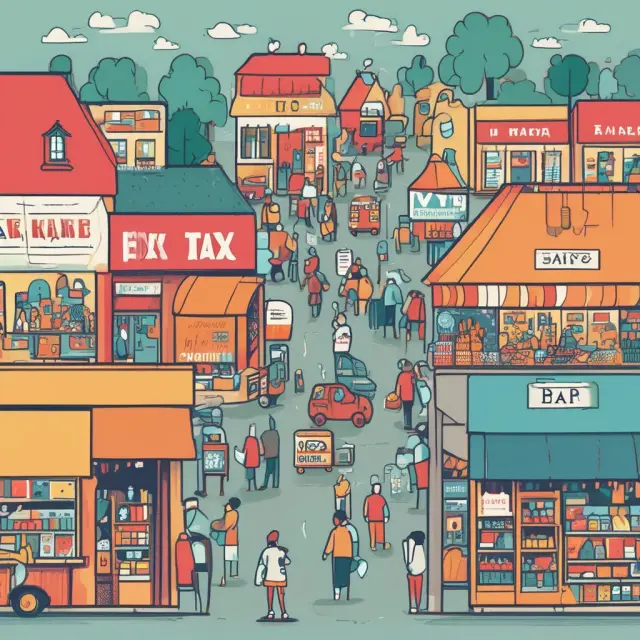
Indirect taxes constitute significant revenue sources for governments worldwide. This section explores some common forms of indirect taxes such as import duties, carbon fees, and sales tax.
Import Duties as an Indirect Tax
Import duties refer to taxes or tariffs on imported goods. The importer is responsible for paying the duty upon entry of the good into a country. The cost of import duties often gets passed onto the final consumer in the form of higher prices, making it an indirect tax. For instance, if a company imports raw materials or machinery from overseas to manufacture its products, they will pay the import duty on those goods before selling them domestically. Consumers eventually bear the burden through increased product costs. Import duties can serve various purposes, including protecting domestic industries, generating revenue for governments, and influencing international trade agreements.
Carbon Fees: A Modern Form of Indirect Tax
Governments are increasingly imposing carbon fees on businesses to address climate change concerns by introducing a financial incentive for reducing greenhouse gas emissions. These fees can be thought of as indirect taxes since they get passed onto consumers in the form of increased prices for goods or services that produce substantial carbon emissions. For example, an electricity company might pay a carbon fee based on its annual carbon output and then pass this additional cost to consumers through higher electricity bills. While some countries have implemented a cap-and-trade system to mitigate the regressive nature of carbon fees, the overall impact remains: individuals with lower incomes disproportionately bear the burden of indirect taxes like carbon fees as they spend a larger portion of their income on necessities that are subjected to these taxes.
Sales Taxes: Indirect or Direct?
Although sales taxes are typically considered indirect taxes, it’s essential to note that the distinction between direct and indirect taxes can be subtle in the case of sales taxes. Sales taxes imposed as a final levy on consumers are direct taxes. However, value-added taxes (VAT) levied throughout the production process are considered indirect taxes as they get passed along the supply chain. For example, if a manufacturer adds 10% VAT to the cost price of their goods before selling them, the consumer ultimately pays that tax in the form of a higher price when purchasing the finished product. The importance of this distinction lies in how sales taxes affect consumers and businesses differently depending on whether they’re direct or indirect.
In conclusion, indirect taxes, such as import duties and carbon fees, play an essential role in financing government expenditures, influencing economic policy, and redistributing wealth. Understanding the regressive nature of these taxes is crucial for consumers and governments alike when designing fair tax policies that minimize their negative impact on lower-income populations.
Import Duties as an Indirect Tax
When discussing indirect taxes, import duties represent a common yet significant example. Import duties are levied at the border when goods enter a country and are intended to protect local industries or generate revenue for the government. They work by increasing the cost of imported products, making them more expensive for consumers and potentially less competitive against domestically produced alternatives.
The economic consequences of import duties can be far-reaching as they impact international trade, domestic industries, and ultimately consumers. Import duties can lead to retaliation from other countries, which may impose their own tariffs on exports coming from the country that imposed the duty. This can result in a “trade war,” where both sides impose escalating import duties on each other’s goods, damaging trade relationships and economic growth.
The impact of import duties is not limited to international relations but also extends to domestic industries and consumers. When import duties are levied, the price of imported goods increases. This can protect local industries, but it also means that domestic consumers will pay more for those imported goods or potentially opt for domestic alternatives. This can lead to a decrease in demand for imported products and an increase in demand for domestically produced ones, which can have both positive and negative effects on the domestic economy.
For example, if a country imposes an import duty on steel, domestic steel manufacturers may benefit from increased demand due to higher prices for imported steel. However, consumers may end up paying more for products that use steel as a raw material. This can lead to a decrease in purchasing power and potentially impact industries that rely on imported steel but cannot easily switch to domestic alternatives.
It is crucial to remember that import duties are ultimately indirect taxes, as the costs are passed onto consumers when they purchase goods or services affected by the tariffs. The consumer bears the burden of these taxes, even if they might not be aware of it at the time of purchase. These hidden taxes can result in a decrease in purchasing power for lower-income households and further emphasize income inequality.
Another recent development in indirect taxes comes from carbon fees or emissions pricing. Carbon fees are an attempt to mitigate greenhouse gas emissions by levying a fee on manufacturers or importers based on the carbon content of their products. This fee is then passed on to consumers, making goods with higher carbon content more expensive. While these taxes may have environmental benefits, they can also impact industries heavily reliant on carbon-intensive production processes and result in increased costs for consumers.
In conclusion, indirect taxes like import duties and carbon fees serve essential economic functions but can impact consumers differently depending on their income levels. Understanding the implications of such taxes is crucial as governments continue to explore new ways to generate revenue while minimizing negative impacts on the economy and consumers.

Carbon Fees: A Modern Form of Indirect Tax
A modern approach to indirect taxation is emerging with increasing popularity among governments and economists—carbon fees. Carbon fees are essentially taxes placed on carbon emissions from industries, aiming to mitigate the environmental impact of greenhouse gas (GHG) emissions by discouraging their usage. In essence, these fees serve as a disincentive for industries to emit large amounts of carbon dioxide (CO2), shifting their focus towards more sustainable and eco-friendly production methods.
Carbon pricing has become an essential part of the global conversation on climate change mitigation. In contrast to traditional indirect taxes, like import duties, which are levied equally across all income groups, carbon fees target specific industries and activities based on their carbon footprint. This approach allows for a more equitable distribution of tax burden among various sectors and has the potential to stimulate innovation and technological advancements in reducing GHG emissions.
The rationale behind implementing carbon fees stems from economic theory that suggests pricing carbon emissions correctly can lead to an efficient allocation of resources and encourage market forces to drive reductions in greenhouse gas emissions. By internalizing the true environmental costs, industries are incentivized to find solutions to minimize their carbon footprint while maintaining profitability.
Manufacturers in sectors with heavy GHG emission profiles, like oil refining, cement production, or steel manufacturing, face the most significant impact from these taxes as they may be required to pay substantial sums due to their high energy usage and associated CO2 emissions. This indirectly puts pressure on consumers to absorb some of the increased costs through higher product prices.
The implications of carbon fees for both manufacturers and consumers can be profound. For businesses, there are several ways to respond: passing on the costs through price increases, investing in technologies that reduce emissions and decrease the overall cost base, or moving operations to jurisdictions with less stringent regulations. Ultimately, the goal is to create a more sustainable, low-carbon economy by incentivizing industries to reevaluate their production methods and invest in technologies that will help them meet future carbon pricing requirements.
From a consumer perspective, carbon fees can lead to higher prices for goods and services due to the added costs imposed on manufacturers. This could potentially impact purchasing power negatively for consumers with lower income levels, making everyday items less affordable. However, the long-term benefits of reducing GHG emissions and addressing climate change may outweigh these short-term challenges, leading to a more sustainable economy and a cleaner environment for future generations.
As governments worldwide continue to search for effective strategies to reduce carbon emissions in their economies, carbon fees are likely to remain a crucial part of the policy discussion. The implementation and design of carbon pricing regimes will depend on various factors, including economic considerations, political realities, and technological advancements. By staying informed about this modern form of indirect taxation, consumers and businesses alike can prepare for future changes in their industries and adjust accordingly to capitalize on these shifts towards a more sustainable economy.

Impact on Consumers
Indirect taxes can significantly affect consumers’ purchasing power and overall cost of living. Since these taxes are typically passed onto consumers, they ultimately bear the burden of these fees. The regressive nature of indirect taxes may disproportionately impact lower-income households as they spend a larger share of their income on basic necessities that are subject to higher taxes.
One example of an indirect tax with considerable societal impact is import duties. Import duties, also known as tariffs, are often imposed by governments on goods imported from foreign countries. When these duties are levied, the cost is typically passed along to consumers in the form of higher prices for imported goods. In this way, indirect taxes can make certain goods and services less affordable for lower-income households, who may have limited discretionary income for nonessential purchases.
Another common indirect tax, carbon fees, is gaining increasing attention as governments look to combat climate change. These taxes are imposed on companies that produce or emit a significant amount of carbon emissions. While the intent behind these taxes is well-intentioned, they can ultimately be regressive in nature due to their impact on consumers. For instance, when companies increase the price of goods to cover the cost of the carbon fee, consumers bear the brunt of that cost. Lower-income households, who spend a larger portion of their income on essentials like groceries and utilities, may feel the effects more acutely than their wealthier counterparts.
The consequences of indirect taxes can go beyond increased costs for consumers; they can also impact the overall economic landscape. Indirect taxes can potentially distort market prices from their equilibrium price, leading to inefficiencies and unintended consequences. This is particularly relevant when it comes to the pricing of goods and services subjected to varying degrees of taxation.
It’s important for consumers to be aware of the impact indirect taxes have on their purchasing power and the overall cost of living. Being informed about the specific indirect taxes in place, as well as any proposed changes or increases, can help them make more informed decisions when it comes to spending and budgeting.
Policymaking and Indirect Taxes
Indirect taxes are widely used by governments as revenue-generating tools, but their impact on different income levels has sparked debates among economists. Policymakers have a significant role in shaping indirect tax policies and determining their potential consequences. In this section, we delve deeper into how policymaking influences indirect taxes’ application and alternative solutions.
Policymakers decide which goods or services to subject to indirect taxes based on various factors such as economic goals (revenue generation, price stabilization, etc.) and public welfare considerations. For instance, carbon fees are imposed to promote environmental sustainability by discouraging the consumption of fossil fuels that contribute significantly to greenhouse gas emissions.
However, indirect taxes can have unintended consequences, particularly on low-income households. Some argue that these regressive taxes disproportionately affect people with lower income levels since they bear a larger burden in percentage terms than those with higher incomes (Burdekin & Stern, 2014). To address this concern, policymakers have explored options such as tax credits and rebates that can mitigate the regressive nature of indirect taxes.
Another issue with indirect taxes is their potential misuse to further specific government policies. For instance, subsidies or exemptions for some industries may distort market prices and create inefficiencies. Economists argue that policymakers should aim for tax reforms that simplify the system and minimize opportunities for rent-seeking behaviors (Rodrik, 2015).
Moreover, indirect taxes are subject to international trade rules, particularly when they impact imports or exports. For example, import duties can be imposed as a safeguard against unfair competition from foreign producers but may face challenges under the WTO’s Agreement on Trade-Related Aspects of Intellectual Property Rights (TRIPS). Policymakers must carefully weigh the potential benefits and costs of indirect taxes in this global context.
Despite these challenges, indirect taxes remain an essential part of many governments’ tax systems due to their revenue generation capacity and flexibility. As the economic landscape continues to evolve, policymakers will need to adapt indirect tax policies to meet new demands while minimizing their regressive impact on lower-income households.
In conclusion, understanding policymaking in the context of indirect taxes is crucial to appreciate how these taxes are implemented and how they shape our economies. Policymakers play a significant role in deciding which goods or services to tax, addressing concerns around their regressive nature, and considering international trade implications. Their decisions can have far-reaching consequences, making it essential for informed public discourse and transparency in policymaking processes.

Advantages and Disadvantages of Indirect Taxes
Indirect taxes present various advantages and disadvantages for governments and taxpayers alike. Let us examine these aspects in detail.
Advantages of Indirect Taxes for Governments:
- Widely Applicable: Indirect taxes are generally applied to all consumers, regardless of their income levels. This results in a broad tax base that provides a steady revenue stream for governments.
- Easier Collection: Indirect taxes are often simpler to collect because they do not require extensive documentation or individual assessments. The responsibility falls on the business entity collecting and remitting the tax to the government.
- Stability: Indirect taxes offer a stable source of revenue as they are generally not subject to economic fluctuations, unlike direct taxes such as income taxes. This makes them an essential component of fiscal policy for governments.
Advantages of Indirect Taxes for Taxpayers:
- Progressivity Possibilities: Governments may structure indirect taxes to provide a more progressive tax system by exempting certain goods or services that lower-income households typically consume more frequently, such as food and basic necessities. This can help mitigate the regressive nature of indirect taxes for those at the bottom of the income ladder.
- Transparency: Indirect taxes are often transparent, as consumers can see the tax levied on goods or services they purchase directly. This helps create a more informed taxpaying public and can lead to greater awareness of government revenues and expenditures.
Disadvantages for Governments:
- Economic Distortion: Indirect taxes can distort market prices and consumption patterns by altering the relative prices of various goods or services, potentially leading to inefficient resource allocation. For instance, higher indirect tax rates on unhealthy food items like sugary drinks may lead consumers to shift towards healthier alternatives.
- Complexity: The collection and administration of indirect taxes can be complex due to their intricate nature and potential for various exemptions and exceptions. This complexity could lead to increased compliance costs for businesses, which might result in higher prices for consumers or administrative inefficiencies.
- Regressive Burden: Indirect taxes have a regressive impact on income distribution as they disproportionately affect lower-income households due to their generally uniform application across all taxpayers. This can widen the income gap and exacerbate poverty and inequality if not addressed through targeted relief mechanisms or exemptions.
Disadvantages for Taxpayers:
- Hidden Costs: Indirect taxes are often hidden from consumers, as they may not realize that a portion of their purchase price goes towards paying the tax. This can create a lack of awareness and potential dissatisfaction with the taxation system.
- Price Increases: Indirect taxes ultimately translate into higher prices for consumers, as businesses pass on these costs to their customers. For low-income households, this can represent a significant financial burden.
- Lack of Control: Unlike direct taxes, which allow individuals to control the amount they pay by adjusting their income levels or taxable bases, indirect taxes are imposed irrespective of personal circumstances. This lack of control can be frustrating for taxpayers and could lead to dissatisfaction with the government.
In conclusion, indirect taxes offer various advantages and disadvantages for both governments and taxpayers. Understanding these aspects is crucial in evaluating their role in modern economies, their impacts on consumers and businesses, and ongoing debates surrounding their use as part of fiscal policy.

Conclusion: The Role of Indirect Taxes in Modern Economies
Indirect taxes play a significant role in modern economies, providing governments with an essential source of revenue. However, their regressive nature raises concerns about their impact on different income levels and overall economic efficiency. In contrast to direct taxes, where the person immediately paying the tax is the one being taxed, indirect taxes are collected by one entity along the supply chain and ultimately borne by consumers in the form of higher prices for goods or services.
Import duties serve as an illustrative example of indirect taxes. These taxes are typically imposed when a good enters a country’s borders and are paid by the importer. Subsequently, they become part of the total cost of the product and get passed onto consumers. Indirect taxes like import duties can be considered regressive because they do not differentiate between high and low-income consumers. Both groups pay the same amount for the tax.
Apart from import duties, other indirect taxes include carbon fees, excise duties on goods such as fuel, liquor, and cigarettes, and sales taxes. Governments have recently started imposing carbon fees to promote environmentally friendly practices and reduce greenhouse gas emissions. Carbon fees can be considered an indirect tax since their cost is ultimately borne by consumers.
Policymakers hold immense power in shaping indirect tax policies, as they decide which industries and goods are subjected to taxes. This discretion can lead to debates surrounding the fairness and efficiency of these policies. For example, a policy that imposes a high import duty on foreign automobiles may create an unfair competitive advantage for domestic auto manufacturers while raising car prices for consumers.
Indirect taxes have their advantages and disadvantages. On the positive side, they can generate substantial revenue for governments without having to collect it directly from taxpayers. They are also relatively easy to administer compared to direct taxes, as they do not require extensive individual record-keeping and reporting. However, indirect taxes may lead to inefficiencies, as market prices do not reflect their true equilibrium value due to the levied fees. Additionally, lower-income consumers bear a disproportionately higher burden when these taxes are in place.
In conclusion, understanding indirect taxes, their regressive nature, and various forms is crucial for individuals and economists alike. Indirect taxes provide governments with essential revenue while also raising concerns about fairness and economic efficiency. By staying informed, consumers can make more conscious purchasing decisions and engage in thoughtful discussions surrounding the role of indirect taxes within modern economies.

FAQs on Indirect Taxes
What is an Indirect Tax?
An indirect tax is a levy imposed by one entity in the supply chain and subsequently paid to the government. The consumer eventually bears this tax as part of the product’s price, making it a regressive form of taxation.
How does Indirect Taxation contrast with Direct Taxation?
Direct taxes are levied on individuals or entities who pay the tax directly to the government, while indirect taxes are paid by one entity and later passed onto consumers. Examples of direct taxes include income tax.
Why are Indirect Taxes Considered Regressive?
Indirect taxes burden people with lower incomes equally as those with higher incomes; for instance, import duties on goods carry the same cost regardless of a consumer’s income level. Economists argue that this can lead to market inefficiencies and skewed economic policies.
What are some Common Indirect Taxes?
Import duties, carbon fees, and sales tax are common forms of indirect taxes. Import duties are paid by importers and passed onto consumers; carbon fees are levied on manufacturers to combat emissions; and sales taxes can be imposed at the production or consumption level.
What is a Value-Added Tax (VAT)?
A value-added tax (VAT) is an indirect tax that is typically applied at each stage of production in a supply chain. The tax is paid by businesses when they sell goods to one another and ultimately passed on to the consumer in the form of increased prices.
What are Consumption Taxes?
Consumption taxes include certain indirect taxes like sales taxes, excise duties, and import duties that primarily target expenditures on goods and services. These taxes can be regressive because they do not consider income level when calculating the tax burden.
How do Indirect Taxes impact Consumers?
Consumers bear the brunt of indirect taxes as prices for goods and services increase to account for these levies. The additional costs can reduce purchasing power and potentially affect consumption patterns.
What are the Pros and Cons of Indirect Taxes?
Advantages include generating government revenue, reducing administrative costs compared to direct taxes, and encouraging compliance through hidden nature. Disadvantages include regressive nature, market inefficiencies, and potential for complex tax systems.
How do Policymakers Approach Indirect Taxes?
Policymakers have the power to determine which industries are subject to indirect taxes and at what rates, making their role crucial in mitigating any negative economic consequences. Alternative solutions include targeted tax relief programs or direct taxation for specific industries.
 Next entry · No. 2,376The Indirect Method: A Comprehensive Guide to Preparing Cash Flow Statements
See also
-
 No. 4,876
24 Jul 2025
22 min
Understanding the Significance and Implications of the Tax-to-GDP Ratio
Economics
No. 4,876
24 Jul 2025
22 min
Understanding the Significance and Implications of the Tax-to-GDP Ratio
Economics -
 No. 2,594
19 Jan 2025
19 min
Understanding JGTRRA: The Legacy of the Jobs and Growth Tax Relief Reconciliation Act on U.S. Economy and its Sunset Provisions
Finance Policy
No. 2,594
19 Jan 2025
19 min
Understanding JGTRRA: The Legacy of the Jobs and Growth Tax Relief Reconciliation Act on U.S. Economy and its Sunset Provisions
Finance Policy -
 No. 1,561
04 Oct 2024
19 min
Understanding Flat Taxes: Pros, Cons, and Real-World Examples
Finance Policy
No. 1,561
04 Oct 2024
19 min
Understanding Flat Taxes: Pros, Cons, and Real-World Examples
Finance Policy -
 No. 5,743
04 Oct 2025
23 min
Understanding Windfall Taxes: An Overview for Institutional Investors
Taxation
No. 5,743
04 Oct 2025
23 min
Understanding Windfall Taxes: An Overview for Institutional Investors
Taxation -
 No. 5,648
26 Sep 2025
18 min
Understanding Wealth Taxes: What They Are and Their Impact on the Economy
Taxation
No. 5,648
26 Sep 2025
18 min
Understanding Wealth Taxes: What They Are and Their Impact on the Economy
Taxation -
 No. 5,540
17 Sep 2025
23 min
Voluntary Compliance in the US Income Tax System: An Overview
Taxation
No. 5,540
17 Sep 2025
23 min
Voluntary Compliance in the US Income Tax System: An Overview
Taxation