Understanding Inside Days: A Common yet Significant Technical Chart Pattern for Institutional Investors
Understand how institutional investors utilize Inside Days, a technical chart pattern. Learn entry, exit strategies & examples.
What is an Inside Day?
An inside day refers to a specific price chart pattern where the high and low of one trading session are completely within the range of another trading session. In simpler terms, if a day’s high is lower than the previous day’s high and its low is higher than the previous day’s low, you have an inside day. This pattern indicates a contraction in price volatility, signaling a potential continuation of the underlying trend.
An inside day doesn’t necessarily predict significant market movement following the pattern. Given their frequency in the financial markets, many inside days yield minimal impact on prices. However, when traded correctly, an inside day can represent a valuable opportunity for investors and traders seeking to capitalize on price movements.
Characteristics of Inside Days
For a day to qualify as an inside day, both the high and low must be contained within the previous day’s range. This two-day pattern indicates lower volatility compared to the preceding days. A market in consolidation or ranging may present several inside days, providing opportunities for traders to gauge potential breakouts or continuations.
Trading Inside Days: Long Position
When considering entering a long position based on an inside day pattern, it is crucial to align specific conditions. The market should be experiencing an uptrend, with the stock price moving higher before and during the inside day formation. A confirmation of the trend following the inside day can be observed when the price breaks above the resistance level formed by the high of the inside day’s candlestick.
Long Entry: Buy when the stock price closes above the high of the inside day candlestick, which acts as a potential resistance level.
Stop Loss: Place a stop loss order below the low of the inside day candlestick to minimize losses if the trend reverses.
Profit Taking: Monitor trends and consider closing the position when reaching a desirable profit target or employing trailing stop loss orders to protect profits as the price advances.
Trading Inside Days: Short Position
Investors can also capitalize on inside day patterns by entering short positions under certain conditions. The market should display a downtrend, with the stock price declining before and during the inside day formation. A bearish confirmation of the trend following the inside day occurs when the price breaks below the support level created by the low of the inside day candlestick.
Short Entry: Sell short when the stock price closes below the low of the inside day candlestick, acting as potential support.
Stop Loss: Place a stop loss order above the high of the inside day candlestick to mitigate losses if the downtrend reverses.
Profit Taking: Set profit targets based on technical indicators or moving averages and close the position when reached.
Avoiding Common Mistakes with Inside Days
Although an inside day pattern can provide valuable insights into market trends, it is crucial to avoid common pitfalls. One potential mistake lies in entering a trade without proper analysis of the overall trend direction. An inside day may not result in significant price movement if it occurs during a ranging or sideways market. Additionally, traders should be cautious about overtrading, as not every inside day will yield profitable opportunities.
Inside Days vs. Outside Days: Key Differences and Similarities
Outside days differ from inside days by having highs and/or lows that extend beyond the previous day’s range. While both patterns offer insight into market dynamics, they carry distinct implications for traders. Inside days can be seen as a continuation pattern, whereas outside days may signal potential reversals or trend changes. Understanding both patterns is essential for making informed trading decisions and adapting to various market conditions.

Formation of an Inside Day
An inside day, often denoted as ID, is an intraday or multi-day price pattern characterized by a range entirely contained within another day’s price range. A typical inside day consists of two consecutive days, each having highs and lows that fall within the other day’s respective price range. These patterns can occur frequently in various timeframes, such as minute charts, daily charts, or weekly charts, making them prevalent among traders and investors alike.
The formation of an inside day signifies a decrease in market volatility as compared to the preceding day. It may be viewed as a pause in ongoing trends or price swings before resuming the trend’s direction. In most cases, an inside day acts as a continuation pattern, implying that the prevailing market condition will persist after the two-day sequence.
Characteristics and Conditions
To identify an inside day, consider the following conditions:
- The high price of the second day must be lower than the high price of the first day, and the low price of the second day should be higher than the low price of the first day.
- The trading range of the second day is entirely contained within the trading range of the first day.
- A decrease in trading volume or a similar level of volume compared to previous days could indicate increased confidence from market participants.
Inside Days and Market Conditions
It’s important to note that inside days do not automatically signal bullish or bearish conditions, as they can form within uptrends, downtrends, or sideways markets. For example, if an inside day forms during a bullish trend, it could be viewed as a potential continuation pattern for further price increases. Conversely, an inside day occurring during a bearish trend might indicate a temporary relief rally before resuming the downward trend.
In summary, understanding inside days is vital for traders and investors looking to navigate the markets, as they offer valuable insights into potential market direction and volatility trends. By recognizing their formation and applying appropriate trading strategies, one can make informed decisions when entering or exiting trades based on the overall market condition and the specific chart pattern at hand.
In the next section, we will discuss various strategies for long and short positions when trading inside days.
Trading Inside Days as a Continuation Pattern
An inside day, characterized by a contraction in volatility where the high of one day falls within the range of another day and the low of the second day rises above the first’s low, can be considered a continuation pattern. This means that following the inside day, the price is likely to continue moving in the same direction as it did prior to the pattern formation.
Market Conditions for Entering Trades Based on Inside Days
To successfully trade an inside day pattern, it’s essential to identify the ideal market conditions. A bullish trend, with the stock or asset price consistently advancing before the inside day, increases the chances of a profitable outcome when entering a long position upon a breakout from the pattern. Conversely, if the market is bearish, and the price has been declining prior to an inside day, it would be ideal to short sell upon a break below the pattern.
Understanding the Inside Day’s Context
It’s crucial to note that not all inside days signify continuation patterns or will result in significant price moves following their formation. Traders should consider the broader context of the market conditions, including overall trends and relevant economic data or news. For example, if a strong earnings report is scheduled for a particular stock during an inside day pattern, it might cause a more pronounced breakout than if no major catalysts were present.
Entering Long Positions with Inside Days
To enter long positions after an inside day pattern formation in a bullish market, the trader should:
- Identify the inside day pattern on a daily chart.
- Await confirmation of the breakout above the resistance level (high of the inside day).
- Enter the position upon confirmation.
- Place a stop loss below the low of the inside day as risk management.
Closing Thoughts
In summary, understanding inside days is important for technical traders and investors alike. This pattern signifies a contraction in volatility within a two-day timeframe and often acts as a continuation pattern. Successful trades based on this pattern can be made by considering the broader market conditions, including overall trends and relevant economic data or news, and employing sound risk management strategies.
Avoiding Common Mistakes when Trading Inside Days
Traders should also be aware of common mistakes that can negatively impact their results when trading inside days as a continuation pattern. Some of these include:
- Ignoring overall market conditions and trading irrespective of the prevailing trend.
- Entering prematurely, without confirming the breakout from the pattern.
- Neglecting to place adequate stop losses or risk management strategies.
- Failing to consider potential market catalysts that might impact the price following an inside day pattern formation.
- Overtrading and focusing on insignificant inside days, leading to low-probability trades and increased transaction costs.

Analyzing Inside Days in Different Market Conditions
Understanding inside days as a chart pattern is just the first step for traders looking to employ it effectively. The performance and significance of an inside day can vary widely based on prevailing market conditions and trends. In this section, we’ll dive deeper into the dynamics of inside days in different market scenarios and discuss some strategies for maximizing returns when trading these patterns.
First, let us consider how inside days behave within a trending market. A bullish or bearish trend implies an overall direction in price movement. Inside days can function as continuation patterns in such conditions if they form during a brief pause or consolidation period within the existing trend. For instance, a bullish inside day (BI) in a bullish market could signal a resumption of the uptrend. Conversely, a bearish inside day (BD) in a bearish market may indicate that the downtrend will resume after the short-term pause.
Inside days can also be observed in range-bound markets. Range-bound conditions are characterized by a narrow trading band where price oscillates between support and resistance levels. In these circumstances, an inside day can function as a reversal pattern or a continuation pattern depending on its position within the prevailing range. For example, an inside day occurring at the lower end of the range may represent a bullish reversal pattern, while an inside day at the upper end could be seen as a bearish reversal.
When analyzing inside days in different market conditions, it’s crucial to assess both the overall trend and the short-term price action leading up to the pattern. This will help determine whether the inside day should be treated as a continuation or a reversal pattern. Remember that not all inside days result in significant moves, so careful analysis is essential to maximize potential profits and minimize risk.
In the next section, we’ll explore strategies for entering trades using inside days as a continuation pattern in various market conditions. We’ll discuss ideal entry points and exit strategies to help you make informed decisions when trading these patterns.

Trading Strategy for Inside Days: Long Position
An inside day is an intriguing technical chart pattern where a second day’s high and low fall completely within the prior day’s range. This two-day pattern signifies decreased volatility, often serving as a pause or consolidation before the price continues in the same direction. For investors seeking to profit from this pattern, an inside day can offer excellent opportunities, particularly for entering long positions.
Long Entry Strategies:
To capitalize on a bullish inside day, consider implementing the following entry strategies:
1. Breakout above resistance: An inside day forming during an uptrend could be seen as a bullish continuation pattern. Once the price breaks out above the high of the inside day pattern, traders can enter long positions.
2. Confirming signals: Traders might prefer to wait for confirming signals before executing long trades, such as bullish candlestick patterns that indicate strong buying interest following an inside day.
Placement of Stop Loss:
Proper stop loss placement is vital when trading the inside day strategy. To protect capital, a stop loss can be set below the low of the inside day pattern. For example, if an inside day occurs near $50, and the low of the inside day is at $49, then a reasonable stop loss could be placed at $48.5.
Profit Taking Strategies:
Different profit taking strategies can be employed depending on your risk tolerance and personal preference. Some potential methods include:
- Trailing Stop Loss: A trailing stop loss follows the price’s movement by a predetermined amount, allowing profits to be locked in as the price rises. This strategy allows investors to enjoy potential gains while limiting risk.
- Profit targets: Setting profit targets based on key levels or technical indicators can help traders lock in profits at specific prices. This strategy is effective for those who prefer a more aggressive approach and are willing to accept greater volatility.
- Moving Average or Trendline: Using moving averages, trendlines, or other technical tools can provide clear exit points for profits based on market conditions.
In conclusion, an inside day presents a unique opportunity for traders seeking long positions in a bullish market. By implementing appropriate entry strategies and employing effective stop loss and profit taking methods, investors can capitalize on this powerful chart pattern while minimizing risk and optimizing returns.

Trading Strategy for Inside Days: Short Position
An inside day may also present opportunities when aiming to take a short position. This section discusses strategies for identifying ideal conditions and executing trades with proper risk management in mind when short selling an inside day pattern.
Short Entry
To enter a short position during an inside day, the first requirement is that the overall market trend should be bearish. Ideally, the security being traded should also be experiencing a downward trend before the inside day formation. Once identified, wait for the price to break below the low of the inside day pattern with strong volume. This confirmation may suggest that the selling pressure has intensified and increased the likelihood of a significant move to the downside.
Stop Loss Placement
In any short position, setting an appropriate stop loss is crucial to limiting potential losses. When trading an inside day pattern for shorting, place the stop loss above the high of the inside day formation or at the highest low of the two-day pattern, depending on which provides a better risk/reward ratio. By placing it above the high of the pattern, traders can ensure that they are not trapped in an unfavorable position if the price suddenly reverses and moves higher.
Profit Taking Strategies
Once the trade is initiated with a short entry, traders should plan their profit taking strategies to lock in gains. A trailing stop loss or a predetermined profit target can be used, depending on individual preferences. A trailing stop loss allows the profit to grow as the market moves down while simultaneously protecting against potential losses. Alternatively, setting a fixed profit target at a specific level can provide a clear exit point for the trade based on a desired risk/reward ratio.
Example of Shorting an Inside Day
In the following chart, Bank of America Corporation (BAC) demonstrates an inside day pattern with a bearish trend and a subsequent short entry opportunity:
- Identify the bearish trend prior to the inside day formation in BAC.
- Wait for confirmation when the price breaks below the low of the inside day pattern with increased volume.
- Enter the short position.
- Place a stop loss above the high of the inside day or highest low of the two-day pattern to limit potential losses.
- Set profit taking strategies such as a trailing stop loss or a fixed profit target based on risk management and individual preferences.
In summary, understanding the intricacies of an inside day can provide valuable insights for traders looking for shorting opportunities. By following proper entry conditions, stop loss placement, and profit taking strategies, traders can position themselves to capture potential gains while managing their risks effectively.

Common Mistakes to Avoid When Trading Inside Days
An inside day is an intriguing and popular chart pattern among investors, often considered a continuation pattern due to its potential for price movement in the same direction following its formation. However, despite its seemingly straightforward nature, it is essential not to overlook some common mistakes while trading this pattern. Let’s discuss the pitfalls you should be aware of to increase your chances of success when entering trades based on inside day patterns.
Mistake 1: Trading Against Market Trend
The market trend plays a crucial role in determining whether an inside day is a valid setup for a profitable trade or not. If the overall direction of the market contradicts the price movement into and out of the two-day pattern, you may face adverse price movements or whipsaws. To maximize your chances of success when trading inside days, it is vital to ensure that the market trend aligns with the potential direction of price action following the pattern.
Mistake 2: Ignoring Volume Analysis
Volume can offer valuable insights into the strength and commitment of buyers and sellers during an inside day’s formation. A significant increase in trading volume could indicate a more robust move following the inside day. Conversely, low volume might indicate that the pattern lacks sufficient buying or selling pressure to generate a substantial price swing. Consider combining inside day analysis with volume analysis for a more comprehensive perspective on potential market movements.
Mistake 3: Placing Inappropriate Stop Losses
Stop loss placement plays a vital role in managing risk when trading an inside day pattern. A stop loss placed too closely to the entry may limit your profit potential, while setting it too far away might expose you to excessive risk. Ideally, your stop loss should be placed at a price level where it limits potential losses while allowing the trade room to breathe and reach its full potential.
Mistake 4: Not Adjusting for Market Conditions
Market conditions can significantly impact inside day performance. For example, in trending markets, inside days may serve as continuation patterns, whereas in ranging or consolidating markets, they could merely represent a pause or reversal. Understanding the current market conditions and their potential influence on an inside day pattern’s outcome is crucial to making informed trading decisions.
By recognizing and avoiding these common pitfalls when trading inside days, you can increase your chances of success while navigating this popular chart pattern with more confidence.
Inside Days vs. Outside Days: Key Differences and Similarities
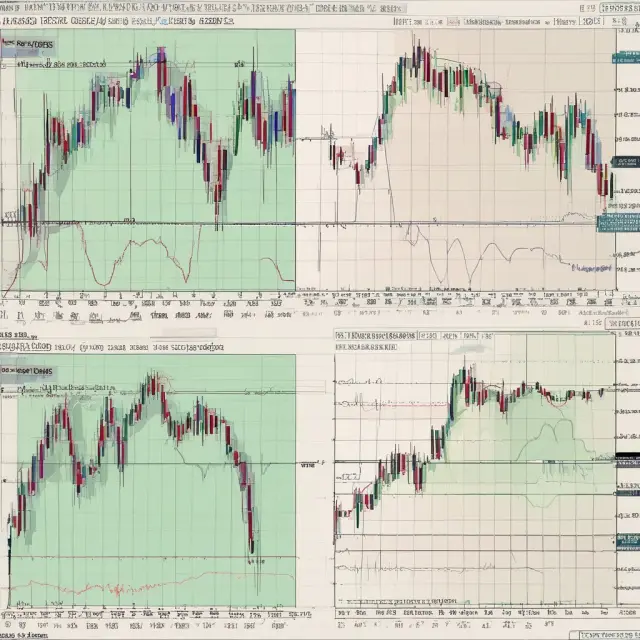
An inside day and an outside day are two common technical chart patterns often utilized by traders to understand market trends and potential reversals. While they share some similarities, these patterns differ significantly in their formation, interpretation, and impact on the price action following their occurrence. In this section, we will explore the differences and similarities between inside days and outside days, offering insights into how these patterns can be used to enhance your trading strategies.
An Inside Day: A Closer Look
An inside day is a two-day price pattern where the high of the second day falls below the high of the first day, and the low of the second day rises above the low of the previous day. The net result of this pattern is a contraction in volatility, with the price range of the second day entirely within the range of the prior day. Inside days are considered neutral by some traders but often serve as continuation patterns, especially when the overall trend aligns with the direction into and out of the two-day pattern (Figure 1).
Figure 1: Inside Day Example in Apple Inc.
The inside day pattern suggests that the market is taking a pause during this period and may continue its existing trend following the pattern’s resolution. According to the Encyclopedia of Chart Patterns by Thomas Bulkowski, approximately 62% of inside days will result in continuation of the price trend. This statistic highlights the importance of understanding the overall market direction when considering entering a trade based on an inside day pattern.
An Outside Day: A Different Perspective
An outside day is the opposite of an inside day, with the high or low of the second day exceeding the high or low of the previous day. The outside day can signal a potential trend reversal if it occurs during an uptrend and features a lower high or an downtrend with a higher low (Figure 2).
Figure 2: Outside Day Example in Microsoft Corporation
The outside day pattern indicates that a significant price move may follow the pattern’s resolution. For example, an outside day occurring during an uptrend with a lower high could indicate a potential reversal to downside trend, whereas an outside day during a downtrend with a higher low may suggest a possible trend reversal to an uptrend.
Comparing Inside Days and Outside Days: The Similarities
Despite their differences in formation and interpretation, inside days and outside days share some common characteristics:
- Both are two-day chart patterns.
- They can occur multiple times per month in various markets.
- They provide insights into market trends and potential reversals.
- Their validity depends on the overall market direction.
- Traders often utilize these patterns to inform their trading decisions.
Comparing Inside Days and Outside Days: The Differences
In addition to their differences in formation and interpretation, inside days and outside days possess unique characteristics that differentiate them from one another:
- Inside days represent a contraction of volatility, whereas outside days indicate an expansion of volatility.
- Inside days often serve as continuation patterns, while outside days suggest potential trend reversals.
- The probability of trend continuation is higher for inside days compared to outside days.
- Traders may employ different strategies based on the pattern’s outcome.
- Inside days can occur during both uptrends and downtrends, while outside days tend to be more prominent in strong trends.
By understanding the nuances of inside days and outside days, traders can use this knowledge to make informed decisions, adapt their strategies, and potentially improve their overall trading performance. To gain further insights into these patterns, explore examples of inside and outside days in various markets and analyze how they have impacted price movements following their occurrence.

Real-Life Inside Day Examples
An inside day, as previously discussed, is a two-bar chart pattern where the high and low of one day fall within the range of the preceding day’s high and low. This price action indicates reduced volatility and often signals a continuation of the existing trend. In this section, we will examine some real-life examples of inside days to illustrate their appearance and significance in various financial instruments.
First, let’s look at an example of inside days occurring within Apple Inc.’s (AAPL) daily price chart during a bullish market. As seen in Figure 1, the two inside days denoted by the red rectangles show the highs and lows of one day contained within the range of the previous day’s price action. Following each inside day pattern, the stock continued to rally, signaling that this was a bullish continuation.
Figure 1: Apple Inc. Inside Days During a Bullish Trend
Next, we explore an example of inside days in the context of a bearish market for Amazon.com, Inc. (AMZN) as depicted in Figure 2. Similar to our previous example with AAPL, the two inside days (red rectangles) display the range of the preceding day’s high and low being contained within the current day’s price action. However, in this instance, Amazon’s stock exhibited a bearish continuation after each inside day pattern, as indicated by the downward trend following the patterns.
Figure 2: Amazon.com Inside Days During a Bearish Trend
These examples showcase the importance of market context when interpreting inside days. While these two-bar chart patterns may often indicate continuation, it is crucial to consider the overall trend direction and the price behavior preceding the pattern to make informed trading decisions.
In conclusion, understanding inside days and their real-life applications can provide valuable insights for traders attempting to capitalize on market trends. By recognizing these common chart patterns and analyzing their occurrences in various financial instruments, traders can enhance their ability to identify potential trade opportunities and maximize profitability.
Frequently Asked Questions about Inside Days
An inside day is a two-consecutive-day price action event characterized by a trading range where the high and low of one day fall within the boundaries of the previous day’s price range (Bulkowski, T. (2005)). This section answers some frequently asked questions about this common yet intriguing chart pattern, which often signals a continuation of an existing trend or market direction.
What is the significance of an inside day?
An inside day signifies contracted volatility and potential for continued price movement in the same direction as the broader trend (Bulkowski, T. (2005)). Since they can occur frequently, not every inside day will have a significant impact on the market or your trading portfolio. However, when identified correctly within an uptrend or downtrend, an inside day could serve as a strong buy or sell signal.
What are the conditions for an inside day?
To qualify as an inside day, the second day must display a range that is entirely within the price range of the preceding day. The high of the second day should be lower than the high of the first day, and the low of the second day should be higher than the low of the first day (Bulkowski, T. (2005)).
Can inside days occur during any market conditions?
Yes, inside days can form in a variety of market environments, including uptrends, downtrends, or ranges (Bulkowski, T. (2005)). However, their effectiveness as a trading signal might depend on the current trend and overall market conditions.
What is the ideal way to trade an inside day?
The most successful trades using an inside day pattern typically occur when the direction of the broader trend aligns with the price movement during the two-day pattern (Bulkowski, T. (2005)). For instance, in a bull market, a long entry should be considered if the price exits the pattern to the upside, while a short entry could be viable when the price breaks below the pattern during a bear market.
How does one set up stops and take profits with inside days?
Stop loss orders should be placed outside the pattern on the opposite side of the entry. For example, if entering a long position, place the stop loss below the low of the two-day pattern. Profit targets are not explicitly defined for inside day trades, so traders can employ alternative methods such as trailing stops, risk/reward ratios, indicators, or other chart patterns to exit their positions.
What is the difference between inside days and outside days?
The primary difference lies in the price ranges of consecutive days: Inside days show a contraction of volatility where the high and low of one day fall within the boundaries of the previous day (Bulkowski, T. (2005)). Outside days, on the other hand, have a larger range than their preceding day, which could indicate a potential reversal or continuation of the trend depending on the market conditions.
Example: Inside Days in Action
Take a look at these inside day examples within the stock chart of Microsoft Corporation. The first example showcases an inside day pattern occurring during a bullish uptrend (Figure 1). A long entry could be considered when the price breaks above the high of the two-day pattern, while the stop loss would be placed below the low of the same pattern.
Inside Day Example in Microsoft Corporation (Figure 1)
Figure 1: An inside day pattern within an uptrend in Microsoft Corporation (Source: TradingView)
The second example, shown in Figure 2, displays an inside day formation during a bearish downtrend. In this scenario, traders may consider taking a short position when the price breaks below the low of the two-day pattern. The stop loss would be placed above the high of the same pattern for risk management purposes.
Inside Day Example in Microsoft Corporation (Figure 2)
Figure 2: An inside day pattern within a bearish downtrend in Microsoft Corporation (Source: TradingView)
 Next entry · No. 2,413Understanding Insolvency: Causes, Consequences and Differences from Bankruptcy
See also
-
 No. 4,648
05 Jul 2025
20 min
Mastering Short Positions: Understanding Risks, Strategies, and Techniques
Business Finance
No. 4,648
05 Jul 2025
20 min
Mastering Short Positions: Understanding Risks, Strategies, and Techniques
Business Finance -
 No. 2,325
28 Dec 2024
20 min
Understanding Impulse Waves in Finance: An Essential Tool for Professional Investors
Financial Education
No. 2,325
28 Dec 2024
20 min
Understanding Impulse Waves in Finance: An Essential Tool for Professional Investors
Financial Education -
 No. 5,618
24 Sep 2025
19 min
Understanding Warrant Premiums: A Comprehensive Guide
Business Finance
No. 5,618
24 Sep 2025
19 min
Understanding Warrant Premiums: A Comprehensive Guide
Business Finance -
 No. 5,443
09 Sep 2025
21 min
Variable Death Benefit: A Comprehensive Guide to Understanding and Maximizing Your Investment in Variable Universal Life Insurance Policies
Insurance
No. 5,443
09 Sep 2025
21 min
Variable Death Benefit: A Comprehensive Guide to Understanding and Maximizing Your Investment in Variable Universal Life Insurance Policies
Insurance -
 No. 5,072
09 Aug 2025
20 min
Understanding the Power and Limitations of Trend Analysis in Finance and Investment
Investments
No. 5,072
09 Aug 2025
20 min
Understanding the Power and Limitations of Trend Analysis in Finance and Investment
Investments -
 No. 4,911
27 Jul 2025
20 min
A Comprehensive Guide to Technical Analysis: Understanding Chart Patterns, Indicators, and Strategies
Finance Policy
No. 4,911
27 Jul 2025
20 min
A Comprehensive Guide to Technical Analysis: Understanding Chart Patterns, Indicators, and Strategies
Finance Policy