Understanding Middle-Income Countries (MICs): Characteristics, Significance, and Transition
Explore Middle-Income Countries (MICs), their significance, characteristics, and transitions, from Lower-Middle Income to Upper-Middle Income.
Introduction to Middle-Income Countries (MICs)
The term “middle-income countries” (MICs), according to the World Bank definition, refers to economies with gross national income (GNI) per capita between $1,036 and $12,535. MICs are an essential income category for the World Bank’s operational purposes in providing financial and economic development services.
The classification of countries into MICs is based on their Gross National Income (GNI) per capita using a three-year moving average of exchange rates, as determined by the Atlas method. The World Bank uses this measure to gauge a country’s economic capacity and progress. Middle-income economies represent a significant share of the world’s population and economic activity, making them pivotal players in global growth and development.
Understanding Middle-Income Countries: Categorization by the World Bank
The World Bank divides MICs into two subcategories based on income levels: lower-middle income (LMIC) and upper-middle income (UMIC). LMICs have a per capita GNI between $1,036 and $4,045, while UMICs have a per capita GNI between $3,046 and $12,535.
Characteristics of Middle-Income Countries: A Diverse Range of Challenges
The diversity of MICs extends to their regions, sizes, populations, and income levels, encompassing countries like Belize and the Marshall Islands with tiny populations, as well as giants such as Brazil, Russia, India, and China. Middle-income economies are a vast group, consisting of 109 nations, which translates to about one-third of global GDP and over 70% of the world’s population.
Lower-middle income countries face challenges like providing essential services, such as water and electricity, while upper-middle income economies tackle issues related to corruption, governance, and development. The unique characteristics and challenges of each country within this classification necessitate tailored approaches for addressing their individual needs.
Middle-Income Countries: Significance and Impact
The importance of MICs lies in their contribution to global economic growth and stability. They are responsible for poverty reduction, international financial stability, and the resolution of various global cross-border issues, including climate change, sustainable energy development, food and water security, and international trade. The collective population of MICs, which makes up over 70% of the world’s seven billion people, demonstrates their significance in shaping the future trajectory of the global economy.
The Transition from Lower- to Upper-Middle Income Countries: Real-life Examples
Countries can transition between income categories based on their GNI per capita. For instance, India and 46 other countries in the South Asia region continue to be considered lower-middle-income countries, while Sri Lanka graduated to the upper-middle-income group in 2020. Chile, another example, moved up to a high-income country status in 2013 after years of economic growth and development efforts.
Conclusion: Middle-Income Countries: A Backbone of the Global Economy
Understanding middle-income countries is essential for gaining insights into global economic trends and their potential impact on the world’s future development trajectory. MICs play a crucial role as a backbone of the global economy, and addressing their challenges can lead to improved stability and growth opportunities for all nations.

MIC Classification by the World Bank
The World Bank’s categorization of countries into middle-income (MIC) economies is based on their gross national income (GNI) per capita levels. Specifically, MICs are defined as having a GNI per capita between $1,036 and $12,535. This income range separates MICs from low-income countries (LICs), which have a GNI per capita below $1,036, and high-income countries (HICs), with a GNI per capita above $12,535 (World Bank, 2021).
This classification system plays a crucial role for the World Bank in its operational activities. By providing financial and economic development services tailored to different income groups, the organization can effectively address the unique challenges faced by each country category. The middle-income countries are of significant importance due to their large population numbers and substantial contributions to the global economy.
To better understand MICs, it’s helpful to dive deeper into the specific subcategories within this group: lower-middle income (LMI) and upper-middle income (UMI). Lower-middle-income countries have a GNI per capita between $1,036 and $4,045, while upper-middle-income countries have a GNI per capita ranging from $3,046 to $12,535.
It’s important to note that the income levels mentioned are based on a three-year moving average of exchange rates using the Atlas method (World Bank, 2021). This approach aims to provide a more accurate representation of a country’s economic situation by accounting for fluctuations in currency values.
MICs are a diverse bunch, encompassing various regions, populations, and income levels. While some countries have small populations, such as Belize or the Marshall Islands, others, like China and India, represent massive economies and growing global influencers. The challenges faced by these countries also vary significantly, with essential services provision being a major concern for lower-middle income nations while curbing corruption and improving governance are critical issues for upper-middle income countries.
The role of middle-income countries in the world economy is crucial due to their large population sizes and substantial economic contributions. They have a combined population of approximately five billion people, representing about 70% of the global population. MICs account for roughly one-third of the world’s GDP (World Bank, 2021).
Moreover, middle-income countries are significant drivers of economic growth and development. Their poverty reduction efforts have positive impacts on international financial stability, as well as on global cross-border issues such as climate change, sustainable energy development, food and water security, and international trade (World Bank, 2021).
As countries progress from lower- to upper-middle income status, their economic realities shift. For instance, Sri Lanka moved from the lower-middle-income group to the upper-middle-income group in 2020 after decades of growth and development efforts. India, on the other hand, has been a lower-middle-income country since 2009 (World Bank, 2021).
The transition from one income level to another is not always straightforward and depends on various factors, including a country’s economic policies, social conditions, and global circumstances. Nonetheless, the milestone of graduating to an upper-middle-income status represents significant progress towards achieving high-income country status, which can bring numerous socioeconomic benefits for its citizens.
In conclusion, the World Bank’s classification of middle-income countries based on their GNI per capita levels is a valuable tool for understanding this diverse group of nations. MICs’ importance in global economic growth and development cannot be overstated due to their substantial population sizes and significant contributions to the world economy. As we delve deeper into the topic, we’ll explore the unique challenges faced by lower-middle income and upper-middle income countries and discuss real-life examples of their progress towards higher income statuses.
Characteristics of Middle-Income Countries
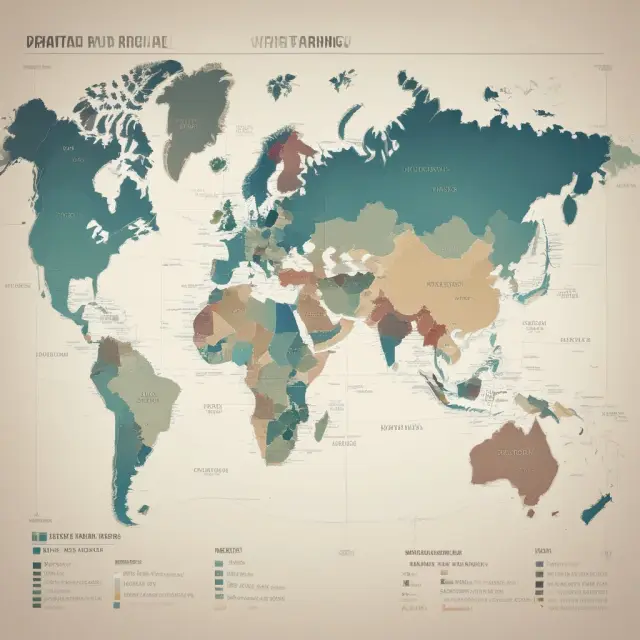
Middle-income countries (MICs), as defined by the World Bank, are economies with a gross national income (GNI) per capita ranging between $1,036 and $12,535. Classified for operational purposes within the financial and economic development services provided by the World Bank, MICs encompass a significant portion of global population and economic activity.
Middle-Income Countries: A Diverse Group
The term “middle-income” can be somewhat misleading as this classification includes economies with varying regional, size, population, and income level characteristics. Middle-income countries are further subdivided into lower-middle income (LMI) and upper-middle income (UMI) countries based on their per capita GNI levels.
Lower-Middle Income Countries
The World Bank categorizes 53 LMI countries, with per capita GNIs ranging from $1,036 to $4,045. These economies represent a significant portion of the world’s population and are home to some of its most pressing challenges. For instance, ensuring access to essential services such as water and electricity is often a major concern for LMI countries.
Upper-Middle Income Countries
Upper-middle income countries include 56 economies with per capita GNIs between $3,046 and $12,535. This subgroup of MICs is more influential on the global stage due to their larger populations and economic power. Countries like India and China, two of the BRIC giants, fall under this category. With approximately three billion people combined, these countries contribute significantly to the world’s population and economically disadvantaged individuals. However, they face various challenges such as corruption and governance issues that need addressing.
The Economic Importance of Middle-Income Countries
Middle-income countries play a vital role in global economic growth and stability, making it essential to understand their unique characteristics. According to the World Bank, sustainable development and growth in MICs yield positive externalities, such as poverty reduction, international financial stability, and addressing global cross-border issues, like climate change, sustainable energy development, food security, water security, and international trade. The combined population of these countries represents over 70% of the world’s population and accounts for about one-third of global GDP.
Transitioning from Lower- to Upper-Middle Income Countries
MICs can transition between income categories depending on their per capita GNI. For example, India has been a lower-middle-income country since 2009, while neighboring Sri Lanka moved to the upper-middle-income group in 2020 after being classified as a lower-middle-income country since 1999. Another instance of this transition is Chile, which became a high-income country in 2013 after having been an upper-middle income country since 1997.
The dynamic nature of MIC classification highlights the importance of understanding these countries’ economic progress and challenges to effectively address their development needs and ensure long-term stability in the global economy.
Lower-Middle Income Countries (LMICs)
The World Bank’s middle-income country (MIC) classification comprises two groups – lower-middle income and upper-middle income economies, each with distinct characteristics and challenges. This section focuses on lower-middle income countries (LMICs), which are defined as those with a Gross National Income (GNI) per capita between $1,036 and $4,045.
Lower-Middle Income Countries: Essential Services and Population Growth Challenges
Countries within the lower-middle income category face various economic challenges, primarily centered around providing essential services to their populations. Ensuring access to clean water, adequate sanitation, reliable electricity, and quality education are some of these challenges. Additionally, population growth plays a significant role in the development trajectory of LMICs, as they collectively host over half of the world’s population.
The World Bank estimates that 46 countries fall into this income group, mostly located in regions such as South Asia and sub-Saharan Africa, where poverty remains pervasive and economic disparities are prevalent. The challenges these countries encounter differ from those experienced by upper-middle income economies. For example, access to clean water is still a concern for many LMICs, with millions living in areas without regular water supplies. According to the World Bank, 2.1 billion people worldwide do not have access to safely managed drinking water services—a problem particularly acute in low-income countries.
Another essential service that requires significant attention is electricity. The International Energy Agency (IEA) reports that more than one billion people globally lack reliable access to electricity, with the majority residing in sub-Saharan Africa and South Asia. This energy deficiency significantly impacts economic development and hinders efforts to alleviate poverty, as industries cannot operate effectively without consistent power supplies.
Access to quality education is essential for a nation’s human capital development. Lack of investment and resources in the educational sector can hinder a country’s long-term growth potential and perpetuate intergenerational poverty. According to UNESCO, around 258 million children and youth worldwide are out of school, with the majority residing in lower-middle income countries.
Another factor that sets LMICs apart from their upper-middle income counterparts is population growth. With rapidly expanding populations, these nations face a daunting challenge to create enough jobs, housing, schools, and infrastructure to accommodate their growing populace. The United Nations projects that 95% of the world’s population growth between now and 2030 will occur in Asia and Africa, with most of it taking place in lower-middle income countries.
Addressing these challenges requires substantial investment and strategic planning from governments and development partners to ensure that essential services are accessible to all citizens, regardless of their socioeconomic backgrounds. In turn, providing essential services and addressing population growth will help LMICs make strides towards graduating into upper-middle income economies.

Upper-Middle Income Countries (UMICs)
Upper-middle-income countries (UMICs), according to the World Bank, are those economies with Gross National Income (GNI) per capita ranging from $3,046 to $12,535. These economies represent a significant portion of the world population and economic activity. While they have made substantial progress in their development journey, several challenges persist, primarily related to corruption, governance, and development.
Characteristics of UMICs
UMICs encompass a diverse group of countries, varying from small populations like Qatar and Costa Rica to populous nations such as Turkey and Egypt. They represent around 16% of the world’s population and account for approximately 23% of global Gross Domestic Product (GDP). UMICs are also home to some of the world’s fastest-growing economies, like India and Turkey.
Despite their progress, UMICs still face challenges in various aspects, such as:
- Corruption: Transparency International’s 2020 Corruption Perceptions Index ranked several UMICs in the lower half of the list, indicating significant corruption issues that hinder economic growth and development.
- Governance: Although most UMICs have made progress regarding governance, some still face challenges related to rule of law, political instability, and weak institutions.
- Development: UMICs need to continue addressing the challenges in various sectors like education, healthcare, infrastructure, and energy. These issues can significantly impact their economic growth and overall development trajectory.
Impact of UMIC Challenges
The challenges faced by UMICs can have far-reaching consequences for both individual economies and the global community as a whole. Some potential impacts are:
- Economic Stability: Prolonged corruption and poor governance can negatively impact economic stability, making it difficult to attract foreign investment and undermining investor confidence.
- Development Progress: Inefficient institutions and weak governance can hinder development progress, particularly in the areas of healthcare and education, which are crucial for long-term growth.
- Global Stability: Instability or underdevelopment in UMICs can have spillover effects on other countries and regions. For instance, conflict or instability in one country could lead to refugee inflows or economic disruption in neighboring nations.
In conclusion, UMICs’ challenges, particularly related to corruption, governance, and development, necessitate continued attention and efforts from both the international community and these countries themselves. Addressing these issues is crucial for fostering sustainable growth and development within these economies while also ensuring global economic stability.

Why Middle-Income Countries Matter
Understanding the economic and developmental landscape of middle-income countries (MICs) is crucial for the global economy’s continued growth and stability. As per the World Bank, MICs play a pivotal role in achieving sustainable and inclusive development worldwide, impacting areas such as poverty reduction, international financial stability, and global cross-border issues.
MICs are significant contributors to global economic activity, accounting for approximately one-third of the world’s Gross Domestic Product (GDP) and hosting over 70% of the global population, which is about five billion people. These economies come in various sizes, income levels, and development challenges, ranging from providing essential services to tackling corruption and improving governance.
Among the 109 MICs, 53 are lower-middle-income economies, with per capita Gross National Income (GNI) between $1,036 and $4,045, while 56 are upper-middle-income countries, with a GNI per capita between $3,046 and $12,535. These economies span different regions, from the BRIC nations (Brazil, Russia, India, and China) to tiny states like Belize and the Marshall Islands.
China and India are particularly influential players in the global economy due to their massive populations, with China being home to roughly one-fourth of the world’s population and India having approximately 17%. Their impact on the global market is evident considering that these two countries account for nearly a quarter of worldwide economic output.
Poverty reduction is another essential area where middle-income economies contribute significantly. The World Bank asserts that sustainable growth and development in these nations yield positive spillovers to the rest of the world, improving international financial stability while addressing global cross-border issues like climate change, sustainable energy development, food and water security, and international trade.
Furthermore, MICs are essential for achieving Millennium Development Goals (MDGs) and Sustainable Development Goals (SDGs), which aim to eradicate extreme poverty, reduce child mortality rates, improve maternal health, access clean water and sanitation, ensure access to quality education, promote gender equality, foster sustainable economic growth, combat diseases, and reduce inequality within and among countries.
In conclusion, understanding middle-income countries (MICs) and their unique challenges is vital for investors, governments, international organizations, and individuals interested in the global economy’s continued stability and development. These economies are crucial for achieving sustainable poverty reduction, financial stability, and addressing pressing cross-border issues. As the world moves towards a more interconnected economic landscape, keeping abreast of MIC developments will be essential for long-term investment strategies and international cooperation.
Moving from Lower- to Upper-Middle Income Countries
Transitioning from a lower-middle income country (LMIC) to an upper-middle income country (UMIC) signifies a significant milestone in a nation’s economic development journey. Graduating to the UMIC category often comes with new challenges and responsibilities as economies navigate the complexities of moving up the income ladder.
The World Bank defines countries as lower-middle income or upper-middle income based on their gross national income (GNI) per capita. Economies fall into the lower-middle income range when they have a GNI per capita between $1,036 and $4,045. On the other hand, an economy becomes an upper-middle income country when its GNI per capita ranges from $3,046 to $12,535.
India, for instance, remains a lower-middle income country with a population of over 1.3 billion people as of 2022. In contrast, Sri Lanka graduated to the upper-middle income category in 2020 after having been a lower-middle income nation since 1999. Chile also joined the ranks of high-income countries in 2013, leaving behind its upper-middle income status.
The significance of moving from LMICs to UMICs goes beyond symbolic recognition. The World Bank considers these transitions essential for continued global economic growth and stability as sustainable development within MICs has a positive impact on the international community. Some notable outcomes include:
- Poverty reduction: Achieving UMIC status indicates that an economy is making progress in poverty alleviation, which benefits its citizens and reduces income inequality.
- International financial stability: As economies grow stronger and stabilize, they contribute to a more robust global economic environment by providing increased access to international markets for trade and investment.
- Global cross-border issues: MICs are often at the forefront of addressing challenges that affect the global community, such as climate change, sustainable energy development, food and water security, and international trade.
The transition from LMIC to UMIC status can bring new challenges for countries, including managing corruption, improving governance, and adopting best practices to remain competitive within the global economy. These challenges require a strategic approach as nations must balance maintaining economic growth while addressing pressing social issues and ensuring sustainable development for future generations.
In conclusion, moving from lower-middle income to upper-middle income countries represents an important step forward in a nation’s economic development journey. As these economies progress towards higher levels of income and development, they contribute significantly to global economic growth and stability while addressing the challenges that come with their newfound status.
Conclusion: Middle-Income Countries (MICs) in Today’s Global Economy
The World Bank’s categorization of economies into low-, lower-middle-, upper-middle-, and high-income nations plays a crucial role in understanding the global economic landscape. Among these, middle-income countries (MICs), which have a gross national income (GNI) per capita ranging between $1,036 and $12,535, hold significant importance due to their large representation of the world’s population and economic activity.
Defined as economies transitioning from lower-middle to upper-middle or vice versa, MICs are a diverse group in terms of region, size, population, and income level. Lower-middle-income countries (LMICs) have per capita GNIs between $1,036 and $4,045, while upper-middle economies have per capita GNIs between $3,046 and $12,535. This diverse nature of MICs means that their challenges are not one-size-fits-all; they differ substantially. For instance, the primary concerns for lower-middle-income countries might revolve around providing essential services like water and electricity to their citizens. In contrast, upper-middle economies may grapple with issues related to corruption and governance.
MICs have a population of approximately five billion individuals, representing over 70% of the world’s seven billion people. These countries are home to the economically disadvantaged, with 73% residing in these nations. Their economic influence is substantial, contributing to about one-third of global GDP and serving as a primary engine for global economic growth and development.
The significance of MICs extends beyond their immediate economies. Sustainable growth and development within MICs have positive spillovers on the rest of the world in areas such as poverty reduction, international financial stability, and addressing global cross-border issues like climate change and sustainable energy development, food and water security, and international trade.
In conclusion, understanding middle-income countries and their unique challenges is vital for a comprehensive analysis of today’s global economy. As these nations continue to evolve, they will play an increasingly essential role in shaping the economic future of our interconnected world.

FAQs About Middle-Income Countries
Q: What Is the Definition of a Middle-Income Country (MIC)?
A middle-income country is an economy with a gross national income (GNI) per capita between $1,036 and $12,535. The World Bank defines MICs based on their GNI per capita for its operational purposes.
Q: Why Does the World Bank Classify Economies as Middle-Income Countries (MICs)?
The World Bank uses income categorization to analyze economies and provide financial assistance tailored to their unique needs. By classifying economies as low, lower-middle, upper-middle, or high income, it can effectively target its resources towards development efforts in each category.
Q: What Are the Characteristics of Middle-Income Countries (MICs)?
Middle-income countries come in a wide range of sizes, populations, and challenges. They are broken up into lower-middle income and upper-middle income economies. Lower-middle income economies have per capita GNIs between $1,036 and $4,045 while upper-middle economies have per capita GNIs between $3,046 and $12,535. MICs can be found in various regions, each with unique challenges, such as essential services provision for lower-middle income countries or curbing corruption and improving governance in upper-middle income countries.
Q: Why Are Middle-Income Countries (MICs) Significant?
Middle-income countries are crucial for global economic growth and stability due to their sizeable population, extensive resources, and the positive spillovers they create through poverty reduction, international financial stability, and addressing global cross-border issues. MICs collectively represent one-third of global GDP and host over 70% of the world’s population.
Q: How Does a Country Graduate from Lower- to Upper-Middle Income Status?
A country moves up from lower-middle income status to upper-middle income status based on its GNI per capita reaching $3,046 or more. The transition is significant because it can impact international financial assistance and development priorities for the country in question. For instance, India has been a lower-middle-income country since 2009, while Sri Lanka moved to upper-middle-income status in 2020.
Q: What Challenges Do Middle-Income Countries (MICs) Face?
Lower-middle income countries often struggle with providing essential services such as water and electricity to their population, while upper-middle income countries grapple with issues like corruption and improving governance. These challenges vary depending on the region and specific circumstances of each country.
References and Sources for Further Reading
If you wish to delve deeper into understanding middle-income countries (MICs) beyond this article, several reliable resources can provide valuable insights. This section will present a collection of key references that will enrich your knowledge on MICs’ characteristics, significance, challenges, and transitions.
1. The World Bank Group: The primary source for data and analysis concerning MICs is the World Bank itself, which offers extensive reports on various aspects of middle-income countries.
– World Development Indicators (WDI): A comprehensive collection of data on a variety of development indicators, including country profiles, time series data, and custom data queries.
– World Development Report: An annual publication that focuses on a specific topic related to development and presents new research, analysis, and data on the state of the world’s development.
2. International Monetary Fund (IMF): The IMF is an international organization that seeks to promote international monetary cooperation, global financial stability, and sustainable economic growth. Its publications include reports, working papers, and data on various aspects of MICs.
– World Economic Outlook: A semi-annual publication by the International Monetary Fund, which provides an analysis of the global economy’s current situation and future prospects.
– IMF Country Reports: Offers detailed analyses of individual countries’ economic situations, policies, and challenges.
3. United Nations Development Programme (UNDP): UNDP focuses on implementing sustainable development projects in developing countries. Its resources include publications, data, and research on various dimensions of human development and sustainable development.
– Human Development Report: An annual publication that provides a global perspective on human development through comprehensive analysis, data, and research.
– Sustainable Development Goals (SDGs): A collection of 17 goals set by the United Nations General Assembly to end poverty, protect the planet, and ensure prosperity for all.
4. The Economist Intelligence Unit (EIU): A global business intelligence organization that provides research, analysis, forecasts, and data on various aspects of international markets, economies, and industries. Its resources include reports, country profiles, and publications related to MICs’ economic development and challenges.
5. United States Agency for International Development (USAID): USAID is an independent federal government agency that focuses on providing international development and disaster assistance through partnerships with private organizations, NGOs, and other governments. Its resources include country profiles, data, research, and publications related to MICs’ development challenges and initiatives.
These resources will help you gain a deeper understanding of middle-income countries and the unique challenges they face in their economic development and transition process. Happy exploring!
 Next entry · No. 3,194Understanding the Complex World of Middle Market Firms: Investment, Financing, and Challenges
See also
-
 No. 2,460
08 Jan 2025
18 min
Understanding the Role and Significance of the International Bank for Reconstruction and Development (IBRD)
Business Finance
No. 2,460
08 Jan 2025
18 min
Understanding the Role and Significance of the International Bank for Reconstruction and Development (IBRD)
Business Finance -
 No. 2,463
08 Jan 2025
20 min
Understanding International Finance: Key Concepts, Institutions, and Challenges
Global Finance
No. 2,463
08 Jan 2025
20 min
Understanding International Finance: Key Concepts, Institutions, and Challenges
Global Finance -
 No. 5,801
08 Oct 2025
24 min
Understanding the Role and Impact of the World Bank
Business Finance
No. 5,801
08 Oct 2025
24 min
Understanding the Role and Impact of the World Bank
Business Finance -
 No. 4,958
31 Jul 2025
22 min
Understanding the Evolution and Classification of Developing Nations in Finance and Investment
Business Finance
No. 4,958
31 Jul 2025
22 min
Understanding the Evolution and Classification of Developing Nations in Finance and Investment
Business Finance -
 No. 4,771
15 Jul 2025
23 min
Understanding Stop Orders: A Comprehensive Guide for Institutional and Professional Investors
Business Finance
No. 4,771
15 Jul 2025
23 min
Understanding Stop Orders: A Comprehensive Guide for Institutional and Professional Investors
Business Finance -
 No. 4,644
05 Jul 2025
21 min
The Sherman Antitrust Act: A Comprehensive Guide for Institutional Investors
Business Finance
No. 4,644
05 Jul 2025
21 min
The Sherman Antitrust Act: A Comprehensive Guide for Institutional Investors
Business Finance