Understanding Minimum Efficient Scale (MES): Economies of Scale and Competitive Production

Exploring the concept, factors, and real-life examples of Minimum Efficient Scale (MES) that enables companies to achieve lower costs through economies of…
What is Minimum Efficient Scale (MES)?
The minimum efficient scale (MES) refers to the production level at which a company minimizes its long-run average total cost (LRATC), enabling it to produce goods competitively with the lowest possible cost per unit. By reaching this balance, a firm can effectively compete in its industry and achieve economies of scale.
Economies of Scale: A Catalyst for Minimum Efficient Scale
One primary driver of minimum efficient scale is economies of scale, where a company’s production costs decrease as output increases due to spreading fixed costs over more units and optimizing production processes. Economies of scale result in higher efficiency and profitability by lowering the per-unit cost, making it easier for companies to offer competitive prices.
Internal Economies of Scale: Enhancing Efficiency from Within
Internally, companies can achieve economies of scale through process improvements, such as Henry Ford’s implementation of a moving assembly line. These improvements increase productivity and reduce unit costs by allowing firms to specialize labor tasks, hire unskilled workers, and utilize new technology. Once internal economies of scale are exhausted, the company reaches minimum efficient scale, where constant returns begin.
External Economies of Scale: Industry-Wide Improvements
Another way companies can achieve economies of scale is through external forces that benefit the entire industry. For instance, a government tax break on equipment purchases could lower production costs for all companies in the industry, resulting in a collective minimum efficient scale.
XYZ Company: Achieving Minimum Efficient Scale through Internal Economies
XYZ Company, a mobile device manufacturer, sought to increase its revenue and decrease production costs by implementing new technology to replace outdated machinery. This technological upgrade led to higher production volumes, improved efficiency, and reduced input costs. Although there was an initial investment required for the equipment, XYZ Company experienced lower variable costs in producing mobile devices as a result.
As production continued to rise, XYZ eventually reached minimum efficient scale, where internal economies of scale no longer provided cost savings. This equilibrium allowed the company to maintain constant returns while staying competitive in its industry.
Factors Affecting Minimum Efficient Scale: Adapting to Change
Minimum efficient scale is influenced by a variety of factors, including labor costs, competition, customer demands, and government regulations. To remain competitive, businesses must frequently reassess their production levels and adapt to external variables. Companies that can successfully navigate these challenges will be better positioned to achieve minimum efficient scale and maintain a sustainable competitive advantage in their industry.
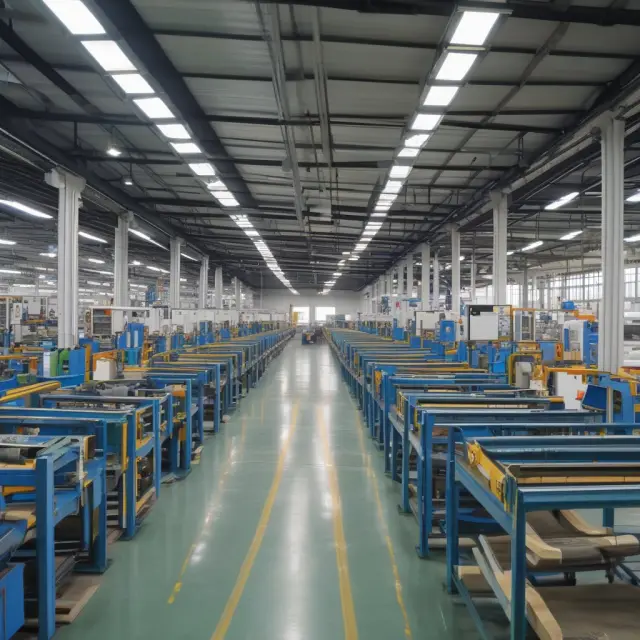
Minimum Efficient Scale and Economies of Scale
The concept of Minimum Efficient Scale (MES) revolves around finding the optimal production point where a company can efficiently create goods at the lowest possible per-unit cost while remaining competitive. Achieving the MES enables a business to produce its products competitively and effectively in the market. Economies of scale, one critical factor in achieving MES, involve lowering per-unit costs as production volumes increase.
Economies of Scale: Lowering Per-Unit Costs
Economies of scale are essential for companies to remain competitive by producing goods at a reduced cost per unit. As the volume of output rises, fixed costs spread over a larger number of units, resulting in lower variable costs per unit produced. Economies of scale contribute significantly to efficiency and profitability by reducing the long-term average cost per unit and offering a competitive edge in the marketplace.
Internal Economies of Scale: Improvements from Within
Internal economies of scale result from modifications made within a company, such as process innovations or organizational changes. For instance, Henry Ford revolutionized automobile production by implementing an assembly line that divided tasks among workers to achieve higher efficiency and lower labor costs. By focusing on specific tasks, unskilled labor could produce more efficiently than multiskilled labor, thus driving down input costs. A company’s minimum efficient scale is the output level at which internal economies of scale optimize production and minimize per-unit costs as constant returns begin.
External Economies of Scale: Industry-Wide Advantages
External economies of scale occur when outside factors positively impact the industry’s overall scale, benefiting multiple companies in the sector. An example includes a government tax break that lowers the cost structure for all businesses in the industry, enabling them to reduce production costs and increase profitability while remaining competitive.
MES Example: XYZ Company
XYZ Company, a mobile device manufacturer, aimed to improve production capacity, increase revenue, and lower production costs by implementing new technology. The company’s investment in advanced machinery led to internal economies of scale due to increased production volumes, speed, and efficiency. By reducing input costs through bulk purchasing, XYZ achieved constant returns as the savings from internal economies of scale were exhausted.
In conclusion, Minimum Efficient Scale (MES) plays a crucial role in determining a company’s ability to produce goods efficiently while remaining competitive. Economies of scale play an essential part in achieving MES by reducing per-unit costs as production volumes increase, enabling companies to stay ahead of the competition and optimize their output levels. Internal economies of scale lead to improvements within a business, while external economies of scale involve industry-wide advantages that positively impact the entire sector. Understanding these concepts is vital for businesses to effectively manage their production processes and maintain a competitive edge in today’s rapidly changing marketplace.

Internal Economies of Scale
Achieving minimum efficient scale (MES) within a company can be accomplished through internal economies of scale, which are improvements made internally that lower per-unit production costs as the volume increases. One famous example is Henry Ford’s implementation of an assembly line, dividing labor tasks and enabling unskilled workers to perform specific jobs, reducing labor costs. This enabled Ford Motor Company to increase production efficiency at a lower cost per unit.
Internal economies of scale are crucial for companies because they allow for the creation of output that is as efficient and inexpensive as possible. Companies can reach their MES point when internal economies of scale have been exhausted, and constant returns have begun. This concept is significant since it determines the productivity level at which a firm can effectively compete in its market.
Internal economies of scale can manifest in various ways. For example:
– Investment in technology: Companies that upgrade their machinery or adopt advanced technologies can streamline production processes, lowering per-unit costs while improving overall efficiency.
– Economizing on labor: By optimizing the division of labor and improving worker productivity, companies can produce more with fewer employees, reducing their labor costs.
– Bulk purchases: Purchasing raw materials or components in larger quantities allows companies to take advantage of volume discounts, lowering input costs per unit as production increases.
– Learning curve effects: Over time, a company’s workforce gains experience and efficiency as they become more familiar with the technology and processes, which can lead to cost reductions.
The XYZ Company is a real-life example of a firm that effectively implemented internal economies of scale to achieve MES. The company sought to improve its production capacity while reducing costs to increase revenue. By purchasing new equipment and adopting advanced technologies, XYZ was able to streamline its production processes, lower input costs, and handle higher volumes. This enabled the company to increase sales and become more competitive in its market.
It’s crucial for companies to recognize that achieving MES is not a one-time event but an ongoing process. As a business grows and evolves, it must continually adapt to changing external factors, such as labor costs, competition, customer demands, and government regulations, which can impact the minimum efficient scale. In conclusion, understanding internal economies of scale and their importance in achieving MES is essential for companies looking to remain competitive in their industry while maintaining a balance between production efficiency, cost savings, and consumer demand.

External Economies of Scale
Companies may also enjoy economies of scale when an outside force improves their industry’s overall production efficiency. These external economies of scale result from factors outside a company’s control, such as technological advancements or government policies that benefit all companies in the sector. For instance, imagine a significant breakthrough in renewable energy technology that significantly lowers the cost and environmental impact of producing electricity. This innovation would lower production costs for every business operating within the power generation industry, even if they did not directly invest in the new technology.
External economies of scale can occur at various stages of production. For example, a government may introduce a tax break on raw materials or labor that benefits all companies in an industry, which could lead to reduced costs and increased efficiency for each firm. A port expansion project might create external economies of scale by enabling larger ships to dock and offload cargo more efficiently, reducing transportation costs and increasing the overall capacity of businesses in the shipping and logistics sectors.
The impact of external economies of scale on minimum efficient scale varies depending on the industry’s structure and competition landscape. In industries with highly concentrated market structures, a few large companies might dominate the market and capture most of the benefits from these external efficiencies. However, in competitive markets with many players, smaller firms might also benefit from such economies of scale, contributing to increased efficiency throughout the industry.
External economies of scale can be challenging for small businesses that may not have the resources or capability to take full advantage of these opportunities. For instance, a small company might struggle to invest in new technology or adapt its processes to exploit external economies of scale efficiently. In such cases, strategic partnerships and collaborations with larger companies or industry associations could help smaller firms access external economies of scale and improve their competitive position.
In conclusion, understanding minimum efficient scale (MES) is essential for businesses aiming to achieve long-term profitability and maintain a competitive edge in their industries. By identifying the point at which internal economies of scale have been exhausted and constant returns begin, firms can optimize production processes, reduce costs, and improve efficiency. While external economies of scale provide additional opportunities for cost savings through industry-wide improvements, they also introduce challenges related to competition and resource accessibility. By staying informed about these factors and adapting their strategies accordingly, companies can effectively navigate the competitive landscape and achieve long-term success.

Minimum Efficient Scale Example: XYZ Company
XYZ company, a leading producer and manufacturer of mobile devices, sought to boost production capacity and lower costs by implementing new technology. This strategy aimed to achieve the Minimum Efficient Scale (MES), allowing XYZ to maintain competitive pricing and capture a larger market share in their industry.
Internal Economies of Scale
To improve productivity and reduce input costs, XYZ Company invested in advanced machinery and technology. By replacing outdated equipment, they could enhance production volumes and speed while using fewer resources per unit. This resulted in significant internal economies of scale, enabling the company to produce more goods at a lower long-term average cost per unit. The new technology also allowed XYZ to take advantage of volume discounts when purchasing raw materials in larger quantities.
Before implementing the new machinery, one worker would handle all stages of assembly, leading to increased labor costs and lower efficiency. However, with the division of tasks into specific jobs for each worker, XYZ could hire less skilled labor and increase output while reducing input costs. This internal economy of scale led to increased sales, higher profits, and overall competitiveness in the marketplace.
Once MES was achieved, constant returns to scale ensued, as the savings from internal economies of scale were exhausted. XYZ’s investment in new technology proved successful in reaching the minimum efficient scale. By enhancing production volumes at a lower cost per unit, they could maintain a competitive edge and continue to grow their market share.
FAQs about Minimum Efficient Scale
- What is Minimum Efficient Scale (MES)? MES represents the point on a company’s long-term average cost curve where economies of scale have been exhausted, and constant returns have begun. It’s the balance point at which a firm can produce goods at a competitive price while minimizing long-run average total costs.
- What are the factors that determine Minimum Efficient Scale (MES)? MES depends on various factors such as market demand, production volume, labor costs, competition, government regulations, and economies of scale. These factors can change over time, requiring a continuous reassessment to maintain minimum efficient scale.
- What are internal economies of scale? Internal economies of scale are improvements a company makes internally to reduce its long-term average cost per unit while increasing production volumes. This includes investing in new technology or implementing more efficient processes.
- How does achieving Minimum Efficient Scale benefit a company? Achieving minimum efficient scale allows a company to produce goods at the lowest possible cost while remaining competitive within its industry. It enables companies to pass savings onto customers through lower prices and improve overall profitability.
- What are external economies of scale? External economies of scale occur when an outside force, such as government regulations or industry-wide tax breaks, lowers costs for the entire industry. This leads to a reduction in the long-term average cost per unit for all companies within the industry, increasing their competitiveness.

Factors Affecting Minimum Efficient Scale
The minimum efficient scale (MES) plays a vital role in determining how many companies can effectively operate within an industry based on their ability to produce goods at the most competitive price while minimizing costs. Several internal and external factors can significantly impact the MES and require constant evaluation by businesses to stay competitive. In this section, we will explore some of the essential factors that influence minimum efficient scale and how they impact a company’s overall cost structure.
1. Labor Costs: The cost of labor is an essential factor in achieving MES. Lower labor costs can reduce the per-unit cost of production, making it easier for a company to achieve economies of scale. However, as the size of a business grows, managing a larger workforce and related HR functions can lead to higher administrative costs and diseconomies of scale.
2. Competition: Competitive pressure is another vital factor that affects minimum efficient scale. In industries with high competition, companies must be more efficient in production and lower costs to remain competitive. This often requires achieving economies of scale and reducing per-unit costs through internal improvements or external economies.
3. Customer Demands: Customer demands significantly impact the MES for various industries. For instance, some industries like restaurants can achieve minimum efficient scale with relatively low production volumes due to high turnover rates and frequent customer demand. In contrast, other industries may require substantial production volumes to reach MES due to higher fixed costs or economies of scale that only become evident at larger scales.
4. Government Regulations: Government regulations can also affect the minimum efficient scale for various businesses. For example, environmental regulations might force companies to invest in costly technology to meet compliance requirements, which could increase their MES. Similarly, minimum wage laws or other labor-related policies might raise the per-unit cost of production and make it harder for smaller companies to achieve economies of scale and compete effectively.
5. Technological Advancements: Technological advancements can significantly impact a company’s minimum efficient scale by enabling higher levels of productivity and reducing costs. For instance, the use of automation, robotics, or digital platforms can lower labor costs, increase production efficiency, and enable smaller businesses to achieve economies of scale previously only attainable by larger companies.
By understanding these factors, businesses can effectively evaluate their current minimum efficient scale and make informed decisions about how to optimize their operations for long-term success. Adjusting to changing market conditions and customer demands is crucial in maintaining a competitive edge in any industry, ensuring that your business remains agile and responsive to market changes.

Diseconomies of Scale
Diseconomies of scale refer to a situation where the long-run average cost per unit rises as a company expands in size and complexity. Unlike economies of scale, which decrease costs by spreading them over more units, diseconomies of scale increase costs due to management issues and other complications.
When companies grow larger, managing their operations efficiently becomes more challenging. Communication between departments and employees can become muddled, leading to misaligned goals and inefficiencies. This complexity results in higher labor costs, increased supervisory requirements, and additional coordination needs, all of which contribute to diseconomies of scale.
For instance, a company might initially benefit from economies of scale as it increases production volume. However, once the firm exceeds its minimum efficient scale (MES), these cost savings may begin to plateau or even reverse due to increased overhead costs and managerial complexities.
One common example of diseconomies of scale can be seen in large corporations that experience bloated bureaucracy. As organizations become larger, they often require more layers of management to maintain control over their operations. This added management structure increases the firm’s labor costs without generating commensurate revenue growth.
Moreover, larger companies might face higher expenses related to transportation and logistics due to the need for longer supply chains to serve their wider customer base. Additionally, managing a vast workforce can lead to increased training costs and complications in administering employee benefits and incentives.
Although diseconomies of scale are generally associated with large corporations, they can also impact smaller businesses in industries that require significant coordination among various players. For instance, in the agriculture sector, farmers might face diseconomies of scale when managing extensive landholdings due to the additional labor requirements and transportation costs for harvesting and distributing their crops.
Understanding both economies and diseconomies of scale is crucial for businesses aiming to optimize their operations and achieve long-term profitability. By analyzing their cost structures, companies can determine the optimal production levels that minimize average total costs while maximizing efficiency and competitiveness.

Minimum Efficient Scale in Industries with Low Production Volumes
The concept of minimum efficient scale (MES) plays a crucial role for businesses striving to produce goods competitively, particularly in industries characterized by low production volumes. In such instances, companies can achieve the efficiency needed to compete effectively and minimize costs, even when producing smaller quantities.
Minimum Efficient Scale: The Balance Point
For a business to be economically viable and remain competitive, it must find an optimal balance between production costs, consumer demand, and market size. Achieving this delicate balance is where minimum efficient scale (MES) comes in – the point at which a company can produce its goods efficiently enough to offer them competitively in the marketplace.
At the MES, a company minimizes long-run average total cost per unit (LRATC), making it a significant factor that can influence the number of competitors operating within an industry. For low production volume industries, achieving minimum efficient scale is crucial for numerous companies to coexist and thrive in the marketplace.
Economies of Scale: The Key to Minimum Efficient Scale
Achieving MES often hinges on economies of scale – a phenomenon where per-unit production costs decrease as output increases, resulting from spreading fixed costs over more units or lowering input prices due to bulk purchasing. Economies of scale can significantly enhance a company’s efficiency and profitability by reducing the cost per unit.
Internal Economies of Scale: Making it Happen Within
One way companies can achieve internal economies of scale is through process improvements, like upgrading machinery or optimizing production methods, which can lead to lower input costs and increased productivity. For instance, the introduction of the moving assembly line revolutionized Ford’s production process by allowing for higher efficiency and reduced per-unit labor costs.
In the case of a low production volume industry, the application of internal economies of scale can make all the difference in achieving MES and maintaining a competitive edge.
Minimum Efficient Scale Example: A Restaurant’s Success Story
Consider a high-end restaurant that strives to offer its patrons exquisite culinary experiences. In this industry, where small production volumes are standard, minimum efficient scale can still be achieved through internal economies of scale.
A restaurant may invest in state-of-the-art kitchen equipment to increase cooking capacity and speed while reducing waste and labor costs. By implementing modern inventory management systems, they can optimize their storage space, reducing the spoilage of perishable goods and minimizing wastage.
In summary, minimum efficient scale (MES) plays an essential role in enabling businesses to produce goods competitively, even in industries characterized by low production volumes. By focusing on economies of scale, both internal and external, companies can effectively reduce costs and maintain a competitive advantage.

Minimum Efficient Scale in Industries with High Production Volumes
In industries where achieving minimum efficient scale necessitates high production volumes, only a limited number of companies can effectively compete due to the substantial costs required to reach that level. Minimum efficient scale (MES) refers to the quantity of output at which a company minimizes its long-term average total cost per unit and achieves economies of scale. In industries with high production volumes, the MES may require significant investment in technology, infrastructure, and labor force expansion. This section explores how achieving minimum efficient scale within such industries can impact competition and business strategies.
Achieving Minimum Efficient Scale with High Production Volumes: Challenges and Implications
When a company’s market requires high production volumes to reach the MES, it must invest substantial resources in acquiring the necessary infrastructure, technology, labor force, or raw materials. This investment can lead to several implications for business strategies:
- Significant upfront costs: Reaching minimum efficient scale in industries with high production volumes often requires a considerable initial investment in capital expenditures, such as purchasing expensive machinery or building large manufacturing facilities.
- Reduced competition: High production volumes may limit the number of competitors capable of reaching the MES due to their financial constraints. This can lead to less competition and potentially higher prices for consumers if there is no substitutable product available.
- Economies of scale and productivity gains: Companies that achieve minimum efficient scale in industries with high production volumes can enjoy significant economies of scale and productivity gains, such as reduced input costs, improved efficiencies, or the ability to buy raw materials at lower prices due to bulk purchases.
- Potential for external economies: High production volumes may lead to external economies of scale where an outside force improves the industry’s overall efficiency. For example, a government subsidy for renewable energy could benefit all companies within the industry by reducing their costs and making it more accessible to reach minimum efficient scale.
- Barriers to entry: Industries with high production volumes may have significant barriers to entry due to the substantial upfront costs required to reach minimum efficient scale. This can protect existing firms from new competitors, enabling them to maintain their competitive advantage.
Real-Life Example of Minimum Efficient Scale in a High Production Volume Industry
Consider the semiconductor industry, where reaching minimum efficient scale requires billions of dollars in research and development, production facilities, and advanced technology investments. Companies like Intel Corporation have been able to maintain their market dominance due to their ability to invest in large-scale research and development, manufacturing processes, and human resources. As a result, they can produce semiconductors more efficiently and at lower costs compared to smaller competitors.
In conclusion, achieving minimum efficient scale in industries with high production volumes comes with significant challenges and implications for companies. High upfront investments are required to reach the MES, which can limit competition, provide productivity gains, create external economies of scale, and act as barriers to entry. Companies that successfully reach the MES in such industries can maintain a competitive advantage and reap substantial benefits.

FAQs about Minimum Efficient Scale
Minimum efficient scale (MES) refers to the production level at which a business can produce goods at the lowest possible per-unit cost while remaining competitive in the market. The concept of MES is vital for businesses, as it enables them to understand the most efficient way to produce goods and compete effectively with other companies in their industry. In this FAQ, we’ll answer some common questions about minimum efficient scale and its significance in business and economics.
What is Minimum Efficient Scale (MES)?
Answer: Minimum efficient scale (MES) is the production point where a company can produce goods at a competitive price with the lowest possible cost per unit. It marks the balance between consumer demand, production volume, and costs associated with manufacturing and delivering goods.
What factors determine minimum efficient scale?
Answer: Minimum efficient scale depends on various factors, including economies of scale, labor costs, competition, customer demands, government regulations, and industry tax breaks, among others. Each factor can change over time, forcing reevaluation to maintain optimal cost levels.
What is the relationship between minimum efficient scale (MES) and economies of scale?
Answer: Economies of scale are the cost advantages a company experiences when it increases production volume, spreads fixed costs across more units, or reduces per-unit input costs through technological advancements. Minimum efficient scale is achieved by utilizing these economies of scale to their fullest extent and finding the optimal balance point where constant returns begin.
How does minimum efficient scale impact competition in an industry?
Answer: Minimum efficient scale determines which companies can effectively compete in a market based on their production capacity, efficiency, and costs. Industries with low production volumes may have many competitors due to low MES requirements, while industries requiring high production volumes might have fewer competitors due to the challenges of achieving MES.
What happens when a company reaches minimum efficient scale?
Answer: When a company achieves minimum efficient scale, it maximizes economies of scale and minimizes per-unit costs, making it more competitive in its industry and able to produce goods efficiently at the lowest possible cost. However, as production volumes continue to increase beyond this point, diseconomies of scale can begin to impact costs.
Can a company achieve minimum efficient scale internally?
Answer: Yes, companies can achieve minimum efficient scale internally by implementing improvements, such as new technology, processes, or workflows that reduce production costs and improve efficiency. Internal economies of scale enable a company to produce goods more cheaply while increasing sales through higher production volumes.
How do external factors impact minimum efficient scale?
Answer: External factors, such as government regulations, taxes, subsidies, or industry developments, can significantly influence a company’s minimum efficient scale by changing the cost structure and competitive landscape of an industry. Companies must remain vigilant to these external factors to maintain their competitive edge.
 Next entry · No. 3,208Understanding Minimum Wage: History, Exceptions, and Current Rates
See also
-
 No. 1,228
15 Aug 2024
20 min
Understanding Economies of Scale: The Competitive Advantage for Larger Businesses
Business Strategy
No. 1,228
15 Aug 2024
20 min
Understanding Economies of Scale: The Competitive Advantage for Larger Businesses
Business Strategy -
 No. 1,433
14 Sep 2024
25 min
External Economies of Scale: Unlocking Industry-wide Cost Savings and Growth Opportunities
Business Strategy
No. 1,433
14 Sep 2024
25 min
External Economies of Scale: Unlocking Industry-wide Cost Savings and Growth Opportunities
Business Strategy -
 No. 5,754
05 Oct 2025
20 min
Understanding the Modern-Day Wirehouse: Past, Present, and Future
Business Finance
No. 5,754
05 Oct 2025
20 min
Understanding the Modern-Day Wirehouse: Past, Present, and Future
Business Finance -
 No. 5,435
08 Sep 2025
19 min
Understanding Variable Overhead Spending Variance: Differences Between Budgeted and Actual Costs
Business Finance
No. 5,435
08 Sep 2025
19 min
Understanding Variable Overhead Spending Variance: Differences Between Budgeted and Actual Costs
Business Finance -
 No. 5,432
08 Sep 2025
18 min
Understanding the Variable Cost Ratio: A Critical Metric for Evaluating a Company’s Profitability
Business Finance
No. 5,432
08 Sep 2025
18 min
Understanding the Variable Cost Ratio: A Critical Metric for Evaluating a Company’s Profitability
Business Finance -
 No. 5,267
25 Aug 2025
20 min
Understanding Unit Costs: A Key Measure in Financial Analysis for Manufacturing and Service Businesses
Business Finance
No. 5,267
25 Aug 2025
20 min
Understanding Unit Costs: A Key Measure in Financial Analysis for Manufacturing and Service Businesses
Business Finance