Understanding Path Dependency and Its Impact on Businesses and Industries

Explore the concept of path dependency and how it shapes businesses and industries through historical preferences and case studies.
Introduction to Path Dependency
Path dependency is an intriguing phenomenon that refers to the persistence of a product or practice due to historical preference or use. In finance and business, path dependency can significantly impact industries, organizations, and markets. This concept explains why companies may cling to outdated methods despite more efficient alternatives and why industries might follow certain paths despite evidence suggesting otherwise.
Historically, the term path dependence was coined within the historical-institutionalist approach to political science. This perspective suggests that institutions change less frequently than anticipated and exert constraints on advancement. Path dependency arises when policymakers make assumptions based on past practices, make cautious decisions, or fail to learn from experience.
Understanding the Concept of Path Dependency
Path dependency can be traced back to Herbert A. Alexander’s work in the 1960s on technological systems, where he introduced the idea that once a technology becomes dominant, it is difficult to replace. This concept has since been adopted and expanded upon by scholars such as Brian Arthur and Paul David, who have explored how path dependencies influence the adoption of technologies and shape industries.
Path Dependence in Action: Historical Preference
A classic example of path dependency can be observed when a town grows around a factory. While it is ideal to build factories away from residential areas for various reasons, historical precedent often leads to factories being situated near homes and infrastructure. Once established, moving the factory would prove extremely costly, making it difficult to break free from this pattern.
Path Dependence in Industries: The Use of Fossil Fuels
A powerful example of path dependency in industries is the continued reliance on fossil fuels as primary energy sources. Despite resource limitations and growing environmental concerns, many industries are hesitant to transition away from fossil fuels due to their extensive infrastructure investment and the interconnected nature of various sectors. As a result, path dependencies have kept these industries tied to finite resources that may become increasingly costly in the long term.
Impact on Businesses: Reluctance to Change and Inability to Adapt
Path dependency can influence business strategies in several ways, sometimes to their detriment. Companies often develop core products or systems that establish their market presence. Over time, competitors might introduce new, more efficient methods, leaving the original company reluctant or unable to invest in forward-thinking innovations. For example, Palm Inc., a pioneer in personal digital assistants, faced this issue when smartphones eclipsed its devices. Despite widespread use and potential for growth, Palm was unable to adapt to the changing market, leading to its eventual demise.
Examples of Path Dependency: Digital Photography vs Film Cameras and QWERTY Keyboard
Two notable examples of path dependency are the transition from film photography to digital photography and the continued use of the QWERTY keyboard. In the case of digital photography, early adopters found that the new technology offered significant advantages over traditional film cameras. However, camera manufacturers and their customers were hesitant to abandon the established infrastructure and investment in film-based technologies, resulting in a prolonged transition period.
Likewise, the QWERTY keyboard has persisted despite being suboptimal for typing speed compared to alternative layouts like Dvorak Simplified Keyboard. Its continued use can be attributed to path dependency, as it became widely adopted during the early days of typewriters and remained the standard when computers were introduced, making it a de facto industry standard.
Path Dependency: Causes and Consequences
Understanding the causes and consequences of path dependence is crucial for businesses and industries seeking to navigate this complex phenomenon. By recognizing the underlying factors driving path dependency and its potential impact on innovation and growth, organizations can make informed decisions about their strategies and investments.
In conclusion, path dependency is an essential concept in finance, business, and economics that can shape industries, markets, and companies. Understanding its causes, consequences, and implications is vital for businesses and investors looking to navigate the complexities of modern markets and adapt to changing circumstances. By recognizing and addressing the challenges posed by path dependence, organizations can position themselves for long-term success in a rapidly evolving global economy.

Historical Preference in Path Dependency
Path dependency, a phenomenon where historical preferences shape continued use of products or practices despite the availability of superior alternatives, can be observed across industries and businesses. The term has been used extensively within the historical-institutionalist approach to political science, which argues that institutions change more slowly than anticipated due to cautious policymaking and resistance to innovation.
One example of path dependency lies in a town’s development around a factory. Although it would ideally be situated at a distance from residential areas for numerous reasons, the presence of the factory often precedes the establishment of worker housing and other community amenities. Relocating an existing factory is a costly endeavor that can significantly impact not only the company but also the surrounding community. Therefore, factories are frequently built in close proximity to residential areas, despite potential negative consequences.
Historical preference plays a crucial role in industries as well. The adoption of initial concepts, methods, or innovations as industry standards is an indicator of path dependency. For instance, the use of fossil fuels as primary energy sources persists due to their widespread use in tertiary industries and the extensive infrastructure already dedicated to their utilization. While the resource’s availability and cost have become increasingly challenging, a viable long-term or renewable successor resource has yet to emerge at scale.
Path dependency can significantly impact businesses, often hindering their ability to adopt forward-thinking innovations that could potentially drive growth. For example, a company’s core product or system establishes its market presence. As new and competitive products or methods enter the market, path dependency may contribute to reluctance or inability to invest in these opportunities.
The introduction of digital photography posed such a challenge for camera film manufacturers. The emergence of digital photography presented a compelling alternative, but established companies faced immense resistance to change due to historical preferences and the significant investments they had made in their core product lines. Palm Inc., the pioneer of personal digital assistants, encountered similar difficulties as smartphones began dominating the mobile devices market. Despite its innovation, Palm’s technology could not compete effectively with the growing popularity of smartphones.
Another illustration of path dependency is the QWERTY keyboard layout, which remains in use despite its suboptimal typing speed compared to other layouts. The adoption of this particular layout is a result of historical preference and the resistance to change that comes with it.
In conclusion, understanding path dependency is essential for businesses and policymakers seeking to navigate the complexities of technological advancement and industry evolution. By acknowledging the role of historical preferences in shaping current practices and products, one can better anticipate and address the challenges that come with changing market dynamics.
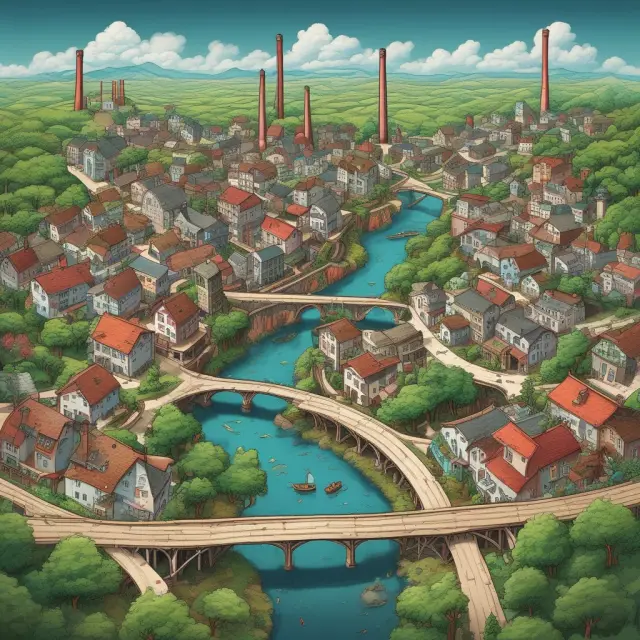
Case Study: Town and Factory
Path dependency refers to the phenomenon whereby history matters greatly in shaping the continued use of a product or practice, even when newer, more efficient alternatives are available. The relationship between a town and its factory can be used as an example of path dependency in action. Initially, factories should ideally be located at a considerable distance from residential areas due to environmental concerns and safety reasons. However, the historical order of development often dictates that factories come before housing. This scenario creates a strong bond between the two entities, making it challenging for a factory to relocate even if it would serve the community better if situated further away.
Path dependency can be attributed to the financial implications and policymakers’ cautious or uninformed decisions. A town built around a factory is a classic example of this concept. In such cases, the factories come first, and residential areas develop around them. The cost implication of moving an established factory is usually too high, even though relocating it to the outskirts would offer numerous benefits for both parties involved.
The idea that institutions change less than expected, as suggested by scholars in the historical-institutionalist approach to political science, further underscores the persistence of this relationship between factories and towns. Path dependency is also influenced by supplier and customer preferences leading to a dominant technology, even if it might be inferior to an alternative. In the context of our case study, the town’s infrastructure, services, and workforce are adapted around the factory, making it harder for both parties to change course.
This phenomenon can result in significant challenges for businesses looking to innovate or adapt. For example, industries that follow path dependency may become resistant to change and find it difficult to invest in newer technologies due to the considerable costs involved. In cases where a dominant product or technology is established, companies might struggle to maintain relevance as competition emerges from more forward-thinking alternatives.
The town-factory dynamic exemplifies how historical preferences shape the continued use of a practice or technology even when more efficient alternatives are available. Understanding the implications and causes of path dependency can help businesses navigate the challenges associated with this phenomenon and position themselves for long-term success.
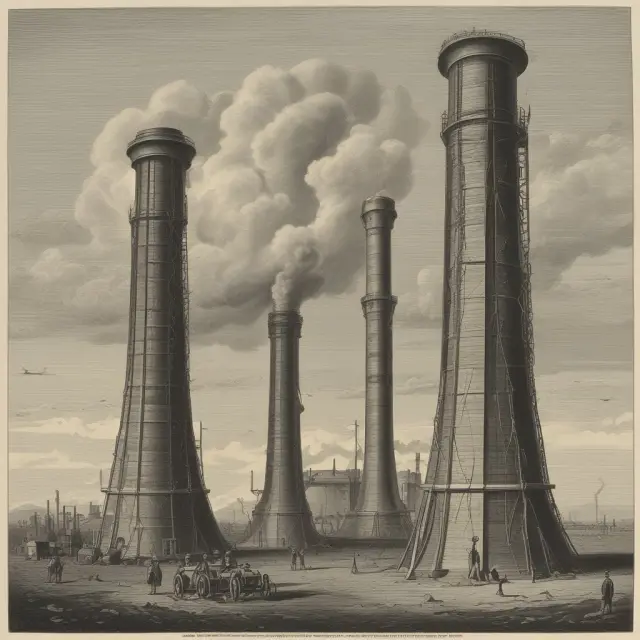
Path Dependence in Industries: The Use of Fossil Fuels
The phenomenon of path dependency can be observed extensively across various industries, most notably in the persistence of fossil fuels as primary energy sources. Despite growing concerns regarding resource limitations and the urgency to transition towards sustainable alternatives, the dominance of fossil fuels remains a significant aspect of our global economy. This section explores the reasons behind this continued reliance on a finite resource and its implications for businesses.
Historical Preference in Path Dependence
Path dependence is the result of historical precedent. Once an industry adopts a specific technology or practice, it becomes challenging to abandon it, even when more efficient alternatives become available. This reluctance can stem from significant financial investments in existing infrastructure or the comfort and familiarity that comes with continuation on a well-worn path.
Fossil Fuels: A Historical Preference
The use of fossil fuels as primary energy sources dates back to the Industrial Revolution. Initially, these resources provided a competitive edge, enabling industries to generate power at an unprecedented scale and fueling economic growth. Over time, the dependence on fossil fuels deepened, with various sectors becoming intricately linked to their continued use.
Persistence of Fossil Fuels in Energy Production
Despite advancements in renewable energy technologies and increased public awareness about resource depletion and environmental concerns, the dominance of fossil fuels persists. This reluctance can be attributed to significant investments in infrastructure, regulatory frameworks, and established business practices that revolve around these resources. Additionally, the transition towards sustainable alternatives is costly and time-consuming, further reinforcing the continued use of fossil fuels.
Implications for Businesses: The Cost of Inertia
Businesses can face significant challenges when path dependency hinders their ability to adapt to new innovations or market shifts. Fossil fuel companies are a prime example, as they find themselves confronted with the need to transform their operations in response to changing consumer preferences and regulatory pressures. Failure to do so could result in loss of market share and ultimately, business failure.
A Case Study: Path Dependency in the Automotive Industry
The automotive industry’s continued dependence on fossil fuels is a prime example of path dependency. The widespread use of gasoline-fueled internal combustion engines has been a mainstay of the auto industry for over a century. However, with advancements in battery technology and electric vehicles gaining popularity, automakers face mounting pressure to adapt and transition towards more sustainable alternatives. Companies that fail to embrace change risk losing market share as consumers shift their preferences towards greener options.
Conclusion: Overcoming Path Dependency and Embracing Change
Path dependency can present significant challenges for businesses, particularly when it comes to adapting to new innovations or market shifts. However, by acknowledging the historical roots of this phenomenon and understanding its implications, companies can take proactive steps towards embracing change and maintaining their competitiveness in a rapidly evolving landscape. This might involve investing in research and development, forging partnerships with industry pioneers, or even rethinking their core business models to align with emerging trends.
Understanding path dependency and its impact on industries is crucial for businesses seeking to remain competitive and navigate the complexities of an ever-changing global economy. By acknowledging the historical influences that shape our industrial landscape and embracing new opportunities for growth, companies can overcome the inertia of path dependency and position themselves for success in a sustainable future.

Impact on Businesses: Reluctance to Change and Inability to Adapt
Path dependency refers to the continued use of a product, practice, or technology based on historical preference, even if newer, more efficient alternatives are available. This phenomenon can significantly impact businesses by hindering their ability to adapt to new innovations.
One notable example of path dependency in business is the reluctance and inability of industries to abandon established methods for fear of the financial implications of change. In many instances, an initial concept or standard becomes ingrained, making it difficult for companies to shift to alternative solutions despite their potential advantages.
Consider the case of fossil fuels as a primary energy source. The pervasiveness of this resource is rooted in its historical adoption and the extensive interconnections among industries that rely on it. This path dependency has significant consequences, particularly as the finite nature of fossil fuel resources becomes more apparent and the cost of alternative sources continues to decline.
Another example of business path dependency can be seen in the camera industry. The emergence of digital photography presented a challenge for film manufacturers who were hesitant to invest in new technologies that threatened their existing business models. This reluctance resulted in many companies ultimately losing market share and, in some cases, going out of business.
Palm, Inc., a pioneer in the development of personal digital assistants, faced similar challenges as it struggled to keep pace with the rise of smartphones. Despite Palm’s early success in introducing forward-thinking technology, the company was unable to adapt its strategies effectively and ultimately lost ground to competitors.
Additionally, the QWERTY keyboard is a classic example of path dependency, as this typing layout remains widely used despite being suboptimal in terms of efficiency. The historical preference for QWERTY has created an expectation that persists, even when more efficient alternatives exist.
The reasons for business path dependency are multifaceted. Fear of financial losses and the need to protect established revenue streams can motivate companies to cling to outdated practices or technologies. Moreover, policymakers may make cautious decisions based on incomplete or outdated information, further reinforcing path dependency.
Understanding the role of path dependency in business can help companies better anticipate and navigate the challenges associated with innovation and change. By recognizing that historical preferences and established practices can shape future outcomes, organizations can position themselves to take advantage of emerging trends while mitigating risks. This approach allows businesses to be proactive rather than reactive in an increasingly competitive landscape.

Example: Digital Photography vs Film Cameras
Path dependency manifests itself in various industries and business practices. One significant example can be seen in the transition from traditional film photography to digital photography. This shift was not a simple change, as there were compelling reasons for photographers to stick with their trusted analog cameras. However, the emergence of digital photography brought about new opportunities that proved difficult for some businesses to embrace.
The story begins with the invention and initial use of digital cameras in the late 20th century. Their introduction marked the beginning of a gradual transformation within the photography industry. Digital cameras offered several advantages over their film counterparts: greater convenience, faster image processing, improved image quality, and the ability to make numerous copies without degradation.
Despite these benefits, many photographers remained loyal to traditional film cameras due to path dependency. A primary reason for this attachment was the established network of labs that catered to the development and printing of film photographs. Film photography had been an industry standard for over a century, and photographers found comfort in the tried-and-true processes and workflows. Moreover, many photographers had substantial investments in their film equipment, which made the prospect of upgrading to digital seem costly and unnecessary.
The camera manufacturers faced similar challenges as they struggled to adapt to this technological shift. Firms like Kodak, Fuji, and others built their businesses around film photography; the transition to digital seemed risky, and there was uncertainty about the long-term prospects of the new technology. Despite the challenges, some companies like Sony and Canon managed to embrace the change by creating innovative digital cameras that catered to both professional and amateur photographers.
The example of digital photography illustrates how path dependency can hinder innovation in industries and businesses. The resistance to change can lead to missed opportunities and even business failures. However, it is essential to note that not all businesses are equally susceptible to the effects of path dependency. Companies with a strong focus on research and development and those willing to invest in new technologies have better chances of navigating technological shifts successfully.
Understanding how path dependency impacts the industry can help businesses anticipate trends, adapt more quickly, and stay ahead of the competition. In the case of digital photography, early adopters like Sony and Canon thrived by embracing the change and creating innovative products that catered to consumers’ needs. This strategy not only helped these companies maintain their market position but also ensured their long-term success.

Case Study: Palm, Inc. and the Smartphone Market
Path Dependency’s Impact on Businesses: Reluctance to Change and Inability to Adapt
Palm, a pioneer in personal digital assistants (PDAs), faced significant challenges as the market shifted towards smartphones. The company’s reluctance to adapt to emerging trends ultimately led to its downfall.
The story of Palm is an illustrative example of how path dependency can hinder businesses from adapting to new innovations and maintaining their competitiveness in evolving markets. In the late 1980s, Palm introduced the first mass-produced PDA: the Palm Pilot. The device’s success was due to its compact size, ease of use, and innovative design that revolutionized personal information management. By the early 2000s, however, smartphones with advanced features began to emerge as viable alternatives to PDAs. Apple’s iPhone and Google’s Android were particularly noteworthy for their touchscreens, internet connectivity, and versatility, offering users a more comprehensive mobile experience.
Despite this shift in market trends, Palm continued to focus on improving its PDA line instead of exploring the potential of smartphones. The company held onto the belief that PDAs catered to a specific niche audience with unique requirements and preferences. The costly investment in R&D for the PDAs further reinforced their commitment to the technology, as they saw it as their core product and source of revenue.
Moreover, Palm’s management team was hesitant to embrace the new smartphone trend due to perceived risks. They believed that smartphones were large and unwieldy, with limited battery life compared to PDAs. There was also skepticism regarding user adoption given their high price point. Palm underestimated both the rapid rate at which smartphones would replace PDAs and the consumer’s willingness to pay a premium for mobile devices offering more features and capabilities.
The emergence of smartphones forced Palm to face an uphill battle in retaining market share. The company launched several devices, including the Treo line, that attempted to combine PDA functionality with smartphone features. However, it was not enough to compete with the sleek designs, superior user interfaces, and extensive ecosystems offered by Apple’s iPhone and Google’s Android.
In 2010, Palm discontinued its device production as it was unable to adapt to the rapidly changing market landscape dominated by smartphones. The reluctance to change paths, despite the availability of better alternatives, ultimately led to Palm’s demise. This case study underlines the importance of staying open to new opportunities and being willing to pivot when markets evolve, especially in industries prone to rapid technological advancements.
Understanding Path Dependency: The Role of Historical Preference in Shaping Industries
Path dependency plays a crucial role in shaping industries by creating resistance to change due to historical preference or use. Businesses and policymakers often continue down specific paths because it is more cost-effective to maintain the status quo than to invest in new, untested alternatives. The concept of path dependency was first introduced in the context of institutional economics, where scholars argue that industries follow a particular trajectory due to early choices or standards established in their infancy.
Palm’s story serves as an excellent example of this phenomenon. Once the company had established itself as a leader in PDAs, it was reluctant to abandon its core product and invest resources in developing smartphones. The costly R&D investments in improving PDA technology and user loyalty further reinforced Palm’s commitment to this path.
Path dependency can lead businesses down an unsustainable or outdated trajectory, particularly when markets change rapidly. By sticking too closely to existing practices, companies risk becoming obsolete as consumers seek more innovative and efficient alternatives. In the case of Palm, their historical success with PDAs blinded them to the potential of smartphones and ultimately contributed to their downfall.
Conclusion: Navigating Path Dependency’s Challenges in Business
Palm’s experience with path dependency is a cautionary tale for businesses. Companies must be aware of the potential consequences of path dependence and develop strategies that enable them to adapt to emerging trends and changing market landscapes. To navigate this challenge, businesses can:
- Stay informed about industry trends and emerging technologies
- Embrace new innovations and invest in R&D
- Monitor user preferences and feedback
- Maintain a flexible business model that allows for pivoting when necessary
- Collaborate with partners to share resources and expertise
- Cultivate a culture of continuous learning and improvement
- Be willing to abandon unsuccessful ventures
By being proactive, businesses can reduce the risks associated with path dependency and position themselves as leaders in their industries. Adaptability is crucial for long-term success, especially in markets where technological advancements are frequent and rapid. Companies that fail to adapt may find themselves left behind, just like Palm did in the face of smartphones.
Understanding the concept of path dependency and its implications for businesses and industries is essential for any entrepreneur or manager looking to succeed in today’s fast-paced business environment. By recognizing the importance of historical preferences and how they shape the trajectory of companies, industries, and markets, businesses can make informed decisions that prepare them for a future filled with innovation and change.

Path Dependency in the Context of QWERTY Keyboard
The phenomenon of path dependency is evident across various aspects of our lives, including technology and business. One classic example that highlights the persistence of a seemingly outdated system is the continued use of the QWERTY keyboard layout.
QWERTY keyboards were first introduced in the late 1800s as a solution to slow typists’ issue during the early days of typewriting machines. The arrangement was designed to reduce the occurrence of typebar collisions and improve typing speed. However, research has shown that QWERTY is actually less efficient than other keyboard layouts such as Dvorak Simplified Keyboard or Colemak.
Despite this, QWERTY remains the standard for keyboards on computers and mobile devices worldwide. The reason lies in the concept of path dependency – a phenomenon whereby history matters, and what has occurred in the past persists due to resistance to change.
Historically, QWERTY was the first keyboard layout to gain widespread adoption, and as time passed, people became more accustomed to it. As a result, manufacturers continued producing devices with this layout to cater to consumers’ preferences. Additionally, businesses built up massive investments in infrastructure around QWERTY, such as software, manuals, and training materials.
Changing to an alternative keyboard layout would require significant effort and resources – retraining employees, redesigning products, and updating existing systems. As a result, the investment sunk into QWERTY made it more cost-effective for companies to stick with the existing standard than to make a switch. Moreover, users also contribute to path dependency by resisting change, as they feel uncomfortable learning an entirely new layout and fear the potential disruption to their productivity.
Furthermore, the reluctance to change might not only be due to financial factors but could stem from policymakers making cautious or uninformed decisions. For instance, in the case of typewriters, the development of QWERTY keyboards was influenced by the Remington Typewriter Company’s promotion of the layout to prevent competitors from catching up. This historical precedent set the stage for QWERTY becoming the default keyboard layout, and it has been carried forward ever since.
In conclusion, path dependency plays a significant role in shaping industries and businesses by perpetuating outdated practices, even when more efficient alternatives exist. The story of the QWERTY keyboard illustrates this concept, demonstrating how history and inertia can influence our technological development and decision-making. As we move forward, understanding path dependency is crucial to navigating the challenges it poses and embracing innovations that break free from its constraints.

Causes and Consequences of Path Dependence
Path dependency is an intriguing phenomenon that can significantly impact businesses and industries, often leading to the continued use of outdated products or practices. This concept arises when historical preference shapes our decisions and actions, making it challenging for new innovations or alternatives to displace existing ones. In this section, we will delve deeper into the underlying causes and consequences of path dependency.
Causes of Path Dependency
Historical Preference: One primary cause of path dependence is historical preference, where a company or industry persists in using a product or practice due to its long-standing history. This can be seen as a result of inertia, ease of use, or the significant cost and effort required to switch to something new. For instance, imagine a town that has grown around a factory. Ideally, a factory should be located at a safe distance from residential areas for various reasons, such as safety and environmental concerns. However, factories are often built first, followed by the construction of worker housing and other essential amenities nearby. The thought of relocating a large factory and dismantling the surrounding infrastructure is not only costly but also time-consuming, making it an unrealistic option.
Financial Implications: Another cause of path dependency lies in the financial implications of change. Companies and industries may find it more economical to continue utilizing existing products or practices, even if more efficient alternatives exist. For example, the fossil fuel industry has been slow to transition towards renewable energy sources due to the vast amount of investments they have made into oil, natural gas, and coal. The cost and effort required to shift to a new energy infrastructure can be substantial, making it a daunting prospect for many businesses within this sector.
Misinformed or Cautious Decisions: Path dependency may also stem from policymakers or decision-makers who make cautious or uninformed decisions based on limited information. In some cases, the lack of complete knowledge about an emerging technology or alternative can lead to a reluctance to embrace change. As new technologies and innovations evolve, it is essential for policymakers and businesses alike to stay informed and adapt accordingly.
Consequences of Path Dependence
Resistance to Change: One of the most significant consequences of path dependency is resistance to change. Companies may cling to outdated products or practices due to historical preference or financial considerations, even if more efficient alternatives are available. For example, the case study of a town built around a factory demonstrates how inertia can make it challenging for communities to adapt to new circumstances.
Hindered Innovation: Path dependency can also hinder innovation by discouraging the adoption of newer, more competitive products or practices. This can be seen in industries like digital photography and personal digital assistants (PDAs), where the emergence of innovative technologies failed to displace established players due to path dependency. The reluctance or inability to invest in these new technologies ultimately limited their growth potential and market impact.
Conclusion:
Understanding path dependency is vital for businesses and industries, as it can significantly influence their decisions, strategies, and overall success. By recognizing the underlying causes and consequences of this phenomenon, companies can be better prepared to navigate the challenges posed by historical preference and adapt to new innovations effectively. In the next section, we will discuss some strategies that businesses can employ to mitigate the effects of path dependency and foster innovation in their industries.

Path Dependency and Innovation: Navigating the Challenge
The phenomenon of path dependency poses significant challenges for businesses seeking to innovate and adapt, especially when historical preferences or practices continue despite more efficient alternatives becoming available. Understanding how to navigate these challenges is crucial for companies looking to thrive in today’s rapidly changing business environment.
Path Dependency: Causes and Implications
Path dependency occurs due to various reasons including historical preferences, financial implications, and policymakers making cautious or uninformed decisions. The result can be an industry’s persistence in following a particular path that might hinder innovation and adaptation.
Strategies for Businesses: Embrace Change or Learn to Live with It?
Businesses face two primary options when dealing with the challenges posed by path dependency: they can either embrace change and invest in new technologies, practices, or innovations or learn to live with it and find ways to adapt. Both options come with their pros and cons.
Embrace Change: Investing in New Technologies or Practices
Investing in new technologies or practices requires a significant financial commitment and carries risks. However, companies that successfully make the leap can reap substantial rewards, such as increased efficiency, competitiveness, and growth. A case in point is digital photography’s impact on traditional film photography. Despite the initial resistance from film manufacturers, those who embraced the new technology were eventually able to tap into a larger market and establish their presence.
Adapt: Learning to Cope with Path Dependency
Learning to adapt to path dependency can be an effective strategy for businesses that cannot or do not wish to invest heavily in new technologies or practices. Companies may find ways to integrate the existing technology or practice into their business model and create value by offering unique selling propositions, customizations, or additional services. For instance, QWERTY keyboards are a result of path dependency but have been adapted to work efficiently with touch typing techniques.
Conclusion: Adapting to Path Dependency
Navigating the challenges posed by path dependency requires businesses to be proactive in understanding historical preferences and their implications on current practices. By embracing change or adapting to the existing landscape, companies can not only survive but also thrive in a rapidly evolving business environment. The key is to strike a balance between innovation and adaptation, ensuring that businesses remain agile while capitalizing on the advantages of established practices.
FAQs: Frequently Asked Questions About Path Dependency
Path dependency refers to a phenomenon where historical preference or use influences the continued adoption and maintenance of a product, practice, or technology. Businesses and industries may adhere to existing systems even if superior alternatives are available due to path dependency. Here, we delve into some common queries about path dependency and its significance in finance, business, and economics.
What is Path Dependency?
Path dependency describes the persistence of a product or practice based on historical preference or use (Freyssenet & Callon, 1998). In other words, businesses and industries may continue along a particular path even if new, more efficient alternatives are available due to the cost implications or resistance to change.
How does Path Dependency Impact Businesses?
Businesses can be affected by path dependency when they invest in existing technologies, practices, or systems. This reluctance to change can hinder their ability to adapt and innovate. For example, Palm, the defunct maker of early personal digital assistants, struggled to maintain relevance as smartphones eclipsed its devices due to path dependency (Greener, 2013).
What is an Example of Path Dependency in Industry?
The use of fossil fuels as primary energy sources serves as a classic example of path dependence in industries. Despite the finite nature of these resources and the availability of alternative power sources, many businesses are reluctant to switch due to the cost implications and infrastructure requirements (Greener, 2013).
What is a Real-Life Example of Path Dependency?
A town built around a factory serves as a real-life example of path dependency. Ideally, factories should be located away from residential areas for safety reasons. However, the historical sequence of events may result in a factory being established first, followed by the workers’ homes and amenities. Moving the factory would be expensive and impractical, leading to its continued presence despite the potential consequences (Greener, 2013).
What Causes Path Dependency?
Path dependency can result from two primary causes: historical preference or reluctance to change due to cost implications. The former is often driven by the desire to maintain compatibility with existing systems and avoid the disruption caused by a switch (Freyssenet & Callon, 1998). The latter arises when companies are hesitant to invest in new technologies or practices due to the perceived risks or costs associated with change.
How Does Path Dependency Affect Innovation?
Path dependency can hinder innovation by encouraging businesses to focus on existing products, practices, and systems. It may also prevent them from adopting new technologies that could potentially disrupt their operations (Freyssenet & Callon, 1998). To navigate this challenge, businesses should continually monitor emerging trends and invest in research and development to stay competitive.
References:
Freyssenet, Y., & Callon, M. (1998). The Micro-Politics of Technological Change: A Sociological Approach. University of Chicago Press.
Greener, I. (2013). Path Dependency and Technology. Encyclopedia Britannica.
 Next entry · No. 3,917Understanding the USA PATRIOT Act: Implications for Finance and Investment Professionals
See also
-
 No. 3,990
13 May 2025
24 min
Planned Obsolescence: Understanding the Strategy Behind Forcing Product Replacements in Finance and Technology
Business Strategy
No. 3,990
13 May 2025
24 min
Planned Obsolescence: Understanding the Strategy Behind Forcing Product Replacements in Finance and Technology
Business Strategy -
 No. 5,924
19 Oct 2025
19 min
Understanding the Zone of Possible Agreement (ZOPA) in Negotiations: Bridging the Gap Between Parties
Business Strategy
No. 5,924
19 Oct 2025
19 min
Understanding the Zone of Possible Agreement (ZOPA) in Negotiations: Bridging the Gap Between Parties
Business Strategy -
 No. 5,853
13 Oct 2025
21 min
Understanding Yellow Knights: From Hostile Takeover Attempts to Mergers of Equals
Business Strategy
No. 5,853
13 Oct 2025
21 min
Understanding Yellow Knights: From Hostile Takeover Attempts to Mergers of Equals
Business Strategy -
 No. 5,613
23 Sep 2025
19 min
Maximizing Opportunities: A Strategic Approach to Warm Calling in Finance and Investment
Business Strategy
No. 5,613
23 Sep 2025
19 min
Maximizing Opportunities: A Strategic Approach to Warm Calling in Finance and Investment
Business Strategy -
 No. 5,474
12 Sep 2025
20 min
Understanding Versioning: How Companies Create Value through Different Product Versions
Business Strategy
No. 5,474
12 Sep 2025
20 min
Understanding Versioning: How Companies Create Value through Different Product Versions
Business Strategy -
 No. 5,406
06 Sep 2025
20 min
Value Added: Understanding the Concept, Importance and Implementation in Businesses and Economy
Business Strategy
No. 5,406
06 Sep 2025
20 min
Value Added: Understanding the Concept, Importance and Implementation in Businesses and Economy
Business Strategy