Understanding PERT Charts: An Essential Project Management Tool for Finance and Investment
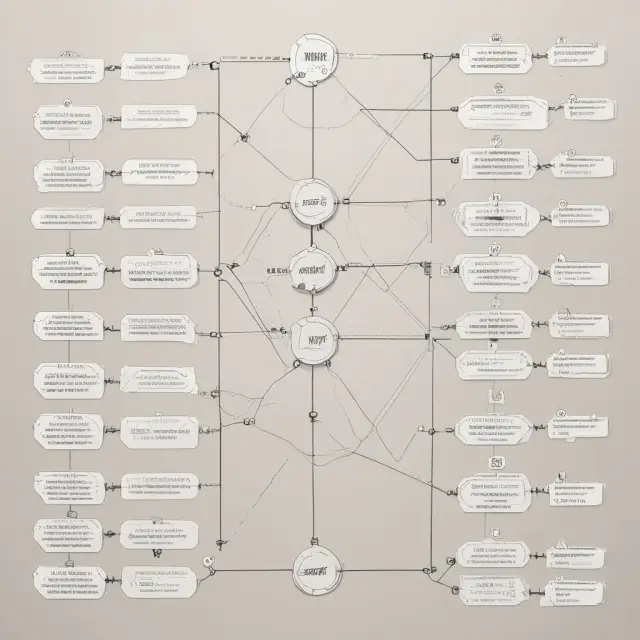
Understanding PERT Charts: A Comprehensive Guide to Project Management for Finance and Investment. Learn what they are, how they work, and their advantages…
What is a PERT Chart?
Program Evaluation Review Technique (PERT) charts are essential project management tools widely used in finance and investment sectors for managing complex projects, especially those with multiple dependencies among tasks. These charts allow managers to identify the sequence of events and their dependencies, providing a comprehensive understanding of the overall project timeline.
Originating from the U.S. Navy’s Special Projects Office during the 1950s, PERT charts were first used in managing the Polaris nuclear submarine project. They differentiate themselves from Gantt charts by focusing on task dependencies and risk management.
The core components of a PERT chart include nodes, vectors, activity lines, optimistic time, pessimistic time, most likely time, and expected time. Nodes represent events or milestones within the project, while vectors represent tasks connecting these nodes with dependencies. Optimistic time represents the minimum duration for completing a task; pessimistic time is the maximum; and most likely time is the most probable duration. The expected time is derived from the weighted average of optimistic, pessimistic, and most likely time.
The flow of events in a PERT chart is represented by arrows, with activity lines connecting nodes indicating various tasks. Dependent tasks require that their preceding tasks be completed before they can begin, while parallel tasks occur at the same time. The chart helps managers evaluate the project’s resources required for each task and the dependencies among them, ensuring efficient project management.
Understanding PERT Charts: A Comprehensive Guide for Finance and Investment
——————————————————————————-
In this comprehensive guide, we will delve deeper into the world of PERT charts and their significance in finance and investment sectors. We’ll explore the components, advantages, disadvantages, examples, and the differences between PERT and Gantt charts.
Section 1: Introduction to PERT Charts
————————————–
What is a PERT chart? This question has puzzled project managers for decades. Let us unravel the mystery and discover how this powerful tool can be used effectively in your finance or investment projects.
### History of PERT Charts
PERT charts were first introduced by the U.S. Navy’s Special Projects Office during the 1950s, specifically for managing the Polaris nuclear submarine project. Their primary purpose was to identify task dependencies and manage complex projects. Since then, they have gained widespread popularity across industries, particularly in finance and investment sectors, due to their ability to help managers evaluate resources, identify critical paths, and manage risks.
### Difference Between PERT and Gantt Charts
Although both PERT and Gantt charts serve the purpose of project management visualization, they differ significantly. While a Gantt chart focuses on displaying project schedule elements with their start and end dates, PERT charts emphasize task dependencies and risk management by using nodes and vectors to represent events, milestones, and tasks respectively.
Section 2: Components of a PERT Chart
—————————————
To fully grasp the essence of PERT charts, it’s essential to understand their core components: nodes, vectors, activity lines, optimistic time, pessimistic time, most likely time, and expected time.
### Nodes
Nodes represent events or milestones within a project. These can be considered checkpoints that indicate the completion of a specific task or phase. They are usually represented by circles or rectangles in the chart.
### Vectors and Activity Lines
Vectors connect nodes, indicating tasks with dependencies. An arrow pointing from one node to another signifies the direction of flow, denoting that the task represented by the source node must be completed before the target node’s task can begin.
Activity lines are used to represent the duration and time estimates for each task. They help managers evaluate resource allocation and prioritize tasks based on their importance and dependencies.
### Optimistic Time
Optimistic time represents the minimum duration required to complete a task under ideal conditions. This value is often based on best-case scenarios and can be used as a reference point when calculating more realistic estimations.
### Pessimistic Time
Pessimistic time, also known as risk time or worst-case time, represents the maximum duration that could be required to complete a task under adverse conditions. This value helps managers prepare for potential delays and develop contingency plans.
### Most Likely Time
Most likely time is the estimated duration based on realistic assumptions and historical data. It represents the best-case scenario considering the usual circumstances and is used as the primary reference point when planning a project’s timeline.
### Expected Time
Expected time is derived from the weighted average of optimistic, pessimistic, and most likely time. This value takes into account both the best-case and worst-case scenarios, providing a more accurate representation of the actual duration needed to complete a task.
Section 3: How PERT Charts Work
——————————-
PERT charts enable managers to visualize and analyze project tasks while considering their dependencies and resource requirements. By understanding how PERT charts work, you’ll be better equipped to utilize this tool effectively in your finance or investment projects.
### Creating a PERT Chart
To create a PERT chart, follow these steps:
- Identify the key deliverables and tasks necessary to complete the project.
- Determine their dependencies (if any) and their sequence.
- Estimate the optimistic, pessimistic, and most likely time for each task based on historical data, best-case scenarios, and realistic assumptions.
- Create nodes for key deliverables or milestones, and connect them using vectors to represent tasks and dependencies.
- Label each vector with the corresponding task’s name and expected duration.
- Review the chart regularly to identify critical paths and potential bottlenecks that could impact project progress.
Section 4: Advantages and Disadvantages of PERT Charts
——————————————————-
Like all tools, PERT charts come with their advantages and disadvantages. Understanding these can help you make an informed decision on whether to use this method for managing your finance or investment projects.
### Advantages
PERT charts offer several benefits:
- Identify task dependencies, ensuring efficient project management.
- Enable effective communication among team members and stakeholders.
- Allow for what-if analyses and contingency planning.
- Encourage collaboration between departments and teams.
- Provide a comprehensive visualization of the project’s timeline and dependencies.
### Disadvantages
Despite their advantages, PERT charts have some drawbacks:
- They can be time-consuming to create and maintain.
- Their accuracy heavily relies on accurate estimation of optimistic, pessimistic, and most likely times.
- They may not accurately represent complex project relationships.
Section 5: Examples of PERT Charts in Finance and Investment Sectors
——————————————————————–
PERT charts have proven valuable in various sectors, including finance and investment. Let’s explore some real-world examples of their application:
### Mergers and Acquisitions
Mergers and acquisitions involve multiple tasks with complex dependencies. PERT charts help identify these dependencies and manage the timeline effectively.
### Project Financing
Financing projects can include numerous tasks, such as feasibility studies, market analysis, regulatory approvals, and construction phases. PERT charts provide a clear visualization of their sequence and dependencies, ensuring that all required steps are completed in order.
### Capital Budgeting
Capital budgeting involves evaluating long-term investments. PERT charts help identify critical paths and potential bottlenecks, providing valuable insights into the project’s timeline and resource requirements.
Section 6: Conclusion
———————
In conclusion, Program Evaluation Review Technique (PERT) charts are a powerful tool for managing complex projects in finance and investment sectors. By understanding their components, advantages, disadvantages, and real-world applications, you’ll be well-equipped to implement this method effectively and achieve successful project outcomes.
Components of a PERT Chart
A Program Evaluation Review Technique (PERT) chart is an essential project management tool widely used in finance and investment industries to manage complex projects. Developed by the U.S. Navy’s Special Projects Office in the 1950s for the Polaris nuclear submarine project, PERT charts offer unique advantages over traditional Gantt charts.
Key Components
- Nodes: Nodes or events represent milestones or project stages within a PERT chart. They are represented by circles or rectangles in the chart.
- Vectors: Lines or arrows connecting nodes signify activities or tasks required to move from one event to another. The direction of arrows indicates task dependencies.
- Optimistic time: This is the shortest possible duration for a task, assuming ideal conditions.
- Pessimistic time: This represents the longest estimated time for completing a task under adverse conditions.
- Most likely time: This signifies the most probable duration of a task based on historical data and expert judgment.
- Expected time: This is the average or mean time calculated from optimistic, pessimistic, and most likely times, giving an overall estimate for a task’s completion.
Understanding the Polaris Nuclear Submarine Project
One of the earliest uses of PERT charts can be traced back to the U.S. Navy’s Special Projects Office in the late 1950s. The team behind this project applied PERT to manage the Polaris nuclear submarine program, which required a significant number of interconnected tasks and dependencies. By visualizing these relationships using PERT charts, they were able to effectively plan, execute, and monitor the project’s progress.
How Does a PERT Chart Work?
Creating a PERT chart involves analyzing all tasks involved in a project, determining their estimated times, and calculating critical paths—the longest sequence of interconnected tasks from start to finish. PERT charts display the relationships between these tasks using nodes and vectors while considering optimistic, pessimistic, and most likely time frames for task completion.
In summary, a PERT chart is an indispensable tool for project managers in finance and investment sectors due to its unique ability to represent complex projects’ dependencies, identify critical paths, and provide multiple estimates of task duration. By understanding the components of a PERT chart and its origin, project managers can effectively implement this powerful management technique and maximize their project’s success.
How Does a PERT Chart Work?
A Program Evaluation Review Technique (PERT) chart is a powerful tool in project management that allows for an in-depth understanding of project timelines and interdependent tasks. Created by the U.S. Navy’s Special Projects Office during the 1950s to manage the Polaris nuclear submarine project, PERT charts are now widely used in various industries to plan, execute, and monitor complex projects. In this section, we will explore the inner workings of PERT charts by discussing dependent tasks, parallel tasks, nodes, vectors, activity lines, and how these elements come together to create a visual representation of a project’s timeline.
First, let us define what PERT charts are and their primary components:
1. **Dependent Tasks:** Dependent tasks refer to items that need to be completed in a specific order before the next task can begin. For example, if an arrow is drawn from Task No. 1 to Task No. 2 on a PERT chart, Task No. 1 must be finished before work on Task No. 2 can commence.
2. **Parallel Tasks:** Parallel tasks, also known as independent tasks, are items that do not have dependencies and can occur concurrently within a project. They’re represented by non-connected nodes or activities on the chart.
3. **Nodes:** Nodes are circles or rectangles used to represent events, milestones, or stages in a project. Each node represents an identifiable point where tasks begin or end, making it easier for managers and team members to understand the progress of the project at a glance.
4. **Vectors (Lines):** Vectors represent the connection between nodes and depict the direction of task dependencies. They indicate which tasks should be completed first and help illustrate the sequence and flow of events in a project.
5. **Activity Lines:** Activity lines connect nodes and vectors to represent specific tasks and their associated durations. These lines provide valuable information on the time required to complete each task, offering insights into the project’s overall timeline and helping managers plan resources accordingly.
Now that we have a grasp of the fundamental components in a PERT chart, let us delve deeper into how these elements work together:
A PERT chart is created by first determining all the tasks necessary to complete a project and assigning an estimated time for each task. These tasks are then organized into nodes, with vectors indicating dependencies between them. Activity lines represent individual tasks and their associated durations. The goal of creating a PERT chart is to establish the earliest start and finish times for each task as well as the latest finish time. This information helps project managers understand the critical path – the longest sequence of dependent tasks that must be completed on time for the project to reach its completion date.
Understanding how a PERT chart works enables project managers to effectively plan, execute, and monitor projects while minimizing delays and optimizing resources. By analyzing dependencies, task durations, and critical paths, teams can make data-driven decisions that contribute to successful project outcomes.
Interpreting a PERT Chart
A Program Evaluation Review Technique (PERT) chart is an intricate web of nodes, vectors, and activities used in project management. To fully understand the significance behind this powerful tool, it’s essential to learn how to decipher the information displayed on a PERT chart. Let’s take a closer look at the components that make up a PERT chart and their interpretations.
Understanding Flow of Events
First, we need to grasp the flow of events in a PERT chart. The direction of arrows represents the sequence of tasks or events, with each arrow pointing from the start of one task to the beginning of another. Dotted activity lines signify dummy activities that occur at specific points on other paths. For example, an event labeled ‘Completing Substation 1’ may be represented as a node in the main path but also as a dotted line in parallel tasks.
Identifying Critical Path and Key Terms
Critical path refers to the sequence of activities with the longest duration from start to finish. To locate critical paths, examine the nodes with the longest expected time. The terms ‘optimistic time,’ ‘pessimistic time,’ and ‘most likely time’ are integral components in a PERT chart:
- Optimistic time: This represents the shortest possible time it takes to complete an activity or task under ideal conditions. It is often used as a basis for calculating other time estimates.
- Pessimistic time: This refers to the longest duration of an activity or task, considering all potential complications and delays.
- Most likely time: Also known as the expected time, this is the best estimate of how long it would typically take to complete a task. It represents a reasonable assumption based on historical data, experience, and knowledge of the project.
In essence, a PERT chart presents an organized representation of tasks and their dependencies, allowing managers to make informed decisions regarding project scheduling, resource allocation, and risk management. By interpreting the flow of events and key terms, stakeholders can gain valuable insights into potential bottlenecks, critical paths, and overall project progress.

Advantages of PERT Charts
Program Evaluation and Review Technique (PERT) charts have proven themselves as indispensable tools in managing complex projects due to their ability to improve communication, enhance collaboration, and provide a comprehensive analysis of project timelines. These advantages are rooted in the following aspects:
1. Improved Communication
PERT charts facilitate effective communication among various departments involved in a project by incorporating data from multiple sources. By visually representing interconnected tasks, their dependencies, and required resources, PERT charts help all stakeholders to understand their role in the project, leading to more informed decision-making and successful outcomes.
2. Strategic Positioning
PERT analysis enables organizations to commit to projects that align with their strategic goals by considering various timeframes and risks. By visualizing the critical path and identifying the longest chain of tasks, PERT charts help prioritize resources and manage risks effectively, ensuring that projects are executed in a manner that supports an organization’s objectives.
3. What-If Analysis
PERT charts offer the ability to explore potential scenarios and assess their impact on project timelines. By simulating different outcomes and analyzing various timeframes, PERT charts help organizations make informed decisions about resource allocation, risk mitigation, and overall project execution.
4. Dependency Management
By representing task dependencies, PERT charts provide a clear understanding of the relationships between tasks, allowing teams to plan more effectively and adjust to changing circumstances. This helps minimize delays, reduce rework, and improve overall project efficiency.
5. Adaptability
PERT charts can be updated as projects evolve, making them an effective tool for managing changing requirements, resource availability, or external factors that may impact the project timeline. By staying informed about potential disruptions, teams can proactively respond to challenges and maintain project momentum.
In summary, PERT charts offer numerous advantages in managing complex projects by improving communication, enhancing collaboration, providing comprehensive analysis, managing dependencies, and adapting to changing circumstances. With these benefits, it is no wonder that organizations have turned to PERT charts as a valuable tool for effectively planning, executing, and delivering successful projects.

Disadvantages of PERT Charts
While PERT charts provide numerous benefits in managing projects, they do come with certain disadvantages. The main disadvantages include subjectivity in data, high labor intensity, and potential for unreliable estimates.
Subjectivity in Data
The data used in PERT charts can be highly subjective as it relies on the expertise of team members to estimate task durations. These estimations might not always be accurate due to individual biases or misunderstandings about project complexities. For instance, some team members may underestimate the time required for a task because they are overly optimistic about their abilities, while others may overestimate due to fear of failure or uncertainty. This subjectivity can lead to inaccurate timelines and unrealistic expectations, causing potential delays and misaligned project objectives.
High Labor Intensity
Creating a PERT chart is a time-consuming process that requires significant effort from the project manager and team members. Collecting data on task dependencies and estimating durations can be challenging and laborious, especially for large projects with numerous tasks and interdependencies. Moreover, maintaining and updating the information in the PERT chart as the project progresses is an ongoing responsibility that demands continuous attention and resources.
Potential for Unreliable Estimates
As mentioned earlier, PERT charts rely on accurate estimates of task durations to calculate project timelines and identify critical paths. However, these estimations can be unreliable due to unforeseen circumstances such as resource availability, external factors like market conditions or regulatory changes, or simply human error. Inaccurate estimates can result in missed deadlines, budget overruns, and decreased efficiency.
Importance of Continual Review
Given the subjective nature and potential for unreliable data in PERT charts, it is crucial to perform continual reviews of project information and adapt the chart accordingly. This ongoing review process ensures that the team remains informed about any changes or issues impacting the project timeline, enabling them to adjust their strategies as needed to minimize risks and maintain project objectives. By staying engaged with the PERT chart, teams can proactively address potential problems and maintain control over their projects, ensuring successful completion.
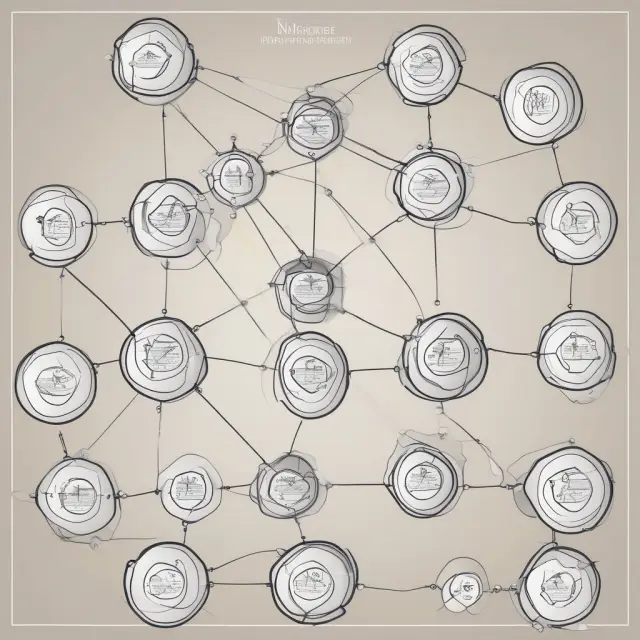
Example of PERT Charts
PERT charts were first introduced in the 1950s during the Polaris nuclear submarine project by the U.S. Navy’s Special Projects Office. This significant achievement demonstrated the power of PERT charts as a critical tool for managing complex projects, especially those with numerous interdependent tasks. In contrast to Gantt charts that focus on sequential tasks and their completion dates, PERT charts emphasize dependencies among tasks (Ballard, 1967).
A PERT chart’s comparison to the well-known Gantt chart lies primarily in its approach towards time estimation for project stages. While both methods aim to manage projects effectively, they differ significantly when it comes to evaluating task durations and dependencies.
PERT charts use nodes, vectors, optimistic time, pessimistic time, most likely time, expected time, and dummy activities to represent the components of a project (Morris & Hulbert, 1995). Nodes symbolize milestones or events within the project timeline while vectors denote tasks that connect various nodes.
PERT charts enable managers to visualize project dependencies more accurately than Gantt charts since they consider multiple time estimates for each task: optimistic time (shortest duration), pessimistic time (longest duration), most likely time (best-case scenario), and expected time (average duration). These estimates help organizations better plan, allocate resources, and estimate overall project completion time.
Comparing PERT charts to Gantt charts, the primary differences can be summarized as follows:
- Time Estimation: Gantt charts solely focus on fixed durations for tasks, whereas PERT charts provide a more comprehensive analysis of task durations through multiple estimates.
- Dependencies: Gantt charts may not always clearly display dependencies between tasks, but PERT charts explicitly illustrate dependencies among tasks with nodes and vectors.
- Flexibility: Gantt charts offer less flexibility in managing changing project circumstances due to their sequential representation of tasks, while PERT charts adapt more easily to alterations since they account for multiple time estimates and task dependencies.
In conclusion, PERT charts provide valuable insights into project management, enabling organizations to visualize complex interdependencies and manage risks effectively, making them an essential tool for finance and investment industries dealing with large-scale projects.

Creating a PERT Chart
Incorporating Microsoft Excel or custom software with ready-made templates such as Lucidchart into your planning arsenal, a PERT chart is an invaluable tool for managing complex projects with numerous tasks and dependencies. In this section, we’ll guide you through the process of defining key deliverables, estimating timeframes, and creating a PERT chart to visualize and optimize your project’s critical path.
First, let us define some essential terms:
- **Key deliverables:** These are the specific outcomes or milestones that must be achieved during a project. In a PERT chart, they are represented by nodes.
- **Tasks:** Tasks are individual actions required to complete each key deliverable. Dependencies between tasks will influence how they are connected in the PERT chart.
- **Time frames:** Time frames refer to the expected duration of each task. This information is used in estimating project timelines and resources.
- **Dependencies:** Task dependencies define the sequence or precedence of tasks. In a PERT chart, dependencies determine how tasks are connected via vectors.
To begin creating a PERT chart, you’ll need to:
- Identify all key deliverables for your project
- Determine the specific tasks required for each deliverable
- Estimate timeframes for each task based on optimistic, pessimistic, and most likely scenarios
- Document dependencies between tasks
- Utilize Microsoft Excel or a custom software solution to input this data and generate your PERT chart.
Microsoft Excel offers an easy-to-use interface for organizing project information, making it a popular choice for many project managers. By inputting key deliverables, tasks, dependencies, and time frames into Excel spreadsheets, you’ll be able to create a visual representation of your project timeline that accounts for dependencies and critical paths.
Custom software solutions like Lucidchart provide readymade templates specifically designed for creating PERT charts. These platforms offer additional features such as customizable visuals, real-time collaboration, and the ability to import data directly from other project management tools.
Regardless of which tool you choose, planning is essential to effectively utilize a PERT chart in managing your projects. By taking the time to define key deliverables, tasks, dependencies, and time frames, you’ll be well on your way to creating an accurate and insightful visualization of your project that will help guide you from planning to execution.

PERT Chart vs. Gantt Chart
When it comes to managing projects and visualizing their timelines, there are two primary tools available to project managers: PERT charts and Gantt charts. While both methods offer valuable insights, they cater to different aspects of project management, each with its unique advantages and disadvantages. In this section, we’ll discuss the key differences between these two project management tools and help you decide which one to use for planning and execution.
PERT (Program Evaluation and Review Technique) charts originated in the 1950s as a response to the complexities of managing large-scale projects, such as the U.S. Navy’s Polaris nuclear submarine project. PERT charts are designed to illustrate task dependencies and time relationships between project events and activities. Gantt charts, on the other hand, have their roots in the early 1900s and were initially used for tracking construction projects. They are primarily focused on sequential tasks and displaying start and end dates.
One significant difference between PERT and Gantt charts lies in their approach to managing dependencies. PERT charts use nodes (circles or rectangles) to represent project events, interconnected by arrows that represent activities and their dependencies. Dependent tasks are those where the completion of one task is required before another can start. In contrast, Gantt charts display tasks as horizontal bars connected to a timeline. The length of each bar represents the duration of the associated task.
When deciding which tool to use for your project management needs, consider the following factors:
1. Complexity of Projects: PERT charts are more suitable for intricate projects with numerous dependencies and tasks. Their ability to illustrate interconnections among different project components makes them an invaluable asset for managing complex initiatives. Gantt charts work better for simpler projects where tasks have fewer dependencies or can be executed independently.
2. Project Size: The size of your project can also influence the choice between PERT and Gantt charts. Larger projects with numerous interdependent tasks will benefit from using a PERT chart, which offers a clearer understanding of how each task contributes to the overall project. Conversely, smaller projects may find that a Gantt chart provides sufficient insights into their timeline.
3. Team Collaboration: PERT charts can foster better collaboration among team members by encouraging open communication and coordination. Their visual representation of dependencies enables teams to identify potential bottlenecks and work more efficiently together. In contrast, Gantt charts offer a more straightforward display of individual tasks and deadlines, making them suitable for projects where team collaboration is not as essential.
4. Project Phases: Both PERT and Gantt charts have their strengths when it comes to managing project phases. PERT charts are ideal for the planning stage, helping project managers define critical paths, identify dependencies, and set realistic timelines. Gantt charts excel in monitoring progress during project execution by showing the status of tasks in real-time and highlighting potential delays.
5. Flexibility: In terms of flexibility, PERT charts offer more options for managing project complexities by providing insights into various scenarios such as optimistic, pessimistic, and expected times. Gantt charts, however, present a more straightforward representation of tasks and their start and end dates.
In conclusion, choosing between PERT and Gantt charts depends on the nature and complexity of your project, as well as the specific goals you aim to achieve during each phase of the project lifecycle. By understanding the unique advantages and disadvantages of each tool, you’ll be better equipped to make an informed decision and successfully manage your projects from start to finish.
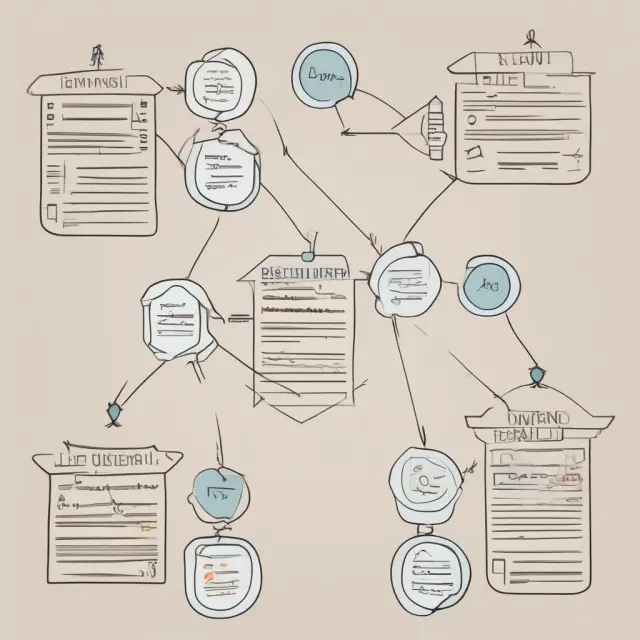
Main Components in a PERT Chart
A PERT chart (Program Evaluation and Review Technique) is an essential tool for managing complex projects, especially within finance and investment industries, due to its unique representation of project tasks and their dependencies. In this section, we delve deeper into the various components of a PERT chart, explaining their significance and importance in project management.
1. Nodes:
A node represents an event or milestone in a project. Circles represent external nodes while rectangles represent internal nodes. External nodes indicate the start and end of a project, while internal nodes show important intermediate points in the project timeline.
2. Vectors:
Vectors are the arrows connecting nodes, representing tasks or activities that must be completed between events. Each vector has three time estimates – optimistic time, pessimistic time, and most likely time. Optimistic time is the shortest duration it would take to complete a task, pessimistic time is the longest possible duration, while most likely time is a reasonable estimate of the expected completion time under normal circumstances.
3. Activity lines:
Activity lines connect vectors and represent the logical flow from one task to another, helping visualize dependencies between tasks. These dependencies determine the sequence in which tasks must be executed.
4. Dependencies:
Dependencies are relationships between tasks where completion of one task depends on the completion of another. Dependent tasks cannot start until the preceding task is completed. In a PERT chart, arrows indicate task dependencies and show the order in which tasks must be executed.
5. Critical path:
The critical path is the sequence of tasks that determines the shortest possible duration for project completion. It represents the longest chain of dependent tasks. Identifying the critical path helps determine the earliest start and finish dates for each task, ensuring a project stays on schedule.
Understanding these components provides valuable insight into how PERT charts function as effective project management tools within finance and investment industries. By using this knowledge to manage projects efficiently and effectively, organizations can achieve their strategic goals while minimizing risk and maximizing productivity.
FAQs
What Is a PERT Chart?
A Program Evaluation Review Technique (PERT) chart is an essential tool for managing and visualizing complex projects, particularly in finance and investment industries. Introduced by the U.S. Navy’s Special Projects Office in the 1950s to guide the Polaris nuclear submarine project, it differs from a traditional Gantt chart with its focus on task dependencies.
What Are the Main Components of a PERT Chart?
A PERT chart consists of nodes (circles or rectangles representing events/milestones), vectors (lines connecting tasks), and dummy activities (dotted activity lines). PERT charts use three time frames: optimistic time, pessimistic time, and most likely time.
How Does a PERT Chart Work?
Creating a PERT chart involves estimating task durations based on these three time frames and evaluating dependencies between tasks to identify the critical path. This information helps project managers determine time, resources, and develop a budget for their projects.
What Are the Advantages of Using a PERT Chart?
A PERT chart offers several advantages: it enables efficient management by allowing evaluation of required assets, incorporates data from multiple departments, encourages communication between team members, and supports strategic positioning within an organization. It also facilitates what-if analyses to help choose the most efficient project path.
What Are the Disadvantages of Using a PERT Chart?
Despite its advantages, PERT charts come with disadvantages: they can be labor-intensive, rely on subjective data, and are time-consuming to create and maintain. The information provided may become outdated if not continuously reviewed and updated.
How Does a PERT Chart Differ from a Gantt Chart?
The primary difference between the two lies in their focus: while both charts depict project timelines, a PERT chart emphasizes task dependencies and incorporates multiple time frames, while a Gantt chart focuses on visualizing start and end dates of tasks.
What Are Some Real-World Applications of PERT Charts?
PERT charts have been successfully used in various industries, including construction, IT projects, and defense to manage complex projects with intricate dependencies. The Polaris nuclear submarine project is a notable example of its effectiveness.
 Next entry · No. 3,969PEST Analysis: Understanding the External Factors Impacting Your Business
See also
-
 No. 5,613
23 Sep 2025
19 min
Maximizing Opportunities: A Strategic Approach to Warm Calling in Finance and Investment
Business Strategy
No. 5,613
23 Sep 2025
19 min
Maximizing Opportunities: A Strategic Approach to Warm Calling in Finance and Investment
Business Strategy -
 No. 3,899
05 May 2025
20 min
Understanding Pareto Analysis: A Powerful Technique for Prioritizing Business Needs in Finance and Investment
Business Strategy
No. 3,899
05 May 2025
20 min
Understanding Pareto Analysis: A Powerful Technique for Prioritizing Business Needs in Finance and Investment
Business Strategy -
 No. 3,827
30 Apr 2025
19 min
Maximizing Transition: The Role and Benefits of Outplacement Services in Finance and Investment
Business Strategy
No. 3,827
30 Apr 2025
19 min
Maximizing Transition: The Role and Benefits of Outplacement Services in Finance and Investment
Business Strategy -
 No. 3,257
14 Mar 2025
24 min
Understanding Monopolistic Competition in Finance and Investment: Characteristics, Advantages, Disadvantages, and Industry Examples
Business Strategy
No. 3,257
14 Mar 2025
24 min
Understanding Monopolistic Competition in Finance and Investment: Characteristics, Advantages, Disadvantages, and Industry Examples
Business Strategy -
 No. 2,055
06 Dec 2024
21 min
The Role and Impact of Headhunters on the Hiring Process in Finance and Investment
Business Strategy
No. 2,055
06 Dec 2024
21 min
The Role and Impact of Headhunters on the Hiring Process in Finance and Investment
Business Strategy -
 No. 1,377
06 Sep 2024
24 min
Understanding Excess Capacity: Causes, Consequences and the Global Impact
Business Strategy
No. 1,377
06 Sep 2024
24 min
Understanding Excess Capacity: Causes, Consequences and the Global Impact
Business Strategy