Understanding Pennants: A Technical Analysis Continuation Pattern

Learn how to identify, analyze, and trade with the continuation pattern - pennant. Understand its components, stages, price targets & real-life examples.
Introduction to Pennants
Pennants are continuation patterns in technical analysis where there is an initial strong price movement, known as the flagpole, followed by a consolidation period with converging trend lines—the pennant—and culminating in a breakout that represents the second part of the flagpole. In essence, they indicate a pause in the prevailing trend before it resumes its course. Pennants share characteristics with flags but differ due to their shorter duration and the presence of converging trend lines during consolidation.
The components of a pennant include:
- Flagpole: The large price movement that precedes the consolidation phase.
- Consolidation period: A relatively short-term, sideways trading pattern formed by the convergence of upward and downward trendlines. This phase is often characterized by decreased volatility and lower trading volumes compared to the flagpole.
- Breakout: The price movement that occurs after the consolidation period, typically in the same direction as the initial flagpole, indicating the continuation or resumption of the primary trend.
To identify a pennant on a chart, you must look for the following signs:
- A strong price movement—the flagpole—in the security that precedes the formation of the pennant.
- The presence of converging trendlines within the consolidation period.
- A breakout from the upper trendline of the pennant in the direction of the initial price movement.
- Confirmatory signs like higher volume during the breakout to ensure a genuine continuation of the primary trend.
Once you have identified a potential pennant, you can use it as an opportunity for trade entry or exit by setting up stop-loss orders based on key levels, such as the support and resistance zones within the pattern. Additionally, traders may also consider using technical indicators like moving averages, Bollinger Bands, or Relative Strength Index (RSI) to confirm trends and validate the pennant’s significance.
For instance, in a bullish pennant, a trader might enter a long position once the upper trendline resistance is breached with a volume spike. The price target for this trade could be established by measuring the height of the flagpole and adding it to the breakout price. Alternatively, traders might exit their positions when the price reaches the calculated target or if the trend reverses after a significant pullback in volume.
A well-executed pennant strategy can offer substantial profits for investors willing to remain patient during periods of consolidation. However, it’s essential to remember that not all flagpole movements will result in a valid pennant and subsequent continuation of the trend. Therefore, traders should exercise caution when interpreting chart patterns and always consider other indicators or fundamental factors to validate their analysis.

Components of a Pennant
A pennant is a continuation pattern in technical analysis formed after an initial strong move, referred to as the flagpole, followed by a period of consolidation. The term “pennant” comes from its shape, which resembles a triangular sail on a ship. During this consolidation phase, converging trend lines form, and once these lines converge, traders look for a breakout in the same direction as the flagpole.
The pennant formation comprises two distinct components: the flagpole and the consolidation period. The flagpole represents the significant price movement or trend prior to the consolidation phase. This phase can last from several days to weeks, depending on the volatility and strength of the underlying security. During this phase, volume tends to be high as investors react to news, economic data releases, or other fundamental factors.
Following the flagpole, a period of consolidation ensues. The consolidation period is characterized by converging trend lines, with one resistance line forming along the highs and another support line at the lows. This phase typically lasts from one to three weeks, giving investors an opportunity to reassess the market conditions before making their next move. During this stage, volume usually decreases as price action becomes more range-bound.
Once the consolidation period concludes, a breakout occurs in the same direction as the flagpole movement. The breakout signifies a continuation of the prevailing trend and may result in significant volatility and price swings. A successful breakout confirms the validity of the pennant pattern and signals to traders that it’s time to enter or add to their positions.
Volume analysis plays a critical role during both the flagpole and consolidation periods of a pennant formation. In the flagpole phase, high volume indicates strong investor demand or selling pressure, while in the consolidation period, decreased volume suggests investors are taking profits or waiting for more confirmation before making their next move.
In conclusion, understanding pennants is essential for technical analysts as it provides insight into potential price movements following a significant price trend. By identifying and analyzing the components of a pennant—the flagpole and consolidation period—traders can make informed decisions about entering or adding to their positions. Keep in mind that while pennants can be profitable opportunities, they require careful analysis and confirmation using additional chart patterns and indicators to increase the chances of success.
Identifying Pennants in Charts
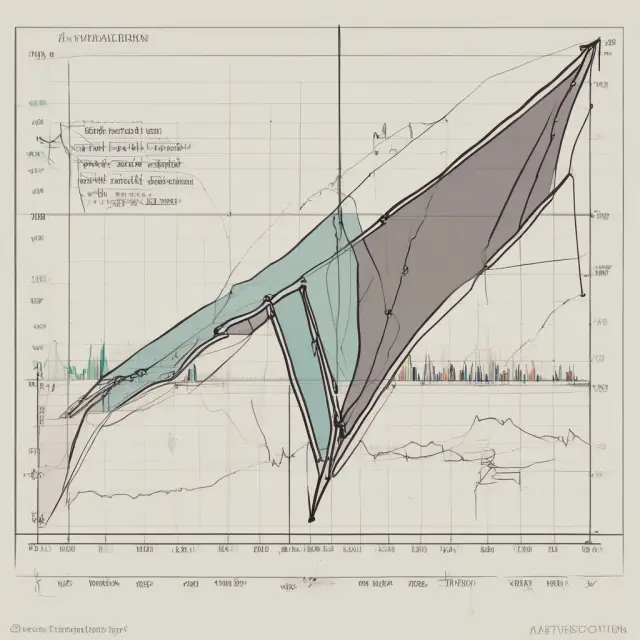
In technical analysis, a pennant is an intriguing continuation pattern that forms after a significant price movement (flagpole) followed by a period of consolidation, during which two converging trendlines create a triangle-like structure. This section will discuss how to visually recognize and confirm pennants on charts using essential trendlines and volume analysis.
Visual Recognition: A Pennant’s Structure
A pennant forms when a large price movement, called the flagpole, is followed by a consolidation period where price action resembles a symmetrical triangle. The two converging trendlines in the triangle are crucial for recognizing this pattern. The upper trendline represents resistance, while the lower one serves as support.
Confirmation: Trendlines and Volume
To confirm that a pennant is forming, look for a visible flagpole preceding the consolidation period. Then, check if price action forms a triangle structure with converging trendlines. The volume during the consolidation phase should be lower than usual when compared to previous volumes in the flagpole. During the breakout, there will typically be a substantial increase in volume. This surge in trading activity reinforces the validity of the pennant pattern as traders enter new positions.
Example: Recognizing and Confirming a Pennant
The following example illustrates the recognition and confirmation process for a bullish pennant pattern.
1. Large Price Movement – Flagpole
In this scenario, a stock rises dramatically from $50 to $80 within a short time frame, which represents the flagpole. The volume during the flagpole is high as many traders buy into the upward trend.
2. Consolidation Period – Pennant Formation
The price consolidates between $70 and $62. This period creates a symmetrical triangle (the pennant) with converging trendlines. Volume during this phase decreases significantly compared to the flagpole, as traders wait for further confirmation before entering new positions.
3. Breakout
After the consolidation period, the stock breaks out from the upper trendline resistance, signaling a continuation of the uptrend initiated by the flagpole. The volume during the breakout increases significantly as new positions are entered and previous holders add to their existing positions.
Price Targets, Stop Losses, and Trading Strategies: These topics will be covered in subsequent sections. Stay tuned!

Pennant Formation Stages
A pennant, a continuation pattern in technical analysis, occurs following a significant price movement, referred to as the flagpole, where there is a large increase or decrease in price. This is followed by a period of consolidation, during which price action contracts into what appears as a triangular pattern—the pennant itself. Ultimately, this consolidation phase concludes with a breakout that resumes the initial direction of the trend.
The Three Stages of a Pennant
1. Flagpole: The flagpole marks the beginning of the pennant formation and is characterized by a substantial price move, indicating the direction of the underlying trend. This movement creates a strong base for the subsequent consolidation period.
2. Consolidation Period: During this phase, the security’s price action contracts into a triangular pattern known as a pennant, which can last from one to three weeks. The pennant is formed by converging trend lines that squeeze the price action into a narrower range. It is important to note that volume during this stage generally decreases, with many traders taking profit or waiting for further confirmation before entering new positions.
3. Breakout: The breakout marks the final stage of a pennant formation and occurs when price breaks through either the upper or lower trend line of the consolidation period. This breakout signifies the resumption of the initial trend direction, with higher volume typically accompanying this move to confirm the pattern’s validity.
Example: A Real-life Pennant Example
Consider an example of a bullish pennant that occurs in a stock chart, as shown below: In the above image, a stock rises sharply from $35 to $46 (flagpole), followed by a period of consolidation where price contracts into a symmetrical triangle pattern (pennant). Eventually, the price breaks through the upper trend line resistance at $48.50, which marks the beginning of the second half of the flagpole’s movement and ultimately leads to new highs.
Many traders view pennants as excellent opportunities for entering new positions based on technical analysis. For instance, a trader might establish a long position by placing a buy limit order above the upper trend line when they anticipate a breakout from the pennant formation. Additionally, it is essential to set stop-loss levels below (for bullish patterns) or above (for bearish patterns) the lowest (highest) point of the pennant to minimize potential losses and protect profits.
In conclusion, understanding pennants is crucial for traders seeking to identify continuation patterns in the financial markets. By recognizing the formation stages—flagpole, consolidation period, and breakout—and applying proper analysis techniques, such as trendline identification and volume confirmation, investors can potentially profit from this technically sound pattern.

Characteristics of Pennants
A pennant, as described in technical analysis, is a continuation pattern that follows an impressive price movement, known as the flagpole, with a period of consolidation where converging trend lines—the pennant—form. This consolidation phase lasts between one to three weeks, and after it breaks out, the security resumes its previous directional trend (bullish or bearish). The similarities between pennants and flags lie in their converging trend lines during the consolidation period. However, unlike flags, pennants have lower volume during the consolidation phase, followed by a significant increase in volume during the breakout phase.
To identify a pennant formation, traders look for three distinct stages:
- Flagpole: A large price movement in one direction—this could be an uptrend or downtrend—often accompanied by high trading volumes.
- Consolidation period: A contraction of volatility where the price action creates a symmetrical triangle or rectangle pattern with converging trend lines, signifying a period of indecision or consolidation. The volume during this phase is lower compared to the flagpole and breakout phases.
- Breakout: The security breaks out from the upper or lower trend line of the pennant, resuming its previous directional trend with increased trading volumes.
The length and duration of a pennant’s components play crucial roles in confirming its validity. For instance, if a flagpole lasts for several weeks and is followed by a prolonged consolidation period with no clear breakout, it might not be considered a true pennant but rather a failed pattern.
Furthermore, the symmetry of the pennant formation also adds credence to its validity. In a well-formed pennant, the flagpole and the breakout movement should display similar price swings or magnitudes in terms of their lengths. This ensures that the pattern maintains continuation with the preceding trend.
By understanding the characteristics of pennants and recognizing these patterns in charts, traders can use this information to make informed decisions about entering new positions based on breakouts and price targets. The next section will explore trading strategies for utilizing pennants in technical analysis.
Volume Analysis in Pennants
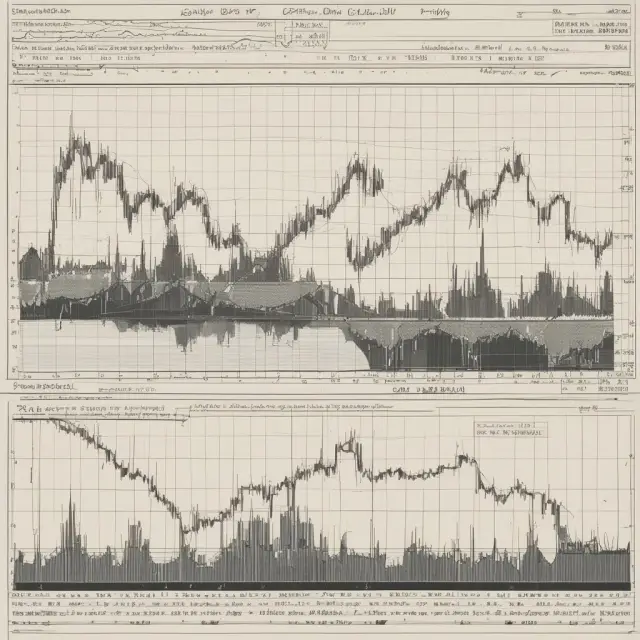
When identifying potential pennants, volume analysis plays a critical role both during the flagpole and within the pennant pattern itself. In the context of a pennant, volume refers to the number of shares or contracts that change hands during trading sessions. Volume can help confirm whether the price action is genuine and give insight into the strength and potential continuation of a trend.
During the flagpole phase, large volume confirms the significant price move in either direction, providing essential validation for a subsequent pennant formation. When the stock or asset experiences a sharp price movement—either upwards (bullish) or downwards (bearish)—high trading volumes typically accompany these trends. For bullish flagpoles, an increase in volume signals strong buying pressure, while bearish flagpoles reflect substantial selling activity. This volumetric confirmation bolsters the reliability of the pennant formation and may indicate a higher probability of success for potential trades based on this pattern.
During the consolidation phase of a pennant, traders observe volume levels to determine the strength of the underlying trend. Typically, the period of consolidation within a pennant has lower trading volumes than during the flagpole phase due to investors taking profits and waiting for confirmation signals before entering new positions. As the stock or asset enters the breakout phase, volume increases significantly as new positions are initiated. This surge in buying or selling activity marks a crucial point for traders, signaling that the underlying trend has resumed its momentum.
When identifying potential entries based on pennant patterns, traders often look for high trading volumes during the breakout phase to confirm the validity of the pattern. By combining volume analysis with price action and other technical indicators like RSI or moving averages, traders can gain a more robust understanding of the underlying trend’s strength and increase their confidence in entering trades at optimal entry points.
In conclusion, understanding volume dynamics during both flagpole and pennant phases is essential for successful technical analysis based on this pattern. By carefully monitoring trading volumes, traders can enhance their ability to identify potential pennants, confirm the validity of a breakout, and position themselves to capture potential gains from the continuation of the underlying trend.

Price Targets and Stop Losses for Pennants
Pennants are a continuation pattern, making them an excellent choice for traders looking to enter new positions following a consolidation period in their security of interest. To maximize potential profits, it’s crucial to set both a price target and stop loss for trades made during the pennant’s breakout.
Price Target Calculation
The initial move—the flagpole—provides insight into estimating the price target for a pennant. The height of this movement serves as the base for determining potential upside when a breakout occurs from the consolidation period (pennant). To calculate the price target, simply add the height of the flagpole to the breakout point. For instance, if a stock surges from $30.00 to $50.00 and then forms a pennant with a breakout at $45.00, the estimated price target would be around $60.00 ($50.00 + $10.00).
Setting Stop Losses
A stop loss is an essential component of any trading strategy, serving as a protective measure to minimize potential losses. When dealing with pennants, determining the stop loss can be more complex than just setting it at the lowest point within the pennant formation. Instead, traders should consider multiple factors that may influence the support level during the breakout. For example, a trader could place their stop loss below significant support levels or prior resistance levels. If the price drops below these levels during the breakout, this would be an indication to exit the position. In our previous example, if $40.00 served as a strong support level before the pennant formation, a trader might consider placing their stop loss at that level.
In conclusion, understanding how to calculate price targets and set stop losses for pennants is crucial in maximizing profits and minimizing risk. Traders must be well-versed in the mechanics of this technical analysis pattern to utilize it effectively while navigating the volatile financial markets.

Trading Strategies with Pennants
A pennant is an intriguing continuation chart pattern in technical analysis that follows a significant price movement, referred to as the flagpole, which is followed by a period of consolidation and eventual breakout. This section will delve into effective trading strategies using pennants, focusing on both breakout and confirmation tactics.
Breakout Strategies
- **Identifying the Pennant:** Start by spotting a significant price movement (flagpole) followed by a period of consolidation. The converging trendlines during this phase form the pennant pattern. Traders closely watch for a breakout from the upper trendline, which signals the start of the second half of the flagpole’s momentum.
- **Setting Targets and Stop Losses:** A common strategy is to establish a price target based on the height of the initial flagpole movement. For instance, if a stock rises from $5.00 to $10.00 in a sharp rally, consolidates to around $8.50, and then breaks out from the pennant at $9.00, traders might set a target of $14.00 ($5.00 + $9.00). The stop loss is typically set at the lowest point within the pennant pattern since a breakdown at these levels could potentially indicate an ongoing reversal trend.
- **Confirmation Strategies:** Many traders prefer to wait for confirmation signals before entering a trade based on the pennant pattern. For example, they may look for additional indicators such as moving averages or the Relative Strength Index (RSI) to validate the breakout and ensure the trend remains intact.
Confirmation Strategies
- **Volume Analysis:** One crucial aspect of pennants is volume analysis. The initial price move should be accompanied by a significant increase in trading volume, while the consolidation period usually sees a decrease in volume. However, when the breakout occurs, traders expect to see a surge in volume as well. This is an essential confirmation that the pattern has been validated, and new positions can be established at this point.
- **Support Levels:** A pennant’s consolidation period often forms near support or resistance levels on the chart. Traders may wait for a breakout above these levels as a strong indication of further price appreciation, making them excellent entry points.
- **Combining with Other Indicators:** Pennants can also be used in conjunction with other technical indicators to strengthen confirmation signals. For example, some traders prefer to wait for a bullish divergence between the stock price and RSI or MACD indicator before entering a trade based on the pennant pattern.
In conclusion, utilizing pennants as part of your trading strategy can be an effective method to capitalize on market trends while minimizing risk through careful analysis and confirmation signals. By understanding how to identify, set targets and stop losses, and confirm breakouts, traders can make informed decisions during each stage of the pennant pattern for optimal gains.

Real-Life Examples of Pennants
Pennants, like their cousins flags, are continuation patterns with a large price movement followed by a period of consolidation before another move in the same direction. In this section, we will explore real-life examples to help you understand how pennants form and what they can reveal about market trends.
First, let us examine an example from Apple Inc. (AAPL) stock chart in 2019. After a significant price surge in January 2019, the stock formed a bullish pennant (see Figure 1). The flagpole, represented by the sharp upward move starting around $158.31, led to a period of consolidation with converging trend lines—the pennant.
Figure 1: Apple Inc. Bullish Pennant Example
Traders watch for the breakout from the upper trend line of this symmetrical triangle as an opportunity to enter long positions. A bullish pennant is confirmed when the security breaks above its resistance level and experiences a surge in volume, signifying strong buying interest.
Next, let us examine a bearish pennant example using Microsoft Corporation (MSFT) stock chart from 2016. After an extended downtrend, MSFT formed a bearish pennant, as depicted in Figure 2. This bearish pennant was preceded by a sharp price decline, serving as the flagpole. Following this downward movement, Microsoft entered a consolidation phase where the stock traded within converging trend lines.
Figure 2: Microsoft Corporation Bearish Pennant Example
Traders would short sell or place bearish positions during the bearish pennant formation, anticipating a downward breakout below the lower trendline and further price decline. In this instance, volume analysis can be used to confirm the pattern. A significant increase in trading activity following the breakdown of the lower trend line increases the likelihood of a strong move against the direction of the flagpole.
In summary, real-life examples are essential tools for understanding the formation and implications of pennants in technical analysis. By studying how these patterns emerge and evolve, you can develop a deeper understanding of stock price movements and make informed investment decisions based on market trends.

FAQs on Pennants
What are Pennants in Technical Analysis?
A pennant is a continuation pattern formed during a large movement in a security, which is followed by a consolidation period with converging trend lines. It’s characterized by lower volume during the consolidation phase and higher volume during the breakout.
What makes Pennants similar to Flags?
Both pennants and flags are continuation patterns where a significant move in price action is followed by a relatively calm period before a strong continuation of that trend occurs. The primary difference between these two formations lies in the structure, with pennants featuring converging trendlines during their consolidation period.
How long does a Pennant last?
A typical pennant pattern can last from one to three weeks.
What is the role of volume in Pennants?
Volume plays an essential role in the formation and confirmation of a pennant. The initial move should be accompanied by high volume, while the consolidation phase exhibits lower volume. A significant increase in volume during the breakout from the pennant confirms the validity of the pattern.
How is the Price Target for a Pennant calculated?
The price target for a pennant is established by measuring the height of the flagpole and adding it to the point where the price breaks out from the pennant.
What is the typical Stop Loss level for a Pennant strategy?
Stop losses are typically placed at the lowest point of the pennant pattern to minimize potential losses, while also leaving room for the price to move in the intended direction as it breaks out of the pattern.
How can other technical indicators or chart patterns be used with Pennants?
Traders often use other indicators or chart patterns in conjunction with pennants to confirm the validity of the pattern. For example, RSI levels during the consolidation phase and trendline resistance levels before the breakout can help provide additional confirmation.
 Next entry · No. 3,942Understanding the Dynamics of Penny Stocks: Volatility and Opportunity
See also
-
 No. 3,446
29 Mar 2025
19 min
Understanding Net Volume: A Technical Indicator for Professional and Institutional Investors
Financial Data Analysis
No. 3,446
29 Mar 2025
19 min
Understanding Net Volume: A Technical Indicator for Professional and Institutional Investors
Financial Data Analysis -
 No. 3,269
15 Mar 2025
20 min
Understanding Morning Stars: Identifying Bullish Reversal Patterns in Finance
Business Finance
No. 3,269
15 Mar 2025
20 min
Understanding Morning Stars: Identifying Bullish Reversal Patterns in Finance
Business Finance -
 No. 2,669
25 Jan 2025
18 min
Understanding the Kairi Relative Index (KRI): A Technical Analysis Tool for Buy and Sell Signals
Financial Tools
No. 2,669
25 Jan 2025
18 min
Understanding the Kairi Relative Index (KRI): A Technical Analysis Tool for Buy and Sell Signals
Financial Tools -
 No. 221
07 Apr 2024
20 min
Understanding Ascending Triangles: A Technical Analysis Chart Pattern for Institutional Investors
Markets
No. 221
07 Apr 2024
20 min
Understanding Ascending Triangles: A Technical Analysis Chart Pattern for Institutional Investors
Markets -
 No. 4,915
27 Jul 2025
20 min
Technical Analysis 101: A Comprehensive Guide for Institutional Investors
Financial Education
No. 4,915
27 Jul 2025
20 min
Technical Analysis 101: A Comprehensive Guide for Institutional Investors
Financial Education -
 No. 4,912
27 Jul 2025
20 min
Understanding Technical Analysts: Tools, Certification, and Key Responsibilities
Financial Education
No. 4,912
27 Jul 2025
20 min
Understanding Technical Analysts: Tools, Certification, and Key Responsibilities
Financial Education