Understanding Seigniorage: Profiting from Currency Production

Dive into the intricacies of seigniorage – a critical concept in currency production that can generate profit or loss for governments.
Introduction to Seigniorage
Seigniorage is a significant concept within the realm of currency production and economic theory. This revenue-generating mechanism occurs when a government’s cost to produce its currency is lower than the face value of that currency. In essence, seigniorage represents the difference between the face value of money—whether it be paper bills or coins—and the actual cost to create it. By understanding seigniorage and its intricacies, we gain insight into the financial benefits governments can reap from currency production.
Definition and Historical Origins
The term “seigniorage” has roots traced back to feudal Europe when lords, or “seigneurs,” possessed the authority to mint coins. In this context, seigniorage refers to the profit earned by these lords from their exclusive right to issue currency. Fast forward to today, and seigniorage is a crucial economic concept representing the difference between the face value of money and its production cost.
Profit or Loss
Governments have the potential to either profit or experience a loss when producing currency. When the face value of the currency is higher than the cost to create it, governments generate revenue in the form of seigniorage. Conversely, if the production cost exceeds the denomination’s face value—as is often the case with coins containing valuable metals, such as silver or copper—governments may experience a loss.
Seigniorage vs Gresham’s Law
Gresham’s law and seigniorage are related monetary principles. While Gresham’s law refers to the tendency of “bad money” driving out “good money,” seigniorage represents the potential profit governments gain from issuing new currency. The two concepts intersect, as the production of new money can influence market dynamics and even lead to situations where “bad money drives out good.”
The Cost to Produce a U.S. Dollar Bill
In 2022, it cost the United States government 13.8 cents to produce a $20 bill and 17 cents for a $100 bill. The production costs of paper bills result from factors like ink, paper, labor, and overhead. As such, the seigniorage for these denominations is substantial: $196.20 for each $20 bill and $183 cents for each $100 bill.
Production Costs of Circulating Coins
The production costs of coins vary greatly depending on their denomination, composition, and minting method. In 2021, the U.S. Mint produced more than 14 billion circulating coins at a cost of 2.10 cents per penny—a loss for the government due to the coin’s melt value being lower than its face value.
Seigniorage and Modern Monetary Theory (MMT)
Modern Monetary Theory, or MMT, is an economic framework that proposes governments can create their own money without facing a limit on debt issuance or inflation. Seigniorage plays a role within this theory as the difference between the face value of newly created money and its cost to produce.
Seigniorage’s Role in the U.S. Economy
The U.S. Federal Reserve, which manages the country’s monetary policy, uses seigniorage revenue to help fund various aspects of economic stability and growth. For example, the Fed purchases Treasury securities on a regular basis, with the proceeds from these sales used for seigniorage-related expenses such as producing new currency and maintaining the currency in circulation.
The Importance of Seigniorage in the European Union
Seigniorage plays a crucial role in the European Monetary Union (EMU), where member countries have relinquished their ability to produce their own currencies to the European Central Bank (ECB). The ECB manages monetary policy for all participating countries, generating seigniorage from issuing new euros. This revenue is used to help fund the operating expenses of the ECB and the European System of Central Banks.
Frequently Asked Questions:
Q1. What is the historical significance of seigniorage?
A1. Seigniorage originated during feudal Europe when lords, or “seigneurs,” were granted the exclusive right to mint coins and earn profits from issuing new currency.
Q2. How does a government make a profit with seigniorage?
A2. A government makes a profit when the face value of the money it creates is higher than the cost to produce it. This difference represents the seigniorage revenue.
Q3. What factors can influence a currency’s production cost?
A3. Production costs for currency are influenced by various factors, such as ink, paper, labor, overhead, and the metal content of coins (if applicable).
Q4. What is Gresham’s law, and how does it relate to seigniorage?
A4. Gresham’s law states that “bad money drives out good.” Seigniorage comes into play as new currency can influence market dynamics and potentially lead to situations where bad money (lower-value currency) drives out good money (higher-value currency).

Definition of Seigniorage
Seigniorage is an intriguing concept that refers to the difference between the face value and the actual cost of producing a currency note or coin. The term originated from medieval Europe when seigneurs, or lords, had the power to mint coins within their territories. Today, governments around the world continue to profit from this economic phenomenon.
In modern-day terms, seigniorage represents the revenue generated by creating new currency that exceeds the cost of production. This difference can be significant and serves as a valuable source of income for countries, enabling them to finance government expenditures without relying on taxation.
Historically, seigniorage was first recognized in the 18th century when economists began calculating the revenue that European governments could potentially generate from their newly established mints. In more recent times, however, seigniorage has taken on a broader meaning and significance for monetary policies.
Governments can profit from seigniorage when the cost to create new currency is lower than its face value. For instance, in 2022, it cost just 7.5 cents to produce a US dollar bill, while its face value was $1. This discrepancy between cost and face value resulted in an impressive seigniorage of 92.5 cents per dollar.
However, the production of coins can sometimes result in a loss for governments instead of a profit due to their intrinsic metal values. In the United States, for example, it costs more to produce a penny than its face value. Since 2016, producing a penny has cost more than one cent. Despite this loss, the U.S. Mint continues to manufacture pennies due to their circulation necessity and public demand.
In conclusion, seigniorage is an essential concept that enables governments to generate revenue by creating new currency. Understanding its historical background, economic significance, and modern-day implications can help individuals appreciate the intricacies behind the monetary policies of various nations.

Seigniorage: Profit or Loss
Governments have the unique ability to generate revenue through currency production, but this potential profit isn’t always guaranteed. Seigniorage—the difference between a currency’s face value and production cost—can result in either profit or loss for those who mint the money. In this section, we will discuss how governments can experience seigniorage profits or losses based on various factors.
The Concept of Seigniorage
Seigniorage is an essential component of a monetary system where the difference between the face value and production cost of currency generates revenue for the issuing government. If the currency’s face value exceeds its production cost, the government benefits from positive seigniorage. However, if the production cost outweighs the currency’s face value, then negative seigniorage occurs.
Seigniorage as Profit
Positive seigniorage is a valuable source of revenue for governments when producing their own currency. Governments can use this revenue to finance expenditures without resorting to taxation. For instance, if it takes 7 cents to create a $10 bill, the government will earn 93 cents through seigniorage. This profit can be used to fund projects, programs, or other initiatives that benefit the population.
The Case of Coins and Seigniorage Losses
Coins are an exception when it comes to seigniorage. While their production cost might be lower than their face value, the intrinsic value of the metal in the coin may exceed its nominal value. This is especially true for base metals used in coins like pennies and nickels, where production costs often outweigh the face value of these coins. For instance, producing a penny costs more than one cent due to the price of zinc and copper used in its composition, making it an example of negative seigniorage.
The Federal Reserve’s Role in Seigniorage
In the United States, the Federal Reserve plays a crucial role in managing seigniorage as it determines the amount of currency needed for economic circulation. The Fed pays production costs to both the U.S. Bureau of Engraving and Printing for banknotes and the U.S. Mint for coins. This cost includes materials, labor, machinery, and other expenses related to manufacturing the currency.
Seigniorage and Gresham’s Law: Similarities and Differences
Gresham’s law is an economic principle stating that “bad money drives out good.” In monetary systems where seigniorage is present, this principle can be interpreted in different ways. Seigniorage can lead to the hoarding of superior currency, driving the ‘bad’ currency out of circulation. However, Gresham’s law was historically rooted in the concept of metallic currencies and their intrinsic values.
The Evolution of Seigniorage throughout History
Seigniorage has deep roots dating back to Europe during feudal times when lords or “seigneurs” controlled coin production. This historical significance is where seigniorage gets its name. Over time, the concept evolved to encompass the revenue-generating potential of creating currency with a face value higher than the cost to produce it.
In Conclusion
Seigniorage plays a pivotal role in understanding how governments generate revenue through currency production. While the potential for profit is significant, the actual outcome depends on factors like the cost of producing a given denomination and market forces that influence demand for specific currencies. Seigniorage provides valuable insights into economic systems, monetary policies, and the complex interplay between intrinsic value and face value in currency.
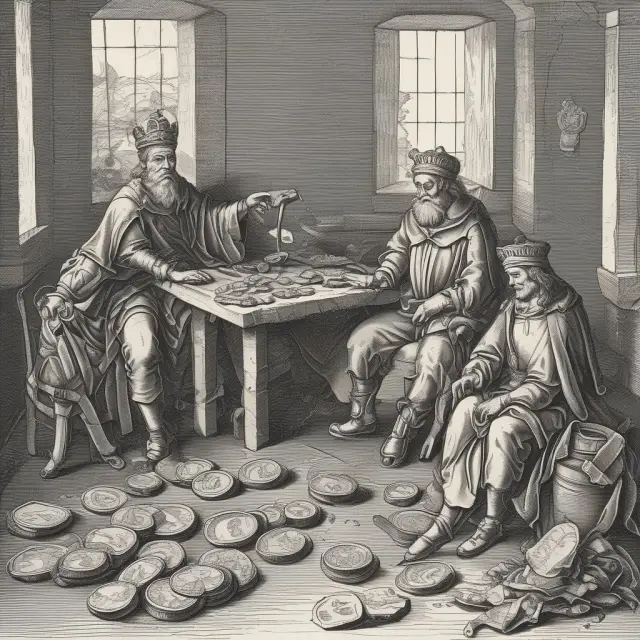
Seigniorage vs Gresham’s Law
Seigniorage and Gresham’s law are two related but distinct concepts within the realm of monetary economics. While seigniorage refers to the difference between the cost to produce money and its face value, leading to potential revenue for the issuing government, Gresham’s law is a monetary principle dealing with the relative stability and composition of different currencies in circulation.
Historically, seigniorage dates back to the feudal lords of Europe who possessed the right to mint their own coins. They could issue currency with a higher face value than the actual cost of production, creating a profit for themselves, or “seigniorage.” In contrast, Gresham’s law emerged from the observation of people preferring to keep and use good money over bad, regardless of the difference in denomination.
Though initially applied to precious metals coins, with gold being more valuable than silver, modern interpretations of Gresham’s Law have been extended to paper currencies and their relative stability within international markets. This can be seen when countries experience significant differences between their respective exchange rates or inflation levels, causing a shift in the circulation of their currency.
When it comes to seigniorage and Gresham’s law, there are some important differences that set them apart:
- Origins and historical context – Seigniorage was first introduced as a means for feudal lords to create revenue from producing coins with a higher face value than the actual production cost. In contrast, Gresham’s Law is rooted in the observation of people preferring to keep and use good money over bad, regardless of its denomination or underlying material (gold or silver).
- Monetary principles – While seigniorage pertains to the difference between the face value and production cost of a currency, Gresham’s law refers to how various currencies interact within circulation, with “good” money driving out “bad.”
- Modern applications – Seigniorage is still relevant today as governments can profit from producing new currency when its face value exceeds the cost of production. On the other hand, Gresham’s Law is mostly applied to the relative stability and competition between currencies in international markets.
In summary, seigniorage and Gresham’s law are two distinct concepts within monetary economics with their unique historical origins, principles, and applications. Seigniorage represents a potential profit for governments from producing currency with a face value greater than its cost of production, whereas Gresham’s Law explains how people prefer to use good money over bad, leading to the circulation of more stable currencies.
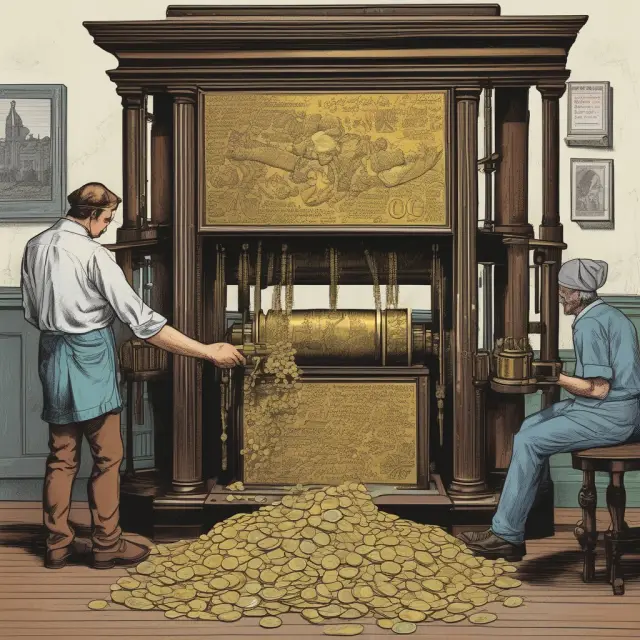
Cost to Produce a U.S. Dollar Bill
Seigniorage, as the difference between the face value and production cost of money, is an essential concept for any individual or entity involved in currency issuance and circulation. In the context of the United States, understanding this economic principle becomes particularly significant due to the vast amount of dollars in circulation. To illustrate how seigniorage functions regarding the creation and production of a single U.S. dollar bill, let’s examine the costs and implications involved.
First, it’s crucial to establish that the cost to produce a U.S. dollar bill is not insignificant. The Bureau of Engraving and Printing (BEP) is responsible for printing these bills, while the U.S. Mint oversees coin production. According to data from 2022, it costs the Federal Reserve 13.8 cents to produce a $20 bill and 17 cents for a $100 bill. Despite this seemingly substantial cost, the seigniorage value is much higher due to the face value of these bills.
For instance, with a $20 bill, the difference between its face value ($20) and production cost (13.8 cents) results in a seigniorage revenue of $19.862 or 98.745% of the bill’s denomination. Similarly, for a $100 bill, the seigniorage amounts to $99.83, representing approximately 99.83% of its face value.
While the production costs for dollar bills are generally covered by seigniorage revenue, this is not always the case for coins. This disparity arises due to differences in material composition and production processes between banknotes and coins.
When considering coins, especially those made from precious metals like silver or gold, the melt value may outweigh their face value, leading to negative seigniorage. For instance, a $0.01 copper penny, whose face value is one cent, costs 2.10 cents to produce in 2022. In this scenario, each penny results in a loss of 1.10 cents, which could ultimately impact the overall profitability of the coin production process.
Understanding the cost breakdown of producing a U.S. dollar bill and its associated seigniorage provides valuable insights into the economic dynamics behind currency issuance and circulation within the United States. This knowledge can help individuals better grasp monetary policies, as well as the potential implications for financial markets and public finance.

Production Costs of Circulating Coins
Seigniorage is the financial benefit that governments gain when producing currency. The concept revolves around the difference between the face value and production cost of money, which often results in a profit. However, the production of circulating coins can sometimes lead to losses instead. The U.S. Mint and the Federal Reserve System are responsible for the coinage and paper money production respectively.
The term “seigniorage” originated during the feudal era when lords had the right to mint coins, known as their seigniorial prerogative. The profits from this activity were then called seigniorage. Fast forwarding to modern times, the principle remains applicable but its application has shifted. Seigniorage now refers to the revenue generated by governments by issuing currency with a face value greater than the cost of production.
However, when discussing circulating coins, the situation is not as straightforward. The metals used in coinage possess intrinsic value. For instance, silver quarters and dimes contain real silver. With the price of precious metals fluctuating on global markets, there are instances where the melt value surpasses the face value—and when combined with production costs, results in a loss.
The U.S. penny is one such example. Its cost to produce exceeded its face value for sixteen consecutive years between 2005 and 2019. In 2021, it still took 2.10 cents to manufacture the humble coin with a face value of just one cent. Despite being the smallest denomination in circulation, the penny continues to be produced due to its role as a convenient unit for making change.
The U.S. Mint produces various types of coins, including circulating ones and collectible ones. Circulating coins are used primarily in everyday transactions while collectibles serve as numismatic investments. The minting cost, melting value, and demand determine whether seigniorage is generated or not.
The Federal Reserve Bank purchases newly produced coins from the U.S. Mint at their face value. This practice helps ensure a steady supply of coins available for circulation and keeps the economy functioning smoothly. The cost breakdown reveals that producing a single dollar bill in 2022 was 7.5 cents, generating 92.5 cents in seigniorage. In contrast, the cost to manufacture a penny amounted to 2.10 cents, making it a loss-making coin.
In conclusion, understanding the production costs behind circulating coins is crucial to comprehending seigniorage fully. It highlights that not all currencies generate profit for governments; some may incur losses instead. This knowledge adds depth to our grasp of the financial intricacies underlying currency production and its implications.

Seigniorage’s Role in the U.S. Economy
The profit or loss generated by a country from producing its currency is known as seigniorage. In the case of the United States, seigniorage has proven to be a valuable source of revenue. Understanding how this economic concept functions within the U.S. economy involves examining the Federal Reserve’s role in currency production and the implications of this process for the American economy.
Seigniorage is generated when the cost to produce a currency is lower than its face value, resulting in a profit for the government responsible for minting that currency. The U.S. government benefits significantly from seigniorage due to the unique nature of its fiat currency system—one where the value of money is derived not by the intrinsic worth of a commodity like gold or silver but through government decree.
The Federal Reserve, as the central bank responsible for managing the nation’s monetary policy, plays an essential role in seigniorage generation. The Fed purchases Treasury bills (T-bills) from the U.S. Department of the Treasury to acquire funding for producing new currency. In return, the Fed receives a fixed interest rate on these T-bills. Once the Federal Reserve Bank orders currency from the Bureau of Engraving and Printing, it pays production costs to the U.S. Mint for the minting of coins or the production of paper bills. The Fed then purchases the newly produced currency at its face value, generating seigniorage revenue when the cost to produce the currency is less than its face value.
This arrangement benefits the U.S. government in several ways: it provides a source of revenue for funding expenditures without raising taxes, helps control inflation by managing the amount of money circulating in the economy and allows the country to maintain financial stability during periods of economic instability or uncertainty. However, it’s crucial to note that this seemingly advantageous arrangement comes with potential challenges, such as the possibility of generating negative seigniorage due to changing production costs or market demands.
One of the most notable examples of seigniorage in action is the cost difference between producing a $1 bill and a penny. In 2022, it cost the Federal Reserve only 7.5 cents to produce a $1 bill while it spent 2.10 cents to produce a single penny—a significant disparity. The seigniorage generated from producing these denominations represents an important source of revenue for the U.S. government.
Moreover, seigniorage is not a new concept; its historical roots date back to feudal Europe when lords or “seigneurs” had the power to mint coins, earning profits from the difference between the intrinsic value of the metal used and the face value placed on their coins. This economic principle has been adapted to modern fiat currency systems, making it a valuable tool for governments looking to finance their expenditures.
In conclusion, seigniorage plays a crucial role in the U.S. economy by providing revenue for government spending, managing inflation, and maintaining financial stability. Understanding its historical background, how it’s generated through the Federal Reserve system, and potential challenges can help investors, economists, and policymakers appreciate its significance.

The Importance of Seigniorage in Modern Monetary Theory (MMT)
Modern Monetary Theory (MMT), an innovative monetary framework, sheds light on the significance of seigniorage as a tool for governments to manage their economies. In MMT, a country’s currency is considered sovereign, meaning it can issue its own debt and create its own money in order to finance its expenditures without being limited by external constraints. Seigniorage represents one aspect of this flexibility, allowing countries to generate revenue when producing currency that exceeds the cost of production.
Historically, seigniorage has been viewed as a source of revenue for governments, often used to fund various governmental expenditures without relying on taxation. With MMT, the importance of seigniorage is magnified due to the framework’s unique understanding that a sovereign currency issuer like the U.S., for example, can issue debt in its own currency and create money at will. As such, seigniorage revenue can be used to fund government spending without the need for new borrowing or taxation.
However, it is essential to note that while governments generate revenue through seigniorage, they also face costs associated with producing their currency. These costs include the materials and labor required for coin and paper money production. In the case of coins, the value of the metal used can exceed the denomination it represents, leading to an additional cost called “metal content,” or the intrinsic value of the coin.
In modern times, seigniorage has taken on new significance as a tool within MMT for managing economic stability and growth. By adjusting the amount of currency in circulation, governments can influence interest rates and inflation levels, providing them with greater control over their economies. This flexibility is essential during periods of recession or economic instability when conventional monetary tools may be less effective.
In summary, seigniorage plays a vital role within Modern Monetary Theory as it represents a source of revenue for governments and an essential tool for managing a sovereign currency. By producing currency at a cost lower than its face value, governments can generate revenue to finance expenditures and maintain economic stability, making seigniorage a powerful yet nuanced concept within the context of modern monetary systems.

Seigniorage and the European Union
The concept of seigniorage is not limited to individual countries but extends to larger economic entities such as the European Union (EU). Understanding how seigniorage functions within the EU provides valuable insights into its implications for monetary policy, fiscal sustainability, and macroeconomic stability.
In the context of the EU, the European Central Bank (ECB) assumes responsibility for managing the eurozone’s monetary policy and currency production. Like in other countries, seigniorage revenue is generated when the ECB’s cost to produce a euro is lower than its face value. This extra value goes directly to the European Union budget, which may be used to finance various initiatives without having to collect additional taxes.
The European Central Bank closely monitors the production costs of euro banknotes and coins, providing detailed information on each currency denomination. In 2022, for example, it cost €0.081 to produce a €50 note, whereas €0.369 was needed to mint a €2 coin. The positive seigniorage revenue generated from these transactions contributes significantly to the European Union budget and its overall fiscal sustainability.
However, there are important differences between euro banknotes and coins when it comes to seigniorage generation. Euro notes do not have an intrinsic value since they are simply pieces of paper, while coins have a metal base with a certain market value. The melt value of coins may fluctuate depending on global commodity markets, which can impact the overall seigniorage revenue for the European Union.
Another factor to consider is the role of the European System of Central Banks (ESCB) in setting interest rates. The ESCB’s primary goal is maintaining price stability within the eurozone, with its benchmark refinancing rate typically influencing borrowing costs for banks and businesses across EU countries. When considering seigniorage revenue generation, these interest rate decisions can indirectly impact the profitability of producing and circulating euros.
In summary, seigniorage plays a vital role in the European Union’s monetary system, contributing to its fiscal sustainability while allowing for various expenditures without raising additional taxes. Understanding how seigniorage functions within the EU context is crucial for assessing its implications on monetary policy, fiscal stability, and macroeconomic performance.

FAQ: Seigniorage Frequently Asked Questions
What is Seigniorage, and how does it work?
Seigniorage is the difference between the face value of money and its cost to produce. When the production cost is lower than the face value, the government gains a profit from seigniorage. Conversely, when production costs exceed the face value, the government suffers a loss. The U.S. Federal Reserve purchases newly printed currency at face value while paying for its production costs.
What is the historical origin of Seigniorage?
The term “seigniorage” originated from feudal European lords who had the power to mint their own coins. They could profit from seigniorage when producing new coins cost less than their face value.
How does the Federal Reserve determine the cost of producing a dollar bill or coin?
The Federal Reserve collaborates with the U.S. Department of the Treasury’s Bureau of Engraving and Printing for currency production and pays for production costs. The Mint handles coin production, and it is influenced by the number of Federal Reserve Bank orders.
What factors influence seigniorage?
The cost of producing a new dollar bill or coin affects seigniorage positively when the face value exceeds production expenses. However, interest payments on Treasury bills acquired in exchange for new currency and changes in metal prices may negatively impact seigniorage.
How is Seigniorage related to Gresham’s Law?
Gresham’s law states that “bad money drives out good” in reference to coins with less valuable metal being hoarded while others are exchanged, creating a form of effective seigniorage. However, this principle only applies when currencies have intrinsic value made from precious metals. With the abandonment of metallic currency standards, it has been adapted as a concept for relative currency stability in global markets.
What is the cost to produce a U.S. dollar bill?
The 2022 production cost of producing a single US dollar bill was 7.5 cents.
How much does the U.S. Mint produce in circulating coins annually?
In 2021, the U.S. Mint produced more than 14 billion circulating coins, including pennies, nickels, dimes, and quarters.
What are some real-world examples of seigniorage?
The Federal Reserve purchases Treasury bills to allow for new currency production at face value while paying for production costs. The cost difference between the face value and production expense creates revenue for the government through seigniorage.
Why does seigniorage matter, and how is it used by governments?
Seigniorage generates revenue for governments when the value of newly produced currency exceeds its production costs. Governments utilize this revenue to finance their expenditures without raising taxes, promoting economic stability and growth within their respective economies.
 Next entry · No. 4,598Unlocking Wealth: A Comprehensive Guide to Self-Directed IRAs (SDIRAs)
See also
-
 No. 5,572
20 Sep 2025
18 min
Understanding the Wage-Price Spiral and Its Impact on Inflation
Finance Policy
No. 5,572
20 Sep 2025
18 min
Understanding the Wage-Price Spiral and Its Impact on Inflation
Finance Policy -
 No. 5,379
03 Sep 2025
22 min
Maximizing Utility: Understanding Economic Theory and Measuring the Value of Goods and Services
Economics
No. 5,379
03 Sep 2025
22 min
Maximizing Utility: Understanding Economic Theory and Measuring the Value of Goods and Services
Economics -
 No. 5,179
17 Aug 2025
21 min
Understanding Underemployment Equilibrium: The Persistent State of Unemployment Above Full Employment
Economics
No. 5,179
17 Aug 2025
21 min
Understanding Underemployment Equilibrium: The Persistent State of Unemployment Above Full Employment
Economics -
 No. 4,732
12 Jul 2025
20 min
Understanding Stagflation: The Economic Puzzle of Slow Growth, High Unemployment, and Inflation
Economics
No. 4,732
12 Jul 2025
20 min
Understanding Stagflation: The Economic Puzzle of Slow Growth, High Unemployment, and Inflation
Economics -
 No. 4,474
21 Jun 2025
19 min
Ricardian Equivalence: Understanding the Controversial Economic Theory
Economics
No. 4,474
21 Jun 2025
19 min
Ricardian Equivalence: Understanding the Controversial Economic Theory
Economics -
 No. 4,287
06 Jun 2025
19 min
Understanding Rational Expectations Theory: Predicting Future Economic Outcomes
Economics
No. 4,287
06 Jun 2025
19 min
Understanding Rational Expectations Theory: Predicting Future Economic Outcomes
Economics