Understanding Skewness in Finance: Implications for Investors and Return Distributions

Exploring Skewness in Finance: Understand the implications of this measure for investors and return distributions in various contexts.
What is Skewness?
Skewness refers to the degree of asymmetry or distortion in a probability distribution from perfect symmetry around its mean, or central tendency. When a bell curve is not balanced evenly on both sides with respect to the median, it displays skewness, manifesting as either right (positive) or left (negative) skew.
Right Skewness
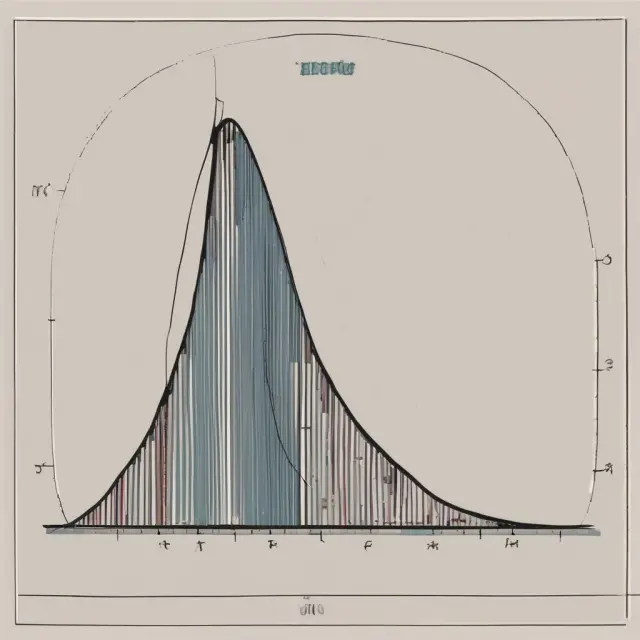
A right-skewed distribution, also known as positive skewness, features a longer tail to the right side and fewer observations towards the left side of the median. The mean is usually greater than the median, as extreme values or outliers on the right side pull the average upwards. For example, in the context of stock market returns, a positive skew indicates a higher probability of observing larger gains but an increased risk of experiencing substantial losses.
Left Skewness
Conversely, left-skewed distributions, or negative skewness, have longer tails on the left side and fewer observations towards the right side of the median. The mean is typically smaller than the median, with extreme values pulling the average downwards. For instance, in household income statistics, a negatively skewed distribution implies that a larger percentage of individuals earn lower salaries compared to those earning higher wages.
Measuring Skewness
To quantify skewness, statisticians use Pearson’s first and second coefficients of skewness, which measure the difference between the mean and median values relative to the standard deviation. Pearson’s first coefficient focuses on strong mode distributions, while the second coefficient is better suited for data sets with weak or multiple modes. A positive value signifies right skewness, while a negative value represents left skewness, with zero skewness indicating a symmetrical distribution.
Understanding Skewness
Skewness plays an essential role in financial analysis as it provides valuable insights into the direction and extent of outliers and deviations from mean values. This information enables investors to make more informed decisions and assess potential risks, especially when predicting future outcomes based on historical data. Short-term and medium-term investors, in particular, benefit from considering skewness as they are less likely to hold onto assets long enough for averages to even out, making it crucial to understand the extremes of their investment portfolios.
The Importance of Skewness
Investors rely on skewness as a critical tool for assessing risk and performance in various financial instruments, including stocks, bonds, mutual funds, and derivatives. It helps determine whether the data is evenly distributed around its mean or if it exhibits any significant asymmetry that could impact investment decisions. Understanding skewness allows investors to:
- Evaluate potential risks by identifying extreme values in a distribution and assessing their likelihood of occurrence.
- Choose appropriate financial models based on the data’s underlying distribution type.
- Anticipate market trends, such as changes in volatility or shifts towards right-skewed distributions, which could lead to increased opportunities for gains or losses.
- Compare and contrast different investment options to identify those with more favorable risk/reward profiles.
- Hedge against potential risks by incorporating skewness into portfolio construction strategies.
In conclusion, Skewness is a vital concept in finance that investors must understand to make informed decisions about their investments. By recognizing the direction and extent of asymmetry in return distributions, investors can better assess risk, identify opportunities, and adapt their investment strategies accordingly. The ability to effectively manage skewness allows for more accurate predictions and improved overall performance.
Types and Degrees of Skewness
Skewness is an essential concept in statistics used to understand how data is distributed around its central value. It measures the degree of asymmetry observed in a probability distribution by determining whether it deviates from perfect symmetry or normality. A normal distribution, represented by a bell curve, exhibits zero skewness, with equal weight on both sides. However, real-world data sets are seldom normally distributed and may exhibit right (positive) or left (negative) skewness to varying degrees.
Right-skewed distributions, also referred to as positively skewed distributions, have a longer tail extending towards the right side of the distribution curve. In contrast, left-skewed distributions, or negatively skewed distributions, display a longer tail on the left side of the curve. These two skews represent the direction and weight of the distribution, with zero skewness indicating a normal distribution.
The degrees of skewness can be measured using various statistical methods such as Pearson’s first and second coefficients of skewness. Pearson’s first coefficient measures the difference between the mode and mean divided by the standard deviation. Pearson’s second coefficient, on the other hand, computes the difference between the median and mean multiplied by three, then divided by the standard deviation. Both methods provide valuable insights into skewness, with Pearson’s first method being more suitable for distributions with a strong mode while Pearson’s second method is preferred when dealing with weak or multiple modes.
Understanding Skewness in Finance
Skewness plays a crucial role in finance, particularly for short- and medium-term investors who need to assess the likelihood of extreme returns. In contrast to standard deviation, which assumes a normal distribution, skewness takes into account the extremes or outliers that can significantly impact investment performance. By considering skewness risk, investors can better understand the potential risks associated with their investments and adjust their strategies accordingly.
Common Examples of Skewed Distributions in Finance
Skewness is prevalent in finance, particularly in stock market returns and individual household income distributions. Understanding the implications of skewness in these contexts can lead to improved investment decisions and risk management strategies. In the next sections, we will explore the relationship between skewness and measures of central tendency, as well as its impact on financial models and commonly encountered distributions in finance. Stay tuned for further insights into this essential concept!

Impact of Skewness on Mean and Median
Understanding Measures of Central Tendency
Before delving into the impact of skewness on mean and median, it’s essential first to comprehend these two measures of central tendency. The mean represents the arithmetic average of a data set, while the median is the middle value when the data points are arranged from least to greatest.
Relationship Between Skewness and Mean vs Median
When dealing with skewed distributions, it’s important to note that both mean and median differ in their sensitivity to extreme values. The relationship between skewness, mean, and median can be explained through the example of right-skewed data distributions, where the tail extends towards the right side.
Impact on Mean
In a right-skewed distribution, the presence of long tails containing large observations or outliers results in an increased mean value compared to the median. The influence of these extreme values is more pronounced as the degree of skewness increases. This gap between mean and median can lead investors to underestimate risks associated with the investment, as the mean may not accurately represent the typical return experience.
Impact on Median
On the other hand, the median remains less affected by outliers in a right-skewed distribution because it represents the value that occurs most frequently. Conversely, for left-skewed distributions with a tail extending towards the left side, the mean is smaller than the median, as the influence of extreme negative values pulls down the overall average.
Implications for Investors and Financial Models
The impact of skewness on mean and median has significant implications for investors in both understanding investment risks and the limitations of financial models based on assumptions of normal distributions. By recognizing how a right-skewed distribution affects these measures, investors can gain a more comprehensive perspective on potential portfolio performance and make better informed decisions.
Investors should be aware that a model’s assumption of a normal distribution with equal mean and median may lead to underestimation or overconfidence in investment risks. Financial models should instead incorporate the skewness factor when assessing returns, especially for short-term investments where the impact of skewness is more pronounced. By doing so, investors can gain a clearer understanding of potential portfolio risks and better anticipate market movements.

Measuring Skewness: Coefficients
Skewness can be quantified as a representation of the extent to which a given distribution deviates from symmetry, which is commonly measured by skewness coefficients. Pearson’s first and second coefficients are two common methods for determining skewness. Let’s explore each in detail:
1. Pearson’s First Coefficient of Skewness (Pearson Mode Skewness)
Pearson’s first coefficient of skewness, also known as Pearson mode skewness, calculates the difference between the mode and mean, then divides this difference by the standard deviation. The formula is: Sk = (Md – Mo) / s
Where:
- Sk = Pearson’s first coefficient of skewness
- Md = Modal value (the value with the highest frequency)
- Mo = Mean value
- s = Standard deviation
This method is useful when dealing with data that have a strong mode. However, it may not be suitable for data sets having weak modes or multiple modes since its accuracy relies on the presence of a clear central mode.
2. Pearson’s Second Coefficient of Skewness (Pearson Median Skewness)
Pearson’s second coefficient of skewness, also known as Pearson median skewness, calculates the difference between the median and mean, multiplies it by three, and then divides this product by the standard deviation. The formula is: Sk = (Md – Mo) * 3 / s
Where:
- Sk = Pearson’s second coefficient of skewness
- Md = Median value
- Mo = Mean value
- s = Standard deviation
Pearson’s second coefficient is a preferred method when dealing with data having weak or no clear modes. It is not influenced by extreme values and offers a more robust measure of skewness in such cases.
Skewness, as mentioned previously, measures the asymmetry in a probability distribution and is used along with kurtosis to better understand the likelihood of extreme events occurring. Investors often utilize skewness when evaluating financial instruments’ return distributions since it considers the extremes rather than focusing solely on the mean or average.
Understanding these coefficients can help investors make more informed decisions by considering the distribution’s symmetry and identifying potential risks associated with skewness in their investment strategies.

Skewness in Finance: Importance and Uses
Skewness is a vital concept within finance, especially for short-term and medium investors, as it provides essential insights into return distributions. Skewness indicates the asymmetry in data distribution, with a normal distribution having zero skewness. Distributions can exhibit right or positive skewness (longer tail on the right side) or left or negative skewness (longer tail on the left side). Understanding skewness is crucial for investors as it helps assess risk more effectively.
Measuring Skewness in Finance
Two common methods to quantify skewness are Pearson’s first and second coefficients of skewness. Pearson’s first coefficient, also known as mode skewness, subtracts the mode from the mean and divides the result by the standard deviation. Pearson’s second coefficient, or median skewness, subtracts the median from the mean, multiplies the difference by three, and then divides the product by the standard deviation.
Impact of Skewness on Mean and Median
A right-skewed distribution has a larger gap between the mean and median compared to a symmetric or left-skewed distribution. In such cases, the mean is higher than the median since most of the data points lie towards the tail end on the right side. Conversely, in a negatively skewed distribution, the median value is larger than the mean, as more data points fall towards the left side.
Financial Implications and Uses of Skewness
Skewness plays a significant role in finance by offering valuable insights into return distributions. It helps investors understand potential risks beyond average returns. For instance, skewness can indicate the presence of extreme events that might not be accounted for using traditional statistical measures such as standard deviation. Short-term and medium investors are particularly interested in skewness since they frequently deal with volatile markets where unexpected outcomes can significantly impact their investment portfolios.
Understanding the Causes of Skewness in Finance
Skewness arises due to differences between the number and frequency of data points on either side of a distribution curve. For example, consider stock market returns, which often exhibit right skewness. This is because investors are more likely to experience small losses than significant gains over time. However, large losses can still occur, leading to the long tail on the left side. Conversely, positive skewness can be observed in income distribution, as fewer individuals hold a substantial share of income while many earn relatively less.
Implications for Financial Models and Portfolio Management
Skewness is essential when developing financial models since it helps account for potential extreme events and better estimate risks. Additionally, it provides insights into portfolio management strategies by identifying assets or sectors that are more likely to contribute to skewness in investment returns. By understanding these patterns, investors can optimize their portfolios to mitigate risks and improve overall performance.
In conclusion, skewness is a crucial concept for investors, especially when dealing with short-term or medium investments. It helps assess the asymmetry in return distributions, enabling investors to make informed decisions by accounting for potential extreme events that may not be captured by traditional statistical measures such as standard deviation. By understanding skewness and its various applications, investors can better manage risk and optimize their investment strategies.
Impact of Skewness on Financial Models
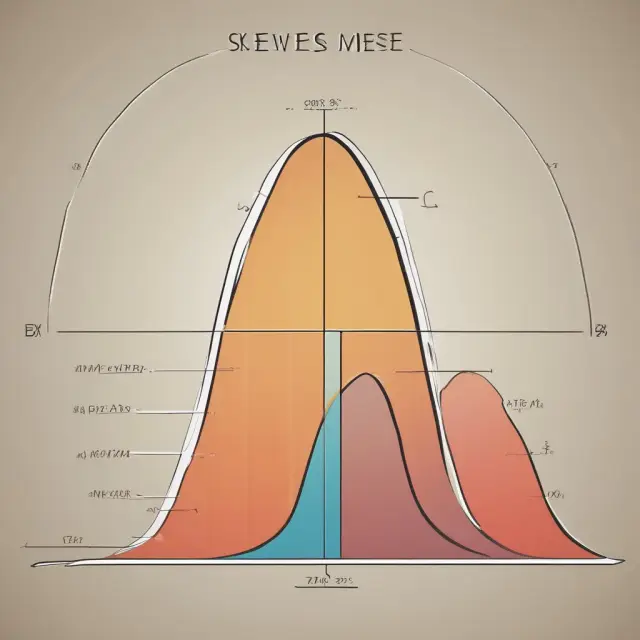
Skewness can have significant implications for financial models, particularly when dealing with skewed distributions. These models often assume a normal distribution in their calculations. However, many real-world data sets exhibit skewness, leading to potential underestimation of risk or incorrect predictions.
Skewness and Financial Modeling: Unmet Expectations
The standard deviation is commonly used as a measure for predicting future returns in financial modeling. However, this approach assumes a normal distribution. When data exhibits skewness, the assumption of a normal distribution can lead to inaccurate predictions or underestimations of risk. In such cases, investors may be caught off guard by extreme market movements.
Underestimation of Skewness Risk
Financial models that do not account for skewness risk can significantly underestimate the likelihood of encountering outliers in a skewed distribution. The more right-skewed (positive skewness) the data, the greater the discrepancy between the model’s predictions and real-world performance. This is because these models assume an equal distribution around the mean value, while skewed distributions have unequal dispersion to the left and right of the mean.
Examples of Skewness in Finance
Skewness plays a crucial role in understanding risk and return distributions within various financial markets, particularly in stock market returns. Many financial models rely on normal distribution assumptions for estimating future outcomes, but these assumptions do not account for the fact that stock market returns are often right-skewed, with more extreme positive returns compared to negative ones.
Stock Market Returns and Skewness
The skewness of stock market returns can be observed through the excess kurtosis and asymmetry in return distributions. This skewness is essential for investors as it better represents the extremes of the data set, which are often more relevant to short-term and medium-term investment strategies. Understanding skewness in stock market returns allows investors to make more informed decisions regarding risk management and portfolio construction.
Conclusion: Importance of Skewness for Investors
Skewness is a crucial consideration when evaluating financial data and constructing investment models. By understanding how skewness impacts distributions, investors can better manage risks, assess market movements, and make more informed decisions based on real-world outcomes. This knowledge empowers investors to create well-diversified portfolios that are better equipped to handle the volatility of financial markets.

Commonly Skewed Distributions in Finance
Skewness is a significant measure for investors when examining return distributions, particularly in relation to stock market returns and individual household income. In finance, skewness plays a crucial role in understanding potential risks and the likelihood of extreme events.
Stock Market Returns
The stock market tends to exhibit right-skewed (positive) distributions due to the fact that large gains often overshadow small losses. The occurrence of significant market movements is more common than might be expected under a normal distribution, leading to increased volatility and potential for skewness in returns. A right-skewed return distribution would have a longer tail towards positive values, indicating an asymmetric distribution where gains outweigh losses. This property can influence the effectiveness of various investment strategies and risk management techniques.
Individual Household Income
Another example of a commonly skewed distribution in finance is individual household income. The income distribution for households demonstrates a positively skewed pattern, as fewer people have higher incomes compared to those with lower incomes. This distribution shape can help investors better understand income inequality and the potential impact it may have on their investment strategies or portfolio composition.
Understanding Skewness in Finance
Investors benefit from understanding skewness in finance due to its implications for risk management and performance prediction. By acknowledging the presence of skewness, investors can more accurately evaluate the risks associated with various financial instruments and tailor their investment strategies accordingly. For instance, skewness can be used to identify the potential for extreme events, which is crucial for short-term and medium-term investors. Moreover, it helps in understanding how well a given financial model represents the underlying data distribution and its limitations.
Skewness Risk
Financial models often assume normal distributions when making predictions about future performance. However, many real-world return distributions deviate from this assumption and exhibit skewness. Skewness risk refers to the potential for underestimation of extreme events in financial models that do not consider skewness. The more pronounced the skewness in a given distribution, the greater the model’s inaccuracy in predicting future performance.
Conclusion
In summary, skewness plays an essential role in finance as it provides insights into the risk and return characteristics of various financial instruments. By understanding how to identify and measure skewness in return distributions, investors can make more informed decisions when constructing their portfolios and managing risks. Moreover, recognizing the presence of skewness allows for a better understanding of potential financial market behaviors and tail events that may significantly impact investment strategies.

Understanding the Causes of Skewness
Skewness can be attributed to several underlying factors, most notably the relationship between frequency and activity or the distribution of events around a median. An excellent example of this concept is observed in an Olympic long jump contest where skewness often arises due to the fact that many competitors tend to land jumps within a certain range while fewer competitors produce extreme results, i.e., longer or shorter jumps than most others.
This phenomenon can be better understood through the context of how data is distributed around a median. In the case of right-skewed distributions, the tail of the distribution curve is typically longer on the right side, meaning that the outliers or extreme values are further from the mean on the right and closer to it on the left. Conversely, left-skewed distributions present a longer tail on the left side, with outliers residing nearer the median on the left and further away from it on the right.
This disparity between the distribution of data points can be attributed to various factors, including but not limited to:
- Natural variations in human capabilities or behaviors, such as income levels or athletic performances, where individuals exhibit a wide range of abilities, leading to skewness in their respective distributions.
- Market forces or external factors that introduce significant volatility and uncertainty, which may result in a concentration of data points around an average value while a small percentage experiences extreme outcomes, thus creating skewed return distributions.
Regardless of the underlying cause, skewness is essential to be acknowledged when analyzing financial data due to its impact on risk assessment and the potential implications for investors. As discussed earlier, skewness influences measures of central tendency (mean and median) and can provide valuable insights into the direction of outliers, helping users make more informed decisions regarding their investment strategies.

Is Skewness Normal?
Skewness is an essential concept in understanding probability distributions and risk analysis, particularly within the field of finance. It describes the degree of asymmetry present in a distribution, which can be right-skewed or left-skewed. While skewness may seem like an abstract statistical property, it carries significant implications for investors and financial models.
Skewness is often observed when data exhibit long tails on one side and shorter tails on the other. This deviation from symmetry can be expected in specific contexts where the underlying data naturally favor certain outcomes. For instance, when analyzing human lifespan statistics, skewness is a normal occurrence since most people tend to live beyond average life expectancy, leading to a longer right tail.
However, skewness can also pose challenges for investors and financial models. The presence of skewness in return distributions can significantly impact investment decisions due to its potential to introduce unforeseen risks and biases. Understanding the implications of skewness is crucial for investors seeking to optimize their portfolios, manage risk, and make informed investment choices.
The most common type of skewness found in finance is right-skewness, which arises when a data distribution has more observations on the right side compared to the left side. This asymmetry can be seen in various financial returns like stock market indices or individual stocks. Right-skewness occurs due to the prevalence of extreme events and outliers that significantly impact investment portfolios, such as economic downturns, market crashes, or significant company announcements.
Investors need to account for skewness risk when using financial models, which often assume normal distribution properties. Failing to consider skewness can result in underestimation of potential losses and an overly optimistic view of future returns, ultimately leading to suboptimal investment strategies.
To effectively manage skewness risk, investors must first understand the extent of skewness present in their portfolio and its implications for their investment objectives. They may also adopt various tools and techniques such as option contracts or alternative investment structures designed to mitigate the impact of extreme events on their investments. By acknowledging and addressing skewness, investors can make more informed decisions, better manage risk, and ultimately achieve their desired investment outcomes.

Conclusion: Skewness Implications for Investors
The understanding and evaluation of skewness in financial analysis plays a crucial role, particularly for short-term and medium investors, as it offers unique insights into return distributions. By examining the direction and degree of skewness, investors can better assess the risks inherent in their investment decisions.
Skewness informs us about the distribution’s asymmetry or tail behavior – whether it is positively (right-skewed) or negatively (left-skewed) distorted from a normal bell curve. Right-skewed distributions, such as those commonly observed in stock market returns and household income data, display longer tails on the right side, indicating a higher concentration of extreme positive values compared to negative ones. Conversely, left-skewed distributions feature longer tails on the left side, with more extreme negative values than positive ones.
The importance of skewness in investment analysis stems from its ability to reveal valuable information about the data that may be overlooked if solely focusing on measures of central tendency, like mean or median. For example, right-skewed return distributions might indicate a higher likelihood of extreme gains or losses, which can significantly impact an investment’s risk and reward profile.
Investors must be aware of skewness risk in financial models that assume normal distribution, as these models often underestimate the impact of extreme values on performance predictions. By acknowledging the presence of skewness and incorporating it into investment strategies, investors can enhance their understanding of asset risk and potential returns, ultimately making more informed decisions.
FAQs about Skewness
- What is the difference between positive and negative skewness? Positive (right-skewed) distributions have longer tails on the right side, while negative (left-skewed) distributions have longer tails on the left side.
- How can Pearson’s coefficient of skewness be calculated? The formula for Pearson’s first coefficient of skewness is Sk = (Md – Mo)/s, while the formula for the second coefficient of skewness is Sk = (Md – Mo)*3/s, where Md is median value, Mo is mode value, and s is standard deviation.
- What does skewness tell us about outliers? Skewness only indicates the direction of outliers in a distribution; it does not reveal their number. In positive skewness, outliers are located towards the right side, while in negative skewness, they are towards the left side.
- Why is skewness important for investors? Skewness helps investors understand the true nature of return distributions by providing insights into extreme values and their impact on risk and reward profile. It allows for a more comprehensive assessment of investment opportunities.

FAQs about Skewness
**What is the difference between symmetry and skewness in statistics?**
Symmetry refers to a perfect balance between left and right sides of a distribution, whereas skewness measures the degree of asymmetry or distortion. A symmetric distribution has zero skew, while skewed distributions can be positively or negatively skewed based on their longer tail to either side.
**Can you explain what types of skewness exist and how they differ?**
There are two primary types of skewness: positive (right) and negative (left). Positive skewness is characterized by a longer tail to the right side, while negative skewness has a longer tail on the left side. The extent of these skews can vary from mild to severe.
**What happens to mean and median when dealing with skewed distributions?**
The mean of positively skewed data will always be greater than the median value, whereas negatively skewed data will have a mean less than its median value. Mean is influenced by extreme outliers, making it a potentially misleading measure for highly skewed distributions. Median provides a more accurate representation of central tendency in such cases.
**How can we measure skewness?**
Skewness can be measured using Pearson’s first or second coefficients of skewness. Both methods quantify the degree of asymmetry by comparing the distribution to a normal (symmetric) one.
**Why is skewness important in finance?**
Investors often focus on skewness when analyzing return distributions because it helps gauge the presence and direction of extreme values, which can significantly impact investment performance. Skewness is especially relevant for short-term and medium-term investors as they are less likely to hold positions long enough for the average to even out.
**What is skewness risk?**
Skewness risk refers to the increased likelihood of encountering extreme values in a distribution, which can lead to significant losses or gains. Financial models that assume normal distributions underestimate this risk when dealing with highly skewed data, making it essential for investors to consider skewness when evaluating investment strategies.
**What are some common examples of skewed distributions in finance?**
Stock market returns and individual household income are two commonly encountered skewed distributions in finance. Stock market returns typically exhibit right-skewness due to the prevalence of small positive returns and occasional large negative losses. Household income, on the other hand, shows left-skewness as fewer individuals earn extremely high income compared to those with lower income.
**What causes skewness in data sets?**
Skewness results from a non-uniform distribution of data points where some ranges have more activity than others. This is often influenced by the underlying nature or characteristics of the data itself, such as Olympic long jump contest scores having a right-skewed distribution due to most jumpers landing larger distances and fewer jumping short distances.
 Next entry · No. 4,671Skin in the Game: The Power of Aligning Interests of Owners and Managers
See also
-
 No. 2,823
07 Feb 2025
21 min
Leptokurtic Distributions: An In-Depth Guide for Institutional Investors
Financial Data Analysis
No. 2,823
07 Feb 2025
21 min
Leptokurtic Distributions: An In-Depth Guide for Institutional Investors
Financial Data Analysis -
 No. 1,052
21 Jul 2024
21 min
Discrete Distributions: Understanding Binomial, Bernoulli, Multinomial, Poisson, and Monte Carlo Simulations
Financial Data Analysis
No. 1,052
21 Jul 2024
21 min
Discrete Distributions: Understanding Binomial, Bernoulli, Multinomial, Poisson, and Monte Carlo Simulations
Financial Data Analysis -
 No. 424
23 Apr 2024
19 min
Understanding Binomial Distribution and Its Applications in Finance and Investment
Financial Tools
No. 424
23 Apr 2024
19 min
Understanding Binomial Distribution and Its Applications in Finance and Investment
Financial Tools -
 No. 5,845
12 Oct 2025
18 min
Understanding and Utilizing Year-Over-Year (YOY) Analysis in Finance and Investment
Business Finance
No. 5,845
12 Oct 2025
18 min
Understanding and Utilizing Year-Over-Year (YOY) Analysis in Finance and Investment
Business Finance -
 No. 5,712
01 Oct 2025
17 min
Understanding Wholesale Trade: A Key Economic Indicator for Institutional Investors
Business Finance
No. 5,712
01 Oct 2025
17 min
Understanding Wholesale Trade: A Key Economic Indicator for Institutional Investors
Business Finance -
 No. 5,450
09 Sep 2025
17 min
Understanding Variance Inflation Factor (VIF) and Multicollinearity in Regression Analysis
Business Finance
No. 5,450
09 Sep 2025
17 min
Understanding Variance Inflation Factor (VIF) and Multicollinearity in Regression Analysis
Business Finance